
The Wealth of Nations
eBook
• INR 70.00
• English
• 9789389716924
No ratings yet
| Publisher | General Press |
|---|---|
| ISBN13 | 9789389716924 |
| ASIN/SKU | B08DG93RK3 |
| Book Format | eBook |
| Language | English |
| List Price | INR 70.00 |
| Subject Code | BUS069030, SOC050000 |
| Publishing Date | 30/06/2020 |
| Book Code | BD00068700 |
Buy this Book
Amazon Stores
Ebook Stores
Other Stores
Discover The Wealth of Nations by Adam Smith. This book is published by General Press in eBook format, ISBN 9789389716924, ASIN B08DG93RK3, under Business and Money.
Book Description
‘The Wealth of Nations’ is a clearly written account of economics at the dawn of the Industrial Revolution. The work was a landmark work in the history and economics as it was comprehensive and an accurate characterization of the economic mechanisms at work in modern economics. The book includes Smith's assessment of the mercantile system, his advocacy of the freedom of commerce and industry, and his famous prophecy that “America will be one of the foremost nations of the world”.
ABOUT THE AUTHOR:
Adam Smith was a Scottish moral philosopher and a pioneer of political economy. One of the key figures of the Scottish Enlightenment, Smith is best known for two classic works: ‘The Theory of Moral Sentiments’, and ‘An Inquiry into the Nature and Causes of the Wealth of Nations’. The latter, usually abbreviated as ‘The Wealth of Nations’, is considered his magnum opus and the first modern work of economics. Smith is cited as the ‘Father of Modern Economics’ and is still among the most influential thinkers in the field of economics today.
Smith studied social philosophy at the University of Glasgow and at Balliol College, Oxford, where he was one of the first students to benefit from scholarships set up by fellow Scot, John Snell. After graduating, he delivered a successful series of public lectures at the University of Edinburgh, leading him to collaborate with David Hume during the Scottish Enlightenment. Smith obtained a professorship at Glasgow teaching moral philosophy, and during this time he wrote and published The Theory of Moral Sentiments.
ABOUT THE AUTHOR:
Adam Smith was a Scottish moral philosopher and a pioneer of political economy. One of the key figures of the Scottish Enlightenment, Smith is best known for two classic works: ‘The Theory of Moral Sentiments’, and ‘An Inquiry into the Nature and Causes of the Wealth of Nations’. The latter, usually abbreviated as ‘The Wealth of Nations’, is considered his magnum opus and the first modern work of economics. Smith is cited as the ‘Father of Modern Economics’ and is still among the most influential thinkers in the field of economics today.
Smith studied social philosophy at the University of Glasgow and at Balliol College, Oxford, where he was one of the first students to benefit from scholarships set up by fellow Scot, John Snell. After graduating, he delivered a successful series of public lectures at the University of Edinburgh, leading him to collaborate with David Hume during the Scottish Enlightenment. Smith obtained a professorship at Glasgow teaching moral philosophy, and during this time he wrote and published The Theory of Moral Sentiments.
Author Biography
Adam Smith (1723–1790) was a Scottish philosopher, economist, and author whose ideas transformed the way people understand economics, commerce, and society. Widely regarded as the "Father of Modern Economics," Smith believed that prosperity grows when individuals are free to pursue their own interests within a system guided by fair laws and open competition. His ideas continue to influence governments, businesses, and economists around the world.
Born in Kirkcaldy, Scotland, Smith lost his father before he was born and was raised by his devoted mother, Margaret Douglas. A gifted student from an early age, he studied at the University of Glasgow under the renowned philosopher Francis Hutcheson before continuing his education at Balliol College, Oxford. Although he found Oxford's academic environment disappointing, he remained a passionate reader and independent thinker, laying the foundation for his later work.
After returning to Scotland, Smith became a professor at the University of Glasgow, where he taught logic and moral philosophy. His lectures explored ethics, law, politics, and economics, reflecting his belief that these subjects were deeply interconnected. In 1759, he published The Theory of Moral Sentiments, a landmark work that argued human beings are guided not only by self-interest but also by sympathy, conscience, and a desire for justice. This balanced view of human nature became an important part of his philosophy.
Smith achieved lasting fame with the publication of An Inquiry into the Nature and Causes of the Wealth of Nations in 1776. In this groundbreaking book, he explained how free markets, specialization, and the division of labor can increase productivity and improve living standards. He introduced the famous idea of the "invisible hand," describing how individual economic choices can unintentionally benefit society when supported by competition and sound institutions. While often associated with free-market capitalism, Smith also recognized the importance of education, public infrastructure, and ethical conduct in creating a healthy economy.
Adam Smith spent his later years serving as a Commissioner of Customs in Scotland while continuing to revise his writings. He passed away in Edinburgh in 1790, leaving behind a body of work that has shaped economic thought for more than two centuries. His enduring legacy lies not only in his economic theories but also in his profound understanding of human behavior, morality, and the relationship between individual freedom and the common good.
Born in Kirkcaldy, Scotland, Smith lost his father before he was born and was raised by his devoted mother, Margaret Douglas. A gifted student from an early age, he studied at the University of Glasgow under the renowned philosopher Francis Hutcheson before continuing his education at Balliol College, Oxford. Although he found Oxford's academic environment disappointing, he remained a passionate reader and independent thinker, laying the foundation for his later work.
After returning to Scotland, Smith became a professor at the University of Glasgow, where he taught logic and moral philosophy. His lectures explored ethics, law, politics, and economics, reflecting his belief that these subjects were deeply interconnected. In 1759, he published The Theory of Moral Sentiments, a landmark work that argued human beings are guided not only by self-interest but also by sympathy, conscience, and a desire for justice. This balanced view of human nature became an important part of his philosophy.
Smith achieved lasting fame with the publication of An Inquiry into the Nature and Causes of the Wealth of Nations in 1776. In this groundbreaking book, he explained how free markets, specialization, and the division of labor can increase productivity and improve living standards. He introduced the famous idea of the "invisible hand," describing how individual economic choices can unintentionally benefit society when supported by competition and sound institutions. While often associated with free-market capitalism, Smith also recognized the importance of education, public infrastructure, and ethical conduct in creating a healthy economy.
Adam Smith spent his later years serving as a Commissioner of Customs in Scotland while continuing to revise his writings. He passed away in Edinburgh in 1790, leaving behind a body of work that has shaped economic thought for more than two centuries. His enduring legacy lies not only in his economic theories but also in his profound understanding of human behavior, morality, and the relationship between individual freedom and the common good.
Editorial Reviews
Editorial Reviews will be added soon…
Book Summary
Book Summary will be added soon…
Sample Chapters
Sample Chapters will be added soon…
Reader Reviews
No reviews yet.
The Wealth of Nations
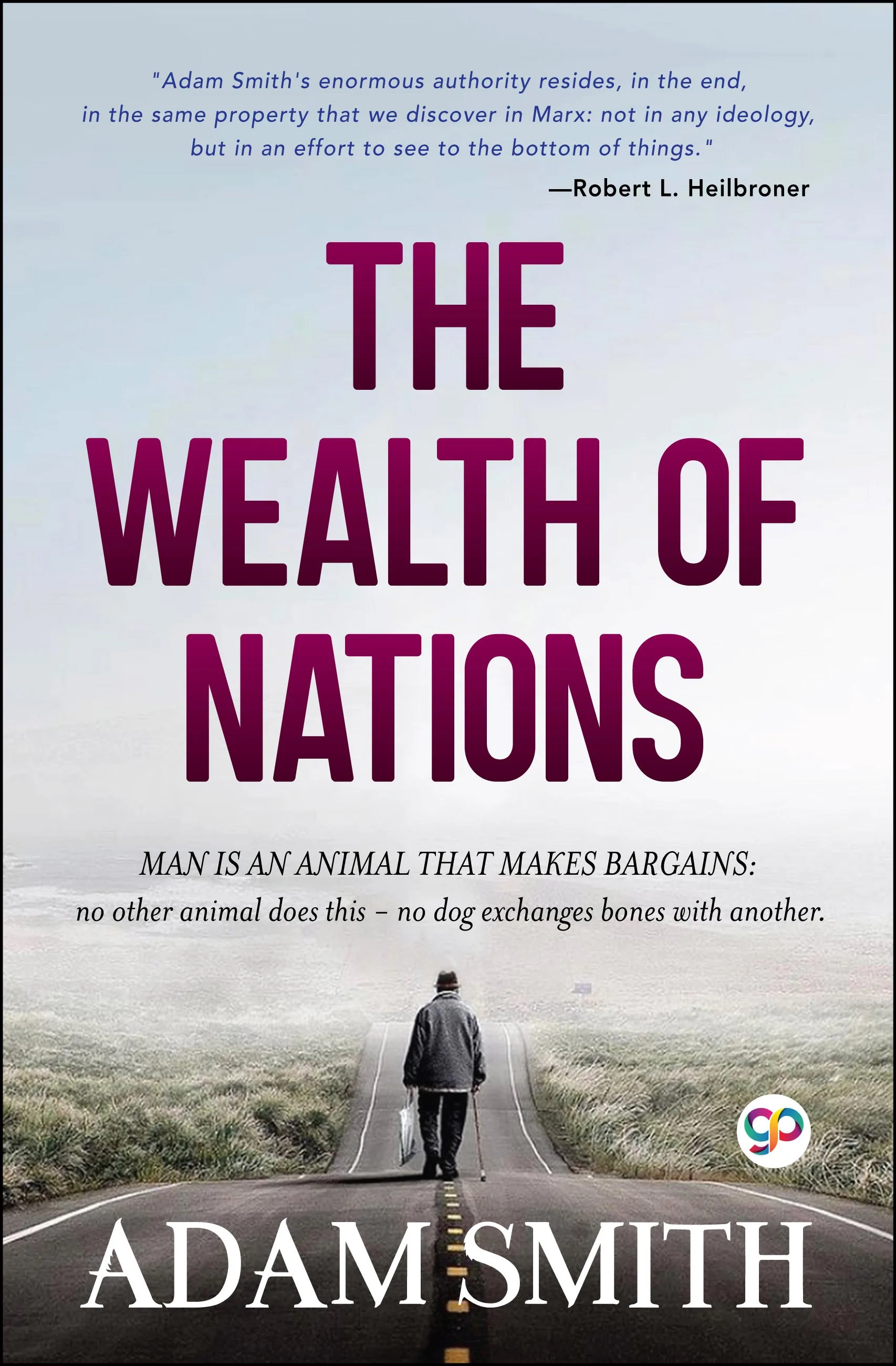
Download Cover Image
Do you want to download the full cover image for The Wealth of Nations?