
Wives and Daughters
eBook
• INR 70.00
• English
• 9789390492091
No ratings yet
| Publisher | General Press |
|---|---|
| ISBN13 | 9789390492091 |
| ASIN/SKU | B096HT3BTV |
| Book Format | eBook |
| Language | English |
| List Price | INR 70.00 |
| Subject Code | DRA000000, FIC014000 |
| Book Code | BD00068712 |
Buy this Book
Amazon Stores
Ebook Stores
Other Stores
Discover Wives and Daughters by Elizabeth Gaskell. This book is published by General Press in eBook format, ISBN 9789390492091, ASIN B096HT3BTV, under Literature and Fiction, Literary Fiction, Women's Fiction.
Book Description
‘Wives and Daughters’ is a novel by Elizabeth Gaskell, first published in the Cornhill Magazine as a serial from August 1864 to January 1866. Set in the watchful society of Hollingford, this is a warm tale of love and longing. Molly Gibson is the spirited, loyal daughter of the local doctor. Their peaceful close-knit home is turned upside down when Molly's father decides to remarry to give Molly the woman's presence he feels she lacks, but until the arrival of Cynthia, her dazzling stepsister, Molly finds her situation hard to accept. Intertwined with the story of the Gibsons is that of Squire Hamley and his two sons. As Molly grows up and falls in love, she learns to judge people for what they are, not what they seem. Through Molly's observations the hierarchies, social values, and social changes of early-nineteenth-century English life are made vivid in a novel that is timeless in its representation of human relationships.
A novel that follows the fortunes of two families in Nineteenth Century rural England, it focuses on family relationships—father, daughter and step-mother, father and sons, father and step-daughter. It portrays the world of the late 1820s and the forces of change within it. This tender story of parents, children and step-children, mistakes and secrets was Elizabeth Gaskell's last novel and is considered her masterpiece.
A novel that follows the fortunes of two families in Nineteenth Century rural England, it focuses on family relationships—father, daughter and step-mother, father and sons, father and step-daughter. It portrays the world of the late 1820s and the forces of change within it. This tender story of parents, children and step-children, mistakes and secrets was Elizabeth Gaskell's last novel and is considered her masterpiece.
Author Biography
Elizabeth Cleghorn Gaskell was born in London in 1810, but she spent her formative years in Cheshire, Stratford-upon-Avon and the north of England. In 1832 she married the Reverend William Gaskell, who became well known as the minister of the Unitarian Chapel in Manchester’s Cross Street. As well as leading a busy domestic life as minister’s wife and mother of four daughters, she worked among the poor, traveled frequently and wrote. Mary Barton (1848) was her first success.
Editorial Reviews
Editorial Reviews will be added soon…
Book Summary
Wives and Daughters by Elizabeth Gaskell is a richly observed Victorian novel about family, friendship, love, social expectations, class, marriage, and the complicated process of growing into adulthood. First published in serial form in The Cornhill Magazine between 1864 and 1866, the novel was unfinished when Gaskell died suddenly in 1865. Despite its incomplete ending, Wives and Daughters is widely regarded as one of her finest works because of its warm characterization, subtle humor, social realism, and unusually perceptive portrayal of family life. Set in the fictional English town of Hollingford, the story follows Molly Gibson from childhood into young womanhood as her family changes, her friendships deepen, and her understanding of love and society becomes more mature. Rather than depending on dramatic events, the novel builds its power through everyday relationships and the small emotional choices that gradually shape people's lives.
At the center of Wives and Daughters is Molly Gibson, the daughter of Dr. Gibson, a respected local doctor. Molly loses her mother when she is young, and her father raises her with affection but also with the practical habits of a busy professional man. Molly grows into a sensible, kind, observant girl who is deeply attached to her father. She is not portrayed as a conventional romantic heroine who immediately understands the world around her. Instead, she develops gradually. Her innocence is balanced by intelligence, and much of the novel's emotional interest comes from watching her learn to distinguish genuine affection from vanity, manipulation, social ambition, and romantic fantasy.
Dr. Gibson eventually decides that Molly needs a female companion and parental figure. He marries Clare Kirkpatrick, a beautiful widow who becomes Molly's stepmother. Clare, however, is very different from Molly's late mother. She is elegant, socially ambitious, and extremely conscious of appearances. She enjoys admiration and possesses considerable confidence in her ability to manage social situations. Although she is not simply a cruel or wicked stepmother, she is self-centered and often unable to understand Molly's deeper emotional needs. The marriage therefore transforms Molly's home. She gains a stepmother, but she also loses some of the uncomplicated closeness she once enjoyed with her father.
Clare brings her daughter Cynthia Kirkpatrick into Molly's life. Cynthia is one of the novel's most fascinating characters because she combines beauty, charm, emotional reserve, and vulnerability. She has been shaped by an unhappy childhood and by her mother's ambitions. Clare is eager to improve Cynthia's social position through marriage, while Cynthia herself is much more complicated than her mother realizes. Molly and Cynthia become close friends, but their relationship is tested by romantic complications. Cynthia attracts attention wherever she goes, and several men become interested in her. Molly, who is more sincere and emotionally straightforward, sometimes struggles to understand Cynthia's behavior.
The arrival of Roger Hamley adds another important dimension to the story. Roger is the eldest son of the Hamley family, who live at Hamley Hall, a nearby country estate. He is intelligent, energetic, scientifically minded, and genuinely interested in natural history. Unlike many men in the novel's social world, Roger is not primarily concerned with fashionable appearances. His intellectual curiosity and practical nature make him an appealing contrast to more superficial characters. Molly develops a deep affection for Roger, although she does not initially fully recognize or articulate the nature of her feelings.
The Hamley family provides an important contrast to the Gibsons. The family consists of Squire Hamley, his wife, and their sons Roger and Osborne. The Hamleys belong to the landed gentry, but their circumstances are not entirely secure. Squire Hamley is proud of his family and social position, while Mrs. Hamley is deeply attached to her sons and particularly worried about Osborne. Osborne, Roger's elder brother, has health problems and has disappointed his father in various ways, but his mother continues to idealize him. This family structure allows Gaskell to explore the emotional pressures placed on children by parental expectations.
Osborne Hamley is handsome, educated, and charming, but he is also deeply flawed. He has secretly married a Frenchwoman named Aimée, whose existence he hides because he fears his father's disapproval. His secret marriage becomes one of the novel's central sources of tension. Osborne's situation demonstrates the dangerous consequences of Victorian expectations surrounding class, family approval, inheritance, and marriage. He wants to preserve his relationship with his father while also maintaining his secret marriage, but the deception becomes increasingly difficult to sustain.
Meanwhile, Molly's friendship with Cynthia develops in complicated ways. Cynthia's beauty and social confidence attract admiration, but she has a troubled history involving Mr. Preston, a man connected with her earlier life. Clare is eager to arrange a socially advantageous marriage for her daughter, and she is particularly interested in wealthy or well-connected men. Cynthia, however, does not behave as a simple social climber. She has genuine feelings and regrets, but she is emotionally guarded and sometimes acts in ways that unintentionally hurt Molly. Her character is one of the novel's great strengths because Gaskell refuses to reduce her to either a heroine or a villain.
A significant part of the novel concerns the relationship between Molly and Roger. Roger does not initially see Molly as a romantic figure. He treats her almost like a younger sister and admires her good sense and loyalty. Molly, meanwhile, becomes increasingly aware of her feelings for him. The situation becomes painful when Roger develops an interest in Cynthia. Molly knows that Cynthia is her friend, and she does not want to behave selfishly, so she keeps much of her emotional suffering to herself. Her restraint demonstrates one of the central qualities of her character: she values loyalty and kindness even when doing so causes her personal pain.
Roger's attraction to Cynthia is understandable because Cynthia possesses qualities Molly does not. She is worldly, graceful, mysterious, and socially sophisticated. Roger is intrigued by her complexity. Molly's affection for Roger, by contrast, is rooted in familiarity, trust, and genuine understanding. The difference between these two types of attraction becomes central to the novel's exploration of love. Gaskell shows that people do not always fall in love with the person who is best suited to them. Sometimes they are drawn toward mystery or glamour before recognizing the deeper value of loyalty and companionship.
Molly's emotional development is further complicated by the arrival of Osborne's secret. Roger eventually discovers the truth about his brother's marriage and becomes involved in protecting Osborne and Aimée. This creates tension within the Hamley family because Roger is torn between loyalty to his brother and respect for his father. The secret also highlights one of Gaskell's recurring themes: the damage caused by concealment. Characters hide marriages, feelings, financial problems, and past relationships because they fear social judgment. These secrets rarely remain harmless. They gradually create emotional confusion and conflict.
The novel's treatment of marriage is particularly nuanced. The title itself, Wives and Daughters, points toward the roles women are expected to occupy within Victorian family life. Marriage can provide security and social advancement, but it can also become a source of pressure and unhappiness. Women are judged according to beauty, manners, family background, and marital prospects. At the same time, Gaskell gives her female characters considerable individuality. Molly, Cynthia, Clare, Mrs. Hamley, and Aimée all respond differently to the expectations placed upon them.
Molly's relationship with Clare is especially revealing. Clare believes she is acting for the family's benefit, but her priorities are often shaped by vanity and social ambition. She wants Molly to become more polished and socially successful, while Molly is more comfortable with sincerity and simple affection. Their differences show how Victorian femininity could involve competing expectations: a young woman was supposed to be modest and respectable, but she was also expected to possess social grace and attract a suitable husband.
Gaskell's social observation extends beyond marriage into questions of class. Hollingford contains people from different social levels, and their relationships are shaped by status as much as by personality. The Hamleys belong to the landed gentry, the Gibsons occupy a professional middle-class position, and other characters move within different levels of local society. Gaskell does not present class as a simple hierarchy of good and bad people. Instead, she shows how social expectations influence behavior. Characters often make decisions because of what their families, neighbors, or communities will think.
The novel also contains a strong theme of female friendship. Molly and Cynthia are very different, yet their friendship becomes one of the emotional centers of the story. Molly's loyalty survives jealousy and misunderstanding, while Cynthia gradually recognizes the depth of Molly's affection. Their relationship is more complicated than a simple friendship between opposites. Gaskell explores how women can become both sources of comfort and sources of emotional uncertainty for one another within a society where marriage often determines a woman's future.
Another important theme is growing up. Molly's journey is not merely a romantic one. She moves from childhood into adulthood and gradually learns that the people she loves are imperfect. Her father can make mistakes. Her stepmother can be selfish without being entirely evil. Cynthia can be both unreliable and vulnerable. Roger can misread his own feelings. The adults around Molly do not possess the certainty she once imagined they had. This realization is part of her education.
Gaskell's style contributes greatly to the novel's charm. Instead of relying on melodramatic action, she pays close attention to conversation, manners, domestic routines, misunderstandings, and small changes in relationships. Her humor is gentle but often sharp. She can expose vanity with a single observation, yet she rarely treats her characters with complete contempt. Even flawed people are given motives that make them understandable. This humane quality is one of the reasons Wives and Daughters remains so appealing.
The novel is also notable for its unfinished ending. Gaskell died before completing the final portion of the story, leaving readers without a fully written conclusion. The surviving narrative ends at a crucial moment in the relationships among Molly, Roger, and Cynthia. Because of the extensive development of these characters and the direction of the plot, readers have long debated how Gaskell intended to resolve the story. However, no definitive ending written by Gaskell exists. Some editions have included conjectural conclusions or editorial material, but these should not be confused with Gaskell's own completed text.
The unfinished ending is both frustrating and strangely fitting. Wives and Daughters is fundamentally a novel about relationships that are constantly changing. Its characters are not neatly divided into heroes and villains, and their emotional futures are not entirely predictable. The absence of a final resolution leaves the reader with the sense that life itself often refuses the neat conclusions provided by conventional fiction.
At its heart, Wives and Daughters is a story about learning to understand people. Molly's greatest strength is not beauty, wealth, or social sophistication but her ability to care sincerely for others. She gradually learns that love cannot be forced, that appearances can be misleading, and that people often conceal their deepest fears behind socially acceptable behavior. Her emotional maturity is the real journey of the novel.
For readers looking for an in-depth summary of Wives and Daughters by Elizabeth Gaskell, the novel can ultimately be understood as a beautifully detailed portrait of Victorian family and social life, centered on Molly Gibson's movement from innocence toward emotional maturity. Through Molly, Cynthia, Roger, Osborne, Clare, and the Hamleys, Gaskell explores love, marriage, friendship, family loyalty, class, secrecy, social ambition, and the difficult choices created by society's expectations. The novel's greatest achievement is its humanity: nobody is entirely simple, and almost every important decision emerges from a mixture of affection, fear, pride, insecurity, and hope. Although Gaskell's death prevented her from providing a definitive conclusion, Wives and Daughters remains a deeply satisfying and emotionally intelligent novel precisely because its characters feel like real people whose lives cannot always be reduced to easy answers.
At the center of Wives and Daughters is Molly Gibson, the daughter of Dr. Gibson, a respected local doctor. Molly loses her mother when she is young, and her father raises her with affection but also with the practical habits of a busy professional man. Molly grows into a sensible, kind, observant girl who is deeply attached to her father. She is not portrayed as a conventional romantic heroine who immediately understands the world around her. Instead, she develops gradually. Her innocence is balanced by intelligence, and much of the novel's emotional interest comes from watching her learn to distinguish genuine affection from vanity, manipulation, social ambition, and romantic fantasy.
Dr. Gibson eventually decides that Molly needs a female companion and parental figure. He marries Clare Kirkpatrick, a beautiful widow who becomes Molly's stepmother. Clare, however, is very different from Molly's late mother. She is elegant, socially ambitious, and extremely conscious of appearances. She enjoys admiration and possesses considerable confidence in her ability to manage social situations. Although she is not simply a cruel or wicked stepmother, she is self-centered and often unable to understand Molly's deeper emotional needs. The marriage therefore transforms Molly's home. She gains a stepmother, but she also loses some of the uncomplicated closeness she once enjoyed with her father.
Clare brings her daughter Cynthia Kirkpatrick into Molly's life. Cynthia is one of the novel's most fascinating characters because she combines beauty, charm, emotional reserve, and vulnerability. She has been shaped by an unhappy childhood and by her mother's ambitions. Clare is eager to improve Cynthia's social position through marriage, while Cynthia herself is much more complicated than her mother realizes. Molly and Cynthia become close friends, but their relationship is tested by romantic complications. Cynthia attracts attention wherever she goes, and several men become interested in her. Molly, who is more sincere and emotionally straightforward, sometimes struggles to understand Cynthia's behavior.
The arrival of Roger Hamley adds another important dimension to the story. Roger is the eldest son of the Hamley family, who live at Hamley Hall, a nearby country estate. He is intelligent, energetic, scientifically minded, and genuinely interested in natural history. Unlike many men in the novel's social world, Roger is not primarily concerned with fashionable appearances. His intellectual curiosity and practical nature make him an appealing contrast to more superficial characters. Molly develops a deep affection for Roger, although she does not initially fully recognize or articulate the nature of her feelings.
The Hamley family provides an important contrast to the Gibsons. The family consists of Squire Hamley, his wife, and their sons Roger and Osborne. The Hamleys belong to the landed gentry, but their circumstances are not entirely secure. Squire Hamley is proud of his family and social position, while Mrs. Hamley is deeply attached to her sons and particularly worried about Osborne. Osborne, Roger's elder brother, has health problems and has disappointed his father in various ways, but his mother continues to idealize him. This family structure allows Gaskell to explore the emotional pressures placed on children by parental expectations.
Osborne Hamley is handsome, educated, and charming, but he is also deeply flawed. He has secretly married a Frenchwoman named Aimée, whose existence he hides because he fears his father's disapproval. His secret marriage becomes one of the novel's central sources of tension. Osborne's situation demonstrates the dangerous consequences of Victorian expectations surrounding class, family approval, inheritance, and marriage. He wants to preserve his relationship with his father while also maintaining his secret marriage, but the deception becomes increasingly difficult to sustain.
Meanwhile, Molly's friendship with Cynthia develops in complicated ways. Cynthia's beauty and social confidence attract admiration, but she has a troubled history involving Mr. Preston, a man connected with her earlier life. Clare is eager to arrange a socially advantageous marriage for her daughter, and she is particularly interested in wealthy or well-connected men. Cynthia, however, does not behave as a simple social climber. She has genuine feelings and regrets, but she is emotionally guarded and sometimes acts in ways that unintentionally hurt Molly. Her character is one of the novel's great strengths because Gaskell refuses to reduce her to either a heroine or a villain.
A significant part of the novel concerns the relationship between Molly and Roger. Roger does not initially see Molly as a romantic figure. He treats her almost like a younger sister and admires her good sense and loyalty. Molly, meanwhile, becomes increasingly aware of her feelings for him. The situation becomes painful when Roger develops an interest in Cynthia. Molly knows that Cynthia is her friend, and she does not want to behave selfishly, so she keeps much of her emotional suffering to herself. Her restraint demonstrates one of the central qualities of her character: she values loyalty and kindness even when doing so causes her personal pain.
Roger's attraction to Cynthia is understandable because Cynthia possesses qualities Molly does not. She is worldly, graceful, mysterious, and socially sophisticated. Roger is intrigued by her complexity. Molly's affection for Roger, by contrast, is rooted in familiarity, trust, and genuine understanding. The difference between these two types of attraction becomes central to the novel's exploration of love. Gaskell shows that people do not always fall in love with the person who is best suited to them. Sometimes they are drawn toward mystery or glamour before recognizing the deeper value of loyalty and companionship.
Molly's emotional development is further complicated by the arrival of Osborne's secret. Roger eventually discovers the truth about his brother's marriage and becomes involved in protecting Osborne and Aimée. This creates tension within the Hamley family because Roger is torn between loyalty to his brother and respect for his father. The secret also highlights one of Gaskell's recurring themes: the damage caused by concealment. Characters hide marriages, feelings, financial problems, and past relationships because they fear social judgment. These secrets rarely remain harmless. They gradually create emotional confusion and conflict.
The novel's treatment of marriage is particularly nuanced. The title itself, Wives and Daughters, points toward the roles women are expected to occupy within Victorian family life. Marriage can provide security and social advancement, but it can also become a source of pressure and unhappiness. Women are judged according to beauty, manners, family background, and marital prospects. At the same time, Gaskell gives her female characters considerable individuality. Molly, Cynthia, Clare, Mrs. Hamley, and Aimée all respond differently to the expectations placed upon them.
Molly's relationship with Clare is especially revealing. Clare believes she is acting for the family's benefit, but her priorities are often shaped by vanity and social ambition. She wants Molly to become more polished and socially successful, while Molly is more comfortable with sincerity and simple affection. Their differences show how Victorian femininity could involve competing expectations: a young woman was supposed to be modest and respectable, but she was also expected to possess social grace and attract a suitable husband.
Gaskell's social observation extends beyond marriage into questions of class. Hollingford contains people from different social levels, and their relationships are shaped by status as much as by personality. The Hamleys belong to the landed gentry, the Gibsons occupy a professional middle-class position, and other characters move within different levels of local society. Gaskell does not present class as a simple hierarchy of good and bad people. Instead, she shows how social expectations influence behavior. Characters often make decisions because of what their families, neighbors, or communities will think.
The novel also contains a strong theme of female friendship. Molly and Cynthia are very different, yet their friendship becomes one of the emotional centers of the story. Molly's loyalty survives jealousy and misunderstanding, while Cynthia gradually recognizes the depth of Molly's affection. Their relationship is more complicated than a simple friendship between opposites. Gaskell explores how women can become both sources of comfort and sources of emotional uncertainty for one another within a society where marriage often determines a woman's future.
Another important theme is growing up. Molly's journey is not merely a romantic one. She moves from childhood into adulthood and gradually learns that the people she loves are imperfect. Her father can make mistakes. Her stepmother can be selfish without being entirely evil. Cynthia can be both unreliable and vulnerable. Roger can misread his own feelings. The adults around Molly do not possess the certainty she once imagined they had. This realization is part of her education.
Gaskell's style contributes greatly to the novel's charm. Instead of relying on melodramatic action, she pays close attention to conversation, manners, domestic routines, misunderstandings, and small changes in relationships. Her humor is gentle but often sharp. She can expose vanity with a single observation, yet she rarely treats her characters with complete contempt. Even flawed people are given motives that make them understandable. This humane quality is one of the reasons Wives and Daughters remains so appealing.
The novel is also notable for its unfinished ending. Gaskell died before completing the final portion of the story, leaving readers without a fully written conclusion. The surviving narrative ends at a crucial moment in the relationships among Molly, Roger, and Cynthia. Because of the extensive development of these characters and the direction of the plot, readers have long debated how Gaskell intended to resolve the story. However, no definitive ending written by Gaskell exists. Some editions have included conjectural conclusions or editorial material, but these should not be confused with Gaskell's own completed text.
The unfinished ending is both frustrating and strangely fitting. Wives and Daughters is fundamentally a novel about relationships that are constantly changing. Its characters are not neatly divided into heroes and villains, and their emotional futures are not entirely predictable. The absence of a final resolution leaves the reader with the sense that life itself often refuses the neat conclusions provided by conventional fiction.
At its heart, Wives and Daughters is a story about learning to understand people. Molly's greatest strength is not beauty, wealth, or social sophistication but her ability to care sincerely for others. She gradually learns that love cannot be forced, that appearances can be misleading, and that people often conceal their deepest fears behind socially acceptable behavior. Her emotional maturity is the real journey of the novel.
For readers looking for an in-depth summary of Wives and Daughters by Elizabeth Gaskell, the novel can ultimately be understood as a beautifully detailed portrait of Victorian family and social life, centered on Molly Gibson's movement from innocence toward emotional maturity. Through Molly, Cynthia, Roger, Osborne, Clare, and the Hamleys, Gaskell explores love, marriage, friendship, family loyalty, class, secrecy, social ambition, and the difficult choices created by society's expectations. The novel's greatest achievement is its humanity: nobody is entirely simple, and almost every important decision emerges from a mixture of affection, fear, pride, insecurity, and hope. Although Gaskell's death prevented her from providing a definitive conclusion, Wives and Daughters remains a deeply satisfying and emotionally intelligent novel precisely because its characters feel like real people whose lives cannot always be reduced to easy answers.
Sample Chapters
Sample Chapters will be added soon…
Reader Reviews
No reviews yet.
Wives and Daughters
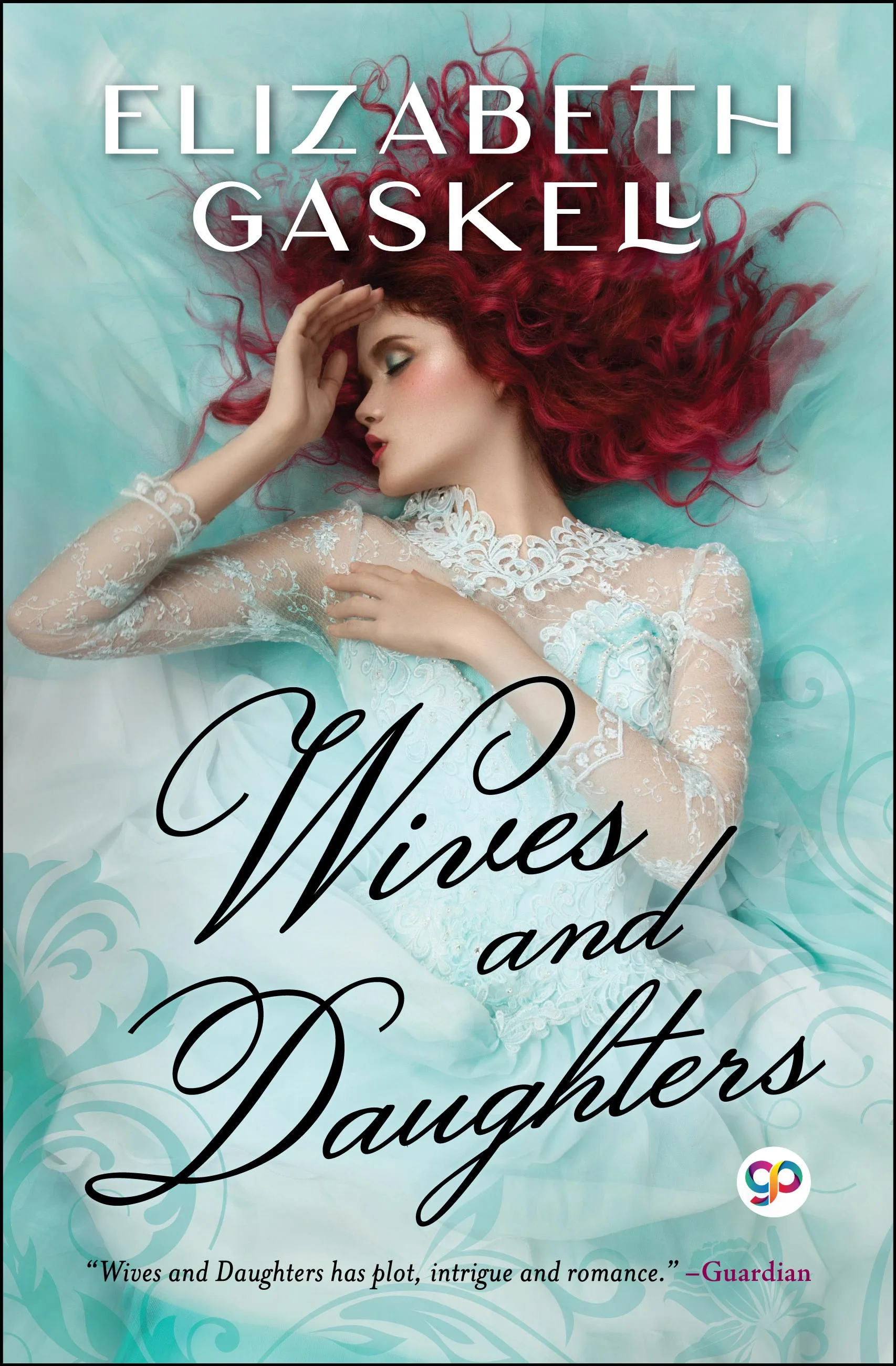
Download Cover Image
Do you want to download the full cover image for Wives and Daughters?