
The Tale of Peter Rabbit
eBook
• INR 51.00
• English
• 9789391181246
No ratings yet
| Publisher | General Press |
|---|---|
| ISBN13 | 9789391181246 |
| ASIN/SKU | B096L8D21W |
| Book Format | eBook |
| Language | English |
| List Price | INR 51.00 |
| Subject Code | JUV007000, JUV002210 |
| Publishing Date | 01/06/2021 |
| Book Code | BD00068730 |
Buy this Book
Amazon Stores
Ebook Stores
Other Stores
Discover The Tale of Peter Rabbit by Beatrix Potter. This book is published by General Press in eBook format, ISBN 9789391181246, ASIN B096L8D21W, under Children's Books, Children's Classics, Animal Stories.
Book Description
‘The Tale of Peter Rabbit,’ first published by Frederick Warne in 1902, is a classic children's story by Beatrix Potter that is a must read for new and returning readers alike. Beatrix Potter was an English author, illustrator, natural scientist, and conservationist best known for her children's books featuring animals. Potter's artistic and literary interests were deeply influenced by fairies, fairy tales and fantasy. ‘The Tale of Peter Rabbit’ was her first publication.
It tells the story of a very mischievous rabbit and the trouble he encounters in a vegetable garden. Peter disobeys his mother by going into Mr. McGregor's garden and almost gets caught. Potter's books continue to sell throughout the world in many languages with her stories being retold in song, film, ballet, and animation. The basis for the 2018 film, Peter Rabbit has been hailed as one of the bestselling stories of all time. The warmth and charm of Beatrix Potter's animal stories have made them favorites with generations of children and adults.
It tells the story of a very mischievous rabbit and the trouble he encounters in a vegetable garden. Peter disobeys his mother by going into Mr. McGregor's garden and almost gets caught. Potter's books continue to sell throughout the world in many languages with her stories being retold in song, film, ballet, and animation. The basis for the 2018 film, Peter Rabbit has been hailed as one of the bestselling stories of all time. The warmth and charm of Beatrix Potter's animal stories have made them favorites with generations of children and adults.
Author Biography
Beatrix Potter (1866–1943) was an English author, illustrator, naturalist, and conservationist whose beautifully illustrated children's books have delighted readers for more than a century. Best known for creating The Tale of Peter Rabbit, Potter combined her remarkable artistic talent with a deep love of nature, producing stories that remain timeless classics. Her gentle narratives, memorable animal characters, and exquisite watercolor illustrations established her as one of the most beloved authors in children's literature.
Helen Beatrix Potter was born on July 28, 1866, in London, England, into a prosperous family. Educated primarily at home by governesses, she developed a keen interest in the natural world from an early age. During family holidays in the English countryside and Scotland, she closely observed animals, plants, and landscapes, filling sketchbooks with detailed drawings. She also studied fungi and other aspects of natural history with great seriousness, demonstrating a scientific curiosity that was unusual for women of her time.
Potter's literary career began almost by accident. She wrote and illustrated a picture letter for the young son of a former governess, featuring a mischievous rabbit named Peter. This letter later became The Tale of Peter Rabbit, which she initially self-published in 1901 after several publishers rejected it. The following year, Frederick Warne & Co. published the book, and it became an immediate success. Potter went on to write more than twenty children's books, including The Tale of Squirrel Nutkin, The Tale of Jemima Puddle-Duck, The Tale of Tom Kitten, and The Tale of Benjamin Bunny. Her stories combined gentle humor, moral lessons, and realistic observations of animal behavior, creating a unique literary style that continues to enchant readers of all ages.
Beyond her achievements as an author, Potter became a dedicated farmer and conservationist. Using the wealth earned from her books, she purchased farms and large areas of land in England's Lake District. She devoted herself to sheep farming, particularly breeding Herdwick sheep, and worked tirelessly to preserve the region's natural beauty. Upon her death in 1943, she bequeathed more than 4,000 acres of land to the National Trust, ensuring its protection for future generations.
Today, Beatrix Potter is remembered not only as one of the world's greatest children's authors but also as a passionate advocate for nature conservation. Her stories continue to inspire imagination, kindness, and a lifelong appreciation for the beauty of the natural world.
Helen Beatrix Potter was born on July 28, 1866, in London, England, into a prosperous family. Educated primarily at home by governesses, she developed a keen interest in the natural world from an early age. During family holidays in the English countryside and Scotland, she closely observed animals, plants, and landscapes, filling sketchbooks with detailed drawings. She also studied fungi and other aspects of natural history with great seriousness, demonstrating a scientific curiosity that was unusual for women of her time.
Potter's literary career began almost by accident. She wrote and illustrated a picture letter for the young son of a former governess, featuring a mischievous rabbit named Peter. This letter later became The Tale of Peter Rabbit, which she initially self-published in 1901 after several publishers rejected it. The following year, Frederick Warne & Co. published the book, and it became an immediate success. Potter went on to write more than twenty children's books, including The Tale of Squirrel Nutkin, The Tale of Jemima Puddle-Duck, The Tale of Tom Kitten, and The Tale of Benjamin Bunny. Her stories combined gentle humor, moral lessons, and realistic observations of animal behavior, creating a unique literary style that continues to enchant readers of all ages.
Beyond her achievements as an author, Potter became a dedicated farmer and conservationist. Using the wealth earned from her books, she purchased farms and large areas of land in England's Lake District. She devoted herself to sheep farming, particularly breeding Herdwick sheep, and worked tirelessly to preserve the region's natural beauty. Upon her death in 1943, she bequeathed more than 4,000 acres of land to the National Trust, ensuring its protection for future generations.
Today, Beatrix Potter is remembered not only as one of the world's greatest children's authors but also as a passionate advocate for nature conservation. Her stories continue to inspire imagination, kindness, and a lifelong appreciation for the beauty of the natural world.
Editorial Reviews
Editorial Reviews will be added soon…
Book Summary
The Tale of Peter Rabbit by Beatrix Potter is one of the most beloved classic children’s books ever written. First published in 1902, this short picture book tells the story of Peter Rabbit, a curious, adventurous, and disobedient young rabbit who ignores his mother’s warning and sneaks into the vegetable garden of the frightening Mr. McGregor. What begins as a tempting adventure quickly becomes a desperate escape, as Peter finds himself trapped in the garden and chased by its owner. Although the story is simple enough for young children to understand, Beatrix Potter fills it with humor, suspense, gentle danger, family affection, and an unusually realistic understanding of childhood behavior. The book’s lasting appeal comes partly from the fact that Peter is not a perfectly obedient hero. He makes mistakes, becomes frightened, gets into trouble, and suffers the natural consequences of his choices. In that sense, The Tale of Peter Rabbit is both an entertaining animal story and a timeless story about curiosity, temptation, disobedience, fear, and returning home.
The story begins with four little rabbits named Flopsy, Mopsy, Cotton-tail, and Peter. They live with their mother beneath the root of a large fir tree. From the very beginning, Potter establishes a warm family environment while also introducing the danger that will drive the plot. Mrs. Rabbit warns her children that they may explore the fields and the lane, but they must not enter Mr. McGregor’s garden. Her warning is especially serious because Peter’s father had previously entered the garden and met a terrible fate: Mrs. McGregor eventually used him in a pie. This dark detail is presented in the calm, matter-of-fact manner characteristic of Potter’s storytelling. It immediately tells the reader that the garden is not simply a place where vegetables grow. It is a dangerous human territory where the rabbits must be careful.
Mrs. Rabbit then leaves to go to the baker’s, carrying her basket and umbrella. Flopsy, Mopsy, and Cotton-tail obey their mother and go down the lane to gather blackberries. Peter, however, immediately reveals his rebellious nature. He is the child who cannot resist doing exactly what he has been told not to do. Instead of following his sisters, he runs straight toward Mr. McGregor’s garden. This opening establishes one of the central themes of The Tale of Peter Rabbit: the conflict between parental wisdom and childhood curiosity. Peter knows the rule, understands that the garden is dangerous, and has been given a very clear warning. Nevertheless, the attraction of the forbidden place proves stronger than his good sense.
Once Peter enters the garden, his curiosity is rewarded with an abundance of delicious food. He begins by eating vegetables, including lettuces, French beans, and radishes. The garden is presented almost as a paradise from a hungry rabbit’s perspective. The carefully cultivated vegetables offer Peter exactly what he wants. Potter understands an important truth about children: simply being told that something is forbidden does not necessarily make it less attractive. In fact, the prohibition can make the forbidden object even more exciting. Peter’s adventure therefore feels psychologically believable despite the fact that the main character is a talking, clothing-wearing rabbit.
Peter’s pleasure does not last long. While exploring the garden, he encounters Mr. McGregor, who immediately notices him. Peter becomes terrified and runs away. The resulting chase forms the central action of the book. Mr. McGregor attempts to catch Peter, and Peter desperately searches for a way out. The garden, which initially seemed inviting and full of delicious food, suddenly becomes a maze of obstacles and dangers. Peter loses his way, becomes increasingly frightened, and discovers that escaping from the garden is much harder than entering it.
One of the most memorable aspects of the story is how physical and immediate Peter’s fear becomes. His jacket catches on something, and he struggles to free himself. At another point, he hides beneath a flowerpot and tries to remain unnoticed. His adventure is not presented as a grand heroic quest. Instead, Potter focuses on small moments of panic and survival. Peter is not brave because he deliberately chooses danger; he is simply a young creature trying to escape after realizing that he has made a serious mistake.
This is what makes Peter such a compelling character. He is mischievous, but he is not malicious. He enters the garden because he wants to explore and eat vegetables, not because he wants to hurt anyone. His disobedience is driven by impulse. Potter does not turn him into a moral monster or punish him excessively. Instead, she allows him to experience fear, exhaustion, and regret. The result is a remarkably humane portrait of a child who learns through experience.
As the chase continues, Peter loses some of the possessions that distinguish him as a little gentleman rabbit. His shoes disappear, and eventually he loses his blue jacket as well. These details are humorous, but they also symbolize how quickly Peter's comfortable world falls apart. At home, he is protected by his mother and surrounded by familiar things. In Mr. McGregor’s garden, those protections disappear. His clothing, confidence, and sense of control are gradually stripped away.
Peter eventually discovers a way out of the garden. After squeezing beneath the gate, he runs back toward home as quickly as he can. His journey home is important because the story is not simply about punishment for bad behavior. It is also about safety, family, and the emotional relief of returning to a familiar place after experiencing danger. Peter has ventured away from his mother’s protection and returns exhausted, frightened, and unwell.
Meanwhile, his three sisters have had a completely different kind of afternoon. Because they obeyed their mother, they have spent their time peacefully gathering blackberries. The contrast between Peter and his sisters reinforces the story’s moral structure without turning the book into a heavy-handed lesson. Potter does not need to explain at length that obedience would have prevented Peter’s trouble. The events themselves make the point. The sisters enjoy a pleasant outing, while Peter experiences hunger, fear, exhaustion, and the consequences of his curiosity.
When Peter finally reaches home, Mrs. Rabbit realizes that he is not well. Rather than delivering a long lecture, she puts him to bed and gives him chamomile tea. The ending is remarkably gentle. Peter has disobeyed his mother, entered a dangerous place, nearly been caught, and returned home exhausted, yet he is still loved and cared for. This final scene gives the story its emotional warmth. The lesson is not simply “obey your parents or you will be punished.” It is also that home remains a place of comfort after mistakes and frightening experiences.
The main theme of The Tale of Peter Rabbit is therefore disobedience and its consequences, but the book contains several related themes. Curiosity is perhaps the most important. Peter is curious about Mr. McGregor’s garden and cannot resist discovering what is inside. His curiosity leads directly to danger, but Potter does not portray curiosity itself as evil. Instead, she shows that curiosity needs to be balanced with judgment. Peter’s problem is not that he wants to explore; it is that he ignores a warning about a genuinely dangerous situation.
Another important theme is temptation. Peter is surrounded by food that he finds irresistible, and his appetite overcomes his caution. The garden represents the attraction of immediate pleasure. Peter knows the risks but chooses the reward anyway. For young readers, this makes the story an accessible introduction to the idea that choices can have consequences. The temptation does not have to be explained abstractly because children can see it through Peter’s actions.
The story also explores the theme of parental love and protection. Mrs. Rabbit is not merely a character who tells her children what they cannot do. She understands the dangers of the world outside their home and tries to protect them. Her warning comes from experience, particularly the tragic experience of Peter’s father. Yet she does not abandon Peter when he makes a mistake. Her final act of caring for him demonstrates that parental love can coexist with disappointment.
Peter himself represents the universal experience of childhood. He is impulsive, energetic, curious, easily distracted, and sometimes unable to think about consequences until after something has gone wrong. That is why generations of children have recognized themselves in him. A perfectly obedient rabbit might make the story less interesting. Peter’s imperfections are what give him personality. He is naughty, but he is also vulnerable. He makes a mistake, becomes frightened, and comes home.
Beatrix Potter’s writing style is another major reason for the book’s enduring popularity. The language is remarkably simple, direct, and economical. Potter does not overload the story with descriptions or explanations. Instead, she uses short sentences, clear actions, and carefully chosen details. The simplicity makes the book accessible to young readers while allowing the illustrations to carry much of the emotional and narrative weight. The story was originally created as an illustrated letter for five-year-old Noel Moore in 1893, based partly on Potter’s pet rabbit Peter Piper. Potter later revised the story for publication, privately printing it in 1901 before Frederick Warne & Co. issued the commercial edition in 1902.
The illustrations are inseparable from the storytelling. Potter was an accomplished natural-history artist, and her rabbits are both realistically observed animals and charming human-like characters. Peter’s blue jacket, expressive posture, and movements give him personality without making him look completely detached from the natural world. The garden itself feels tangible and alive. Vegetables, plants, fences, tools, flowerpots, and pathways create a convincing environment in which the chase can unfold. The combination of naturalistic drawing and human-like behavior is one of the distinctive qualities of Potter’s work.
The book’s historical significance is also considerable. Potter’s small-format design was deliberate: she wanted a book that children could hold easily and that would remain affordable. Several publishers initially rejected the work, but Potter persisted, producing a privately printed edition before Frederick Warne agreed to publish it commercially. The Victoria and Albert Museum notes that Potter carefully controlled many aspects of the production, including the text, illustrations, cover, and physical design of the book. The commercial edition appeared in October 1902 and quickly became a major success.
Ultimately, The Tale of Peter Rabbit remains powerful because it understands children without talking down to them. Peter is not presented as an abstract example of good or bad behavior. He is a living character with desires, weaknesses, fears, and affection for home. His adventure is funny because he is mischievous, suspenseful because he is genuinely in danger, and comforting because he eventually returns to the safety of his mother.
The deepest message of The Tale of Peter Rabbit is not simply that children should obey rules. It is that the world contains both wonder and danger, and growing up involves learning to recognize the difference. Peter wants freedom, adventure, and pleasure, but he discovers that independence without judgment can quickly become frightening. His experience teaches him something that children often learn through small mistakes of their own: warnings sometimes exist for very good reasons. Yet Potter balances that lesson with compassion. Even after Peter makes the wrong choice, there is still a warm home waiting for him.
For readers searching for a summary of The Tale of Peter Rabbit, the book can therefore be understood as a compact coming-of-age story disguised as a charming animal adventure. It is a classic children’s picture book about Peter Rabbit’s disobedience, his dangerous visit to Mr. McGregor’s garden, his frantic escape, and his return home. More deeply, it is about curiosity, temptation, consequences, parental protection, fear, resilience, and forgiveness. Its straightforward language, vivid illustrations, memorable characters, and gentle humor explain why Beatrix Potter’s little rabbit has remained part of childhood reading for generations. The story is short, but its emotional world is surprisingly rich: Peter leaves home wanting adventure and returns understanding, at least for the moment, why his mother’s rules matter.
The story begins with four little rabbits named Flopsy, Mopsy, Cotton-tail, and Peter. They live with their mother beneath the root of a large fir tree. From the very beginning, Potter establishes a warm family environment while also introducing the danger that will drive the plot. Mrs. Rabbit warns her children that they may explore the fields and the lane, but they must not enter Mr. McGregor’s garden. Her warning is especially serious because Peter’s father had previously entered the garden and met a terrible fate: Mrs. McGregor eventually used him in a pie. This dark detail is presented in the calm, matter-of-fact manner characteristic of Potter’s storytelling. It immediately tells the reader that the garden is not simply a place where vegetables grow. It is a dangerous human territory where the rabbits must be careful.
Mrs. Rabbit then leaves to go to the baker’s, carrying her basket and umbrella. Flopsy, Mopsy, and Cotton-tail obey their mother and go down the lane to gather blackberries. Peter, however, immediately reveals his rebellious nature. He is the child who cannot resist doing exactly what he has been told not to do. Instead of following his sisters, he runs straight toward Mr. McGregor’s garden. This opening establishes one of the central themes of The Tale of Peter Rabbit: the conflict between parental wisdom and childhood curiosity. Peter knows the rule, understands that the garden is dangerous, and has been given a very clear warning. Nevertheless, the attraction of the forbidden place proves stronger than his good sense.
Once Peter enters the garden, his curiosity is rewarded with an abundance of delicious food. He begins by eating vegetables, including lettuces, French beans, and radishes. The garden is presented almost as a paradise from a hungry rabbit’s perspective. The carefully cultivated vegetables offer Peter exactly what he wants. Potter understands an important truth about children: simply being told that something is forbidden does not necessarily make it less attractive. In fact, the prohibition can make the forbidden object even more exciting. Peter’s adventure therefore feels psychologically believable despite the fact that the main character is a talking, clothing-wearing rabbit.
Peter’s pleasure does not last long. While exploring the garden, he encounters Mr. McGregor, who immediately notices him. Peter becomes terrified and runs away. The resulting chase forms the central action of the book. Mr. McGregor attempts to catch Peter, and Peter desperately searches for a way out. The garden, which initially seemed inviting and full of delicious food, suddenly becomes a maze of obstacles and dangers. Peter loses his way, becomes increasingly frightened, and discovers that escaping from the garden is much harder than entering it.
One of the most memorable aspects of the story is how physical and immediate Peter’s fear becomes. His jacket catches on something, and he struggles to free himself. At another point, he hides beneath a flowerpot and tries to remain unnoticed. His adventure is not presented as a grand heroic quest. Instead, Potter focuses on small moments of panic and survival. Peter is not brave because he deliberately chooses danger; he is simply a young creature trying to escape after realizing that he has made a serious mistake.
This is what makes Peter such a compelling character. He is mischievous, but he is not malicious. He enters the garden because he wants to explore and eat vegetables, not because he wants to hurt anyone. His disobedience is driven by impulse. Potter does not turn him into a moral monster or punish him excessively. Instead, she allows him to experience fear, exhaustion, and regret. The result is a remarkably humane portrait of a child who learns through experience.
As the chase continues, Peter loses some of the possessions that distinguish him as a little gentleman rabbit. His shoes disappear, and eventually he loses his blue jacket as well. These details are humorous, but they also symbolize how quickly Peter's comfortable world falls apart. At home, he is protected by his mother and surrounded by familiar things. In Mr. McGregor’s garden, those protections disappear. His clothing, confidence, and sense of control are gradually stripped away.
Peter eventually discovers a way out of the garden. After squeezing beneath the gate, he runs back toward home as quickly as he can. His journey home is important because the story is not simply about punishment for bad behavior. It is also about safety, family, and the emotional relief of returning to a familiar place after experiencing danger. Peter has ventured away from his mother’s protection and returns exhausted, frightened, and unwell.
Meanwhile, his three sisters have had a completely different kind of afternoon. Because they obeyed their mother, they have spent their time peacefully gathering blackberries. The contrast between Peter and his sisters reinforces the story’s moral structure without turning the book into a heavy-handed lesson. Potter does not need to explain at length that obedience would have prevented Peter’s trouble. The events themselves make the point. The sisters enjoy a pleasant outing, while Peter experiences hunger, fear, exhaustion, and the consequences of his curiosity.
When Peter finally reaches home, Mrs. Rabbit realizes that he is not well. Rather than delivering a long lecture, she puts him to bed and gives him chamomile tea. The ending is remarkably gentle. Peter has disobeyed his mother, entered a dangerous place, nearly been caught, and returned home exhausted, yet he is still loved and cared for. This final scene gives the story its emotional warmth. The lesson is not simply “obey your parents or you will be punished.” It is also that home remains a place of comfort after mistakes and frightening experiences.
The main theme of The Tale of Peter Rabbit is therefore disobedience and its consequences, but the book contains several related themes. Curiosity is perhaps the most important. Peter is curious about Mr. McGregor’s garden and cannot resist discovering what is inside. His curiosity leads directly to danger, but Potter does not portray curiosity itself as evil. Instead, she shows that curiosity needs to be balanced with judgment. Peter’s problem is not that he wants to explore; it is that he ignores a warning about a genuinely dangerous situation.
Another important theme is temptation. Peter is surrounded by food that he finds irresistible, and his appetite overcomes his caution. The garden represents the attraction of immediate pleasure. Peter knows the risks but chooses the reward anyway. For young readers, this makes the story an accessible introduction to the idea that choices can have consequences. The temptation does not have to be explained abstractly because children can see it through Peter’s actions.
The story also explores the theme of parental love and protection. Mrs. Rabbit is not merely a character who tells her children what they cannot do. She understands the dangers of the world outside their home and tries to protect them. Her warning comes from experience, particularly the tragic experience of Peter’s father. Yet she does not abandon Peter when he makes a mistake. Her final act of caring for him demonstrates that parental love can coexist with disappointment.
Peter himself represents the universal experience of childhood. He is impulsive, energetic, curious, easily distracted, and sometimes unable to think about consequences until after something has gone wrong. That is why generations of children have recognized themselves in him. A perfectly obedient rabbit might make the story less interesting. Peter’s imperfections are what give him personality. He is naughty, but he is also vulnerable. He makes a mistake, becomes frightened, and comes home.
Beatrix Potter’s writing style is another major reason for the book’s enduring popularity. The language is remarkably simple, direct, and economical. Potter does not overload the story with descriptions or explanations. Instead, she uses short sentences, clear actions, and carefully chosen details. The simplicity makes the book accessible to young readers while allowing the illustrations to carry much of the emotional and narrative weight. The story was originally created as an illustrated letter for five-year-old Noel Moore in 1893, based partly on Potter’s pet rabbit Peter Piper. Potter later revised the story for publication, privately printing it in 1901 before Frederick Warne & Co. issued the commercial edition in 1902.
The illustrations are inseparable from the storytelling. Potter was an accomplished natural-history artist, and her rabbits are both realistically observed animals and charming human-like characters. Peter’s blue jacket, expressive posture, and movements give him personality without making him look completely detached from the natural world. The garden itself feels tangible and alive. Vegetables, plants, fences, tools, flowerpots, and pathways create a convincing environment in which the chase can unfold. The combination of naturalistic drawing and human-like behavior is one of the distinctive qualities of Potter’s work.
The book’s historical significance is also considerable. Potter’s small-format design was deliberate: she wanted a book that children could hold easily and that would remain affordable. Several publishers initially rejected the work, but Potter persisted, producing a privately printed edition before Frederick Warne agreed to publish it commercially. The Victoria and Albert Museum notes that Potter carefully controlled many aspects of the production, including the text, illustrations, cover, and physical design of the book. The commercial edition appeared in October 1902 and quickly became a major success.
Ultimately, The Tale of Peter Rabbit remains powerful because it understands children without talking down to them. Peter is not presented as an abstract example of good or bad behavior. He is a living character with desires, weaknesses, fears, and affection for home. His adventure is funny because he is mischievous, suspenseful because he is genuinely in danger, and comforting because he eventually returns to the safety of his mother.
The deepest message of The Tale of Peter Rabbit is not simply that children should obey rules. It is that the world contains both wonder and danger, and growing up involves learning to recognize the difference. Peter wants freedom, adventure, and pleasure, but he discovers that independence without judgment can quickly become frightening. His experience teaches him something that children often learn through small mistakes of their own: warnings sometimes exist for very good reasons. Yet Potter balances that lesson with compassion. Even after Peter makes the wrong choice, there is still a warm home waiting for him.
For readers searching for a summary of The Tale of Peter Rabbit, the book can therefore be understood as a compact coming-of-age story disguised as a charming animal adventure. It is a classic children’s picture book about Peter Rabbit’s disobedience, his dangerous visit to Mr. McGregor’s garden, his frantic escape, and his return home. More deeply, it is about curiosity, temptation, consequences, parental protection, fear, resilience, and forgiveness. Its straightforward language, vivid illustrations, memorable characters, and gentle humor explain why Beatrix Potter’s little rabbit has remained part of childhood reading for generations. The story is short, but its emotional world is surprisingly rich: Peter leaves home wanting adventure and returns understanding, at least for the moment, why his mother’s rules matter.
Sample Chapters
Sample Chapters will be added soon…
Reader Reviews
No reviews yet.
The Tale of Peter Rabbit
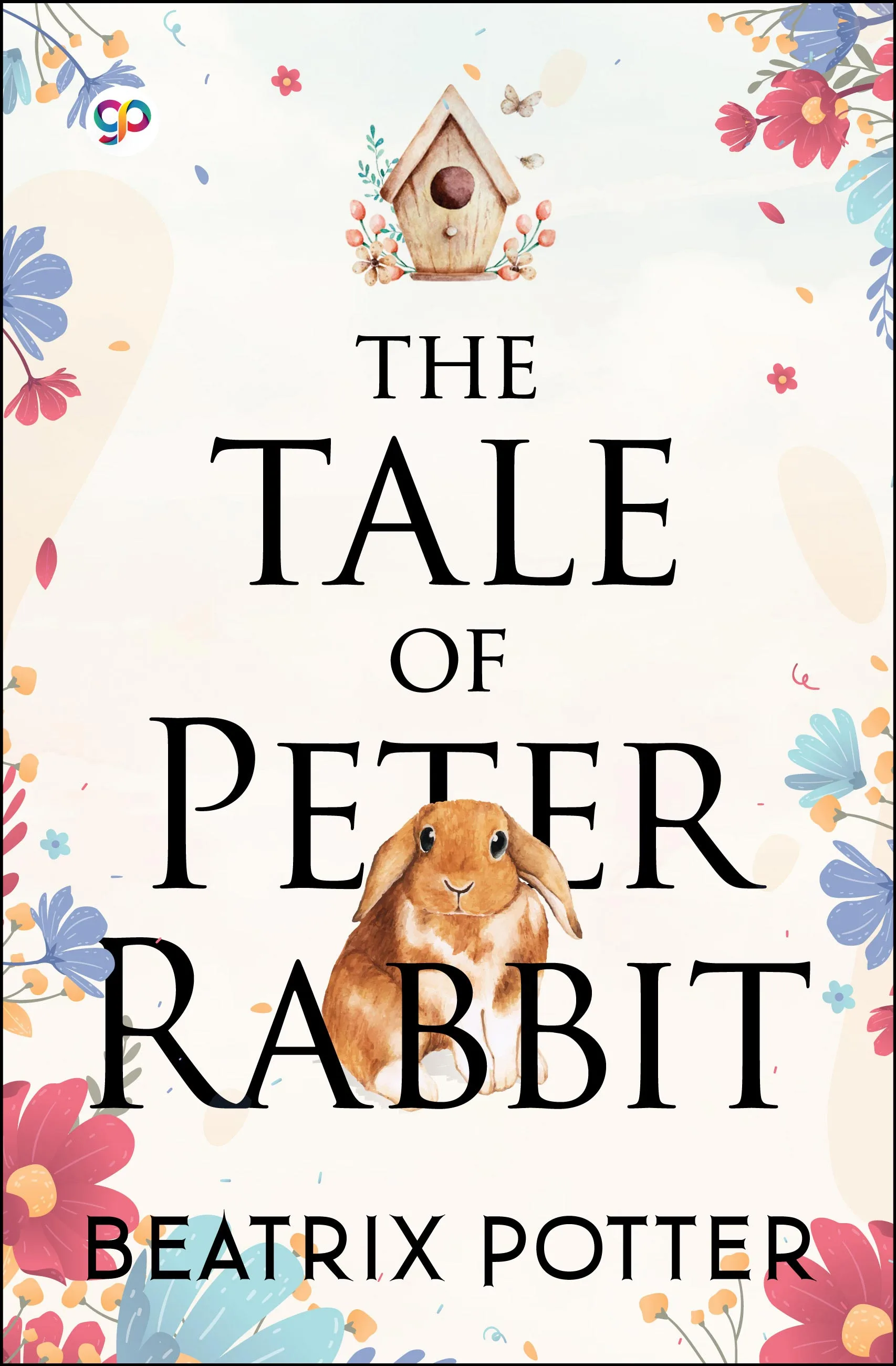
Download Cover Image
Do you want to download the full cover image for The Tale of Peter Rabbit?