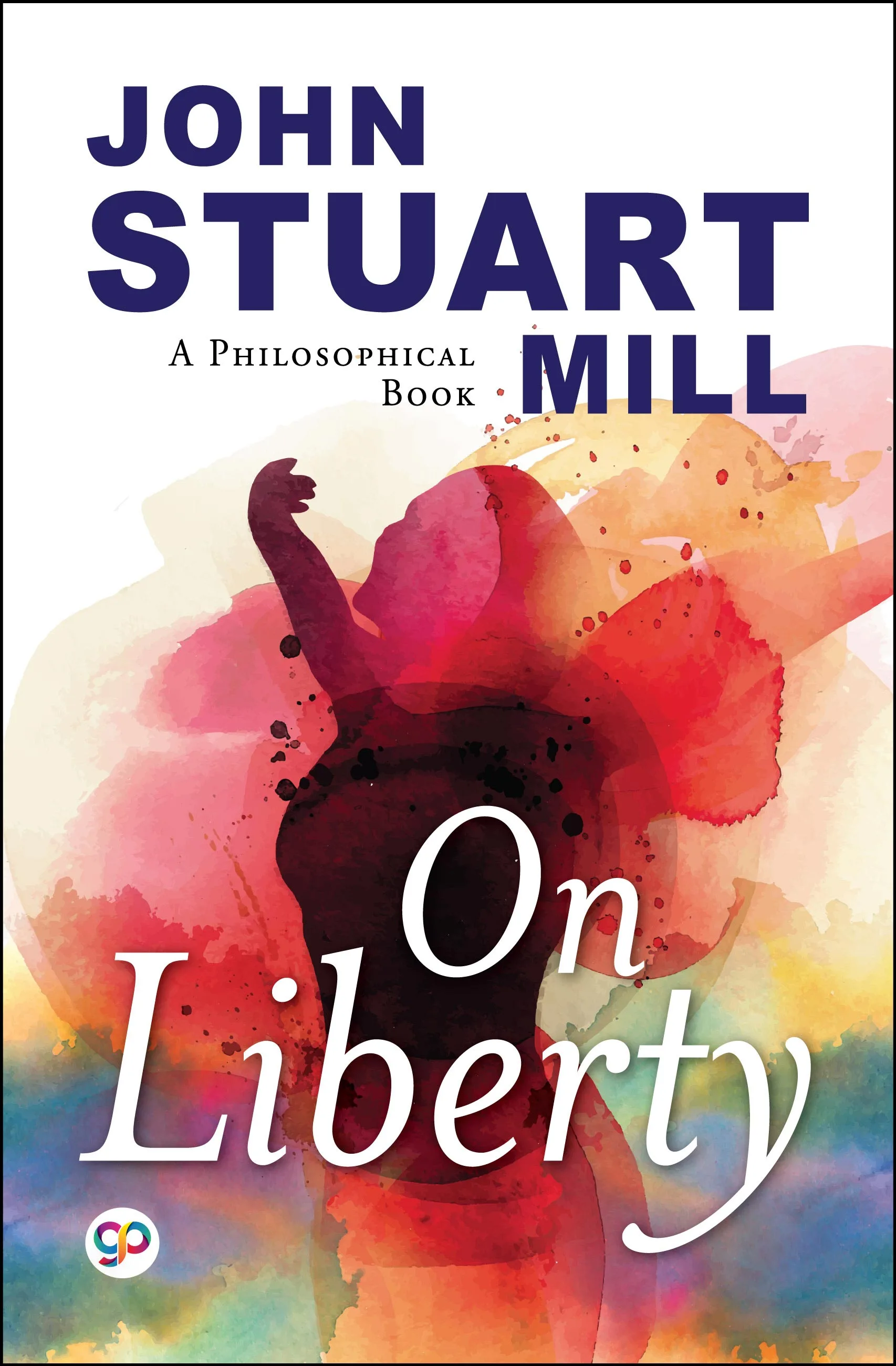
On Liberty
eBook
• INR 70.00
• English
• 9789391181116
No ratings yet
| Publisher | General Press |
|---|---|
| ISBN13 | 9789391181116 |
| ASIN/SKU | B096L96N34 |
| Book Format | eBook |
| Language | English |
| List Price | INR 70.00 |
| Subject Code | PHI005000, PHI000000 |
| Publishing Date | 01/06/2021 |
| Book Code | BD00068732 |
Buy this Book
Amazon Stores
Ebook Stores
Other Stores
Discover On Liberty by John Stuart Mill. This book is published by General Press in eBook format, ISBN 9789391181116, ASIN B096L96N34, under Non Fiction, Politics, Philosophy.
Book Description
‘On Liberty’ is the English philosopher John Stuart Mill's classic critique of the ethical limits of governmental authority, and remains one of the most influential philosophical treatises ever written. In this 1859 philosophical treatise, the concept of personal liberty went without codification until the publication of this enduring work which applies an ethical system of utilitarianism to society and the state which to this day remains well known and studied. Mill starts with a brief overview of the meaning of liberty and proffers his basic argument in favor of liberty for the individual, to the degree that it harms no one else. The value of liberty of opinion and liberty of action are set forth in two chapters. Emphasizing the importance of individuality versus the “tyranny of the majority,” he highlights the positive effects of liberty on all people and on society, as freedom enables progress and prevents social stagnation.
Expounding on society, Mills discusses the appropriate level of authority that society ought to have over the individual and the obligation of that society to protect people who are incapable of exercising their own liberty. Finally, he offers particular examples and applications of his theory, in order to clarify the meaning of his claims.
Expounding on society, Mills discusses the appropriate level of authority that society ought to have over the individual and the obligation of that society to protect people who are incapable of exercising their own liberty. Finally, he offers particular examples and applications of his theory, in order to clarify the meaning of his claims.
Author Biography
John Stuart Mill (1806–1873) was one of the most influential British philosophers, economists, political thinkers, and social reformers of the nineteenth century. His writings on liberty, ethics, economics, democracy, and women's rights helped shape modern liberal thought and continue to influence philosophy, law, political science, and public policy. Renowned for his clarity of reasoning and deep commitment to individual freedom, Mill believed that a just society must protect personal liberty while promoting education, equality, and human progress.
Born on May 20, 1806, in London, England, Mill was the eldest son of the Scottish philosopher and historian James Mill. Under his father's rigorous guidance, he received an extraordinary education from an early age. By the time he was a child, he had mastered Greek and Latin and had studied history, mathematics, logic, economics, and philosophy. Although this intense education gave him exceptional intellectual abilities, it also contributed to a period of emotional crisis in his early twenties. Recovering from this experience led him to appreciate the importance of emotion, literature, and individuality alongside reason.
Mill worked for the British East India Company for more than three decades while continuing his scholarly pursuits. His friendship and later marriage to Harriet Taylor Mill profoundly influenced his philosophical development. He openly acknowledged her contribution to many of his ideas, particularly those concerning freedom, equality, and the rights of women.
Among Mill's most celebrated works are On Liberty (1859), Utilitarianism (1863), Considerations on Representative Government (1861), The Subjection of Women (1869), and Principles of Political Economy (1848). In On Liberty, he argued that individuals should be free to think and act as they choose, provided they do not harm others—a principle that remains central to modern democratic societies. His advocacy for women's equality was especially remarkable for his time, and he became one of the first members of the British Parliament to publicly support women's suffrage.
Beyond philosophy, Mill served as a Member of Parliament, where he championed electoral reform, freedom of speech, education, and social justice. His balanced approach combined respect for individual rights with concern for the common good, making his ideas both practical and enduring.
John Stuart Mill passed away on May 7, 1873, in Avignon, France. Today, he is remembered as one of the greatest thinkers of the modern era, whose writings continue to inspire debates about liberty, democracy, ethics, equality, and the responsibilities of individuals and governments in a free society.
Born on May 20, 1806, in London, England, Mill was the eldest son of the Scottish philosopher and historian James Mill. Under his father's rigorous guidance, he received an extraordinary education from an early age. By the time he was a child, he had mastered Greek and Latin and had studied history, mathematics, logic, economics, and philosophy. Although this intense education gave him exceptional intellectual abilities, it also contributed to a period of emotional crisis in his early twenties. Recovering from this experience led him to appreciate the importance of emotion, literature, and individuality alongside reason.
Mill worked for the British East India Company for more than three decades while continuing his scholarly pursuits. His friendship and later marriage to Harriet Taylor Mill profoundly influenced his philosophical development. He openly acknowledged her contribution to many of his ideas, particularly those concerning freedom, equality, and the rights of women.
Among Mill's most celebrated works are On Liberty (1859), Utilitarianism (1863), Considerations on Representative Government (1861), The Subjection of Women (1869), and Principles of Political Economy (1848). In On Liberty, he argued that individuals should be free to think and act as they choose, provided they do not harm others—a principle that remains central to modern democratic societies. His advocacy for women's equality was especially remarkable for his time, and he became one of the first members of the British Parliament to publicly support women's suffrage.
Beyond philosophy, Mill served as a Member of Parliament, where he championed electoral reform, freedom of speech, education, and social justice. His balanced approach combined respect for individual rights with concern for the common good, making his ideas both practical and enduring.
John Stuart Mill passed away on May 7, 1873, in Avignon, France. Today, he is remembered as one of the greatest thinkers of the modern era, whose writings continue to inspire debates about liberty, democracy, ethics, equality, and the responsibilities of individuals and governments in a free society.
Editorial Reviews
Editorial Reviews will be added soon…
Book Summary
Book Summary will be added soon…
Sample Chapters
Sample Chapters will be added soon…
Reader Reviews
No reviews yet.
On Liberty