
At the Mountains of Madness
eBook
• INR 70.00
• English
• 9789391181031
No ratings yet
| Publisher | General Press |
|---|---|
| ISBN13 | 9789391181031 |
| ASIN/SKU | B096T551VZ |
| Book Format | eBook |
| Language | English |
| List Price | INR 70.00 |
| Subject Code | FIC015000, DRA001010 |
| Publishing Date | 01/06/2021 |
| Book Code | BD00068736 |
Buy this Book
Amazon Stores
Ebook Stores
Other Stores
Discover At the Mountains of Madness by H.P. Lovecraft. This book is published by General Press in eBook format, ISBN 9789391181031, ASIN B096T551VZ, under Literature and Fiction, Classics.
Book Description
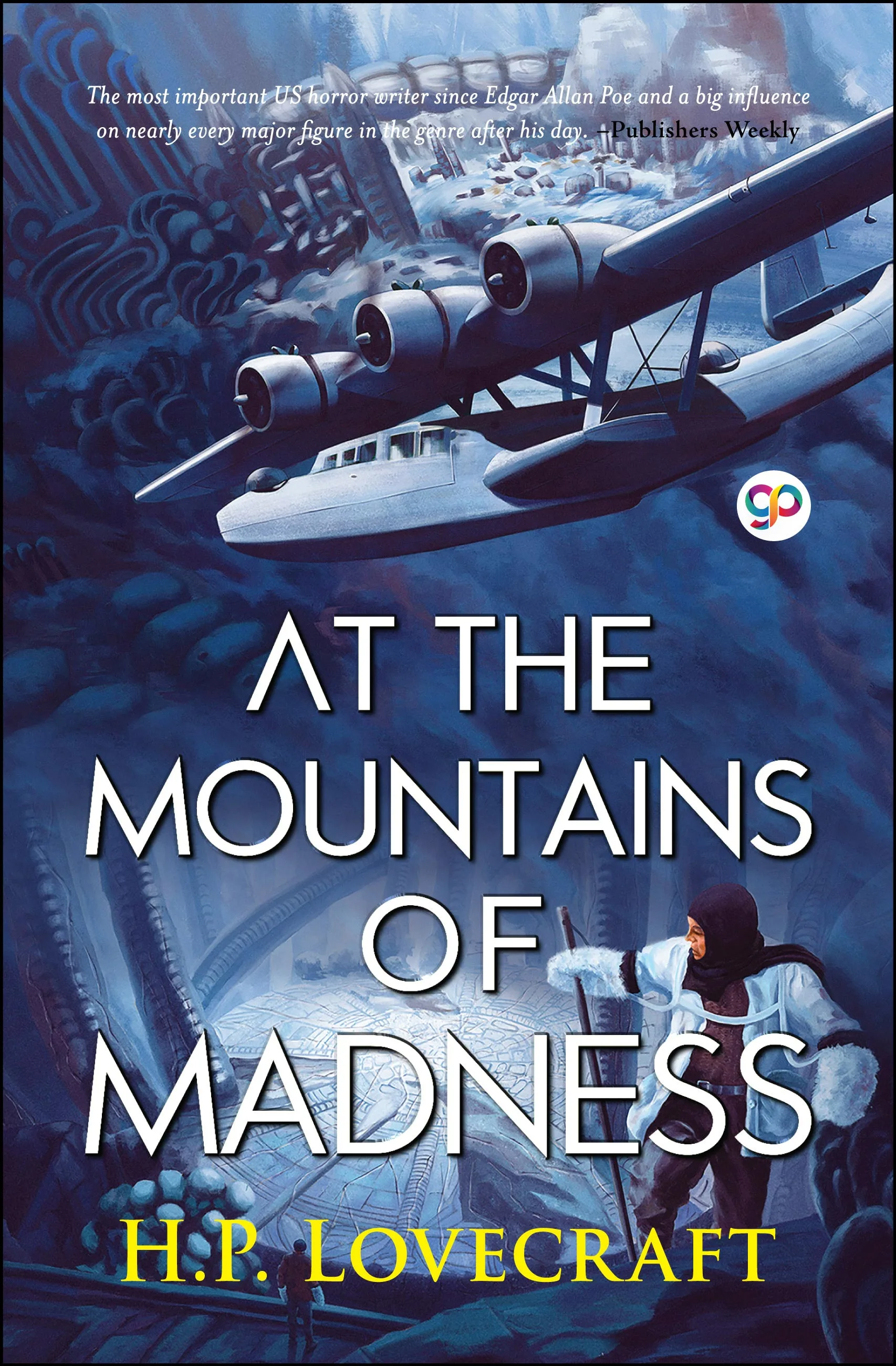
‘At the Mountains of Madness’, Lovecraft's incontrovertible masterpiece, written in February-March 1931, is a story details the events of a disastrous expedition to the barren, windswept Antarctic continent, where the secret history of our planet is preserved, amidst the ruins of its first civilization, in September 1930, and what was found there by a group of explorers led by the narrator, Dr. William Dyer of Miskatonic University. Throughout the story, Dyer details a series of previously untold events in the hope of deterring another group of explorers who wish to return to the continent. It uncovers strange fossils and mind-blasting terror.
Since it was originally serialized in the February, March, and April 1936 issues of Astounding Stories during the classic pulp era, ‘At the Mountains of Madness’ has influenced both horror and science fiction worldwide. Lovecraft scholar S.T. Joshi describes the novella as representing the decisive "demythology" of the Cthulhu Mythos by reinterpreting Lovecraft's earlier supernatural stories in a science fiction paradigm.
Since it was originally serialized in the February, March, and April 1936 issues of Astounding Stories during the classic pulp era, ‘At the Mountains of Madness’ has influenced both horror and science fiction worldwide. Lovecraft scholar S.T. Joshi describes the novella as representing the decisive "demythology" of the Cthulhu Mythos by reinterpreting Lovecraft's earlier supernatural stories in a science fiction paradigm.
Author Biography
H. P. Lovecraft (1890–1937), born Howard Phillips Lovecraft, was an American writer whose imaginative tales of cosmic horror transformed the landscape of supernatural fiction. Although he received only modest recognition during his lifetime, he is now regarded as one of the most influential horror writers in literary history. His stories introduced readers to a universe where humanity is insignificant in the face of ancient, mysterious forces, inspiring generations of authors, filmmakers, and game creators.
Lovecraft was born on August 20, 1890, in Providence, Rhode Island, a city he loved deeply and where he spent most of his life. His childhood was marked by personal loss and periods of ill health. His father died when Lovecraft was very young, and he was raised primarily by his mother and grandparents. A gifted and curious child, he developed an early fascination with astronomy, mythology, science, and classical literature. These interests later blended seamlessly into his fiction, giving his stories a unique combination of scientific speculation and supernatural mystery.
Beginning in the early twentieth century, Lovecraft wrote for amateur literary magazines before gaining wider attention through the pulp magazine Weird Tales. His most celebrated works include The Call of Cthulhu, At the Mountains of Madness, The Shadow over Innsmouth, The Dunwich Horror, and The Colour Out of Space. Rather than relying on ghosts or traditional monsters, Lovecraft created an atmosphere of psychological dread, suggesting that unimaginable cosmic beings and forgotten civilizations existed beyond human understanding. His interconnected stories eventually became known as the Cthulhu Mythos, a fictional universe that continues to expand through the work of countless writers and artists.
Despite his extraordinary imagination, Lovecraft struggled financially throughout his life and often survived through editing, ghostwriting, and extensive correspondence with fellow writers. His letters, numbering in the thousands, reveal an intellectually curious man deeply engaged with literature, philosophy, history, and science. Modern readers also recognize that some of his personal views reflected the prejudices of his era, and these aspects of his legacy are widely acknowledged and critically examined alongside his literary achievements.
H. P. Lovecraft passed away on March 15, 1937, at the age of forty-six. Today, he is remembered as a visionary storyteller whose innovative blend of horror, fantasy, and science fiction reshaped modern speculative literature. His enduring influence continues to inspire writers, filmmakers, and readers who are drawn to the mysteries of the unknown and the vastness of the cosmos.
Lovecraft was born on August 20, 1890, in Providence, Rhode Island, a city he loved deeply and where he spent most of his life. His childhood was marked by personal loss and periods of ill health. His father died when Lovecraft was very young, and he was raised primarily by his mother and grandparents. A gifted and curious child, he developed an early fascination with astronomy, mythology, science, and classical literature. These interests later blended seamlessly into his fiction, giving his stories a unique combination of scientific speculation and supernatural mystery.
Beginning in the early twentieth century, Lovecraft wrote for amateur literary magazines before gaining wider attention through the pulp magazine Weird Tales. His most celebrated works include The Call of Cthulhu, At the Mountains of Madness, The Shadow over Innsmouth, The Dunwich Horror, and The Colour Out of Space. Rather than relying on ghosts or traditional monsters, Lovecraft created an atmosphere of psychological dread, suggesting that unimaginable cosmic beings and forgotten civilizations existed beyond human understanding. His interconnected stories eventually became known as the Cthulhu Mythos, a fictional universe that continues to expand through the work of countless writers and artists.
Despite his extraordinary imagination, Lovecraft struggled financially throughout his life and often survived through editing, ghostwriting, and extensive correspondence with fellow writers. His letters, numbering in the thousands, reveal an intellectually curious man deeply engaged with literature, philosophy, history, and science. Modern readers also recognize that some of his personal views reflected the prejudices of his era, and these aspects of his legacy are widely acknowledged and critically examined alongside his literary achievements.
H. P. Lovecraft passed away on March 15, 1937, at the age of forty-six. Today, he is remembered as a visionary storyteller whose innovative blend of horror, fantasy, and science fiction reshaped modern speculative literature. His enduring influence continues to inspire writers, filmmakers, and readers who are drawn to the mysteries of the unknown and the vastness of the cosmos.
Editorial Reviews
Editorial Reviews will be added soon…
Book Summary
Book Summary will be added soon…
Sample Chapters
Sample Chapters will be added soon…
Reader Reviews
No reviews yet.
At the Mountains of Madness
Download Cover Image
Do you want to download the full cover image for At the Mountains of Madness?