
The Constitution of India
eBook
• INR 70.00
• English
• 9789390492237
No ratings yet
| Publisher | General Press |
|---|---|
| ISBN13 | 9789390492237 |
| ASIN/SKU | B08NXRYBCS |
| Book Format | eBook |
| Language | English |
| List Price | INR 70.00 |
| Subject Code | POL022000, LAW018000 |
| Publishing Date | 09/11/2020 |
| Book Code | BD00068754 |
Buy this Book
Amazon Stores
Ebook Stores
Other Stores
Discover The Constitution of India by Dr. B.R. Ambedkar. This book is published by General Press in eBook format, ISBN 9789390492237, ASIN B08NXRYBCS, under Politics and Social Sciences, Politics.
Book Description
The Constitution of India is the supreme law of India. It lays down the framework defining fundamental political principles, establishes the structure, procedures, powers and duties of government institutions and sets out fundamental rights, directive principles and the duties of citizens. The book is arranged Article-wise and references have been given at the end of each chapter. As almost each Article of the Constitution has been judicially interpreted; the meaning determined by the judiciary has been explained along with the citation of the case. The essential information under each Article has been provided.
ABOUT THE AUTHOR:
Bhimrao Ramji Ambedkar (14 April 1891 – 6 December 1956), popularly known as Babasaheb, was an Indian jurist, economist, politician and social reformer who inspired the Modern Buddhist Movement and campaigned against social discrimination in India, striving for equal social rights or Dalits, women and labour. He was independent India's first law minister and the principal architect of the Constitution of India.
Ambedkar was a prolific student, earning a law degree and various doctorates from Columbia University and the London School of Economics, and gained a reputation as a scholar for his research in law, economics and political science. In his early career he was an economist, professor, and lawyer. His later life was marked by his political activities, where he became involved in the negotiations for India's independence campaigning by publishing journals advocating political rights and social freedom for untouchables and contributing significantly to the establishment of the state of India. In 1956 he converted to Buddhism, initiating mass conversions of Dalits. In 1990, Ambedkar was posthumously conferred with the Bharat Ratna, India's highest civilian award. Ambedkar's legacy includes numerous memorials and depictions in popular culture.
ABOUT THE AUTHOR:
Bhimrao Ramji Ambedkar (14 April 1891 – 6 December 1956), popularly known as Babasaheb, was an Indian jurist, economist, politician and social reformer who inspired the Modern Buddhist Movement and campaigned against social discrimination in India, striving for equal social rights or Dalits, women and labour. He was independent India's first law minister and the principal architect of the Constitution of India.
Ambedkar was a prolific student, earning a law degree and various doctorates from Columbia University and the London School of Economics, and gained a reputation as a scholar for his research in law, economics and political science. In his early career he was an economist, professor, and lawyer. His later life was marked by his political activities, where he became involved in the negotiations for India's independence campaigning by publishing journals advocating political rights and social freedom for untouchables and contributing significantly to the establishment of the state of India. In 1956 he converted to Buddhism, initiating mass conversions of Dalits. In 1990, Ambedkar was posthumously conferred with the Bharat Ratna, India's highest civilian award. Ambedkar's legacy includes numerous memorials and depictions in popular culture.
Author Biography
Dr. Bhimrao Ramji Ambedkar (1891–1956) was a towering Indian jurist, economist, social reformer, and political leader who served as the chief architect of the Indian Constitution. Born into the marginalized Mahar caste in Mhow, Madhya Pradesh, Ambedkar faced severe socio-economic discrimination from a young age due to the oppressive practice of untouchability. Despite these immense barriers, his exceptional intellect propelled him to become one of the most highly educated Indians of his time, earning doctorates in economics from both Columbia University and the London School of Economics.
Returning to India, Ambedkar dedicated his life to dismantling the rigid Hindu caste system and fighting for the civil liberties of Dalits and other oppressed communities. He led powerful grassroots movements, such as the Mahad Satyagraha in 1927, advocating for equal access to public resources. When India gained independence in 1947, he was appointed as the nation’s first Law Minister and selected to chair the Constitution Drafting Committee. Under his visionary leadership, the newly framed Constitution guaranteed fundamental rights, formally outlawed untouchability, and established affirmative action policies to uplift disadvantaged groups.
Beyond his monumental political legacy, Ambedkar was a prolific author and relentless public intellectual. His most famous work, Annihilation of Caste (1936), remains a seminal, blistering critique of social hierarchy and religious orthodoxy. Other major scholarly contributions include Who Were the Shudras? and The Problem of the Rupee, which heavily influenced the establishment of the Reserve Bank of India. Disillusioned with the entrenched inequalities of Hinduism, Ambedkar converted to Buddhism just weeks before his death in 1956, initiating a mass conversion movement among his followers. Posthumously awarded the Bharat Ratna, India’s highest civilian honor, Dr. Ambedkar’s profound legacy continues to inspire global movements for social justice, equality, and human rights.
Returning to India, Ambedkar dedicated his life to dismantling the rigid Hindu caste system and fighting for the civil liberties of Dalits and other oppressed communities. He led powerful grassroots movements, such as the Mahad Satyagraha in 1927, advocating for equal access to public resources. When India gained independence in 1947, he was appointed as the nation’s first Law Minister and selected to chair the Constitution Drafting Committee. Under his visionary leadership, the newly framed Constitution guaranteed fundamental rights, formally outlawed untouchability, and established affirmative action policies to uplift disadvantaged groups.
Beyond his monumental political legacy, Ambedkar was a prolific author and relentless public intellectual. His most famous work, Annihilation of Caste (1936), remains a seminal, blistering critique of social hierarchy and religious orthodoxy. Other major scholarly contributions include Who Were the Shudras? and The Problem of the Rupee, which heavily influenced the establishment of the Reserve Bank of India. Disillusioned with the entrenched inequalities of Hinduism, Ambedkar converted to Buddhism just weeks before his death in 1956, initiating a mass conversion movement among his followers. Posthumously awarded the Bharat Ratna, India’s highest civilian honor, Dr. Ambedkar’s profound legacy continues to inspire global movements for social justice, equality, and human rights.
Editorial Reviews
Editorial Reviews will be added soon…
Book Summary
Book Summary will be added soon…
Sample Chapters
Sample Chapters will be added soon…
Reader Reviews
No reviews yet.
The Constitution of India
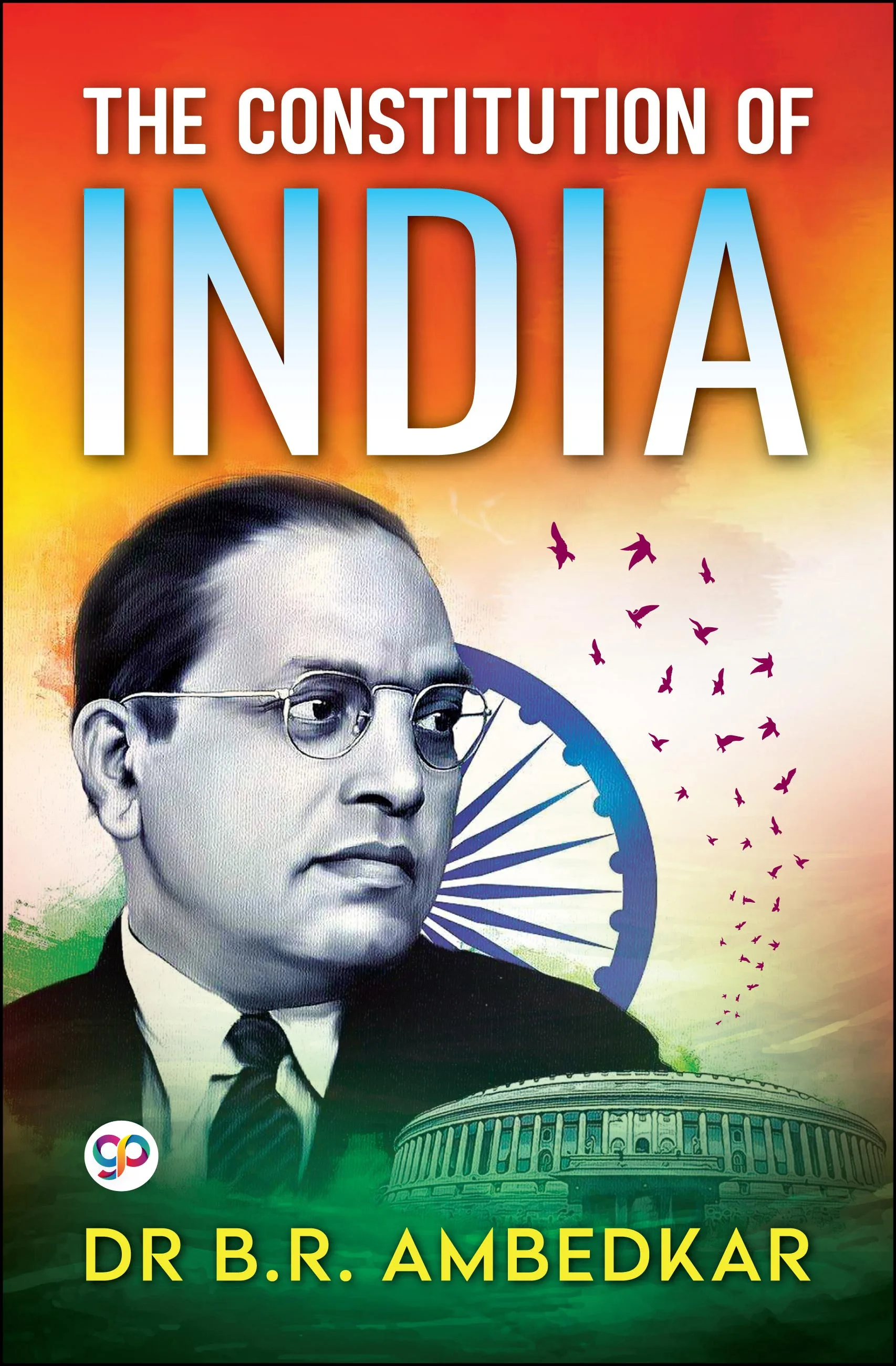
Download Cover Image
Do you want to download the full cover image for The Constitution of India?