
The Painted Veil
eBook
• INR 70.00
• English
• 9789391181208
No ratings yet
| Publisher | General Press |
|---|---|
| ISBN13 | 9789391181208 |
| ASIN/SKU | B0973NXPH5 |
| Book Format | eBook |
| Language | English |
| List Price | INR 70.00 |
| Subject Code | FIC019000, FIC014000, FIC031080 |
| Publishing Date | 01/06/2021 |
| Book Code | BD00068772 |
Buy this Book
Amazon Stores
Ebook Stores
Other Stores
Discover The Painted Veil by W. Somerset Maugham. This book is published by General Press in eBook format, ISBN 9789391181208, ASIN B0973NXPH5, under Literature and Fiction, Historical Fiction, Classics.
Book Description
‘The Painted Veil,’ a 1925 novel by British author W. Somerset Maugham, is a beautifully written affirmation of the human capacity to grow, embrace change, and to learn how to love deeply. The title is taken from Percy Bysshe Shelley's sonnet, which begins “Lift not the painted veil which those who live.” ‘The Painted Veil’ is a powerful novel of transgression and redemption. The novel tells the story of the lovely and superficial Kitty Garstin and her unhappy marriage to Walter Fane, a quiet and honorable man. Kitty agrees to marry Walter not because she loves him, but because she fears being put to shame by her younger sister.
When Walter discovers her treacherous affair, he forces her to travel along with him to the epicenter of a cholera epidemic. Stripped of the British society of her youth and the small but effective society she fought so hard to attain in Hong Kong, the experience completely transforms Kitty and she begins to take accountability for her mistakes, listen to her inner voice and understand her shortcomings.
When Walter discovers her treacherous affair, he forces her to travel along with him to the epicenter of a cholera epidemic. Stripped of the British society of her youth and the small but effective society she fought so hard to attain in Hong Kong, the experience completely transforms Kitty and she begins to take accountability for her mistakes, listen to her inner voice and understand her shortcomings.
Author Biography
William Somerset Maugham was born in Paris in 1874. He spoke French even before he spoke a word of English, a fact to which some critics attribute the purity of his style.
His parents died early and, after an unhappy boyhood, which he recorded poignantly in Of Human Bondage, Maugham became a qualified physician. But writing was his true vocation. For ten years before his first success, he almost literally starved while pouring out novels and plays.
Maugham wrote at a time when experimental modernist literature such as that of William Faulkner, Thomas Mann, James Joyce and Virginia Woolf was gaining increasing popularity and winning critical acclaim. In this context, his plain prose style was criticized as 'such a tissue of clichés' that one's wonder is finally aroused at the writer's ability to assemble so many and at his unfailing inability to put anything in an individual way.
During World War I, Maugham worked for the British Secret Service . He travelled all over the world, and made many visits to America. After World War II, Maugham made his home in south of France and continued to move between England and Nice till his death in 1965.
His parents died early and, after an unhappy boyhood, which he recorded poignantly in Of Human Bondage, Maugham became a qualified physician. But writing was his true vocation. For ten years before his first success, he almost literally starved while pouring out novels and plays.
Maugham wrote at a time when experimental modernist literature such as that of William Faulkner, Thomas Mann, James Joyce and Virginia Woolf was gaining increasing popularity and winning critical acclaim. In this context, his plain prose style was criticized as 'such a tissue of clichés' that one's wonder is finally aroused at the writer's ability to assemble so many and at his unfailing inability to put anything in an individual way.
During World War I, Maugham worked for the British Secret Service . He travelled all over the world, and made many visits to America. After World War II, Maugham made his home in south of France and continued to move between England and Nice till his death in 1965.
Editorial Reviews
Editorial Reviews will be added soon…
Book Summary
The Painted Veil by W. Somerset Maugham is a deeply psychological novel about love, betrayal, pride, guilt, suffering, and the difficult process of becoming emotionally mature. First published in 1925, the novel follows Kitty Fane, a beautiful but emotionally immature Englishwoman whose unhappy marriage leads her into an affair and eventually forces her to confront the consequences of her choices. Set partly in colonial Hong Kong during a devastating cholera epidemic, the novel combines a troubled marriage with a story of spiritual and psychological transformation. Maugham is less interested in presenting simple heroes and villains than in examining how selfishness, vanity, resentment, and suffering can gradually expose a person's true character.
The title The Painted Veil comes from Percy Bysshe Shelley's poem “Lift Not the Painted Veil,” and the image of a painted veil is an appropriate symbol for the novel. People often live behind appearances, illusions, social expectations, and romantic fantasies. Kitty believes she understands love, marriage, and happiness, but much of what she believes is based on superficial ideas. Walter Fane, her husband, also struggles with emotional limitations. As the story develops, the veil separating appearance from reality begins to fall away. Kitty is forced to see herself, her marriage, and other people with greater honesty.
The novel opens with Kitty Garstin, a young Englishwoman from a respectable but emotionally difficult upper-middle-class family. Kitty is beautiful and socially attractive, but she is also vain, impulsive, and deeply concerned with securing a desirable marriage. Her mother has spent years trying to arrange suitable marriages for Kitty and her sister, and Kitty has absorbed the belief that marriage is primarily a matter of social position and personal advantage. Kitty is already in her late twenties, which creates anxiety in a society where unmarried women are judged harshly. She eventually marries Walter Fane, a bacteriologist and medical researcher who works in Hong Kong.
Walter is almost the opposite of Kitty. He is quiet, serious, intelligent, disciplined, and emotionally reserved. He genuinely loves Kitty, but he is not skilled at expressing affection in the way she desires. Kitty does not appreciate his qualities because she is attracted to charm, social excitement, and admiration. Their marriage is therefore unstable from the beginning. Walter loves her more deeply than she understands, while Kitty accepts his love without truly returning it. She enters marriage hoping it will provide security and social respectability rather than companionship based on mutual understanding.
In Hong Kong, Kitty becomes increasingly bored and dissatisfied. Walter's work keeps him occupied, while Kitty enjoys social gatherings and the attention of other people. She becomes acquainted with Charlie Townsend, a handsome, charismatic, and socially ambitious colonial official. Charlie is married, but he pays Kitty the flattering attention she craves. Kitty begins an affair with him, convincing herself that what she feels is love. In reality, her attraction is closely connected to vanity and emotional excitement. Charlie makes her feel desirable and important, whereas Walter's reserved personality leaves her feeling neglected.
Kitty's affair becomes the central moral crisis of the novel. She is not portrayed as a monstrous or deliberately cruel woman. Instead, Maugham presents her as immature, self-centered, and unable to understand the consequences of her desires. Kitty wants romance without responsibility. She wants Charlie's attention without confronting what an affair means for her marriage or for Charlie's wife. Her understanding of love is largely shaped by fantasy. She mistakes excitement and admiration for emotional depth.
Eventually, Walter discovers the affair. Rather than responding with immediate violence or public humiliation, he confronts Kitty with a cold, controlled seriousness. His response reveals how deeply wounded he is. He gives Kitty an ultimatum: either she must persuade Charlie to divorce his wife and marry her, or she must accompany Walter to a remote area of China where a serious cholera epidemic is spreading. Walter intends to work there as a bacteriologist helping combat the disease.
Kitty is initially convinced that Charlie will leave his wife for her. This belief reveals how little she understands him. Charlie has encouraged her affection, but he has never intended to sacrifice his career, reputation, marriage, and social position for her. When Kitty asks him to marry her, he avoids making a genuine commitment. The difference between Charlie's charming words and his actual character becomes painfully clear. Kitty realizes that she has mistaken attention for love.
The disappointment is devastating because it destroys the fantasy she has built around Charlie. She finally sees that the man she imagined does not really exist. Charlie's refusal is also an important turning point because it begins Kitty's education in reality. The affair had been based on illusion, and now that illusion collapses.
Kitty has little choice but to accompany Walter to the epidemic-stricken region. Their journey away from the familiar social world of Hong Kong symbolizes a movement away from appearances and toward uncomfortable truth. The colonial environment surrounding the epidemic is harsh and frightening. Cholera has devastated local communities, and death is an everyday reality. Walter works tirelessly to understand and contain the disease, while Kitty initially struggles to adapt to the unfamiliar surroundings.
The epidemic provides a dramatic contrast to the superficial social world Kitty previously inhabited. In Hong Kong, Kitty had been concerned with parties, clothes, romantic attention, and social status. In the epidemic area, these concerns seem trivial. People are suffering and dying, and Walter's work has immediate importance. Kitty is forced to encounter poverty, illness, death, and human vulnerability. The experience begins to change her perspective.
One of the most important people Kitty encounters is a French Catholic nun, often referred to as the Mother Superior. The nuns care for orphaned and sick children and devote themselves to serving others. Kitty is deeply impressed by their work. Their lives are organized around compassion, discipline, and service rather than vanity or social recognition. The contrast between their selfless commitment and Kitty's previous preoccupation with herself is profound.
Through these experiences, Kitty begins to understand that there are forms of love that have nothing to do with romantic possession. The nuns' care for children demonstrates a different kind of affection—one based on responsibility and service. Kitty gradually develops a desire to become useful herself. Her transformation does not happen suddenly. Maugham carefully shows it emerging through observation, discomfort, shame, and repeated encounters with people who live according to values very different from hers.
Kitty also begins to see Walter differently. Before the epidemic, she viewed him primarily as a dull and emotionally unsatisfying husband. Now she sees his courage, intelligence, dedication, and sense of duty. Walter has placed himself in danger because he believes his scientific work can save lives. Kitty recognizes that he possesses qualities she failed to appreciate because she was too focused on romantic excitement.
However, this realization does not erase the damage between them. Walter's love has been deeply wounded, and Kitty's betrayal cannot simply be forgotten. Their relationship becomes increasingly complicated because Kitty begins to respect Walter at precisely the moment when she understands how much she has hurt him. Maugham avoids giving them an easy reconciliation. The emotional damage is real, and respect does not automatically restore love.
The epidemic eventually takes a terrible toll. Walter himself becomes sick with cholera. Kitty is forced to confront the possibility of losing him. His illness intensifies her feelings of guilt, regret, and helplessness. She recognizes that the man she once regarded as an obstacle to her happiness has become someone she respects deeply. Yet this recognition arrives too late to undo the past.
Walter dies, and Kitty is left to face the consequences of her earlier choices. His death becomes a major turning point because it removes the possibility of resolving their marriage through conversation or reconciliation. Kitty must now decide what kind of person she wants to become without relying on Walter, Charlie, or anyone else to define her future.
After Walter's death, Kitty returns to Hong Kong and encounters Charlie again. Their meeting is important because she now sees him differently. The romantic illusion that once surrounded him has disappeared. Charlie remains charming, socially confident, and superficially attractive, but Kitty understands that charm is not the same as character. Her emotional dependence upon him has weakened because she has developed a more realistic understanding of herself.
Kitty later becomes pregnant, and uncertainty surrounds the child's paternity. This situation forces her to confront another painful question about her past. Her pregnancy also becomes an opportunity to reconsider what kind of life she wants to build. She begins thinking seriously about motherhood and about raising a child who will not repeat the patterns of vanity, dependence, and emotional weakness that shaped her own life.
The novel's later movement toward England represents another stage in Kitty's development. She is no longer the same woman who left for Hong Kong. Her experiences with betrayal, disease, death, service, and grief have stripped away many of her illusions. Yet Maugham does not portray her transformation as complete or perfect. Kitty remains human, capable of uncertainty and mistakes. Her growth lies in becoming more honest with herself and more aware of the consequences of her choices.
One of the novel's strongest themes is the difference between romantic love and genuine love. Kitty initially believes she is in love with Charlie because he makes her feel attractive and excited. But her experience reveals that desire and admiration can be confused with love. Walter's feelings for Kitty are more profound, though they are expressed imperfectly. The nuns demonstrate yet another form of love based on service and compassion. Maugham therefore asks readers to consider what love really means when stripped of fantasy.
Another central theme is illusion versus reality. Kitty lives behind several illusions: the belief that beauty guarantees happiness, that Charlie loves her as deeply as she loves him, that marriage can provide social security without emotional responsibility, and that she can escape the consequences of her actions. The epidemic destroys these illusions one by one. The “painted veil” is therefore a metaphor for the attractive stories people tell themselves about life. Beneath those stories is a more difficult reality.
Guilt and redemption are also central to the novel. Kitty's guilt initially appears as shame and fear, but gradually becomes something more constructive. She begins to understand how her actions affected Walter and herself. Importantly, Maugham does not present redemption as something that can be purchased through suffering. Kitty's transformation comes through a gradual change in what she values. She begins to care about usefulness, responsibility, compassion, and integrity.
The novel also explores death as a force of transformation. The cholera epidemic strips life down to essentials. Social status, wealth, beauty, and romantic fantasies lose their importance when people are facing death. Walter's work becomes meaningful precisely because it serves people in danger. Kitty's exposure to suffering forces her to reconsider the values by which she had previously judged her own life.
The colonial setting is equally significant. Hong Kong and the Chinese communities affected by cholera provide the background against which the European characters' concerns are tested. The novel reflects the attitudes and assumptions of its colonial era, and modern readers may find some of its representations of Chinese society and colonial relationships dated or uncomfortable. Nevertheless, the setting is crucial to Maugham's narrative because the epidemic places Kitty in a world where social performance matters far less than survival, duty, and compassion.
Kitty Fane is the novel's most important character because her development drives the story. She begins as vain, immature, and dependent upon external approval. Her transformation is not a simple conversion from selfishness to goodness. Instead, she becomes more self-aware. She learns that actions have consequences, that attraction is not necessarily love, and that a meaningful life requires responsibility toward others.
Walter Fane is equally complex. His intelligence and dedication make him admirable, but his emotional reserve also contributes to the failure of his marriage. He is not simply the morally superior husband betrayed by a wicked wife. His inability to communicate affection is part of the tragedy. He loves Kitty but cannot make her feel loved in the way she needs. Maugham therefore presents marriage as a relationship in which both emotional needs and personal responsibilities matter.
Charlie Townsend, by contrast, represents charm without depth. He is not a melodramatic villain. His power comes from his ordinariness. He is selfish because selfishness is convenient. He wants the pleasures of Kitty's attention without accepting the responsibilities that would follow from choosing her. Through Charlie, Maugham shows how easily charisma can be mistaken for character.
Ultimately, The Painted Veil is a story about growing up emotionally. Kitty's greatest journey is not geographical but psychological. She begins by believing that happiness comes from being admired and desired. She gradually learns that a worthwhile life depends on honesty, responsibility, compassion, and meaningful connection with other people.
For readers searching for a summary of The Painted Veil, Kitty Fane's character development, Walter Fane and Kitty's marriage, Charlie Townsend's affair, the cholera epidemic, the meaning of the painted veil, the novel's themes of love and betrayal, or an explanation of The Painted Veil ending, the essential point is that Maugham is examining the painful collapse of romantic illusion and the possibility of personal growth afterward.
The novel's lasting power comes from its refusal to offer easy moral answers. Kitty is neither simply a villain nor a victim. Walter is neither a perfect husband nor an emotionless machine. Charlie is neither a great lover nor a cartoonish seducer. Each character reveals something about the ways human beings misunderstand one another. The epidemic then forces those misunderstandings into perspective.
In the end, The Painted Veil suggests that suffering can become transformative when it compels a person to abandon comforting illusions and confront reality. Kitty cannot undo her betrayal, bring Walter back, or recover the innocence she once possessed. What she can do is choose what kind of person she will become afterward. That is the novel's deepest message: maturity begins when we stop living behind the painted veil of our fantasies and accept the difficult responsibility of seeing ourselves, other people, and life as they truly are.
The title The Painted Veil comes from Percy Bysshe Shelley's poem “Lift Not the Painted Veil,” and the image of a painted veil is an appropriate symbol for the novel. People often live behind appearances, illusions, social expectations, and romantic fantasies. Kitty believes she understands love, marriage, and happiness, but much of what she believes is based on superficial ideas. Walter Fane, her husband, also struggles with emotional limitations. As the story develops, the veil separating appearance from reality begins to fall away. Kitty is forced to see herself, her marriage, and other people with greater honesty.
The novel opens with Kitty Garstin, a young Englishwoman from a respectable but emotionally difficult upper-middle-class family. Kitty is beautiful and socially attractive, but she is also vain, impulsive, and deeply concerned with securing a desirable marriage. Her mother has spent years trying to arrange suitable marriages for Kitty and her sister, and Kitty has absorbed the belief that marriage is primarily a matter of social position and personal advantage. Kitty is already in her late twenties, which creates anxiety in a society where unmarried women are judged harshly. She eventually marries Walter Fane, a bacteriologist and medical researcher who works in Hong Kong.
Walter is almost the opposite of Kitty. He is quiet, serious, intelligent, disciplined, and emotionally reserved. He genuinely loves Kitty, but he is not skilled at expressing affection in the way she desires. Kitty does not appreciate his qualities because she is attracted to charm, social excitement, and admiration. Their marriage is therefore unstable from the beginning. Walter loves her more deeply than she understands, while Kitty accepts his love without truly returning it. She enters marriage hoping it will provide security and social respectability rather than companionship based on mutual understanding.
In Hong Kong, Kitty becomes increasingly bored and dissatisfied. Walter's work keeps him occupied, while Kitty enjoys social gatherings and the attention of other people. She becomes acquainted with Charlie Townsend, a handsome, charismatic, and socially ambitious colonial official. Charlie is married, but he pays Kitty the flattering attention she craves. Kitty begins an affair with him, convincing herself that what she feels is love. In reality, her attraction is closely connected to vanity and emotional excitement. Charlie makes her feel desirable and important, whereas Walter's reserved personality leaves her feeling neglected.
Kitty's affair becomes the central moral crisis of the novel. She is not portrayed as a monstrous or deliberately cruel woman. Instead, Maugham presents her as immature, self-centered, and unable to understand the consequences of her desires. Kitty wants romance without responsibility. She wants Charlie's attention without confronting what an affair means for her marriage or for Charlie's wife. Her understanding of love is largely shaped by fantasy. She mistakes excitement and admiration for emotional depth.
Eventually, Walter discovers the affair. Rather than responding with immediate violence or public humiliation, he confronts Kitty with a cold, controlled seriousness. His response reveals how deeply wounded he is. He gives Kitty an ultimatum: either she must persuade Charlie to divorce his wife and marry her, or she must accompany Walter to a remote area of China where a serious cholera epidemic is spreading. Walter intends to work there as a bacteriologist helping combat the disease.
Kitty is initially convinced that Charlie will leave his wife for her. This belief reveals how little she understands him. Charlie has encouraged her affection, but he has never intended to sacrifice his career, reputation, marriage, and social position for her. When Kitty asks him to marry her, he avoids making a genuine commitment. The difference between Charlie's charming words and his actual character becomes painfully clear. Kitty realizes that she has mistaken attention for love.
The disappointment is devastating because it destroys the fantasy she has built around Charlie. She finally sees that the man she imagined does not really exist. Charlie's refusal is also an important turning point because it begins Kitty's education in reality. The affair had been based on illusion, and now that illusion collapses.
Kitty has little choice but to accompany Walter to the epidemic-stricken region. Their journey away from the familiar social world of Hong Kong symbolizes a movement away from appearances and toward uncomfortable truth. The colonial environment surrounding the epidemic is harsh and frightening. Cholera has devastated local communities, and death is an everyday reality. Walter works tirelessly to understand and contain the disease, while Kitty initially struggles to adapt to the unfamiliar surroundings.
The epidemic provides a dramatic contrast to the superficial social world Kitty previously inhabited. In Hong Kong, Kitty had been concerned with parties, clothes, romantic attention, and social status. In the epidemic area, these concerns seem trivial. People are suffering and dying, and Walter's work has immediate importance. Kitty is forced to encounter poverty, illness, death, and human vulnerability. The experience begins to change her perspective.
One of the most important people Kitty encounters is a French Catholic nun, often referred to as the Mother Superior. The nuns care for orphaned and sick children and devote themselves to serving others. Kitty is deeply impressed by their work. Their lives are organized around compassion, discipline, and service rather than vanity or social recognition. The contrast between their selfless commitment and Kitty's previous preoccupation with herself is profound.
Through these experiences, Kitty begins to understand that there are forms of love that have nothing to do with romantic possession. The nuns' care for children demonstrates a different kind of affection—one based on responsibility and service. Kitty gradually develops a desire to become useful herself. Her transformation does not happen suddenly. Maugham carefully shows it emerging through observation, discomfort, shame, and repeated encounters with people who live according to values very different from hers.
Kitty also begins to see Walter differently. Before the epidemic, she viewed him primarily as a dull and emotionally unsatisfying husband. Now she sees his courage, intelligence, dedication, and sense of duty. Walter has placed himself in danger because he believes his scientific work can save lives. Kitty recognizes that he possesses qualities she failed to appreciate because she was too focused on romantic excitement.
However, this realization does not erase the damage between them. Walter's love has been deeply wounded, and Kitty's betrayal cannot simply be forgotten. Their relationship becomes increasingly complicated because Kitty begins to respect Walter at precisely the moment when she understands how much she has hurt him. Maugham avoids giving them an easy reconciliation. The emotional damage is real, and respect does not automatically restore love.
The epidemic eventually takes a terrible toll. Walter himself becomes sick with cholera. Kitty is forced to confront the possibility of losing him. His illness intensifies her feelings of guilt, regret, and helplessness. She recognizes that the man she once regarded as an obstacle to her happiness has become someone she respects deeply. Yet this recognition arrives too late to undo the past.
Walter dies, and Kitty is left to face the consequences of her earlier choices. His death becomes a major turning point because it removes the possibility of resolving their marriage through conversation or reconciliation. Kitty must now decide what kind of person she wants to become without relying on Walter, Charlie, or anyone else to define her future.
After Walter's death, Kitty returns to Hong Kong and encounters Charlie again. Their meeting is important because she now sees him differently. The romantic illusion that once surrounded him has disappeared. Charlie remains charming, socially confident, and superficially attractive, but Kitty understands that charm is not the same as character. Her emotional dependence upon him has weakened because she has developed a more realistic understanding of herself.
Kitty later becomes pregnant, and uncertainty surrounds the child's paternity. This situation forces her to confront another painful question about her past. Her pregnancy also becomes an opportunity to reconsider what kind of life she wants to build. She begins thinking seriously about motherhood and about raising a child who will not repeat the patterns of vanity, dependence, and emotional weakness that shaped her own life.
The novel's later movement toward England represents another stage in Kitty's development. She is no longer the same woman who left for Hong Kong. Her experiences with betrayal, disease, death, service, and grief have stripped away many of her illusions. Yet Maugham does not portray her transformation as complete or perfect. Kitty remains human, capable of uncertainty and mistakes. Her growth lies in becoming more honest with herself and more aware of the consequences of her choices.
One of the novel's strongest themes is the difference between romantic love and genuine love. Kitty initially believes she is in love with Charlie because he makes her feel attractive and excited. But her experience reveals that desire and admiration can be confused with love. Walter's feelings for Kitty are more profound, though they are expressed imperfectly. The nuns demonstrate yet another form of love based on service and compassion. Maugham therefore asks readers to consider what love really means when stripped of fantasy.
Another central theme is illusion versus reality. Kitty lives behind several illusions: the belief that beauty guarantees happiness, that Charlie loves her as deeply as she loves him, that marriage can provide social security without emotional responsibility, and that she can escape the consequences of her actions. The epidemic destroys these illusions one by one. The “painted veil” is therefore a metaphor for the attractive stories people tell themselves about life. Beneath those stories is a more difficult reality.
Guilt and redemption are also central to the novel. Kitty's guilt initially appears as shame and fear, but gradually becomes something more constructive. She begins to understand how her actions affected Walter and herself. Importantly, Maugham does not present redemption as something that can be purchased through suffering. Kitty's transformation comes through a gradual change in what she values. She begins to care about usefulness, responsibility, compassion, and integrity.
The novel also explores death as a force of transformation. The cholera epidemic strips life down to essentials. Social status, wealth, beauty, and romantic fantasies lose their importance when people are facing death. Walter's work becomes meaningful precisely because it serves people in danger. Kitty's exposure to suffering forces her to reconsider the values by which she had previously judged her own life.
The colonial setting is equally significant. Hong Kong and the Chinese communities affected by cholera provide the background against which the European characters' concerns are tested. The novel reflects the attitudes and assumptions of its colonial era, and modern readers may find some of its representations of Chinese society and colonial relationships dated or uncomfortable. Nevertheless, the setting is crucial to Maugham's narrative because the epidemic places Kitty in a world where social performance matters far less than survival, duty, and compassion.
Kitty Fane is the novel's most important character because her development drives the story. She begins as vain, immature, and dependent upon external approval. Her transformation is not a simple conversion from selfishness to goodness. Instead, she becomes more self-aware. She learns that actions have consequences, that attraction is not necessarily love, and that a meaningful life requires responsibility toward others.
Walter Fane is equally complex. His intelligence and dedication make him admirable, but his emotional reserve also contributes to the failure of his marriage. He is not simply the morally superior husband betrayed by a wicked wife. His inability to communicate affection is part of the tragedy. He loves Kitty but cannot make her feel loved in the way she needs. Maugham therefore presents marriage as a relationship in which both emotional needs and personal responsibilities matter.
Charlie Townsend, by contrast, represents charm without depth. He is not a melodramatic villain. His power comes from his ordinariness. He is selfish because selfishness is convenient. He wants the pleasures of Kitty's attention without accepting the responsibilities that would follow from choosing her. Through Charlie, Maugham shows how easily charisma can be mistaken for character.
Ultimately, The Painted Veil is a story about growing up emotionally. Kitty's greatest journey is not geographical but psychological. She begins by believing that happiness comes from being admired and desired. She gradually learns that a worthwhile life depends on honesty, responsibility, compassion, and meaningful connection with other people.
For readers searching for a summary of The Painted Veil, Kitty Fane's character development, Walter Fane and Kitty's marriage, Charlie Townsend's affair, the cholera epidemic, the meaning of the painted veil, the novel's themes of love and betrayal, or an explanation of The Painted Veil ending, the essential point is that Maugham is examining the painful collapse of romantic illusion and the possibility of personal growth afterward.
The novel's lasting power comes from its refusal to offer easy moral answers. Kitty is neither simply a villain nor a victim. Walter is neither a perfect husband nor an emotionless machine. Charlie is neither a great lover nor a cartoonish seducer. Each character reveals something about the ways human beings misunderstand one another. The epidemic then forces those misunderstandings into perspective.
In the end, The Painted Veil suggests that suffering can become transformative when it compels a person to abandon comforting illusions and confront reality. Kitty cannot undo her betrayal, bring Walter back, or recover the innocence she once possessed. What she can do is choose what kind of person she will become afterward. That is the novel's deepest message: maturity begins when we stop living behind the painted veil of our fantasies and accept the difficult responsibility of seeing ourselves, other people, and life as they truly are.
Sample Chapters
Sample Chapters will be added soon…
Reader Reviews
No reviews yet.
The Painted Veil
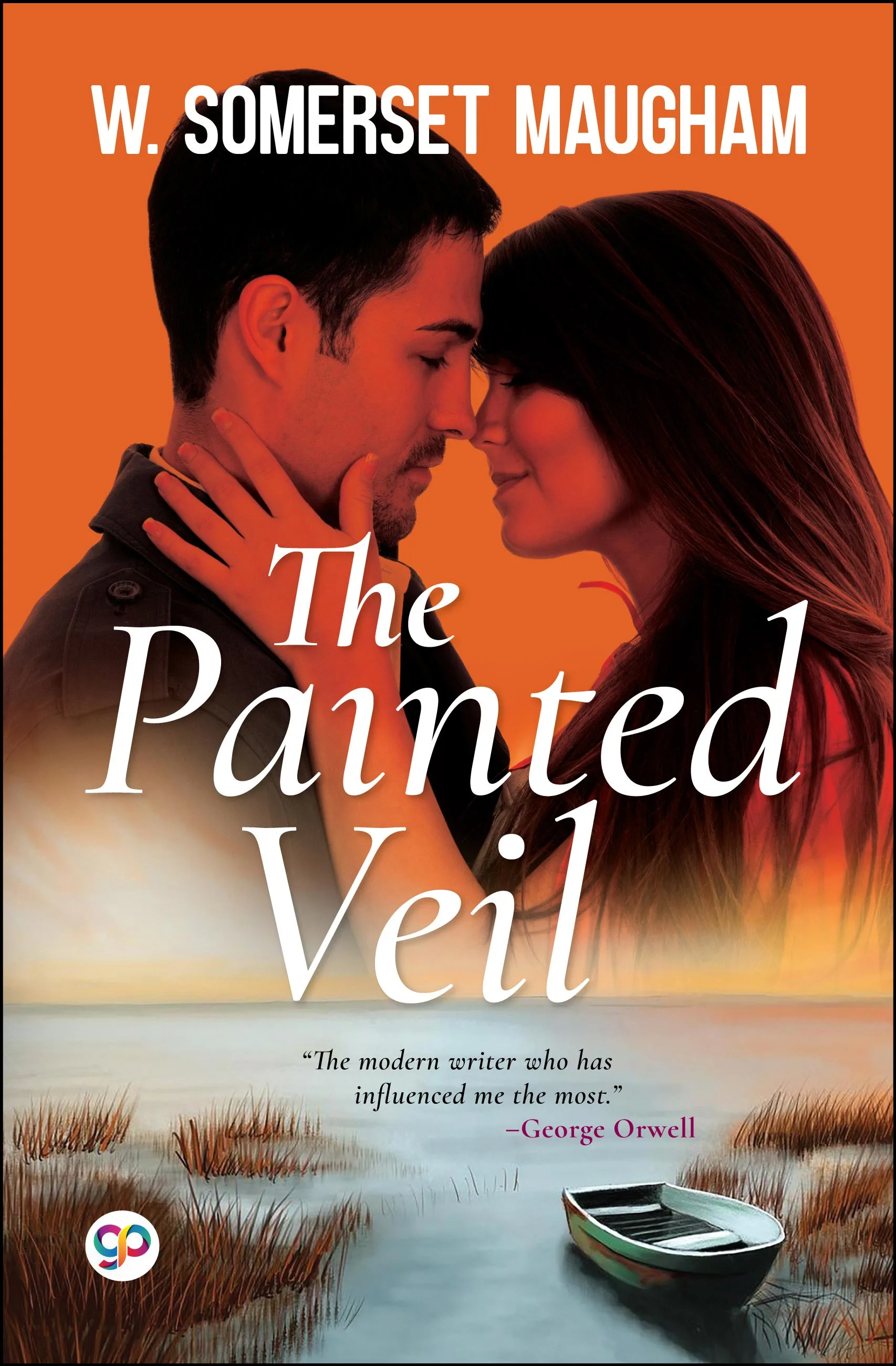
Download Cover Image
Do you want to download the full cover image for The Painted Veil?