
The Kingdom of God is Within You
eBook
• INR 70.00
• English
• 9789390492688
No ratings yet
| Publisher | General Press |
|---|---|
| ISBN13 | 9789390492688 |
| ASIN/SKU | B08RSP2C3S |
| Book Format | eBook |
| Language | English |
| List Price | INR 70.00 |
| Subject Code | REL006700, REL012120 |
| Publishing Date | 18/12/2020 |
| Book Code | BD00068773 |
Buy this Book
Amazon Stores
Ebook Stores
Other Stores
Discover The Kingdom of God is Within You by Andrew Murray. This book is published by General Press in eBook format, ISBN 9789390492688, ASIN B08RSP2C3S, under Christian Books and Bibles, Christian Living, Christianity.
Book Description
This book is a collection of series of lectures originally delivered at an annual conference in South Africa on the topic of the ‘Kingdom of God’. In his own passionate and persuasive manner, author and theologian Andrew Murray reveals how the Kingdom of God is a real and present reality inside of every single believer. Murray first tackles the question of what the Kingdom of God is and then goes on to describe for his readers the importance of the indwelling of God, Jesus Christ in us, and our daily fellowship with him.
ABOUT THE AUTHOR:
Andrew Murray (1828-1917) was an amazingly prolific Christian writer. He lived and ministered as both a pastor and author in the towns and villages of South Africa. Some of Murray's earliest works were written to provide nurture and guidance to Christians, whether young or old in the faith; they were actually an extension of his pastoral work. Once books such as Abide in Christ, Divine Healing, and With Christ in the School of Prayer were written, Murray became widely known, and new books from his pen were awaited with great eagerness throughout the world.
He wrote to give daily practical help to many of the people in his congregation who lived out in the farming communities and could come into town for church services only on rare occasions. As he wrote these books of instruction, Murray adopted the practice of placing many of his more devotional books into thirty-one separate readings to correspond with the days of the month.
At the age of seventy-eight, Murray resigned from the pastorate and devoted most of his time to his manuscripts. He continued to write profusely, moving from one book to the next with an intensity of purpose and a zeal that few men of God have ever equaled. He often said of himself, rather humorously, that he was like a hen about to hatch an egg; he was restless and unhappy until he got the burden of the message off his mind.
During these later years, after hearing of pocket-sized paperbacks, Andrew Murray immediately began to write books to be published in that fashion. He thought it was a splendid way to have the teachings of the Christian life at your fingertips, where they could be carried around and read at any time of the day.
One source has said of Andrew Murray that his prolific style possesses the strength and eloquence that are born of deep earnestness and a sense of the solemnity of the issues of the Christian life. Nearly every page reveals an intensity of purpose and appeal that stirs men to the depths of their souls. Murray moves the emotions, searches the conscience, and reveals the sins and shortcomings of many of us with a love and hope born out of an intimate knowledge of the mercy and faithfulness of God.
For Andrew Murray, prayer was considered our personal home base from which we live our Christian lives and extend ourselves to others. During his later years, the vital necessity of unceasing prayer in the spiritual life came to the forefront of his teachings. It was then that he revealed the secret treasures of his heart concerning a life of persistent and believing prayer.
Countless people the world over have hailed Andrew Murray as their spiritual father and given credit for much of their Christian growth to the influence of his priceless devotional books.
ABOUT THE AUTHOR:
Andrew Murray (1828-1917) was an amazingly prolific Christian writer. He lived and ministered as both a pastor and author in the towns and villages of South Africa. Some of Murray's earliest works were written to provide nurture and guidance to Christians, whether young or old in the faith; they were actually an extension of his pastoral work. Once books such as Abide in Christ, Divine Healing, and With Christ in the School of Prayer were written, Murray became widely known, and new books from his pen were awaited with great eagerness throughout the world.
He wrote to give daily practical help to many of the people in his congregation who lived out in the farming communities and could come into town for church services only on rare occasions. As he wrote these books of instruction, Murray adopted the practice of placing many of his more devotional books into thirty-one separate readings to correspond with the days of the month.
At the age of seventy-eight, Murray resigned from the pastorate and devoted most of his time to his manuscripts. He continued to write profusely, moving from one book to the next with an intensity of purpose and a zeal that few men of God have ever equaled. He often said of himself, rather humorously, that he was like a hen about to hatch an egg; he was restless and unhappy until he got the burden of the message off his mind.
During these later years, after hearing of pocket-sized paperbacks, Andrew Murray immediately began to write books to be published in that fashion. He thought it was a splendid way to have the teachings of the Christian life at your fingertips, where they could be carried around and read at any time of the day.
One source has said of Andrew Murray that his prolific style possesses the strength and eloquence that are born of deep earnestness and a sense of the solemnity of the issues of the Christian life. Nearly every page reveals an intensity of purpose and appeal that stirs men to the depths of their souls. Murray moves the emotions, searches the conscience, and reveals the sins and shortcomings of many of us with a love and hope born out of an intimate knowledge of the mercy and faithfulness of God.
For Andrew Murray, prayer was considered our personal home base from which we live our Christian lives and extend ourselves to others. During his later years, the vital necessity of unceasing prayer in the spiritual life came to the forefront of his teachings. It was then that he revealed the secret treasures of his heart concerning a life of persistent and believing prayer.
Countless people the world over have hailed Andrew Murray as their spiritual father and given credit for much of their Christian growth to the influence of his priceless devotional books.
Author Biography
Andrew Murray (1828-1917) was an amazingly prolific Christian writer. He lived and ministered as both a pastor and author in the towns and villages of South Africa. Some of Murray's earliest works were written to provide nurture and guidance to Christians, whether young or old in the faith; they were actually an extension of his pastoral work. Once books such as Abide in Christ, Divine Healing, and With Christ in the School of Prayer were written, Murray became widely known, and new books from his pen were awaited with great eagerness throughout the world.
He wrote to give daily practical help to many of the people in his congregation who lived out in the farming communities and could come into town for church services only on rare occasions. As he wrote these books of instruction, Murray adopted the practice of placing many of his more devotional books into thirty-one separate readings to correspond with the days of the month.
At the age of seventy-eight, Murray resigned from the pastorate and devoted most of his time to his manuscripts. He continued to write profusely, moving from one book to the next with an intensity of purpose and a zeal that few men of God have ever equaled. He often said of himself, rather humorously, that he was like a hen about to hatch an egg; he was restless and unhappy until he got the burden of the message off his mind.
During these later years, after hearing of pocket-sized paperbacks, Andrew Murray immediately began to write books to be published in that fashion. He thought it was a splendid way to have the teachings of the Christian life at your fingertips, where they could be carried around and read at any time of the day.
One source has said of Andrew Murray that his prolific style possesses the strength and eloquence that are born of deep earnestness and a sense of the solemnity of the issues of the Christian life. Nearly every page reveals an intensity of purpose and appeal that stirs men to the depths of their souls. Murray moves the emotions, searches the conscience, and reveals the sins and shortcomings of many of us with a love and hope born out of an intimate knowledge of the mercy and faithfulness of God.
For Andrew Murray, prayer was considered our personal home base from which we live our Christian lives and extend ourselves to others. During his later years, the vital necessity of unceasing prayer in the spiritual life came to the forefront of his teachings. It was then that he revealed the secret treasures of his heart concerning a life of persistent and believing prayer.
Countless people the world over have hailed Andrew Murray as their spiritual father and given credit for much of their Christian growth to the influence of his priceless devotional books.
He wrote to give daily practical help to many of the people in his congregation who lived out in the farming communities and could come into town for church services only on rare occasions. As he wrote these books of instruction, Murray adopted the practice of placing many of his more devotional books into thirty-one separate readings to correspond with the days of the month.
At the age of seventy-eight, Murray resigned from the pastorate and devoted most of his time to his manuscripts. He continued to write profusely, moving from one book to the next with an intensity of purpose and a zeal that few men of God have ever equaled. He often said of himself, rather humorously, that he was like a hen about to hatch an egg; he was restless and unhappy until he got the burden of the message off his mind.
During these later years, after hearing of pocket-sized paperbacks, Andrew Murray immediately began to write books to be published in that fashion. He thought it was a splendid way to have the teachings of the Christian life at your fingertips, where they could be carried around and read at any time of the day.
One source has said of Andrew Murray that his prolific style possesses the strength and eloquence that are born of deep earnestness and a sense of the solemnity of the issues of the Christian life. Nearly every page reveals an intensity of purpose and appeal that stirs men to the depths of their souls. Murray moves the emotions, searches the conscience, and reveals the sins and shortcomings of many of us with a love and hope born out of an intimate knowledge of the mercy and faithfulness of God.
For Andrew Murray, prayer was considered our personal home base from which we live our Christian lives and extend ourselves to others. During his later years, the vital necessity of unceasing prayer in the spiritual life came to the forefront of his teachings. It was then that he revealed the secret treasures of his heart concerning a life of persistent and believing prayer.
Countless people the world over have hailed Andrew Murray as their spiritual father and given credit for much of their Christian growth to the influence of his priceless devotional books.
Editorial Reviews
Editorial Reviews will be added soon…
Book Summary
Andrew Murray’s The Kingdom of God Is Within You is a short but deeply devotional Christian work about the inner life of faith and the reality of God’s presence within the believer. It is important to distinguish this book from the much better-known work of the same title by Leo Tolstoy. Murray’s The Kingdom of God Is Within You, also published under the title Within, is a Christian devotional work built around four central addresses: “The Kingdom of God,” “The Indwelling of God,” “Jesus Christ in You,” and “Daily Fellowship with God.” The work originated as addresses delivered at the Mowbray Convention in Cape Town, South Africa, and the revised text was published in the late nineteenth century. Murray’s purpose is not to provide an abstract theological definition of the kingdom of God. Instead, he wants readers to experience it as a living spiritual reality—to understand that Christianity is not merely a collection of beliefs, doctrines, ceremonies, or outward practices, but a life in which God Himself dwells within the believer.
The central message of The Kingdom of God Is Within You is that the kingdom of God is fundamentally connected with the presence and rule of God in the human heart. Murray begins by asking what the kingdom actually means. His answer is rooted in the idea that a kingdom is identified by the presence and authority of its king. If God is King, then His kingdom exists wherever His rule is genuinely accepted. Murray therefore moves the reader away from thinking of the kingdom merely as a distant heavenly destination or a future event. He presents it as something that can be experienced in the present through the indwelling presence of God. The original text explicitly connects the kingdom with the reality of Christ and the Holy Spirit dwelling in believers. This becomes the foundation for everything that follows.
Murray’s understanding of the kingdom is consequently inward but not merely private. When he speaks about the kingdom being “within,” he is not encouraging Christians to withdraw from the world or imagine that spirituality is simply a matter of personal feelings. Rather, he is describing an inner transformation in which God’s authority becomes active in a person’s thoughts, desires, choices, and character. The kingdom is present when God rules. It is visible when His presence changes the way a person lives. The inner life is therefore not an escape from practical Christianity; it is the source from which practical Christianity must flow.
This idea also explains why Murray places such strong emphasis on surrender. A kingdom cannot function without a king, and the Christian life cannot become spiritually fruitful while the believer insists on remaining completely self-governing. Murray repeatedly returns to the need to yield the heart to God. The believer must allow God to take possession of the inner life rather than merely adding religious practices to an otherwise self-directed existence. In the original text, Murray associates entering the kingdom with receiving Christ, humility, faith, surrender, and the willingness to allow God to occupy the heart fully. The kingdom of God therefore begins not with human achievement but with receptivity.
This emphasis on receiving rather than achieving is one of the book’s most important themes. Murray’s spirituality is deeply opposed to the idea that holiness can be produced simply through willpower. A Christian may sincerely want to become more patient, loving, obedient, prayerful, or pure, but Murray argues that genuine spiritual transformation ultimately depends upon God’s life working within the believer. The Christian’s task is to open the heart, trust God, surrender self-reliance, and remain available to divine grace. This is why the book is often read as a work about sanctification: the process by which God increasingly shapes the believer’s inner life and character.
The second major movement of the book is the doctrine of the indwelling of God. Murray takes seriously the biblical promise that God does not merely remain distant from His people. God desires to dwell within them. The human heart, in Murray’s vision, becomes a kind of spiritual sanctuary. The Christian life is therefore not simply about believing that God exists or knowing facts about Jesus. It is about experiencing communion with God Himself. This emphasis on divine indwelling is central to the book’s spirituality and explains why Murray repeatedly uses words such as “within,” “heart,” “abiding,” “presence,” “fellowship,” and “life.”
Murray sees this indwelling as the fulfillment of the deeper promise of the new covenant. Instead of God’s law existing merely as an external command, the believer is transformed from within. The Spirit writes God’s will into the heart. This is why the kingdom cannot be reduced to outward religious behavior. A person can perform religious duties while remaining inwardly distant from God. Murray wants something much deeper: a Christian life in which obedience becomes the fruit of divine life operating within the person.
The book’s third major theme is Jesus Christ living in the believer. For Murray, Christianity is not primarily imitation from a distance. Christians are not merely supposed to admire Jesus and then try, through their own strength, to copy Him. The deeper mystery is that Christ Himself lives in them. Murray sees this union with Christ as the source of Christian holiness. The believer’s spiritual life comes from Christ just as a branch receives life from the vine. The emphasis shifts from “What can I do for God?” to “What can God do through the life of Christ within me?”
This distinction is crucial to understanding Murray’s devotional theology. Human effort has a role, but it cannot be the foundation. A Christian who constantly attempts to manufacture holiness through determination will eventually discover exhaustion, inconsistency, and discouragement. Murray instead encourages a posture of dependence. The believer must continually return to Christ as the source of spiritual strength. The original text repeatedly emphasizes that divine life depends upon direct and ongoing communication with God, comparing the need for fresh grace to the daily need for nourishment. The point is simple: yesterday’s spiritual experience cannot substitute for today’s fellowship with God.
This leads naturally into the fourth and final major theme: daily fellowship with God. Murray does not want readers to think that an encounter with God is enough to sustain an entire lifetime. Spiritual fellowship must become a daily reality. Prayer, waiting, trust, surrender, Scripture, and conscious dependence upon God are not occasional exercises but part of the rhythm of Christian life. He encourages readers to begin each day by deliberately turning toward God, taking time to become aware of His presence and allowing Him to shape the day ahead.
The emphasis on daily fellowship gives the book a remarkably practical quality. Murray is not simply discussing theological concepts. He is asking readers to examine how they actually live. Do they begin the day in dependence upon God or in dependence upon themselves? Do they pray only when circumstances become difficult, or do they maintain an ongoing relationship with God? Do they attempt to conquer sin through determination alone, or do they surrender themselves to the transforming work of Christ? Do they treat Christianity as a set of duties, or as fellowship with a living God?
For Murray, the difference between these approaches is enormous. Christianity becomes exhausting when it is reduced to human effort. It becomes life-giving when it is understood as participation in the life of God. This does not mean that Christians become passive or careless. Instead, surrender creates the conditions for active obedience. The believer listens, trusts, obeys, prays, serves, and loves—but does so from a place of dependence upon divine grace.
Humility is therefore another major theme in The Kingdom of God Is Within You. Murray sees humility not as self-hatred but as an accurate recognition of dependence upon God. The proud heart assumes it can manage spiritual life by itself. The humble heart recognizes its need for God every moment. This humility is especially important because the kingdom belongs to God. If God is truly King, then the believer cannot simultaneously insist on complete control. Entering the kingdom means allowing the King to reign.
Murray also connects humility with the work of Christ. Christ’s own life, in Murray’s understanding, is characterized by surrender and obedience to the Father. The believer therefore becomes conformed to Christ not merely by studying Christ but by sharing in the spiritual pattern of Christ’s life. Murray associates Christ’s death with the believer’s death to self and sees surrender to God as the pathway through which the power of Christ’s life becomes increasingly evident. The Christian life becomes a movement away from self-centered independence and toward God-centered dependence.
The book’s treatment of sin follows the same logic. Murray does not suggest that sin can be defeated simply through stronger resolutions. Instead, he directs the believer toward a deeper source of transformation. The problem is not merely that people commit individual wrong actions; the deeper problem is the self-centered life from which those actions emerge. If God’s kingdom is to rule within, the heart itself must be surrendered. The solution is therefore not simply behavioral improvement but the indwelling presence of Christ.
This makes the book especially relevant to Christians who feel trapped in a cycle of spiritual failure. A person may sincerely desire holiness yet repeatedly discover that determination is not enough. Murray’s answer is to stop treating the Christian life as a project of self-improvement. The believer must learn dependence. Instead of continually asking, “How can I become better?” the deeper question becomes, “Am I allowing Christ to live and work within me?” This is one of the most pastoral dimensions of Murray’s message.
Prayer consequently occupies an important place in his vision. Prayer is not merely a way of asking God for things. It is an act of communion. Through prayer, the believer turns away from self-sufficiency and toward God’s presence. Murray encourages Christians to wait before God rather than rushing through prayer as another obligation. The goal is not simply to speak but to become receptive—to allow God to touch, correct, strengthen, and renew the inner life. The original text explicitly encourages believers to take time to meet God and to begin each day by waiting before Him.
The concept of “abiding” is therefore implicit throughout the book. Christian maturity does not happen through occasional spiritual excitement. It grows through continuous relationship. A person who abides in Christ gradually becomes shaped by Christ. The transformation may sometimes be dramatic, but often it happens quietly. Desires change. Attitudes change. Responses change. The person becomes more patient, more trusting, more humble, more loving, and more willing to obey. The outward life changes because the inward center has changed.
Murray also emphasizes that the kingdom is inseparable from the Holy Spirit. The Spirit makes the presence of Christ real within believers. This is why Pentecost matters so much in his understanding of Christian life. The coming of the Holy Spirit represents not merely an extraordinary historical event but the beginning of a new mode of divine presence. Christ, though no longer physically present with the disciples, becomes intimately present through the Spirit. The kingdom is therefore experienced through the Spirit’s work in the heart.
One of the most encouraging aspects of Murray’s teaching is his insistence that the fullness of Christian life is possible because God Himself provides what He commands. The believer is not expected to produce divine life independently. God gives grace. Christ gives Himself. The Spirit indwells. The believer responds through faith, surrender, and obedience. This creates a deeply relational understanding of holiness. Spiritual growth is not simply moral self-discipline; it is the result of growing fellowship with God.
For readers searching for a The Kingdom of God Is Within You book summary, Andrew Murray’s teaching on the kingdom of God, an explanation of the indwelling of God, or a Christian devotional about experiencing Christ within, the most important distinction is between Murray’s book and Leo Tolstoy’s famous work with the identical title. Tolstoy’s The Kingdom of God Is Within You is a philosophical and pacifist critique of institutional Christianity and violence. Murray’s book is a devotional work focused on personal communion with God, Christ’s indwelling presence, sanctification, and daily fellowship. They are entirely different books despite sharing the same title.
The historical form of Murray’s work also matters. Rather than writing a long systematic theology, Murray developed the book from four addresses delivered at a Christian convention in South Africa. The original 1897 edition lists the four major sections as “The Kingdom of God,” “The Indwelling of God,” “Jesus Christ in You,” and “Daily Fellowship with God.” This structure explains the book’s conversational and devotional quality. Murray is speaking directly to believers and repeatedly inviting them to respond personally to what he is teaching.
Ultimately, The Kingdom of God Is Within You is an invitation to move from knowing about God to living in fellowship with God. Andrew Murray argues that the Christian life reaches its deepest meaning when God’s presence becomes an inward reality rather than merely an external doctrine. The kingdom is where the King reigns, and Murray believes God desires to establish that reign in the heart. Christ is not merely an example to admire; He is the living Savior who desires to dwell within His people. The Holy Spirit is not merely a theological concept; He is the divine presence through whom Christ becomes real in the believer. Prayer is not merely a religious duty; it is daily communion. Holiness is not simply human effort; it is the fruit of surrender and divine life.
The book’s lasting appeal comes from this simplicity. Murray repeatedly brings the reader back to the essentials: receive Christ, surrender the heart, depend upon God, cultivate daily fellowship, and allow the life of Christ to become increasingly visible within. His message is particularly powerful for readers who feel that Christianity has become a matter of routine, obligation, or unsuccessful self-improvement. He points toward something deeper—a faith that is inwardly alive because it is rooted in the presence of God.
In the end, The Kingdom of God Is Within You is a meditation on the transforming power of divine indwelling. Murray’s central conviction is that God does not merely want to be worshiped from a distance; He wants to dwell within His people. The kingdom begins when His authority is welcomed into the heart. Christ becomes the source of spiritual life, the Holy Spirit makes that presence real, and daily fellowship keeps the believer connected to the source of grace. The result is a vision of Christianity that is intimate, dependent, deeply devotional, and practical. For Andrew Murray, the great secret of the Christian life is not discovering a new technique for becoming holy. It is discovering that the King Himself desires to live and reign within.
The central message of The Kingdom of God Is Within You is that the kingdom of God is fundamentally connected with the presence and rule of God in the human heart. Murray begins by asking what the kingdom actually means. His answer is rooted in the idea that a kingdom is identified by the presence and authority of its king. If God is King, then His kingdom exists wherever His rule is genuinely accepted. Murray therefore moves the reader away from thinking of the kingdom merely as a distant heavenly destination or a future event. He presents it as something that can be experienced in the present through the indwelling presence of God. The original text explicitly connects the kingdom with the reality of Christ and the Holy Spirit dwelling in believers. This becomes the foundation for everything that follows.
Murray’s understanding of the kingdom is consequently inward but not merely private. When he speaks about the kingdom being “within,” he is not encouraging Christians to withdraw from the world or imagine that spirituality is simply a matter of personal feelings. Rather, he is describing an inner transformation in which God’s authority becomes active in a person’s thoughts, desires, choices, and character. The kingdom is present when God rules. It is visible when His presence changes the way a person lives. The inner life is therefore not an escape from practical Christianity; it is the source from which practical Christianity must flow.
This idea also explains why Murray places such strong emphasis on surrender. A kingdom cannot function without a king, and the Christian life cannot become spiritually fruitful while the believer insists on remaining completely self-governing. Murray repeatedly returns to the need to yield the heart to God. The believer must allow God to take possession of the inner life rather than merely adding religious practices to an otherwise self-directed existence. In the original text, Murray associates entering the kingdom with receiving Christ, humility, faith, surrender, and the willingness to allow God to occupy the heart fully. The kingdom of God therefore begins not with human achievement but with receptivity.
This emphasis on receiving rather than achieving is one of the book’s most important themes. Murray’s spirituality is deeply opposed to the idea that holiness can be produced simply through willpower. A Christian may sincerely want to become more patient, loving, obedient, prayerful, or pure, but Murray argues that genuine spiritual transformation ultimately depends upon God’s life working within the believer. The Christian’s task is to open the heart, trust God, surrender self-reliance, and remain available to divine grace. This is why the book is often read as a work about sanctification: the process by which God increasingly shapes the believer’s inner life and character.
The second major movement of the book is the doctrine of the indwelling of God. Murray takes seriously the biblical promise that God does not merely remain distant from His people. God desires to dwell within them. The human heart, in Murray’s vision, becomes a kind of spiritual sanctuary. The Christian life is therefore not simply about believing that God exists or knowing facts about Jesus. It is about experiencing communion with God Himself. This emphasis on divine indwelling is central to the book’s spirituality and explains why Murray repeatedly uses words such as “within,” “heart,” “abiding,” “presence,” “fellowship,” and “life.”
Murray sees this indwelling as the fulfillment of the deeper promise of the new covenant. Instead of God’s law existing merely as an external command, the believer is transformed from within. The Spirit writes God’s will into the heart. This is why the kingdom cannot be reduced to outward religious behavior. A person can perform religious duties while remaining inwardly distant from God. Murray wants something much deeper: a Christian life in which obedience becomes the fruit of divine life operating within the person.
The book’s third major theme is Jesus Christ living in the believer. For Murray, Christianity is not primarily imitation from a distance. Christians are not merely supposed to admire Jesus and then try, through their own strength, to copy Him. The deeper mystery is that Christ Himself lives in them. Murray sees this union with Christ as the source of Christian holiness. The believer’s spiritual life comes from Christ just as a branch receives life from the vine. The emphasis shifts from “What can I do for God?” to “What can God do through the life of Christ within me?”
This distinction is crucial to understanding Murray’s devotional theology. Human effort has a role, but it cannot be the foundation. A Christian who constantly attempts to manufacture holiness through determination will eventually discover exhaustion, inconsistency, and discouragement. Murray instead encourages a posture of dependence. The believer must continually return to Christ as the source of spiritual strength. The original text repeatedly emphasizes that divine life depends upon direct and ongoing communication with God, comparing the need for fresh grace to the daily need for nourishment. The point is simple: yesterday’s spiritual experience cannot substitute for today’s fellowship with God.
This leads naturally into the fourth and final major theme: daily fellowship with God. Murray does not want readers to think that an encounter with God is enough to sustain an entire lifetime. Spiritual fellowship must become a daily reality. Prayer, waiting, trust, surrender, Scripture, and conscious dependence upon God are not occasional exercises but part of the rhythm of Christian life. He encourages readers to begin each day by deliberately turning toward God, taking time to become aware of His presence and allowing Him to shape the day ahead.
The emphasis on daily fellowship gives the book a remarkably practical quality. Murray is not simply discussing theological concepts. He is asking readers to examine how they actually live. Do they begin the day in dependence upon God or in dependence upon themselves? Do they pray only when circumstances become difficult, or do they maintain an ongoing relationship with God? Do they attempt to conquer sin through determination alone, or do they surrender themselves to the transforming work of Christ? Do they treat Christianity as a set of duties, or as fellowship with a living God?
For Murray, the difference between these approaches is enormous. Christianity becomes exhausting when it is reduced to human effort. It becomes life-giving when it is understood as participation in the life of God. This does not mean that Christians become passive or careless. Instead, surrender creates the conditions for active obedience. The believer listens, trusts, obeys, prays, serves, and loves—but does so from a place of dependence upon divine grace.
Humility is therefore another major theme in The Kingdom of God Is Within You. Murray sees humility not as self-hatred but as an accurate recognition of dependence upon God. The proud heart assumes it can manage spiritual life by itself. The humble heart recognizes its need for God every moment. This humility is especially important because the kingdom belongs to God. If God is truly King, then the believer cannot simultaneously insist on complete control. Entering the kingdom means allowing the King to reign.
Murray also connects humility with the work of Christ. Christ’s own life, in Murray’s understanding, is characterized by surrender and obedience to the Father. The believer therefore becomes conformed to Christ not merely by studying Christ but by sharing in the spiritual pattern of Christ’s life. Murray associates Christ’s death with the believer’s death to self and sees surrender to God as the pathway through which the power of Christ’s life becomes increasingly evident. The Christian life becomes a movement away from self-centered independence and toward God-centered dependence.
The book’s treatment of sin follows the same logic. Murray does not suggest that sin can be defeated simply through stronger resolutions. Instead, he directs the believer toward a deeper source of transformation. The problem is not merely that people commit individual wrong actions; the deeper problem is the self-centered life from which those actions emerge. If God’s kingdom is to rule within, the heart itself must be surrendered. The solution is therefore not simply behavioral improvement but the indwelling presence of Christ.
This makes the book especially relevant to Christians who feel trapped in a cycle of spiritual failure. A person may sincerely desire holiness yet repeatedly discover that determination is not enough. Murray’s answer is to stop treating the Christian life as a project of self-improvement. The believer must learn dependence. Instead of continually asking, “How can I become better?” the deeper question becomes, “Am I allowing Christ to live and work within me?” This is one of the most pastoral dimensions of Murray’s message.
Prayer consequently occupies an important place in his vision. Prayer is not merely a way of asking God for things. It is an act of communion. Through prayer, the believer turns away from self-sufficiency and toward God’s presence. Murray encourages Christians to wait before God rather than rushing through prayer as another obligation. The goal is not simply to speak but to become receptive—to allow God to touch, correct, strengthen, and renew the inner life. The original text explicitly encourages believers to take time to meet God and to begin each day by waiting before Him.
The concept of “abiding” is therefore implicit throughout the book. Christian maturity does not happen through occasional spiritual excitement. It grows through continuous relationship. A person who abides in Christ gradually becomes shaped by Christ. The transformation may sometimes be dramatic, but often it happens quietly. Desires change. Attitudes change. Responses change. The person becomes more patient, more trusting, more humble, more loving, and more willing to obey. The outward life changes because the inward center has changed.
Murray also emphasizes that the kingdom is inseparable from the Holy Spirit. The Spirit makes the presence of Christ real within believers. This is why Pentecost matters so much in his understanding of Christian life. The coming of the Holy Spirit represents not merely an extraordinary historical event but the beginning of a new mode of divine presence. Christ, though no longer physically present with the disciples, becomes intimately present through the Spirit. The kingdom is therefore experienced through the Spirit’s work in the heart.
One of the most encouraging aspects of Murray’s teaching is his insistence that the fullness of Christian life is possible because God Himself provides what He commands. The believer is not expected to produce divine life independently. God gives grace. Christ gives Himself. The Spirit indwells. The believer responds through faith, surrender, and obedience. This creates a deeply relational understanding of holiness. Spiritual growth is not simply moral self-discipline; it is the result of growing fellowship with God.
For readers searching for a The Kingdom of God Is Within You book summary, Andrew Murray’s teaching on the kingdom of God, an explanation of the indwelling of God, or a Christian devotional about experiencing Christ within, the most important distinction is between Murray’s book and Leo Tolstoy’s famous work with the identical title. Tolstoy’s The Kingdom of God Is Within You is a philosophical and pacifist critique of institutional Christianity and violence. Murray’s book is a devotional work focused on personal communion with God, Christ’s indwelling presence, sanctification, and daily fellowship. They are entirely different books despite sharing the same title.
The historical form of Murray’s work also matters. Rather than writing a long systematic theology, Murray developed the book from four addresses delivered at a Christian convention in South Africa. The original 1897 edition lists the four major sections as “The Kingdom of God,” “The Indwelling of God,” “Jesus Christ in You,” and “Daily Fellowship with God.” This structure explains the book’s conversational and devotional quality. Murray is speaking directly to believers and repeatedly inviting them to respond personally to what he is teaching.
Ultimately, The Kingdom of God Is Within You is an invitation to move from knowing about God to living in fellowship with God. Andrew Murray argues that the Christian life reaches its deepest meaning when God’s presence becomes an inward reality rather than merely an external doctrine. The kingdom is where the King reigns, and Murray believes God desires to establish that reign in the heart. Christ is not merely an example to admire; He is the living Savior who desires to dwell within His people. The Holy Spirit is not merely a theological concept; He is the divine presence through whom Christ becomes real in the believer. Prayer is not merely a religious duty; it is daily communion. Holiness is not simply human effort; it is the fruit of surrender and divine life.
The book’s lasting appeal comes from this simplicity. Murray repeatedly brings the reader back to the essentials: receive Christ, surrender the heart, depend upon God, cultivate daily fellowship, and allow the life of Christ to become increasingly visible within. His message is particularly powerful for readers who feel that Christianity has become a matter of routine, obligation, or unsuccessful self-improvement. He points toward something deeper—a faith that is inwardly alive because it is rooted in the presence of God.
In the end, The Kingdom of God Is Within You is a meditation on the transforming power of divine indwelling. Murray’s central conviction is that God does not merely want to be worshiped from a distance; He wants to dwell within His people. The kingdom begins when His authority is welcomed into the heart. Christ becomes the source of spiritual life, the Holy Spirit makes that presence real, and daily fellowship keeps the believer connected to the source of grace. The result is a vision of Christianity that is intimate, dependent, deeply devotional, and practical. For Andrew Murray, the great secret of the Christian life is not discovering a new technique for becoming holy. It is discovering that the King Himself desires to live and reign within.
Sample Chapters
Sample Chapters will be added soon…
Reader Reviews
No reviews yet.
The Kingdom of God is Within You
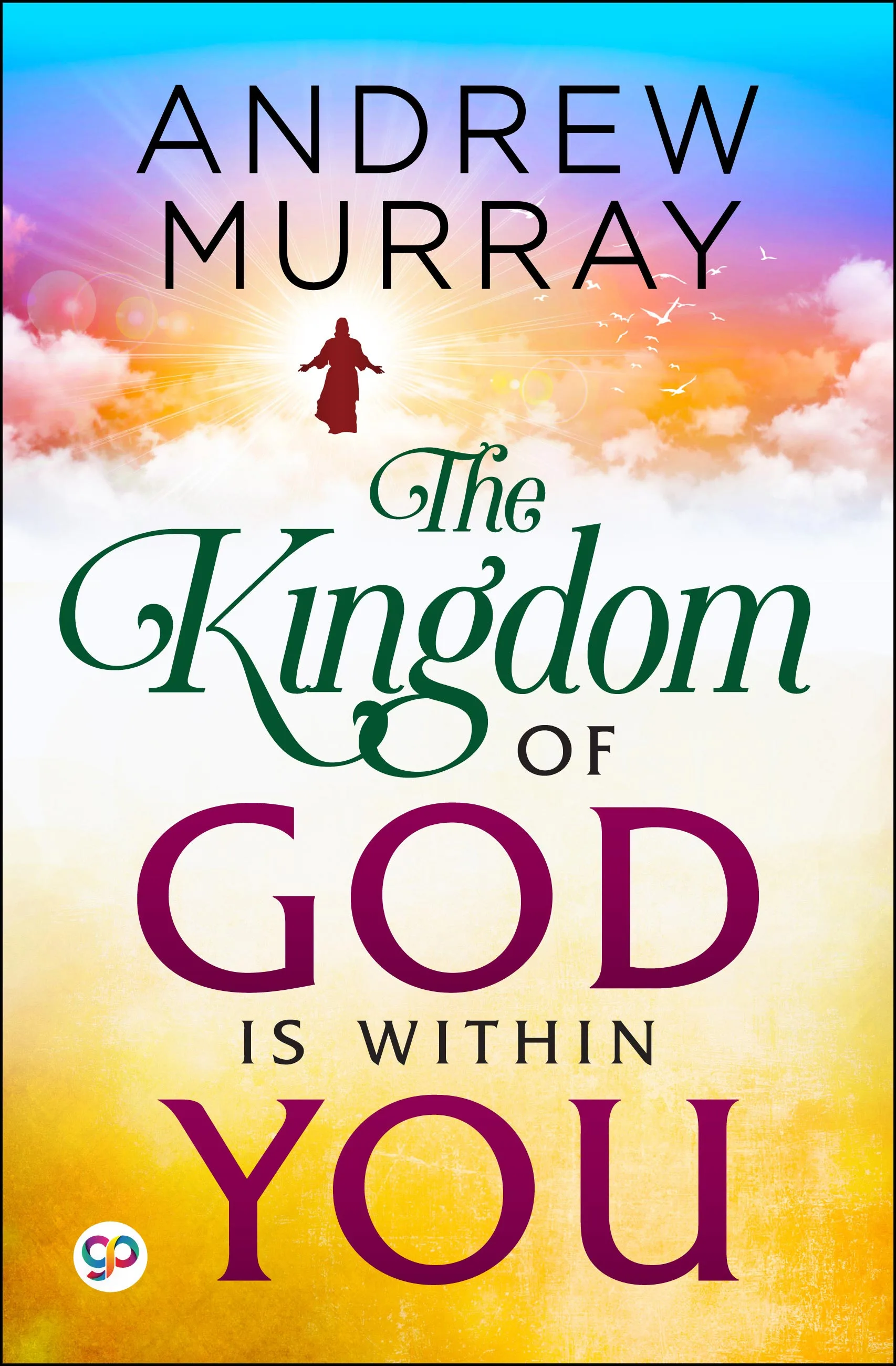
Download Cover Image
Do you want to download the full cover image for The Kingdom of God is Within You?