
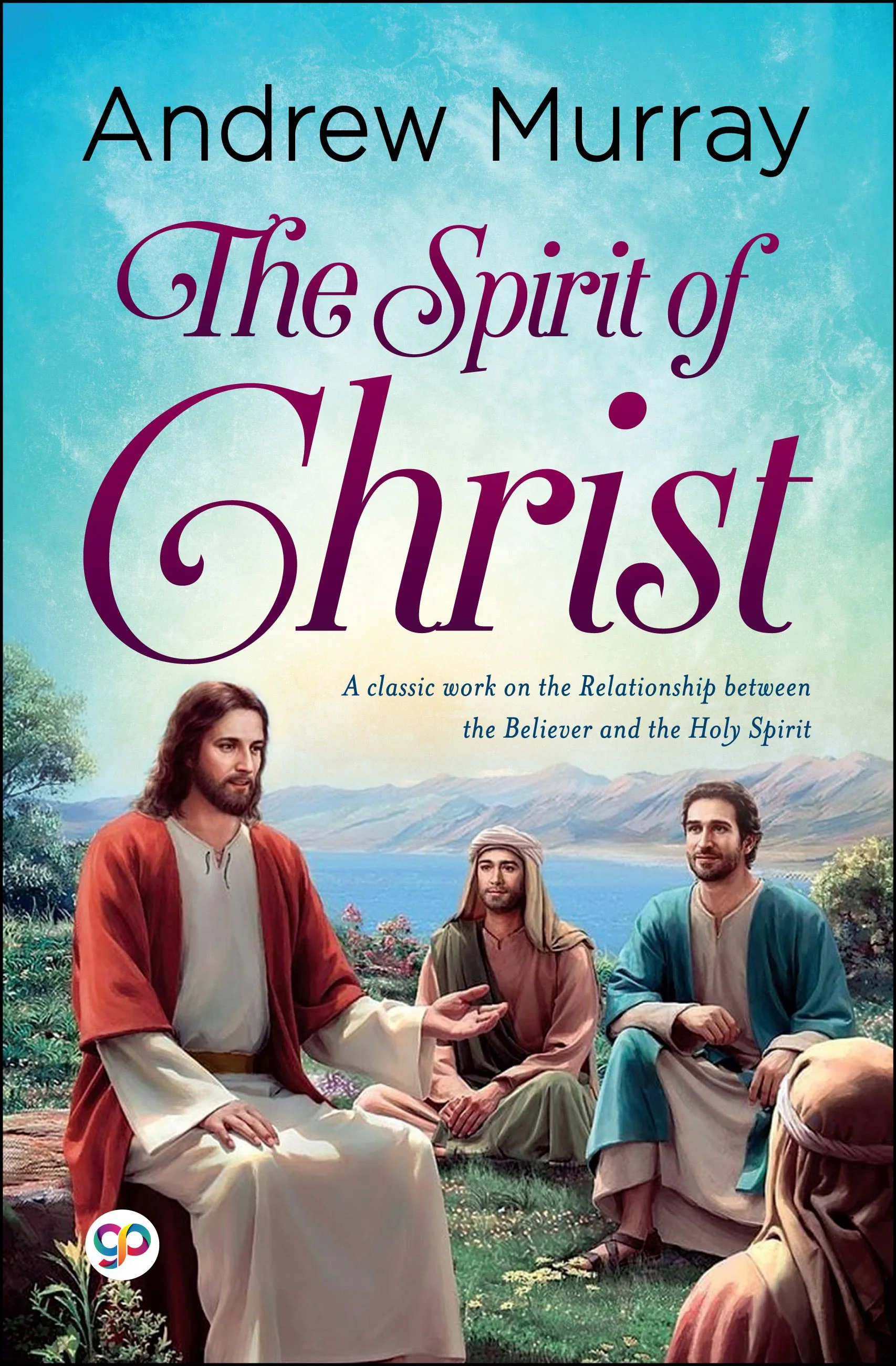
The Spirit of Christ
eBook
• INR 70.00
• English
• 9789390492701
No ratings yet
| Publisher | General Press |
|---|---|
| ISBN13 | 9789390492701 |
| ASIN/SKU | B08RSPCLRG |
| Book Format | eBook |
| Language | English |
| List Price | INR 70.00 |
| Subject Code | REL067090, REL012020 |
| Publishing Date | 18/12/2020 |
| Book Code | BD00068775 |
Buy this Book
Amazon Stores
Ebook Stores
Other Stores
Discover The Spirit of Christ by Andrew Murray. This book is published by General Press in eBook format, ISBN 9789390492701, ASIN B08RSPCLRG, under Christian Books and Bibles, Christianity, Christian Living.
Book Description
‘The Spirit of Christ’ is an in-depth look at the work of the Holy Spirit in the life of the believer and through the church. These 31 chapters are rich in Scripture and will inform, challenge and encourage you in regards to your understanding of the Holy Spirit and his ability to work in your life. Chapters include: The Baptism of the Spirit, Worship in the Spirit, The Spirit of Power, The Spirit of Prayer, The Holy Spirit and Missions, Filled with the spirit and many more. A classic work!
Author Biography
Andrew Murray (1828-1917) was an amazingly prolific Christian writer. He lived and ministered as both a pastor and author in the towns and villages of South Africa. Some of Murray's earliest works were written to provide nurture and guidance to Christians, whether young or old in the faith; they were actually an extension of his pastoral work. Once books such as Abide in Christ, Divine Healing, and With Christ in the School of Prayer were written, Murray became widely known, and new books from his pen were awaited with great eagerness throughout the world.
He wrote to give daily practical help to many of the people in his congregation who lived out in the farming communities and could come into town for church services only on rare occasions. As he wrote these books of instruction, Murray adopted the practice of placing many of his more devotional books into thirty-one separate readings to correspond with the days of the month.
At the age of seventy-eight, Murray resigned from the pastorate and devoted most of his time to his manuscripts. He continued to write profusely, moving from one book to the next with an intensity of purpose and a zeal that few men of God have ever equaled. He often said of himself, rather humorously, that he was like a hen about to hatch an egg; he was restless and unhappy until he got the burden of the message off his mind.
During these later years, after hearing of pocket-sized paperbacks, Andrew Murray immediately began to write books to be published in that fashion. He thought it was a splendid way to have the teachings of the Christian life at your fingertips, where they could be carried around and read at any time of the day.
One source has said of Andrew Murray that his prolific style possesses the strength and eloquence that are born of deep earnestness and a sense of the solemnity of the issues of the Christian life. Nearly every page reveals an intensity of purpose and appeal that stirs men to the depths of their souls. Murray moves the emotions, searches the conscience, and reveals the sins and shortcomings of many of us with a love and hope born out of an intimate knowledge of the mercy and faithfulness of God.
For Andrew Murray, prayer was considered our personal home base from which we live our Christian lives and extend ourselves to others. During his later years, the vital necessity of unceasing prayer in the spiritual life came to the forefront of his teachings. It was then that he revealed the secret treasures of his heart concerning a life of persistent and believing prayer.
Countless people the world over have hailed Andrew Murray as their spiritual father and given credit for much of their Christian growth to the influence of his priceless devotional books.
He wrote to give daily practical help to many of the people in his congregation who lived out in the farming communities and could come into town for church services only on rare occasions. As he wrote these books of instruction, Murray adopted the practice of placing many of his more devotional books into thirty-one separate readings to correspond with the days of the month.
At the age of seventy-eight, Murray resigned from the pastorate and devoted most of his time to his manuscripts. He continued to write profusely, moving from one book to the next with an intensity of purpose and a zeal that few men of God have ever equaled. He often said of himself, rather humorously, that he was like a hen about to hatch an egg; he was restless and unhappy until he got the burden of the message off his mind.
During these later years, after hearing of pocket-sized paperbacks, Andrew Murray immediately began to write books to be published in that fashion. He thought it was a splendid way to have the teachings of the Christian life at your fingertips, where they could be carried around and read at any time of the day.
One source has said of Andrew Murray that his prolific style possesses the strength and eloquence that are born of deep earnestness and a sense of the solemnity of the issues of the Christian life. Nearly every page reveals an intensity of purpose and appeal that stirs men to the depths of their souls. Murray moves the emotions, searches the conscience, and reveals the sins and shortcomings of many of us with a love and hope born out of an intimate knowledge of the mercy and faithfulness of God.
For Andrew Murray, prayer was considered our personal home base from which we live our Christian lives and extend ourselves to others. During his later years, the vital necessity of unceasing prayer in the spiritual life came to the forefront of his teachings. It was then that he revealed the secret treasures of his heart concerning a life of persistent and believing prayer.
Countless people the world over have hailed Andrew Murray as their spiritual father and given credit for much of their Christian growth to the influence of his priceless devotional books.
Editorial Reviews
Editorial Reviews will be added soon…
Book Summary
The Spirit of Christ by Andrew Murray is a classic Christian book about the person, presence, power, and work of the Holy Spirit in the life of a believer and in the Church. First published in 1888, the book explores what it means not merely to believe in the Holy Spirit as a doctrine, but to experience His indwelling presence as a living reality. Murray’s central concern is that Christianity should not remain an outward religion of rules, knowledge, and effort. Instead, the Christian life should become an inward life shaped and empowered by the Spirit of Christ. The original work contains thirty-one devotional chapters, moving through the teachings of Jesus, Acts, Romans, Corinthians, Galatians, and Ephesians.
At the heart of The Spirit of Christ is a simple but profound question: What does it mean for the Holy Spirit to live within a Christian? Andrew Murray believes that this question is essential because the Christian life cannot be successfully lived through human strength alone. A person may know Scripture, attend church, pray, serve others, and sincerely desire holiness, yet still experience spiritual weakness and frustration. Murray argues that the answer is not simply greater determination. The answer is a deeper dependence upon the Holy Spirit. For him, the Spirit is not an abstract theological concept or merely a source of occasional spiritual experiences. The Spirit is God's own presence dwelling in believers, transforming their hearts, guiding their lives, revealing Christ, producing holiness, strengthening prayer, and empowering Christian service.
The book begins with “A New Spirit, and God’s Spirit,” drawing from Ezekiel’s promise of a new heart and God’s Spirit dwelling within His people. Murray establishes an important distinction between the Old Testament experience of the Spirit and the fuller New Testament revelation. In the Old Testament, the Spirit often came upon particular people for particular purposes, whereas the New Testament reveals the Spirit as dwelling within believers. This inward indwelling becomes one of the book’s defining ideas. Murray wants readers to understand that Christianity is not primarily an external change in behavior. True spiritual transformation begins inside the person and then works outward. The Holy Spirit changes the source of life itself, producing a new way of thinking, desiring, worshiping, obeying, and living.
Murray then turns to the baptism of the Spirit and the believer’s relationship with Christ. He emphasizes that Jesus is the One who gives the Spirit. The Spirit therefore cannot be separated from Christ. To receive the Spirit is to enter more deeply into the life and fellowship of Christ Himself. This explains the title The Spirit of Christ: Murray is not presenting the Holy Spirit as an independent subject detached from Jesus. Rather, the Spirit makes the life of the risen Christ real within the believer. The Spirit brings Christ near, reveals His character, and enables Christians to participate in the life Christ makes possible.
One of the book’s important practical themes appears in the chapter on worship in the Spirit. Murray argues that genuine worship must come from the inner life rather than merely from external religious habits. A person can participate in religious ceremonies without truly worshiping God. Spirit-filled worship, by contrast, involves the heart being awakened to God's presence. The Holy Spirit teaches believers to worship God sincerely, spiritually, and personally. This idea connects with Murray’s broader criticism of mechanical Christianity. He repeatedly calls readers away from dependence on religious activity alone and toward a living relationship with God.
The chapter on the Spirit and the Word develops another crucial principle: the Holy Spirit and Scripture belong together. Murray does not treat spiritual experience as a substitute for biblical truth. Instead, he believes that the Spirit gives life to the Word and enables believers to understand and obey it. Scripture without spiritual obedience can become merely intellectual knowledge, while spirituality detached from Scripture can become confused or self-directed. The Spirit uses the Word to reveal Christ and shape the believer. Consequently, Murray’s vision of spiritual growth involves both Scripture and inward dependence on the Spirit.
A particularly important section concerns the Spirit of the glorified Jesus. Murray emphasizes that the Holy Spirit is given in connection with Christ’s glorification. The risen and exalted Christ is not distant from His people; through the Spirit, His life and presence become spiritually active within them. This changes the Christian understanding of Christ's presence. The believer does not simply look backward at what Jesus did in history. Through the Spirit, Christ's life continues to operate in the present. This is why Murray repeatedly connects the Spirit with fellowship, transformation, obedience, and the experience of Christ's presence.
The chapters on the indwelling Spirit, obedience, and knowing the Spirit move the discussion from doctrine into personal experience. Murray insists that the Holy Spirit is meant to be known. He is not merely something a Christian believes exists. The believer can become increasingly sensitive to His leading and work. Yet Murray does not present this knowledge as emotional excitement or mystical novelty. It is demonstrated through obedience. In his understanding, a person who truly desires the Spirit must also desire to obey God. The Spirit's presence produces a life increasingly surrendered to God's will.
The middle section of the book focuses heavily on the Spirit of truth, the Spirit glorifying Christ, and the Spirit convincing of sin. Murray stresses that the Holy Spirit's work is fundamentally Christ-centered. The Spirit does not draw attention away from Jesus but directs attention toward Him. The Spirit reveals truth, exposes sin, and brings the believer into a deeper appreciation of Christ. This gives the book a strong theological center: the purpose of the Spirit is not simply to make Christians feel powerful or spiritually fulfilled. His work is to make Christ known, loved, obeyed, and reproduced in the believer's life.
Murray then turns to waiting for the Spirit, the Spirit of power, the outpouring of the Spirit, and the Holy Spirit and missions. Here the book takes on a more outward and practical dimension. The Christian does not receive the Spirit merely for private spiritual comfort. The Spirit empowers believers for witness and service. Murray looks particularly to Pentecost and the early Church, seeing the Spirit's power as essential to Christian mission. Human enthusiasm, intelligence, organization, and effort are not enough to accomplish spiritual work. The Church needs divine power. Waiting for the Spirit therefore becomes an expression of dependence: believers must recognize that God's work requires God's power.
The chapters based on Romans introduce another major theme: newness of the Spirit, liberty of the Spirit, the leading of the Spirit, and the Spirit of prayer. Murray contrasts life according to external law with life according to the Spirit. The Christian is not intended to remain trapped in a cycle of knowing what is right but repeatedly failing to do it. The Spirit brings a new principle of life. This does not mean that God's commands become irrelevant; rather, obedience becomes increasingly internal and relational. The Spirit creates a desire to do what pleases God.
The chapter on the leading of the Spirit is especially significant for Christians interested in biblical guidance and spiritual discernment. Murray describes the Spirit as the One who leads God's children. Such leading requires attentiveness, surrender, and trust. The believer must learn to distinguish between God's direction and the competing voices of personal desire, fear, pride, and worldly pressure. For Murray, spiritual guidance is inseparable from holiness. A Christian cannot expect to be led by the Spirit while deliberately resisting His work.
Murray's discussion of the Spirit of prayer is equally important. He recognizes that prayer can become difficult when believers depend entirely upon their own ability. Romans 8 teaches that the Spirit helps human weakness and intercedes for believers. Murray therefore presents prayer not merely as something Christians do for the Spirit but as something the Spirit Himself helps produce within them. The Spirit awakens desire for God, teaches dependence, and carries prayer beyond what human words can adequately express.
The chapters on conscience, revelation, and spiritual versus carnal Christianity explore the inward work of the Spirit in greater depth. Murray distinguishes between merely possessing Christian knowledge and actually being spiritually governed. A person may understand Christian teaching intellectually while remaining controlled by selfishness, pride, or worldly desires. The truly spiritual Christian is one whose life is increasingly surrendered to the Spirit. This is one of Murray's most challenging points: spiritual maturity is measured less by how much religious information someone possesses and more by whether the character of Christ is becoming visible in everyday life.
This theme continues in “The Temple of the Holy Spirit” and “The Ministry of the Spirit.” If the believer's body and life are a dwelling place of the Spirit, then ordinary life becomes sacred. The Christian cannot divide life into religious and nonreligious compartments. Work, relationships, speech, choices, desires, and service all fall under the Spirit's influence. Likewise, Christian ministry must depend on the Spirit rather than merely human talent. Murray's understanding of ministry is therefore deeply dependent upon divine empowerment.
The later chapters turn toward the Spirit and the flesh, the Spirit through faith, walking by the Spirit, and the Spirit of love. These chapters contain some of the book's most practical teaching. Murray describes the Christian life as a continual choice between self-centered living and Spirit-directed living. “Walking by the Spirit” means allowing the Spirit to govern daily conduct rather than surrendering to the impulses of the flesh. Importantly, Murray does not reduce this to willpower. The secret is faith and surrender. The believer trusts God to work inwardly and continually yields to that work.
The discussion of the fruit of the Spirit, especially love, brings Murray's theology to its practical climax. He argues that love is not simply one spiritual quality among many. Love reveals the very nature of the Spirit's work because God Himself is love. The Holy Spirit does not merely give believers power to accomplish impressive things; He transforms them into people who love God and other people more deeply. The chapter on the Spirit of Love describes love as central to genuine spirituality, making Christian character more important than religious performance.
The final chapters on the unity of the Spirit and being filled with the Spirit broaden the message from individual Christians to the Church. The Spirit creates unity among believers, meaning that Spirit-filled Christianity cannot be purely individualistic. The Spirit brings people together into the life of Christ. Likewise, Paul's command to be filled with the Spirit becomes, for Murray, an ongoing invitation rather than a one-time spiritual achievement. The believer must continually yield to God and seek a deeper fullness of the Spirit. The book's original table of contents concludes with these themes, emphasizing unity and Spirit-filled living as the culmination of its biblical progression.
One of the greatest strengths of The Spirit of Christ by Andrew Murray is its insistence that Christianity is meant to be experienced as a living relationship with God. Murray is not satisfied with Christianity that remains theoretical. He wants readers to move from knowledge to experience, from effort to dependence, from self-reliance to surrender, and from religious activity to genuine spiritual life. His repeated message is that believers should not try to manufacture spiritual power themselves. They should learn to trust the Holy Spirit who already dwells within them.
The book can therefore be understood as a guide to Holy Spirit-filled Christian living. It addresses questions such as: What does the Holy Spirit do in a believer? What does it mean to be filled with the Spirit? How does the Spirit lead Christians? How does the Spirit strengthen prayer? What is the relationship between the Holy Spirit and Scripture? How does the Spirit produce holiness? How does the Spirit empower Christian witness? And how can believers walk by the Spirit instead of being controlled by the flesh? Murray's answers consistently return to Christ, surrender, faith, obedience, prayer, and love.
Ultimately, The Spirit of Christ is not simply a book about the doctrine of the Holy Spirit; it is a devotional invitation to live by the Holy Spirit. Murray believes that the deepest problem of Christian life is often not a lack of information but a lack of surrender. Christians may know what they should do yet struggle because they attempt to live the Christian life through their own strength. Murray points toward another way: receive, trust, yield, obey, and depend upon the Spirit of Christ. The result is intended to be a life in which Christ becomes increasingly visible through the believer.
For modern readers, the enduring appeal of The Spirit of Christ by Andrew Murray lies in this emphasis on inward transformation. Although written in the nineteenth century, its central questions remain remarkably relevant: How can faith become more than routine? How can prayer become more alive? How can Christians overcome dependence on themselves? How can the Church serve with genuine spiritual power? How can believers become people characterized by love rather than merely religious knowledge? Murray's answer throughout the book is the same: the Christian life must be lived through the indwelling and transforming presence of the Holy Spirit.
In summary, The Spirit of Christ teaches that the Holy Spirit is God's living presence within believers, given to reveal Christ, produce holiness, strengthen prayer, guide God's children, empower witness, create unity, and form the character of divine love. Andrew Murray's ultimate appeal is not for Christians to try harder but to surrender more deeply. The Spirit does not merely help a person become a better version of the self; He makes possible a life increasingly shaped by Christ. That is the central message of the book and the reason it remains an influential classic of Christian devotional literature. Its vision is both demanding and comforting: demanding because it calls for complete surrender, yet comforting because the power required for Christian living is not something believers must create themselves. The Spirit of Christ is given to dwell within them, and the Christian life begins to change when they learn to trust Him.
At the heart of The Spirit of Christ is a simple but profound question: What does it mean for the Holy Spirit to live within a Christian? Andrew Murray believes that this question is essential because the Christian life cannot be successfully lived through human strength alone. A person may know Scripture, attend church, pray, serve others, and sincerely desire holiness, yet still experience spiritual weakness and frustration. Murray argues that the answer is not simply greater determination. The answer is a deeper dependence upon the Holy Spirit. For him, the Spirit is not an abstract theological concept or merely a source of occasional spiritual experiences. The Spirit is God's own presence dwelling in believers, transforming their hearts, guiding their lives, revealing Christ, producing holiness, strengthening prayer, and empowering Christian service.
The book begins with “A New Spirit, and God’s Spirit,” drawing from Ezekiel’s promise of a new heart and God’s Spirit dwelling within His people. Murray establishes an important distinction between the Old Testament experience of the Spirit and the fuller New Testament revelation. In the Old Testament, the Spirit often came upon particular people for particular purposes, whereas the New Testament reveals the Spirit as dwelling within believers. This inward indwelling becomes one of the book’s defining ideas. Murray wants readers to understand that Christianity is not primarily an external change in behavior. True spiritual transformation begins inside the person and then works outward. The Holy Spirit changes the source of life itself, producing a new way of thinking, desiring, worshiping, obeying, and living.
Murray then turns to the baptism of the Spirit and the believer’s relationship with Christ. He emphasizes that Jesus is the One who gives the Spirit. The Spirit therefore cannot be separated from Christ. To receive the Spirit is to enter more deeply into the life and fellowship of Christ Himself. This explains the title The Spirit of Christ: Murray is not presenting the Holy Spirit as an independent subject detached from Jesus. Rather, the Spirit makes the life of the risen Christ real within the believer. The Spirit brings Christ near, reveals His character, and enables Christians to participate in the life Christ makes possible.
One of the book’s important practical themes appears in the chapter on worship in the Spirit. Murray argues that genuine worship must come from the inner life rather than merely from external religious habits. A person can participate in religious ceremonies without truly worshiping God. Spirit-filled worship, by contrast, involves the heart being awakened to God's presence. The Holy Spirit teaches believers to worship God sincerely, spiritually, and personally. This idea connects with Murray’s broader criticism of mechanical Christianity. He repeatedly calls readers away from dependence on religious activity alone and toward a living relationship with God.
The chapter on the Spirit and the Word develops another crucial principle: the Holy Spirit and Scripture belong together. Murray does not treat spiritual experience as a substitute for biblical truth. Instead, he believes that the Spirit gives life to the Word and enables believers to understand and obey it. Scripture without spiritual obedience can become merely intellectual knowledge, while spirituality detached from Scripture can become confused or self-directed. The Spirit uses the Word to reveal Christ and shape the believer. Consequently, Murray’s vision of spiritual growth involves both Scripture and inward dependence on the Spirit.
A particularly important section concerns the Spirit of the glorified Jesus. Murray emphasizes that the Holy Spirit is given in connection with Christ’s glorification. The risen and exalted Christ is not distant from His people; through the Spirit, His life and presence become spiritually active within them. This changes the Christian understanding of Christ's presence. The believer does not simply look backward at what Jesus did in history. Through the Spirit, Christ's life continues to operate in the present. This is why Murray repeatedly connects the Spirit with fellowship, transformation, obedience, and the experience of Christ's presence.
The chapters on the indwelling Spirit, obedience, and knowing the Spirit move the discussion from doctrine into personal experience. Murray insists that the Holy Spirit is meant to be known. He is not merely something a Christian believes exists. The believer can become increasingly sensitive to His leading and work. Yet Murray does not present this knowledge as emotional excitement or mystical novelty. It is demonstrated through obedience. In his understanding, a person who truly desires the Spirit must also desire to obey God. The Spirit's presence produces a life increasingly surrendered to God's will.
The middle section of the book focuses heavily on the Spirit of truth, the Spirit glorifying Christ, and the Spirit convincing of sin. Murray stresses that the Holy Spirit's work is fundamentally Christ-centered. The Spirit does not draw attention away from Jesus but directs attention toward Him. The Spirit reveals truth, exposes sin, and brings the believer into a deeper appreciation of Christ. This gives the book a strong theological center: the purpose of the Spirit is not simply to make Christians feel powerful or spiritually fulfilled. His work is to make Christ known, loved, obeyed, and reproduced in the believer's life.
Murray then turns to waiting for the Spirit, the Spirit of power, the outpouring of the Spirit, and the Holy Spirit and missions. Here the book takes on a more outward and practical dimension. The Christian does not receive the Spirit merely for private spiritual comfort. The Spirit empowers believers for witness and service. Murray looks particularly to Pentecost and the early Church, seeing the Spirit's power as essential to Christian mission. Human enthusiasm, intelligence, organization, and effort are not enough to accomplish spiritual work. The Church needs divine power. Waiting for the Spirit therefore becomes an expression of dependence: believers must recognize that God's work requires God's power.
The chapters based on Romans introduce another major theme: newness of the Spirit, liberty of the Spirit, the leading of the Spirit, and the Spirit of prayer. Murray contrasts life according to external law with life according to the Spirit. The Christian is not intended to remain trapped in a cycle of knowing what is right but repeatedly failing to do it. The Spirit brings a new principle of life. This does not mean that God's commands become irrelevant; rather, obedience becomes increasingly internal and relational. The Spirit creates a desire to do what pleases God.
The chapter on the leading of the Spirit is especially significant for Christians interested in biblical guidance and spiritual discernment. Murray describes the Spirit as the One who leads God's children. Such leading requires attentiveness, surrender, and trust. The believer must learn to distinguish between God's direction and the competing voices of personal desire, fear, pride, and worldly pressure. For Murray, spiritual guidance is inseparable from holiness. A Christian cannot expect to be led by the Spirit while deliberately resisting His work.
Murray's discussion of the Spirit of prayer is equally important. He recognizes that prayer can become difficult when believers depend entirely upon their own ability. Romans 8 teaches that the Spirit helps human weakness and intercedes for believers. Murray therefore presents prayer not merely as something Christians do for the Spirit but as something the Spirit Himself helps produce within them. The Spirit awakens desire for God, teaches dependence, and carries prayer beyond what human words can adequately express.
The chapters on conscience, revelation, and spiritual versus carnal Christianity explore the inward work of the Spirit in greater depth. Murray distinguishes between merely possessing Christian knowledge and actually being spiritually governed. A person may understand Christian teaching intellectually while remaining controlled by selfishness, pride, or worldly desires. The truly spiritual Christian is one whose life is increasingly surrendered to the Spirit. This is one of Murray's most challenging points: spiritual maturity is measured less by how much religious information someone possesses and more by whether the character of Christ is becoming visible in everyday life.
This theme continues in “The Temple of the Holy Spirit” and “The Ministry of the Spirit.” If the believer's body and life are a dwelling place of the Spirit, then ordinary life becomes sacred. The Christian cannot divide life into religious and nonreligious compartments. Work, relationships, speech, choices, desires, and service all fall under the Spirit's influence. Likewise, Christian ministry must depend on the Spirit rather than merely human talent. Murray's understanding of ministry is therefore deeply dependent upon divine empowerment.
The later chapters turn toward the Spirit and the flesh, the Spirit through faith, walking by the Spirit, and the Spirit of love. These chapters contain some of the book's most practical teaching. Murray describes the Christian life as a continual choice between self-centered living and Spirit-directed living. “Walking by the Spirit” means allowing the Spirit to govern daily conduct rather than surrendering to the impulses of the flesh. Importantly, Murray does not reduce this to willpower. The secret is faith and surrender. The believer trusts God to work inwardly and continually yields to that work.
The discussion of the fruit of the Spirit, especially love, brings Murray's theology to its practical climax. He argues that love is not simply one spiritual quality among many. Love reveals the very nature of the Spirit's work because God Himself is love. The Holy Spirit does not merely give believers power to accomplish impressive things; He transforms them into people who love God and other people more deeply. The chapter on the Spirit of Love describes love as central to genuine spirituality, making Christian character more important than religious performance.
The final chapters on the unity of the Spirit and being filled with the Spirit broaden the message from individual Christians to the Church. The Spirit creates unity among believers, meaning that Spirit-filled Christianity cannot be purely individualistic. The Spirit brings people together into the life of Christ. Likewise, Paul's command to be filled with the Spirit becomes, for Murray, an ongoing invitation rather than a one-time spiritual achievement. The believer must continually yield to God and seek a deeper fullness of the Spirit. The book's original table of contents concludes with these themes, emphasizing unity and Spirit-filled living as the culmination of its biblical progression.
One of the greatest strengths of The Spirit of Christ by Andrew Murray is its insistence that Christianity is meant to be experienced as a living relationship with God. Murray is not satisfied with Christianity that remains theoretical. He wants readers to move from knowledge to experience, from effort to dependence, from self-reliance to surrender, and from religious activity to genuine spiritual life. His repeated message is that believers should not try to manufacture spiritual power themselves. They should learn to trust the Holy Spirit who already dwells within them.
The book can therefore be understood as a guide to Holy Spirit-filled Christian living. It addresses questions such as: What does the Holy Spirit do in a believer? What does it mean to be filled with the Spirit? How does the Spirit lead Christians? How does the Spirit strengthen prayer? What is the relationship between the Holy Spirit and Scripture? How does the Spirit produce holiness? How does the Spirit empower Christian witness? And how can believers walk by the Spirit instead of being controlled by the flesh? Murray's answers consistently return to Christ, surrender, faith, obedience, prayer, and love.
Ultimately, The Spirit of Christ is not simply a book about the doctrine of the Holy Spirit; it is a devotional invitation to live by the Holy Spirit. Murray believes that the deepest problem of Christian life is often not a lack of information but a lack of surrender. Christians may know what they should do yet struggle because they attempt to live the Christian life through their own strength. Murray points toward another way: receive, trust, yield, obey, and depend upon the Spirit of Christ. The result is intended to be a life in which Christ becomes increasingly visible through the believer.
For modern readers, the enduring appeal of The Spirit of Christ by Andrew Murray lies in this emphasis on inward transformation. Although written in the nineteenth century, its central questions remain remarkably relevant: How can faith become more than routine? How can prayer become more alive? How can Christians overcome dependence on themselves? How can the Church serve with genuine spiritual power? How can believers become people characterized by love rather than merely religious knowledge? Murray's answer throughout the book is the same: the Christian life must be lived through the indwelling and transforming presence of the Holy Spirit.
In summary, The Spirit of Christ teaches that the Holy Spirit is God's living presence within believers, given to reveal Christ, produce holiness, strengthen prayer, guide God's children, empower witness, create unity, and form the character of divine love. Andrew Murray's ultimate appeal is not for Christians to try harder but to surrender more deeply. The Spirit does not merely help a person become a better version of the self; He makes possible a life increasingly shaped by Christ. That is the central message of the book and the reason it remains an influential classic of Christian devotional literature. Its vision is both demanding and comforting: demanding because it calls for complete surrender, yet comforting because the power required for Christian living is not something believers must create themselves. The Spirit of Christ is given to dwell within them, and the Christian life begins to change when they learn to trust Him.
Sample Chapters
Sample Chapters will be added soon…
Reader Reviews
No reviews yet.
The Spirit of Christ
Download Cover Image
Do you want to download the full cover image for The Spirit of Christ?