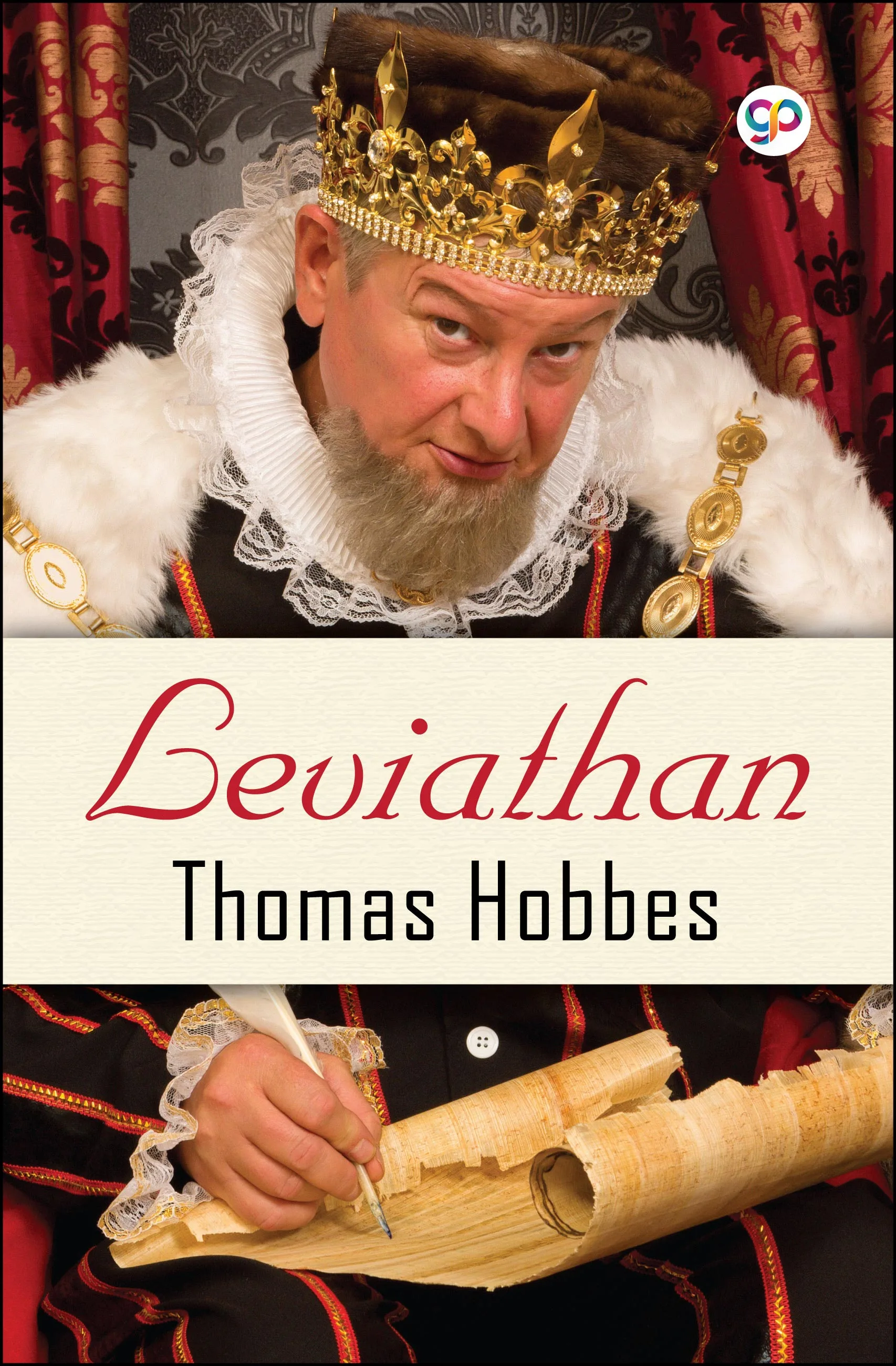
Leviathan
eBook
• INR 70.00
• English
• 9789391181383
No ratings yet
| Publisher | General Press |
|---|---|
| ISBN13 | 9789391181383 |
| ASIN/SKU | B0973SVXKJ |
| Book Format | eBook |
| Language | English |
| List Price | INR 70.00 |
| Subject Code | POL010000, PHI019000 |
| Publishing Date | 21/06/2021 |
| Book Code | BD00068780 |
Buy this Book
Amazon Stores
Ebook Stores
Other Stores
Discover Leviathan by Thomas Hobbes. This book is published by General Press in eBook format, ISBN 9789391181383, ASIN B0973SVXKJ, under Politics and Social Sciences, Politics.
Book Description
‘Leviathan’ is an ambitious and highly original work of political philosophy. Written by Thomas Hobbes during a time of Civil War, it argues that sovereign rule is the most stable form of government. Since its first publication in 1651, Thomas Hobbes’s Leviathan has been recognised as one of the most compelling, and most controversial, works of political philosophy written in English. Claiming that man's essential nature is competitive and selfish, Hobbes formulates the case for a powerful sovereign or “Leviathan” to enforce peace and the law, substituting security for the anarchic freedom he believed human beings would otherwise experience. This worldview shocked many of Hobbes's contemporaries, and his work was publicly burnt for sedition and blasphemy when it was first published.
Hobbes presents us with a portrait of politics which depicts how a state that is made up of the unified body of all its citizens will be powerful, fruitful, protective of each of its members, and free from internal violence.
Hobbes presents us with a portrait of politics which depicts how a state that is made up of the unified body of all its citizens will be powerful, fruitful, protective of each of its members, and free from internal violence.
Author Biography
Thomas Hobbes (1588–1679) was one of the most influential political philosophers in history. His ideas about human nature, government, and society profoundly shaped modern political thought and continue to be studied around the world. Best known for his masterpiece Leviathan, Hobbes argued that a strong and stable government is essential for maintaining peace and preventing conflict. His writings laid important foundations for political philosophy, social contract theory, and modern discussions of state authority.
Hobbes was born on April 5, 1588, in Westport, near Malmesbury, Wiltshire, England. According to tradition, his mother went into premature labor after hearing news of the approaching Spanish Armada, prompting Hobbes to later remark that "fear and I were born twins." He displayed exceptional intelligence from an early age, learning Latin and Greek while still a child. He studied at Magdalen Hall, Oxford, where he developed a strong interest in classical literature, philosophy, and logic.
After completing his education, Hobbes became tutor to the influential Cavendish family, a position that allowed him to travel extensively across Europe. During these journeys, he met some of the leading intellectuals of his time, including Galileo Galilei and René Descartes. Their ideas, together with the scientific revolution unfolding across Europe, deeply influenced Hobbes's approach to philosophy. He sought to explain politics and human behavior through reason and careful observation rather than tradition alone.
The turmoil of the English Civil War profoundly shaped Hobbes's political thinking. In 1651, he published Leviathan, his most famous work, in which he argued that without a powerful central authority, human society would descend into violence and chaos. He described life in such a condition as "solitary, poor, nasty, brutish, and short." To avoid this, he believed individuals willingly surrender certain freedoms through a social contract in exchange for security and order. Although controversial, these ideas became central to the development of modern political theory.
Thomas Hobbes died on December 4, 1679, at the age of ninety-one. Today, he is remembered as one of the founding figures of political philosophy. His writings continue to influence debates on government, law, human nature, and individual liberty, making him one of the most enduring and thought-provoking thinkers in the history of Western philosophy.
Hobbes was born on April 5, 1588, in Westport, near Malmesbury, Wiltshire, England. According to tradition, his mother went into premature labor after hearing news of the approaching Spanish Armada, prompting Hobbes to later remark that "fear and I were born twins." He displayed exceptional intelligence from an early age, learning Latin and Greek while still a child. He studied at Magdalen Hall, Oxford, where he developed a strong interest in classical literature, philosophy, and logic.
After completing his education, Hobbes became tutor to the influential Cavendish family, a position that allowed him to travel extensively across Europe. During these journeys, he met some of the leading intellectuals of his time, including Galileo Galilei and René Descartes. Their ideas, together with the scientific revolution unfolding across Europe, deeply influenced Hobbes's approach to philosophy. He sought to explain politics and human behavior through reason and careful observation rather than tradition alone.
The turmoil of the English Civil War profoundly shaped Hobbes's political thinking. In 1651, he published Leviathan, his most famous work, in which he argued that without a powerful central authority, human society would descend into violence and chaos. He described life in such a condition as "solitary, poor, nasty, brutish, and short." To avoid this, he believed individuals willingly surrender certain freedoms through a social contract in exchange for security and order. Although controversial, these ideas became central to the development of modern political theory.
Thomas Hobbes died on December 4, 1679, at the age of ninety-one. Today, he is remembered as one of the founding figures of political philosophy. His writings continue to influence debates on government, law, human nature, and individual liberty, making him one of the most enduring and thought-provoking thinkers in the history of Western philosophy.
Editorial Reviews
Editorial Reviews will be added soon…
Book Summary
Book Summary will be added soon…
Sample Chapters
Sample Chapters will be added soon…
Reader Reviews
No reviews yet.
Leviathan