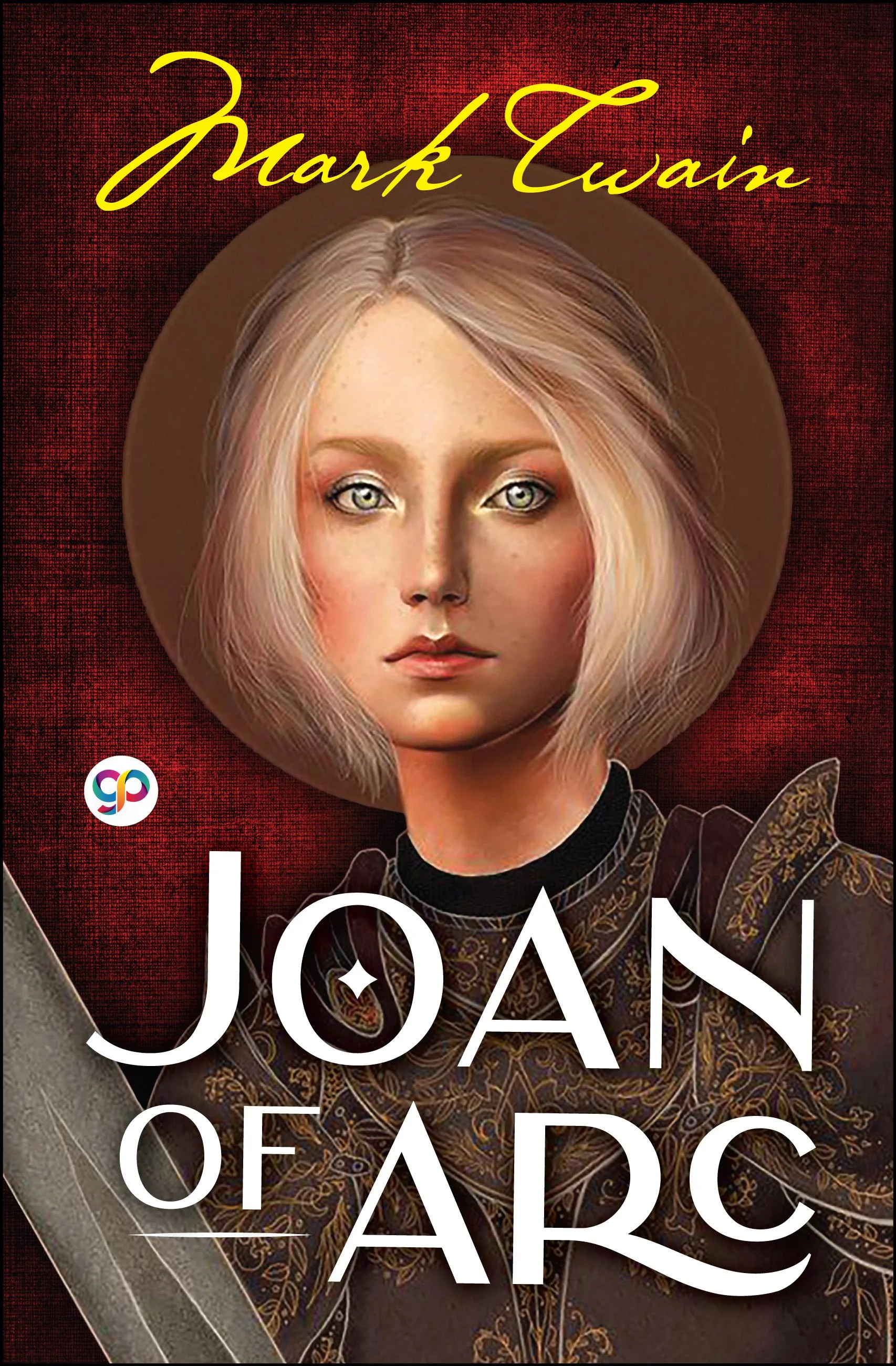
Joan of Arc
eBook
• INR 70.00
• English
• 9789391181819
No ratings yet
| Publisher | General Press |
|---|---|
| ISBN13 | 9789391181819 |
| ASIN/SKU | B09HKXFW59 |
| Book Format | eBook |
| Language | English |
| List Price | INR 70.00 |
| Subject Code | HIS013000, FIC026000 |
| Publishing Date | 05/10/2021 |
| Book Code | BD00068797 |
Buy this Book
Amazon Stores
Ebook Stores
Other Stores
Discover Joan of Arc by Mark Twain. This book is published by General Press in eBook format, ISBN 9789391181819, ASIN B09HKXFW59, under Literature and Fiction, Historical Fiction, Medieval.
Book Description
‘Joan of Arc’ is Mark Twain’s novel and was published as a complete work under his name in 1896. One finds a remarkably accurate biography of the life and mission of ‘Joan of Arc’ told by one of this country's greatest storytellers. The very fact that Mark Twain wrote this book and wrote it the way he did is a powerful testimony to the attractive power of the Catholic Church's saints. This is a book that really will inform and inspire.
The novel is a stark departure from Twain’s usual comic and satirical writings, which is why he insisted it initially be published anonymously so that the public would take it seriously. Twain was deeply fascinated by ‘Joan of Arc’ for much of his life. He considered it to be his best and most important work and spent nearly 15 years researching and working on the novel. The result is a work of sincere and engrossing historical fiction.
The novel is a stark departure from Twain’s usual comic and satirical writings, which is why he insisted it initially be published anonymously so that the public would take it seriously. Twain was deeply fascinated by ‘Joan of Arc’ for much of his life. He considered it to be his best and most important work and spent nearly 15 years researching and working on the novel. The result is a work of sincere and engrossing historical fiction.
Author Biography
Born Samuel Langhorne Clemens in 1835 in Florida, Missouri, Mark Twain was raised in the bustling river town of Hannibal. The mighty Mississippi River deeply shaped his youth and imagination. After his father's death, he left school at twelve to work as a printer's apprentice, igniting his lifelong connection to publishing. He later fulfilled a childhood dream by becoming a Mississippi steamboat pilot, a profession that provided his famous pen name—a river term indicating a safe depth of two fathoms.
The outbreak of the Civil War in 1861 halted commercial river traffic, prompting Twain to travel west to Nevada in search of silver. When mining proved unsuccessful, he pivoted to journalism. Working as a reporter in Virginia City and San Francisco, he honed his distinctive literary voice: a blend of biting satire, irreverent humor, and keen social observation. In 1865, his humorous short story "The Celebrated Jumping Frog of Calaveras County" became a massive success, catapulting him to national fame.
Settling in Hartford, Connecticut, Twain entered his most prolific creative period. Drawing heavily upon his idyllic boyhood memories, he published The Adventures of Tom Sawyer in 1876. He followed this with his undisputed masterpiece, Adventures of Huckleberry Finn, in 1884. Often celebrated as the Great American Novel, the book revolutionized the country's literature through its pioneering use of colloquial speech and its profound, uncompromising indictment of institutionalized slavery and Southern hypocrisy.
Despite achieving unprecedented international acclaim, Twain's final decades were marred by severe financial instability from failed entrepreneurial investments and profound personal grief, including the deaths of his wife and three of his four children. Consequently, his later writings adopted a noticeably darker, more cynical tone that reflected his growing disillusionment with human nature. He passed away in 1910 at the age of seventy-four, leaving behind an enduring legacy as America's premier humorist and a towering architect of modern American literature.
The outbreak of the Civil War in 1861 halted commercial river traffic, prompting Twain to travel west to Nevada in search of silver. When mining proved unsuccessful, he pivoted to journalism. Working as a reporter in Virginia City and San Francisco, he honed his distinctive literary voice: a blend of biting satire, irreverent humor, and keen social observation. In 1865, his humorous short story "The Celebrated Jumping Frog of Calaveras County" became a massive success, catapulting him to national fame.
Settling in Hartford, Connecticut, Twain entered his most prolific creative period. Drawing heavily upon his idyllic boyhood memories, he published The Adventures of Tom Sawyer in 1876. He followed this with his undisputed masterpiece, Adventures of Huckleberry Finn, in 1884. Often celebrated as the Great American Novel, the book revolutionized the country's literature through its pioneering use of colloquial speech and its profound, uncompromising indictment of institutionalized slavery and Southern hypocrisy.
Despite achieving unprecedented international acclaim, Twain's final decades were marred by severe financial instability from failed entrepreneurial investments and profound personal grief, including the deaths of his wife and three of his four children. Consequently, his later writings adopted a noticeably darker, more cynical tone that reflected his growing disillusionment with human nature. He passed away in 1910 at the age of seventy-four, leaving behind an enduring legacy as America's premier humorist and a towering architect of modern American literature.
Editorial Reviews
Editorial Reviews will be added soon…
Book Summary
Mark Twain’s Joan of Arc is a historical biography of Joan of Arc, the young French visionary who became one of the most remarkable figures of the Hundred Years’ War. Published in 1896, the book was one of Twain’s most serious literary projects and, unlike the comic and satirical works for which he is better known, is written with deep admiration and emotional sincerity. Twain considered Joan the most extraordinary person who ever lived, and his Personal Recollections of Joan of Arc attempts to tell her story as both history and human drama. The book follows Joan from her childhood in the French countryside through her visions, military leadership, triumph at Orléans, the coronation of Charles VII, her capture, trial, execution, and eventual rehabilitation.
Although Twain presents the work as a historical narrative, it is not a detached academic biography. He openly admires Joan and tries to correct what he sees as the distortions, prejudices, and injustices surrounding her story. The result is a detailed portrait of courage, faith, innocence, leadership, and sacrifice. At its heart, Joan of Arc asks how an apparently ordinary young woman from a rural village could transform the course of French history and become a symbol of courage and moral conviction.
Joan's Childhood in Domrémy
The story begins in Domrémy, a small village in northeastern France. Joan is born into a humble farming family during one of the darkest periods of the Hundred Years’ War. France is politically divided and militarily weakened, while English forces and their allies control large portions of the country.
Twain spends considerable time describing Joan's childhood because he wants readers to understand how extraordinary her later transformation really was. She is not raised in a royal court or military household. She is a village girl who learns the ordinary duties of rural life.
Yet Joan is portrayed as unusually serious, compassionate, devout, and courageous. She is deeply concerned about the suffering of France and the people around her. Her religious faith is not presented as something superficial. It becomes the central force of her character.
Twain emphasizes her purity and honesty. She is courageous without being boastful and intelligent without being arrogant. Even as a child, she possesses a remarkable sense of responsibility.
The Visions and the Call to Action
The defining moment of Joan's life begins with what she describes as heavenly voices and visions.
She believes that Saint Michael, Saint Catherine, and Saint Margaret have appeared to her and instructed her to help restore France and support Charles, the Dauphin, who is the rightful heir to the French throne.
At first, Joan is understandably frightened by this calling. She is still very young and has no military education. Nevertheless, the voices become increasingly specific. Joan eventually believes she must leave her village, meet the Dauphin, and help drive the English from France.
This is one of the most fascinating parts of Twain's narrative because Joan's courage develops gradually. She does not begin as an experienced warrior. She becomes courageous because she believes she has been given a mission greater than herself.
Twain portrays her faith as a source of extraordinary psychological strength. Her confidence does not come from personal ambition. Joan does not seek wealth, fame, or political power for herself. She believes she is serving France and God.
The Journey to the Dauphin
Joan faces enormous resistance when she attempts to act on her calling.
People naturally doubt her. Why should anyone listen to an inexperienced teenage girl from a farming village? Why should soldiers obey her? Why should a prince entrust the fate of a kingdom to someone who has never commanded an army?
Yet Joan's determination gradually overcomes these barriers.
She manages to reach Charles, the Dauphin, and persuades him that she has a divine mission. Charles and his advisers do not immediately accept her without investigation. Joan is questioned and examined before being allowed to accompany the French army.
Twain emphasizes the courage required simply to reach this point. Joan must leave the safety of her home, enter a world dominated by men, weapons, politics, and warfare, and insist that her voice deserves to be heard.
Her greatest weapon initially is not military knowledge but conviction.
Joan and the French Army
Once Joan joins the French forces, her presence begins to change morale.
The French army is demoralized after years of military defeats. The English appear powerful and difficult to defeat. Joan's arrival gives soldiers a renewed sense of purpose.
Twain is careful to explain that Joan does not magically win battles by herself. She is not portrayed as a supernatural military machine. She inspires soldiers, encourages aggressive action, influences strategy, and becomes a powerful symbol of French resistance.
Her banner becomes especially important. Joan carries a standard bearing religious imagery, and it becomes a visible sign of the cause she represents.
She repeatedly urges the French soldiers to abandon despair and act with courage.
Her influence is remarkable because she transforms the emotional atmosphere of the army. Men who have become accustomed to defeat begin believing that victory is possible.
The Siege of Orléans
The turning point of the book is the siege of Orléans.
The city is strategically important, and its fall could have had disastrous consequences for the French cause. English forces have surrounded it, while the defenders are exhausted and uncertain.
Joan arrives and immediately pushes for action.
Her approach is strikingly different from the cautious behavior of some military commanders. She believes the French must attack rather than remain passive. Her courage inspires the soldiers to take risks.
The French begin a series of attacks against English positions.
Joan personally enters dangerous situations. She is wounded but refuses to abandon the battlefield. Her willingness to share the dangers faced by ordinary soldiers strengthens their confidence in her.
The siege is eventually lifted.
The victory at Orléans becomes a dramatic turning point in the Hundred Years' War. More importantly, it establishes Joan as a national symbol.
The young village girl has become the figure around whom French hopes gather.
The Road to Reims
After Orléans, Joan's attention turns toward the coronation of Charles.
Reims is the traditional city for the coronation of French kings. Joan believes that Charles must be crowned there because the ceremony will establish his legitimacy and strengthen the French cause.
The French army begins a campaign toward Reims.
This section of the story demonstrates Joan's extraordinary strategic and psychological importance. Her presence makes military success appear possible. Towns that might have resisted begin submitting. The momentum created at Orléans continues.
Eventually Charles reaches Reims and is crowned Charles VII.
Joan stands beside him during the ceremony.
For Joan, this is the fulfillment of a central part of her mission.
She has helped restore the king she believes to be France's rightful ruler.
Joan's Desire to Return Home
One of the most moving aspects of Twain's portrayal is that Joan does not appear to enjoy the glory surrounding her.
After the coronation, she wants to return home.
This is crucial to Twain's understanding of her character. Joan does not seem motivated by fame. She has accomplished what she believed she was called to accomplish and would rather return to the quiet life from which she came.
Yet circumstances keep her involved.
France is not completely liberated, and the war continues.
Joan remains determined to serve until she believes her work is finished.
The Decline of Joan's Military Fortune
After the extraordinary successes at Orléans and Reims, Joan's fortunes begin to change.
The French leadership becomes less decisive. Political considerations interfere with military opportunities. Charles VII does not always follow Joan's advice, and the unity and momentum of the French campaign begin to weaken.
This part of the story is important because Twain refuses to make Joan's life into a simple tale of uninterrupted triumph.
She can inspire soldiers, but she cannot control kings, politics, military bureaucracy, or chance.
The same society that once desperately needed her begins to hesitate about how much authority it should allow her.
Joan continues fighting despite these obstacles.
Capture by the Burgundians
Eventually Joan is captured by Burgundian forces, who are allied with the English.
Her capture marks the beginning of the most tragic part of the narrative.
Instead of treating Joan as a prisoner of war deserving reasonable treatment, her enemies turn her into a political and religious problem.
The English understand that Joan's symbolic power is dangerous. As long as she remains alive and free, she can inspire French resistance.
Her enemies therefore seek a way to destroy her reputation as well as her body.
A religious trial becomes the chosen instrument.
Joan's Trial
The trial is one of the central subjects of Twain's book.
Joan is brought before a church court and questioned repeatedly about her visions, her clothing, her military actions, and her relationship with God.
Twain portrays the proceedings as deeply unfair.
Joan is young, isolated, imprisoned, and surrounded by men who possess far greater education and institutional authority. The trial is ostensibly concerned with religious truth, but political motives are impossible to ignore.
The prosecutors attempt to trap Joan through complicated questions.
Yet she frequently responds with remarkable intelligence and composure.
Twain is particularly impressed by her ability to remain clear-minded under intense pressure.
She does not claim theological scholarship. Instead, she speaks from conviction and personal experience.
Her simplicity becomes a strength.
Joan's Courage Under Pressure
The trial reveals a different kind of courage from the courage Joan displayed on the battlefield.
Military courage involves facing physical danger. Joan's courtroom courage involves facing intellectual intimidation, humiliation, manipulation, and the threat of death.
At times she is frightened. Twain does not need to pretend that Joan is incapable of fear. Her greatness comes from continuing despite fear.
She is repeatedly asked whether she believes her voices come from God. Joan refuses to betray what she believes to be true.
Her answers demonstrate an unusual combination of humility and confidence.
She does not claim superiority over others. Yet she refuses to surrender her conscience.
This is one of Twain's central lessons from Joan's life: true courage is not the absence of fear but loyalty to truth when fear would make surrender easier.
The Condemnation and Execution
Eventually Joan is condemned.
She is pressured into signing a confession and is temporarily spared execution. But the circumstances surrounding the confession are deeply troubling, and Joan later returns to her original position.
Her enemies seize upon this as an opportunity to condemn her again.
In 1431, Joan is burned at the stake in Rouen.
She is only nineteen years old.
Twain treats her death as a profound injustice. The girl who had helped restore French confidence is abandoned to enemies who use religious authority to destroy her.
Her execution becomes the darkest moment in the narrative.
Yet it is also the moment when Joan's moral courage reaches its highest point.
Joan's Rehabilitation and Legacy
Joan's story does not end with her death.
Years later, a new investigation is conducted, and the earlier proceedings are judged unjust. Joan's reputation is restored.
Twain emphasizes the irony of history: those who condemned Joan as a criminal could not prevent later generations from recognizing her greatness.
Her memory survives because the qualities that made her remarkable—courage, faith, loyalty, self-sacrifice, and compassion—prove stronger than the political forces that tried to destroy her.
Overall Meaning of Mark Twain's Joan of Arc
For readers searching for a detailed Joan of Arc summary, Mark Twain's book is much more than an account of medieval battles. It is a study of character.
Twain presents Joan as an extraordinary example of moral courage. She begins as a poor country girl with no military training, political influence, or worldly power. What she possesses is conviction.
That conviction enables her to challenge soldiers, commanders, princes, kings, and eventually a hostile court.
Yet Twain's admiration for Joan is not based simply on her military achievements. He repeatedly emphasizes her innocence, generosity, modesty, and lack of selfish ambition. She does not seek power for herself. Her greatness comes from the fact that she believes her life belongs to a cause larger than herself.
The book also explores the tragedy of institutions. Joan is not defeated because her ideals are proven false. She is defeated because political weakness, human jealousy, fear, and institutional power turn against her.
In this sense, Joan of Arc is both a historical biography and a meditation on the relationship between individual conscience and society.
Joan's story remains powerful because it combines extraordinary achievement with extraordinary vulnerability. She is a teenager who enters a violent adult world and changes it. She becomes a military leader without becoming hardened by violence. She achieves fame without becoming obsessed with it. She faces condemnation without surrendering her deepest convictions.
Twain's final portrait is therefore deeply humane. Joan is neither merely a saint on a pedestal nor simply a warrior from medieval history. She is a young woman who believes intensely in her mission and finds the courage to act upon that belief.
That is what makes Joan of Arc enduring. It is a story about France and the Hundred Years' War, but it is also a story about courage, faith, leadership, sacrifice, injustice, and the extraordinary possibilities hidden within an ordinary human life.
Although Twain presents the work as a historical narrative, it is not a detached academic biography. He openly admires Joan and tries to correct what he sees as the distortions, prejudices, and injustices surrounding her story. The result is a detailed portrait of courage, faith, innocence, leadership, and sacrifice. At its heart, Joan of Arc asks how an apparently ordinary young woman from a rural village could transform the course of French history and become a symbol of courage and moral conviction.
Joan's Childhood in Domrémy
The story begins in Domrémy, a small village in northeastern France. Joan is born into a humble farming family during one of the darkest periods of the Hundred Years’ War. France is politically divided and militarily weakened, while English forces and their allies control large portions of the country.
Twain spends considerable time describing Joan's childhood because he wants readers to understand how extraordinary her later transformation really was. She is not raised in a royal court or military household. She is a village girl who learns the ordinary duties of rural life.
Yet Joan is portrayed as unusually serious, compassionate, devout, and courageous. She is deeply concerned about the suffering of France and the people around her. Her religious faith is not presented as something superficial. It becomes the central force of her character.
Twain emphasizes her purity and honesty. She is courageous without being boastful and intelligent without being arrogant. Even as a child, she possesses a remarkable sense of responsibility.
The Visions and the Call to Action
The defining moment of Joan's life begins with what she describes as heavenly voices and visions.
She believes that Saint Michael, Saint Catherine, and Saint Margaret have appeared to her and instructed her to help restore France and support Charles, the Dauphin, who is the rightful heir to the French throne.
At first, Joan is understandably frightened by this calling. She is still very young and has no military education. Nevertheless, the voices become increasingly specific. Joan eventually believes she must leave her village, meet the Dauphin, and help drive the English from France.
This is one of the most fascinating parts of Twain's narrative because Joan's courage develops gradually. She does not begin as an experienced warrior. She becomes courageous because she believes she has been given a mission greater than herself.
Twain portrays her faith as a source of extraordinary psychological strength. Her confidence does not come from personal ambition. Joan does not seek wealth, fame, or political power for herself. She believes she is serving France and God.
The Journey to the Dauphin
Joan faces enormous resistance when she attempts to act on her calling.
People naturally doubt her. Why should anyone listen to an inexperienced teenage girl from a farming village? Why should soldiers obey her? Why should a prince entrust the fate of a kingdom to someone who has never commanded an army?
Yet Joan's determination gradually overcomes these barriers.
She manages to reach Charles, the Dauphin, and persuades him that she has a divine mission. Charles and his advisers do not immediately accept her without investigation. Joan is questioned and examined before being allowed to accompany the French army.
Twain emphasizes the courage required simply to reach this point. Joan must leave the safety of her home, enter a world dominated by men, weapons, politics, and warfare, and insist that her voice deserves to be heard.
Her greatest weapon initially is not military knowledge but conviction.
Joan and the French Army
Once Joan joins the French forces, her presence begins to change morale.
The French army is demoralized after years of military defeats. The English appear powerful and difficult to defeat. Joan's arrival gives soldiers a renewed sense of purpose.
Twain is careful to explain that Joan does not magically win battles by herself. She is not portrayed as a supernatural military machine. She inspires soldiers, encourages aggressive action, influences strategy, and becomes a powerful symbol of French resistance.
Her banner becomes especially important. Joan carries a standard bearing religious imagery, and it becomes a visible sign of the cause she represents.
She repeatedly urges the French soldiers to abandon despair and act with courage.
Her influence is remarkable because she transforms the emotional atmosphere of the army. Men who have become accustomed to defeat begin believing that victory is possible.
The Siege of Orléans
The turning point of the book is the siege of Orléans.
The city is strategically important, and its fall could have had disastrous consequences for the French cause. English forces have surrounded it, while the defenders are exhausted and uncertain.
Joan arrives and immediately pushes for action.
Her approach is strikingly different from the cautious behavior of some military commanders. She believes the French must attack rather than remain passive. Her courage inspires the soldiers to take risks.
The French begin a series of attacks against English positions.
Joan personally enters dangerous situations. She is wounded but refuses to abandon the battlefield. Her willingness to share the dangers faced by ordinary soldiers strengthens their confidence in her.
The siege is eventually lifted.
The victory at Orléans becomes a dramatic turning point in the Hundred Years' War. More importantly, it establishes Joan as a national symbol.
The young village girl has become the figure around whom French hopes gather.
The Road to Reims
After Orléans, Joan's attention turns toward the coronation of Charles.
Reims is the traditional city for the coronation of French kings. Joan believes that Charles must be crowned there because the ceremony will establish his legitimacy and strengthen the French cause.
The French army begins a campaign toward Reims.
This section of the story demonstrates Joan's extraordinary strategic and psychological importance. Her presence makes military success appear possible. Towns that might have resisted begin submitting. The momentum created at Orléans continues.
Eventually Charles reaches Reims and is crowned Charles VII.
Joan stands beside him during the ceremony.
For Joan, this is the fulfillment of a central part of her mission.
She has helped restore the king she believes to be France's rightful ruler.
Joan's Desire to Return Home
One of the most moving aspects of Twain's portrayal is that Joan does not appear to enjoy the glory surrounding her.
After the coronation, she wants to return home.
This is crucial to Twain's understanding of her character. Joan does not seem motivated by fame. She has accomplished what she believed she was called to accomplish and would rather return to the quiet life from which she came.
Yet circumstances keep her involved.
France is not completely liberated, and the war continues.
Joan remains determined to serve until she believes her work is finished.
The Decline of Joan's Military Fortune
After the extraordinary successes at Orléans and Reims, Joan's fortunes begin to change.
The French leadership becomes less decisive. Political considerations interfere with military opportunities. Charles VII does not always follow Joan's advice, and the unity and momentum of the French campaign begin to weaken.
This part of the story is important because Twain refuses to make Joan's life into a simple tale of uninterrupted triumph.
She can inspire soldiers, but she cannot control kings, politics, military bureaucracy, or chance.
The same society that once desperately needed her begins to hesitate about how much authority it should allow her.
Joan continues fighting despite these obstacles.
Capture by the Burgundians
Eventually Joan is captured by Burgundian forces, who are allied with the English.
Her capture marks the beginning of the most tragic part of the narrative.
Instead of treating Joan as a prisoner of war deserving reasonable treatment, her enemies turn her into a political and religious problem.
The English understand that Joan's symbolic power is dangerous. As long as she remains alive and free, she can inspire French resistance.
Her enemies therefore seek a way to destroy her reputation as well as her body.
A religious trial becomes the chosen instrument.
Joan's Trial
The trial is one of the central subjects of Twain's book.
Joan is brought before a church court and questioned repeatedly about her visions, her clothing, her military actions, and her relationship with God.
Twain portrays the proceedings as deeply unfair.
Joan is young, isolated, imprisoned, and surrounded by men who possess far greater education and institutional authority. The trial is ostensibly concerned with religious truth, but political motives are impossible to ignore.
The prosecutors attempt to trap Joan through complicated questions.
Yet she frequently responds with remarkable intelligence and composure.
Twain is particularly impressed by her ability to remain clear-minded under intense pressure.
She does not claim theological scholarship. Instead, she speaks from conviction and personal experience.
Her simplicity becomes a strength.
Joan's Courage Under Pressure
The trial reveals a different kind of courage from the courage Joan displayed on the battlefield.
Military courage involves facing physical danger. Joan's courtroom courage involves facing intellectual intimidation, humiliation, manipulation, and the threat of death.
At times she is frightened. Twain does not need to pretend that Joan is incapable of fear. Her greatness comes from continuing despite fear.
She is repeatedly asked whether she believes her voices come from God. Joan refuses to betray what she believes to be true.
Her answers demonstrate an unusual combination of humility and confidence.
She does not claim superiority over others. Yet she refuses to surrender her conscience.
This is one of Twain's central lessons from Joan's life: true courage is not the absence of fear but loyalty to truth when fear would make surrender easier.
The Condemnation and Execution
Eventually Joan is condemned.
She is pressured into signing a confession and is temporarily spared execution. But the circumstances surrounding the confession are deeply troubling, and Joan later returns to her original position.
Her enemies seize upon this as an opportunity to condemn her again.
In 1431, Joan is burned at the stake in Rouen.
She is only nineteen years old.
Twain treats her death as a profound injustice. The girl who had helped restore French confidence is abandoned to enemies who use religious authority to destroy her.
Her execution becomes the darkest moment in the narrative.
Yet it is also the moment when Joan's moral courage reaches its highest point.
Joan's Rehabilitation and Legacy
Joan's story does not end with her death.
Years later, a new investigation is conducted, and the earlier proceedings are judged unjust. Joan's reputation is restored.
Twain emphasizes the irony of history: those who condemned Joan as a criminal could not prevent later generations from recognizing her greatness.
Her memory survives because the qualities that made her remarkable—courage, faith, loyalty, self-sacrifice, and compassion—prove stronger than the political forces that tried to destroy her.
Overall Meaning of Mark Twain's Joan of Arc
For readers searching for a detailed Joan of Arc summary, Mark Twain's book is much more than an account of medieval battles. It is a study of character.
Twain presents Joan as an extraordinary example of moral courage. She begins as a poor country girl with no military training, political influence, or worldly power. What she possesses is conviction.
That conviction enables her to challenge soldiers, commanders, princes, kings, and eventually a hostile court.
Yet Twain's admiration for Joan is not based simply on her military achievements. He repeatedly emphasizes her innocence, generosity, modesty, and lack of selfish ambition. She does not seek power for herself. Her greatness comes from the fact that she believes her life belongs to a cause larger than herself.
The book also explores the tragedy of institutions. Joan is not defeated because her ideals are proven false. She is defeated because political weakness, human jealousy, fear, and institutional power turn against her.
In this sense, Joan of Arc is both a historical biography and a meditation on the relationship between individual conscience and society.
Joan's story remains powerful because it combines extraordinary achievement with extraordinary vulnerability. She is a teenager who enters a violent adult world and changes it. She becomes a military leader without becoming hardened by violence. She achieves fame without becoming obsessed with it. She faces condemnation without surrendering her deepest convictions.
Twain's final portrait is therefore deeply humane. Joan is neither merely a saint on a pedestal nor simply a warrior from medieval history. She is a young woman who believes intensely in her mission and finds the courage to act upon that belief.
That is what makes Joan of Arc enduring. It is a story about France and the Hundred Years' War, but it is also a story about courage, faith, leadership, sacrifice, injustice, and the extraordinary possibilities hidden within an ordinary human life.
Sample Chapters
Sample Chapters will be added soon…
Reader Reviews
No reviews yet.
Joan of Arc