
Seneca's Letters from a Stoic
eBook
• INR 70.00
• English
• 9789391181956
No ratings yet
| Publisher | General Press |
|---|---|
| ISBN13 | 9789391181956 |
| ASIN/SKU | B09HKZ6TXH |
| Book Format | eBook |
| Language | English |
| List Price | INR 70.00 |
| Subject Code | PHI002000, PHI005000, LCO011000 |
| Publishing Date | 05/10/2021 |
| Book Code | BD00068806 |
Buy this Book
Amazon Stores
Ebook Stores
Other Stores
Discover Seneca's Letters from a Stoic by Lucius Annaeus Seneca. This book is published by General Press in eBook format, ISBN 9789391181956, ASIN B09HKZ6TXH, under Non Fiction, Philosophy of Ethics and Morality, Literary Criticism.
Book Description
Lucius Annaeus Seneca’s 'Letters from a Stoic' is not just a historical philosophical treatise; it is a warm, deeply personal conversation reaching across the centuries. Written near the end of his life, these letters are addressed to his younger friend Lucilius, but they feel as though they are spoken directly to the modern reader. Seneca transforms the often rigorous and demanding philosophy of Stoicism into a profoundly humane, practical guide for navigating the chaos of everyday life.
Rather than preaching from a pedestal, Seneca writes as a vulnerable fellow traveler on the road to wisdom. In beautiful, lucid prose, he tackles the universal anxieties that still plague us today: the paralyzing fear of death, the fleeting nature of time, the deceptive allure of wealth, and the sharp pain of grief. He advises us to find peace within our own minds rather than in uncontrollable external circumstances, urging us to value true friendship, cultivate inner resilience, and treat each day as if it were a complete life.
What makes this collection so extraordinarily moving is Seneca’s profound empathy. He intimately understands human flaws, recognizing that we are all perpetual works in progress. He does not demand unreachable perfection; he simply encourages continuous self-reflection and gentle correction. 'Letters from a Stoic' remains an incredibly comforting companion. It teaches us not how to numb our feelings, but how to quiet the noise, anchor our spirits, and live with genuine purpose, dignity, and grace in a deeply unpredictable world.
Rather than preaching from a pedestal, Seneca writes as a vulnerable fellow traveler on the road to wisdom. In beautiful, lucid prose, he tackles the universal anxieties that still plague us today: the paralyzing fear of death, the fleeting nature of time, the deceptive allure of wealth, and the sharp pain of grief. He advises us to find peace within our own minds rather than in uncontrollable external circumstances, urging us to value true friendship, cultivate inner resilience, and treat each day as if it were a complete life.
What makes this collection so extraordinarily moving is Seneca’s profound empathy. He intimately understands human flaws, recognizing that we are all perpetual works in progress. He does not demand unreachable perfection; he simply encourages continuous self-reflection and gentle correction. 'Letters from a Stoic' remains an incredibly comforting companion. It teaches us not how to numb our feelings, but how to quiet the noise, anchor our spirits, and live with genuine purpose, dignity, and grace in a deeply unpredictable world.
Author Biography
Lucius Annaeus Seneca (c. 4 BCE–65 CE), commonly known as Seneca or Seneca the Younger, was a Roman philosopher, playwright, statesman, and one of the greatest thinkers of the Stoic tradition. His writings on ethics, self-discipline, virtue, and the challenges of daily life have remained influential for nearly two thousand years. Through his essays, letters, and tragedies, Seneca encouraged people to cultivate wisdom, control their emotions, and face adversity with courage and dignity.
Seneca was born in Corduba (modern-day Córdoba, Spain), then part of the Roman Empire, into a wealthy and educated family. His father, Seneca the Elder, was a noted rhetorician who ensured that his son received an excellent education in philosophy, literature, and public speaking. As a young man, Seneca moved to Rome, where he studied under leading Stoic philosophers and developed a lifelong interest in moral philosophy and public service.
His political career was marked by both success and hardship. Seneca became a respected senator but was later exiled to the island of Corsica by Emperor Claudius on charges that were widely believed to have been politically motivated. After eight years in exile, he returned to Rome through the influence of Agrippina, the emperor's wife, and was appointed tutor to her son, the future Emperor Nero. When Nero became emperor in 54 CE, Seneca served as one of his chief advisers during the early years of the reign, a period often remembered for relatively stable governance. As Nero grew increasingly autocratic, however, Seneca gradually withdrew from public life.
Seneca's most enduring works include Letters to Lucilius, On the Shortness of Life, On Anger, On the Happy Life, and On Providence. These writings offer timeless reflections on how to live with integrity, manage fear and grief, value time, and seek inner peace. His tragedies also had a profound influence on later European drama, especially during the Renaissance.
In 65 CE, Seneca was accused of involvement in the Pisonian conspiracy against Nero. Although the evidence remains uncertain, he was ordered to take his own life, a command he accepted with the composure he had long advocated in his philosophy. Today, Seneca is remembered as one of history's greatest moral philosophers, whose wisdom continues to inspire readers seeking resilience, clarity, and a meaningful life.
Seneca was born in Corduba (modern-day Córdoba, Spain), then part of the Roman Empire, into a wealthy and educated family. His father, Seneca the Elder, was a noted rhetorician who ensured that his son received an excellent education in philosophy, literature, and public speaking. As a young man, Seneca moved to Rome, where he studied under leading Stoic philosophers and developed a lifelong interest in moral philosophy and public service.
His political career was marked by both success and hardship. Seneca became a respected senator but was later exiled to the island of Corsica by Emperor Claudius on charges that were widely believed to have been politically motivated. After eight years in exile, he returned to Rome through the influence of Agrippina, the emperor's wife, and was appointed tutor to her son, the future Emperor Nero. When Nero became emperor in 54 CE, Seneca served as one of his chief advisers during the early years of the reign, a period often remembered for relatively stable governance. As Nero grew increasingly autocratic, however, Seneca gradually withdrew from public life.
Seneca's most enduring works include Letters to Lucilius, On the Shortness of Life, On Anger, On the Happy Life, and On Providence. These writings offer timeless reflections on how to live with integrity, manage fear and grief, value time, and seek inner peace. His tragedies also had a profound influence on later European drama, especially during the Renaissance.
In 65 CE, Seneca was accused of involvement in the Pisonian conspiracy against Nero. Although the evidence remains uncertain, he was ordered to take his own life, a command he accepted with the composure he had long advocated in his philosophy. Today, Seneca is remembered as one of history's greatest moral philosophers, whose wisdom continues to inspire readers seeking resilience, clarity, and a meaningful life.
Editorial Reviews
Editorial Reviews will be added soon…
Book Summary
Lucius Annaeus Seneca’s "Letters from a Stoic," originally known as the Epistulae Morales ad Lucilium, is one of the most enduring and accessible works of ancient Roman philosophy. Written during the final years of Seneca’s life, these 124 letters are addressed to his friend Lucilius, a Roman knight and the procurator of Sicily. However, it is widely believed that Seneca wrote them with a broader public audience in mind, intending them to serve as a comprehensive manual for living a virtuous and tranquil life. Unlike the dense, theoretical treatises of his predecessors, Seneca’s letters are intensely personal, conversational, and fiercely practical. They frame Stoicism not as an abstract academic exercise, but as an applied therapeutic regimen meant to cure the soul of anxiety, fear, and destructive passions. Through this intimate correspondence, Seneca offers a timeless roadmap for navigating the inevitable chaos of the human condition with grace and resilience.
One of the most prominent themes running through the letters is the profound value and fleeting nature of time. Seneca argues vehemently that time is the only thing we can truly claim as our own, yet it is the resource we squander most carelessly. He observes that people guard their property and money with fierce jealousy, but allow others to constantly steal their hours and days. For Seneca, the tragic irony of human existence is that we act as though we are immortal, constantly delaying our happiness and our self-improvement to some perpetually distant future. He urges Lucilius to seize hold of today, recognizing that the past is gone, the future is uncertain, and the present moment is the sole arena in which we have any real agency. Living fully in the present is, therefore, the first step toward reclaiming one's life from the grip of procrastination and external distractions.
Seneca also dedicates significant attention to the complex relationship between human beings and material wealth. As one of the wealthiest and most powerful men in the Roman Empire, Seneca’s writings on this subject carry a unique, if sometimes paradoxical, weight. He does not demand absolute poverty; instead, he advocates for emotional detachment from worldly possessions. The Stoic ideal is not to reject wealth, but to prevent wealth from owning the master. To inoculate oneself against the fear of ruin, Seneca advises Lucilius to practice periods of voluntary poverty—eating coarse food and wearing rough clothing—so that he might realize how little the body actually needs. By confronting the worst-case scenario directly, a person strips away the anxiety of losing their status or possessions, achieving a state of inner freedom where external fortunes can neither make nor break their tranquility.
In his reflections on human relationships, Seneca offers a beautifully nuanced perspective on friendship. He counsels Lucilius to be highly selective when choosing friends, advising him to judge a person's character thoroughly before letting them into his inner circle. However, once a friendship is formed, Seneca insists on absolute, unconditional trust, stating that one should share their most intimate thoughts with a friend as freely as they would with themselves. He addresses the Stoic paradox of the wise man who is entirely self-sufficient yet still desires friends. For Seneca, the wise person seeks friendship not out of neediness, utility, or mutual advantage, but out of a desire to practice virtue, to have someone to care for, and to share the profound joy of existence. True friendship, he argues, is a merging of minds dedicated to the pursuit of wisdom.
Adversity and suffering are inevitable parts of the human experience, and Seneca’s letters provide a robust framework for enduring life’s inevitable blows. Rather than lamenting misfortune, he encourages his reader to view hardship as a necessary training ground for the soul. Just as a wrestler builds physical strength by facing a formidable opponent, a person cultivates moral and mental fortitude by navigating difficulties. Seneca firmly believes that a life entirely devoid of struggle is not a blessing but a curse, as it leaves the individual untested and vulnerable. When fate delivers illness, exile, or betrayal, the Stoic response is not anger or despair, but calm acceptance and an active search for the hidden opportunity to practice virtues like courage, patience, and endurance.
To maintain this equilibrium amidst the chaos of the world, Seneca frequently emphasizes the vital necessity of retreating inward. He warns Lucilius about the corrosive nature of the crowd, arguing that immersing oneself in mass society inevitably dilutes one's character and exposes the mind to infectious vices. This does not mean one must become a complete hermit, but rather that one must cultivate an impregnable inner fortress. Seneca teaches that true peace cannot be found by traveling to exotic landscapes or fleeing one's current circumstances, because the mind always travels with you. True tranquility is generated from within, achieved by rigorously examining one's own thoughts, eliminating irrational desires, and aligning one's will with the rational order of nature.
Perhaps the most haunting and powerful motif in "Letters from a Stoic" is Seneca’s constant meditation on mortality. He repeatedly reminds Lucilius that death is not a distant event waiting at the end of life, but a continuous process occurring every single day. Every day that passes belongs to death. By forcing his reader to look directly at their own mortality, Seneca is not trying to inspire morbid dread, but rather an intense, vibrating appreciation for life. He argues that the fear of death is the ultimate chain that binds humanity in slavery. Once a person fully accepts the inevitability of their own demise, they are immediately liberated from all other earthly fears. Learning how to die, in Seneca’s view, is the exact same thing as learning how to truly live.
Throughout the correspondence, Seneca is fiercely critical of those who treat philosophy merely as an intellectual parlor game or a way to show off their rhetorical skills. Philosophy, he insists, is not a trick to catch the public eye; it is the fundamental molding of the mind and the guiding force of action. The true test of wisdom is not what a person says in the lecture hall, but how they behave when they lose a child, face financial ruin, or are handed a death sentence. He demands that Lucilius transform his knowledge into action, reminding him that philosophical maxims are completely useless until they are digested and integrated into one’s daily character. The goal is not merely to know the good, but to manifest the good through everyday behavior.
In the end, "Letters from a Stoic" endures because it is a deeply human and incredibly forgiving document. Seneca does not present himself as a perfect, enlightened sage, but rather as a fellow patient in the hospital of life, sharing the medicines that have helped him manage his own afflictions. The letters bridge the massive gap between the ancient world and the modern reader, proving that while technology and society have changed immeasurably, the fundamental struggles of the human mind remain exactly the same. Through his eloquent, urgent, and compassionate prose, Seneca provides a masterclass in the art of living, offering timeless strategies for cultivating a mind that is resilient, peaceful, and fiercely independent.
One of the most prominent themes running through the letters is the profound value and fleeting nature of time. Seneca argues vehemently that time is the only thing we can truly claim as our own, yet it is the resource we squander most carelessly. He observes that people guard their property and money with fierce jealousy, but allow others to constantly steal their hours and days. For Seneca, the tragic irony of human existence is that we act as though we are immortal, constantly delaying our happiness and our self-improvement to some perpetually distant future. He urges Lucilius to seize hold of today, recognizing that the past is gone, the future is uncertain, and the present moment is the sole arena in which we have any real agency. Living fully in the present is, therefore, the first step toward reclaiming one's life from the grip of procrastination and external distractions.
Seneca also dedicates significant attention to the complex relationship between human beings and material wealth. As one of the wealthiest and most powerful men in the Roman Empire, Seneca’s writings on this subject carry a unique, if sometimes paradoxical, weight. He does not demand absolute poverty; instead, he advocates for emotional detachment from worldly possessions. The Stoic ideal is not to reject wealth, but to prevent wealth from owning the master. To inoculate oneself against the fear of ruin, Seneca advises Lucilius to practice periods of voluntary poverty—eating coarse food and wearing rough clothing—so that he might realize how little the body actually needs. By confronting the worst-case scenario directly, a person strips away the anxiety of losing their status or possessions, achieving a state of inner freedom where external fortunes can neither make nor break their tranquility.
In his reflections on human relationships, Seneca offers a beautifully nuanced perspective on friendship. He counsels Lucilius to be highly selective when choosing friends, advising him to judge a person's character thoroughly before letting them into his inner circle. However, once a friendship is formed, Seneca insists on absolute, unconditional trust, stating that one should share their most intimate thoughts with a friend as freely as they would with themselves. He addresses the Stoic paradox of the wise man who is entirely self-sufficient yet still desires friends. For Seneca, the wise person seeks friendship not out of neediness, utility, or mutual advantage, but out of a desire to practice virtue, to have someone to care for, and to share the profound joy of existence. True friendship, he argues, is a merging of minds dedicated to the pursuit of wisdom.
Adversity and suffering are inevitable parts of the human experience, and Seneca’s letters provide a robust framework for enduring life’s inevitable blows. Rather than lamenting misfortune, he encourages his reader to view hardship as a necessary training ground for the soul. Just as a wrestler builds physical strength by facing a formidable opponent, a person cultivates moral and mental fortitude by navigating difficulties. Seneca firmly believes that a life entirely devoid of struggle is not a blessing but a curse, as it leaves the individual untested and vulnerable. When fate delivers illness, exile, or betrayal, the Stoic response is not anger or despair, but calm acceptance and an active search for the hidden opportunity to practice virtues like courage, patience, and endurance.
To maintain this equilibrium amidst the chaos of the world, Seneca frequently emphasizes the vital necessity of retreating inward. He warns Lucilius about the corrosive nature of the crowd, arguing that immersing oneself in mass society inevitably dilutes one's character and exposes the mind to infectious vices. This does not mean one must become a complete hermit, but rather that one must cultivate an impregnable inner fortress. Seneca teaches that true peace cannot be found by traveling to exotic landscapes or fleeing one's current circumstances, because the mind always travels with you. True tranquility is generated from within, achieved by rigorously examining one's own thoughts, eliminating irrational desires, and aligning one's will with the rational order of nature.
Perhaps the most haunting and powerful motif in "Letters from a Stoic" is Seneca’s constant meditation on mortality. He repeatedly reminds Lucilius that death is not a distant event waiting at the end of life, but a continuous process occurring every single day. Every day that passes belongs to death. By forcing his reader to look directly at their own mortality, Seneca is not trying to inspire morbid dread, but rather an intense, vibrating appreciation for life. He argues that the fear of death is the ultimate chain that binds humanity in slavery. Once a person fully accepts the inevitability of their own demise, they are immediately liberated from all other earthly fears. Learning how to die, in Seneca’s view, is the exact same thing as learning how to truly live.
Throughout the correspondence, Seneca is fiercely critical of those who treat philosophy merely as an intellectual parlor game or a way to show off their rhetorical skills. Philosophy, he insists, is not a trick to catch the public eye; it is the fundamental molding of the mind and the guiding force of action. The true test of wisdom is not what a person says in the lecture hall, but how they behave when they lose a child, face financial ruin, or are handed a death sentence. He demands that Lucilius transform his knowledge into action, reminding him that philosophical maxims are completely useless until they are digested and integrated into one’s daily character. The goal is not merely to know the good, but to manifest the good through everyday behavior.
In the end, "Letters from a Stoic" endures because it is a deeply human and incredibly forgiving document. Seneca does not present himself as a perfect, enlightened sage, but rather as a fellow patient in the hospital of life, sharing the medicines that have helped him manage his own afflictions. The letters bridge the massive gap between the ancient world and the modern reader, proving that while technology and society have changed immeasurably, the fundamental struggles of the human mind remain exactly the same. Through his eloquent, urgent, and compassionate prose, Seneca provides a masterclass in the art of living, offering timeless strategies for cultivating a mind that is resilient, peaceful, and fiercely independent.
Sample Chapters
Chapter 1: On Saving Time
Continue to act thus, my dear Lucilius—set yourself free for your own sake; gather and save your time, which till lately has been forced from you, or filched away, or has merely slipped from your hands. Make yourself believe the truth of my words—that certain moments are torn from us, that some are gently removed, and that others glide beyond our reach. The most disgraceful kind of loss, however, is that due to carelessness. Furthermore, if you will pay close heed to the problem, you will find that the largest portion of our life passes while we are doing ill, a goodly share while we are doing nothing, and the whole while we are doing that which is not to the purpose. What man can you show me who places any value on his time, who reckons the worth of each day, who understands that he is dying daily? For we are mistaken when we look forward to death; the major portion of death has already passed, Whatever years be behind us are in death’s hands.
Therefore, Lucilius, do as you write me that you are doing: hold every hour in your grasp. Lay hold of to-day’s task, and you will not need to depend so much upon to-morrow’s. While we are postponing, life speeds by. Nothing, Lucilius, is ours, except time. We were entrusted by nature with the ownership of this single thing, so fleeting and slippery that anyone who will can oust us from possession. What fools these mortals be! They allow the cheapest and most useless things, which can easily be replaced, to be charged in the reckoning, after they have acquired them; but they never regard themselves as in debt when they have received some of that precious commodity—time! And yet time is the one loan which even a grateful recipient cannot repay.
You may desire to know how I, who preach to you so freely, am practising. I confess frankly: my expense account balances, as you would expect from one who is free-handed but careful. I cannot boast that I waste nothing, but I can at least tell you what I am wasting, and the cause and manner of the loss; I can give you the reasons why I am a poor man. My situation, however, is the same as that of many who are reduced to slender means through no fault of their own: every one forgives them, but no one comes to their rescue.
What is the state of things, then? It is this: I do not regard a man as poor, if the little which remains is enough for him. I advise you, however, to keep what is really yours; and you cannot begin too early. For, as our ancestors believed, it is too late to spare when you reach the dregs of the cask. Of that which remains at the bottom, the amount is slight, and the quality is vile. Farewell
Chapter 2: On Discursiveness in Reading
Judging by what you write me, and by what I hear, I am forming a good opinion regarding your future. You do not run hither and thither and distract yourself by changing your abode; for such restlessness is the sign of a disordered spirit. The primary indication, to my thinking, of a well-ordered maid is a man’s ability to remain in one place and linger in his own company. Be careful, however, lest this reading of many authors and books of every sort may tend to make you discursive and unsteady. You must linger among a limited number of master thinkers, and digest their works, if you would derive ideas which shall win firm hold in your mind. Everywhere means nowhere. When a person spends all his time in foreign travel, he ends by having many acquaintances, but no friends. And the same thing must hold true of men who seek intimate acquaintance with no single author, but visit them all in a hasty and hurried manner. Food does no good and is not assimilated into the body if it leaves the stomach as soon as it is eaten; nothing hinders a cure so much as frequent change of medicine; no wound will heal when one salve is tried after another; a plant which is often moved can never grow strong. There is nothing so efficacious that it can be helpful while it is being shifted about. And in reading of many books is distraction.
Accordingly, since you cannot read all the books which you may possess, it is enough to possess only as many books as you can read. “But,” you reply, “I wish to dip first into one book and then into another.” I tell you that it is the sign of an overnice appetite to toy with many dishes; for when they are manifold and varied, they cloy but do not nourish. So you should always read standard authors; and when you crave a change, fall back upon those whom you read before. Each day acquire something that will fortify you against poverty, against death, indeed against other misfortunes as well; and after you have run over many thoughts, select one to be thoroughly digested that day. This is my own custom; from the many things which I have read, I claim some one part for myself.
The thought for to-day is one which I discovered in Epicurus; for I am wont to cross over even into the enemy’s camp—not as a deserter, but as a scout. He says: “Contented poverty is an honourable estate.” Indeed, if it be contented, it is not poverty at all. It is not the man who has too little, but the man who craves more, that is poor. What does it matter how much a man has laid up in his safe, or in his warehouse, how large are his flocks and how fat his dividends, if he covets his neighbour’s’ property, and reckons, not his past gains, but his hopes of gains to come? Do you ask what is the proper limit to wealth? It is, first, to have what is necessary, and, second, to have what is enough. Farewell.
Chapter 3: On True and False Friendship
You have sent a letter to me through the hand of a “friend” of yours, as you call him. And in your very next sentence you warn me not to discuss with him all the matters that concern you, saying that even you yourself are not accustomed to do this; in other words, you have in the same letter affirmed and denied that he is your friend. Now if you used this word of ours in the popular sense, and called him “friend” in the same way in which we speak of all candidates for election as “honourable gentlemen,” and as we greet all men whom we meet casually, if their names slip us for the moment, with the salutation “my dear sir,”—so be it. But if you consider any man a friend whom you do not trust as you trust yourself, you are mightily mistaken and you do not sufficiently understand what true friendship means. Indeed, I would have you discuss everything with a friend; but first of all discuss the man himself. When friendship is settled, you must trust; before friendship is formed, you must pass judgment. Those persons indeed put last first and confound their duties, who, violating the rules of Theophrastus, judge a man after they have made him their friend, instead of making him their friend after they have judged him. Ponder for a long time whether you shall admit a given person to your friendship; but when you have decided to admit him, welcome him with all your heart and soul. Speak as boldly with him as with yourself. As to yourself, although you should live in such a way that you trust your own self with nothing which you could not entrust even to your enemy, yet, since certain matters occur which convention keeps secret, you should share with a friend at least all your worries and reflections. Regard him as loyal, and you will make him loyal. Some, for example, fearing to be deceived, have taught men to deceive; by their suspicions they have given their friend the right to do wrong. Why need I keep back any words in the presence of my friend? Why should I not regard myself as alone when in his company?
There is a class of men who communicate, to anyone whom they meet, matters which should be revealed to friends alone, and unload upon the chance listener whatever irks them. Others, again, fear to confide in their closest intimates; and if it were possible, they would not trust even themselves, burying their secrets deep in their hearts. But we should do neither. It is equally faulty to trust everyone and to trust no one. Yet the former fault is, I should say, the more ingenuous, the latter the more safe. In like manner you should rebuke these two kinds of men,—both those who always lack repose, and those who are always in repose. For love of bustle is not industry,—it is only the restlessness of a hunted mind. And true repose does not consist in condemning all motion as merely vexation; that kind of repose is slackness and inertia. Therefore, you should note the following saying, taken from my reading in Pomponius: “Some men shrink into dark corners, to such a degree that they see darkly by day.” No, men should combine these tendencies, and he who reposes should act and be who acts should take repose. Discuss the problem with Nature; she will tell you that she has created both day and night. Farewell.
Chapter 4: On the Terrors of Death
Keep on as you have begun, and make all possible haste, so that you may have longer enjoyment of an improved mind, one that is at peace with itself. Doubtless you will derive enjoyment during the time when you are improving your mind and setting it at peace with itself; but quite different is the pleasure which comes from contemplation when one’s mind is so cleansed from every stain that it shines. You remember, of course, what joy you felt when you laid aside the garments of boyhood and donned the man’s toga, and were escorted to the forum; nevertheless, you may look for a still greater joy when you have laid aside the mind of boyhood and when wisdom has enrolled you among men. For it is not boyhood that still stays with us, but something worse,—boyishness. And this condition is all the more serious because we possess the authority of old age, together with the follies of boyhood, yea, even the follies of infancy. Boys fear trifles, children fear shadows, we fear both.
All you need to do is to advance; you will thus understand that some things are less to be dreaded, precisely because they inspire us with great fear. No evil is great which is the last evil of all. Death arrives; it would be a thing to dread, if it could remain with you. But death must either not come at all, or else must come and pass away.
“It is difficult, however,” you say, “to bring the mind to a point where it can scorn life.” But do you not see what trifling reasons impel men to scorn life? One hangs himself before the door of his mistress; another hurls himself from the house-top that he may no longer be compelled to bear the taunts of a bad-tempered master; a third, to be saved from arrest after running away, drives a sword into his vitals. Do you not suppose that virtue will be as efficacious as excessive fear? No man can have a peaceful life who thinks too much about lengthening it, or believes that living through many consulships is a great blessing. Rehearse this thought every day, that you may be able to depart from life contentedly; for man men clutch and cling to life, even as those who are carried down a rushing stream clutch and cling to briars and sharp rocks.
Most men ebb and flow in wretchedness between the fear of death and the hardships of life; they are unwilling to live, and yet they do not know how to die. For this reason, make life as a whole agreeable to yourself by banishing all worry about it. No good thing renders its possessor happy, unless his mind is reconciled to the possibility of loss; nothing, however, is lost with less discomfort than that which, when lost, cannot be missed. Therefore, encourage and toughen your spirit against the mishaps that afflict even the most powerful. For example, the fate of Pompey was settled by a boy and a eunuch, that of Crassus by a cruel and insolent Parthian. Gaius Caesar ordered Lepidus to bare his neck for the axe of the tribune Dexter; and he himself offered his own throat to Chaerea. No man has ever been so far advanced by Fortune that she did not threaten him as greatly as she had previously indulged ban. Do not trust her seeming calm; in a moment the sea is moved to its depths. The very day the ships have made a brave show in the games, they are engulfed. Reflect that a highwayman or an enemy may cut your throat; and, though he is not your master, every slave wields the power of life and death over you. Therefore I declare to you: he is lord of your life that scorns his own. Think of those who have perished through plots in their own home, slain either openly or by guile; you will that just as many have been killed by angry slaves as by angry kings. What matter, therefore, how powerful he be whom you fear, when everyone possesses the power which inspires your fear? “But,” you will say, “if you should chance to fall into the hands of the enemy, the conqueror will command that you be led away,”—yes, whither you are already being led. Why do you voluntarily deceive yourself and require to be told now for the first time what fate it is that you have long been labouring under? Take my word for it: since the day you were born you are being led thither. We must ponder this thought, and thoughts of the like nature, if we desire to be calm as we await that last hour, the fear of which makes all previous hours uneasy.
But I must end my letter. Let me share with you the saying which pleased me to-day. It, too, is culled from another man’s Garden: “Poverty brought into conformity with the law of nature, is great wealth.” Do you know what limits that law of nature ordains for us? Merely to avert hunger, thirst, and cold. In order to banish hunger and thirst, it is not necessary for you to pay court at the doors of the purse-proud, or to submit to the stern frown, or to the kindness that humiliates; nor is it necessary for you to scour the seas, or go campaigning; nature’s needs are easily provided and ready to hand. It is the superfluous things for which men sweat—the superfluous things that wear our togas threadbare, that force us to grow old in camp, that dash us upon foreign shores. That which is enough is ready to our hands. He who has made a fair compact with poverty is rich. Farewell.
Chapter 5: The Philosopher’s Mean
I commend you and rejoice in the fact that you are persistent in your studies, and that, putting all else aside, you make it each day your endeavour to become a better man. I do not merely exhort you to keep at it; I actually beg you to do so. I warn you, however, not to act after the fashion of those who desire to be conspicuous rather than to improve, by doing things which will rouse comment as regards your dress or general way of living. Repellent attire, unkempt hair, slovenly beard, open scorn of silver dishes, a couch on the bare earth, and any other perverted forms of self-display, are to be avoided. The mere name of philosophy, however quietly pursued, is an object of sufficient scorn; and what would happen if we should begin to separate ourselves from the customs of our fellow-men? Inwardly, we ought to be different in all respects, but our exterior should conform to society. Do not wear too fine, nor yet too frowzy, a toga. One needs no silver plate, encrusted and embossed in solid gold; but we should not believe the lack of silver and gold to be proof of the simple life. Let us try to maintain a higher standard of life than that of the multitude, but not a contrary standard; otherwise, we shall frighten away and repel the very persons whom we are trying to improve. We also bring it about that they are unwilling to imitate us in anything, because they are afraid lest they might be compelled to imitate us in everything.
The first thing which philosophy undertakes to give is fellow-feeling with all men; in other words, sympathy and sociability. We part company with our promise if we are unlike other men. We must see to it that the means by which we wish to draw admiration be not absurd and odious. Our motto, as you know, is “Live according to Nature”; but it is quite contrary to nature to torture the body, to hate unlaboured elegance, to be dirty on purpose, to eat food that is not only plain, but disgusting and forbidding. Just as it is a sign of luxury to seek out dainties, so it is madness to avoid that which is customary and can be purchased at no great price. Philosophy calls for plain living, but not for penance; and we may perfectly well be plain and neat at the same time. This is the mean of which I approve; our life should observe a happy medium between the ways of a sage and the ways of the world at large; all men should admire it, but they should understand it also.
“Well then, shall we act like other men? Shall there be no distinction between ourselves and the world?” Yes, a very great one; let men find that we are unlike the common herd, if they look closely. If they visit us at home, they should admire us. rather than our household appointments, he is a great man who uses earthenware dishes as if they were silver; but he is equally great who uses silver as if it were earthenware. It is the sign of an unstable mind not to be able to endure riches.
But I wish to share with you to-day’s profit also. I find in the writings of our Hecato that the limiting of desires helps also to cure fears: “Cease to hope,” he says, “and you will cease to fear.” “But how, you will reply, “can things so different go side by side?” In this way, my dear Lucilius: though they do seem at variance, yet they are really united. Just as the same chain fastens the prisoner and the soldier who guards him, so hope and fear, dissimilar as they are, keep step together; fear follows hope. I am not surprised that they proceed in this way; each alike belongs to a mind that is in suspense, a mind that is fretted by looking forward to the future. But the chief cause of both these ills is that we do not adapt ourselves to the present, but send our thoughts a long way ahead. And so foresight, the noblest blessing of the human race, becomes perverted. Beasts avoid the dangers which they see, and when they have escaped them are free from care; but we men torment ourselves over that which is to come as well as over that which is past. Many of our blessings bring bane to us; for memory recalls the tortures of fear, while foresight anticipates them. The present alone can make no man wretched. Farewell.
Continue to act thus, my dear Lucilius—set yourself free for your own sake; gather and save your time, which till lately has been forced from you, or filched away, or has merely slipped from your hands. Make yourself believe the truth of my words—that certain moments are torn from us, that some are gently removed, and that others glide beyond our reach. The most disgraceful kind of loss, however, is that due to carelessness. Furthermore, if you will pay close heed to the problem, you will find that the largest portion of our life passes while we are doing ill, a goodly share while we are doing nothing, and the whole while we are doing that which is not to the purpose. What man can you show me who places any value on his time, who reckons the worth of each day, who understands that he is dying daily? For we are mistaken when we look forward to death; the major portion of death has already passed, Whatever years be behind us are in death’s hands.
Therefore, Lucilius, do as you write me that you are doing: hold every hour in your grasp. Lay hold of to-day’s task, and you will not need to depend so much upon to-morrow’s. While we are postponing, life speeds by. Nothing, Lucilius, is ours, except time. We were entrusted by nature with the ownership of this single thing, so fleeting and slippery that anyone who will can oust us from possession. What fools these mortals be! They allow the cheapest and most useless things, which can easily be replaced, to be charged in the reckoning, after they have acquired them; but they never regard themselves as in debt when they have received some of that precious commodity—time! And yet time is the one loan which even a grateful recipient cannot repay.
You may desire to know how I, who preach to you so freely, am practising. I confess frankly: my expense account balances, as you would expect from one who is free-handed but careful. I cannot boast that I waste nothing, but I can at least tell you what I am wasting, and the cause and manner of the loss; I can give you the reasons why I am a poor man. My situation, however, is the same as that of many who are reduced to slender means through no fault of their own: every one forgives them, but no one comes to their rescue.
What is the state of things, then? It is this: I do not regard a man as poor, if the little which remains is enough for him. I advise you, however, to keep what is really yours; and you cannot begin too early. For, as our ancestors believed, it is too late to spare when you reach the dregs of the cask. Of that which remains at the bottom, the amount is slight, and the quality is vile. Farewell
Chapter 2: On Discursiveness in Reading
Judging by what you write me, and by what I hear, I am forming a good opinion regarding your future. You do not run hither and thither and distract yourself by changing your abode; for such restlessness is the sign of a disordered spirit. The primary indication, to my thinking, of a well-ordered maid is a man’s ability to remain in one place and linger in his own company. Be careful, however, lest this reading of many authors and books of every sort may tend to make you discursive and unsteady. You must linger among a limited number of master thinkers, and digest their works, if you would derive ideas which shall win firm hold in your mind. Everywhere means nowhere. When a person spends all his time in foreign travel, he ends by having many acquaintances, but no friends. And the same thing must hold true of men who seek intimate acquaintance with no single author, but visit them all in a hasty and hurried manner. Food does no good and is not assimilated into the body if it leaves the stomach as soon as it is eaten; nothing hinders a cure so much as frequent change of medicine; no wound will heal when one salve is tried after another; a plant which is often moved can never grow strong. There is nothing so efficacious that it can be helpful while it is being shifted about. And in reading of many books is distraction.
Accordingly, since you cannot read all the books which you may possess, it is enough to possess only as many books as you can read. “But,” you reply, “I wish to dip first into one book and then into another.” I tell you that it is the sign of an overnice appetite to toy with many dishes; for when they are manifold and varied, they cloy but do not nourish. So you should always read standard authors; and when you crave a change, fall back upon those whom you read before. Each day acquire something that will fortify you against poverty, against death, indeed against other misfortunes as well; and after you have run over many thoughts, select one to be thoroughly digested that day. This is my own custom; from the many things which I have read, I claim some one part for myself.
The thought for to-day is one which I discovered in Epicurus; for I am wont to cross over even into the enemy’s camp—not as a deserter, but as a scout. He says: “Contented poverty is an honourable estate.” Indeed, if it be contented, it is not poverty at all. It is not the man who has too little, but the man who craves more, that is poor. What does it matter how much a man has laid up in his safe, or in his warehouse, how large are his flocks and how fat his dividends, if he covets his neighbour’s’ property, and reckons, not his past gains, but his hopes of gains to come? Do you ask what is the proper limit to wealth? It is, first, to have what is necessary, and, second, to have what is enough. Farewell.
Chapter 3: On True and False Friendship
You have sent a letter to me through the hand of a “friend” of yours, as you call him. And in your very next sentence you warn me not to discuss with him all the matters that concern you, saying that even you yourself are not accustomed to do this; in other words, you have in the same letter affirmed and denied that he is your friend. Now if you used this word of ours in the popular sense, and called him “friend” in the same way in which we speak of all candidates for election as “honourable gentlemen,” and as we greet all men whom we meet casually, if their names slip us for the moment, with the salutation “my dear sir,”—so be it. But if you consider any man a friend whom you do not trust as you trust yourself, you are mightily mistaken and you do not sufficiently understand what true friendship means. Indeed, I would have you discuss everything with a friend; but first of all discuss the man himself. When friendship is settled, you must trust; before friendship is formed, you must pass judgment. Those persons indeed put last first and confound their duties, who, violating the rules of Theophrastus, judge a man after they have made him their friend, instead of making him their friend after they have judged him. Ponder for a long time whether you shall admit a given person to your friendship; but when you have decided to admit him, welcome him with all your heart and soul. Speak as boldly with him as with yourself. As to yourself, although you should live in such a way that you trust your own self with nothing which you could not entrust even to your enemy, yet, since certain matters occur which convention keeps secret, you should share with a friend at least all your worries and reflections. Regard him as loyal, and you will make him loyal. Some, for example, fearing to be deceived, have taught men to deceive; by their suspicions they have given their friend the right to do wrong. Why need I keep back any words in the presence of my friend? Why should I not regard myself as alone when in his company?
There is a class of men who communicate, to anyone whom they meet, matters which should be revealed to friends alone, and unload upon the chance listener whatever irks them. Others, again, fear to confide in their closest intimates; and if it were possible, they would not trust even themselves, burying their secrets deep in their hearts. But we should do neither. It is equally faulty to trust everyone and to trust no one. Yet the former fault is, I should say, the more ingenuous, the latter the more safe. In like manner you should rebuke these two kinds of men,—both those who always lack repose, and those who are always in repose. For love of bustle is not industry,—it is only the restlessness of a hunted mind. And true repose does not consist in condemning all motion as merely vexation; that kind of repose is slackness and inertia. Therefore, you should note the following saying, taken from my reading in Pomponius: “Some men shrink into dark corners, to such a degree that they see darkly by day.” No, men should combine these tendencies, and he who reposes should act and be who acts should take repose. Discuss the problem with Nature; she will tell you that she has created both day and night. Farewell.
Chapter 4: On the Terrors of Death
Keep on as you have begun, and make all possible haste, so that you may have longer enjoyment of an improved mind, one that is at peace with itself. Doubtless you will derive enjoyment during the time when you are improving your mind and setting it at peace with itself; but quite different is the pleasure which comes from contemplation when one’s mind is so cleansed from every stain that it shines. You remember, of course, what joy you felt when you laid aside the garments of boyhood and donned the man’s toga, and were escorted to the forum; nevertheless, you may look for a still greater joy when you have laid aside the mind of boyhood and when wisdom has enrolled you among men. For it is not boyhood that still stays with us, but something worse,—boyishness. And this condition is all the more serious because we possess the authority of old age, together with the follies of boyhood, yea, even the follies of infancy. Boys fear trifles, children fear shadows, we fear both.
All you need to do is to advance; you will thus understand that some things are less to be dreaded, precisely because they inspire us with great fear. No evil is great which is the last evil of all. Death arrives; it would be a thing to dread, if it could remain with you. But death must either not come at all, or else must come and pass away.
“It is difficult, however,” you say, “to bring the mind to a point where it can scorn life.” But do you not see what trifling reasons impel men to scorn life? One hangs himself before the door of his mistress; another hurls himself from the house-top that he may no longer be compelled to bear the taunts of a bad-tempered master; a third, to be saved from arrest after running away, drives a sword into his vitals. Do you not suppose that virtue will be as efficacious as excessive fear? No man can have a peaceful life who thinks too much about lengthening it, or believes that living through many consulships is a great blessing. Rehearse this thought every day, that you may be able to depart from life contentedly; for man men clutch and cling to life, even as those who are carried down a rushing stream clutch and cling to briars and sharp rocks.
Most men ebb and flow in wretchedness between the fear of death and the hardships of life; they are unwilling to live, and yet they do not know how to die. For this reason, make life as a whole agreeable to yourself by banishing all worry about it. No good thing renders its possessor happy, unless his mind is reconciled to the possibility of loss; nothing, however, is lost with less discomfort than that which, when lost, cannot be missed. Therefore, encourage and toughen your spirit against the mishaps that afflict even the most powerful. For example, the fate of Pompey was settled by a boy and a eunuch, that of Crassus by a cruel and insolent Parthian. Gaius Caesar ordered Lepidus to bare his neck for the axe of the tribune Dexter; and he himself offered his own throat to Chaerea. No man has ever been so far advanced by Fortune that she did not threaten him as greatly as she had previously indulged ban. Do not trust her seeming calm; in a moment the sea is moved to its depths. The very day the ships have made a brave show in the games, they are engulfed. Reflect that a highwayman or an enemy may cut your throat; and, though he is not your master, every slave wields the power of life and death over you. Therefore I declare to you: he is lord of your life that scorns his own. Think of those who have perished through plots in their own home, slain either openly or by guile; you will that just as many have been killed by angry slaves as by angry kings. What matter, therefore, how powerful he be whom you fear, when everyone possesses the power which inspires your fear? “But,” you will say, “if you should chance to fall into the hands of the enemy, the conqueror will command that you be led away,”—yes, whither you are already being led. Why do you voluntarily deceive yourself and require to be told now for the first time what fate it is that you have long been labouring under? Take my word for it: since the day you were born you are being led thither. We must ponder this thought, and thoughts of the like nature, if we desire to be calm as we await that last hour, the fear of which makes all previous hours uneasy.
But I must end my letter. Let me share with you the saying which pleased me to-day. It, too, is culled from another man’s Garden: “Poverty brought into conformity with the law of nature, is great wealth.” Do you know what limits that law of nature ordains for us? Merely to avert hunger, thirst, and cold. In order to banish hunger and thirst, it is not necessary for you to pay court at the doors of the purse-proud, or to submit to the stern frown, or to the kindness that humiliates; nor is it necessary for you to scour the seas, or go campaigning; nature’s needs are easily provided and ready to hand. It is the superfluous things for which men sweat—the superfluous things that wear our togas threadbare, that force us to grow old in camp, that dash us upon foreign shores. That which is enough is ready to our hands. He who has made a fair compact with poverty is rich. Farewell.
Chapter 5: The Philosopher’s Mean
I commend you and rejoice in the fact that you are persistent in your studies, and that, putting all else aside, you make it each day your endeavour to become a better man. I do not merely exhort you to keep at it; I actually beg you to do so. I warn you, however, not to act after the fashion of those who desire to be conspicuous rather than to improve, by doing things which will rouse comment as regards your dress or general way of living. Repellent attire, unkempt hair, slovenly beard, open scorn of silver dishes, a couch on the bare earth, and any other perverted forms of self-display, are to be avoided. The mere name of philosophy, however quietly pursued, is an object of sufficient scorn; and what would happen if we should begin to separate ourselves from the customs of our fellow-men? Inwardly, we ought to be different in all respects, but our exterior should conform to society. Do not wear too fine, nor yet too frowzy, a toga. One needs no silver plate, encrusted and embossed in solid gold; but we should not believe the lack of silver and gold to be proof of the simple life. Let us try to maintain a higher standard of life than that of the multitude, but not a contrary standard; otherwise, we shall frighten away and repel the very persons whom we are trying to improve. We also bring it about that they are unwilling to imitate us in anything, because they are afraid lest they might be compelled to imitate us in everything.
The first thing which philosophy undertakes to give is fellow-feeling with all men; in other words, sympathy and sociability. We part company with our promise if we are unlike other men. We must see to it that the means by which we wish to draw admiration be not absurd and odious. Our motto, as you know, is “Live according to Nature”; but it is quite contrary to nature to torture the body, to hate unlaboured elegance, to be dirty on purpose, to eat food that is not only plain, but disgusting and forbidding. Just as it is a sign of luxury to seek out dainties, so it is madness to avoid that which is customary and can be purchased at no great price. Philosophy calls for plain living, but not for penance; and we may perfectly well be plain and neat at the same time. This is the mean of which I approve; our life should observe a happy medium between the ways of a sage and the ways of the world at large; all men should admire it, but they should understand it also.
“Well then, shall we act like other men? Shall there be no distinction between ourselves and the world?” Yes, a very great one; let men find that we are unlike the common herd, if they look closely. If they visit us at home, they should admire us. rather than our household appointments, he is a great man who uses earthenware dishes as if they were silver; but he is equally great who uses silver as if it were earthenware. It is the sign of an unstable mind not to be able to endure riches.
But I wish to share with you to-day’s profit also. I find in the writings of our Hecato that the limiting of desires helps also to cure fears: “Cease to hope,” he says, “and you will cease to fear.” “But how, you will reply, “can things so different go side by side?” In this way, my dear Lucilius: though they do seem at variance, yet they are really united. Just as the same chain fastens the prisoner and the soldier who guards him, so hope and fear, dissimilar as they are, keep step together; fear follows hope. I am not surprised that they proceed in this way; each alike belongs to a mind that is in suspense, a mind that is fretted by looking forward to the future. But the chief cause of both these ills is that we do not adapt ourselves to the present, but send our thoughts a long way ahead. And so foresight, the noblest blessing of the human race, becomes perverted. Beasts avoid the dangers which they see, and when they have escaped them are free from care; but we men torment ourselves over that which is to come as well as over that which is past. Many of our blessings bring bane to us; for memory recalls the tortures of fear, while foresight anticipates them. The present alone can make no man wretched. Farewell.
Reader Reviews
No reviews yet.
Seneca's Letters from a Stoic
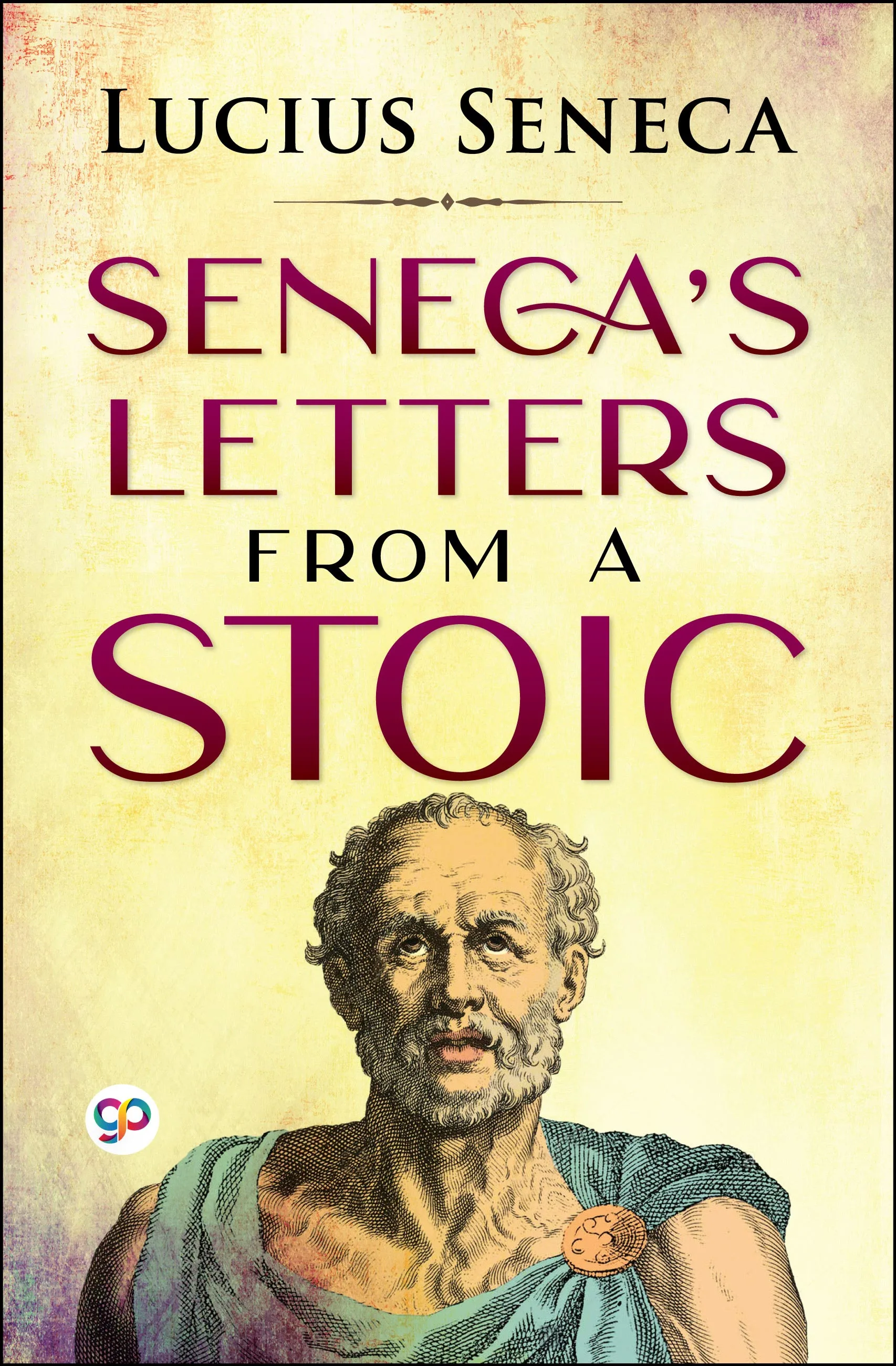
Download Cover Image
Do you want to download the full cover image for Seneca's Letters from a Stoic?