
Your Life is Worth Living
eBook
• INR 70.00
• English
• 9789391181758
No ratings yet
| Publisher | General Press |
|---|---|
| ISBN13 | 9789391181758 |
| ASIN/SKU | B09HM78HBF |
| Book Format | eBook |
| Language | English |
| List Price | INR 70.00 |
| Subject Code | REL081000, REL010000 |
| Publishing Date | 05/10/2021 |
| Book Code | BD00068814 |
Buy this Book
Amazon Stores
Ebook Stores
Other Stores
Discover Your Life is Worth Living by Fulton J. Sheen. This book is published by General Press in eBook format, ISBN 9789391181758, ASIN B09HM78HBF, under Christian Books and Bibles, Christianity, Christian Living.
Book Description
‘Your Life is Worth Living’ has inspiring lessons to deepen your faith from one of the leading religious figures of the twentieth century and author of the Catholic bestseller Life of Christ, Fulton J. Sheen.
For over four decades, Fulton Sheen was the face of Catholicism in America and literally received hundreds of thousands of letters from people around the world in search of truth, faith, salvation, and spiritual guidance. In this newly repackaged reissue of one of Sheen's classic works, the Emmy Award-winning priest takes an intimate look at our sacred journey to God and answers some of life's most profound questions.
With his clever wit and straightforward language, he explains how we can find contentment in the modern world by applying the Christian philosophy of life in our day-to-day exchanges. Sheen also shares humorous stories that made him one of the most celebrated personalities of his time. This book is a lasting testament that your life is worth living and presents the Christian philosophy of life.
For over four decades, Fulton Sheen was the face of Catholicism in America and literally received hundreds of thousands of letters from people around the world in search of truth, faith, salvation, and spiritual guidance. In this newly repackaged reissue of one of Sheen's classic works, the Emmy Award-winning priest takes an intimate look at our sacred journey to God and answers some of life's most profound questions.
With his clever wit and straightforward language, he explains how we can find contentment in the modern world by applying the Christian philosophy of life in our day-to-day exchanges. Sheen also shares humorous stories that made him one of the most celebrated personalities of his time. This book is a lasting testament that your life is worth living and presents the Christian philosophy of life.
Author Biography
FULTON J. SHEEN (1895 – 1979) was one of the most prominent Catholic leaders in American history. He was bishop of Rochester, national director of the Society for the Propagation of the Faith, and television’s first religious broadcaster, hosting “Life is Worth Living” on the ABC network. Sheen’s cause for canonization is currently under consideration.
Editorial Reviews
Editorial Reviews will be added soon…
Book Summary
Your Life Is Worth Living by Fulton J. Sheen is a comprehensive Christian philosophy of life that asks one of the most basic and difficult human questions: Why is life worth living? Rather than answering that question through money, success, pleasure, relationships, or personal achievement, Sheen approaches it from the perspective of Catholic Christianity. He argues that human life has meaning because every person comes from God, is made for God, and ultimately finds fulfillment in God. The book brings together philosophy, theology, morality, Scripture, psychology, and practical spiritual guidance. It was drawn from Sheen’s extensive radio and television teaching and was later published in book form; the original work was assembled from a series of recordings created in 1965, after decades in which Sheen had become one of the most recognizable Catholic voices in America.
The book begins with God and Man, because Sheen believes that a person cannot understand himself without first understanding the source and purpose of his existence. In “The Philosophy of Life,” he addresses the modern feeling that existence is absurd, repetitive, and ultimately meaningless. A person can work, earn money, consume things, pursue entertainment, and repeat the same routines every day without ever asking what all of it is for. Sheen believes this spiritual emptiness is not solved simply by acquiring more possessions or experiences. The human being possesses an interior hunger for truth, goodness, love, and permanence that material things cannot completely satisfy. Life becomes meaningful when it is understood as a journey toward God rather than merely a sequence of earthly events.
Sheen then turns to conscience, presenting it as an inner moral awareness that helps a person recognize the difference between right and wrong. For him, conscience is not simply personal preference. It is connected to objective moral truth. A person may try to silence conscience, rationalize wrongdoing, or convince himself that nothing is truly right or wrong, but such attempts do not eliminate the deeper moral law within human nature. Sheen sees conscience as both a gift and a responsibility. It calls people to examine their actions honestly and to recognize that freedom does not mean doing whatever one wants. Genuine freedom, in his view, means becoming capable of choosing what is genuinely good.
This leads naturally to Sheen’s discussion of good and evil. He rejects the idea that morality is merely a matter of social convention. Good and evil have real consequences because human actions shape the person who performs them. Every choice can strengthen or weaken character. A dishonest act may seem small, but repeated dishonesty gradually changes the person. Likewise, acts of generosity, courage, forgiveness, and self-control gradually form a better human being. Sheen therefore treats morality not as a list of arbitrary restrictions but as a path toward becoming fully human.
The first section then introduces the idea of a “divine invasion,” meaning God’s entrance into human history and human experience. Christianity, Sheen argues, is not simply a collection of moral teachings created by human beings. It claims that God has acted in history and revealed Himself to humanity. The question is therefore not merely whether people believe in God but whether they are willing to respond to the God who has revealed Himself. Sheen asks readers to examine the competing claims made by science, philosophy, politics, pleasure, wealth, ideology, and religion and to determine which can actually answer the deepest questions of human existence. The section proceeds toward revealed truth and miracles, establishing the foundation for Sheen’s specifically Christian understanding of reality.
The second major section, Christ and His Church, places Jesus at the center of the answer. Sheen discusses both the divinity and humanity of Christ, emphasizing the Christian belief that Jesus is truly God and truly man. This combination is essential to his understanding of salvation. If Christ were merely a teacher, He could provide instruction but not transform humanity at its deepest level. If He were not truly human, He could not represent humanity from within human experience. Sheen therefore presents Christ as the meeting point between God and humanity.
The chapters on the Trinity, the Virgin Mary, Christ’s birth, suffering, death, Resurrection, and Ascension develop this vision further. Sheen does not treat the life of Jesus merely as a historical biography. He sees the events of Christ’s life as revelations about the meaning of human existence. The Crucifixion, in particular, becomes the supreme example of sacrificial love. Modern people often associate happiness with avoiding suffering, but Sheen argues that love sometimes requires sacrifice. The Cross demonstrates that suffering can acquire meaning when it is accepted in love and offered for another. The Resurrection then provides the Christian answer to despair: death and suffering do not have the final word.
Sheen next examines the Holy Spirit and the Church, presenting the Church as the continuing presence and instrument of Christ in the world. He discusses the Church as the Mystical Body of Christ and explains Catholic beliefs concerning Peter, papal authority, and infallibility. He also addresses the Church’s relationship with communism, reflecting the historical period in which the original lectures were produced. Although some of the political discussion is tied to the concerns of Sheen’s era, the larger argument is theological: Christianity cannot be reduced to a private philosophy because it makes claims about truth, community, worship, morality, and the destiny of humanity.
The third section focuses on sin, beginning with original sin and its effects on humanity. Sheen’s understanding of sin is more profound than simply breaking a rule. Sin represents a disorder in the relationship between human beings and God. People naturally desire happiness, but they often pursue it through things that cannot ultimately satisfy them. The tragedy of sin is therefore that human beings seek fulfillment in the wrong places. Pride, selfishness, greed, lust, resentment, and other forms of disordered desire turn the individual inward and away from genuine love.
Yet Sheen does not present Christianity as a philosophy of guilt without hope. His discussion of sanctifying grace introduces the possibility of transformation. Grace is God's gift that enables human beings to participate in divine life. This means that Christian spirituality is not simply about trying harder to be morally perfect. Human beings need divine assistance. The Christian life involves cooperation with grace, repentance after failure, and gradual transformation.
This understanding prepares the reader for the fourth major section, Grace and the Sacraments. Sheen explains Catholic teachings about Baptism, Confirmation, the Holy Eucharist, the Eucharistic sacrifice, the Mass, Penance, the Anointing of the Sick, Holy Orders, and Marriage. The sacraments are presented as concrete ways in which God's grace enters human life. Baptism begins the Christian life; Confirmation strengthens it; the Eucharist nourishes it; Penance restores a person after sin; the Anointing of the Sick brings spiritual strength amid illness; Holy Orders serves the Church; and Marriage gives a sacramental framework to the vocation of husband and wife.
The discussion of sin and Penance is particularly important because Sheen understands human beings realistically. People fail. They make selfish decisions, hurt others, betray their own values, and sometimes repeat the same mistakes. Christianity therefore cannot be based on the assumption that people will never fall. Instead, it offers a path back. Repentance requires more than feeling embarrassed or afraid of consequences; it requires recognizing wrongdoing and turning again toward God. In this sense, forgiveness is not a denial of moral responsibility but a means of restoring the person who has fallen.
Sheen’s treatment of marriage, sexuality, and love belongs to the final portion of the book and reflects traditional Catholic teaching. He regards sexuality as something sacred rather than merely biological or recreational. Marriage, in his understanding, is not simply a contract between two individuals but a vocation involving fidelity, sacrifice, family, responsibility, and love. He examines the tensions that can arise in married life and argues that genuine love requires self-giving rather than merely emotional satisfaction. His treatment of sexuality and birth control reflects the Catholic moral teaching of his period and may therefore be particularly important for readers to approach within its historical and theological context.
The final part, World, Soul and Things, returns to the practical question of how a Christian should live. Sheen discusses love, the commandments, total commitment, death, judgment, purgatory, hell, prayer, and the feminine principle in religion. The movement of these chapters is significant. After explaining God, Christ, sin, grace, and the sacraments, Sheen asks what all of this means for everyday life. Christianity cannot remain theoretical. It must influence how a person loves, forgives, works, suffers, prays, and treats other people.
His treatment of the commandments is therefore not simply legalistic. Sheen sees the commandments as expressions of the kind of life that leads toward genuine freedom. The law of love brings these commandments together. Love of God and love of neighbor become the organizing principles of Christian morality. But Sheen distinguishes real love from sentimentality. Genuine love may demand sacrifice, discipline, patience, truthfulness, and forgiveness. It means willing the good of another person even when doing so is difficult.
The book’s discussion of death and judgment brings its central argument into sharp focus. If human life has no eternal purpose, then death can appear to make everything meaningless. But if the human person is created for eternal communion with God, earthly life acquires a completely different significance. Death becomes not merely an ending but a transition into judgment and eternity. Sheen discusses purgatory and hell within this framework, emphasizing that human choices matter because moral and spiritual life ultimately have consequences. Heaven represents the fulfillment for which the human person was created, while separation from God represents the tragic possibility of refusing that fulfillment.
Finally, Sheen turns to prayer, describing it as a dialogue rather than a one-sided speech. Prayer is not simply asking God for favors. It involves listening, surrender, gratitude, repentance, and relationship. This idea captures the emotional heart of the book. Sheen does not believe that people find the meaning of life merely by collecting correct information. They find it through a relationship with God. The intellectual questions matter, but the ultimate purpose of knowledge is transformation.
The central message of Your Life Is Worth Living can therefore be stated simply: human life is worth living because it has a divine origin, a moral purpose, and an eternal destiny. Fulton J. Sheen argues that the modern search for happiness becomes confused when people look for permanent fulfillment in temporary things. Wealth, pleasure, success, status, and even human affection are valuable, but none of them can carry the full weight of the human desire for meaning. According to Sheen, that desire ultimately points beyond the world toward God.
For readers searching for an in-depth summary of Your Life Is Worth Living by Fulton J. Sheen, the book is best understood as a complete introduction to Sheen’s Christian philosophy of life. It explores the meaning of existence, conscience, morality, good and evil, God, Jesus Christ, the Catholic Church, sin, grace, the sacraments, marriage, love, prayer, suffering, death, judgment, heaven, and hell. Its distinctive strength is that Sheen does not isolate these subjects. He connects them into one coherent vision: human beings are created by God, wounded by sin, redeemed through Christ, strengthened by grace, called to love, and ultimately destined for eternal life with God. The title is therefore more than an optimistic slogan. It is the conclusion toward which the entire book moves. Even amid suffering, failure, uncertainty, and death, life possesses meaning because the human person is never merely an accidental creature passing briefly through the world. Life is a journey toward its Creator, and understanding that journey, according to Sheen, is the beginning of learning how to live it well.
The book begins with God and Man, because Sheen believes that a person cannot understand himself without first understanding the source and purpose of his existence. In “The Philosophy of Life,” he addresses the modern feeling that existence is absurd, repetitive, and ultimately meaningless. A person can work, earn money, consume things, pursue entertainment, and repeat the same routines every day without ever asking what all of it is for. Sheen believes this spiritual emptiness is not solved simply by acquiring more possessions or experiences. The human being possesses an interior hunger for truth, goodness, love, and permanence that material things cannot completely satisfy. Life becomes meaningful when it is understood as a journey toward God rather than merely a sequence of earthly events.
Sheen then turns to conscience, presenting it as an inner moral awareness that helps a person recognize the difference between right and wrong. For him, conscience is not simply personal preference. It is connected to objective moral truth. A person may try to silence conscience, rationalize wrongdoing, or convince himself that nothing is truly right or wrong, but such attempts do not eliminate the deeper moral law within human nature. Sheen sees conscience as both a gift and a responsibility. It calls people to examine their actions honestly and to recognize that freedom does not mean doing whatever one wants. Genuine freedom, in his view, means becoming capable of choosing what is genuinely good.
This leads naturally to Sheen’s discussion of good and evil. He rejects the idea that morality is merely a matter of social convention. Good and evil have real consequences because human actions shape the person who performs them. Every choice can strengthen or weaken character. A dishonest act may seem small, but repeated dishonesty gradually changes the person. Likewise, acts of generosity, courage, forgiveness, and self-control gradually form a better human being. Sheen therefore treats morality not as a list of arbitrary restrictions but as a path toward becoming fully human.
The first section then introduces the idea of a “divine invasion,” meaning God’s entrance into human history and human experience. Christianity, Sheen argues, is not simply a collection of moral teachings created by human beings. It claims that God has acted in history and revealed Himself to humanity. The question is therefore not merely whether people believe in God but whether they are willing to respond to the God who has revealed Himself. Sheen asks readers to examine the competing claims made by science, philosophy, politics, pleasure, wealth, ideology, and religion and to determine which can actually answer the deepest questions of human existence. The section proceeds toward revealed truth and miracles, establishing the foundation for Sheen’s specifically Christian understanding of reality.
The second major section, Christ and His Church, places Jesus at the center of the answer. Sheen discusses both the divinity and humanity of Christ, emphasizing the Christian belief that Jesus is truly God and truly man. This combination is essential to his understanding of salvation. If Christ were merely a teacher, He could provide instruction but not transform humanity at its deepest level. If He were not truly human, He could not represent humanity from within human experience. Sheen therefore presents Christ as the meeting point between God and humanity.
The chapters on the Trinity, the Virgin Mary, Christ’s birth, suffering, death, Resurrection, and Ascension develop this vision further. Sheen does not treat the life of Jesus merely as a historical biography. He sees the events of Christ’s life as revelations about the meaning of human existence. The Crucifixion, in particular, becomes the supreme example of sacrificial love. Modern people often associate happiness with avoiding suffering, but Sheen argues that love sometimes requires sacrifice. The Cross demonstrates that suffering can acquire meaning when it is accepted in love and offered for another. The Resurrection then provides the Christian answer to despair: death and suffering do not have the final word.
Sheen next examines the Holy Spirit and the Church, presenting the Church as the continuing presence and instrument of Christ in the world. He discusses the Church as the Mystical Body of Christ and explains Catholic beliefs concerning Peter, papal authority, and infallibility. He also addresses the Church’s relationship with communism, reflecting the historical period in which the original lectures were produced. Although some of the political discussion is tied to the concerns of Sheen’s era, the larger argument is theological: Christianity cannot be reduced to a private philosophy because it makes claims about truth, community, worship, morality, and the destiny of humanity.
The third section focuses on sin, beginning with original sin and its effects on humanity. Sheen’s understanding of sin is more profound than simply breaking a rule. Sin represents a disorder in the relationship between human beings and God. People naturally desire happiness, but they often pursue it through things that cannot ultimately satisfy them. The tragedy of sin is therefore that human beings seek fulfillment in the wrong places. Pride, selfishness, greed, lust, resentment, and other forms of disordered desire turn the individual inward and away from genuine love.
Yet Sheen does not present Christianity as a philosophy of guilt without hope. His discussion of sanctifying grace introduces the possibility of transformation. Grace is God's gift that enables human beings to participate in divine life. This means that Christian spirituality is not simply about trying harder to be morally perfect. Human beings need divine assistance. The Christian life involves cooperation with grace, repentance after failure, and gradual transformation.
This understanding prepares the reader for the fourth major section, Grace and the Sacraments. Sheen explains Catholic teachings about Baptism, Confirmation, the Holy Eucharist, the Eucharistic sacrifice, the Mass, Penance, the Anointing of the Sick, Holy Orders, and Marriage. The sacraments are presented as concrete ways in which God's grace enters human life. Baptism begins the Christian life; Confirmation strengthens it; the Eucharist nourishes it; Penance restores a person after sin; the Anointing of the Sick brings spiritual strength amid illness; Holy Orders serves the Church; and Marriage gives a sacramental framework to the vocation of husband and wife.
The discussion of sin and Penance is particularly important because Sheen understands human beings realistically. People fail. They make selfish decisions, hurt others, betray their own values, and sometimes repeat the same mistakes. Christianity therefore cannot be based on the assumption that people will never fall. Instead, it offers a path back. Repentance requires more than feeling embarrassed or afraid of consequences; it requires recognizing wrongdoing and turning again toward God. In this sense, forgiveness is not a denial of moral responsibility but a means of restoring the person who has fallen.
Sheen’s treatment of marriage, sexuality, and love belongs to the final portion of the book and reflects traditional Catholic teaching. He regards sexuality as something sacred rather than merely biological or recreational. Marriage, in his understanding, is not simply a contract between two individuals but a vocation involving fidelity, sacrifice, family, responsibility, and love. He examines the tensions that can arise in married life and argues that genuine love requires self-giving rather than merely emotional satisfaction. His treatment of sexuality and birth control reflects the Catholic moral teaching of his period and may therefore be particularly important for readers to approach within its historical and theological context.
The final part, World, Soul and Things, returns to the practical question of how a Christian should live. Sheen discusses love, the commandments, total commitment, death, judgment, purgatory, hell, prayer, and the feminine principle in religion. The movement of these chapters is significant. After explaining God, Christ, sin, grace, and the sacraments, Sheen asks what all of this means for everyday life. Christianity cannot remain theoretical. It must influence how a person loves, forgives, works, suffers, prays, and treats other people.
His treatment of the commandments is therefore not simply legalistic. Sheen sees the commandments as expressions of the kind of life that leads toward genuine freedom. The law of love brings these commandments together. Love of God and love of neighbor become the organizing principles of Christian morality. But Sheen distinguishes real love from sentimentality. Genuine love may demand sacrifice, discipline, patience, truthfulness, and forgiveness. It means willing the good of another person even when doing so is difficult.
The book’s discussion of death and judgment brings its central argument into sharp focus. If human life has no eternal purpose, then death can appear to make everything meaningless. But if the human person is created for eternal communion with God, earthly life acquires a completely different significance. Death becomes not merely an ending but a transition into judgment and eternity. Sheen discusses purgatory and hell within this framework, emphasizing that human choices matter because moral and spiritual life ultimately have consequences. Heaven represents the fulfillment for which the human person was created, while separation from God represents the tragic possibility of refusing that fulfillment.
Finally, Sheen turns to prayer, describing it as a dialogue rather than a one-sided speech. Prayer is not simply asking God for favors. It involves listening, surrender, gratitude, repentance, and relationship. This idea captures the emotional heart of the book. Sheen does not believe that people find the meaning of life merely by collecting correct information. They find it through a relationship with God. The intellectual questions matter, but the ultimate purpose of knowledge is transformation.
The central message of Your Life Is Worth Living can therefore be stated simply: human life is worth living because it has a divine origin, a moral purpose, and an eternal destiny. Fulton J. Sheen argues that the modern search for happiness becomes confused when people look for permanent fulfillment in temporary things. Wealth, pleasure, success, status, and even human affection are valuable, but none of them can carry the full weight of the human desire for meaning. According to Sheen, that desire ultimately points beyond the world toward God.
For readers searching for an in-depth summary of Your Life Is Worth Living by Fulton J. Sheen, the book is best understood as a complete introduction to Sheen’s Christian philosophy of life. It explores the meaning of existence, conscience, morality, good and evil, God, Jesus Christ, the Catholic Church, sin, grace, the sacraments, marriage, love, prayer, suffering, death, judgment, heaven, and hell. Its distinctive strength is that Sheen does not isolate these subjects. He connects them into one coherent vision: human beings are created by God, wounded by sin, redeemed through Christ, strengthened by grace, called to love, and ultimately destined for eternal life with God. The title is therefore more than an optimistic slogan. It is the conclusion toward which the entire book moves. Even amid suffering, failure, uncertainty, and death, life possesses meaning because the human person is never merely an accidental creature passing briefly through the world. Life is a journey toward its Creator, and understanding that journey, according to Sheen, is the beginning of learning how to live it well.
Sample Chapters
Sample Chapters will be added soon…
Reader Reviews
No reviews yet.
Your Life is Worth Living
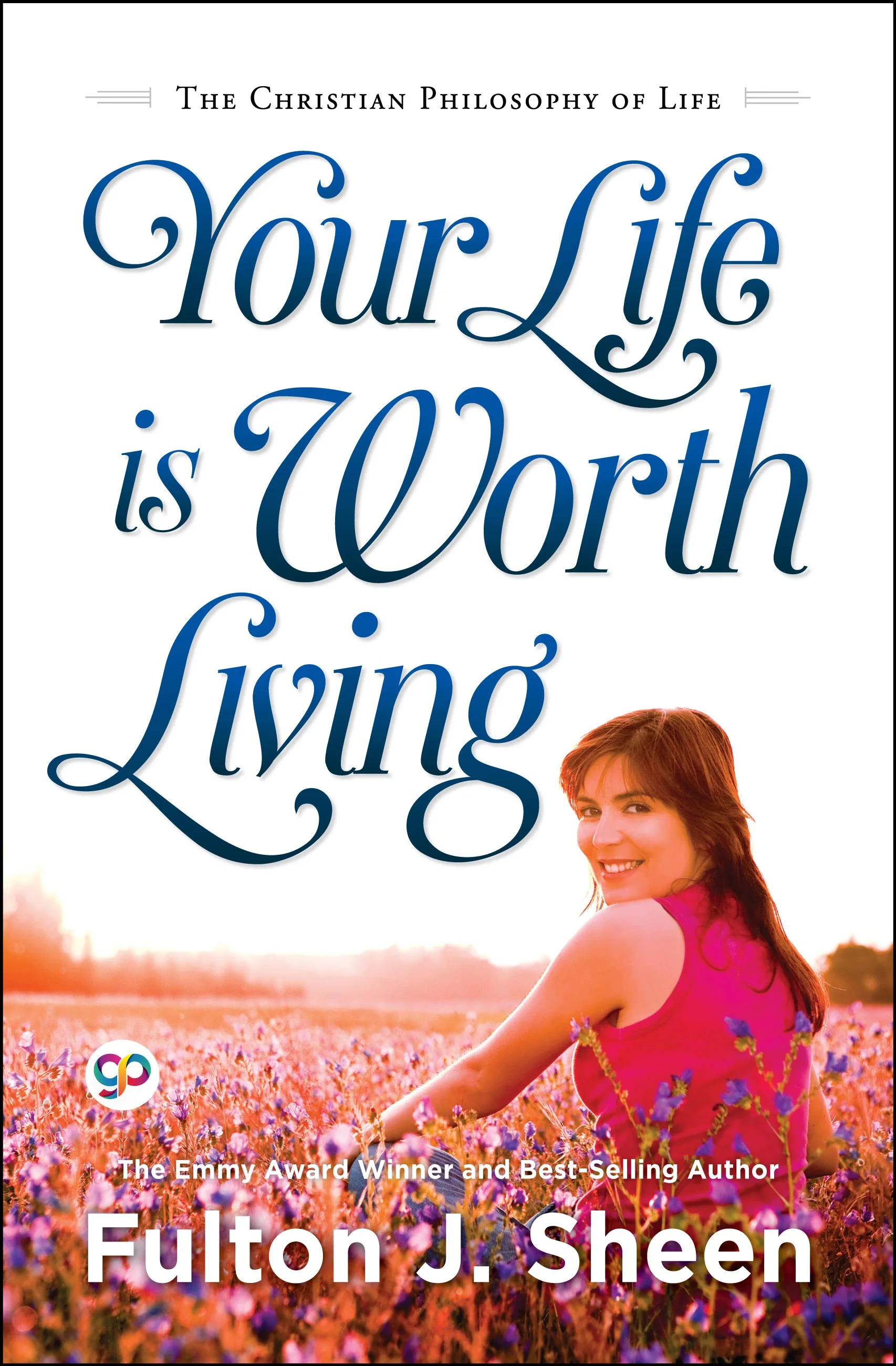
Download Cover Image
Do you want to download the full cover image for Your Life is Worth Living?