
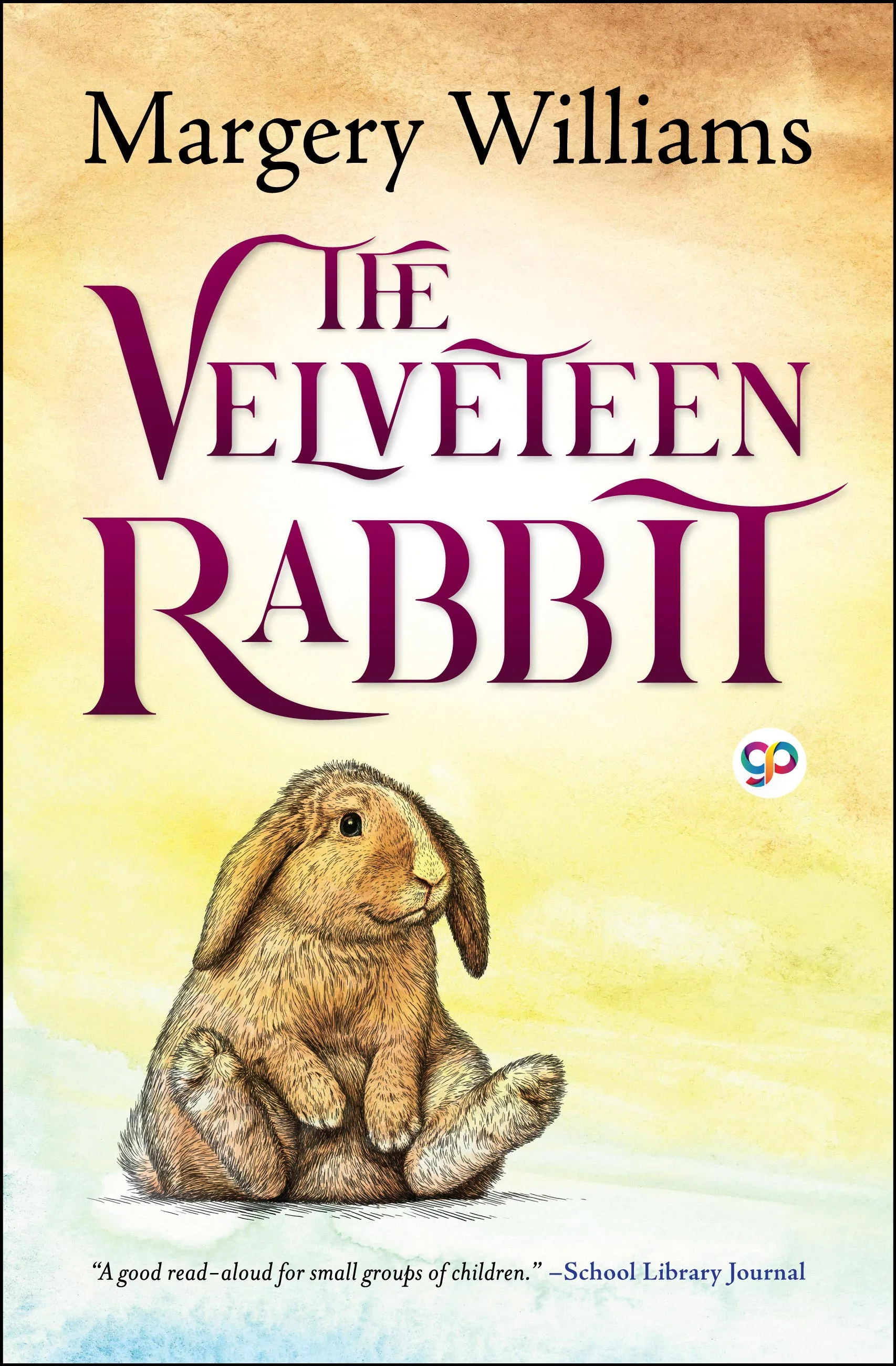
The Velveteen Rabbit
eBook
• INR 51.00
• English
• 9789391181277
No ratings yet
| Publisher | General Press |
|---|---|
| ISBN13 | 9789391181277 |
| ASIN/SKU | B09HMM8MXV |
| Book Format | eBook |
| Language | English |
| List Price | INR 51.00 |
| Subject Code | JUV002210, JUV051000 |
| Publishing Date | 05/10/2021 |
| Book Code | BD00068820 |
Buy this Book
Amazon Stores
Ebook Stores
Other Stores
Discover The Velveteen Rabbit by Margery Williams. This book is published by General Press in eBook format, ISBN 9789391181277, ASIN B09HMM8MXV, under Children's Books, Children's Classics, Fairy Tales, Folk Tales and Myths.
Book Description
‘The Velveteen Rabbit’ is a first children's book and a heart-warming tale by Margery Williams, an English-American author, primarily of popular children's books. It is about a stuffed rabbit who longs to become real, and the magic that makes his dream come true.
Christmas morning, the room filled with the hustle and bustle of preparation, a rabbit stitched of velveteen sits perched on top of the little boy’s stocking. But like most children, the boy is fickle and easily distracted—after Christmas morning, the Velveteen Rabbit is forgotten. Shy and intimidated by the new mechanical toys who sneer at him for being simple, the sawdust-filled rabbit sits quietly at the top of the toy closet, aching to be loved the way he was that wonderful Christmas morning.
A beloved classic since it was first published in 1922, it has since been adapted many times for television and film. It is a timeless story about the importance of love, honesty, and friendship.
Christmas morning, the room filled with the hustle and bustle of preparation, a rabbit stitched of velveteen sits perched on top of the little boy’s stocking. But like most children, the boy is fickle and easily distracted—after Christmas morning, the Velveteen Rabbit is forgotten. Shy and intimidated by the new mechanical toys who sneer at him for being simple, the sawdust-filled rabbit sits quietly at the top of the toy closet, aching to be loved the way he was that wonderful Christmas morning.
A beloved classic since it was first published in 1922, it has since been adapted many times for television and film. It is a timeless story about the importance of love, honesty, and friendship.
Author Biography
Margery Williams (1881–1944), also known as Margery Williams Bianco after her marriage, was a British-American author best remembered for writing The Velveteen Rabbit, one of the most cherished children's books ever published. Her stories are celebrated for their warmth, emotional depth, and timeless reflections on love, kindness, and the meaning of being "real." Through simple yet profound storytelling, she touched the hearts of children and adults alike, leaving a literary legacy that has endured for more than a century.
She was born Margery Williams on July 22, 1881, in London, England. From an early age, she developed a deep love of books and storytelling. Encouraged by her family, she began writing while still a child and published her first book during her teenage years. Her early exposure to literature nurtured a lifelong passion for creating stories that explored imagination, friendship, and the emotional lives of children.
In 1904, Williams married Francesco Bianco, an Italian-born scholar and translator. The couple later settled in the United States, where they raised their family. Balancing family life with her writing career, she continued to produce novels, short stories, and children's books. Her experiences as a mother enriched her understanding of childhood, enabling her to write with remarkable empathy and authenticity.
Her greatest achievement came in 1922 with the publication of The Velveteen Rabbit. The story of a toy rabbit who longs to become real through the power of love quickly became a classic. Its gentle message—that genuine love transforms and gives lasting meaning to life—has resonated with readers across generations. In addition to this beloved work, Williams wrote several other children's books and novels, including Poor Cecco, The Skin Horse, and Winterbound, the latter receiving recognition with a Newbery Honor in 1937.
Margery Williams died on September 4, 1944, in New York. Although she wrote many memorable works, The Velveteen Rabbit remains her enduring masterpiece. Today, her books continue to be translated into numerous languages and adapted for stage, film, and television. She is remembered as a gifted storyteller whose compassionate imagination and deep understanding of love, childhood, and human connection continue to inspire readers of every age.
She was born Margery Williams on July 22, 1881, in London, England. From an early age, she developed a deep love of books and storytelling. Encouraged by her family, she began writing while still a child and published her first book during her teenage years. Her early exposure to literature nurtured a lifelong passion for creating stories that explored imagination, friendship, and the emotional lives of children.
In 1904, Williams married Francesco Bianco, an Italian-born scholar and translator. The couple later settled in the United States, where they raised their family. Balancing family life with her writing career, she continued to produce novels, short stories, and children's books. Her experiences as a mother enriched her understanding of childhood, enabling her to write with remarkable empathy and authenticity.
Her greatest achievement came in 1922 with the publication of The Velveteen Rabbit. The story of a toy rabbit who longs to become real through the power of love quickly became a classic. Its gentle message—that genuine love transforms and gives lasting meaning to life—has resonated with readers across generations. In addition to this beloved work, Williams wrote several other children's books and novels, including Poor Cecco, The Skin Horse, and Winterbound, the latter receiving recognition with a Newbery Honor in 1937.
Margery Williams died on September 4, 1944, in New York. Although she wrote many memorable works, The Velveteen Rabbit remains her enduring masterpiece. Today, her books continue to be translated into numerous languages and adapted for stage, film, and television. She is remembered as a gifted storyteller whose compassionate imagination and deep understanding of love, childhood, and human connection continue to inspire readers of every age.
Editorial Reviews
Editorial Reviews will be added soon…
Book Summary
Margery Williams’s The Velveteen Rabbit; or, How Toys Become Real is a beloved children’s classic about love, friendship, imagination, and the mysterious process by which something becomes “real.” First published in 1922, the story follows a simple stuffed rabbit made of velveteen who longs to become a real rabbit. Unlike many stories about transformation, however, the Velveteen Rabbit does not become real because of magic alone. He becomes real through being deeply loved, cared for, played with, and eventually willing to suffer for the child who loves him. Beneath its gentle language and nursery-story setting, the book explores surprisingly profound ideas about childhood, identity, sacrifice, loss, and what it means to be truly alive. This Velveteen Rabbit summary explains the story, its major characters, themes, symbolism, and enduring message in clear and accessible language.
The story begins with the Velveteen Rabbit arriving in the nursery as a Christmas present. He is beautifully made from soft velveteen and has real-looking whiskers, but compared with the more elaborate mechanical toys in the nursery, he initially feels ordinary. The mechanical toys are proud of their moving parts and complicated mechanisms. They believe that being able to move by themselves makes them superior to simple stuffed animals. The Rabbit is therefore largely ignored at first. He is not glamorous, expensive, or technically impressive. He is simply a soft toy waiting for someone to love him.
The Rabbit’s situation changes when the Boy discovers him. The Boy begins to play with him regularly, and the Rabbit becomes one of his favorite toys. The relationship is not based on the Rabbit’s appearance or sophistication. The child loves him because the Rabbit becomes part of his imaginative world. He is carried around, cuddled, taken on adventures, and treated as a companion rather than merely an object. As the two become closer, the Rabbit begins to wonder what it really means to be real.
The question of what makes a toy “real” is first explained to the Rabbit by the Skin Horse, one of the oldest toys in the nursery. The Skin Horse is worn, faded, and shabby because he has been loved for a long time. When the Rabbit asks whether being real means having complicated machinery inside, the Skin Horse explains that being real has nothing to do with how a toy is made. According to him, something becomes real through love. A toy becomes real when someone loves it deeply enough that it changes from merely being an object into something with a meaningful existence.
This conversation is the philosophical heart of The Velveteen Rabbit. The Skin Horse tells the Rabbit that becoming real can be painful. Once a toy is loved, it may become worn, its fur may become dirty, its appearance may deteriorate, and its original perfection may disappear. Yet those changes are signs that the toy has been genuinely used and loved. The Rabbit is initially frightened by this idea, but he also becomes fascinated by it. He wants more than anything to become real, even though he does not yet understand what the process will cost him.
As the Boy continues to love him, the Rabbit gradually becomes more worn. His velveteen fur becomes rubbed and matted. His whiskers are damaged, and his appearance becomes less attractive. The other toys may have once considered him beautiful, but now he looks shabby. Yet this physical deterioration actually represents his emotional growth. The Rabbit is no longer merely a decorative toy. He has become important to someone. His value comes from the relationship he shares with the Boy.
The story also introduces the Nursery Magic Fairy, who represents the possibility that love can produce a transformation beyond ordinary understanding. But the Fairy does not simply grant the Rabbit a magical reward for being cute or wishing hard enough. The Rabbit’s transformation comes after a long period of being loved and after he has experienced genuine devotion to the Boy. This distinction matters. The story suggests that real transformation is earned through relationships and experience rather than received as a superficial gift.
The Rabbit’s relationship with the Boy becomes even deeper when the Boy takes him everywhere. The Rabbit becomes a trusted companion in the child’s imagination. He is no longer one toy among many. He is the Boy’s special friend. The story therefore captures something very familiar about childhood: children often give emotional lives to their toys. A stuffed animal can become a confidant, an adventure partner, a protector, or even a member of the family. Adults may see only cloth and stuffing, but for a child, imagination can turn an object into a living companion.
One of the most important themes in The Velveteen Rabbit is therefore the power of love to create identity. The Rabbit begins the story uncertain about who he is. He knows what he is made of, but he does not know what it means to be real. Through the Boy’s affection, he develops a sense of purpose. He becomes real not because his physical form changes immediately but because his relationship with another being gives his existence meaning. The story quietly suggests that identity is not always something we possess from the beginning. Sometimes we become ourselves through the relationships in which we are loved.
Another major theme is sacrifice. The Rabbit wants to become real even after learning that becoming real may mean becoming worn and ugly. He accepts the possibility of losing his original beauty because being loved matters more to him than remaining perfect. This is one reason the story resonates with adults as well as children. Growing emotionally often means allowing ourselves to become vulnerable. Love exposes us to pain, disappointment, change, and loss. Yet without that vulnerability, genuine connection is impossible.
The book also explores the difference between appearance and inner worth. The mechanical toys judge the Rabbit according to how impressive he looks and what he can do. The Skin Horse, by contrast, has become beautiful in an entirely different sense: he carries visible evidence of having been loved. His worn body tells the story of his relationships. The Rabbit follows the same path. His shabby appearance does not mean that he has become less valuable. In fact, it proves that he has become more meaningful.
This is particularly poignant because the Rabbit’s transformation is closely connected with loss. After the Boy becomes ill, the adults decide that his nursery must be cleaned and that the Rabbit must be discarded. The Rabbit is sent away because he is considered old, worn, and potentially contaminated. For the Rabbit, this is heartbreaking. He has given everything to the Boy, and now he is being thrown away.
At this moment, the story becomes much more emotionally complex. The Rabbit experiences loneliness and fear, but he also understands that his love for the Boy was real. He remembers the happiness they shared. He has become something more than the object he once was. His suffering therefore becomes part of his transformation. The story does not pretend that love eliminates pain. Instead, it suggests that love can make pain meaningful.
When the Rabbit is left alone outside, the Nursery Magic Fairy appears. She recognizes that the Rabbit has been genuinely loved and that he has become real. She transforms him into a living rabbit. The other rabbits initially find him strange because he still has traces of his former toy identity. He does not quite behave like an ordinary wild rabbit. Eventually, however, he becomes fully comfortable in his new life.
The final emotional turn comes when the Rabbit encounters the Boy again. The child sees a rabbit that reminds him of his old toy but does not recognize him. The Rabbit recognizes the Boy, however, and feels the depth of their former relationship. He has become physically real, but he carries the memory of being loved. This ending is both joyful and bittersweet. The Boy has grown older and moved forward, while the Rabbit continues to carry the connection between them.
The Velveteen Rabbit itself is the central symbol of the story. He represents the human desire to become meaningful through love. At first, he is defined by what he is made of: velveteen, stuffing, thread, and whiskers. Gradually, however, he becomes defined by what he experiences. His worn appearance symbolizes the marks that relationships leave on us. In this sense, the Rabbit’s shabby exterior becomes a metaphor for a life genuinely lived.
The Skin Horse is another important symbol. He represents wisdom gained through experience. Unlike the newer toys, he does not care about looking perfect. He understands that love changes us. His explanation of reality gives the Rabbit the courage to accept vulnerability. He is essentially the story’s philosopher, offering a simple but powerful definition of what it means to become real.
The Nursery Fairy symbolizes transformation, but the story does not present magic as the primary cause of change. Magic arrives only after love has already done its work. This reinforces the idea that emotional reality comes first and supernatural transformation merely makes that reality visible.
Perhaps the most enduring message of The Velveteen Rabbit is that being real is not about being perfect. It is about being loved deeply enough that we become willing to change. The Rabbit becomes real through affection, vulnerability, sacrifice, and loyalty. He loses his original beauty, but in doing so he gains something much more important: a history, a relationship, and a life of his own.
The story also teaches children that love can be both wonderful and painful. It does not offer the simplistic lesson that everything we love will remain with us forever. Instead, it acknowledges that people and things change, childhood ends, and relationships can be separated by circumstances. Yet something valuable can remain even after the original relationship has changed. Memories and love can leave lasting marks on us.
For adults, the story carries an even deeper meaning. The Rabbit’s journey can be read as a metaphor for growing older. Human beings often begin life wanting to appear perfect, attractive, successful, or untouched. But genuine relationships gradually change us. We become tired, vulnerable, imperfect, and marked by experience. Those marks are not necessarily evidence of failure. They can be evidence that we have loved and been loved.
Ultimately, Margery Williams’s The Velveteen Rabbit is a tender story about the mysterious relationship between love and reality. Through a simple stuffed rabbit and a child who loves him, Williams asks a profound question: What makes something truly real? Her answer is not wealth, beauty, intelligence, perfection, or even physical existence. Something becomes real through the depth of its relationships and the experiences it carries. The Rabbit begins as an ordinary toy and ends as a living creature, but the deeper transformation happens long before the Fairy appears. Love has already changed him.
That is why The Velveteen Rabbit remains such an enduring children’s classic. It speaks in simple language, but its emotional truth reaches far beyond childhood. It reminds readers that love leaves marks, that vulnerability is part of genuine connection, and that becoming “real” may require us to give up the safety of remaining untouched. Most importantly, it teaches a gentle and unforgettable lesson: the things that make us imperfect may also be the things that prove we have truly lived and loved.
The story begins with the Velveteen Rabbit arriving in the nursery as a Christmas present. He is beautifully made from soft velveteen and has real-looking whiskers, but compared with the more elaborate mechanical toys in the nursery, he initially feels ordinary. The mechanical toys are proud of their moving parts and complicated mechanisms. They believe that being able to move by themselves makes them superior to simple stuffed animals. The Rabbit is therefore largely ignored at first. He is not glamorous, expensive, or technically impressive. He is simply a soft toy waiting for someone to love him.
The Rabbit’s situation changes when the Boy discovers him. The Boy begins to play with him regularly, and the Rabbit becomes one of his favorite toys. The relationship is not based on the Rabbit’s appearance or sophistication. The child loves him because the Rabbit becomes part of his imaginative world. He is carried around, cuddled, taken on adventures, and treated as a companion rather than merely an object. As the two become closer, the Rabbit begins to wonder what it really means to be real.
The question of what makes a toy “real” is first explained to the Rabbit by the Skin Horse, one of the oldest toys in the nursery. The Skin Horse is worn, faded, and shabby because he has been loved for a long time. When the Rabbit asks whether being real means having complicated machinery inside, the Skin Horse explains that being real has nothing to do with how a toy is made. According to him, something becomes real through love. A toy becomes real when someone loves it deeply enough that it changes from merely being an object into something with a meaningful existence.
This conversation is the philosophical heart of The Velveteen Rabbit. The Skin Horse tells the Rabbit that becoming real can be painful. Once a toy is loved, it may become worn, its fur may become dirty, its appearance may deteriorate, and its original perfection may disappear. Yet those changes are signs that the toy has been genuinely used and loved. The Rabbit is initially frightened by this idea, but he also becomes fascinated by it. He wants more than anything to become real, even though he does not yet understand what the process will cost him.
As the Boy continues to love him, the Rabbit gradually becomes more worn. His velveteen fur becomes rubbed and matted. His whiskers are damaged, and his appearance becomes less attractive. The other toys may have once considered him beautiful, but now he looks shabby. Yet this physical deterioration actually represents his emotional growth. The Rabbit is no longer merely a decorative toy. He has become important to someone. His value comes from the relationship he shares with the Boy.
The story also introduces the Nursery Magic Fairy, who represents the possibility that love can produce a transformation beyond ordinary understanding. But the Fairy does not simply grant the Rabbit a magical reward for being cute or wishing hard enough. The Rabbit’s transformation comes after a long period of being loved and after he has experienced genuine devotion to the Boy. This distinction matters. The story suggests that real transformation is earned through relationships and experience rather than received as a superficial gift.
The Rabbit’s relationship with the Boy becomes even deeper when the Boy takes him everywhere. The Rabbit becomes a trusted companion in the child’s imagination. He is no longer one toy among many. He is the Boy’s special friend. The story therefore captures something very familiar about childhood: children often give emotional lives to their toys. A stuffed animal can become a confidant, an adventure partner, a protector, or even a member of the family. Adults may see only cloth and stuffing, but for a child, imagination can turn an object into a living companion.
One of the most important themes in The Velveteen Rabbit is therefore the power of love to create identity. The Rabbit begins the story uncertain about who he is. He knows what he is made of, but he does not know what it means to be real. Through the Boy’s affection, he develops a sense of purpose. He becomes real not because his physical form changes immediately but because his relationship with another being gives his existence meaning. The story quietly suggests that identity is not always something we possess from the beginning. Sometimes we become ourselves through the relationships in which we are loved.
Another major theme is sacrifice. The Rabbit wants to become real even after learning that becoming real may mean becoming worn and ugly. He accepts the possibility of losing his original beauty because being loved matters more to him than remaining perfect. This is one reason the story resonates with adults as well as children. Growing emotionally often means allowing ourselves to become vulnerable. Love exposes us to pain, disappointment, change, and loss. Yet without that vulnerability, genuine connection is impossible.
The book also explores the difference between appearance and inner worth. The mechanical toys judge the Rabbit according to how impressive he looks and what he can do. The Skin Horse, by contrast, has become beautiful in an entirely different sense: he carries visible evidence of having been loved. His worn body tells the story of his relationships. The Rabbit follows the same path. His shabby appearance does not mean that he has become less valuable. In fact, it proves that he has become more meaningful.
This is particularly poignant because the Rabbit’s transformation is closely connected with loss. After the Boy becomes ill, the adults decide that his nursery must be cleaned and that the Rabbit must be discarded. The Rabbit is sent away because he is considered old, worn, and potentially contaminated. For the Rabbit, this is heartbreaking. He has given everything to the Boy, and now he is being thrown away.
At this moment, the story becomes much more emotionally complex. The Rabbit experiences loneliness and fear, but he also understands that his love for the Boy was real. He remembers the happiness they shared. He has become something more than the object he once was. His suffering therefore becomes part of his transformation. The story does not pretend that love eliminates pain. Instead, it suggests that love can make pain meaningful.
When the Rabbit is left alone outside, the Nursery Magic Fairy appears. She recognizes that the Rabbit has been genuinely loved and that he has become real. She transforms him into a living rabbit. The other rabbits initially find him strange because he still has traces of his former toy identity. He does not quite behave like an ordinary wild rabbit. Eventually, however, he becomes fully comfortable in his new life.
The final emotional turn comes when the Rabbit encounters the Boy again. The child sees a rabbit that reminds him of his old toy but does not recognize him. The Rabbit recognizes the Boy, however, and feels the depth of their former relationship. He has become physically real, but he carries the memory of being loved. This ending is both joyful and bittersweet. The Boy has grown older and moved forward, while the Rabbit continues to carry the connection between them.
The Velveteen Rabbit itself is the central symbol of the story. He represents the human desire to become meaningful through love. At first, he is defined by what he is made of: velveteen, stuffing, thread, and whiskers. Gradually, however, he becomes defined by what he experiences. His worn appearance symbolizes the marks that relationships leave on us. In this sense, the Rabbit’s shabby exterior becomes a metaphor for a life genuinely lived.
The Skin Horse is another important symbol. He represents wisdom gained through experience. Unlike the newer toys, he does not care about looking perfect. He understands that love changes us. His explanation of reality gives the Rabbit the courage to accept vulnerability. He is essentially the story’s philosopher, offering a simple but powerful definition of what it means to become real.
The Nursery Fairy symbolizes transformation, but the story does not present magic as the primary cause of change. Magic arrives only after love has already done its work. This reinforces the idea that emotional reality comes first and supernatural transformation merely makes that reality visible.
Perhaps the most enduring message of The Velveteen Rabbit is that being real is not about being perfect. It is about being loved deeply enough that we become willing to change. The Rabbit becomes real through affection, vulnerability, sacrifice, and loyalty. He loses his original beauty, but in doing so he gains something much more important: a history, a relationship, and a life of his own.
The story also teaches children that love can be both wonderful and painful. It does not offer the simplistic lesson that everything we love will remain with us forever. Instead, it acknowledges that people and things change, childhood ends, and relationships can be separated by circumstances. Yet something valuable can remain even after the original relationship has changed. Memories and love can leave lasting marks on us.
For adults, the story carries an even deeper meaning. The Rabbit’s journey can be read as a metaphor for growing older. Human beings often begin life wanting to appear perfect, attractive, successful, or untouched. But genuine relationships gradually change us. We become tired, vulnerable, imperfect, and marked by experience. Those marks are not necessarily evidence of failure. They can be evidence that we have loved and been loved.
Ultimately, Margery Williams’s The Velveteen Rabbit is a tender story about the mysterious relationship between love and reality. Through a simple stuffed rabbit and a child who loves him, Williams asks a profound question: What makes something truly real? Her answer is not wealth, beauty, intelligence, perfection, or even physical existence. Something becomes real through the depth of its relationships and the experiences it carries. The Rabbit begins as an ordinary toy and ends as a living creature, but the deeper transformation happens long before the Fairy appears. Love has already changed him.
That is why The Velveteen Rabbit remains such an enduring children’s classic. It speaks in simple language, but its emotional truth reaches far beyond childhood. It reminds readers that love leaves marks, that vulnerability is part of genuine connection, and that becoming “real” may require us to give up the safety of remaining untouched. Most importantly, it teaches a gentle and unforgettable lesson: the things that make us imperfect may also be the things that prove we have truly lived and loved.
Sample Chapters
Sample Chapters will be added soon…
Reader Reviews
No reviews yet.
The Velveteen Rabbit
Download Cover Image
Do you want to download the full cover image for The Velveteen Rabbit?