
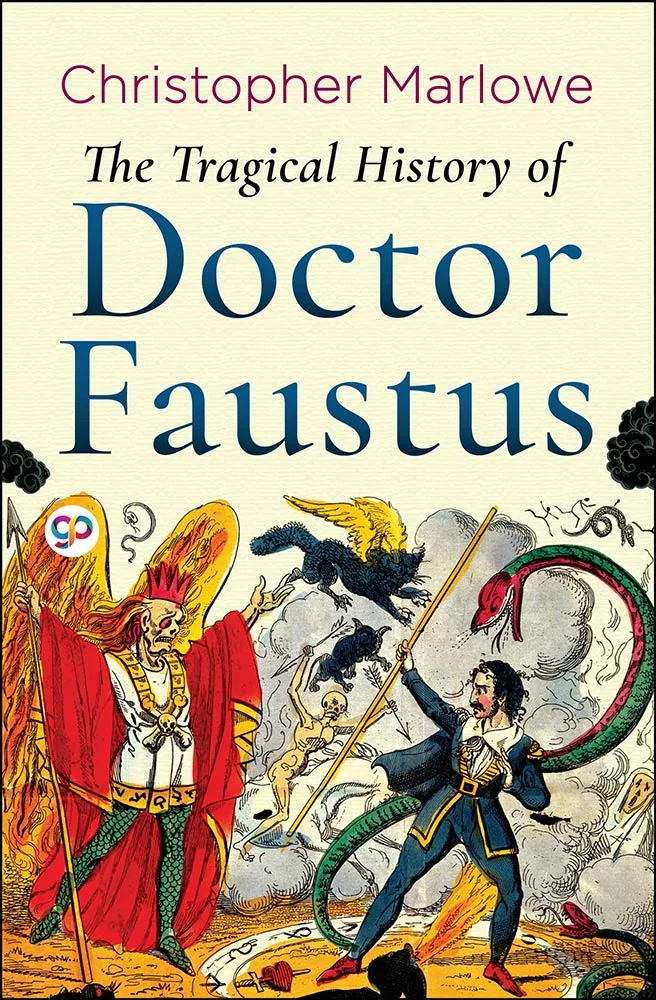
The Tragical History of Doctor Faustus
eBook
• INR 70.00
• English
• 9789391181079
No ratings yet
| Publisher | General Press |
|---|---|
| ISBN13 | 9789391181079 |
| ASIN/SKU | B09HMPNPRZ |
| Book Format | eBook |
| Language | English |
| List Price | INR 70.00 |
| Subject Code | DRA003000, DRA000000 |
| Publishing Date | 05/10/2021 |
| Book Code | BD00068821 |
Buy this Book
Amazon Stores
Ebook Stores
Other Stores
Discover The Tragical History of Doctor Faustus by Christopher Marlowe. This book is published by General Press in eBook format, ISBN 9789391181079, ASIN B09HMPNPRZ, under Literature and Fiction, Classics.
Book Description
‘The Tragical History of Doctor Faustus’ by one of the most famous playwrights in all of literature, Christopher Marlowe. Marlowe's tragic plays, noted for their blank verse and unique protagonists, were a great influence on the legendary William Shakespeare. This play is based on the Faustus story, in which a man sells his soul to the devil for power and knowledge. Doctor Faustus was first published in 1604, eleven years after Marlowe's death and at least twelve years after the first performance of the play.
Faustus immediately takes advantage of his divine skills, using them to impress various men of distinction. Marlowe uses supernatural themes to explore the dire trappings of human nature. With influences from Christian doctrine, the story implicates the true wages of sin stemming from greed, gluttony and pride.
The author illustrates how the greatest tragedy is the one of your own making. It is the most controversial Elizabethan play outside of Shakespeare, with few critics coming to any agreement as to the date or the nature of the text.
Faustus immediately takes advantage of his divine skills, using them to impress various men of distinction. Marlowe uses supernatural themes to explore the dire trappings of human nature. With influences from Christian doctrine, the story implicates the true wages of sin stemming from greed, gluttony and pride.
The author illustrates how the greatest tragedy is the one of your own making. It is the most controversial Elizabethan play outside of Shakespeare, with few critics coming to any agreement as to the date or the nature of the text.
Author Biography
Christopher Marlowe (1564–1593) was an English playwright, poet, and translator whose bold imagination and dramatic innovation transformed Elizabethan theatre. Although his literary career lasted only a few years, Marlowe's influence on English drama was profound. His mastery of blank verse, powerful characters, and ambitious themes paved the way for later playwrights, most notably William Shakespeare. Today, he is regarded as one of the greatest dramatists of the English Renaissance.
Marlowe was born in Canterbury, England, in 1564, the same year as Shakespeare. The son of a shoemaker, he displayed exceptional academic talent from an early age. He attended the King's School in Canterbury before earning a scholarship to Corpus Christi College, Cambridge, where he studied classical literature, philosophy, and theology. His education exposed him to the works of ancient Greek and Roman writers, which greatly influenced his dramatic style. Historians also believe that he may have undertaken secret government service during this period, though the exact nature of his activities remains a subject of scholarly debate.
After moving to London, Marlowe quickly established himself as one of the leading playwrights of the Elizabethan stage. His first major success, Tamburlaine the Great, introduced audiences to a new kind of tragic hero—an ambitious and larger-than-life figure driven by an insatiable desire for power. He followed this with several enduring masterpieces, including Doctor Faustus, The Jew of Malta, Edward II, and The Massacre at Paris. His plays explored themes such as ambition, knowledge, authority, love, and the consequences of human pride, often challenging conventional beliefs and pushing the boundaries of dramatic expression.
In addition to his plays, Marlowe wrote the celebrated narrative poem Hero and Leander and produced a highly regarded translation of Ovid's Amores. His elegant use of blank verse, often praised as "Marlowe's mighty line," gave English drama a new poetic power and greatly influenced the development of theatrical language.
Marlowe's life ended tragically when he was killed during a violent altercation in Deptford in 1593 at the age of just twenty-nine. His untimely death has given rise to numerous theories and speculation, but his literary achievements remain undisputed.
Despite his brief career, Christopher Marlowe left an extraordinary legacy. His fearless imagination, poetic brilliance, and dramatic innovations reshaped English literature, inspiring generations of playwrights and securing his place as one of the defining voices of the Renaissance.
Marlowe was born in Canterbury, England, in 1564, the same year as Shakespeare. The son of a shoemaker, he displayed exceptional academic talent from an early age. He attended the King's School in Canterbury before earning a scholarship to Corpus Christi College, Cambridge, where he studied classical literature, philosophy, and theology. His education exposed him to the works of ancient Greek and Roman writers, which greatly influenced his dramatic style. Historians also believe that he may have undertaken secret government service during this period, though the exact nature of his activities remains a subject of scholarly debate.
After moving to London, Marlowe quickly established himself as one of the leading playwrights of the Elizabethan stage. His first major success, Tamburlaine the Great, introduced audiences to a new kind of tragic hero—an ambitious and larger-than-life figure driven by an insatiable desire for power. He followed this with several enduring masterpieces, including Doctor Faustus, The Jew of Malta, Edward II, and The Massacre at Paris. His plays explored themes such as ambition, knowledge, authority, love, and the consequences of human pride, often challenging conventional beliefs and pushing the boundaries of dramatic expression.
In addition to his plays, Marlowe wrote the celebrated narrative poem Hero and Leander and produced a highly regarded translation of Ovid's Amores. His elegant use of blank verse, often praised as "Marlowe's mighty line," gave English drama a new poetic power and greatly influenced the development of theatrical language.
Marlowe's life ended tragically when he was killed during a violent altercation in Deptford in 1593 at the age of just twenty-nine. His untimely death has given rise to numerous theories and speculation, but his literary achievements remain undisputed.
Despite his brief career, Christopher Marlowe left an extraordinary legacy. His fearless imagination, poetic brilliance, and dramatic innovations reshaped English literature, inspiring generations of playwrights and securing his place as one of the defining voices of the Renaissance.
Editorial Reviews
Editorial Reviews will be added soon…
Book Summary
Book Summary will be added soon…
Sample Chapters
Sample Chapters will be added soon…
Reader Reviews
No reviews yet.
The Tragical History of Doctor Faustus
Download Cover Image
Do you want to download the full cover image for The Tragical History of Doctor Faustus?