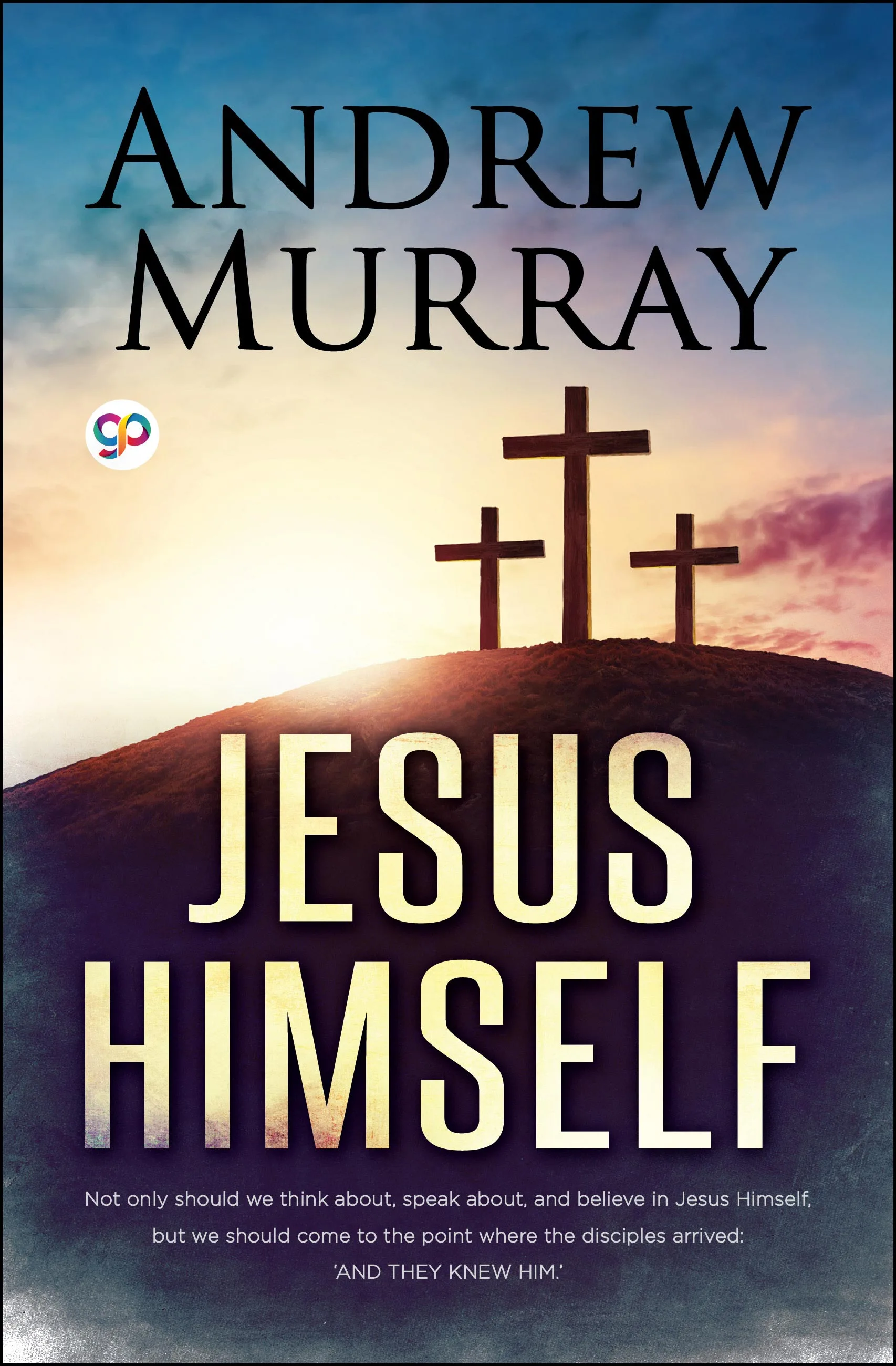
Jesus Himself
eBook
• INR 51.00
• English
• 9789354990403
No ratings yet
| Publisher | General Press |
|---|---|
| ISBN13 | 9789354990403 |
| ASIN/SKU | B09XMJCXSQ |
| Book Format | eBook |
| Language | English |
| List Price | INR 51.00 |
| Subject Code | OCC019000, REL067020 |
| Publishing Date | 01/04/2022 |
| Book Code | BD00068834 |
Buy this Book
Amazon Stores
Ebook Stores
Other Stores
Discover Jesus Himself by Andrew Murray. This book is published by General Press in eBook format, ISBN 9789354990403, ASIN B09XMJCXSQ, under Christian Books and Bibles, Christian Living, Theology.
Book Description
‘Jesus Himself’ consists of brief messages preached by South African pastor Andrew Murray (1828-1917), which originally appeared in the South African Pioneer. Though originally written in 1893, this book feels like many of Andrew Murray's other works-as fresh and relevant as if it were written yesterday! This book describes the relationship that all followers of Christ long for- to be guided by Christ's Spirit on His path, hearing His voice and seeing with His light. It is packed with devotion for Jesus, and describes how to get closer to Jesus. Murray is candid in noting that there is nothing short of Jesus that will satisfy our hearts, and nothing short of complete devotion to Him that will transform our lives into ones that glorify Jesus.
“How possible it is to have Jesus Himself with us and never to know it, and how possible to preach of, and to listen to, all the truth about Jesus Himself and yet not to know Him?” Andrew Murray was concerned about this very real possibility and provided us with the antidote. In this book, Murray reflects on the profound core of the Christian life: exclusive and complete reliance on Jesus himself to bring about everything he has promised for us. It will surely inspire you and draw you closer to Jesus.
“How possible it is to have Jesus Himself with us and never to know it, and how possible to preach of, and to listen to, all the truth about Jesus Himself and yet not to know Him?” Andrew Murray was concerned about this very real possibility and provided us with the antidote. In this book, Murray reflects on the profound core of the Christian life: exclusive and complete reliance on Jesus himself to bring about everything he has promised for us. It will surely inspire you and draw you closer to Jesus.
Author Biography
Andrew Murray (1828-1917) was an amazingly prolific Christian writer. He lived and ministered as both a pastor and author in the towns and villages of South Africa. Some of Murray's earliest works were written to provide nurture and guidance to Christians, whether young or old in the faith; they were actually an extension of his pastoral work. Once books such as Abide in Christ, Divine Healing, and With Christ in the School of Prayer were written, Murray became widely known, and new books from his pen were awaited with great eagerness throughout the world.
He wrote to give daily practical help to many of the people in his congregation who lived out in the farming communities and could come into town for church services only on rare occasions. As he wrote these books of instruction, Murray adopted the practice of placing many of his more devotional books into thirty-one separate readings to correspond with the days of the month.
At the age of seventy-eight, Murray resigned from the pastorate and devoted most of his time to his manuscripts. He continued to write profusely, moving from one book to the next with an intensity of purpose and a zeal that few men of God have ever equaled. He often said of himself, rather humorously, that he was like a hen about to hatch an egg; he was restless and unhappy until he got the burden of the message off his mind.
During these later years, after hearing of pocket-sized paperbacks, Andrew Murray immediately began to write books to be published in that fashion. He thought it was a splendid way to have the teachings of the Christian life at your fingertips, where they could be carried around and read at any time of the day.
One source has said of Andrew Murray that his prolific style possesses the strength and eloquence that are born of deep earnestness and a sense of the solemnity of the issues of the Christian life. Nearly every page reveals an intensity of purpose and appeal that stirs men to the depths of their souls. Murray moves the emotions, searches the conscience, and reveals the sins and shortcomings of many of us with a love and hope born out of an intimate knowledge of the mercy and faithfulness of God.
For Andrew Murray, prayer was considered our personal home base from which we live our Christian lives and extend ourselves to others. During his later years, the vital necessity of unceasing prayer in the spiritual life came to the forefront of his teachings. It was then that he revealed the secret treasures of his heart concerning a life of persistent and believing prayer.
Countless people the world over have hailed Andrew Murray as their spiritual father and given credit for much of their Christian growth to the influence of his priceless devotional books.
He wrote to give daily practical help to many of the people in his congregation who lived out in the farming communities and could come into town for church services only on rare occasions. As he wrote these books of instruction, Murray adopted the practice of placing many of his more devotional books into thirty-one separate readings to correspond with the days of the month.
At the age of seventy-eight, Murray resigned from the pastorate and devoted most of his time to his manuscripts. He continued to write profusely, moving from one book to the next with an intensity of purpose and a zeal that few men of God have ever equaled. He often said of himself, rather humorously, that he was like a hen about to hatch an egg; he was restless and unhappy until he got the burden of the message off his mind.
During these later years, after hearing of pocket-sized paperbacks, Andrew Murray immediately began to write books to be published in that fashion. He thought it was a splendid way to have the teachings of the Christian life at your fingertips, where they could be carried around and read at any time of the day.
One source has said of Andrew Murray that his prolific style possesses the strength and eloquence that are born of deep earnestness and a sense of the solemnity of the issues of the Christian life. Nearly every page reveals an intensity of purpose and appeal that stirs men to the depths of their souls. Murray moves the emotions, searches the conscience, and reveals the sins and shortcomings of many of us with a love and hope born out of an intimate knowledge of the mercy and faithfulness of God.
For Andrew Murray, prayer was considered our personal home base from which we live our Christian lives and extend ourselves to others. During his later years, the vital necessity of unceasing prayer in the spiritual life came to the forefront of his teachings. It was then that he revealed the secret treasures of his heart concerning a life of persistent and believing prayer.
Countless people the world over have hailed Andrew Murray as their spiritual father and given credit for much of their Christian growth to the influence of his priceless devotional books.
Editorial Reviews
Editorial Reviews will be added soon…
Book Summary
Jesus Himself by Andrew Murray is a short but deeply devotional Christian classic about the personal experience of Jesus Christ in the life of a believer. First published in 1893, the book is not a conventional theological study or biography of Jesus. Instead, Murray asks a more intimate question: What does it really mean to know Jesus Himself? The central message is that Christianity should be more than believing facts about Christ, reading about Him, or receiving blessings through faith. The believer is called to recognize, trust, and live consciously in the presence of the living Christ.
The book consists of two brief messages, originally delivered as addresses and later revised for publication. The first is built around the disciples on the road to Emmaus and the words, “Their eyes were opened, and they knew Him.” The second develops Christ’s promise, “Lo, I am with you alway.” Together, these two sections form a simple spiritual progression: from knowing about Jesus to knowing Jesus personally, and from occasionally experiencing His help to living continually in awareness of His presence.
Murray’s language is devotional, direct, and pastoral. He writes especially for Christians who believe in Christ but feel spiritually weak, uncertain, distracted, or unable to live the holy life they desire. His answer is surprisingly simple: the solution is not merely greater effort but a deeper realization of Jesus Himself.
The Central Idea: Knowing Jesus Personally
Murray begins with the story of two disciples walking from Jerusalem to Emmaus after the crucifixion of Jesus. They are discouraged and confused. Jesus Himself comes alongside them, but they do not recognize Him. He speaks with them, explains the Scriptures, and walks with them, yet their eyes remain unable to identify the person who is actually present.
For Murray, this becomes a powerful picture of the Christian life. A person can know many truths about Christianity while still lacking a deep awareness of Christ Himself. A believer may read Scripture, attend church, pray, listen to sermons, and even experience moments of spiritual excitement, yet fail to recognize that the source of those blessings is the living Jesus.
This distinction between knowing about Christ and knowing Christ is the foundation of the entire book. Murray believes that the greatest spiritual blessing is not simply receiving something from Jesus but coming to know the Lord Himself as a living reality.
The point is not intellectual knowledge alone. Murray is concerned with an experiential, personal relationship in which faith becomes a way of seeing the invisible Christ. The publisher description likewise summarizes the book around the idea that fellowship with Jesus is the source of Christian strength and joy.
The Emmaus Road as a Picture of Spiritual Growth
Murray uses the Emmaus story as a picture of different stages in Christian experience.
The disciples begin their journey with sadness. Their hopes have been shattered because they believe Jesus has died and their expectations have failed. Yet Jesus is actually walking beside them.
This is an important spiritual insight in Murray’s writing: the presence of Christ does not depend upon our ability to recognize it. Jesus can be near even when the believer feels abandoned.
The second stage is connected with unbelief and spiritual dullness. The disciples have heard reports of the resurrection, but they do not yet understand what has happened. Their problem is not a lack of information alone. They have information, but they have not yet seen its meaning.
Then Jesus opens the Scriptures to them. As He explains God's Word, their hearts begin to burn. Something changes inside them. They experience spiritual awakening before they fully recognize who is responsible for it.
Finally, their eyes are opened, and they know Him.
This progression is central to Murray's message. A person may experience comfort, joy, inspiration, or spiritual renewal without consciously realizing that Christ Himself is at work. Murray wants the believer to move beyond the experience to the Person behind it.
The goal is therefore not simply a burning heart, but a heart that knows why it burns and whose presence has awakened it.
Faith as Spiritual Sight
One of Murray’s most important ideas is his understanding of faith as spiritual sight.
Human beings normally depend on physical senses. We recognize what we can see and touch. But Christian faith involves learning to recognize an invisible reality. Murray describes faith as a kind of spiritual eyesight through which believers learn to perceive the unseen Christ.
This idea changes the way he approaches Christian living.
The believer does not need to manufacture God's presence. Christ is already present. The challenge is learning to recognize Him and trust Him.
Murray therefore emphasizes waiting upon God, prayer, Scripture, and inward attention to Christ. These practices are not presented as ways of forcing God to come closer. Instead, they help believers become receptive to the reality that Christ is already near.
This is one reason Jesus Himself can be particularly meaningful to Christians who feel that their faith has become routine. Murray redirects attention away from religious activity itself and back toward the Person at the center of Christianity.
From Spiritual Struggle to the Secret of Christian Strength
In the second major section, Murray turns directly toward Christians who struggle with holiness.
He knows that many sincere believers repeatedly promise themselves that they will do better. They make fresh resolutions, try harder, and determine to overcome temptation. Yet after a period of effort, they fail again.
Murray understands the discouragement that follows. If Christian life depends primarily on human determination, then the believer's natural weakness becomes a constant source of fear.
His answer is that the Christian life must be centered on Christ's presence and power rather than human strength alone.
The promise “Lo, I am with you alway” becomes the foundation. Jesus does not merely give instructions from a distance. He is present with His followers.
For Murray, this is the secret of Christian strength. The believer does not simply imitate Christ externally; the believer learns to depend upon Christ inwardly.
This makes the book especially relevant to anyone searching for an Andrew Murray summary of Christian living, a devotional about abiding in Christ, or a practical Christian book about developing a deeper relationship with Jesus.
The Presence of Jesus in Everyday Life
Murray takes Christ's promise of continual presence seriously.
He does not limit Jesus' presence to church services, prayer meetings, religious retreats, or emotionally powerful spiritual experiences. The promise extends to ordinary life.
Christ is present during work, temptation, difficulty, loneliness, responsibility, and service.
This means that the Christian life should not be divided into “spiritual” and “ordinary” portions. Every part of life can become an opportunity for fellowship with Jesus.
Murray wants believers to cultivate an awareness of Christ that continues every hour of the day. The goal is not occasional spiritual excitement but a stable relationship with the Lord. The official publisher description of the book highlights precisely this idea: whole-hearted discipleship is distinguished by fellowship with Jesus throughout daily life.
Why Human Effort Alone Is Not Enough
Another major theme is the difference between trying to live for Christ and living through Christ.
Murray is not arguing that Christians should become passive or careless. Rather, he believes that effort disconnected from dependence upon Jesus eventually produces frustration.
A person may sincerely desire holiness and still discover that determination has limits.
The deeper answer is dependence.
Instead of beginning with the question, “How can I become strong enough?” Murray encourages the believer to ask, “How can I know Jesus more deeply and depend upon Him more completely?”
That shift is crucial.
The Christian life becomes less about constantly measuring one's own performance and more about looking toward Christ. Instead of obsessively asking whether one's faith is strong enough, the believer learns to look at the One in whom faith rests.
This is one of the most comforting aspects of Murray's message. The strength of Christianity does not ultimately lie in the strength of the Christian. It lies in Christ.
Jesus Himself Rather Than Only His Gifts
Murray repeatedly returns to a distinction that gives the book its title.
Christians can become interested in what Jesus gives without becoming deeply interested in Jesus Himself.
They may seek peace, joy, forgiveness, answered prayer, spiritual power, guidance, protection, or victory over sin. These are all valuable gifts. But Murray believes there is something greater: knowing the Giver.
This changes the entire orientation of Christian spirituality.
Instead of saying, “I want what Jesus can give me,” the believer begins to say, “I want Jesus Himself.”
The distinction is subtle but profound.
If Christianity is primarily about receiving blessings, faith can become disappointed when circumstances become difficult. But if Christianity is about fellowship with Christ, then even hardship can become a setting in which the believer discovers His presence more deeply.
Prayer, Waiting, and the Revelation of Christ
Murray places considerable importance on coming into the presence of Jesus and waiting upon Him.
This does not mean empty inactivity. It means quieting the heart enough to become attentive to God.
The disciples on the Emmaus road did not create the presence of Jesus. He was already with them. Their need was for their eyes to be opened.
Murray applies the same principle to Christian prayer. The believer's task is not to persuade Christ to care. It is to come before Him in faith and receive what He desires to reveal.
This creates a spirituality of expectation.
Prayer becomes more than presenting a list of requests. Scripture becomes more than information. Worship becomes more than religious habit. All of these can become places where the believer encounters and recognizes Jesus.
The Cost of Deeper Fellowship
Murray does not present deeper fellowship with Christ as effortless.
There is a cost involved in surrendering self-reliance. A believer must become willing to admit weakness, abandon confidence in personal strength, and depend more completely upon Christ.
That can be uncomfortable.
Human nature wants control. We prefer to know exactly what will happen and how we will solve our problems. Murray's spirituality asks the believer to trust someone beyond the limits of personal understanding.
Yet he insists that this surrender brings greater freedom rather than less.
The believer who stops depending entirely on personal strength becomes available to Christ's strength.
The Book’s Central Message About Christian Joy
The joy Murray describes is not simply emotional happiness.
It comes from knowing that Christ is present.
The Emmaus disciples begin their journey in sadness, but after recognizing Jesus, they return with renewed confidence. Their circumstances have not magically become simple. What has changed is their understanding of who is with them.
This is an important lesson in Murray's theology of joy.
Christian joy does not necessarily mean the absence of trouble. It means that trouble is experienced in fellowship with Christ.
The believer's confidence comes from knowing that Jesus is not merely a historical figure who lived long ago. He is the risen Lord who remains present with His people.
Major Themes in Jesus Himself
The first major theme is personal fellowship with Christ. Murray wants Christianity to move from information to relationship.
The second is faith. Faith is presented as the spiritual ability to recognize and trust the unseen Christ.
The third is Christ's continual presence. Jesus' promise to remain with His followers is not merely theological doctrine; it is intended to transform everyday life.
The fourth is dependence on Christ. Human effort has value, but lasting spiritual strength comes through reliance upon Jesus.
The fifth is spiritual awakening. Like the disciples on the Emmaus road, believers may have Christ near them without recognizing Him. Murray's prayer is that their eyes will be opened.
The sixth is holiness through fellowship. Rather than treating holiness simply as moral self-improvement, Murray presents it as the fruit of deeper communion with Christ.
Final Summary and Meaning
Jesus Himself by Andrew Murray is a compact Christian devotional with a remarkably focused message: the greatest need of the believer is not merely more knowledge about Jesus, but a deeper awareness of Jesus Himself.
Using the Emmaus disciples and Christ's promise of continual presence, Murray describes a Christian life that moves from discouragement to recognition, from spiritual blindness to faith, from self-effort to dependence, and from occasional religious experience to continual fellowship with Christ.
The book's enduring appeal comes from its simplicity. Murray does not offer a complicated formula for spiritual growth. He repeatedly directs the reader back to one Person.
Jesus is not merely the subject of Christian doctrine. He is not merely the source of blessings. He is not merely an example from history.
He is Himself the center, strength, joy, and living reality of the Christian life.
For readers searching for an in-depth summary of Jesus Himself by Andrew Murray, the book can be understood as an invitation to move from knowing about Christ to knowing Christ personally; from occasionally seeking Him to consciously living in His presence; and from relying upon one's own spiritual strength to trusting the risen Lord who promises, “I am with you.”
Ultimately, Murray's message is both challenging and comforting. It is challenging because it asks Christians to go beyond superficial faith and religious habit. But it is comforting because the deeper Christian life does not depend upon becoming strong enough to manage everything alone. The believer's hope is found in the presence of Christ Himself.
That is the heart of Jesus Himself: when the eyes of faith are opened, the Christian discovers that the One they have been seeking is already near.
The book consists of two brief messages, originally delivered as addresses and later revised for publication. The first is built around the disciples on the road to Emmaus and the words, “Their eyes were opened, and they knew Him.” The second develops Christ’s promise, “Lo, I am with you alway.” Together, these two sections form a simple spiritual progression: from knowing about Jesus to knowing Jesus personally, and from occasionally experiencing His help to living continually in awareness of His presence.
Murray’s language is devotional, direct, and pastoral. He writes especially for Christians who believe in Christ but feel spiritually weak, uncertain, distracted, or unable to live the holy life they desire. His answer is surprisingly simple: the solution is not merely greater effort but a deeper realization of Jesus Himself.
The Central Idea: Knowing Jesus Personally
Murray begins with the story of two disciples walking from Jerusalem to Emmaus after the crucifixion of Jesus. They are discouraged and confused. Jesus Himself comes alongside them, but they do not recognize Him. He speaks with them, explains the Scriptures, and walks with them, yet their eyes remain unable to identify the person who is actually present.
For Murray, this becomes a powerful picture of the Christian life. A person can know many truths about Christianity while still lacking a deep awareness of Christ Himself. A believer may read Scripture, attend church, pray, listen to sermons, and even experience moments of spiritual excitement, yet fail to recognize that the source of those blessings is the living Jesus.
This distinction between knowing about Christ and knowing Christ is the foundation of the entire book. Murray believes that the greatest spiritual blessing is not simply receiving something from Jesus but coming to know the Lord Himself as a living reality.
The point is not intellectual knowledge alone. Murray is concerned with an experiential, personal relationship in which faith becomes a way of seeing the invisible Christ. The publisher description likewise summarizes the book around the idea that fellowship with Jesus is the source of Christian strength and joy.
The Emmaus Road as a Picture of Spiritual Growth
Murray uses the Emmaus story as a picture of different stages in Christian experience.
The disciples begin their journey with sadness. Their hopes have been shattered because they believe Jesus has died and their expectations have failed. Yet Jesus is actually walking beside them.
This is an important spiritual insight in Murray’s writing: the presence of Christ does not depend upon our ability to recognize it. Jesus can be near even when the believer feels abandoned.
The second stage is connected with unbelief and spiritual dullness. The disciples have heard reports of the resurrection, but they do not yet understand what has happened. Their problem is not a lack of information alone. They have information, but they have not yet seen its meaning.
Then Jesus opens the Scriptures to them. As He explains God's Word, their hearts begin to burn. Something changes inside them. They experience spiritual awakening before they fully recognize who is responsible for it.
Finally, their eyes are opened, and they know Him.
This progression is central to Murray's message. A person may experience comfort, joy, inspiration, or spiritual renewal without consciously realizing that Christ Himself is at work. Murray wants the believer to move beyond the experience to the Person behind it.
The goal is therefore not simply a burning heart, but a heart that knows why it burns and whose presence has awakened it.
Faith as Spiritual Sight
One of Murray’s most important ideas is his understanding of faith as spiritual sight.
Human beings normally depend on physical senses. We recognize what we can see and touch. But Christian faith involves learning to recognize an invisible reality. Murray describes faith as a kind of spiritual eyesight through which believers learn to perceive the unseen Christ.
This idea changes the way he approaches Christian living.
The believer does not need to manufacture God's presence. Christ is already present. The challenge is learning to recognize Him and trust Him.
Murray therefore emphasizes waiting upon God, prayer, Scripture, and inward attention to Christ. These practices are not presented as ways of forcing God to come closer. Instead, they help believers become receptive to the reality that Christ is already near.
This is one reason Jesus Himself can be particularly meaningful to Christians who feel that their faith has become routine. Murray redirects attention away from religious activity itself and back toward the Person at the center of Christianity.
From Spiritual Struggle to the Secret of Christian Strength
In the second major section, Murray turns directly toward Christians who struggle with holiness.
He knows that many sincere believers repeatedly promise themselves that they will do better. They make fresh resolutions, try harder, and determine to overcome temptation. Yet after a period of effort, they fail again.
Murray understands the discouragement that follows. If Christian life depends primarily on human determination, then the believer's natural weakness becomes a constant source of fear.
His answer is that the Christian life must be centered on Christ's presence and power rather than human strength alone.
The promise “Lo, I am with you alway” becomes the foundation. Jesus does not merely give instructions from a distance. He is present with His followers.
For Murray, this is the secret of Christian strength. The believer does not simply imitate Christ externally; the believer learns to depend upon Christ inwardly.
This makes the book especially relevant to anyone searching for an Andrew Murray summary of Christian living, a devotional about abiding in Christ, or a practical Christian book about developing a deeper relationship with Jesus.
The Presence of Jesus in Everyday Life
Murray takes Christ's promise of continual presence seriously.
He does not limit Jesus' presence to church services, prayer meetings, religious retreats, or emotionally powerful spiritual experiences. The promise extends to ordinary life.
Christ is present during work, temptation, difficulty, loneliness, responsibility, and service.
This means that the Christian life should not be divided into “spiritual” and “ordinary” portions. Every part of life can become an opportunity for fellowship with Jesus.
Murray wants believers to cultivate an awareness of Christ that continues every hour of the day. The goal is not occasional spiritual excitement but a stable relationship with the Lord. The official publisher description of the book highlights precisely this idea: whole-hearted discipleship is distinguished by fellowship with Jesus throughout daily life.
Why Human Effort Alone Is Not Enough
Another major theme is the difference between trying to live for Christ and living through Christ.
Murray is not arguing that Christians should become passive or careless. Rather, he believes that effort disconnected from dependence upon Jesus eventually produces frustration.
A person may sincerely desire holiness and still discover that determination has limits.
The deeper answer is dependence.
Instead of beginning with the question, “How can I become strong enough?” Murray encourages the believer to ask, “How can I know Jesus more deeply and depend upon Him more completely?”
That shift is crucial.
The Christian life becomes less about constantly measuring one's own performance and more about looking toward Christ. Instead of obsessively asking whether one's faith is strong enough, the believer learns to look at the One in whom faith rests.
This is one of the most comforting aspects of Murray's message. The strength of Christianity does not ultimately lie in the strength of the Christian. It lies in Christ.
Jesus Himself Rather Than Only His Gifts
Murray repeatedly returns to a distinction that gives the book its title.
Christians can become interested in what Jesus gives without becoming deeply interested in Jesus Himself.
They may seek peace, joy, forgiveness, answered prayer, spiritual power, guidance, protection, or victory over sin. These are all valuable gifts. But Murray believes there is something greater: knowing the Giver.
This changes the entire orientation of Christian spirituality.
Instead of saying, “I want what Jesus can give me,” the believer begins to say, “I want Jesus Himself.”
The distinction is subtle but profound.
If Christianity is primarily about receiving blessings, faith can become disappointed when circumstances become difficult. But if Christianity is about fellowship with Christ, then even hardship can become a setting in which the believer discovers His presence more deeply.
Prayer, Waiting, and the Revelation of Christ
Murray places considerable importance on coming into the presence of Jesus and waiting upon Him.
This does not mean empty inactivity. It means quieting the heart enough to become attentive to God.
The disciples on the Emmaus road did not create the presence of Jesus. He was already with them. Their need was for their eyes to be opened.
Murray applies the same principle to Christian prayer. The believer's task is not to persuade Christ to care. It is to come before Him in faith and receive what He desires to reveal.
This creates a spirituality of expectation.
Prayer becomes more than presenting a list of requests. Scripture becomes more than information. Worship becomes more than religious habit. All of these can become places where the believer encounters and recognizes Jesus.
The Cost of Deeper Fellowship
Murray does not present deeper fellowship with Christ as effortless.
There is a cost involved in surrendering self-reliance. A believer must become willing to admit weakness, abandon confidence in personal strength, and depend more completely upon Christ.
That can be uncomfortable.
Human nature wants control. We prefer to know exactly what will happen and how we will solve our problems. Murray's spirituality asks the believer to trust someone beyond the limits of personal understanding.
Yet he insists that this surrender brings greater freedom rather than less.
The believer who stops depending entirely on personal strength becomes available to Christ's strength.
The Book’s Central Message About Christian Joy
The joy Murray describes is not simply emotional happiness.
It comes from knowing that Christ is present.
The Emmaus disciples begin their journey in sadness, but after recognizing Jesus, they return with renewed confidence. Their circumstances have not magically become simple. What has changed is their understanding of who is with them.
This is an important lesson in Murray's theology of joy.
Christian joy does not necessarily mean the absence of trouble. It means that trouble is experienced in fellowship with Christ.
The believer's confidence comes from knowing that Jesus is not merely a historical figure who lived long ago. He is the risen Lord who remains present with His people.
Major Themes in Jesus Himself
The first major theme is personal fellowship with Christ. Murray wants Christianity to move from information to relationship.
The second is faith. Faith is presented as the spiritual ability to recognize and trust the unseen Christ.
The third is Christ's continual presence. Jesus' promise to remain with His followers is not merely theological doctrine; it is intended to transform everyday life.
The fourth is dependence on Christ. Human effort has value, but lasting spiritual strength comes through reliance upon Jesus.
The fifth is spiritual awakening. Like the disciples on the Emmaus road, believers may have Christ near them without recognizing Him. Murray's prayer is that their eyes will be opened.
The sixth is holiness through fellowship. Rather than treating holiness simply as moral self-improvement, Murray presents it as the fruit of deeper communion with Christ.
Final Summary and Meaning
Jesus Himself by Andrew Murray is a compact Christian devotional with a remarkably focused message: the greatest need of the believer is not merely more knowledge about Jesus, but a deeper awareness of Jesus Himself.
Using the Emmaus disciples and Christ's promise of continual presence, Murray describes a Christian life that moves from discouragement to recognition, from spiritual blindness to faith, from self-effort to dependence, and from occasional religious experience to continual fellowship with Christ.
The book's enduring appeal comes from its simplicity. Murray does not offer a complicated formula for spiritual growth. He repeatedly directs the reader back to one Person.
Jesus is not merely the subject of Christian doctrine. He is not merely the source of blessings. He is not merely an example from history.
He is Himself the center, strength, joy, and living reality of the Christian life.
For readers searching for an in-depth summary of Jesus Himself by Andrew Murray, the book can be understood as an invitation to move from knowing about Christ to knowing Christ personally; from occasionally seeking Him to consciously living in His presence; and from relying upon one's own spiritual strength to trusting the risen Lord who promises, “I am with you.”
Ultimately, Murray's message is both challenging and comforting. It is challenging because it asks Christians to go beyond superficial faith and religious habit. But it is comforting because the deeper Christian life does not depend upon becoming strong enough to manage everything alone. The believer's hope is found in the presence of Christ Himself.
That is the heart of Jesus Himself: when the eyes of faith are opened, the Christian discovers that the One they have been seeking is already near.
Sample Chapters
Sample Chapters will be added soon…
Reader Reviews
No reviews yet.
Jesus Himself