
The History of the Decline and Fall of the Roman Empire
eBook
• INR 51.00
• English
• 9789354990588
No ratings yet
| Publisher | General Press |
|---|---|
| ISBN13 | 9789354990588 |
| ASIN/SKU | B09XMJK39V |
| Book Format | eBook |
| Language | English |
| List Price | INR 51.00 |
| Subject Code | HIS016000, HIS010000 |
| Publishing Date | 01/04/2022 |
| Book Code | BD00068835 |
Buy this Book
Amazon Stores
Ebook Stores
Other Stores
Discover The History of the Decline and Fall of the Roman Empire by Edward Gibbon. This book is published by General Press in eBook format, ISBN 9789354990588, ASIN B09XMJK39V, under History, History of Europe, Nonfiction.
Book Description
Few works of history have captured the rise, transformation, and eventual decline of a civilization as powerfully as Edward Gibbon’s 'The History of the Decline and Fall of the Roman Empire', a monumental work of historical literature and one of the most influential studies of the Roman world ever written. First published in the late eighteenth century, the book explores how one of history’s greatest empires gradually weakened through political conflict, military pressures, economic problems, social changes, and the shifting forces of religion and culture.
Rather than presenting Rome’s decline as the result of a single disaster, Gibbon traces a long and complicated process stretching across centuries. He begins with the Roman Empire at the height of its power and follows its changing fortunes as emperors rise and fall, borders come under increasing pressure, and internal divisions make the vast empire harder to govern. Along the way, he examines the role of the army, government, taxation, corruption, succession struggles, and the changing character of Roman society. His narrative also moves beyond Rome itself, exploring the rise of Christianity, the Byzantine Empire, the expansion of Islam, and the migrations and invasions that reshaped Europe.
What makes Gibbon’s work remarkable is not simply the enormous historical period it covers, but the way he connects political events with broader cultural and social forces. His sharp observations, dry wit, and confident storytelling turn complex history into a deeply engaging account of how civilizations change over time. 'The History of the Decline and Fall of the Roman Empire' remains a fascinating invitation to look at Rome not as a civilization that suddenly collapsed, but as a world slowly transformed by forces both within and beyond its control. For readers curious about why great empires rise, endure, and ultimately change, Gibbon’s classic offers a journey well worth taking.
Rather than presenting Rome’s decline as the result of a single disaster, Gibbon traces a long and complicated process stretching across centuries. He begins with the Roman Empire at the height of its power and follows its changing fortunes as emperors rise and fall, borders come under increasing pressure, and internal divisions make the vast empire harder to govern. Along the way, he examines the role of the army, government, taxation, corruption, succession struggles, and the changing character of Roman society. His narrative also moves beyond Rome itself, exploring the rise of Christianity, the Byzantine Empire, the expansion of Islam, and the migrations and invasions that reshaped Europe.
What makes Gibbon’s work remarkable is not simply the enormous historical period it covers, but the way he connects political events with broader cultural and social forces. His sharp observations, dry wit, and confident storytelling turn complex history into a deeply engaging account of how civilizations change over time. 'The History of the Decline and Fall of the Roman Empire' remains a fascinating invitation to look at Rome not as a civilization that suddenly collapsed, but as a world slowly transformed by forces both within and beyond its control. For readers curious about why great empires rise, endure, and ultimately change, Gibbon’s classic offers a journey well worth taking.
Author Biography
Edward Gibbon (1737–1794) was an English historian, scholar, and author whose monumental work The History of the Decline and Fall of the Roman Empire established him as one of the greatest historians in the English language. Renowned for his meticulous research, elegant prose, and analytical approach, Gibbon transformed the writing of history by combining careful examination of historical sources with engaging narrative. His work continues to be admired for its literary brilliance and lasting influence on the study of ancient history.
Gibbon was born on May 8, 1737, in Putney, Surrey, England, into a prosperous family. His childhood was marked by fragile health, which limited his physical activities but encouraged a lifelong devotion to reading and learning. He attended Magdalen College, Oxford, though he later expressed disappointment with the quality of education he received there. After briefly converting to Roman Catholicism, he was sent to Lausanne, Switzerland, where he lived under the guidance of a Protestant minister. During this period, he returned to Protestantism and received a rigorous education in classical literature, philosophy, history, and languages. His years in Lausanne laid the intellectual foundation for his future achievements.
Gibbon served for a time in the Hampshire militia and later entered public life as a Member of Parliament. However, it was scholarship that remained his greatest passion. While visiting Rome in 1764, he conceived the idea of writing a comprehensive history of the Roman Empire. The result was The History of the Decline and Fall of the Roman Empire, published in six volumes between 1776 and 1789. The work traced the empire's development from the height of its power to the fall of Constantinople in 1453, offering detailed analysis of political, military, religious, and social changes. Although some of his interpretations—particularly those concerning Christianity—have been debated and revised by later historians, his commitment to critical inquiry and extensive use of primary sources set new standards for historical scholarship.
Edward Gibbon spent his later years continuing his studies and refining his writings until his death in London on January 16, 1794. His masterpiece remains one of the most influential works of history ever written, admired for its depth, clarity, and literary excellence. Today, Gibbon is remembered as a pioneering historian whose disciplined scholarship and enduring curiosity transformed the study of the ancient world and inspired generations of historians, writers, and readers.
Gibbon was born on May 8, 1737, in Putney, Surrey, England, into a prosperous family. His childhood was marked by fragile health, which limited his physical activities but encouraged a lifelong devotion to reading and learning. He attended Magdalen College, Oxford, though he later expressed disappointment with the quality of education he received there. After briefly converting to Roman Catholicism, he was sent to Lausanne, Switzerland, where he lived under the guidance of a Protestant minister. During this period, he returned to Protestantism and received a rigorous education in classical literature, philosophy, history, and languages. His years in Lausanne laid the intellectual foundation for his future achievements.
Gibbon served for a time in the Hampshire militia and later entered public life as a Member of Parliament. However, it was scholarship that remained his greatest passion. While visiting Rome in 1764, he conceived the idea of writing a comprehensive history of the Roman Empire. The result was The History of the Decline and Fall of the Roman Empire, published in six volumes between 1776 and 1789. The work traced the empire's development from the height of its power to the fall of Constantinople in 1453, offering detailed analysis of political, military, religious, and social changes. Although some of his interpretations—particularly those concerning Christianity—have been debated and revised by later historians, his commitment to critical inquiry and extensive use of primary sources set new standards for historical scholarship.
Edward Gibbon spent his later years continuing his studies and refining his writings until his death in London on January 16, 1794. His masterpiece remains one of the most influential works of history ever written, admired for its depth, clarity, and literary excellence. Today, Gibbon is remembered as a pioneering historian whose disciplined scholarship and enduring curiosity transformed the study of the ancient world and inspired generations of historians, writers, and readers.
Editorial Reviews
Editorial Reviews will be added soon…
Book Summary
"The History of the Decline and Fall of the Roman Empire" is one of the greatest works of historical writing ever produced. In this monumental history, Edward Gibbon traces the story of the Roman Empire from the height of its power under the Antonine emperors in the second century AD to the fall of Constantinople in 1453. Rather than focusing on a single ruler or event, Gibbon examines the gradual weakening of an empire that once ruled much of Europe, North Africa, and the Middle East. He explores how political instability, military decline, religious transformation, economic troubles, and foreign invasions slowly eroded Rome's strength over many centuries. His work is not merely a record of events but an attempt to understand why even the mightiest civilizations eventually collapse.
Gibbon begins by describing the Roman Empire during what he considers its golden age, particularly under emperors such as Trajan, Hadrian, Antoninus Pius, and Marcus Aurelius. During this period, Rome enjoyed relative peace, prosperity, and efficient administration. Its vast road network, disciplined army, thriving trade, and legal system allowed the empire to flourish. Yet beneath this impressive surface, Gibbon detects the seeds of future decline. The increasing concentration of power in the hands of emperors, dependence on military loyalty, and growing political corruption gradually weakened the institutions that had once made Rome strong.
After the death of Marcus Aurelius, the empire entered a period of instability marked by civil wars, short-lived emperors, and constant struggles for power. Ambitious generals fought one another for the imperial throne, while the army became more interested in choosing emperors than defending the empire's borders. This political chaos drained resources and weakened public confidence in the government. Gibbon explains how frequent changes in leadership prevented long-term planning and left the empire vulnerable to both internal rebellion and external threats.
A major turning point in the narrative is the rise of Christianity. Gibbon presents the spread of the new religion as one of the many forces that transformed Roman society. He argues that as Christianity became the dominant faith, traditional Roman values and civic institutions changed significantly. Religious disputes often became political conflicts, while emperors increasingly devoted attention to theological controversies. Although modern historians debate many of Gibbon's conclusions about Christianity, his discussion remains one of the most famous and controversial aspects of the book. He examines the growth of the Church, the lives of early Christians, and the relationship between religious authority and imperial power.
As the centuries progressed, Rome faced mounting pressure from powerful neighboring peoples, including the Goths, Vandals, Huns, Franks, and other Germanic tribes. Gibbon vividly recounts their invasions, migrations, and battles against the empire. The sack of Rome by Alaric in AD 410 shocked the ancient world, while later invasions further weakened imperial control. Leaders such as Attila the Hun appear as formidable opponents whose campaigns reshaped Europe's political landscape. Yet Gibbon emphasizes that these invasions succeeded largely because the empire itself had already become fragile from years of internal decline.
The story also follows the division of the Roman Empire into eastern and western halves. While the Western Roman Empire gradually collapsed under repeated invasions and political disorder, the Eastern Roman Empire, centered in Constantinople, survived for nearly a thousand more years. Gibbon carefully examines the fortunes of Byzantine emperors, military campaigns, religious disputes, and diplomatic strategies. Although he often criticizes Byzantine politics as overly ceremonial and divided, he acknowledges the empire's remarkable endurance and its role in preserving Roman traditions, law, and classical learning through the Middle Ages.
Another important theme throughout the work is the changing balance of power across Europe and the Mediterranean. Gibbon describes the rise of Islam and the extraordinary expansion of the Arab Caliphates, which transformed the political and religious map of the ancient world. He also follows the emergence of new kingdoms in Western Europe, the revival of imperial ambitions under Charlemagne, the Crusades, and the growing influence of the Ottoman Turks. These developments show that while Rome declined, history continued to evolve through the rise of new civilizations and new centers of power.
The final chapters bring the narrative to the dramatic fall of Constantinople in 1453, when the Ottoman Sultan Mehmed II captured the last remnants of the Eastern Roman Empire. This event symbolically marked the end of an empire that had endured in one form or another for almost fifteen centuries. Gibbon portrays this conclusion with both grandeur and melancholy, emphasizing the long historical journey from Rome's unmatched dominance to its ultimate disappearance. Rather than blaming a single event or individual, he presents the empire's fall as the result of many interconnected causes unfolding over generations.
More than a history of Rome, 'The History of the Decline and Fall of the Roman Empire' is a profound meditation on power, leadership, human ambition, and the impermanence of civilizations. Gibbon combines meticulous research with elegant prose and thoughtful analysis, encouraging readers to consider how prosperity can give way to complacency and how great institutions can weaken when they lose their discipline and purpose. Although modern scholarship has revised some of his interpretations, his work remains a landmark of historical literature. It continues to inspire readers not only because of its rich account of the Roman world but also because of the timeless questions it raises about the rise, endurance, and eventual decline of every great empire.
Gibbon begins by describing the Roman Empire during what he considers its golden age, particularly under emperors such as Trajan, Hadrian, Antoninus Pius, and Marcus Aurelius. During this period, Rome enjoyed relative peace, prosperity, and efficient administration. Its vast road network, disciplined army, thriving trade, and legal system allowed the empire to flourish. Yet beneath this impressive surface, Gibbon detects the seeds of future decline. The increasing concentration of power in the hands of emperors, dependence on military loyalty, and growing political corruption gradually weakened the institutions that had once made Rome strong.
After the death of Marcus Aurelius, the empire entered a period of instability marked by civil wars, short-lived emperors, and constant struggles for power. Ambitious generals fought one another for the imperial throne, while the army became more interested in choosing emperors than defending the empire's borders. This political chaos drained resources and weakened public confidence in the government. Gibbon explains how frequent changes in leadership prevented long-term planning and left the empire vulnerable to both internal rebellion and external threats.
A major turning point in the narrative is the rise of Christianity. Gibbon presents the spread of the new religion as one of the many forces that transformed Roman society. He argues that as Christianity became the dominant faith, traditional Roman values and civic institutions changed significantly. Religious disputes often became political conflicts, while emperors increasingly devoted attention to theological controversies. Although modern historians debate many of Gibbon's conclusions about Christianity, his discussion remains one of the most famous and controversial aspects of the book. He examines the growth of the Church, the lives of early Christians, and the relationship between religious authority and imperial power.
As the centuries progressed, Rome faced mounting pressure from powerful neighboring peoples, including the Goths, Vandals, Huns, Franks, and other Germanic tribes. Gibbon vividly recounts their invasions, migrations, and battles against the empire. The sack of Rome by Alaric in AD 410 shocked the ancient world, while later invasions further weakened imperial control. Leaders such as Attila the Hun appear as formidable opponents whose campaigns reshaped Europe's political landscape. Yet Gibbon emphasizes that these invasions succeeded largely because the empire itself had already become fragile from years of internal decline.
The story also follows the division of the Roman Empire into eastern and western halves. While the Western Roman Empire gradually collapsed under repeated invasions and political disorder, the Eastern Roman Empire, centered in Constantinople, survived for nearly a thousand more years. Gibbon carefully examines the fortunes of Byzantine emperors, military campaigns, religious disputes, and diplomatic strategies. Although he often criticizes Byzantine politics as overly ceremonial and divided, he acknowledges the empire's remarkable endurance and its role in preserving Roman traditions, law, and classical learning through the Middle Ages.
Another important theme throughout the work is the changing balance of power across Europe and the Mediterranean. Gibbon describes the rise of Islam and the extraordinary expansion of the Arab Caliphates, which transformed the political and religious map of the ancient world. He also follows the emergence of new kingdoms in Western Europe, the revival of imperial ambitions under Charlemagne, the Crusades, and the growing influence of the Ottoman Turks. These developments show that while Rome declined, history continued to evolve through the rise of new civilizations and new centers of power.
The final chapters bring the narrative to the dramatic fall of Constantinople in 1453, when the Ottoman Sultan Mehmed II captured the last remnants of the Eastern Roman Empire. This event symbolically marked the end of an empire that had endured in one form or another for almost fifteen centuries. Gibbon portrays this conclusion with both grandeur and melancholy, emphasizing the long historical journey from Rome's unmatched dominance to its ultimate disappearance. Rather than blaming a single event or individual, he presents the empire's fall as the result of many interconnected causes unfolding over generations.
More than a history of Rome, 'The History of the Decline and Fall of the Roman Empire' is a profound meditation on power, leadership, human ambition, and the impermanence of civilizations. Gibbon combines meticulous research with elegant prose and thoughtful analysis, encouraging readers to consider how prosperity can give way to complacency and how great institutions can weaken when they lose their discipline and purpose. Although modern scholarship has revised some of his interpretations, his work remains a landmark of historical literature. It continues to inspire readers not only because of its rich account of the Roman world but also because of the timeless questions it raises about the rise, endurance, and eventual decline of every great empire.
Sample Chapters
Volume 1
Chapter 1 : The Extent of the Empire in the Age of the Antonines — Part I
Introduction : The Extent and Military Force of the Empire in the Age of the Antonines
In the second century of the Christian Æra, the empire of Rome comprehended the fairest part of the earth, and the most civilized portion of mankind. The frontiers of that extensive monarchy were guarded by ancient renown and disciplined valor. The gentle but powerful influence of laws and manners had gradually cemented the union of the provinces. Their peaceful inhabitants enjoyed and abused the advantages of wealth and luxury. The image of a free constitution was preserved with decent reverence: the Roman senate appeared to possess the sovereign authority, and devolved on the emperors all the executive powers of government. During a happy period of more than fourscore years, the public administration was conducted by the virtue and abilities of Nerva, Trajan, Hadrian, and the two Antonines. It is the design of this, and of the two succeeding chapters, to describe the prosperous condition of their empire; and afterwards, from the death of Marcus Antoninus, to deduce the most important circumstances of its decline and fall; a revolution which will ever be remembered, and is still felt by the nations of the earth.
The principal conquests of the Romans were achieved under the republic; and the emperors, for the most part, were satisfied with preserving those dominions which had been acquired by the policy of the senate, the active emulations of the consuls, and the martial enthusiasm of the people. The seven first centuries were filled with a rapid succession of triumphs; but it was reserved for Augustus to relinquish the ambitious design of subduing the whole earth, and to introduce a spirit of moderation into the public councils. Inclined to peace by his temper and situation, it was easy for him to discover that Rome, in her present exalted situation, had much less to hope than to fear from the chance of arms; and that, in the prosecution of remote wars, the undertaking became every day more difficult, the event more doubtful, and the possession more precarious, and less beneficial. The experience of Augustus added weight to these salutary reflections, and effectually convinced him that, by the prudent vigor of his counsels, it would be easy to secure every concession which the safety or the dignity of Rome might require from the most formidable barbarians. Instead of exposing his person and his legions to the arrows of the Parthians, he obtained, by an honorable treaty, the restitution of the standards and prisoners which had been taken in the defeat of Crassus.
His generals, in the early part of his reign, attempted the reduction of Ethiopia and Arabia Felix. They marched near a thousand miles to the south of the tropic; but the heat of the climate soon repelled the invaders, and protected the un-warlike natives of those sequestered regions. The northern countries of Europe scarcely deserved the expense and labor of conquest. The forests and morasses of Germany were filled with a hardy race of barbarians, who despised life when it was separated from freedom; and though, on the first attack, they seemed to yield to the weight of the Roman power, they soon, by a signal act of despair, regained their independence, and reminded Augustus of the vicissitude of fortune. On the death of that emperor, his testament was publicly read in the senate. He bequeathed, as a valuable legacy to his successors, the advice of confining the empire within those limits which nature seemed to have placed as its permanent bulwarks and boundaries: on the west, the Atlantic Ocean; the Rhine and Danube on the north; the Euphrates on the east; and towards the south, the sandy deserts of Arabia and Africa.
Happily for the repose of mankind, the moderate system recommended by the wisdom of Augustus, was adopted by the fears and vices of his immediate successors. Engaged in the pursuit of pleasure, or in the exercise of tyranny, the first Cæsars seldom showed themselves to the armies, or to the provinces; nor were they disposed to suffer, that those triumphs which their indolence neglected, should be usurped by the conduct and valor of their lieutenants. The military fame of a subject was considered as an insolent invasion of the Imperial prerogative; and it became the duty, as well as interest, of every Roman general, to guard the frontiers intrusted to his care, without aspiring to conquests which might have proved no less fatal to himself than to the vanquished barbarians.
The only accession which the Roman empire received, during the first century of the Christian Æra, was the province of Britain. In this single instance, the successors of Cæsar and Augustus were persuaded to follow the example of the former, rather than the precept of the latter. The proximity of its situation to the coast of Gaul seemed to invite their arms; the pleasing though doubtful intelligence of a pearl fishery attracted their avarice; and as Britain was viewed in the light of a distinct and insulated world, the conquest scarcely formed any exception to the general system of continental measures. After a war of about forty years, undertaken by the most stupid, maintained by the most dissolute, and terminated by the most timid of all the emperors, the far greater part of the island submitted to the Roman yoke. The various tribes of Britain possessed valor without conduct, and the love of freedom without the spirit of union. They took up arms with savage fierceness; they laid them down, or turned them against each other, with wild inconsistency; and while they fought singly, they were successively subdued. Neither the fortitude of Caractacus, nor the despair of Boadicea, nor the fanaticism of the Druids, could avert the slavery of their country, or resist the steady progress of the Imperial generals, who maintained the national glory, when the throne was disgraced by the weakest, or the most vicious of mankind. At the very time when Domitian, confined to his palace, felt the terrors which he inspired, his legions, under the command of the virtuous Agricola, defeated the collected force of the Caledonians, at the foot of the Grampian Hills; and his fleets, venturing to explore an unknown and dangerous navigation, displayed the Roman arms round every part of the island. The conquest of Britain was considered as already achieved; and it was the design of Agricola to complete and insure his success, by the easy reduction of Ireland, for which, in his opinion, one legion and a few auxiliaries were sufficient. The western isle might be improved into a valuable possession, and the Britons would wear their chains with the less reluctance, if the prospect and example of freedom were on every side removed from before their eyes.
But the superior merit of Agricola soon occasioned his removal from the government of Britain; and forever disappointed this rational, though extensive scheme of conquest. Before his departure, the prudent general had provided for security as well as for dominion. He had observed, that the island is almost divided into two unequal parts by the opposite gulfs, or, as they are now called, the Friths of Scotland. Across the narrow interval of about forty miles, he had drawn a line of military stations, which was afterwards fortified, in the reign of Antoninus Pius, by a turf rampart, erected on foundations of stone. This wall of Antoninus, at a small distance beyond the modern cities of Edinburgh and Glasgow, was fixed as the limit of the Roman province. The native Caledonians preserved, in the northern extremity of the island, their wild independence, for which they were not less indebted to their poverty than to their valor. Their incursions were frequently repelled and chastised; but their country was never subdued. The masters of the fairest and most wealthy climates of the globe turned with contempt from gloomy hills, assailed by the winter tempest, from lakes concealed in a blue mist, and from cold and lonely heaths, over which the deer of the forest were chased by a troop of naked barbarians.
Such was the state of the Roman frontiers, and such the maxims of Imperial policy, from the death of Augustus to the accession of Trajan. That virtuous and active prince had received the education of a soldier, and possessed the talents of a general. The peaceful system of his predecessors was interrupted by scenes of war and conquest; and the legions, after a long interval, beheld a military emperor at their head. The first exploits of Trajan were against the Dacians, the most warlike of men, who dwelt beyond the Danube, and who, during the reign of Domitian, had insulted, with impunity, the Majesty of Rome. To the strength and fierceness of barbarians they added a contempt for life, which was derived from a warm persuasion of the immortality and transmigration of the soul. Decebalus, the Dacian king, approved himself a rival not unworthy of Trajan; nor did he despair of his own and the public fortune, till, by the confession of his enemies, he had exhausted every resource both of valor and policy. This memorable war, with a very short suspension of hostilities, lasted five years; and as the emperor could exert, without control, the whole force of the state, it was terminated by an absolute submission of the barbarians. The new province of Dacia, which formed a second exception to the precept of Augustus, was about thirteen hundred miles in circumference. Its natural boundaries were the Niester, the Teyss or Tibiscus, the Lower Danube, and the Euxine Sea. The vestiges of a military road may still be traced from the banks of the Danube to the neighborhood of Bender, a place famous in modern history, and the actual frontier of the Turkish and Russian empires.
Trajan was ambitious of fame; and as long as mankind shall continue to bestow more liberal applause on their destroyers than on their benefactors, the thirst of military glory will ever be the vice of the most exalted characters. The praises of Alexander, transmitted by a succession of poets and historians, had kindled a dangerous emulation in the mind of Trajan. Like him, the Roman emperor undertook an expedition against the nations of the East; but he lamented with a sigh, that his advanced age scarcely left him any hopes of equalling the renown of the son of Philip. Yet the success of Trajan, however transient, was rapid and specious. The degenerate Parthians, broken by intestine discord, fled before his arms. He descended the River Tigris in triumph, from the mountains of Armenia to the Persian Gulf. He enjoyed the honor of being the first, as he was the last, of the Roman generals, who ever navigated that remote sea. His fleets ravaged the coast of Arabia; and Trajan vainly flattered himself that he was approaching towards the confines of India. Every day the astonished senate received the intelligence of new names and new nations, that acknowledged his sway. They were informed that the kings of Bosphorus, Colchos, Iberia, Albania, Osrhoene, and even the Parthian monarch himself, had accepted their diadems from the hands of the emperor; that the independent tribes of the Median and Carduchian hills had implored his protection; and that the rich countries of Armenia, Mesopotamia, and Assyria, were reduced into the state of provinces. But the death of Trajan soon clouded the splendid prospect; and it was justly to be dreaded, that so many distant nations would throw off the unaccustomed yoke, when they were no longer restrained by the powerful hand which had imposed it.
Chapter 1: The Extent of the Empire in the Age of the Antonines — Part II
It was an ancient tradition, that when the Capitol was founded by one of the Roman kings, the god Terminus (who presided over boundaries, and was represented, according to the fashion of that age, by a large stone) alone, among all the inferior deities, refused to yield his place to Jupiter himself. A favorable inference was drawn from his obstinacy, which was interpreted by the augurs as a sure presage that the boundaries of the Roman power would never recede. During many ages, the prediction, as it is usual, contributed to its own accomplishment. But though Terminus had resisted the Majesty of Jupiter, he submitted to the authority of the emperor Hadrian. The resignation of all the eastern conquests of Trajan was the first measure of his reign. He restored to the Parthians the election of an independent sovereign; withdrew the Roman garrisons from the provinces of Armenia, Mesopotamia, and Assyria; and, in compliance with the precept of Augustus, once more established the Euphrates as the frontier of the empire. Censure, which arraigns the public actions and the private motives of princes, has ascribed to envy, a conduct which might be attributed to the prudence and moderation of Hadrian. The various character of that emperor, capable, by turns, of the meanest and the most generous sentiments, may afford some color to the suspicion. It was, however, scarcely in his power to place the superiority of his predecessor in a more conspicuous light, than by thus confessing himself unequal to the task of defending the conquests of Trajan.
The martial and ambitious spirit of Trajan formed a very singular contrast with the moderation of his successor. The restless activity of Hadrian was not less remarkable when compared with the gentle repose of Antoninus Pius. The life of the former was almost a perpetual journey; and as he possessed the various talents of the soldier, the statesman, and the scholar, he gratified his curiosity in the discharge of his duty.
Careless of the difference of seasons and of climates, he marched on foot, and bare-headed, over the snows of Caledonia, and the sultry plains of the Upper Egypt; nor was there a province of the empire which, in the course of his reign, was not honored with the presence of the monarch. But the tranquil life of Antoninus Pius was spent in the bosom of Italy, and, during the twenty-three years that he directed the public administration, the longest journeys of that amiable prince extended no farther than from his palace in Rome to the retirement of his Lanuvian villa.
Notwithstanding this difference in their personal conduct, the general system of Augustus was equally adopted and uniformly pursued by Hadrian and by the two Antonines. They persisted in the design of maintaining the dignity of the empire, without attempting to enlarge its limits. By every honorable expedient they invited the friendship of the barbarians; and endeavored to convince mankind that the Roman power, raised above the temptation of conquest, was actuated only by the love of order and justice. During a long period of forty-three years, their virtuous labors were crowned with success; and if we except a few slight hostilities, that served to exercise the legions of the frontier, the reigns of Hadrian and Antoninus Pius offer the fair prospect of universal peace. The Roman name was revered among the most remote nations of the earth. The fiercest barbarians frequently submitted their differences to the arbitration of the emperor; and we are informed by a contemporary historian that he had seen ambassadors who were refused the honor which they came to solicit of being admitted into the rank of subjects.
The terror of the Roman arms added weight and dignity to the moderation of the emperors. They preserved peace by a constant preparation for war; and while justice regulated their conduct, they announced to the nations on their confines, that they were as little disposed to endure, as to offer an injury. The military strength, which it had been sufficient for Hadrian and the elder Antoninus to display, was exerted against the Parthians and the Germans by the emperor Marcus. The hostilities of the barbarians provoked the resentment of that philosophic monarch, and, in the prosecution of a just defence, Marcus and his generals obtained many signal victories, both on the Euphrates and on the Danube. The military establishment of the Roman empire, which thus assured either its tranquillity or success, will now become the proper and important object of our attention.
In the purer ages of the commonwealth, the use of arms was reserved for those ranks of citizens who had a country to love, a property to defend, and some share in enacting those laws, which it was their interest as well as duty to maintain. But in proportion as the public freedom was lost in extent of conquest, war was gradually improved into an art, and degraded into a trade. The legions themselves, even at the time when they were recruited in the most distant provinces, were supposed to consist of Roman citizens. That distinction was generally considered, either as a legal qualification or as a proper recompense for the soldier; but a more serious regard was paid to the essential merit of age, strength, and military stature. In all levies, a just preference was given to the climates of the North over those of the South: the race of men born to the exercise of arms was sought for in the country rather than in cities; and it was very reasonably presumed, that the hardy occupations of smiths, carpenters, and huntsmen, would supply more vigor and resolution than the sedentary trades which are employed in the service of luxury. After every qualification of property had been laid aside, the armies of the Roman emperors were still commanded, for the most part, by officers of liberal birth and education; but the common soldiers, like the mercenary troops of modern Europe, were drawn from the meanest, and very frequently from the most profligate, of mankind.
Chapter 1 : The Extent of the Empire in the Age of the Antonines — Part I
Introduction : The Extent and Military Force of the Empire in the Age of the Antonines
In the second century of the Christian Æra, the empire of Rome comprehended the fairest part of the earth, and the most civilized portion of mankind. The frontiers of that extensive monarchy were guarded by ancient renown and disciplined valor. The gentle but powerful influence of laws and manners had gradually cemented the union of the provinces. Their peaceful inhabitants enjoyed and abused the advantages of wealth and luxury. The image of a free constitution was preserved with decent reverence: the Roman senate appeared to possess the sovereign authority, and devolved on the emperors all the executive powers of government. During a happy period of more than fourscore years, the public administration was conducted by the virtue and abilities of Nerva, Trajan, Hadrian, and the two Antonines. It is the design of this, and of the two succeeding chapters, to describe the prosperous condition of their empire; and afterwards, from the death of Marcus Antoninus, to deduce the most important circumstances of its decline and fall; a revolution which will ever be remembered, and is still felt by the nations of the earth.
The principal conquests of the Romans were achieved under the republic; and the emperors, for the most part, were satisfied with preserving those dominions which had been acquired by the policy of the senate, the active emulations of the consuls, and the martial enthusiasm of the people. The seven first centuries were filled with a rapid succession of triumphs; but it was reserved for Augustus to relinquish the ambitious design of subduing the whole earth, and to introduce a spirit of moderation into the public councils. Inclined to peace by his temper and situation, it was easy for him to discover that Rome, in her present exalted situation, had much less to hope than to fear from the chance of arms; and that, in the prosecution of remote wars, the undertaking became every day more difficult, the event more doubtful, and the possession more precarious, and less beneficial. The experience of Augustus added weight to these salutary reflections, and effectually convinced him that, by the prudent vigor of his counsels, it would be easy to secure every concession which the safety or the dignity of Rome might require from the most formidable barbarians. Instead of exposing his person and his legions to the arrows of the Parthians, he obtained, by an honorable treaty, the restitution of the standards and prisoners which had been taken in the defeat of Crassus.
His generals, in the early part of his reign, attempted the reduction of Ethiopia and Arabia Felix. They marched near a thousand miles to the south of the tropic; but the heat of the climate soon repelled the invaders, and protected the un-warlike natives of those sequestered regions. The northern countries of Europe scarcely deserved the expense and labor of conquest. The forests and morasses of Germany were filled with a hardy race of barbarians, who despised life when it was separated from freedom; and though, on the first attack, they seemed to yield to the weight of the Roman power, they soon, by a signal act of despair, regained their independence, and reminded Augustus of the vicissitude of fortune. On the death of that emperor, his testament was publicly read in the senate. He bequeathed, as a valuable legacy to his successors, the advice of confining the empire within those limits which nature seemed to have placed as its permanent bulwarks and boundaries: on the west, the Atlantic Ocean; the Rhine and Danube on the north; the Euphrates on the east; and towards the south, the sandy deserts of Arabia and Africa.
Happily for the repose of mankind, the moderate system recommended by the wisdom of Augustus, was adopted by the fears and vices of his immediate successors. Engaged in the pursuit of pleasure, or in the exercise of tyranny, the first Cæsars seldom showed themselves to the armies, or to the provinces; nor were they disposed to suffer, that those triumphs which their indolence neglected, should be usurped by the conduct and valor of their lieutenants. The military fame of a subject was considered as an insolent invasion of the Imperial prerogative; and it became the duty, as well as interest, of every Roman general, to guard the frontiers intrusted to his care, without aspiring to conquests which might have proved no less fatal to himself than to the vanquished barbarians.
The only accession which the Roman empire received, during the first century of the Christian Æra, was the province of Britain. In this single instance, the successors of Cæsar and Augustus were persuaded to follow the example of the former, rather than the precept of the latter. The proximity of its situation to the coast of Gaul seemed to invite their arms; the pleasing though doubtful intelligence of a pearl fishery attracted their avarice; and as Britain was viewed in the light of a distinct and insulated world, the conquest scarcely formed any exception to the general system of continental measures. After a war of about forty years, undertaken by the most stupid, maintained by the most dissolute, and terminated by the most timid of all the emperors, the far greater part of the island submitted to the Roman yoke. The various tribes of Britain possessed valor without conduct, and the love of freedom without the spirit of union. They took up arms with savage fierceness; they laid them down, or turned them against each other, with wild inconsistency; and while they fought singly, they were successively subdued. Neither the fortitude of Caractacus, nor the despair of Boadicea, nor the fanaticism of the Druids, could avert the slavery of their country, or resist the steady progress of the Imperial generals, who maintained the national glory, when the throne was disgraced by the weakest, or the most vicious of mankind. At the very time when Domitian, confined to his palace, felt the terrors which he inspired, his legions, under the command of the virtuous Agricola, defeated the collected force of the Caledonians, at the foot of the Grampian Hills; and his fleets, venturing to explore an unknown and dangerous navigation, displayed the Roman arms round every part of the island. The conquest of Britain was considered as already achieved; and it was the design of Agricola to complete and insure his success, by the easy reduction of Ireland, for which, in his opinion, one legion and a few auxiliaries were sufficient. The western isle might be improved into a valuable possession, and the Britons would wear their chains with the less reluctance, if the prospect and example of freedom were on every side removed from before their eyes.
But the superior merit of Agricola soon occasioned his removal from the government of Britain; and forever disappointed this rational, though extensive scheme of conquest. Before his departure, the prudent general had provided for security as well as for dominion. He had observed, that the island is almost divided into two unequal parts by the opposite gulfs, or, as they are now called, the Friths of Scotland. Across the narrow interval of about forty miles, he had drawn a line of military stations, which was afterwards fortified, in the reign of Antoninus Pius, by a turf rampart, erected on foundations of stone. This wall of Antoninus, at a small distance beyond the modern cities of Edinburgh and Glasgow, was fixed as the limit of the Roman province. The native Caledonians preserved, in the northern extremity of the island, their wild independence, for which they were not less indebted to their poverty than to their valor. Their incursions were frequently repelled and chastised; but their country was never subdued. The masters of the fairest and most wealthy climates of the globe turned with contempt from gloomy hills, assailed by the winter tempest, from lakes concealed in a blue mist, and from cold and lonely heaths, over which the deer of the forest were chased by a troop of naked barbarians.
Such was the state of the Roman frontiers, and such the maxims of Imperial policy, from the death of Augustus to the accession of Trajan. That virtuous and active prince had received the education of a soldier, and possessed the talents of a general. The peaceful system of his predecessors was interrupted by scenes of war and conquest; and the legions, after a long interval, beheld a military emperor at their head. The first exploits of Trajan were against the Dacians, the most warlike of men, who dwelt beyond the Danube, and who, during the reign of Domitian, had insulted, with impunity, the Majesty of Rome. To the strength and fierceness of barbarians they added a contempt for life, which was derived from a warm persuasion of the immortality and transmigration of the soul. Decebalus, the Dacian king, approved himself a rival not unworthy of Trajan; nor did he despair of his own and the public fortune, till, by the confession of his enemies, he had exhausted every resource both of valor and policy. This memorable war, with a very short suspension of hostilities, lasted five years; and as the emperor could exert, without control, the whole force of the state, it was terminated by an absolute submission of the barbarians. The new province of Dacia, which formed a second exception to the precept of Augustus, was about thirteen hundred miles in circumference. Its natural boundaries were the Niester, the Teyss or Tibiscus, the Lower Danube, and the Euxine Sea. The vestiges of a military road may still be traced from the banks of the Danube to the neighborhood of Bender, a place famous in modern history, and the actual frontier of the Turkish and Russian empires.
Trajan was ambitious of fame; and as long as mankind shall continue to bestow more liberal applause on their destroyers than on their benefactors, the thirst of military glory will ever be the vice of the most exalted characters. The praises of Alexander, transmitted by a succession of poets and historians, had kindled a dangerous emulation in the mind of Trajan. Like him, the Roman emperor undertook an expedition against the nations of the East; but he lamented with a sigh, that his advanced age scarcely left him any hopes of equalling the renown of the son of Philip. Yet the success of Trajan, however transient, was rapid and specious. The degenerate Parthians, broken by intestine discord, fled before his arms. He descended the River Tigris in triumph, from the mountains of Armenia to the Persian Gulf. He enjoyed the honor of being the first, as he was the last, of the Roman generals, who ever navigated that remote sea. His fleets ravaged the coast of Arabia; and Trajan vainly flattered himself that he was approaching towards the confines of India. Every day the astonished senate received the intelligence of new names and new nations, that acknowledged his sway. They were informed that the kings of Bosphorus, Colchos, Iberia, Albania, Osrhoene, and even the Parthian monarch himself, had accepted their diadems from the hands of the emperor; that the independent tribes of the Median and Carduchian hills had implored his protection; and that the rich countries of Armenia, Mesopotamia, and Assyria, were reduced into the state of provinces. But the death of Trajan soon clouded the splendid prospect; and it was justly to be dreaded, that so many distant nations would throw off the unaccustomed yoke, when they were no longer restrained by the powerful hand which had imposed it.
Chapter 1: The Extent of the Empire in the Age of the Antonines — Part II
It was an ancient tradition, that when the Capitol was founded by one of the Roman kings, the god Terminus (who presided over boundaries, and was represented, according to the fashion of that age, by a large stone) alone, among all the inferior deities, refused to yield his place to Jupiter himself. A favorable inference was drawn from his obstinacy, which was interpreted by the augurs as a sure presage that the boundaries of the Roman power would never recede. During many ages, the prediction, as it is usual, contributed to its own accomplishment. But though Terminus had resisted the Majesty of Jupiter, he submitted to the authority of the emperor Hadrian. The resignation of all the eastern conquests of Trajan was the first measure of his reign. He restored to the Parthians the election of an independent sovereign; withdrew the Roman garrisons from the provinces of Armenia, Mesopotamia, and Assyria; and, in compliance with the precept of Augustus, once more established the Euphrates as the frontier of the empire. Censure, which arraigns the public actions and the private motives of princes, has ascribed to envy, a conduct which might be attributed to the prudence and moderation of Hadrian. The various character of that emperor, capable, by turns, of the meanest and the most generous sentiments, may afford some color to the suspicion. It was, however, scarcely in his power to place the superiority of his predecessor in a more conspicuous light, than by thus confessing himself unequal to the task of defending the conquests of Trajan.
The martial and ambitious spirit of Trajan formed a very singular contrast with the moderation of his successor. The restless activity of Hadrian was not less remarkable when compared with the gentle repose of Antoninus Pius. The life of the former was almost a perpetual journey; and as he possessed the various talents of the soldier, the statesman, and the scholar, he gratified his curiosity in the discharge of his duty.
Careless of the difference of seasons and of climates, he marched on foot, and bare-headed, over the snows of Caledonia, and the sultry plains of the Upper Egypt; nor was there a province of the empire which, in the course of his reign, was not honored with the presence of the monarch. But the tranquil life of Antoninus Pius was spent in the bosom of Italy, and, during the twenty-three years that he directed the public administration, the longest journeys of that amiable prince extended no farther than from his palace in Rome to the retirement of his Lanuvian villa.
Notwithstanding this difference in their personal conduct, the general system of Augustus was equally adopted and uniformly pursued by Hadrian and by the two Antonines. They persisted in the design of maintaining the dignity of the empire, without attempting to enlarge its limits. By every honorable expedient they invited the friendship of the barbarians; and endeavored to convince mankind that the Roman power, raised above the temptation of conquest, was actuated only by the love of order and justice. During a long period of forty-three years, their virtuous labors were crowned with success; and if we except a few slight hostilities, that served to exercise the legions of the frontier, the reigns of Hadrian and Antoninus Pius offer the fair prospect of universal peace. The Roman name was revered among the most remote nations of the earth. The fiercest barbarians frequently submitted their differences to the arbitration of the emperor; and we are informed by a contemporary historian that he had seen ambassadors who were refused the honor which they came to solicit of being admitted into the rank of subjects.
The terror of the Roman arms added weight and dignity to the moderation of the emperors. They preserved peace by a constant preparation for war; and while justice regulated their conduct, they announced to the nations on their confines, that they were as little disposed to endure, as to offer an injury. The military strength, which it had been sufficient for Hadrian and the elder Antoninus to display, was exerted against the Parthians and the Germans by the emperor Marcus. The hostilities of the barbarians provoked the resentment of that philosophic monarch, and, in the prosecution of a just defence, Marcus and his generals obtained many signal victories, both on the Euphrates and on the Danube. The military establishment of the Roman empire, which thus assured either its tranquillity or success, will now become the proper and important object of our attention.
In the purer ages of the commonwealth, the use of arms was reserved for those ranks of citizens who had a country to love, a property to defend, and some share in enacting those laws, which it was their interest as well as duty to maintain. But in proportion as the public freedom was lost in extent of conquest, war was gradually improved into an art, and degraded into a trade. The legions themselves, even at the time when they were recruited in the most distant provinces, were supposed to consist of Roman citizens. That distinction was generally considered, either as a legal qualification or as a proper recompense for the soldier; but a more serious regard was paid to the essential merit of age, strength, and military stature. In all levies, a just preference was given to the climates of the North over those of the South: the race of men born to the exercise of arms was sought for in the country rather than in cities; and it was very reasonably presumed, that the hardy occupations of smiths, carpenters, and huntsmen, would supply more vigor and resolution than the sedentary trades which are employed in the service of luxury. After every qualification of property had been laid aside, the armies of the Roman emperors were still commanded, for the most part, by officers of liberal birth and education; but the common soldiers, like the mercenary troops of modern Europe, were drawn from the meanest, and very frequently from the most profligate, of mankind.
Reader Reviews
No reviews yet.
The History of the Decline and Fall of the Roman Empire
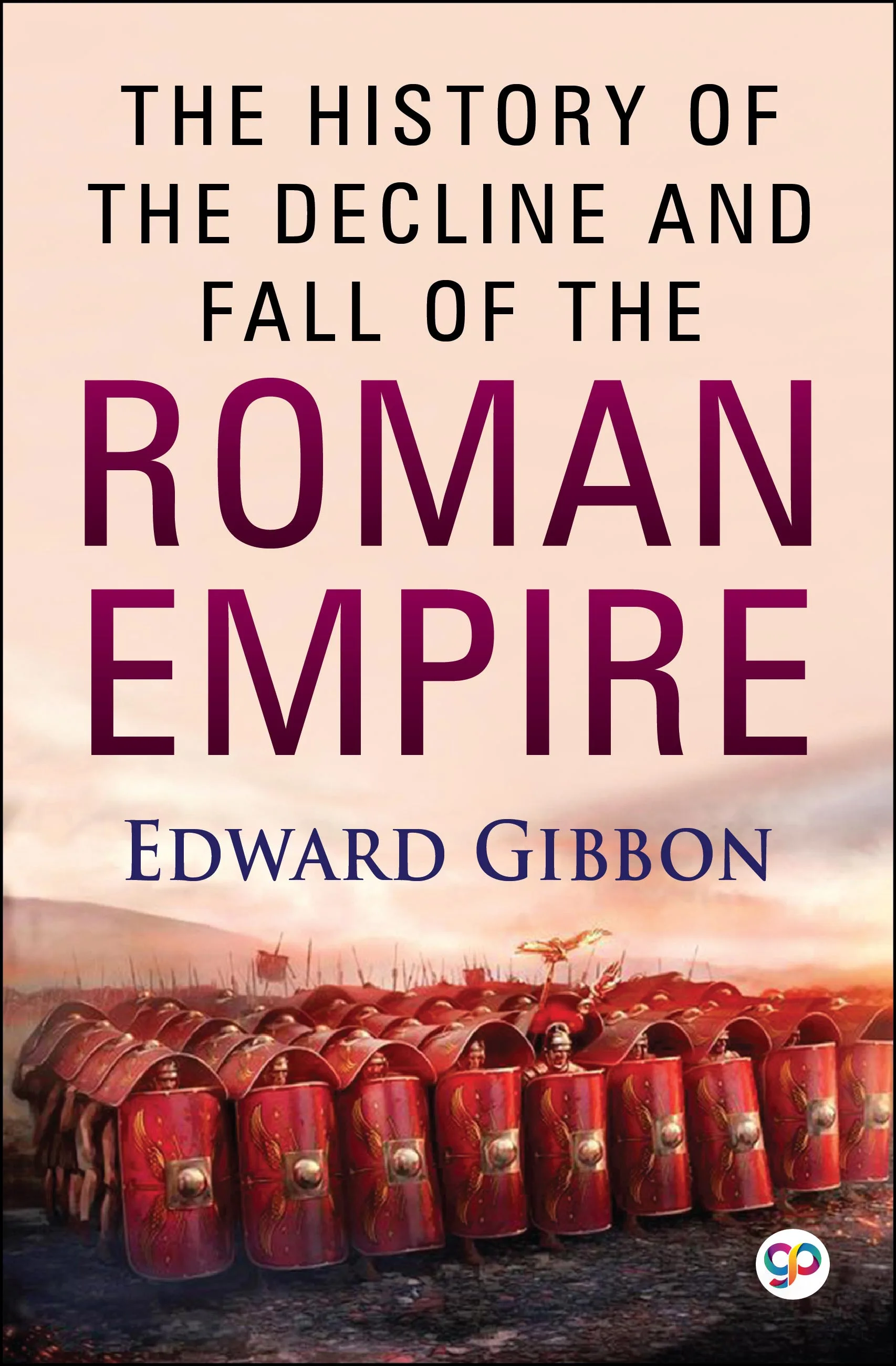
Download Cover Image
Do you want to download the full cover image for The History of the Decline and Fall of the Roman Empire?