
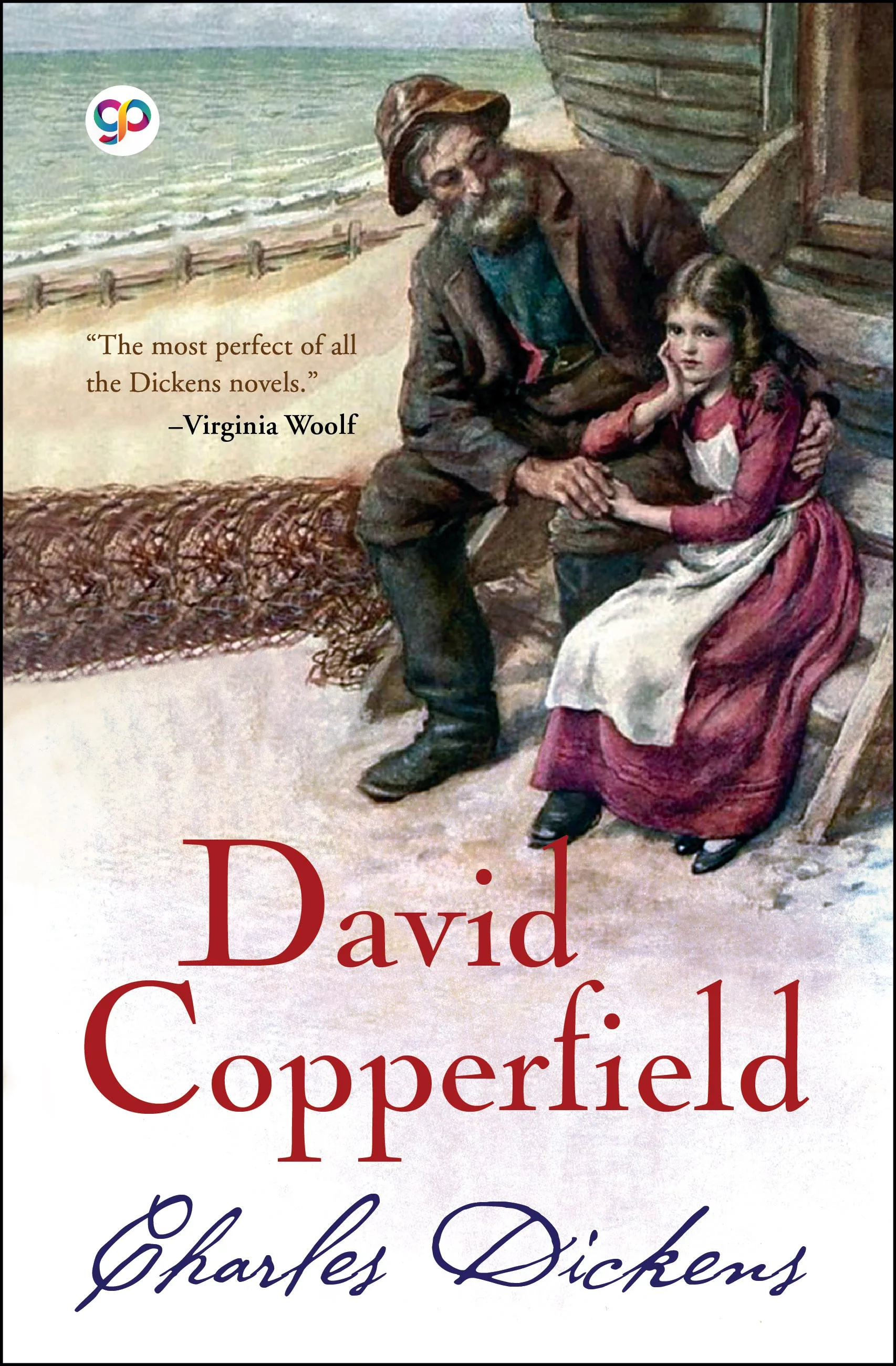
David Copperfield
eBook
• INR 51.00
• English
• 9789354990373
No ratings yet
| Publisher | General Press |
|---|---|
| ISBN13 | 9789354990373 |
| ASIN/SKU | B09XMJMXB4 |
| Book Format | eBook |
| Language | English |
| List Price | INR 51.00 |
| Subject Code | FIC004000, FIC033000, FIC019000 |
| Publishing Date | 01/04/2022 |
| Book Code | BD00068837 |
Buy this Book
Amazon Stores
Ebook Stores
Other Stores
Discover David Copperfield by Charles Dickens. This book is published by General Press in eBook format, ISBN 9789354990373, ASIN B09XMJMXB4, under Children's Books, Classics, Children's Classics.
Book Description
Dickens' seventh novel, ‘David Copperfield’, appeared in 1850, by which time he was a British national institution. The story follows the life of David Copperfield, a young boy who is born six months after the death of his father, from childhood to maturity. David spends his early years in relative happiness with his loving mother and their kindly housekeeper, Peggotty, but when his mother remarries, David is sent to a lodge with Peggotty's family. His mother and her newly born child die, Peggotty marries, and since no one remains to care for David in London, he decides to run away, and he walks from London to Dover, to his only relative, an eccentric yet kind-hearted great-aunt. Many elements of the novel follow events in Dickens' own life, and it is often considered as his veiled autobiography.
It is a tale so luxuriant in setting, so fabulous in character, and so pure in intent that though it was written 150 years ago, we still cheer with David during his triumph and weep with him in his suffering.
"The most perfect of all the Dickens novels."—Virginia Woolf
"Like many fond parents, I have in my heart of hearts a favorite child. And his name is David Copperfield." (From the preface by Charles Dickens)
It is a tale so luxuriant in setting, so fabulous in character, and so pure in intent that though it was written 150 years ago, we still cheer with David during his triumph and weep with him in his suffering.
"The most perfect of all the Dickens novels."—Virginia Woolf
"Like many fond parents, I have in my heart of hearts a favorite child. And his name is David Copperfield." (From the preface by Charles Dickens)
Author Biography
Charles Dickens (7 February 1812 – 9 June 1870) was an English writer and social critic. He created some of the world's best-known fictional characters and is regarded as the greatest novelist of the Victorian era. His works enjoyed unprecedented popularity during his lifetime, and by the twentieth century critics and scholars had recognised him as a literary genius. His novels and short stories enjoy lasting popularity.
The second of eight children, he grew up in a family frequently beset by financial insecurity. At age eleven, Dickens was taken out of school and sent to work in London backing warehouse, where his job was to paste labels on bottles for six shillings a week. His father John Dickens, was a warmhearted but improvident man. When he was condemned the Marshela Prison for unpaid debts, he unwisely agreed that Charles should stay in lodgings and continue working while the rest of the family joined him in jail. This three-month separation caused Charles much pain; his experiences as a child alone in a huge city—cold, isolated with barely enough to eat—haunted him for the rest of his life.
When the family fortunes improved, Charles went back to school, after which he became an office boy, a freelance reporter and finally an author. With Pickwick Papers (1836-7) he achieved immediate fame; in a few years he was easily the most popular and respected writer of his time. It has been estimated that one out of every ten persons in Victorian England was a Dickens reader. Oliver Twist (1837), Nicholas Nickleby (1838-9) and The Old Curiosity Shop (1840-41) were huge successes. Martin Chuzzlewit (1843-4) was less so, but Dickens followed it with his unforgettable, A Christmas Carol (1843), Bleak House (1852-3), Hard Times (1854) and Little Dorrit (1855-7) reveal his deepening concern for the injustices of British Society. A Tale of Two Cities (1859), Great Expectations (1860-1) and Our Mutual Friend (1864-5) complete his major works.
Dickens's marriage to Catherine Hoggarth produced ten children but ended in separation in 1858. In that year he began a series of exhausting public readings; his health gradually declined. After putting in a full day's work at his home at Gads Hill, Kent on June 8, 1870, Dickens suffered a stroke, and he died the following day.
He was a sympathiser with the poor, the suffering, and the oppressed; and by his death, one of England's greatest writers is lost to the world.
The second of eight children, he grew up in a family frequently beset by financial insecurity. At age eleven, Dickens was taken out of school and sent to work in London backing warehouse, where his job was to paste labels on bottles for six shillings a week. His father John Dickens, was a warmhearted but improvident man. When he was condemned the Marshela Prison for unpaid debts, he unwisely agreed that Charles should stay in lodgings and continue working while the rest of the family joined him in jail. This three-month separation caused Charles much pain; his experiences as a child alone in a huge city—cold, isolated with barely enough to eat—haunted him for the rest of his life.
When the family fortunes improved, Charles went back to school, after which he became an office boy, a freelance reporter and finally an author. With Pickwick Papers (1836-7) he achieved immediate fame; in a few years he was easily the most popular and respected writer of his time. It has been estimated that one out of every ten persons in Victorian England was a Dickens reader. Oliver Twist (1837), Nicholas Nickleby (1838-9) and The Old Curiosity Shop (1840-41) were huge successes. Martin Chuzzlewit (1843-4) was less so, but Dickens followed it with his unforgettable, A Christmas Carol (1843), Bleak House (1852-3), Hard Times (1854) and Little Dorrit (1855-7) reveal his deepening concern for the injustices of British Society. A Tale of Two Cities (1859), Great Expectations (1860-1) and Our Mutual Friend (1864-5) complete his major works.
Dickens's marriage to Catherine Hoggarth produced ten children but ended in separation in 1858. In that year he began a series of exhausting public readings; his health gradually declined. After putting in a full day's work at his home at Gads Hill, Kent on June 8, 1870, Dickens suffered a stroke, and he died the following day.
He was a sympathiser with the poor, the suffering, and the oppressed; and by his death, one of England's greatest writers is lost to the world.
Editorial Reviews
Editorial Reviews will be added soon…
Book Summary
Charles Dickens’s David Copperfield, published in serial form between 1849 and 1850, is one of the most beloved novels in English literature. Often described as Dickens’s most autobiographical novel, it follows the life of David Copperfield from a lonely childhood through hardship, education, friendship, love, disappointment, and finally maturity. Rather than telling only the story of one man’s adventures, Dickens uses David’s life to explore childhood, poverty, family, social injustice, ambition, marriage, memory, and the gradual discovery of one’s own identity.
David begins his life at Blunderstone in Suffolk, where he lives with his widowed mother, Clara Copperfield, and their loyal servant, Peggotty. David’s early childhood is affectionate and relatively happy. His mother loves him deeply, and Peggotty provides warmth and security. But this happiness does not last. Clara marries the stern and controlling Edward Murdstone, whose arrival changes the household completely.
Murdstone believes that children require strict discipline rather than affection. He resents David’s presence and treats him harshly. His sister, Jane Murdstone, soon joins the household and reinforces the atmosphere of coldness and control. When David resists Murdstone’s authority, he is punished severely and eventually sent away to Salem House, a boarding school.
At Salem House, David encounters another important figure, Mr. Creakle, the brutal headmaster. School life is difficult, but David forms friendships that remain important throughout his life. The most memorable is his friendship with James Steerforth, an older boy whose confidence and charm impress David. David admires Steerforth deeply, even though readers can gradually see qualities in him that David himself does not yet recognize.
Another significant friend is Tommy Traddles, a kind and decent boy who suffers under the school's harsh discipline but remains generous and good-hearted. Through these friendships, Dickens begins showing David the importance of character. Some people possess charm without moral strength, while others have little social power but enormous goodness.
David’s life changes tragically when his mother dies. Murdstone responds not with compassion but by sending David to work in a London factory. David is still a child, yet he is forced to earn his living under miserable conditions. The experience humiliates and isolates him. Dickens draws heavily here on his own childhood experiences, when he was briefly sent to work after his father was imprisoned for debt.
David’s poverty during this period becomes one of the most important experiences in shaping his character. He rents a small room and struggles to survive, feeling abandoned by the adults who should have protected him. Eventually, he decides that he cannot continue living this way and travels to Dover to seek help from his eccentric but loving great-aunt, Betsey Trotwood.
Aunt Betsey becomes one of the most memorable figures in the novel. She had expected David to be a girl and is initially disappointed by his birth, but she eventually becomes his strongest protector. She takes him into her home and provides the stability he desperately needs. Her companion, Mr. Dick, is equally unusual but remarkably kind. With their help, David is given another opportunity to receive an education and build a future.
David's new life introduces him to a wider range of people. He studies at school in Canterbury and meets Agnes Wickfield, the daughter of the lawyer Mr. Wickfield. Agnes becomes one of the most important people in his life. She is intelligent, patient, morally grounded, and deeply caring. David sees her as a source of emotional stability, although he does not initially understand the full nature of his feelings for her.
At Mr. Wickfield’s office, David also encounters Uriah Heep, one of Dickens’s most memorable villains. Heep constantly describes himself as “umble” and presents himself as humble and submissive. In reality, he is ambitious, manipulative, dishonest, and determined to gain control over those around him. He gradually exploits Mr. Wickfield’s weaknesses and attempts to take over his professional and personal life.
David eventually moves to London and begins working as a secretary before pursuing a career as a writer. His ambition to become an author is one of the novel’s most important threads. Writing allows David to transform his experiences into something meaningful. His difficult childhood does not simply disappear; it becomes part of the material from which he builds his identity.
During this period, David meets Dora Spenlow and falls deeply in love with her. Dora is charming, beautiful, affectionate, and somewhat childlike. David idealizes her and eventually marries her. Yet their marriage reveals the difference between romantic fantasy and the realities of adult life. Dora is not prepared to manage a household, and David gradually realizes that love alone cannot solve the practical problems of marriage.
Their relationship is tender but ultimately tragic. Dora becomes seriously ill and dies young. Her death is one of the experiences that forces David to mature emotionally. He begins to understand that love is not simply the excitement of attraction; it also involves companionship, responsibility, patience, and mutual understanding.
Meanwhile, Steerforth’s darker character becomes impossible to ignore. He meets Emily, the niece of David’s loyal childhood friend Peggotty's family, and seduces her before abandoning her. Emily had dreamed of marrying Ham, a kind and honorable young fisherman, but Steerforth destroys those hopes. The scandal devastates the Peggotty family.
David is forced to reconsider his admiration for Steerforth. The qualities that once seemed attractive—confidence, charm, social power—are revealed as selfishness and irresponsibility. Steerforth’s actions eventually lead to tragedy, including the death of Ham while attempting to rescue Steerforth from a shipwreck.
The story also develops the parallel struggle against Uriah Heep. With the help of Mr. Micawber, a lovable but chronically unsuccessful man, David and his friends expose Heep’s fraud and manipulation. Mr. Micawber is one of Dickens’s most comic and unforgettable characters. Constantly overwhelmed by financial difficulties, he nevertheless remains optimistic and generous. His eventual role in exposing Heep demonstrates that apparently powerless people can still act courageously.
As David grows older, he increasingly understands the difference between appearance and character. People who once seemed impressive may turn out to be morally empty, while seemingly ordinary individuals may possess extraordinary loyalty and courage. His childhood admiration for Steerforth gives way to disappointment, while his appreciation for Agnes deepens.
After Dora’s death, David travels abroad and spends time reflecting on his life. His experiences gradually bring him toward emotional maturity. He eventually recognizes that Agnes, who has quietly supported him for years, is the person with whom he can build a truly balanced and lasting relationship.
David and Agnes marry, and David establishes himself as a successful writer. The ending does not erase the suffering of his earlier life, but it shows that he has learned from it. He has transformed painful experiences into understanding and creative work.
One of the central themes of David Copperfield is the formation of identity. David begins as a vulnerable child whose circumstances are controlled by adults. Over time, he learns to make his own choices. His journey demonstrates that becoming an adult is not simply a matter of growing older; it is the process of understanding oneself, recognizing the character of others, accepting responsibility, and learning from mistakes.
The novel is also deeply concerned with childhood vulnerability. Through David’s experiences, Dickens criticizes systems and adults that exploit children or fail to protect them. Poverty, harsh schooling, child labor, abusive authority, and unequal social structures are shown not as abstract problems but as forces that shape real lives.
Ultimately, David Copperfield is a story about memory and growth. David looks back on his life and attempts to understand how the people and experiences of his childhood shaped the person he became. Some memories bring pain, others bring gratitude, and some remain unresolved. Yet all become part of his story.
The novel’s enduring power lies in its humanity. Dickens fills it with comedy, tragedy, eccentric characters, villains, romances, and adventures, but beneath everything is a deeply personal question: How does a wounded child become a whole adult? David’s answer is found through education, friendship, work, love, loss, and self-knowledge. His life shows that the past cannot be erased, but it can be understood—and sometimes transformed into wisdom, compassion, and a meaningful future.
David begins his life at Blunderstone in Suffolk, where he lives with his widowed mother, Clara Copperfield, and their loyal servant, Peggotty. David’s early childhood is affectionate and relatively happy. His mother loves him deeply, and Peggotty provides warmth and security. But this happiness does not last. Clara marries the stern and controlling Edward Murdstone, whose arrival changes the household completely.
Murdstone believes that children require strict discipline rather than affection. He resents David’s presence and treats him harshly. His sister, Jane Murdstone, soon joins the household and reinforces the atmosphere of coldness and control. When David resists Murdstone’s authority, he is punished severely and eventually sent away to Salem House, a boarding school.
At Salem House, David encounters another important figure, Mr. Creakle, the brutal headmaster. School life is difficult, but David forms friendships that remain important throughout his life. The most memorable is his friendship with James Steerforth, an older boy whose confidence and charm impress David. David admires Steerforth deeply, even though readers can gradually see qualities in him that David himself does not yet recognize.
Another significant friend is Tommy Traddles, a kind and decent boy who suffers under the school's harsh discipline but remains generous and good-hearted. Through these friendships, Dickens begins showing David the importance of character. Some people possess charm without moral strength, while others have little social power but enormous goodness.
David’s life changes tragically when his mother dies. Murdstone responds not with compassion but by sending David to work in a London factory. David is still a child, yet he is forced to earn his living under miserable conditions. The experience humiliates and isolates him. Dickens draws heavily here on his own childhood experiences, when he was briefly sent to work after his father was imprisoned for debt.
David’s poverty during this period becomes one of the most important experiences in shaping his character. He rents a small room and struggles to survive, feeling abandoned by the adults who should have protected him. Eventually, he decides that he cannot continue living this way and travels to Dover to seek help from his eccentric but loving great-aunt, Betsey Trotwood.
Aunt Betsey becomes one of the most memorable figures in the novel. She had expected David to be a girl and is initially disappointed by his birth, but she eventually becomes his strongest protector. She takes him into her home and provides the stability he desperately needs. Her companion, Mr. Dick, is equally unusual but remarkably kind. With their help, David is given another opportunity to receive an education and build a future.
David's new life introduces him to a wider range of people. He studies at school in Canterbury and meets Agnes Wickfield, the daughter of the lawyer Mr. Wickfield. Agnes becomes one of the most important people in his life. She is intelligent, patient, morally grounded, and deeply caring. David sees her as a source of emotional stability, although he does not initially understand the full nature of his feelings for her.
At Mr. Wickfield’s office, David also encounters Uriah Heep, one of Dickens’s most memorable villains. Heep constantly describes himself as “umble” and presents himself as humble and submissive. In reality, he is ambitious, manipulative, dishonest, and determined to gain control over those around him. He gradually exploits Mr. Wickfield’s weaknesses and attempts to take over his professional and personal life.
David eventually moves to London and begins working as a secretary before pursuing a career as a writer. His ambition to become an author is one of the novel’s most important threads. Writing allows David to transform his experiences into something meaningful. His difficult childhood does not simply disappear; it becomes part of the material from which he builds his identity.
During this period, David meets Dora Spenlow and falls deeply in love with her. Dora is charming, beautiful, affectionate, and somewhat childlike. David idealizes her and eventually marries her. Yet their marriage reveals the difference between romantic fantasy and the realities of adult life. Dora is not prepared to manage a household, and David gradually realizes that love alone cannot solve the practical problems of marriage.
Their relationship is tender but ultimately tragic. Dora becomes seriously ill and dies young. Her death is one of the experiences that forces David to mature emotionally. He begins to understand that love is not simply the excitement of attraction; it also involves companionship, responsibility, patience, and mutual understanding.
Meanwhile, Steerforth’s darker character becomes impossible to ignore. He meets Emily, the niece of David’s loyal childhood friend Peggotty's family, and seduces her before abandoning her. Emily had dreamed of marrying Ham, a kind and honorable young fisherman, but Steerforth destroys those hopes. The scandal devastates the Peggotty family.
David is forced to reconsider his admiration for Steerforth. The qualities that once seemed attractive—confidence, charm, social power—are revealed as selfishness and irresponsibility. Steerforth’s actions eventually lead to tragedy, including the death of Ham while attempting to rescue Steerforth from a shipwreck.
The story also develops the parallel struggle against Uriah Heep. With the help of Mr. Micawber, a lovable but chronically unsuccessful man, David and his friends expose Heep’s fraud and manipulation. Mr. Micawber is one of Dickens’s most comic and unforgettable characters. Constantly overwhelmed by financial difficulties, he nevertheless remains optimistic and generous. His eventual role in exposing Heep demonstrates that apparently powerless people can still act courageously.
As David grows older, he increasingly understands the difference between appearance and character. People who once seemed impressive may turn out to be morally empty, while seemingly ordinary individuals may possess extraordinary loyalty and courage. His childhood admiration for Steerforth gives way to disappointment, while his appreciation for Agnes deepens.
After Dora’s death, David travels abroad and spends time reflecting on his life. His experiences gradually bring him toward emotional maturity. He eventually recognizes that Agnes, who has quietly supported him for years, is the person with whom he can build a truly balanced and lasting relationship.
David and Agnes marry, and David establishes himself as a successful writer. The ending does not erase the suffering of his earlier life, but it shows that he has learned from it. He has transformed painful experiences into understanding and creative work.
One of the central themes of David Copperfield is the formation of identity. David begins as a vulnerable child whose circumstances are controlled by adults. Over time, he learns to make his own choices. His journey demonstrates that becoming an adult is not simply a matter of growing older; it is the process of understanding oneself, recognizing the character of others, accepting responsibility, and learning from mistakes.
The novel is also deeply concerned with childhood vulnerability. Through David’s experiences, Dickens criticizes systems and adults that exploit children or fail to protect them. Poverty, harsh schooling, child labor, abusive authority, and unequal social structures are shown not as abstract problems but as forces that shape real lives.
Ultimately, David Copperfield is a story about memory and growth. David looks back on his life and attempts to understand how the people and experiences of his childhood shaped the person he became. Some memories bring pain, others bring gratitude, and some remain unresolved. Yet all become part of his story.
The novel’s enduring power lies in its humanity. Dickens fills it with comedy, tragedy, eccentric characters, villains, romances, and adventures, but beneath everything is a deeply personal question: How does a wounded child become a whole adult? David’s answer is found through education, friendship, work, love, loss, and self-knowledge. His life shows that the past cannot be erased, but it can be understood—and sometimes transformed into wisdom, compassion, and a meaningful future.
Sample Chapters
Sample Chapters will be added soon…
Reader Reviews
No reviews yet.
David Copperfield
Download Cover Image
Do you want to download the full cover image for David Copperfield?