
The King James Version of the Bible
eBook
• INR 99.00
• English
• 9789354990618
No ratings yet
| Publisher | General Press |
|---|---|
| ISBN13 | 9789354990618 |
| ASIN/SKU | B09XMJQMLT |
| Book Format | eBook |
| Language | English |
| List Price | INR 99.00 |
| Subject Code | BIB006000, REL006700 |
| Publishing Date | 01/04/2022 |
| Book Code | BD00068838 |
Buy this Book
Amazon Stores
Ebook Stores
Other Stores
Discover The King James Version of the Bible by King James. This book is published by General Press in eBook format, ISBN 9789354990618, ASIN B09XMJQMLT, under Christian Books and Bibles.
Book Description
‘The King James Version of the Bible,’ also known as the Authorized Version or King James Bible, is an English translation of the Christian Bible for the Church of England begun in 1604 and completed in 1611. The books of the King James Version include 39 books of the Old Testament, an intertestamental section containing 14 apocrypha books, and the 27 books of the New Testament.
It was first printed by the King's Printer Robert Barker and was the third translation into English to be approved by the English Church authorities. The first had been the Great Bible, commissioned in the reign of King Henry VIII (1535), and the second had been the Bishops' Bible of 1568.
In January 1604, James I convened the Hampton Court Conference, where a new English version was conceived in response to the problems of the earlier translations perceived by the Puritans, a faction of the Church of England. The translation is widely considered to be both beautiful and scholarly and thus a towering achievement in English literature.
It was first printed by the King's Printer Robert Barker and was the third translation into English to be approved by the English Church authorities. The first had been the Great Bible, commissioned in the reign of King Henry VIII (1535), and the second had been the Bishops' Bible of 1568.
In January 1604, James I convened the Hampton Court Conference, where a new English version was conceived in response to the problems of the earlier translations perceived by the Puritans, a faction of the Church of England. The translation is widely considered to be both beautiful and scholarly and thus a towering achievement in English literature.
Author Biography
King James I of England and VI of Scotland (1566–1625) was one of the most significant monarchs in British history. He is best remembered for sponsoring the translation of the Bible that became known as the King James Version (KJV), a work that has had an extraordinary influence on the English language, literature, and Christian worship for more than four centuries. His reign also marked the union of the English and Scottish crowns under a single monarch, laying important foundations for the future United Kingdom.
James was born on June 19, 1566, at Edinburgh Castle, Scotland. He was the only son of Mary, Queen of Scots, and Henry Stuart, Lord Darnley. After his mother was forced to abdicate the Scottish throne, James became King of Scotland in 1567 when he was only thirteen months old. Raised under the care of tutors and regents, he received an exceptional education in history, languages, philosophy, and theology. His love of learning earned him a reputation as one of the most scholarly rulers of his time.
In 1603, following the death of Queen Elizabeth I, James inherited the English throne and became the first monarch to rule both England and Scotland. Although the two kingdoms remained politically separate during his lifetime, his accession created a lasting dynastic union. His reign was marked by political tensions with Parliament, religious disagreements, and events such as the Gunpowder Plot of 1605, an unsuccessful attempt to assassinate the king and destroy Parliament.
James was a prolific writer as well as a patron of literature and religion. He authored works on kingship, politics, and theology, including Basilikon Doron and The True Law of Free Monarchies. His greatest cultural legacy came in 1604, when he authorized a new English translation of the Bible. Completed in 1611 by a team of learned scholars, the King James Version became one of the most widely read and influential books in history.
King James died on March 27, 1625, and was succeeded by his son, Charles I. Today, he is remembered not only as a monarch but also as a patron of scholarship whose support for the King James Bible left an enduring mark on religion, literature, and the English-speaking world.
James was born on June 19, 1566, at Edinburgh Castle, Scotland. He was the only son of Mary, Queen of Scots, and Henry Stuart, Lord Darnley. After his mother was forced to abdicate the Scottish throne, James became King of Scotland in 1567 when he was only thirteen months old. Raised under the care of tutors and regents, he received an exceptional education in history, languages, philosophy, and theology. His love of learning earned him a reputation as one of the most scholarly rulers of his time.
In 1603, following the death of Queen Elizabeth I, James inherited the English throne and became the first monarch to rule both England and Scotland. Although the two kingdoms remained politically separate during his lifetime, his accession created a lasting dynastic union. His reign was marked by political tensions with Parliament, religious disagreements, and events such as the Gunpowder Plot of 1605, an unsuccessful attempt to assassinate the king and destroy Parliament.
James was a prolific writer as well as a patron of literature and religion. He authored works on kingship, politics, and theology, including Basilikon Doron and The True Law of Free Monarchies. His greatest cultural legacy came in 1604, when he authorized a new English translation of the Bible. Completed in 1611 by a team of learned scholars, the King James Version became one of the most widely read and influential books in history.
King James died on March 27, 1625, and was succeeded by his son, Charles I. Today, he is remembered not only as a monarch but also as a patron of scholarship whose support for the King James Bible left an enduring mark on religion, literature, and the English-speaking world.
Editorial Reviews
Editorial Reviews will be added soon…
Book Summary
The King James Version (KJV) of the Bible, first published in 1611 under the patronage of King James I of England, is one of the most influential books in the history of literature, religion, and Western civilization. Rather than being a single narrative, it is a collection of sixty-six books written by numerous authors over many centuries. Together, these books tell the sweeping story of humanity's relationship with God—from the creation of the world to the promise of a renewed creation. Rich in poetry, history, prophecy, wisdom, law, and personal letters, the King James Bible has shaped language, culture, and faith for generations.
The Bible is divided into two major sections: the Old Testament and the New Testament. The Old Testament lays the foundation by describing God's creation of the world, His covenant with the people of Israel, and His unfolding plan for humanity. The New Testament centers on the life, teachings, death, and resurrection of Jesus Christ and the growth of the early Christian Church.
The Bible opens with the Book of Genesis, where God creates the heavens, the earth, and all living creatures. Humanity begins with Adam and Eve, who live in harmony with God until they disobey His command. Their fall introduces sin, suffering, and death into the world. Yet even in this moment of failure, the Bible presents hope by revealing God's continuing desire to restore humanity. Genesis continues with the stories of Noah, Abraham, Isaac, Jacob, and Joseph, tracing the origins of the people through whom God's promises will unfold.
The following books describe the birth of the nation of Israel. Through Moses, God delivers the Israelites from slavery in Egypt in the dramatic story of the Exodus. He gives them laws intended to guide their worship, morality, justice, and community life. These commandments emphasize love for God, care for others, honesty, compassion, and faithfulness. Although the laws are detailed, their deeper purpose is to shape a people who reflect God's character.
As Israel settles in the Promised Land, the historical books recount cycles of faithfulness and rebellion. Judges, kings, priests, and prophets rise and fall as the nation repeatedly turns toward God and then away from Him. Figures such as Joshua, Samuel, David, Solomon, Elijah, and Elisha play central roles in this unfolding history. King David becomes one of the Bible's most beloved leaders, remembered not for perfection but for his sincere repentance and deep trust in God. Solomon is celebrated for his wisdom and for building the Temple in Jerusalem, though his later years reveal the dangers of pride and divided loyalties.
The poetic and wisdom books provide a different perspective on life and faith. Job wrestles with the mystery of suffering, asking why righteous people endure hardship. Rather than offering simple answers, the book encourages humility before God's wisdom. Psalms is a collection of songs and prayers expressing joy, grief, gratitude, fear, repentance, and hope. These poems reveal that faith includes honest emotion and heartfelt conversation with God. Proverbs offers practical guidance for wise living, emphasizing integrity, humility, diligence, and respect for God. Ecclesiastes reflects on life's temporary nature, concluding that lasting meaning comes from reverence for God rather than worldly success. Song of Solomon celebrates love, devotion, and the beauty of committed relationships.
The prophetic books call Israel back to faithfulness. Prophets such as Isaiah, Jeremiah, Ezekiel, and Daniel warn against injustice, idolatry, and empty religious practices. They remind the people that genuine worship must be accompanied by mercy, righteousness, and compassion. Alongside warnings of judgment, these books also proclaim hope, promising restoration, forgiveness, and the coming of a Savior who will bring lasting peace and establish God's kingdom.
The New Testament begins with the four Gospels—Matthew, Mark, Luke, and John—which present complementary accounts of the life of Jesus Christ. Jesus is portrayed as both fully human and fully divine, fulfilling the promises of the Old Testament. He teaches through sermons, conversations, and memorable parables that reveal profound spiritual truths through everyday experiences. His message centers on the Kingdom of God, calling people to repentance, faith, forgiveness, humility, and love. He consistently reaches out to the poor, the sick, the marginalized, and those rejected by society, demonstrating that God's grace is available to all.
The climax of the Gospels is Jesus' crucifixion and resurrection. Though innocent, He willingly accepts death on the cross as an act of sacrificial love for humanity's sins. Three days later, His resurrection is presented as the decisive victory over sin and death, offering hope of eternal life to all who believe in Him. This event forms the heart of Christian faith and the central message of the New Testament.
The Book of Acts describes the birth and rapid growth of the early Church after Jesus' ascension into heaven. Empowered by the Holy Spirit, the apostles proclaim the Gospel across the Roman Empire despite persecution and hardship. Peter emerges as an important leader among Jewish believers, while Paul becomes the principal missionary to the Gentiles, carrying Christianity far beyond its original setting.
The letters, or epistles, written by Paul and other early Christian leaders provide instruction for churches facing practical and spiritual challenges. These writings explain key Christian teachings, including salvation by grace through faith, the importance of love, unity within the Church, forgiveness, humility, perseverance, and holy living. They encourage believers to express their faith through compassion, generosity, patience, and service to others. Rather than presenting faith as merely a set of beliefs, these letters describe it as a transformed way of life rooted in love for God and neighbor.
The Bible concludes with the Book of Revelation, a richly symbolic vision of the ultimate triumph of God over evil. Written during a time of persecution, it offers hope to believers by assuring them that suffering will not have the final word. The book describes God's final judgment, the defeat of evil, and the creation of a new heaven and a new earth where justice, peace, and God's presence are fully restored. Its closing chapters return to themes introduced in Genesis, completing the Bible's grand narrative of creation, fall, redemption, and renewal.
Throughout both Testaments, several themes unite the diverse books into a single story. God's love, justice, mercy, holiness, and faithfulness appear consistently. Human beings repeatedly struggle with sin, pride, and disobedience, yet God continually extends opportunities for forgiveness and restoration. The Bible emphasizes that true greatness is found in humility, genuine faith, selfless love, and faithful obedience rather than power or wealth.
The enduring influence of the King James Version extends beyond religion. Its majestic language has shaped English literature, inspired countless works of art and music, and contributed many familiar expressions still used today. More importantly, it continues to invite readers to reflect on life's deepest questions: the nature of good and evil, the purpose of human existence, the meaning of suffering, the possibility of redemption, and the hope of eternal life. Whether approached as sacred Scripture, historical literature, or a cultural masterpiece, the King James Bible remains one of humanity's most profound and enduring works, offering a timeless vision of faith, hope, justice, and love.
The Bible is divided into two major sections: the Old Testament and the New Testament. The Old Testament lays the foundation by describing God's creation of the world, His covenant with the people of Israel, and His unfolding plan for humanity. The New Testament centers on the life, teachings, death, and resurrection of Jesus Christ and the growth of the early Christian Church.
The Bible opens with the Book of Genesis, where God creates the heavens, the earth, and all living creatures. Humanity begins with Adam and Eve, who live in harmony with God until they disobey His command. Their fall introduces sin, suffering, and death into the world. Yet even in this moment of failure, the Bible presents hope by revealing God's continuing desire to restore humanity. Genesis continues with the stories of Noah, Abraham, Isaac, Jacob, and Joseph, tracing the origins of the people through whom God's promises will unfold.
The following books describe the birth of the nation of Israel. Through Moses, God delivers the Israelites from slavery in Egypt in the dramatic story of the Exodus. He gives them laws intended to guide their worship, morality, justice, and community life. These commandments emphasize love for God, care for others, honesty, compassion, and faithfulness. Although the laws are detailed, their deeper purpose is to shape a people who reflect God's character.
As Israel settles in the Promised Land, the historical books recount cycles of faithfulness and rebellion. Judges, kings, priests, and prophets rise and fall as the nation repeatedly turns toward God and then away from Him. Figures such as Joshua, Samuel, David, Solomon, Elijah, and Elisha play central roles in this unfolding history. King David becomes one of the Bible's most beloved leaders, remembered not for perfection but for his sincere repentance and deep trust in God. Solomon is celebrated for his wisdom and for building the Temple in Jerusalem, though his later years reveal the dangers of pride and divided loyalties.
The poetic and wisdom books provide a different perspective on life and faith. Job wrestles with the mystery of suffering, asking why righteous people endure hardship. Rather than offering simple answers, the book encourages humility before God's wisdom. Psalms is a collection of songs and prayers expressing joy, grief, gratitude, fear, repentance, and hope. These poems reveal that faith includes honest emotion and heartfelt conversation with God. Proverbs offers practical guidance for wise living, emphasizing integrity, humility, diligence, and respect for God. Ecclesiastes reflects on life's temporary nature, concluding that lasting meaning comes from reverence for God rather than worldly success. Song of Solomon celebrates love, devotion, and the beauty of committed relationships.
The prophetic books call Israel back to faithfulness. Prophets such as Isaiah, Jeremiah, Ezekiel, and Daniel warn against injustice, idolatry, and empty religious practices. They remind the people that genuine worship must be accompanied by mercy, righteousness, and compassion. Alongside warnings of judgment, these books also proclaim hope, promising restoration, forgiveness, and the coming of a Savior who will bring lasting peace and establish God's kingdom.
The New Testament begins with the four Gospels—Matthew, Mark, Luke, and John—which present complementary accounts of the life of Jesus Christ. Jesus is portrayed as both fully human and fully divine, fulfilling the promises of the Old Testament. He teaches through sermons, conversations, and memorable parables that reveal profound spiritual truths through everyday experiences. His message centers on the Kingdom of God, calling people to repentance, faith, forgiveness, humility, and love. He consistently reaches out to the poor, the sick, the marginalized, and those rejected by society, demonstrating that God's grace is available to all.
The climax of the Gospels is Jesus' crucifixion and resurrection. Though innocent, He willingly accepts death on the cross as an act of sacrificial love for humanity's sins. Three days later, His resurrection is presented as the decisive victory over sin and death, offering hope of eternal life to all who believe in Him. This event forms the heart of Christian faith and the central message of the New Testament.
The Book of Acts describes the birth and rapid growth of the early Church after Jesus' ascension into heaven. Empowered by the Holy Spirit, the apostles proclaim the Gospel across the Roman Empire despite persecution and hardship. Peter emerges as an important leader among Jewish believers, while Paul becomes the principal missionary to the Gentiles, carrying Christianity far beyond its original setting.
The letters, or epistles, written by Paul and other early Christian leaders provide instruction for churches facing practical and spiritual challenges. These writings explain key Christian teachings, including salvation by grace through faith, the importance of love, unity within the Church, forgiveness, humility, perseverance, and holy living. They encourage believers to express their faith through compassion, generosity, patience, and service to others. Rather than presenting faith as merely a set of beliefs, these letters describe it as a transformed way of life rooted in love for God and neighbor.
The Bible concludes with the Book of Revelation, a richly symbolic vision of the ultimate triumph of God over evil. Written during a time of persecution, it offers hope to believers by assuring them that suffering will not have the final word. The book describes God's final judgment, the defeat of evil, and the creation of a new heaven and a new earth where justice, peace, and God's presence are fully restored. Its closing chapters return to themes introduced in Genesis, completing the Bible's grand narrative of creation, fall, redemption, and renewal.
Throughout both Testaments, several themes unite the diverse books into a single story. God's love, justice, mercy, holiness, and faithfulness appear consistently. Human beings repeatedly struggle with sin, pride, and disobedience, yet God continually extends opportunities for forgiveness and restoration. The Bible emphasizes that true greatness is found in humility, genuine faith, selfless love, and faithful obedience rather than power or wealth.
The enduring influence of the King James Version extends beyond religion. Its majestic language has shaped English literature, inspired countless works of art and music, and contributed many familiar expressions still used today. More importantly, it continues to invite readers to reflect on life's deepest questions: the nature of good and evil, the purpose of human existence, the meaning of suffering, the possibility of redemption, and the hope of eternal life. Whether approached as sacred Scripture, historical literature, or a cultural masterpiece, the King James Bible remains one of humanity's most profound and enduring works, offering a timeless vision of faith, hope, justice, and love.
Sample Chapters
Sample Chapters will be added soon…
Reader Reviews
No reviews yet.
The King James Version of the Bible
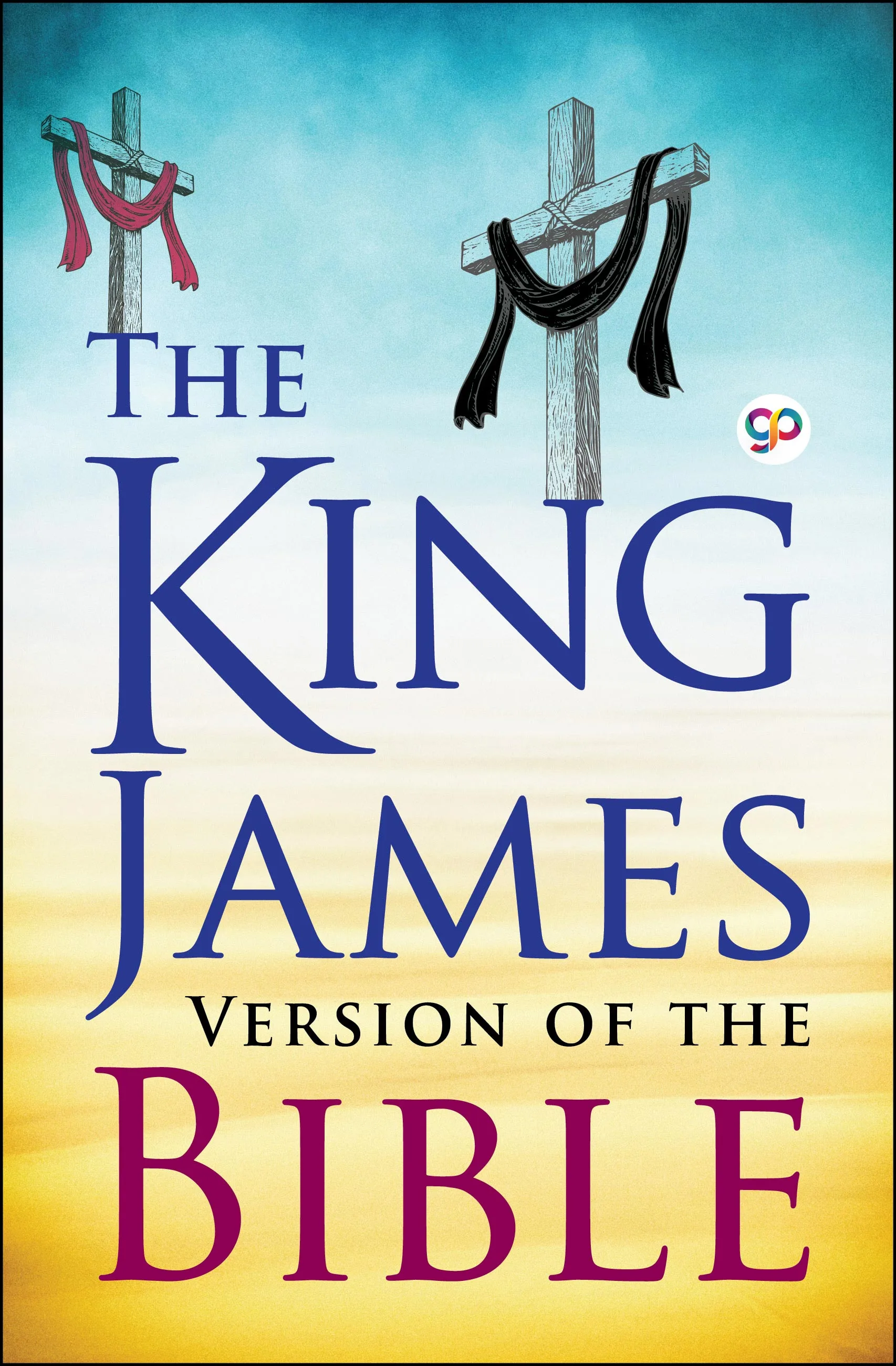
Download Cover Image
Do you want to download the full cover image for The King James Version of the Bible?