
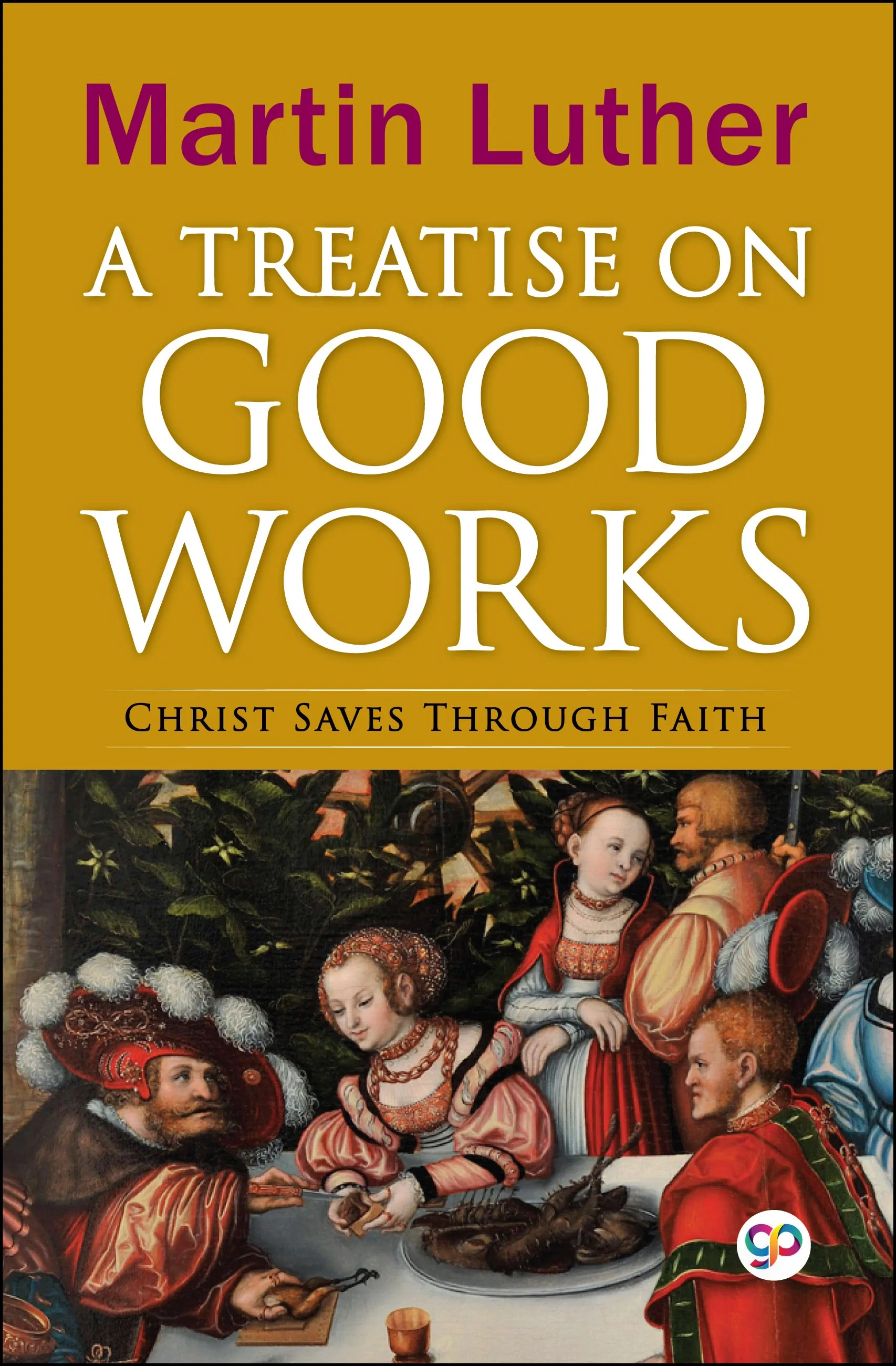
A Treatise on Good Works
eBook
• INR 99.00
• English
• 9789354990304
No ratings yet
| Publisher | General Press |
|---|---|
| ISBN13 | 9789354990304 |
| ASIN/SKU | B09XMJTFVR |
| Book Format | eBook |
| Language | English |
| List Price | INR 99.00 |
| Subject Code | REL082000, REL111000 |
| Publishing Date | 01/04/2022 |
| Book Code | BD00068840 |
Buy this Book
Amazon Stores
Ebook Stores
Other Stores
Discover A Treatise on Good Works by Martin Luther. This book is published by General Press in eBook format, ISBN 9789354990304, ASIN B09XMJTFVR, under Christian Books and Bibles, Theology, Christianity.
Book Description
Martin Luther (10 November 1483–18 February 1546) was a German professor of theology, composer, priest, monk, and a seminal figure in the Protestant Reformation. In ‘A Treatise on Good Works,’ Luther presents a clear and accessible introduction to his deeply influential theology. Offering simple and direct principles for Christian living, he defines good works as all activities intended to help maintain the church. The work preaches deep and profound moral lessons to human beings everywhere. Luther preaches that good work requires complete faith in God. For the reward of kindness to be received either in this world or the hereafter, one must have complete trust in oneself and in the mightiness of God.
Luther's transformational idea of justification by faith alone was often misunderstood and misrepresented in the early years of the Reformation. In 1520, with his Wittenberg congregation in mind, Luther set out to clarify the biblical foundation of good works. In doing so he recast the very definitions of ‘sacred’ and ‘secular’ both for his own generation and ours. The book is the second of an occasional series of guides to key Reformation treatises.
Luther’s main goal was to commend a new, down-to-earth piety to all Christians. This piety was new, because at its center was a radically different meaning of good works that would transform the way believers practiced their faith. But while Luther maintains that good works are important, he also argues that salvation only comes from faith in God’s grace.
Luther's transformational idea of justification by faith alone was often misunderstood and misrepresented in the early years of the Reformation. In 1520, with his Wittenberg congregation in mind, Luther set out to clarify the biblical foundation of good works. In doing so he recast the very definitions of ‘sacred’ and ‘secular’ both for his own generation and ours. The book is the second of an occasional series of guides to key Reformation treatises.
Luther’s main goal was to commend a new, down-to-earth piety to all Christians. This piety was new, because at its center was a radically different meaning of good works that would transform the way believers practiced their faith. But while Luther maintains that good works are important, he also argues that salvation only comes from faith in God’s grace.
Author Biography
Martin Luther (1483–1546) was a German theologian, priest, professor, and religious reformer whose ideas transformed Christianity and changed the course of European history. As the central figure of the Protestant Reformation, he challenged certain teachings and practices of the Roman Catholic Church, encouraging believers to return to the authority of the Bible and the importance of personal faith. His courage and conviction reshaped religious life and influenced education, politics, and culture across Europe.
Luther was born on November 10, 1483, in Eisleben, Germany. His father, Hans Luther, hoped that his son would become a lawyer, and Martin began studying law at the University of Erfurt. However, after surviving a violent thunderstorm in 1505, he vowed to become a monk if his life were spared. Keeping his promise, he entered the Augustinian monastery, where he devoted himself to prayer, study, and the search for spiritual certainty. He was later ordained as a priest and earned a doctorate in theology, becoming a professor at the University of Wittenberg.
The defining moment of Luther's life came in 1517, when he published his famous Ninety-five Theses. In this document, he criticized the sale of indulgences and called for open debate on church practices. Thanks to the recently invented printing press, his ideas spread rapidly throughout Europe. His refusal to withdraw his beliefs led to his excommunication and his appearance before the Diet of Worms in 1521, where he famously refused to renounce his convictions.
While living under the protection of Frederick the Wise, Luther translated the New Testament into German, later completing the translation of the entire Bible. His translation made the Scriptures accessible to ordinary people and played a major role in shaping the modern German language. He also wrote hymns, sermons, catechisms, and theological works that became foundational texts for Protestant churches.
Martin Luther died on February 18, 1546, in his hometown of Eisleben. Today, he is remembered as one of history's most influential religious leaders. His emphasis on faith, Scripture, education, and individual conscience continues to shape Protestant Christianity around the world. Although some aspects of his later writings remain subjects of historical criticism, his enduring impact on religion, language, and Western civilization is undeniable.
Luther was born on November 10, 1483, in Eisleben, Germany. His father, Hans Luther, hoped that his son would become a lawyer, and Martin began studying law at the University of Erfurt. However, after surviving a violent thunderstorm in 1505, he vowed to become a monk if his life were spared. Keeping his promise, he entered the Augustinian monastery, where he devoted himself to prayer, study, and the search for spiritual certainty. He was later ordained as a priest and earned a doctorate in theology, becoming a professor at the University of Wittenberg.
The defining moment of Luther's life came in 1517, when he published his famous Ninety-five Theses. In this document, he criticized the sale of indulgences and called for open debate on church practices. Thanks to the recently invented printing press, his ideas spread rapidly throughout Europe. His refusal to withdraw his beliefs led to his excommunication and his appearance before the Diet of Worms in 1521, where he famously refused to renounce his convictions.
While living under the protection of Frederick the Wise, Luther translated the New Testament into German, later completing the translation of the entire Bible. His translation made the Scriptures accessible to ordinary people and played a major role in shaping the modern German language. He also wrote hymns, sermons, catechisms, and theological works that became foundational texts for Protestant churches.
Martin Luther died on February 18, 1546, in his hometown of Eisleben. Today, he is remembered as one of history's most influential religious leaders. His emphasis on faith, Scripture, education, and individual conscience continues to shape Protestant Christianity around the world. Although some aspects of his later writings remain subjects of historical criticism, his enduring impact on religion, language, and Western civilization is undeniable.
Editorial Reviews
Editorial Reviews will be added soon…
Book Summary
Book Summary will be added soon…
Sample Chapters
Sample Chapters will be added soon…
Reader Reviews
No reviews yet.
A Treatise on Good Works
Download Cover Image
Do you want to download the full cover image for A Treatise on Good Works?