
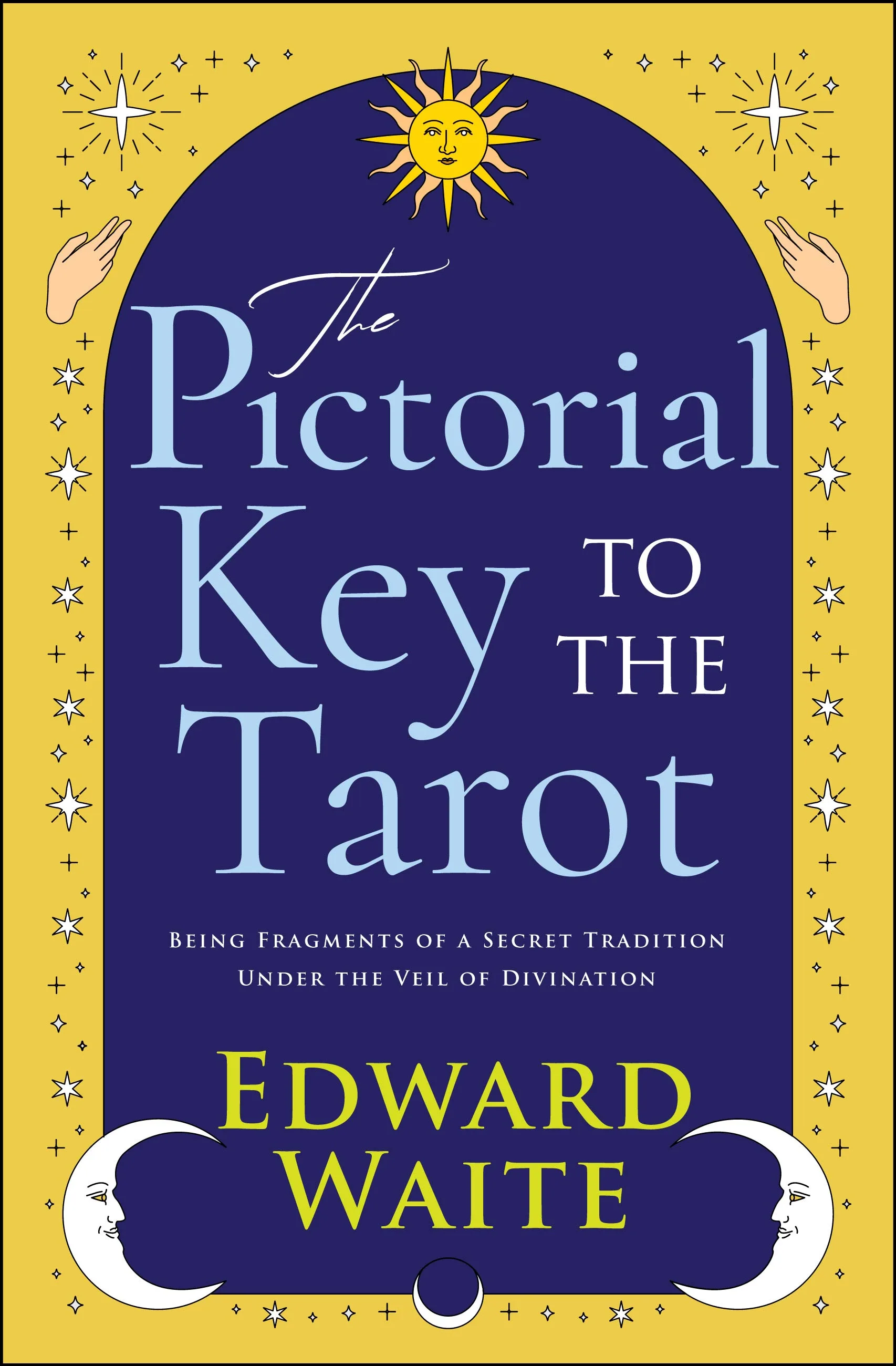
The Pictorial Key to the Tarot
eBook
• INR 99.00
• English
• 9789354993336
No ratings yet
| Publisher | General Press |
|---|---|
| ISBN13 | 9789354993336 |
| ASIN/SKU | B0B6FPDQBZ |
| Book Format | eBook |
| Language | English |
| List Price | INR 99.00 |
| Subject Code | OCC024000 |
| Publishing Date | 06/07/2022 |
| Book Code | BD00068872 |
Buy this Book
Amazon Stores
Ebook Stores
Other Stores
Discover The Pictorial Key to the Tarot by AE Waite. This book is published by General Press in eBook format, ISBN 9789354993336, ASIN B0B6FPDQBZ, under Non Fiction, Reference, Mythology.
Book Description
First published in 1911, ‘The Pictorial Key to the Tarot’ is a guide to the divinatory tarot deck by A.E. Waite. An American-born British poet and mystic, Waite is famed for co-creating the Rider-Waite tarot deck, sometimes referred to as the Rider-Waite-Smith deck. While there were many tarot decks created and distributed around the world prior to this, the Rider-Waite deck was the first to become widely famous.
It was also the first to illustrate all 78 cards fully when most decks only illustrated the 22 Major Arcana cards. Waite extensively researched the significance of each card’s symbolism and deeper meaning as part of the creation of the deck and shares these insights in “The Pictorial Key to the Tarot”. In addition to a discussion of the significance of each card and the images that appear on it, Waite also includes instructions on how to conduct a reading. Waite’s guide remains as useful as when it was first written a century ago and is an essential addition to the library of anyone who practices the tarot or wishes to learn more about its meaning.
It was also the first to illustrate all 78 cards fully when most decks only illustrated the 22 Major Arcana cards. Waite extensively researched the significance of each card’s symbolism and deeper meaning as part of the creation of the deck and shares these insights in “The Pictorial Key to the Tarot”. In addition to a discussion of the significance of each card and the images that appear on it, Waite also includes instructions on how to conduct a reading. Waite’s guide remains as useful as when it was first written a century ago and is an essential addition to the library of anyone who practices the tarot or wishes to learn more about its meaning.
Author Biography
Arthur Edward Waite (1857–1942), widely known as A.E. Waite, was an English scholar, mystic, poet, and prolific author whose work had a lasting influence on the study of Western mysticism, esoteric traditions, and the Tarot. Best remembered as the co-creator of the famous Rider–Waite Tarot deck, Waite devoted his life to exploring the spiritual and symbolic dimensions of religion, philosophy, and the occult. Unlike many of his contemporaries, he sought to uncover the deeper mystical truths that he believed lay beneath outward rituals and secret teachings.
Waite was born in Brooklyn, New York, but after the death of his father, his family moved to England, where he spent most of his life. Raised in modest circumstances, he developed a deep love for literature and spirituality at an early age. As a young man, he became fascinated by mystical writings, alchemy, Rosicrucianism, Kabbalah, and Christian mysticism. His lifelong passion for research led him to study rare manuscripts and historical texts, making him one of the most respected scholars of esoteric traditions in his time.
Throughout his career, Waite wrote more than a hundred books and articles covering a wide range of spiritual subjects. His notable works include The Book of Ceremonial Magic, The Holy Kabbalah, and The Secret Tradition in Freemasonry. Rather than encouraging sensational or magical practices, Waite emphasized the pursuit of inner wisdom, moral growth, and spiritual enlightenment. His careful scholarship helped distinguish historical fact from legend, making complex mystical traditions more accessible to thoughtful readers.
In 1909, Waite collaborated with artist Pamela Colman Smith to create the Rider–Waite Tarot deck, published the following year. Waite designed the symbolic framework, while Smith brought the imagery to life through her remarkable illustrations. Their deck introduced richly illustrated scenes on every card of the Minor Arcana, transforming the way Tarot was understood and used. Today, it remains the world's most influential and widely recognized Tarot deck.
A.E. Waite spent his later years continuing his research, writing, and involvement in mystical societies. He died in England in 1942, leaving behind a remarkable literary and spiritual legacy. His works continue to inspire scholars, historians, and spiritual seekers, offering thoughtful insights into symbolism, mysticism, and the enduring human search for wisdom and inner truth.
Waite was born in Brooklyn, New York, but after the death of his father, his family moved to England, where he spent most of his life. Raised in modest circumstances, he developed a deep love for literature and spirituality at an early age. As a young man, he became fascinated by mystical writings, alchemy, Rosicrucianism, Kabbalah, and Christian mysticism. His lifelong passion for research led him to study rare manuscripts and historical texts, making him one of the most respected scholars of esoteric traditions in his time.
Throughout his career, Waite wrote more than a hundred books and articles covering a wide range of spiritual subjects. His notable works include The Book of Ceremonial Magic, The Holy Kabbalah, and The Secret Tradition in Freemasonry. Rather than encouraging sensational or magical practices, Waite emphasized the pursuit of inner wisdom, moral growth, and spiritual enlightenment. His careful scholarship helped distinguish historical fact from legend, making complex mystical traditions more accessible to thoughtful readers.
In 1909, Waite collaborated with artist Pamela Colman Smith to create the Rider–Waite Tarot deck, published the following year. Waite designed the symbolic framework, while Smith brought the imagery to life through her remarkable illustrations. Their deck introduced richly illustrated scenes on every card of the Minor Arcana, transforming the way Tarot was understood and used. Today, it remains the world's most influential and widely recognized Tarot deck.
A.E. Waite spent his later years continuing his research, writing, and involvement in mystical societies. He died in England in 1942, leaving behind a remarkable literary and spiritual legacy. His works continue to inspire scholars, historians, and spiritual seekers, offering thoughtful insights into symbolism, mysticism, and the enduring human search for wisdom and inner truth.
Editorial Reviews
Editorial Reviews will be added soon…
Book Summary
Book Summary will be added soon…
Sample Chapters
Sample Chapters will be added soon…
Reader Reviews
No reviews yet.
The Pictorial Key to the Tarot
Download Cover Image
Do you want to download the full cover image for The Pictorial Key to the Tarot?