
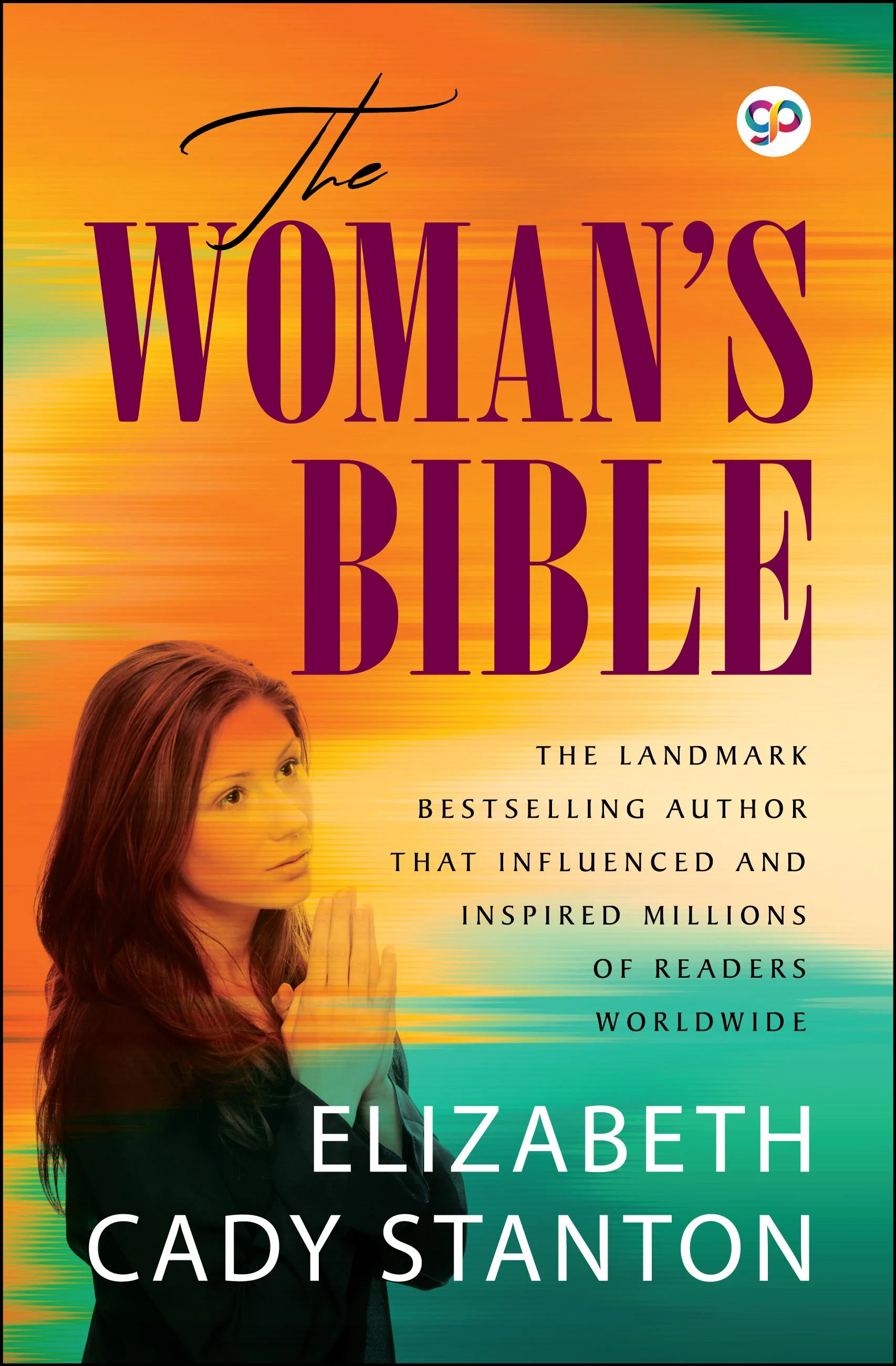
The Woman's Bible
eBook
• INR 99.00
• English
• 9789354992643
No ratings yet
| Publisher | General Press |
|---|---|
| ISBN13 | 9789354992643 |
| ASIN/SKU | B0B6FPFJ8G |
| Book Format | eBook |
| Language | English |
| List Price | INR 99.00 |
| Subject Code | SOC028000, PHI034000 |
| Publishing Date | 06/07/2022 |
| Book Code | BD00068875 |
Buy this Book
Amazon Stores
Ebook Stores
Other Stores
Discover The Woman's Bible by Elizabeth Cady Stanton. This book is published by General Press in eBook format, ISBN 9789354992643, ASIN B0B6FPFJ8G, under Religion and Spirituality, Philosophy.
Book Description
The Woman's Bible was published by Elizabeth Cady Stanton and a committee of other women in 1895. Struggling for women’s rights in the nineteenth century, the early feminists were constantly told that the Bible ordains woman's sphere as helper to man and woman’s status as inferior to man. Having heard this throughout her decades of labor in the women’s rights movement, Elizabeth Cady Stanton determined to investigate the Bible and what it really says about women. She attempted to obtain the assistance of a number of female scholars of Hebrew and Greek, but several turned her down, fearing that their reputations would be compromised and others were afraid to critique the Bible for religious reasons.
Stanton finally chose a committee of women she believed would make a valuable contribution, primarily based on her perception of their liberal ideas and ability to make sense out of what they read. This was the “Revising Committee” that shared billing with Stanton for the work. Stanton herself, however, wrote most of the commentary, and it contains her own beliefs and values.
‘The Woman’s Bible’ failed to be accepted as a major work of biblical scholarship, though it became a best-seller.
Stanton finally chose a committee of women she believed would make a valuable contribution, primarily based on her perception of their liberal ideas and ability to make sense out of what they read. This was the “Revising Committee” that shared billing with Stanton for the work. Stanton herself, however, wrote most of the commentary, and it contains her own beliefs and values.
‘The Woman’s Bible’ failed to be accepted as a major work of biblical scholarship, though it became a best-seller.
Author Biography
Elizabeth Cady Stanton (1815–1902) was an American writer, social reformer, abolitionist, and one of the most influential leaders of the women's rights movement in the United States. A gifted speaker and powerful writer, Stanton devoted her life to challenging legal and social inequalities faced by women. Through her speeches, essays, books, and political activism, she helped lay the foundation for the movement that ultimately secured women's right to vote and advanced the broader cause of gender equality.
Stanton was born on November 12, 1815, in Johnstown, New York, into a prominent and educated family. Her father, Daniel Cady, was a respected judge whose legal work exposed her to the laws that denied women many basic rights, including property ownership and equal legal status. An exceptional student, she received an education that was uncommon for women of her time, developing a lifelong interest in literature, philosophy, law, and public affairs. In 1840, she married abolitionist Henry Brewster Stanton, and together they became active participants in social reform movements.
A defining moment in Stanton's life came in 1848 when she organized the Seneca Falls Convention with fellow reformer Lucretia Mott. The convention produced the historic Declaration of Sentiments, a document modeled after the United States Declaration of Independence that boldly called for equal rights for women, including the right to vote. Stanton drafted much of this landmark declaration, making her one of the principal architects of the American women's rights movement.
Throughout her career, Stanton worked closely with Susan B. Anthony, forming one of the most influential partnerships in the history of social reform. Together they campaigned tirelessly for women's suffrage, legal equality, educational opportunities, and reforms in marriage and property laws. Stanton also wrote extensively, publishing works such as The Woman's Bible, in which she offered a critical examination of traditional interpretations of religious texts concerning women. While some of her views were controversial, they reflected her commitment to encouraging independent thought and equal opportunity.
Elizabeth Cady Stanton passed away in 1902, nearly two decades before American women gained the constitutional right to vote through the Nineteenth Amendment. Her vision, determination, and eloquent advocacy profoundly shaped the struggle for women's rights. Today, she is remembered as a pioneering author and reformer whose enduring legacy continues to inspire movements for equality, justice, and human dignity around the world.
Stanton was born on November 12, 1815, in Johnstown, New York, into a prominent and educated family. Her father, Daniel Cady, was a respected judge whose legal work exposed her to the laws that denied women many basic rights, including property ownership and equal legal status. An exceptional student, she received an education that was uncommon for women of her time, developing a lifelong interest in literature, philosophy, law, and public affairs. In 1840, she married abolitionist Henry Brewster Stanton, and together they became active participants in social reform movements.
A defining moment in Stanton's life came in 1848 when she organized the Seneca Falls Convention with fellow reformer Lucretia Mott. The convention produced the historic Declaration of Sentiments, a document modeled after the United States Declaration of Independence that boldly called for equal rights for women, including the right to vote. Stanton drafted much of this landmark declaration, making her one of the principal architects of the American women's rights movement.
Throughout her career, Stanton worked closely with Susan B. Anthony, forming one of the most influential partnerships in the history of social reform. Together they campaigned tirelessly for women's suffrage, legal equality, educational opportunities, and reforms in marriage and property laws. Stanton also wrote extensively, publishing works such as The Woman's Bible, in which she offered a critical examination of traditional interpretations of religious texts concerning women. While some of her views were controversial, they reflected her commitment to encouraging independent thought and equal opportunity.
Elizabeth Cady Stanton passed away in 1902, nearly two decades before American women gained the constitutional right to vote through the Nineteenth Amendment. Her vision, determination, and eloquent advocacy profoundly shaped the struggle for women's rights. Today, she is remembered as a pioneering author and reformer whose enduring legacy continues to inspire movements for equality, justice, and human dignity around the world.
Editorial Reviews
Editorial Reviews will be added soon…
Book Summary
Book Summary will be added soon…
Sample Chapters
Sample Chapters will be added soon…
Reader Reviews
No reviews yet.
The Woman's Bible
Download Cover Image
Do you want to download the full cover image for The Woman's Bible?