
GOD Works Through Faith
eBook
• INR 99.00
• English
• 9789354992346
No ratings yet
| Publisher | General Press |
|---|---|
| ISBN13 | 9789354992346 |
| ASIN/SKU | B0B6G1T792 |
| Book Format | eBook |
| Language | English |
| List Price | INR 99.00 |
| Subject Code | REL077000, PHI013000, REL012120, REL012070 |
| Publishing Date | 06/07/2022 |
| Book Code | BD00068887 |
Buy this Book
Amazon Stores
Ebook Stores
Other Stores
Discover GOD Works Through Faith by Robert A Russell. This book is published by General Press in eBook format, ISBN 9789354992346, ASIN B0B6G1T792, under Religion and Spirituality, Spirituality, Inspiration and Meditation.
Book Description
What if faith were more than simply believing in something unseen—and could become a practical force for changing the way you live, think, and face life’s challenges? 'GOD Works Through Faith' by Robert A. Russell is an inspirational New Thought and spiritual growth book that explores the nature of faith, how it works, and the powerful role it can play in an individual’s everyday life. First published in 1957, the book reflects Russell’s effort to make complex spiritual ideas understandable and useful rather than distant or abstract.
At the heart of the book is a simple but profound question: What is faith, really? Russell does not treat faith merely as passive hope or an intellectual belief. Instead, he examines it as an active spiritual principle that can influence a person’s thoughts, choices, confidence, and relationship with God. He considers what faith does within us, how it can be strengthened, and how a deeper understanding of it can affect the way we respond to difficulties and pursue the things that matter to us.
Russell’s approach is especially appealing to readers who want spirituality connected to ordinary life. Drawing from personal experience, observation, and spiritual reflection, he presents his ideas in a direct and accessible manner. Rather than overwhelming the reader with complicated theological language, he encourages a gradual process of understanding, repetition, and personal discovery. The underlying message is that spiritual truths become meaningful when they are not only understood intellectually but also practiced and made part of daily experience.
The book also explores the connection between human faith and the way God works through an individual. Russell invites readers to look beyond doubt, fear, and uncertainty and consider what becomes possible when faith is consciously developed. His discussion is broad enough to appeal to readers from different spiritual backgrounds, while remaining firmly focused on personal transformation, inner strength, and a closer awareness of divine power.
Ultimately, 'GOD Works Through Faith' is a concise yet thought-provoking guide for anyone seeking a stronger spiritual foundation and a more practical understanding of faith. Its central ideas encourage readers to examine what they believe, how they respond to life, and how faith might become a living force rather than a distant concept. For readers interested in spiritual growth, New Thought philosophy, inspirational books, and the practical power of faith, Russell’s message offers an intriguing invitation to look at belief in an entirely new way—and discover where that understanding might lead.
At the heart of the book is a simple but profound question: What is faith, really? Russell does not treat faith merely as passive hope or an intellectual belief. Instead, he examines it as an active spiritual principle that can influence a person’s thoughts, choices, confidence, and relationship with God. He considers what faith does within us, how it can be strengthened, and how a deeper understanding of it can affect the way we respond to difficulties and pursue the things that matter to us.
Russell’s approach is especially appealing to readers who want spirituality connected to ordinary life. Drawing from personal experience, observation, and spiritual reflection, he presents his ideas in a direct and accessible manner. Rather than overwhelming the reader with complicated theological language, he encourages a gradual process of understanding, repetition, and personal discovery. The underlying message is that spiritual truths become meaningful when they are not only understood intellectually but also practiced and made part of daily experience.
The book also explores the connection between human faith and the way God works through an individual. Russell invites readers to look beyond doubt, fear, and uncertainty and consider what becomes possible when faith is consciously developed. His discussion is broad enough to appeal to readers from different spiritual backgrounds, while remaining firmly focused on personal transformation, inner strength, and a closer awareness of divine power.
Ultimately, 'GOD Works Through Faith' is a concise yet thought-provoking guide for anyone seeking a stronger spiritual foundation and a more practical understanding of faith. Its central ideas encourage readers to examine what they believe, how they respond to life, and how faith might become a living force rather than a distant concept. For readers interested in spiritual growth, New Thought philosophy, inspirational books, and the practical power of faith, Russell’s message offers an intriguing invitation to look at belief in an entirely new way—and discover where that understanding might lead.
Author Biography
Robert A. Russell (1888–1948) was an American author, speaker, and teacher known for his inspirational and spiritual writings. Born in the late 19th century, Russell's life was dedicated to exploring and sharing the principles of Christian spirituality.
Russell's literary career began in the early 20th century, during a time when there was a growing interest in spiritual matters and self-improvement. He authored numerous books and articles on topics such as prayer, faith, healing, and Christian living, earning him recognition as a leading voice in the field of spiritual literature.
His works often emphasized the practical application of spiritual principles in daily life, offering guidance on how individuals could deepen their relationship with God and live more fulfilling and purposeful lives. Russell's writing style was characterized by clarity, compassion, and a deep understanding of human nature, making his works accessible and relatable to readers of all backgrounds.
In addition to his writing, Russell was also a popular speaker and lecturer, traveling extensively to share his insights and teachings with audiences across the United States. He had a gift for communicating complex spiritual concepts in a straightforward and engaging manner, earning him a dedicated following of readers and listeners.
Russell's impact continues to be felt today through his timeless writings, which continue to inspire and uplift countless individuals seeking spiritual growth and enlightenment. His legacy as a writer and teacher of profound spiritual truths endures, reminding us of the enduring power of faith and the transformative potential of a life lived in alignment with divine principles.
Russell's literary career began in the early 20th century, during a time when there was a growing interest in spiritual matters and self-improvement. He authored numerous books and articles on topics such as prayer, faith, healing, and Christian living, earning him recognition as a leading voice in the field of spiritual literature.
His works often emphasized the practical application of spiritual principles in daily life, offering guidance on how individuals could deepen their relationship with God and live more fulfilling and purposeful lives. Russell's writing style was characterized by clarity, compassion, and a deep understanding of human nature, making his works accessible and relatable to readers of all backgrounds.
In addition to his writing, Russell was also a popular speaker and lecturer, traveling extensively to share his insights and teachings with audiences across the United States. He had a gift for communicating complex spiritual concepts in a straightforward and engaging manner, earning him a dedicated following of readers and listeners.
Russell's impact continues to be felt today through his timeless writings, which continue to inspire and uplift countless individuals seeking spiritual growth and enlightenment. His legacy as a writer and teacher of profound spiritual truths endures, reminding us of the enduring power of faith and the transformative potential of a life lived in alignment with divine principles.
Editorial Reviews
Editorial Reviews will be added soon…
Book Summary
GOD Works Through Faith by Robert A. Russell is a practical and encouraging guide to understanding the role of faith in everyday life. Drawing upon biblical teachings and Christian spiritual principles, Russell explains that faith is not merely a religious belief or an emotional feeling—it is an active trust in God that influences the way a person thinks, speaks, prays, and lives. Throughout the book, he encourages readers to develop a deeper confidence in God's promises and to recognize faith as a powerful force that shapes both spiritual growth and daily experience.
The central message of the book is simple yet profound: God accomplishes His work through people who trust Him wholeheartedly. Russell argues that while God possesses unlimited power, faith is the means through which individuals receive His guidance, strength, peace, and blessings. Faith is presented not as a way of controlling God or demanding specific outcomes but as a relationship of confidence that aligns a person's heart with God's will.
Russell begins by explaining the true meaning of faith. Many people think faith is blind optimism or wishful thinking, but he rejects this idea. Instead, he describes faith as a confident assurance rooted in God's character. Because God is faithful, trustworthy, and loving, believers can confidently rely on Him even when circumstances appear uncertain. Faith, therefore, is not based on visible evidence alone but on the conviction that God remains present and active even when His work cannot yet be seen.
The book emphasizes that faith grows through a close relationship with God. Russell repeatedly points readers toward prayer, Scripture, and quiet reflection as essential practices for strengthening trust. Just as friendships deepen through regular communication, faith develops through consistent fellowship with God. Reading the Bible, meditating on its promises, and spending time in prayer gradually transform fear into confidence and uncertainty into hope.
A recurring theme throughout the book is the importance of believing God's promises rather than allowing doubt to dominate one's thinking. Russell explains that many people pray sincerely but continue to focus on fear, worry, or negative expectations. Such thinking weakens confidence and distracts believers from recognizing God's presence. Instead, he encourages readers to replace anxious thoughts with trust, reminding them that faith involves choosing to rely on God's wisdom even when immediate answers are not apparent.
Prayer receives significant attention as one of the practical expressions of faith. Russell portrays prayer not simply as asking for blessings but as entering into a trusting conversation with God. Genuine prayer includes gratitude, worship, confession, and patient listening as well as requests for help. He encourages believers to approach God with sincerity rather than with fear, believing that God hears every prayer and responds according to His perfect wisdom and timing.
Russell also highlights the connection between faith and action. Trust in God is not meant to remain an internal belief; it should influence everyday decisions and behavior. A person who genuinely believes in God's guidance will strive to live with honesty, compassion, patience, and courage. Faith becomes visible through actions that reflect confidence in God's direction. The author argues that belief without corresponding action often remains incomplete because genuine trust naturally expresses itself through obedience and faithful living.
Another major focus of the book is overcoming fear. Russell recognizes that life inevitably brings challenges such as illness, financial hardship, disappointment, uncertainty, and personal loss. During such times, fear can easily replace confidence. Rather than denying these realities, he encourages readers to face them with the assurance that God remains present in every circumstance. Faith does not guarantee a life free from difficulties, but it provides the strength to endure them with hope instead of despair.
The author frequently returns to the biblical examples of men and women whose lives demonstrated remarkable faith. Figures such as Abraham, Moses, David, and the apostles illustrate how ordinary individuals accomplished extraordinary things by trusting God. These stories remind readers that faith is available to imperfect people who choose to depend on God despite their weaknesses and limitations. Russell presents these examples not as unreachable ideals but as encouragement for believers facing their own struggles.
One of the book's practical teachings concerns the power of words. Russell suggests that a person's speech often reflects the condition of the heart. Constant expressions of fear, defeat, and hopelessness can reinforce discouragement, while words rooted in faith encourage confidence and perseverance. He urges readers to speak with gratitude, hope, and trust, allowing their conversations to reflect their confidence in God's goodness rather than their anxiety about present circumstances.
Closely connected to this idea is the importance of maintaining a positive spiritual outlook. Russell does not advocate ignoring life's problems or pretending difficulties do not exist. Instead, he encourages believers to interpret challenges through the lens of God's faithfulness. Even when situations remain unresolved, faith enables individuals to believe that God can bring wisdom, growth, and unexpected blessings from seasons of hardship.
The book also discusses the relationship between faith and patience. Modern society often expects immediate results, but Russell explains that spiritual growth frequently unfolds gradually. God's answers may arrive differently or more slowly than expected. During these waiting periods, faith continues to trust rather than becoming discouraged. Patience is therefore presented as an essential companion to faith because genuine confidence does not disappear simply because visible change takes time.
Humility emerges as another important lesson. Russell reminds readers that faith does not make people self-sufficient; instead, it deepens their dependence on God. True faith acknowledges human limitations while recognizing God's unlimited wisdom and power. This attitude protects believers from pride and encourages continual reliance on divine guidance rather than personal strength alone.
Love also occupies a central place in Russell's understanding of faith. He argues that authentic trust in God naturally produces compassion toward others. A faith that remains disconnected from kindness, forgiveness, generosity, and service has missed its deeper purpose. As believers grow closer to God, they become more willing to extend grace, patience, and encouragement to those around them. In this way, faith transforms relationships as well as personal spirituality.
Throughout the book, Russell consistently emphasizes hope. Regardless of past mistakes, present difficulties, or uncertain futures, he assures readers that God continues to work in the lives of those who trust Him. Failures need not define a person's future because God's mercy offers opportunities for renewal and fresh beginnings. Faith allows individuals to move forward with confidence, believing that God can accomplish good even through imperfect circumstances.
The writing style is warm, conversational, and deeply pastoral. Rather than presenting complicated theological arguments, Russell focuses on practical encouragement that readers can apply immediately. His reflections are grounded in biblical principles and illustrated through everyday experiences, making the book accessible to both new believers and those seeking to strengthen an already established faith.
Ultimately, GOD Works Through Faith is a reminder that faith is more than agreement with religious teachings—it is a daily choice to trust God's character, follow His guidance, and remain hopeful in every season of life. Robert A. Russell presents faith as a living relationship that shapes thoughts, actions, and attitudes while drawing believers closer to God. The book encourages readers to face life's uncertainties with courage, cultivate patience through prayer, and discover that enduring peace and spiritual strength come from placing unwavering confidence in God's faithful presence.
The central message of the book is simple yet profound: God accomplishes His work through people who trust Him wholeheartedly. Russell argues that while God possesses unlimited power, faith is the means through which individuals receive His guidance, strength, peace, and blessings. Faith is presented not as a way of controlling God or demanding specific outcomes but as a relationship of confidence that aligns a person's heart with God's will.
Russell begins by explaining the true meaning of faith. Many people think faith is blind optimism or wishful thinking, but he rejects this idea. Instead, he describes faith as a confident assurance rooted in God's character. Because God is faithful, trustworthy, and loving, believers can confidently rely on Him even when circumstances appear uncertain. Faith, therefore, is not based on visible evidence alone but on the conviction that God remains present and active even when His work cannot yet be seen.
The book emphasizes that faith grows through a close relationship with God. Russell repeatedly points readers toward prayer, Scripture, and quiet reflection as essential practices for strengthening trust. Just as friendships deepen through regular communication, faith develops through consistent fellowship with God. Reading the Bible, meditating on its promises, and spending time in prayer gradually transform fear into confidence and uncertainty into hope.
A recurring theme throughout the book is the importance of believing God's promises rather than allowing doubt to dominate one's thinking. Russell explains that many people pray sincerely but continue to focus on fear, worry, or negative expectations. Such thinking weakens confidence and distracts believers from recognizing God's presence. Instead, he encourages readers to replace anxious thoughts with trust, reminding them that faith involves choosing to rely on God's wisdom even when immediate answers are not apparent.
Prayer receives significant attention as one of the practical expressions of faith. Russell portrays prayer not simply as asking for blessings but as entering into a trusting conversation with God. Genuine prayer includes gratitude, worship, confession, and patient listening as well as requests for help. He encourages believers to approach God with sincerity rather than with fear, believing that God hears every prayer and responds according to His perfect wisdom and timing.
Russell also highlights the connection between faith and action. Trust in God is not meant to remain an internal belief; it should influence everyday decisions and behavior. A person who genuinely believes in God's guidance will strive to live with honesty, compassion, patience, and courage. Faith becomes visible through actions that reflect confidence in God's direction. The author argues that belief without corresponding action often remains incomplete because genuine trust naturally expresses itself through obedience and faithful living.
Another major focus of the book is overcoming fear. Russell recognizes that life inevitably brings challenges such as illness, financial hardship, disappointment, uncertainty, and personal loss. During such times, fear can easily replace confidence. Rather than denying these realities, he encourages readers to face them with the assurance that God remains present in every circumstance. Faith does not guarantee a life free from difficulties, but it provides the strength to endure them with hope instead of despair.
The author frequently returns to the biblical examples of men and women whose lives demonstrated remarkable faith. Figures such as Abraham, Moses, David, and the apostles illustrate how ordinary individuals accomplished extraordinary things by trusting God. These stories remind readers that faith is available to imperfect people who choose to depend on God despite their weaknesses and limitations. Russell presents these examples not as unreachable ideals but as encouragement for believers facing their own struggles.
One of the book's practical teachings concerns the power of words. Russell suggests that a person's speech often reflects the condition of the heart. Constant expressions of fear, defeat, and hopelessness can reinforce discouragement, while words rooted in faith encourage confidence and perseverance. He urges readers to speak with gratitude, hope, and trust, allowing their conversations to reflect their confidence in God's goodness rather than their anxiety about present circumstances.
Closely connected to this idea is the importance of maintaining a positive spiritual outlook. Russell does not advocate ignoring life's problems or pretending difficulties do not exist. Instead, he encourages believers to interpret challenges through the lens of God's faithfulness. Even when situations remain unresolved, faith enables individuals to believe that God can bring wisdom, growth, and unexpected blessings from seasons of hardship.
The book also discusses the relationship between faith and patience. Modern society often expects immediate results, but Russell explains that spiritual growth frequently unfolds gradually. God's answers may arrive differently or more slowly than expected. During these waiting periods, faith continues to trust rather than becoming discouraged. Patience is therefore presented as an essential companion to faith because genuine confidence does not disappear simply because visible change takes time.
Humility emerges as another important lesson. Russell reminds readers that faith does not make people self-sufficient; instead, it deepens their dependence on God. True faith acknowledges human limitations while recognizing God's unlimited wisdom and power. This attitude protects believers from pride and encourages continual reliance on divine guidance rather than personal strength alone.
Love also occupies a central place in Russell's understanding of faith. He argues that authentic trust in God naturally produces compassion toward others. A faith that remains disconnected from kindness, forgiveness, generosity, and service has missed its deeper purpose. As believers grow closer to God, they become more willing to extend grace, patience, and encouragement to those around them. In this way, faith transforms relationships as well as personal spirituality.
Throughout the book, Russell consistently emphasizes hope. Regardless of past mistakes, present difficulties, or uncertain futures, he assures readers that God continues to work in the lives of those who trust Him. Failures need not define a person's future because God's mercy offers opportunities for renewal and fresh beginnings. Faith allows individuals to move forward with confidence, believing that God can accomplish good even through imperfect circumstances.
The writing style is warm, conversational, and deeply pastoral. Rather than presenting complicated theological arguments, Russell focuses on practical encouragement that readers can apply immediately. His reflections are grounded in biblical principles and illustrated through everyday experiences, making the book accessible to both new believers and those seeking to strengthen an already established faith.
Ultimately, GOD Works Through Faith is a reminder that faith is more than agreement with religious teachings—it is a daily choice to trust God's character, follow His guidance, and remain hopeful in every season of life. Robert A. Russell presents faith as a living relationship that shapes thoughts, actions, and attitudes while drawing believers closer to God. The book encourages readers to face life's uncertainties with courage, cultivate patience through prayer, and discover that enduring peace and spiritual strength come from placing unwavering confidence in God's faithful presence.
Sample Chapters
Chapter 1
What Faith Is
Did you ever contemplate the things that happen through faith—not the things that could happen, or the things that might happen, but the things that do happen, the things that are happening now?
Where Did Faith Come From?
You were born with the characteristic of Faith, for it is inherent in man. Protected from the moment of your conception, you emerged into the world with the expectation of continued security. You accepted the loving care of your parents—food, shelter, guidance—without question.
You not only accepted but demanded in a loud imperious voice the things that gave you emotional and physical comfort.
You took your first steps in confidence in the loving hand that held you, and you were not too discouraged by a few bumps and tumbles. You smiled and expected a smile in return.
Today you walk to your work or drive or take a bus, expecting to arrive at your destination all in one piece. You accept a job, expressing faith in your potential. You marry with faith in the one you have chosen and faith in your power to provide for your family.
In other words, you have faith in yourself, and that is actually faith in the God within you. You eat food prepared by countless hands that you never see and wear clothing made by persons you will never know. You trust the taxi driver to take you to your destination, the barber to shave your face, and the cook to prepare your meals.
How do you know that the taxi driver won’t take you to some out-of-the-way place and hold you up? Or that the barber will not cut your throat? Or that the cook will not poison your food? Because of your faith in your fellow-man and that too is faith in the one God, who according to St. Paul, is above all, and through all, and in you all.
Three Gifts Are Yours.—When man walked out from God’s finished thought, he bore three gifts:
• Life—(energy, animation) by which to Live
• Mind—(the power to reason, select, understand, and know) by which to become aware of God, of himself and his environment
• Faith—(trust, confidence, assurance) by which to penetrate the invisible and to hold God’s promises until they are realized in him and for him
What is Faith?
The St. James version of the Bible says Faith is the substance of things hoped for, the evidence of things not seen. Moffatt translates the words in this way: Now faith means that we are confident of what we hope for, convinced of what we do not see. What comforting words: evidence, assurance, conviction, substance!
Faith is the belief that you have the power to do all things. It is a magnetic power that attracts the answer to your prayer. Results do not come by chance, accident, or fate. They are molded by your faith in your power through God.
Faith is the glass under the faucet; it is the water wheel under the fall; it is the windmill adjusted to the wind; it is the sunflower facing the sun; it is the ear at the telephone. Success reduced to its lowest and simplest terms is faith expressed in action.
Faith is a mental attitude against which there is no possibility of contradiction. If that attitude is directed toward God, it becomes your ability to do anything. When you pray or treat, you have a right to expect an answer to that prayer or treatment, providing your conviction is in line with the nature of God.
Your mind, however, must be so convinced of its idea, it must so completely accept it, that contradiction or denial is impossible. When you have absolute faith, there is nothing left in you to contradict your treatment.
Faith is the bridge between the physical and spiritual world. You have the privilege of crossing on it at will.
Faith not only makes old things new, but it is the point of contact between God and man. It is the means by which we identify ourselves with the Allness of God. Through our faith, God fulfills His promises. Through our faith, His Good becomes visible and usable. Desire is impressed upon the subconscious mind through feeling. Faith holds the idea of desire in Substance until it takes form.
Faith is the most dynamic and transforming force in man. To become mighty in the individual, it needs only a chance to exercise itself. As students of Truth, we must work for the highest and most complete state of faith, for faith is the wire along which Omnipotence moves. In that state, there is no longer anything in us to deny, doubt, or divide the Truth that we affirm.
We shall never perfect our faith, however, by talking about it, reading about it, waiting for it or wishing for it; we perfect it by applying it to every phase of our living, to the little as well as to the big problems in our lives.
Faith is not just a stirring—up of the imagination. It is an actual power which acts upon our words. It enables us to see things as God sees them, without blur or distortion.
Faith not only leads man into a definite course of action but opens the way for the Power to flow along the uncongested circuits of his thought. No longer hampered by doubts, fears, and worries, man becomes, as Emerson says, the “inlet and the outlet for all that there is in God.” The highest faith is whole, continuous, triumphant, and victorious. It admits no contrary evidence, no fear, no opposition, no separation, and no limitation.
Hope says that it could happen or it might happen. Faith says that it will happen. It is the moving force in all creative processes. It is the agent of healing, of prayer, and of demonstration. It is the power to accomplish all things through Christ. All things are yours; and ye are Christ’s; and Christ is God’s. The man of faith experiences Wholeness. Thy faith hath made the whole, said Jesus to the woman who touched His garment in search of healing, to the blind beggar, Bartimaeus, and to the leper who returned to give glory to God.
Faith Is an Individual Power. Why did Jesus pin-point thy faith? Why not the faith of someone better trained or better equipped spiritually than you recognize yourself to be? He was showing us that the whole process takes place within the individual consciousness, within my consciousness if I am seeking the rewards of faith, within yours if you wish to experience Wholeness.
Why do we ask for another’s help? Why do we have practitioners? When the evidence of the senses seems to overpower us, when we cannot see Reality through the cloud of false evidence, we are often impelled to seek the help of one whose vision is not obscured by our problem. But unless we meet the faith of the helper with one-hundred percent agreement, we are no better off than we were. Our faith is still essential.
The Answer Precedes the Problem.
Do you remember the place in which Jesus could do no mighty works because of their unbelief? Could healing not have taken place in Nazareth? The Truth is that the works were already done spiritually in that place as they are in all other places, but they had to await the recognition of the people concerned before they became visible on the material plane.
Do you see now why it is your faith that makes you whole? It makes you whole because in reality you are whole already. Your faith simply acts to reveal that which already is. The works come automatically to the heart that believes.
We do not see the Law of Faith, but we know its power by what it does. Our task is fourfold:
1. To become aware of that which eternally is—the Omnipresence of God
2. To claim the good we desire through faith, recognition, and realization
3. To accept the desire as fulfilled
4. To realize our Oneness with God until the feeling of fulfillment comes to us Faith is the realization that All Good Is In Instant Manifestation.
If our prayers were not answered, if our needs were not met before we prayed, there would be no point in praying. Jesus said, ‘Before ye call I will answer and while ye are yet speaking I will hear’. Whatever needs to be done is already done. Whatever is needed is already supplied. There is no Life apart from God, there is no Power apart from God, there is no Substance apart from God, there is no Health apart from God, there is no Being apart from God. There is only ONE Mind, Life, Power, Substance, and Love in which we live and move and have our being. When we get the realization of this Truth, the whole outer world changes. Discordant factors are harmonized, problems are solved, difficult tasks are made easier, and diseases are healed. The tenor of our lives becomes harmonious.
Faith Acts on the Level of Our Consciousness—Life is a state of consciousness. Nothing can come to us except as consciousness. It is all that we are, all that we are aware of, all that we believe. We add to it or take from it with every experience. The level of our consciousness determines our faith and that level is of our own making. Faith is the starting point of every affirmation, prayer, and treatment; but without recognition of it as evidence of the Father Within without awareness of the closeness of our relationship to Him, without acceptance of His promises, without the realization of the Omnipresence of God, it is likely to end as wishful thinking, daydreaming, or mere desire.
As you rise in consciousness to the awareness of your Oneness with God, you will discover that there is no place for negation. It is not person, place, or thing. Therefore, it has no reason for being. Disease is a negative faith operating through man, but it isn’t the man and therefore does not belong to him. That is why you must separate the belief from the believer in your own mind. If evil had as much power as good, the universe could not exist for a second.
According to Jesus, you must empty the mind therefore you can reach a heavenly state. He that loseth his life shall find it. When you lose your sense of personal power, the God Power awaits your use. If God is, He is all there is, and all things are possible to you because of your faith or conscious Oneness with Him. Now don’t tell the world how wonderful it is until you have proved it for yourself. Faith without works is dead.
The primary purpose of spiritual therapy is not to make unhappy people happy, or sick people well, or poor people rich. It is not to solve problems or to establish better and healthier living conditions. These are results. The primary object is to help people realize the Presence of God.
Get Acquainted with God.—Eliphaz told Job in the midst of his suffering, Acquaint now thyself with Him [God] and be at peace: thereby good shall come unto thee.
To most Christians, God is a name rather than a warm and living Presence. We talk about Him, sing about Him, read about Him, preach about Him, and pray to Him; but very few of us take the time or trouble to get acquainted with Him. How, then, can we know Him as a very present help in trouble? When will we learn that faith cannot lift us any higher or take us any further than the level of consciousness on which we function? That it cannot take out of consciousness something which is not already there? Or that it cannot give us anything that is not already given?
If I want to know about electricity, how to use it and how to direct it, I associate myself with electricians who are experts with dynamos, motors, copper wires, switches and transformers; through them I come to the realization of electricity.
If I want to know about music, I associate myself with outstanding musicians, with musical instruments and compositions; through them I come to a realization of music.
If I want to know about painting and how to paint, I engage the best teacher I can find, I associate myself with artists, with paints, brushes, and canvas. I study the masterpieces of the world, and through all these, I come to a realization of painting.
If I want to get acquainted with you, I must identify myself with you. I must associate with you and be a companion to you. I must give you my thought and time. I must study your mind and your nature. If I am to understand you, I must know all about you. I must surrender to you.
How does one get acquainted with God? How does one get to know Him? Only by practicing His Presence. God must become to us a living, pulsating Presence. He must become as real as our friends or the members of our family are to us. We must know Him, not as a cold and lifeless name, not as a vague and misty personality, but as an actual, living Partner.
The first function of faith is to make God real—to make Him as real to us as He was to Jesus, John, and Paul. Where is God? Within each one of us. Not within us in the sense that He is within our body, our solar plexus, or our brain, but within our consciousness.
I and the Father are one.—When you realize that God is not in one place and you in another, when you understand your Oneness with Him and can say and believe I and the Father are one, your word will accomplish that whereunto it is sent, according to the promise. When you believe that your desire is already fulfilled, believe that what you are asking for is already yours, you have put your faith to work and what you seek will be manifested in your experience. You have the word of Jesus that this is so, for He said, ‘What things so ever ye desire, when ye pray, believe that ye receive them, and ye shall have them… And all things whatsoever ye shall ask in prayer, believing, ye shall receive… Before they call, I will answer; and while they are yet speaking, I will hear’.
There is nothing on earth you cannot have, nothing you cannot heal, nothing you cannot be if you have faith enough to accept the fact that what you are seeking is already yours. The fact that you can visualize a changed condition is proof of the Spiritual Reality of it. By your faith in the God with whom all things are possible, the desired condition materializes. I can of mine own self do nothing... The Father that dwelleth in me, he doeth the works... He that believeth in me, the works that I do shall he do also... All things are delivered unto me of my Father.
In this Oneness all things are yours. The ears of the deaf are unstopped, blind eyes are opened, diseases are healed—not by using the spiritual to heal the physical, not by using will power to force others to conform to your way of thinking, not by the application of brute force, but by the uncovering of the Perfection that is already there.
Too long have we had God in one place and man in another. Too long have we kept apart that which God hath joined together.
Do you understand? You who are reading these lines? You do not have to acquire any-thing, buy anything, or create anything. You have only to accept your Oneness with Him through faith.
Believest thou not that I am in the Father and the Father in me?... I and my Father are one... The Father that dwelleth in me, he doeth the works. Could there be a stronger statement of Oneness, of Integration? God is all Life; He is your Life. God is Mind; He is your Mind. God is Power; He is your Power.
Why is the consciousness of Oneness so necessary to the perfect outworking of faith? Because it supplies the inner forces of faith. It acts as a magnet to draw to itself everything it needs for expression. Solomon said, ‘With all thy getting, get understanding’. Without this inner force, the consciousness of the Allness-of-God and our Oneness with Him, faith is partial, limited, and incomplete. It becomes what some teachers refer to as “blind faith” in contrast to understanding faith.
Did you ever try to demonstrate over a problem while keeping your attention on the problem? What happened? You still had the problem but in a magnified form.
How Big Is Big? Jesus’ one and only formula for meeting trouble was Have faith in God. With faith you can solve the apparently irreducible problems and remove the presumably insurmountable obstacles in your life. You can dominate every circumstance, you can open every door. It doesn’t matter what the circum-stance, condition, or problem may be, If ye have faith as a grain of mustard seed, ye shall say unto this mountain, ‘Remove hence to yonder place’; and it shall remove; and nothing shall be impossible to you.
Jesus likens human problems and troubles to mountains, but He says that if you have faith, you can remove these mountains. You can cause them to be swallowed up and lost sight of for-ever. All your sickness and troubles can be re-versed when you have a radical belief in God and an unqualified and unquestioning acceptance of the fulfillment of your desires. But you must trust your faith in the same way that the air-borne infantryman trusts the parachute that is bringing him to earth.
If ye have faith as a grain of mustard seed... nothing shall be impossible to you. Jesus did not say that fulfillment depends upon argument, reason, theology, logic, or a particular concept of God, but upon faith. Faith the size of a mustard seed is not a lot of faith, but note the power Jesus assigned to it. Of course, the mustard seed has an amazing potential for growth. So does the small faith that you plant in the subjective mind if you tend it carefully. Perhaps the faith you have now is just enough faith to let you try faith. Tend the seed with love and confidence. Water it with persistency and tenacity. Shelter the tiny growth from the cold winds of negative thought.
Visualize the effect in your life of faith in action. See yourself using it, living in it, expressing it. Accept the promises made to those who believe as made to you personally. Know that any desire you hold in faith is a Reality in Spirit, existing from the moment you conceived it and eagerly awaiting its manifestation in your life. Put your faith to the test. Exercise it. Let it grow.
Why did Jesus use the mustard seed as a symbol of faith? To show the infinite power of even a little faith. The mustard seed is not only one of the smallest of seeds, but it is one of the most powerful and productive of creative things. And so it is with the little bit of faith.
With Jesus, the lesser faith was always the promise of the greater faith. It doesn’t matter how small your faith is, if you believe in it, if you have faith in it, if you keep it alive, if you keep it in motion, it has to grow.
Never allow yourself to minimize your “mustard seed” of faith. Never allow yourself to think of it as inadequate. Know that you have it and that you couldn’t lose it if you wanted to. Praise it. Let it grow. It will do wonders for you; nothing shall be impossible to you.
Let us think of it in this way. In the “mustard seed” stage, my faith is like a little candle in the mind. It gives forth a certain amount of light. But it is governed by impersonal law; it works the way I use it. If it works slowly for me at first, that is because my expectations and mental equivalents are small. I need to step them up. I know that a little steam will lift the lid of a tea kettle but a lot of steam will lift tons. The Law of Faith is just that simple:
With what measure ye mete, it shall be measured to you again. The manifestation of my faith is not measured by the size of my faith but by the acceptance, belief, or mental equivalent which I hold. If I want a 500 candle power light, I must have a 500 watt bulb. If I want the good measure, pressed down, and shaken together and running over, I must present a large measure.
Thousands of people go every year to Shrines and Blessed Pools believing that they have some magic power to heal. Hundreds who have faith are healed through contact with these places. But thousands return unhealed because they do not have the necessary faith.
What Faith Is
Did you ever contemplate the things that happen through faith—not the things that could happen, or the things that might happen, but the things that do happen, the things that are happening now?
Where Did Faith Come From?
You were born with the characteristic of Faith, for it is inherent in man. Protected from the moment of your conception, you emerged into the world with the expectation of continued security. You accepted the loving care of your parents—food, shelter, guidance—without question.
You not only accepted but demanded in a loud imperious voice the things that gave you emotional and physical comfort.
You took your first steps in confidence in the loving hand that held you, and you were not too discouraged by a few bumps and tumbles. You smiled and expected a smile in return.
Today you walk to your work or drive or take a bus, expecting to arrive at your destination all in one piece. You accept a job, expressing faith in your potential. You marry with faith in the one you have chosen and faith in your power to provide for your family.
In other words, you have faith in yourself, and that is actually faith in the God within you. You eat food prepared by countless hands that you never see and wear clothing made by persons you will never know. You trust the taxi driver to take you to your destination, the barber to shave your face, and the cook to prepare your meals.
How do you know that the taxi driver won’t take you to some out-of-the-way place and hold you up? Or that the barber will not cut your throat? Or that the cook will not poison your food? Because of your faith in your fellow-man and that too is faith in the one God, who according to St. Paul, is above all, and through all, and in you all.
Three Gifts Are Yours.—When man walked out from God’s finished thought, he bore three gifts:
• Life—(energy, animation) by which to Live
• Mind—(the power to reason, select, understand, and know) by which to become aware of God, of himself and his environment
• Faith—(trust, confidence, assurance) by which to penetrate the invisible and to hold God’s promises until they are realized in him and for him
What is Faith?
The St. James version of the Bible says Faith is the substance of things hoped for, the evidence of things not seen. Moffatt translates the words in this way: Now faith means that we are confident of what we hope for, convinced of what we do not see. What comforting words: evidence, assurance, conviction, substance!
Faith is the belief that you have the power to do all things. It is a magnetic power that attracts the answer to your prayer. Results do not come by chance, accident, or fate. They are molded by your faith in your power through God.
Faith is the glass under the faucet; it is the water wheel under the fall; it is the windmill adjusted to the wind; it is the sunflower facing the sun; it is the ear at the telephone. Success reduced to its lowest and simplest terms is faith expressed in action.
Faith is a mental attitude against which there is no possibility of contradiction. If that attitude is directed toward God, it becomes your ability to do anything. When you pray or treat, you have a right to expect an answer to that prayer or treatment, providing your conviction is in line with the nature of God.
Your mind, however, must be so convinced of its idea, it must so completely accept it, that contradiction or denial is impossible. When you have absolute faith, there is nothing left in you to contradict your treatment.
Faith is the bridge between the physical and spiritual world. You have the privilege of crossing on it at will.
Faith not only makes old things new, but it is the point of contact between God and man. It is the means by which we identify ourselves with the Allness of God. Through our faith, God fulfills His promises. Through our faith, His Good becomes visible and usable. Desire is impressed upon the subconscious mind through feeling. Faith holds the idea of desire in Substance until it takes form.
Faith is the most dynamic and transforming force in man. To become mighty in the individual, it needs only a chance to exercise itself. As students of Truth, we must work for the highest and most complete state of faith, for faith is the wire along which Omnipotence moves. In that state, there is no longer anything in us to deny, doubt, or divide the Truth that we affirm.
We shall never perfect our faith, however, by talking about it, reading about it, waiting for it or wishing for it; we perfect it by applying it to every phase of our living, to the little as well as to the big problems in our lives.
Faith is not just a stirring—up of the imagination. It is an actual power which acts upon our words. It enables us to see things as God sees them, without blur or distortion.
Faith not only leads man into a definite course of action but opens the way for the Power to flow along the uncongested circuits of his thought. No longer hampered by doubts, fears, and worries, man becomes, as Emerson says, the “inlet and the outlet for all that there is in God.” The highest faith is whole, continuous, triumphant, and victorious. It admits no contrary evidence, no fear, no opposition, no separation, and no limitation.
Hope says that it could happen or it might happen. Faith says that it will happen. It is the moving force in all creative processes. It is the agent of healing, of prayer, and of demonstration. It is the power to accomplish all things through Christ. All things are yours; and ye are Christ’s; and Christ is God’s. The man of faith experiences Wholeness. Thy faith hath made the whole, said Jesus to the woman who touched His garment in search of healing, to the blind beggar, Bartimaeus, and to the leper who returned to give glory to God.
Faith Is an Individual Power. Why did Jesus pin-point thy faith? Why not the faith of someone better trained or better equipped spiritually than you recognize yourself to be? He was showing us that the whole process takes place within the individual consciousness, within my consciousness if I am seeking the rewards of faith, within yours if you wish to experience Wholeness.
Why do we ask for another’s help? Why do we have practitioners? When the evidence of the senses seems to overpower us, when we cannot see Reality through the cloud of false evidence, we are often impelled to seek the help of one whose vision is not obscured by our problem. But unless we meet the faith of the helper with one-hundred percent agreement, we are no better off than we were. Our faith is still essential.
The Answer Precedes the Problem.
Do you remember the place in which Jesus could do no mighty works because of their unbelief? Could healing not have taken place in Nazareth? The Truth is that the works were already done spiritually in that place as they are in all other places, but they had to await the recognition of the people concerned before they became visible on the material plane.
Do you see now why it is your faith that makes you whole? It makes you whole because in reality you are whole already. Your faith simply acts to reveal that which already is. The works come automatically to the heart that believes.
We do not see the Law of Faith, but we know its power by what it does. Our task is fourfold:
1. To become aware of that which eternally is—the Omnipresence of God
2. To claim the good we desire through faith, recognition, and realization
3. To accept the desire as fulfilled
4. To realize our Oneness with God until the feeling of fulfillment comes to us Faith is the realization that All Good Is In Instant Manifestation.
If our prayers were not answered, if our needs were not met before we prayed, there would be no point in praying. Jesus said, ‘Before ye call I will answer and while ye are yet speaking I will hear’. Whatever needs to be done is already done. Whatever is needed is already supplied. There is no Life apart from God, there is no Power apart from God, there is no Substance apart from God, there is no Health apart from God, there is no Being apart from God. There is only ONE Mind, Life, Power, Substance, and Love in which we live and move and have our being. When we get the realization of this Truth, the whole outer world changes. Discordant factors are harmonized, problems are solved, difficult tasks are made easier, and diseases are healed. The tenor of our lives becomes harmonious.
Faith Acts on the Level of Our Consciousness—Life is a state of consciousness. Nothing can come to us except as consciousness. It is all that we are, all that we are aware of, all that we believe. We add to it or take from it with every experience. The level of our consciousness determines our faith and that level is of our own making. Faith is the starting point of every affirmation, prayer, and treatment; but without recognition of it as evidence of the Father Within without awareness of the closeness of our relationship to Him, without acceptance of His promises, without the realization of the Omnipresence of God, it is likely to end as wishful thinking, daydreaming, or mere desire.
As you rise in consciousness to the awareness of your Oneness with God, you will discover that there is no place for negation. It is not person, place, or thing. Therefore, it has no reason for being. Disease is a negative faith operating through man, but it isn’t the man and therefore does not belong to him. That is why you must separate the belief from the believer in your own mind. If evil had as much power as good, the universe could not exist for a second.
According to Jesus, you must empty the mind therefore you can reach a heavenly state. He that loseth his life shall find it. When you lose your sense of personal power, the God Power awaits your use. If God is, He is all there is, and all things are possible to you because of your faith or conscious Oneness with Him. Now don’t tell the world how wonderful it is until you have proved it for yourself. Faith without works is dead.
The primary purpose of spiritual therapy is not to make unhappy people happy, or sick people well, or poor people rich. It is not to solve problems or to establish better and healthier living conditions. These are results. The primary object is to help people realize the Presence of God.
Get Acquainted with God.—Eliphaz told Job in the midst of his suffering, Acquaint now thyself with Him [God] and be at peace: thereby good shall come unto thee.
To most Christians, God is a name rather than a warm and living Presence. We talk about Him, sing about Him, read about Him, preach about Him, and pray to Him; but very few of us take the time or trouble to get acquainted with Him. How, then, can we know Him as a very present help in trouble? When will we learn that faith cannot lift us any higher or take us any further than the level of consciousness on which we function? That it cannot take out of consciousness something which is not already there? Or that it cannot give us anything that is not already given?
If I want to know about electricity, how to use it and how to direct it, I associate myself with electricians who are experts with dynamos, motors, copper wires, switches and transformers; through them I come to the realization of electricity.
If I want to know about music, I associate myself with outstanding musicians, with musical instruments and compositions; through them I come to a realization of music.
If I want to know about painting and how to paint, I engage the best teacher I can find, I associate myself with artists, with paints, brushes, and canvas. I study the masterpieces of the world, and through all these, I come to a realization of painting.
If I want to get acquainted with you, I must identify myself with you. I must associate with you and be a companion to you. I must give you my thought and time. I must study your mind and your nature. If I am to understand you, I must know all about you. I must surrender to you.
How does one get acquainted with God? How does one get to know Him? Only by practicing His Presence. God must become to us a living, pulsating Presence. He must become as real as our friends or the members of our family are to us. We must know Him, not as a cold and lifeless name, not as a vague and misty personality, but as an actual, living Partner.
The first function of faith is to make God real—to make Him as real to us as He was to Jesus, John, and Paul. Where is God? Within each one of us. Not within us in the sense that He is within our body, our solar plexus, or our brain, but within our consciousness.
I and the Father are one.—When you realize that God is not in one place and you in another, when you understand your Oneness with Him and can say and believe I and the Father are one, your word will accomplish that whereunto it is sent, according to the promise. When you believe that your desire is already fulfilled, believe that what you are asking for is already yours, you have put your faith to work and what you seek will be manifested in your experience. You have the word of Jesus that this is so, for He said, ‘What things so ever ye desire, when ye pray, believe that ye receive them, and ye shall have them… And all things whatsoever ye shall ask in prayer, believing, ye shall receive… Before they call, I will answer; and while they are yet speaking, I will hear’.
There is nothing on earth you cannot have, nothing you cannot heal, nothing you cannot be if you have faith enough to accept the fact that what you are seeking is already yours. The fact that you can visualize a changed condition is proof of the Spiritual Reality of it. By your faith in the God with whom all things are possible, the desired condition materializes. I can of mine own self do nothing... The Father that dwelleth in me, he doeth the works... He that believeth in me, the works that I do shall he do also... All things are delivered unto me of my Father.
In this Oneness all things are yours. The ears of the deaf are unstopped, blind eyes are opened, diseases are healed—not by using the spiritual to heal the physical, not by using will power to force others to conform to your way of thinking, not by the application of brute force, but by the uncovering of the Perfection that is already there.
Too long have we had God in one place and man in another. Too long have we kept apart that which God hath joined together.
Do you understand? You who are reading these lines? You do not have to acquire any-thing, buy anything, or create anything. You have only to accept your Oneness with Him through faith.
Believest thou not that I am in the Father and the Father in me?... I and my Father are one... The Father that dwelleth in me, he doeth the works. Could there be a stronger statement of Oneness, of Integration? God is all Life; He is your Life. God is Mind; He is your Mind. God is Power; He is your Power.
Why is the consciousness of Oneness so necessary to the perfect outworking of faith? Because it supplies the inner forces of faith. It acts as a magnet to draw to itself everything it needs for expression. Solomon said, ‘With all thy getting, get understanding’. Without this inner force, the consciousness of the Allness-of-God and our Oneness with Him, faith is partial, limited, and incomplete. It becomes what some teachers refer to as “blind faith” in contrast to understanding faith.
Did you ever try to demonstrate over a problem while keeping your attention on the problem? What happened? You still had the problem but in a magnified form.
How Big Is Big? Jesus’ one and only formula for meeting trouble was Have faith in God. With faith you can solve the apparently irreducible problems and remove the presumably insurmountable obstacles in your life. You can dominate every circumstance, you can open every door. It doesn’t matter what the circum-stance, condition, or problem may be, If ye have faith as a grain of mustard seed, ye shall say unto this mountain, ‘Remove hence to yonder place’; and it shall remove; and nothing shall be impossible to you.
Jesus likens human problems and troubles to mountains, but He says that if you have faith, you can remove these mountains. You can cause them to be swallowed up and lost sight of for-ever. All your sickness and troubles can be re-versed when you have a radical belief in God and an unqualified and unquestioning acceptance of the fulfillment of your desires. But you must trust your faith in the same way that the air-borne infantryman trusts the parachute that is bringing him to earth.
If ye have faith as a grain of mustard seed... nothing shall be impossible to you. Jesus did not say that fulfillment depends upon argument, reason, theology, logic, or a particular concept of God, but upon faith. Faith the size of a mustard seed is not a lot of faith, but note the power Jesus assigned to it. Of course, the mustard seed has an amazing potential for growth. So does the small faith that you plant in the subjective mind if you tend it carefully. Perhaps the faith you have now is just enough faith to let you try faith. Tend the seed with love and confidence. Water it with persistency and tenacity. Shelter the tiny growth from the cold winds of negative thought.
Visualize the effect in your life of faith in action. See yourself using it, living in it, expressing it. Accept the promises made to those who believe as made to you personally. Know that any desire you hold in faith is a Reality in Spirit, existing from the moment you conceived it and eagerly awaiting its manifestation in your life. Put your faith to the test. Exercise it. Let it grow.
Why did Jesus use the mustard seed as a symbol of faith? To show the infinite power of even a little faith. The mustard seed is not only one of the smallest of seeds, but it is one of the most powerful and productive of creative things. And so it is with the little bit of faith.
With Jesus, the lesser faith was always the promise of the greater faith. It doesn’t matter how small your faith is, if you believe in it, if you have faith in it, if you keep it alive, if you keep it in motion, it has to grow.
Never allow yourself to minimize your “mustard seed” of faith. Never allow yourself to think of it as inadequate. Know that you have it and that you couldn’t lose it if you wanted to. Praise it. Let it grow. It will do wonders for you; nothing shall be impossible to you.
Let us think of it in this way. In the “mustard seed” stage, my faith is like a little candle in the mind. It gives forth a certain amount of light. But it is governed by impersonal law; it works the way I use it. If it works slowly for me at first, that is because my expectations and mental equivalents are small. I need to step them up. I know that a little steam will lift the lid of a tea kettle but a lot of steam will lift tons. The Law of Faith is just that simple:
With what measure ye mete, it shall be measured to you again. The manifestation of my faith is not measured by the size of my faith but by the acceptance, belief, or mental equivalent which I hold. If I want a 500 candle power light, I must have a 500 watt bulb. If I want the good measure, pressed down, and shaken together and running over, I must present a large measure.
Thousands of people go every year to Shrines and Blessed Pools believing that they have some magic power to heal. Hundreds who have faith are healed through contact with these places. But thousands return unhealed because they do not have the necessary faith.
Reader Reviews
No reviews yet.
GOD Works Through Faith
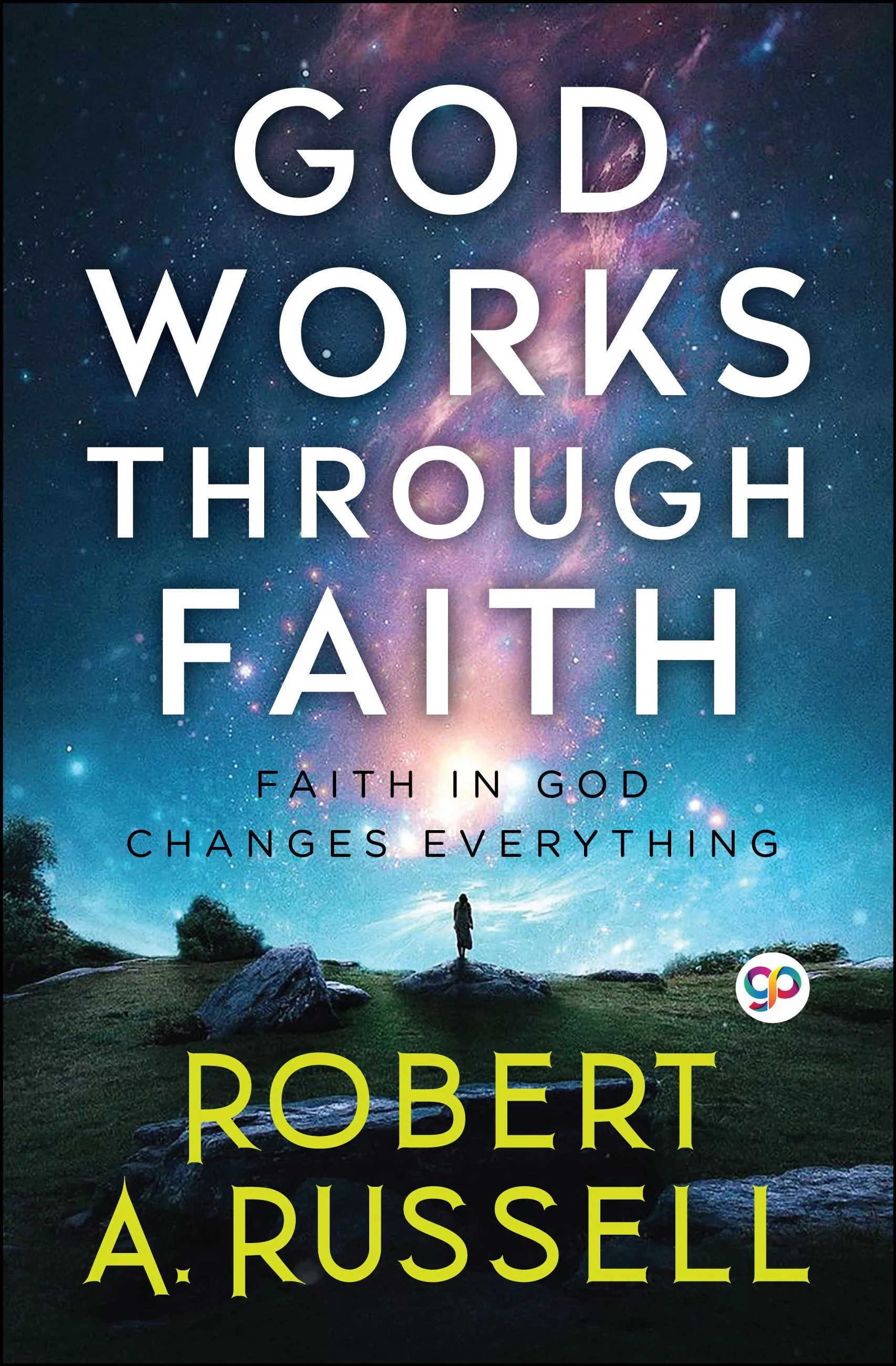
Download Cover Image
Do you want to download the full cover image for GOD Works Through Faith?