
Ever Increasing Faith
eBook
• INR 99.00
• English
• 9789354992803
No ratings yet
| Publisher | General Press |
|---|---|
| ISBN13 | 9789354992803 |
| ASIN/SKU | B0B9RFWV7Q |
| Book Format | eBook |
| Language | English |
| List Price | INR 99.00 |
| Subject Code | REL079000, REL123000, REL077000 |
| Publishing Date | 01/09/2022 |
| Book Code | BD00068913 |
Buy this Book
Amazon Stores
Ebook Stores
Other Stores
Discover Ever Increasing Faith by Smith Wigglesworth. This book is published by General Press in eBook format, ISBN 9789354992803, ASIN B0B9RFWV7Q, under Christian Books and Bibles, Christian Living, Christian Faith.
Book Description
‘Ever Increasing Faith’ are sermons by Smith Wigglesworth, a British evangelist who was significant in the early history of Pentecostalism. Some of his sermons were transcribed for Pentecostal magazines, and these were collected into two books: Ever Increasing Faith and Faith that Prevails.
In this, Wigglesworth directs you to a marvelous insight into what faith is and how one can cultivate it. You will learn what can be achieved using only faith. As a result, you will have a more substantial and stronger relationship with God. Wigglesworth reveals wisdom and sound teaching on the power and the manifestations of the Holy Spirit, prophecy, discerning of spirits, healing, tongues, and much more.
In this, Wigglesworth directs you to a marvelous insight into what faith is and how one can cultivate it. You will learn what can be achieved using only faith. As a result, you will have a more substantial and stronger relationship with God. Wigglesworth reveals wisdom and sound teaching on the power and the manifestations of the Holy Spirit, prophecy, discerning of spirits, healing, tongues, and much more.
Author Biography
Smith Wigglesworth (1859–1947) was a British evangelist, preacher, and one of the most influential figures in the early Pentecostal movement. Remembered for his unwavering faith, passionate preaching, and emphasis on the power of prayer, he inspired countless people to deepen their relationship with God. His sermons and devotional writings continue to be widely read by Christians around the world, encouraging lives marked by faith, holiness, and trust in God's promises.
He was born on June 8, 1859, in Menston, Yorkshire, England, into a poor working-class family. From an early age, Wigglesworth helped support his family by working in the fields and later as a plumber. Although he had little formal education and struggled with reading and writing during his youth, he developed a strong Christian faith after attending Methodist revival meetings. His spiritual life was further strengthened through his marriage to Polly Featherstone, whose encouragement played a vital role in his personal and spiritual growth.
For many years, Wigglesworth worked as a plumber while serving faithfully in local Christian ministry. A turning point came in the early twentieth century when he embraced the Pentecostal movement after experiencing what he described as the baptism in the Holy Spirit. From that time onward, he devoted himself entirely to preaching, believing that God worked powerfully through faith, prayer, and the guidance of the Holy Spirit.
Wigglesworth traveled extensively throughout Britain, Europe, North America, Australia, New Zealand, and South Africa, conducting revival meetings that attracted large audiences. His ministry emphasized repentance, salvation, divine healing, and the transforming power of the Holy Spirit. Many who attended his meetings reported experiences of healing and spiritual renewal. While such accounts remain matters of personal faith and religious testimony rather than historical verification, they contributed significantly to his reputation and influence within Pentecostal Christianity.
Smith Wigglesworth died on March 12, 1947, at the age of eighty-seven. His sermons were later compiled into numerous books, including Ever Increasing Faith, Faith That Prevails, and The Anointing of the Holy Spirit. Today, he is remembered as one of the most influential Pentecostal leaders of the twentieth century. His life of humble beginnings, steadfast faith, and devoted ministry continues to inspire believers who seek a deeper commitment to prayer, spiritual growth, and Christian service.
He was born on June 8, 1859, in Menston, Yorkshire, England, into a poor working-class family. From an early age, Wigglesworth helped support his family by working in the fields and later as a plumber. Although he had little formal education and struggled with reading and writing during his youth, he developed a strong Christian faith after attending Methodist revival meetings. His spiritual life was further strengthened through his marriage to Polly Featherstone, whose encouragement played a vital role in his personal and spiritual growth.
For many years, Wigglesworth worked as a plumber while serving faithfully in local Christian ministry. A turning point came in the early twentieth century when he embraced the Pentecostal movement after experiencing what he described as the baptism in the Holy Spirit. From that time onward, he devoted himself entirely to preaching, believing that God worked powerfully through faith, prayer, and the guidance of the Holy Spirit.
Wigglesworth traveled extensively throughout Britain, Europe, North America, Australia, New Zealand, and South Africa, conducting revival meetings that attracted large audiences. His ministry emphasized repentance, salvation, divine healing, and the transforming power of the Holy Spirit. Many who attended his meetings reported experiences of healing and spiritual renewal. While such accounts remain matters of personal faith and religious testimony rather than historical verification, they contributed significantly to his reputation and influence within Pentecostal Christianity.
Smith Wigglesworth died on March 12, 1947, at the age of eighty-seven. His sermons were later compiled into numerous books, including Ever Increasing Faith, Faith That Prevails, and The Anointing of the Holy Spirit. Today, he is remembered as one of the most influential Pentecostal leaders of the twentieth century. His life of humble beginnings, steadfast faith, and devoted ministry continues to inspire believers who seek a deeper commitment to prayer, spiritual growth, and Christian service.
Editorial Reviews
Editorial Reviews will be added soon…
Book Summary
Smith Wigglesworth’s Ever Increasing Faith is a passionate and uncompromising book about Christian faith. First published in 1924, it brings together sermons and teachings from one of the most influential Pentecostal evangelists of the early twentieth century. The book moves through themes of faith, healing, prayer, salvation, the risen Christ, righteousness, the Holy Spirit, and spiritual gifts. Its central message is straightforward: faith should not remain small, passive, or theoretical; it should grow until it becomes a living force in every part of a Christian’s life.
Wigglesworth begins with the command that gives the book its foundation: “Have faith in God.” For him, faith is much more than agreeing intellectually that God exists. It means trusting God so completely that a person is willing to act on that trust even when circumstances appear to contradict it. He repeatedly points readers toward the biblical promise that faith can overcome apparently impossible obstacles. Doubt, fear, and discouragement, in his view, become barriers when they are allowed to dominate the mind.
Yet Wigglesworth’s understanding of faith is not presented as effortless optimism. He believes faith must be developed. It grows through prayer, Scripture, obedience, spiritual experience, and a deepening relationship with Christ. A believer should not be satisfied with yesterday’s faith. Just as physical life grows, spiritual life should grow. The Christian is meant to move from dependence and uncertainty toward confidence and spiritual maturity.
This emphasis leads naturally to the subject of deliverance. Wigglesworth believes that Christ came not merely to forgive sins but to bring freedom from the powers that enslave human beings. His preaching frequently connects salvation with liberation, whether the problem is spiritual bondage, fear, oppression, or sickness. He presents Jesus as an active and present Savior rather than merely a historical figure whose work belongs to the distant past.
One of the book’s strongest themes is the power of the name of Jesus. Wigglesworth places enormous importance on the belief that Christ’s authority continues to operate through His name. The name of Jesus represents His character, authority, victory, and presence. For Wigglesworth, believers should therefore approach prayer with confidence rather than with a defeated attitude. Christianity, as he understands it, is not simply a system of beliefs but an encounter with a living Christ.
This conviction becomes especially visible in his extensive discussion of divine healing. Chapters such as “Wilt Thou Be Made Whole?”, “I Am the Lord That Healeth Thee,” and “Himself Took Our Infirmities” focus on healing as an important part of his understanding of Christ’s ministry. Wigglesworth interprets biblical passages about Jesus healing the sick as evidence that God remains interested in human suffering and that believers should approach Him with faith.
He shares numerous accounts of healing and dramatic spiritual experiences. These stories are not presented merely as entertainment. Their purpose is to challenge the reader’s expectations about what God can do. Wigglesworth wants people who have become discouraged by circumstances to recover a sense of spiritual possibility.
At the same time, modern readers should understand these healing accounts within their religious context. They represent Wigglesworth’s Pentecostal convictions and testimonies, rather than medically established evidence that faith alone cures disease. The importance of these chapters lies primarily in understanding his theology of faith, prayer, and healing.
The discussion then shifts toward the risen Christ. Wigglesworth insists that Christianity depends upon the reality of Christ’s resurrection. Jesus is not simply someone believers remember; He is the living center of their faith. Because Christ is risen, Wigglesworth believes His followers can experience His power in the present. Prayer, worship, praise, and spiritual life therefore become ways of responding to a living relationship rather than merely observing religious traditions.
The chapter on righteousness introduces another important dimension. Faith cannot be separated from the transformation of character. Wigglesworth does not want Christians merely to claim spiritual power while continuing to live selfishly or dishonestly. Genuine faith should produce a changed life. The believer should increasingly reflect Christ in conduct, motives, love, and obedience.
This idea becomes particularly important when he discusses “the words of this life.” Wigglesworth places great importance on the Bible as a source of spiritual nourishment. Scripture is not simply a book to be admired; it is something to be believed, absorbed, and lived. Faith grows through hearing and receiving the Word of God. Consequently, a Christian who wants stronger faith must cultivate a close relationship with Scripture.
The book then enters deeply into life in the Spirit. Wigglesworth teaches that Christianity should be characterized by the active presence of the Holy Spirit. Being spiritually alive means more than belonging to a church or accepting a creed. It means allowing the Spirit to shape one's thoughts, actions, prayer, worship, and service.
Several chapters focus specifically on being filled with the Holy Spirit and the baptism of the Spirit. Wigglesworth reflects the Pentecostal theology of his era, emphasizing spiritual empowerment and the biblical evidence associated with Spirit baptism. He believes that God equips ordinary believers with supernatural power so that they can become effective witnesses and servants.
The final section deals extensively with spiritual gifts. Wigglesworth discusses the word of knowledge, faith, healing, miracles, prophecy, discerning of spirits, and tongues. He treats these gifts not as badges of spiritual superiority but as manifestations of God's power intended for the service of others.
The gift of faith receives particular significance because it represents an extraordinary confidence in God beyond ordinary human ability. Likewise, healing and miracles demonstrate, in Wigglesworth’s understanding, that the Christian life should remain open to divine intervention. Prophecy involves speaking under spiritual inspiration, while discerning of spirits concerns the ability to distinguish genuine spiritual activity from what is false or harmful.
His discussion of tongues and other Pentecostal practices reflects the early Pentecostal movement’s attempt to recover what its followers understood as the supernatural dimensions of the New Testament church. Wigglesworth’s message is that Christianity should not become merely formal or intellectual. It should possess spiritual vitality.
What makes Ever Increasing Faith memorable is the personality behind its message. Wigglesworth writes and speaks with extraordinary urgency. He does not present faith as a comfortable idea for occasional encouragement. He challenges the reader to examine whether fear, doubt, habit, or religious routine has replaced genuine trust in God.
The book’s deeper message is therefore about spiritual enlargement. Faith must become greater than circumstances. Prayer must become more than words. Christianity must become more than intellectual belief. The believer is called to move from passive religion toward active trust, from weakness toward dependence on God, and from merely knowing about Christ toward experiencing His presence.
Ultimately, Ever Increasing Faith is a book about refusing to place unnecessary limits on what one believes God can accomplish. Wigglesworth’s language can sometimes sound forceful, absolute, and even startling to a modern reader, but beneath that intensity is a deeply pastoral desire: he wants people to discover courage where they have known fear, hope where they have known despair, and spiritual confidence where they have felt powerless.
The lasting appeal of the book lies in its insistence that faith is a journey rather than a finished possession. It must be exercised, tested, strengthened, and expressed through action. For Wigglesworth, the Christian life is meant to become progressively fuller—fuller in faith, prayer, love, spiritual power, service, and dependence upon Christ. The goal is not simply to possess faith, but to allow faith to become increasingly alive within us.
Wigglesworth begins with the command that gives the book its foundation: “Have faith in God.” For him, faith is much more than agreeing intellectually that God exists. It means trusting God so completely that a person is willing to act on that trust even when circumstances appear to contradict it. He repeatedly points readers toward the biblical promise that faith can overcome apparently impossible obstacles. Doubt, fear, and discouragement, in his view, become barriers when they are allowed to dominate the mind.
Yet Wigglesworth’s understanding of faith is not presented as effortless optimism. He believes faith must be developed. It grows through prayer, Scripture, obedience, spiritual experience, and a deepening relationship with Christ. A believer should not be satisfied with yesterday’s faith. Just as physical life grows, spiritual life should grow. The Christian is meant to move from dependence and uncertainty toward confidence and spiritual maturity.
This emphasis leads naturally to the subject of deliverance. Wigglesworth believes that Christ came not merely to forgive sins but to bring freedom from the powers that enslave human beings. His preaching frequently connects salvation with liberation, whether the problem is spiritual bondage, fear, oppression, or sickness. He presents Jesus as an active and present Savior rather than merely a historical figure whose work belongs to the distant past.
One of the book’s strongest themes is the power of the name of Jesus. Wigglesworth places enormous importance on the belief that Christ’s authority continues to operate through His name. The name of Jesus represents His character, authority, victory, and presence. For Wigglesworth, believers should therefore approach prayer with confidence rather than with a defeated attitude. Christianity, as he understands it, is not simply a system of beliefs but an encounter with a living Christ.
This conviction becomes especially visible in his extensive discussion of divine healing. Chapters such as “Wilt Thou Be Made Whole?”, “I Am the Lord That Healeth Thee,” and “Himself Took Our Infirmities” focus on healing as an important part of his understanding of Christ’s ministry. Wigglesworth interprets biblical passages about Jesus healing the sick as evidence that God remains interested in human suffering and that believers should approach Him with faith.
He shares numerous accounts of healing and dramatic spiritual experiences. These stories are not presented merely as entertainment. Their purpose is to challenge the reader’s expectations about what God can do. Wigglesworth wants people who have become discouraged by circumstances to recover a sense of spiritual possibility.
At the same time, modern readers should understand these healing accounts within their religious context. They represent Wigglesworth’s Pentecostal convictions and testimonies, rather than medically established evidence that faith alone cures disease. The importance of these chapters lies primarily in understanding his theology of faith, prayer, and healing.
The discussion then shifts toward the risen Christ. Wigglesworth insists that Christianity depends upon the reality of Christ’s resurrection. Jesus is not simply someone believers remember; He is the living center of their faith. Because Christ is risen, Wigglesworth believes His followers can experience His power in the present. Prayer, worship, praise, and spiritual life therefore become ways of responding to a living relationship rather than merely observing religious traditions.
The chapter on righteousness introduces another important dimension. Faith cannot be separated from the transformation of character. Wigglesworth does not want Christians merely to claim spiritual power while continuing to live selfishly or dishonestly. Genuine faith should produce a changed life. The believer should increasingly reflect Christ in conduct, motives, love, and obedience.
This idea becomes particularly important when he discusses “the words of this life.” Wigglesworth places great importance on the Bible as a source of spiritual nourishment. Scripture is not simply a book to be admired; it is something to be believed, absorbed, and lived. Faith grows through hearing and receiving the Word of God. Consequently, a Christian who wants stronger faith must cultivate a close relationship with Scripture.
The book then enters deeply into life in the Spirit. Wigglesworth teaches that Christianity should be characterized by the active presence of the Holy Spirit. Being spiritually alive means more than belonging to a church or accepting a creed. It means allowing the Spirit to shape one's thoughts, actions, prayer, worship, and service.
Several chapters focus specifically on being filled with the Holy Spirit and the baptism of the Spirit. Wigglesworth reflects the Pentecostal theology of his era, emphasizing spiritual empowerment and the biblical evidence associated with Spirit baptism. He believes that God equips ordinary believers with supernatural power so that they can become effective witnesses and servants.
The final section deals extensively with spiritual gifts. Wigglesworth discusses the word of knowledge, faith, healing, miracles, prophecy, discerning of spirits, and tongues. He treats these gifts not as badges of spiritual superiority but as manifestations of God's power intended for the service of others.
The gift of faith receives particular significance because it represents an extraordinary confidence in God beyond ordinary human ability. Likewise, healing and miracles demonstrate, in Wigglesworth’s understanding, that the Christian life should remain open to divine intervention. Prophecy involves speaking under spiritual inspiration, while discerning of spirits concerns the ability to distinguish genuine spiritual activity from what is false or harmful.
His discussion of tongues and other Pentecostal practices reflects the early Pentecostal movement’s attempt to recover what its followers understood as the supernatural dimensions of the New Testament church. Wigglesworth’s message is that Christianity should not become merely formal or intellectual. It should possess spiritual vitality.
What makes Ever Increasing Faith memorable is the personality behind its message. Wigglesworth writes and speaks with extraordinary urgency. He does not present faith as a comfortable idea for occasional encouragement. He challenges the reader to examine whether fear, doubt, habit, or religious routine has replaced genuine trust in God.
The book’s deeper message is therefore about spiritual enlargement. Faith must become greater than circumstances. Prayer must become more than words. Christianity must become more than intellectual belief. The believer is called to move from passive religion toward active trust, from weakness toward dependence on God, and from merely knowing about Christ toward experiencing His presence.
Ultimately, Ever Increasing Faith is a book about refusing to place unnecessary limits on what one believes God can accomplish. Wigglesworth’s language can sometimes sound forceful, absolute, and even startling to a modern reader, but beneath that intensity is a deeply pastoral desire: he wants people to discover courage where they have known fear, hope where they have known despair, and spiritual confidence where they have felt powerless.
The lasting appeal of the book lies in its insistence that faith is a journey rather than a finished possession. It must be exercised, tested, strengthened, and expressed through action. For Wigglesworth, the Christian life is meant to become progressively fuller—fuller in faith, prayer, love, spiritual power, service, and dependence upon Christ. The goal is not simply to possess faith, but to allow faith to become increasingly alive within us.
Sample Chapters
Sample Chapters will be added soon…
Reader Reviews
No reviews yet.
Ever Increasing Faith
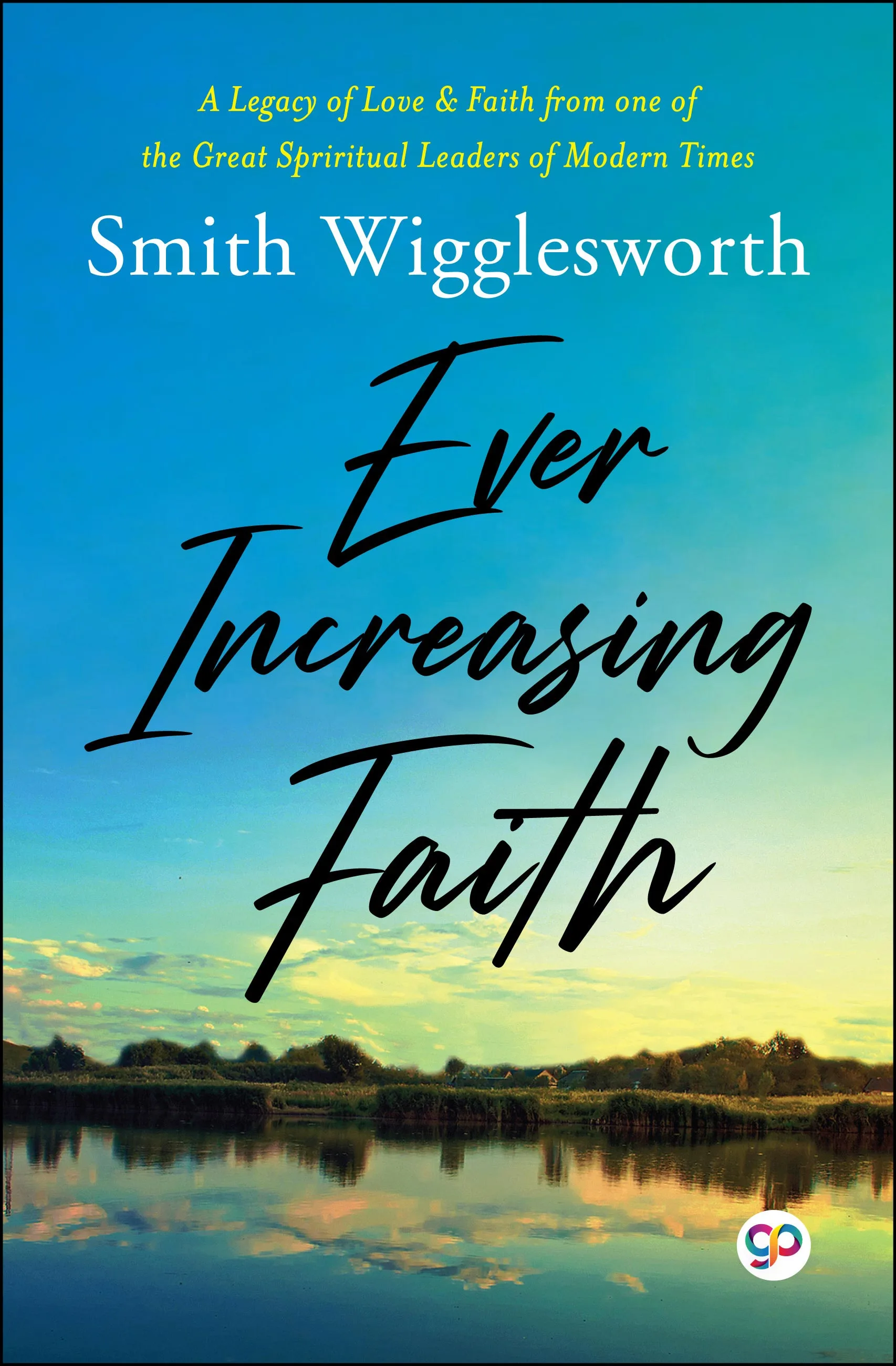
Download Cover Image
Do you want to download the full cover image for Ever Increasing Faith?