
Toward a Psychology of Being
eBook
• INR 99.00
• English
• 9789354993077
No ratings yet
| Publisher | General Press |
|---|---|
| ISBN13 | 9789354993077 |
| ASIN/SKU | B0B9RGRN6T |
| Book Format | eBook |
| Language | English |
| List Price | INR 99.00 |
| Subject Code | PSY020000, PSY024000, BUS082000, BUS000000 |
| Publishing Date | 01/09/2022 |
| Book Code | BD00068917 |
Buy this Book
Amazon Stores
Ebook Stores
Other Stores
Discover Toward a Psychology of Being by Abraham H. Maslow. This book is published by General Press in eBook format, ISBN 9789354993077, ASIN B0B9RGRN6T, under Reference, Personality Psychology, Humanistic Psychology.
Book Description
First published in 1962, ‘Toward a Psychology of Being’ was written by Abraham H. Maslow, an American psychologist who was best known for creating Maslow's hierarchy of needs, a theory of psychological health predicated on fulfilling innate human needs in priority, culminating in self-actualization.
This book develops on Maslow’s key theories of motivation and self-actualization, which were first introduced in Maslow’s 1954 book, Motivation and Personality. It gives a series of hypotheses about the human condition, dealing with important questions about people’s intrinsic desires, the nature of well-being, and the process of psychological growth.
Professor Maslow claims that most of us are prepping to live rather than truly living. Therefore, instead of being a person who only wishes to reach his true ‘call’ in life, you should enter a state of becoming. Always trying to reach your maximum potential and living in harmony with your natural needs.
This book develops on Maslow’s key theories of motivation and self-actualization, which were first introduced in Maslow’s 1954 book, Motivation and Personality. It gives a series of hypotheses about the human condition, dealing with important questions about people’s intrinsic desires, the nature of well-being, and the process of psychological growth.
Professor Maslow claims that most of us are prepping to live rather than truly living. Therefore, instead of being a person who only wishes to reach his true ‘call’ in life, you should enter a state of becoming. Always trying to reach your maximum potential and living in harmony with your natural needs.
Author Biography
In its first edition, Abraham Maslow's "Toward a Psychology of Being" (1962) sold more than 100,000 copies. Like R. D. Laing, Maslow questioned the old psychoanalytic notions of being well or ill "adjusted" to the world and spoke from a broadly human base. Human nature---the inner nature of every individual which is uniquely his or her own---"seems not to be . . . necessarily evil; . . . the basic human capacities are on their face either neutral, premoral or positively good." What we call evil behavior appears most often to be a secondary reaction to frustration of this intrinsic nature." On this foundation, Maslow built an affirmation of people and people's potentialities for self-fulfillment and psychological health. He considered his "humanistic" or "Eupsychian" approach to be part of the revolution then taking place in psychology, as in other fields, toward a new view of people. He saw people as sociable, creative, and loving beings whose welfare is not in the cure of "neurosis" or other ills, but on the development of their most socially and personally constructive potentials. Maslow was born in New York City and received his B.A., M.A., and Ph.D. from the University of Wisconsin. He was chairman of the psychology department at Brandeis University in Waltham, Massachusetts. He taught for 14 years at Brooklyn College, and was the president of the American Psychological Association from 1967 to 1968. His wife Bertha helped edit his journals and last papers after his death and assisted with a memorial volume about him.
Editorial Reviews
Editorial Reviews will be added soon…
Book Summary
Abraham H. Maslow’s Toward a Psychology of Being is a landmark work in humanistic psychology and one of the most important books for understanding Maslow’s ideas about human potential, self-actualization, peak experiences, motivation, creativity, and psychological growth. First published in 1962, the book grew out of Maslow’s dissatisfaction with the limitations of traditional psychology. He believed that psychology had spent too much time studying illness, weakness, fear, conditioning, and dysfunctional behavior and not enough time studying people who were healthy, creative, fulfilled, courageous, and capable of reaching their potential. Rather than asking only what makes people sick, Maslow wanted psychology to ask a larger question: What makes human beings flourish? This Toward a Psychology of Being summary explores that question and explains why Maslow believed psychology needed to move toward a more complete understanding of human nature.
Maslow begins from the belief that human beings cannot be adequately understood by looking only at their problems. Traditional psychological approaches had made important discoveries about anxiety, neurosis, behavior, and mental illness, but Maslow felt that these perspectives offered only half a picture of humanity. If psychologists studied only people who were struggling, they might develop a science of pathology rather than a science of health. Maslow therefore wanted to investigate people who appeared psychologically mature and relatively free from severe neurosis. He was interested in individuals who were independent, creative, realistic, spontaneous, accepting of themselves and others, and deeply engaged with meaningful work. His goal was not to create a perfect category of human beings but to discover what psychological health might look like when people are allowed to develop fully.
This approach is closely connected with Maslow’s famous hierarchy of needs, although Toward a Psychology of Being goes considerably further than the simplified pyramid often associated with his name. Maslow argues that human motivation is not limited to the desire to remove discomfort. People certainly seek food, safety, security, affection, and belonging, but once basic deficiencies are reasonably satisfied, another kind of motivation becomes possible. People begin to want growth, meaning, creativity, understanding, beauty, and the realization of their capacities. Maslow calls these higher motivations growth needs or being needs.
This distinction between deficiency motivation and growth motivation is one of the book’s central ideas. Deficiency motivation arises from something lacking. A hungry person seeks food because something is missing. A lonely person seeks connection because companionship is lacking. A person who feels unsafe seeks security. In these situations, action is directed toward reducing a deficiency and restoring balance. Growth motivation is different. A person who is already reasonably satisfied may continue learning, creating, exploring, loving, and developing—not because something is missing but because there is something more within them that can be expressed. Growth is therefore not simply a method for fixing problems. It is an unfolding of potential.
Maslow uses the concept of self-actualization to describe this process. Self-actualization means becoming more fully what one is capable of becoming. It is not simply success, fame, wealth, or personal satisfaction. A person can achieve conventional success while remaining deeply disconnected from their potential. Self-actualization involves discovering and expressing one’s genuine capacities while living in accordance with meaningful values. For one person this may involve art; for another, scientific work, parenting, teaching, social service, craftsmanship, leadership, or any other vocation pursued with authenticity and commitment.
One of Maslow’s most important insights is that self-actualization is not necessarily comfortable. Personal growth often requires confronting difficult truths about oneself. It can involve uncertainty, responsibility, risk, and the willingness to move beyond familiar habits. People sometimes remain psychologically stuck because the familiar, even when unsatisfying, feels safer than the unknown. Maslow therefore presents growth as a choice that must often be made repeatedly. Human beings have both a tendency toward growth and a tendency to protect themselves from it.
This tension is connected to what Maslow calls the Jonah complex, his term for the fear of one’s own greatness or potential. People may be frightened not only by failure but also by success. Becoming capable, visible, responsible, or excellent can create new demands. A person may therefore unconsciously avoid opportunities because realizing their potential means accepting greater responsibility. Maslow’s point is deeply humane: people sometimes sabotage their growth not because they lack ability but because they are afraid of what using that ability might require of them.
Another central concept is the peak experience. Maslow uses this term for moments of unusually intense happiness, awe, insight, unity, creativity, love, or fulfillment. During a peak experience, ordinary self-consciousness may temporarily fade. A person can become completely absorbed in music, nature, art, love, discovery, creative work, or a profound sense of meaning. Time may seem to change, and the person may experience the world as unusually vivid and significant.
Peak experiences are important because Maslow believes they reveal something about human potential. They are not necessarily religious experiences, although they can be. A scientist experiencing the beauty of discovery, an artist completely absorbed in creation, a parent experiencing overwhelming love, or a person standing before a magnificent landscape may all experience moments of transcendence. Maslow therefore broadens the study of spirituality by suggesting that profound experiences of meaning can occur within ordinary human life.
These experiences also lead Maslow toward a distinction between ordinary psychological functioning and Being. Deficiency-oriented people tend to relate to the world according to their needs. They see things partly in terms of what those things can provide or threaten. Being-oriented people, by contrast, can sometimes perceive reality more directly. They are less dominated by the question, “What can I get from this?” and more capable of appreciating something simply because it exists. Maslow calls this Being-cognition, or B-cognition.
Being-cognition involves a more receptive way of seeing. A person can appreciate another human being without immediately trying to control or use them. They can experience a sunset without turning it into a photograph for social approval. They can listen to music without demanding that it serve a practical purpose. They can encounter another person with curiosity rather than immediately judging them according to personal advantage. In this sense, psychological health involves not only achieving goals but also developing the ability to experience reality without constantly forcing it to satisfy personal needs.
Maslow’s discussion of love is similarly nuanced. He distinguishes between deficiency-love and Being-love. Deficiency-love seeks something from another person: reassurance, security, validation, companionship, or the satisfaction of emotional needs. Being-love, on the other hand, is based more strongly on appreciation of the other person for who they are. It does not mean that healthy relationships have no needs or expectations. Rather, it means that love can become less possessive and more accepting as psychological maturity increases.
This distinction helps explain Maslow’s broader understanding of healthy relationships. Psychologically mature people are not necessarily emotionally detached. In fact, they may love more deeply because they are less dependent on others to complete their identity. Their relationships can contain greater freedom, honesty, respect, and appreciation. They can care deeply without needing to control every aspect of another person.
Maslow also places great importance on creativity. He challenges the assumption that creativity belongs only to artists, writers, or exceptional geniuses. He sees creativity as a natural expression of psychological health. A self-actualizing person may display creativity in cooking, teaching, parenting, science, business, problem-solving, relationships, or everyday work. What matters is the openness, flexibility, spontaneity, and willingness to engage directly with reality.
This idea connects creativity with spontaneity. Maslow’s psychologically healthy individuals are capable of behaving naturally rather than constantly performing roles designed to satisfy social expectations. They know themselves well enough to act from genuine values. Yet spontaneity does not mean impulsiveness. A self-actualizing person can be disciplined and responsible while remaining authentic. The goal is not to abandon social norms completely but to avoid becoming imprisoned by them.
Another important theme is acceptance. Maslow observes that psychologically mature people tend to accept themselves, others, and reality more readily than highly defensive individuals. This does not mean they approve of everything or never try to change anything. Rather, they do not waste enormous amounts of energy denying facts. They can acknowledge weakness without allowing it to destroy their self-respect. They can recognize imperfections in other people without demanding impossible perfection.
Maslow also discusses the importance of meaning and values. A psychologically healthy person needs something worthwhile to live for. Human beings are not satisfied indefinitely by comfort alone. Once basic needs are reasonably met, people often require purpose. They need work, relationships, ideals, creativity, service, or other commitments that make existence feel worthwhile. Without meaning, even material success can become strangely empty.
This becomes particularly important in Maslow’s discussion of transcendence. Self-actualization is not necessarily the final stage of human development. Some people become increasingly concerned with values and realities beyond the personal self. They may devote themselves to truth, justice, beauty, humanity, spirituality, or service. In this sense, the mature person can move from asking, “How can I become everything I can be?” toward the larger question, “What can I contribute to something beyond myself?”
Maslow’s broader argument is therefore a challenge to both reductionism and pessimism. Human beings are not merely bundles of conditioned responses, nor are they simply creatures driven by unconscious conflict. At the same time, Maslow does not portray humanity as automatically good or endlessly progressive. People can be destructive, defensive, fearful, and selfish. But these tendencies do not represent the whole of human nature. Humans also possess capacities for love, creativity, truth, growth, courage, compassion, and transcendence.
The book’s practical significance lies in its invitation to reconsider what mental health actually means. If health is defined only as the absence of anxiety, depression, or other symptoms, then psychology may stop too early. Maslow proposes a richer standard: psychological health should also involve vitality, purpose, autonomy, creativity, meaningful relationships, openness to experience, and the realization of potential. A person may not be clinically ill and yet still live a narrow, fearful, or unfulfilled life.
For modern readers, this message remains highly relevant. Contemporary culture often measures success through external achievement, productivity, income, popularity, and recognition. Maslow asks us to consider a different question: Are we becoming more fully ourselves? Achievement can support growth, but it cannot substitute for it. A person can accumulate possessions and still feel empty; become highly respected and still feel false; or reach professional success while ignoring the deeper needs of the self.
Ultimately, Toward a Psychology of Being is Maslow’s attempt to expand psychology from a science concerned mainly with illness into a science capable of understanding human flourishing. Its central message is that people possess a natural tendency toward growth, but that tendency can be blocked by fear, insecurity, social conditioning, unhealthy environments, and internal conflict. The task of a healthy life is not simply to eliminate problems but to create the conditions in which human potential can unfold.
In the end, Maslow asks us to imagine psychology as a discipline that studies not only what goes wrong with people but also what goes right. He invites us to take seriously moments of joy, creativity, love, insight, courage, wonder, and transcendence. He reminds us that human beings need more than survival. They need meaning, purpose, growth, and the opportunity to become what they are capable of becoming. That is the enduring significance of Toward a Psychology of Being: it shifts the question from “How can we fix human beings?” to a much more hopeful one—“How can human beings become more fully alive?”
Maslow begins from the belief that human beings cannot be adequately understood by looking only at their problems. Traditional psychological approaches had made important discoveries about anxiety, neurosis, behavior, and mental illness, but Maslow felt that these perspectives offered only half a picture of humanity. If psychologists studied only people who were struggling, they might develop a science of pathology rather than a science of health. Maslow therefore wanted to investigate people who appeared psychologically mature and relatively free from severe neurosis. He was interested in individuals who were independent, creative, realistic, spontaneous, accepting of themselves and others, and deeply engaged with meaningful work. His goal was not to create a perfect category of human beings but to discover what psychological health might look like when people are allowed to develop fully.
This approach is closely connected with Maslow’s famous hierarchy of needs, although Toward a Psychology of Being goes considerably further than the simplified pyramid often associated with his name. Maslow argues that human motivation is not limited to the desire to remove discomfort. People certainly seek food, safety, security, affection, and belonging, but once basic deficiencies are reasonably satisfied, another kind of motivation becomes possible. People begin to want growth, meaning, creativity, understanding, beauty, and the realization of their capacities. Maslow calls these higher motivations growth needs or being needs.
This distinction between deficiency motivation and growth motivation is one of the book’s central ideas. Deficiency motivation arises from something lacking. A hungry person seeks food because something is missing. A lonely person seeks connection because companionship is lacking. A person who feels unsafe seeks security. In these situations, action is directed toward reducing a deficiency and restoring balance. Growth motivation is different. A person who is already reasonably satisfied may continue learning, creating, exploring, loving, and developing—not because something is missing but because there is something more within them that can be expressed. Growth is therefore not simply a method for fixing problems. It is an unfolding of potential.
Maslow uses the concept of self-actualization to describe this process. Self-actualization means becoming more fully what one is capable of becoming. It is not simply success, fame, wealth, or personal satisfaction. A person can achieve conventional success while remaining deeply disconnected from their potential. Self-actualization involves discovering and expressing one’s genuine capacities while living in accordance with meaningful values. For one person this may involve art; for another, scientific work, parenting, teaching, social service, craftsmanship, leadership, or any other vocation pursued with authenticity and commitment.
One of Maslow’s most important insights is that self-actualization is not necessarily comfortable. Personal growth often requires confronting difficult truths about oneself. It can involve uncertainty, responsibility, risk, and the willingness to move beyond familiar habits. People sometimes remain psychologically stuck because the familiar, even when unsatisfying, feels safer than the unknown. Maslow therefore presents growth as a choice that must often be made repeatedly. Human beings have both a tendency toward growth and a tendency to protect themselves from it.
This tension is connected to what Maslow calls the Jonah complex, his term for the fear of one’s own greatness or potential. People may be frightened not only by failure but also by success. Becoming capable, visible, responsible, or excellent can create new demands. A person may therefore unconsciously avoid opportunities because realizing their potential means accepting greater responsibility. Maslow’s point is deeply humane: people sometimes sabotage their growth not because they lack ability but because they are afraid of what using that ability might require of them.
Another central concept is the peak experience. Maslow uses this term for moments of unusually intense happiness, awe, insight, unity, creativity, love, or fulfillment. During a peak experience, ordinary self-consciousness may temporarily fade. A person can become completely absorbed in music, nature, art, love, discovery, creative work, or a profound sense of meaning. Time may seem to change, and the person may experience the world as unusually vivid and significant.
Peak experiences are important because Maslow believes they reveal something about human potential. They are not necessarily religious experiences, although they can be. A scientist experiencing the beauty of discovery, an artist completely absorbed in creation, a parent experiencing overwhelming love, or a person standing before a magnificent landscape may all experience moments of transcendence. Maslow therefore broadens the study of spirituality by suggesting that profound experiences of meaning can occur within ordinary human life.
These experiences also lead Maslow toward a distinction between ordinary psychological functioning and Being. Deficiency-oriented people tend to relate to the world according to their needs. They see things partly in terms of what those things can provide or threaten. Being-oriented people, by contrast, can sometimes perceive reality more directly. They are less dominated by the question, “What can I get from this?” and more capable of appreciating something simply because it exists. Maslow calls this Being-cognition, or B-cognition.
Being-cognition involves a more receptive way of seeing. A person can appreciate another human being without immediately trying to control or use them. They can experience a sunset without turning it into a photograph for social approval. They can listen to music without demanding that it serve a practical purpose. They can encounter another person with curiosity rather than immediately judging them according to personal advantage. In this sense, psychological health involves not only achieving goals but also developing the ability to experience reality without constantly forcing it to satisfy personal needs.
Maslow’s discussion of love is similarly nuanced. He distinguishes between deficiency-love and Being-love. Deficiency-love seeks something from another person: reassurance, security, validation, companionship, or the satisfaction of emotional needs. Being-love, on the other hand, is based more strongly on appreciation of the other person for who they are. It does not mean that healthy relationships have no needs or expectations. Rather, it means that love can become less possessive and more accepting as psychological maturity increases.
This distinction helps explain Maslow’s broader understanding of healthy relationships. Psychologically mature people are not necessarily emotionally detached. In fact, they may love more deeply because they are less dependent on others to complete their identity. Their relationships can contain greater freedom, honesty, respect, and appreciation. They can care deeply without needing to control every aspect of another person.
Maslow also places great importance on creativity. He challenges the assumption that creativity belongs only to artists, writers, or exceptional geniuses. He sees creativity as a natural expression of psychological health. A self-actualizing person may display creativity in cooking, teaching, parenting, science, business, problem-solving, relationships, or everyday work. What matters is the openness, flexibility, spontaneity, and willingness to engage directly with reality.
This idea connects creativity with spontaneity. Maslow’s psychologically healthy individuals are capable of behaving naturally rather than constantly performing roles designed to satisfy social expectations. They know themselves well enough to act from genuine values. Yet spontaneity does not mean impulsiveness. A self-actualizing person can be disciplined and responsible while remaining authentic. The goal is not to abandon social norms completely but to avoid becoming imprisoned by them.
Another important theme is acceptance. Maslow observes that psychologically mature people tend to accept themselves, others, and reality more readily than highly defensive individuals. This does not mean they approve of everything or never try to change anything. Rather, they do not waste enormous amounts of energy denying facts. They can acknowledge weakness without allowing it to destroy their self-respect. They can recognize imperfections in other people without demanding impossible perfection.
Maslow also discusses the importance of meaning and values. A psychologically healthy person needs something worthwhile to live for. Human beings are not satisfied indefinitely by comfort alone. Once basic needs are reasonably met, people often require purpose. They need work, relationships, ideals, creativity, service, or other commitments that make existence feel worthwhile. Without meaning, even material success can become strangely empty.
This becomes particularly important in Maslow’s discussion of transcendence. Self-actualization is not necessarily the final stage of human development. Some people become increasingly concerned with values and realities beyond the personal self. They may devote themselves to truth, justice, beauty, humanity, spirituality, or service. In this sense, the mature person can move from asking, “How can I become everything I can be?” toward the larger question, “What can I contribute to something beyond myself?”
Maslow’s broader argument is therefore a challenge to both reductionism and pessimism. Human beings are not merely bundles of conditioned responses, nor are they simply creatures driven by unconscious conflict. At the same time, Maslow does not portray humanity as automatically good or endlessly progressive. People can be destructive, defensive, fearful, and selfish. But these tendencies do not represent the whole of human nature. Humans also possess capacities for love, creativity, truth, growth, courage, compassion, and transcendence.
The book’s practical significance lies in its invitation to reconsider what mental health actually means. If health is defined only as the absence of anxiety, depression, or other symptoms, then psychology may stop too early. Maslow proposes a richer standard: psychological health should also involve vitality, purpose, autonomy, creativity, meaningful relationships, openness to experience, and the realization of potential. A person may not be clinically ill and yet still live a narrow, fearful, or unfulfilled life.
For modern readers, this message remains highly relevant. Contemporary culture often measures success through external achievement, productivity, income, popularity, and recognition. Maslow asks us to consider a different question: Are we becoming more fully ourselves? Achievement can support growth, but it cannot substitute for it. A person can accumulate possessions and still feel empty; become highly respected and still feel false; or reach professional success while ignoring the deeper needs of the self.
Ultimately, Toward a Psychology of Being is Maslow’s attempt to expand psychology from a science concerned mainly with illness into a science capable of understanding human flourishing. Its central message is that people possess a natural tendency toward growth, but that tendency can be blocked by fear, insecurity, social conditioning, unhealthy environments, and internal conflict. The task of a healthy life is not simply to eliminate problems but to create the conditions in which human potential can unfold.
In the end, Maslow asks us to imagine psychology as a discipline that studies not only what goes wrong with people but also what goes right. He invites us to take seriously moments of joy, creativity, love, insight, courage, wonder, and transcendence. He reminds us that human beings need more than survival. They need meaning, purpose, growth, and the opportunity to become what they are capable of becoming. That is the enduring significance of Toward a Psychology of Being: it shifts the question from “How can we fix human beings?” to a much more hopeful one—“How can human beings become more fully alive?”
Sample Chapters
Sample Chapters will be added soon…
Reader Reviews
No reviews yet.
Toward a Psychology of Being
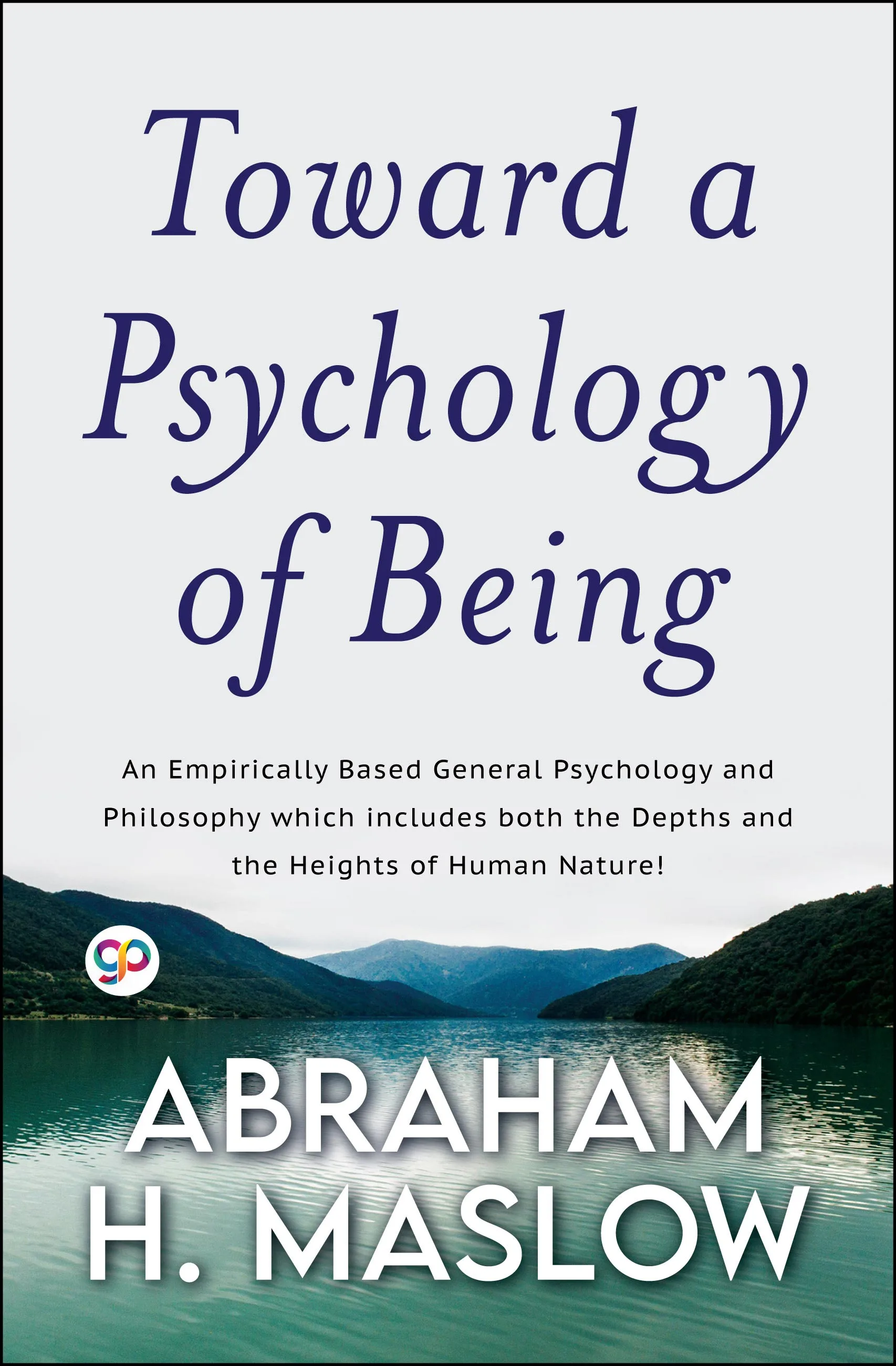
Download Cover Image
Do you want to download the full cover image for Toward a Psychology of Being?