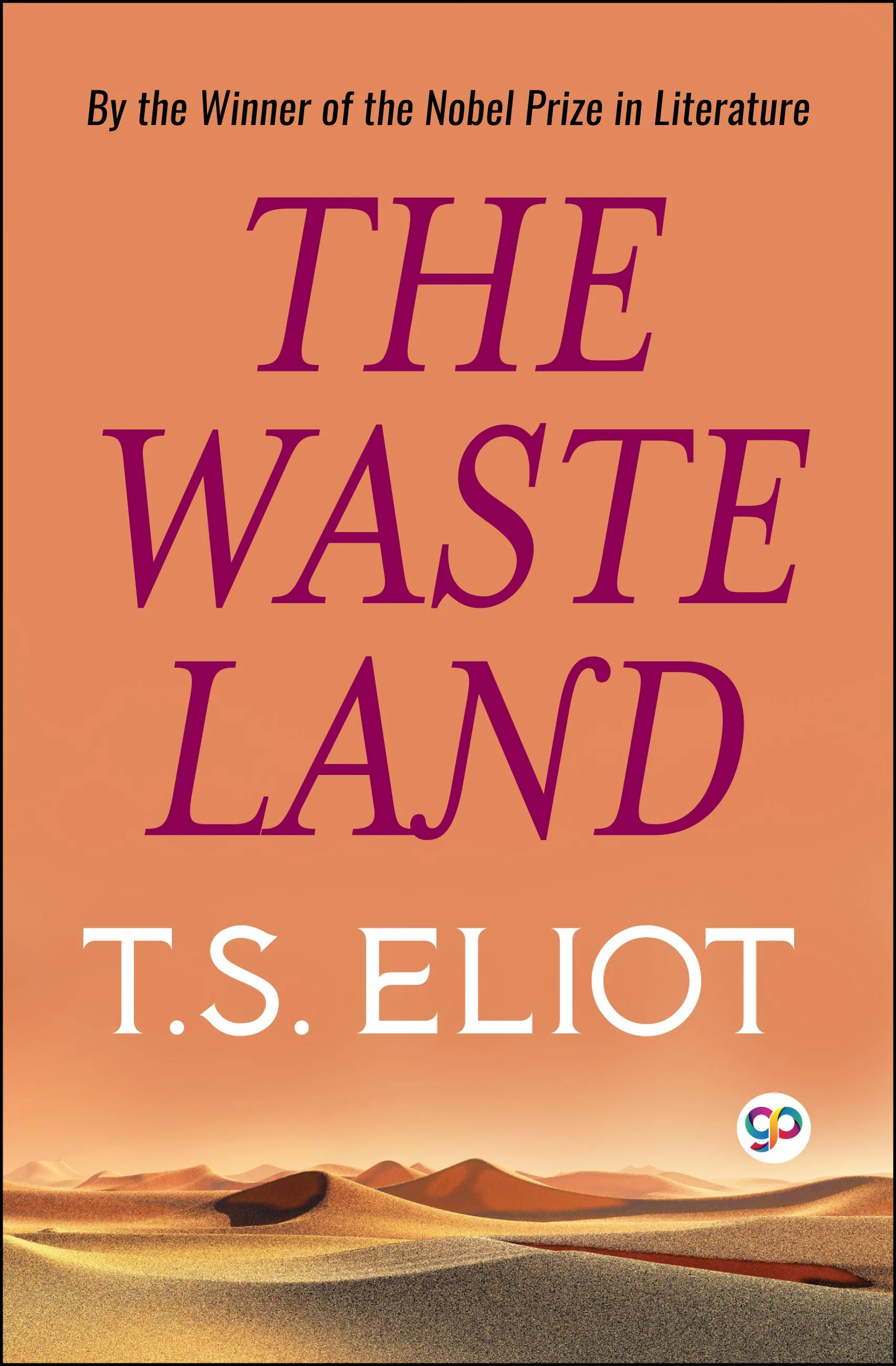
The Waste Land
eBook
• INR 99.00
• English
• 9789354993640
No ratings yet
| Publisher | General Press |
|---|---|
| ISBN13 | 9789354993640 |
| ASIN/SKU | B0B9RH7SKL |
| Book Format | eBook |
| Language | English |
| List Price | INR 99.00 |
| Subject Code | POE005010, POE023010 |
| Publishing Date | 01/09/2022 |
| Book Code | BD00068920 |
Buy this Book
Amazon Stores
Ebook Stores
Other Stores
Discover The Waste Land by T.S. Eliot. This book is published by General Press in eBook format, ISBN 9789354993640, ASIN B0B9RH7SKL, under Literature and Fiction, Poetry.
Book Description
T.S. Eliot’s "The Waste Land" is a profound, fragmented masterpiece that captures the deep spiritual and emotional exhaustion of the world following the devastation of the First World War. While often viewed as a complex modernist puzzle, at its heart, it is a deeply human cry for meaning, connection, and healing in a fractured society.
The poem guides us through a barren, desolate landscape—a "waste land" where modern life has lost its vitality and purpose. Through a mesmerizing collage of shifting voices, ancient myths, and fleeting glimpses of city life, Eliot explores the profound isolation of individuals who are surrounded by others yet utterly alone. We witness loveless encounters, hollow conversations, and a pervasive sense of grief that haunts the modern city. The narrative flows through five distinct movements, moving from the painful awakening of spring in a deadened world to the fiery destruction of unchecked desires, and finally to a desperate thirst for spiritual rain.
Yet, amidst the overwhelming despair and broken imagery, Eliot offers a faint, flickering glimmer of hope. In its final moments, the poem turns toward Eastern philosophy, echoing the Sanskrit words for giving, compassion, and self-control. Ultimately, 'The Waste Land' is a moving testament to human resilience. It is an acknowledgment that while our world and our spirits may sometimes shatter, we can still gather the fragments to seek out inner peace and meaning in the ruins.
The poem guides us through a barren, desolate landscape—a "waste land" where modern life has lost its vitality and purpose. Through a mesmerizing collage of shifting voices, ancient myths, and fleeting glimpses of city life, Eliot explores the profound isolation of individuals who are surrounded by others yet utterly alone. We witness loveless encounters, hollow conversations, and a pervasive sense of grief that haunts the modern city. The narrative flows through five distinct movements, moving from the painful awakening of spring in a deadened world to the fiery destruction of unchecked desires, and finally to a desperate thirst for spiritual rain.
Yet, amidst the overwhelming despair and broken imagery, Eliot offers a faint, flickering glimmer of hope. In its final moments, the poem turns toward Eastern philosophy, echoing the Sanskrit words for giving, compassion, and self-control. Ultimately, 'The Waste Land' is a moving testament to human resilience. It is an acknowledgment that while our world and our spirits may sometimes shatter, we can still gather the fragments to seek out inner peace and meaning in the ruins.
Author Biography
T. S. Eliot (1888–1965), whose full name was Thomas Stearns Eliot, was one of the most influential poets, playwrights, essayists, and literary critics of the twentieth century. A pioneer of literary modernism, he transformed English-language poetry through his innovative style, profound intellectual depth, and exploration of the spiritual and cultural challenges of the modern world. His works continue to shape literature, criticism, and philosophy, making him one of the defining literary voices of his era.
Eliot was born on September 26, 1888, in St. Louis, Missouri, United States, into a distinguished and educated family. From an early age, he showed exceptional academic ability and a deep interest in literature, philosophy, and classical languages. He studied at Harvard University, where he explored philosophy, Sanskrit, and comparative literature. He later continued his studies at the Sorbonne in Paris and Merton College, Oxford, experiences that broadened his intellectual outlook and influenced his literary style.
In 1914, Eliot settled in England, where he spent most of his adult life and eventually became a British citizen. His literary breakthrough came in 1915 with The Love Song of J. Alfred Prufrock, a poem that introduced readers to his distinctive modernist voice. He gained international acclaim in 1922 with The Waste Land, widely regarded as one of the greatest poems of the twentieth century. Through its rich symbolism, fragmented structure, and numerous literary references, the poem captured the uncertainty and spiritual disillusionment of the post-First World War era.
Beyond poetry, Eliot was an accomplished playwright and critic. His verse dramas, including Murder in the Cathedral and The Cocktail Party, revitalized poetic theatre, while essays such as Tradition and the Individual Talent profoundly influenced modern literary criticism. He also delighted younger readers with Old Possum's Book of Practical Cats, which later inspired the world-famous musical Cats. In 1948, Eliot received the Nobel Prize in Literature for his outstanding contribution to modern poetry and literary criticism.
T. S. Eliot died on January 4, 1965, in London. Today, he is remembered as one of the greatest writers in the English language. His poetry, criticism, and plays continue to inspire readers with their intellectual richness, emotional depth, and timeless reflections on faith, culture, memory, and the search for meaning in an ever-changing world.
Eliot was born on September 26, 1888, in St. Louis, Missouri, United States, into a distinguished and educated family. From an early age, he showed exceptional academic ability and a deep interest in literature, philosophy, and classical languages. He studied at Harvard University, where he explored philosophy, Sanskrit, and comparative literature. He later continued his studies at the Sorbonne in Paris and Merton College, Oxford, experiences that broadened his intellectual outlook and influenced his literary style.
In 1914, Eliot settled in England, where he spent most of his adult life and eventually became a British citizen. His literary breakthrough came in 1915 with The Love Song of J. Alfred Prufrock, a poem that introduced readers to his distinctive modernist voice. He gained international acclaim in 1922 with The Waste Land, widely regarded as one of the greatest poems of the twentieth century. Through its rich symbolism, fragmented structure, and numerous literary references, the poem captured the uncertainty and spiritual disillusionment of the post-First World War era.
Beyond poetry, Eliot was an accomplished playwright and critic. His verse dramas, including Murder in the Cathedral and The Cocktail Party, revitalized poetic theatre, while essays such as Tradition and the Individual Talent profoundly influenced modern literary criticism. He also delighted younger readers with Old Possum's Book of Practical Cats, which later inspired the world-famous musical Cats. In 1948, Eliot received the Nobel Prize in Literature for his outstanding contribution to modern poetry and literary criticism.
T. S. Eliot died on January 4, 1965, in London. Today, he is remembered as one of the greatest writers in the English language. His poetry, criticism, and plays continue to inspire readers with their intellectual richness, emotional depth, and timeless reflections on faith, culture, memory, and the search for meaning in an ever-changing world.
Editorial Reviews
Editorial Reviews will be added soon…
Book Summary
"The Waste Land" by T.S. Eliot is one of the most influential poems of the twentieth century. Rather than telling a straightforward story, it presents a series of vivid scenes, shifting voices, memories, myths, and conversations that together portray a world struggling with spiritual emptiness and cultural decline after the devastation of the First World War. The poem opens with the striking declaration that "April is the cruellest month," immediately reversing the traditional idea of spring as a season of hope and renewal. Instead of bringing comfort, the arrival of spring forces buried memories and painful emotions back to life. Eliot introduces readers to a landscape where people are emotionally disconnected, unable to find meaning in their lives despite living in a modern, bustling society. The opening establishes the poem's central idea: humanity is trapped in a barren spiritual wasteland, longing for renewal but unable to discover the path toward it.
As the poem moves forward, Eliot introduces a wide variety of characters whose lives seem ordinary on the surface but reveal deep loneliness beneath. An aristocratic woman recalls fragments of her childhood and travels across Europe, yet her memories fail to provide lasting comfort. Elsewhere, fortune-telling, conversations in multiple languages, and references to ancient legends appear side by side, creating a dreamlike atmosphere where the past and present constantly overlap. These shifting voices reflect the confusion of modern life, suggesting that people have become disconnected not only from one another but also from history, tradition, and faith. Rather than presenting a single narrator, Eliot allows many different perspectives to emerge, emphasizing the fragmented nature of human experience in the modern world.
One of the poem's most memorable sections explores life in a modern city, often identified with London. The city is filled with crowds moving silently across bridges and streets, appearing almost like ghosts rather than living people. Although thousands walk together every day, genuine human connection is almost entirely absent. Eliot describes offices, homes, pubs, and everyday routines that continue without joy or purpose. The city becomes a symbol of spiritual exhaustion, where individuals are trapped in repetitive lives that leave little room for imagination, love, or hope. Even ordinary conversations reveal emotional emptiness, suggesting that modern civilization has become efficient but deeply dissatisfied.
The poem also examines relationships between men and women, often portraying them as mechanical and emotionally hollow. One particularly striking episode describes a young woman whose encounter with a man lacks affection, passion, or mutual understanding. Their interaction is reduced to habit rather than genuine intimacy, illustrating how love has been replaced by indifference. In another scene, women gossip in a public house about marriage, family, and daily hardships. Their conversations are realistic and often humorous, yet they reveal lives burdened by poverty, exhaustion, and disappointment. Eliot uses these contrasting scenes to show that emotional emptiness exists across all social classes. Whether wealthy or poor, educated or ordinary, many people seem unable to experience meaningful relationships.
Throughout the poem, Eliot repeatedly turns to myths, religious traditions, and ancient literature to deepen his exploration of modern despair. References to the Holy Grail legend, Greek mythology, Buddhism, Christianity, Hindu philosophy, Shakespeare, Dante, and many other sources appear throughout the work. These references are not simply decorative; they suggest that humanity has faced spiritual crises before and has always searched for renewal through wisdom, sacrifice, and self-discovery. Eliot contrasts these rich cultural traditions with the emptiness of contemporary society, implying that modern civilization has lost touch with the values and beliefs that once gave people purpose. The constant movement between ancient myths and present-day realities creates a powerful contrast between enduring human questions and the fragmented condition of the modern age.
Nature, which traditionally represents life and renewal, appears throughout the poem in an altered and disturbing form. Rivers are polluted, gardens are lifeless, and dry landscapes dominate the imagery. Water, one of the poem's most important symbols, represents both life and destruction. Characters long for rain because it promises renewal and healing, yet water also recalls drowning and death. This tension reflects the uncertainty of human existence itself, where hope and fear exist side by side. The repeated images of dryness suggest not only environmental barrenness but also emotional and spiritual drought. Eliot uses these natural symbols to illustrate the deep longing for transformation that remains unfulfilled for much of the poem.
As the poem approaches its conclusion, the mood becomes increasingly intense and visionary. Images of ruined cities, collapsing civilizations, mountains without water, and thunder rolling across the sky create an atmosphere filled with expectation. The journey becomes less physical than spiritual, as humanity searches desperately for guidance in a world that seems close to collapse. The thunder finally speaks, offering brief yet profound messages drawn from ancient Indian philosophy. These teachings encourage generosity, compassion, and self-control as essential virtues for overcoming selfishness and restoring balance. Eliot does not present these ideas as simple solutions but rather as timeless principles that point toward spiritual renewal. After so much confusion and fragmentation, these words offer a glimpse of order without completely resolving the poem's uncertainties.
The ending of The Waste Land remains deliberately open to interpretation. Eliot gathers together fragments from many languages, cultures, and literary traditions, reflecting the broken state of the modern world while also suggesting that fragments themselves can preserve wisdom. The poem closes with the repeated Sanskrit word "Shantih," often translated as a profound peace that surpasses ordinary understanding. Although the wasteland has not been completely transformed, the ending hints that spiritual peace remains possible for those willing to seek it. Rather than providing clear answers, Eliot invites readers to continue reflecting on the poem's symbols, voices, and ideas long after the final lines have been read.
Overall, 'The Waste Land' is far more than a poem about despair. It is a powerful meditation on civilization, memory, faith, love, history, and the human search for meaning in a fractured world. Through its rich symbolism, fragmented structure, and remarkable range of cultural references, T.S. Eliot captures the uncertainty of the modern age while refusing to abandon the possibility of renewal. Although its language and imagery can be challenging, the poem rewards careful reading by revealing profound insights into human experience. Its exploration of loss, alienation, and hope continues to resonate with readers across generations, making it one of the defining literary achievements of modern poetry and a timeless reflection on humanity's enduring desire for purpose and inner peace.
As the poem moves forward, Eliot introduces a wide variety of characters whose lives seem ordinary on the surface but reveal deep loneliness beneath. An aristocratic woman recalls fragments of her childhood and travels across Europe, yet her memories fail to provide lasting comfort. Elsewhere, fortune-telling, conversations in multiple languages, and references to ancient legends appear side by side, creating a dreamlike atmosphere where the past and present constantly overlap. These shifting voices reflect the confusion of modern life, suggesting that people have become disconnected not only from one another but also from history, tradition, and faith. Rather than presenting a single narrator, Eliot allows many different perspectives to emerge, emphasizing the fragmented nature of human experience in the modern world.
One of the poem's most memorable sections explores life in a modern city, often identified with London. The city is filled with crowds moving silently across bridges and streets, appearing almost like ghosts rather than living people. Although thousands walk together every day, genuine human connection is almost entirely absent. Eliot describes offices, homes, pubs, and everyday routines that continue without joy or purpose. The city becomes a symbol of spiritual exhaustion, where individuals are trapped in repetitive lives that leave little room for imagination, love, or hope. Even ordinary conversations reveal emotional emptiness, suggesting that modern civilization has become efficient but deeply dissatisfied.
The poem also examines relationships between men and women, often portraying them as mechanical and emotionally hollow. One particularly striking episode describes a young woman whose encounter with a man lacks affection, passion, or mutual understanding. Their interaction is reduced to habit rather than genuine intimacy, illustrating how love has been replaced by indifference. In another scene, women gossip in a public house about marriage, family, and daily hardships. Their conversations are realistic and often humorous, yet they reveal lives burdened by poverty, exhaustion, and disappointment. Eliot uses these contrasting scenes to show that emotional emptiness exists across all social classes. Whether wealthy or poor, educated or ordinary, many people seem unable to experience meaningful relationships.
Throughout the poem, Eliot repeatedly turns to myths, religious traditions, and ancient literature to deepen his exploration of modern despair. References to the Holy Grail legend, Greek mythology, Buddhism, Christianity, Hindu philosophy, Shakespeare, Dante, and many other sources appear throughout the work. These references are not simply decorative; they suggest that humanity has faced spiritual crises before and has always searched for renewal through wisdom, sacrifice, and self-discovery. Eliot contrasts these rich cultural traditions with the emptiness of contemporary society, implying that modern civilization has lost touch with the values and beliefs that once gave people purpose. The constant movement between ancient myths and present-day realities creates a powerful contrast between enduring human questions and the fragmented condition of the modern age.
Nature, which traditionally represents life and renewal, appears throughout the poem in an altered and disturbing form. Rivers are polluted, gardens are lifeless, and dry landscapes dominate the imagery. Water, one of the poem's most important symbols, represents both life and destruction. Characters long for rain because it promises renewal and healing, yet water also recalls drowning and death. This tension reflects the uncertainty of human existence itself, where hope and fear exist side by side. The repeated images of dryness suggest not only environmental barrenness but also emotional and spiritual drought. Eliot uses these natural symbols to illustrate the deep longing for transformation that remains unfulfilled for much of the poem.
As the poem approaches its conclusion, the mood becomes increasingly intense and visionary. Images of ruined cities, collapsing civilizations, mountains without water, and thunder rolling across the sky create an atmosphere filled with expectation. The journey becomes less physical than spiritual, as humanity searches desperately for guidance in a world that seems close to collapse. The thunder finally speaks, offering brief yet profound messages drawn from ancient Indian philosophy. These teachings encourage generosity, compassion, and self-control as essential virtues for overcoming selfishness and restoring balance. Eliot does not present these ideas as simple solutions but rather as timeless principles that point toward spiritual renewal. After so much confusion and fragmentation, these words offer a glimpse of order without completely resolving the poem's uncertainties.
The ending of The Waste Land remains deliberately open to interpretation. Eliot gathers together fragments from many languages, cultures, and literary traditions, reflecting the broken state of the modern world while also suggesting that fragments themselves can preserve wisdom. The poem closes with the repeated Sanskrit word "Shantih," often translated as a profound peace that surpasses ordinary understanding. Although the wasteland has not been completely transformed, the ending hints that spiritual peace remains possible for those willing to seek it. Rather than providing clear answers, Eliot invites readers to continue reflecting on the poem's symbols, voices, and ideas long after the final lines have been read.
Overall, 'The Waste Land' is far more than a poem about despair. It is a powerful meditation on civilization, memory, faith, love, history, and the human search for meaning in a fractured world. Through its rich symbolism, fragmented structure, and remarkable range of cultural references, T.S. Eliot captures the uncertainty of the modern age while refusing to abandon the possibility of renewal. Although its language and imagery can be challenging, the poem rewards careful reading by revealing profound insights into human experience. Its exploration of loss, alienation, and hope continues to resonate with readers across generations, making it one of the defining literary achievements of modern poetry and a timeless reflection on humanity's enduring desire for purpose and inner peace.
Sample Chapters
I. The Burial of the Dead
April is the cruellest month, breeding
Lilacs out of the dead land, mixing
Memory and desire, stirring
Dull roots with spring rain.
Winter kept us warm, covering
Earth in forgetful snow, feeding
A little life with dried tubers.
Summer surprised us, coming over the Starnbergersee
With a shower of rain; we stopped in the colonnade,
And went on in sunlight, into the Hofgarten,
And drank coffee, and talked for an hour.
Bin gar keine Russin, stamm’ aus Litauen, echt deutsch.
And when we were children, staying at the archduke’s,
My cousin’s, he took me out on a sled,
And I was frightened. He said, Marie,
Marie, hold on tight. And down we went.
In the mountains, there you feel free.
I read, much of the night, and go south in the winter.
What are the roots that clutch, what branches grow
Out of this stony rubbish? Son of man,
You cannot say, or guess, for you know only
A heap of broken images, where the sun beats,
And the dead tree gives no shelter, the cricket no relief,
And the dry stone no sound of water. Only
There is shadow under this red rock,
(Come in under the shadow of this red rock),
And I will show you something different from either
Your shadow at morning striding behind you
Or your shadow at evening rising to meet you;
I will show you fear in a handful of dust.
Frisch weht der Wind
Der Heimat zu
Mein Irisch Kind,
Wo weilest du?
“You gave me hyacinths first a year ago;
“They called me the hyacinth girl.”
—Yet when we came back, late, from the Hyacinth garden,
Your arms full, and your hair wet, I could not
Speak, and my eyes failed, I was neither
Living nor dead, and I knew nothing,
Looking into the heart of light, the silence.
Oed’ und leer das Meer.
Madame Sosostris, famous clairvoyante,
Had a bad cold, nevertheless
Is known to be the wisest woman in Europe,
With a wicked pack of cards. Here, said she,
Is your card, the drowned Phoenician Sailor,
(Those are pearls that were his eyes. Look!)
Here is Belladonna, the Lady of the Rocks,
The lady of situations.
Here is the man with three staves, and here the Wheel,
And here is the one-eyed merchant, and this card,
Which is blank, is something he carries on his back,
Which I am forbidden to see. I do not find
The Hanged Man. Fear death by water.
I see crowds of people, walking round in a ring.
Thank you. If you see dear Mrs. Equitone,
Tell her I bring the horoscope myself:
One must be so careful these days.
Unreal City,
Under the brown fog of a winter dawn,
A crowd flowed over London Bridge, so many,
I had not thought death had undone so many.
Sighs, short and infrequent, were exhaled,
And each man fixed his eyes before his feet.
Flowed up the hill and down King William Street,
To where Saint Mary Woolnoth kept the hours
With a dead sound on the final stroke of nine.
There I saw one I knew, and stopped him, crying “Stetson!
“You who were with me in the ships at Mylae!
“That corpse you planted last year in your garden,
“Has it begun to sprout? Will it bloom this year?
“Or has the sudden frost disturbed its bed?
“Oh keep the Dog far hence, that’s friend to men,
“Or with his nails he’ll dig it up again!
“You! hypocrite lecteur!—mon semblable,—mon frère!”
April is the cruellest month, breeding
Lilacs out of the dead land, mixing
Memory and desire, stirring
Dull roots with spring rain.
Winter kept us warm, covering
Earth in forgetful snow, feeding
A little life with dried tubers.
Summer surprised us, coming over the Starnbergersee
With a shower of rain; we stopped in the colonnade,
And went on in sunlight, into the Hofgarten,
And drank coffee, and talked for an hour.
Bin gar keine Russin, stamm’ aus Litauen, echt deutsch.
And when we were children, staying at the archduke’s,
My cousin’s, he took me out on a sled,
And I was frightened. He said, Marie,
Marie, hold on tight. And down we went.
In the mountains, there you feel free.
I read, much of the night, and go south in the winter.
What are the roots that clutch, what branches grow
Out of this stony rubbish? Son of man,
You cannot say, or guess, for you know only
A heap of broken images, where the sun beats,
And the dead tree gives no shelter, the cricket no relief,
And the dry stone no sound of water. Only
There is shadow under this red rock,
(Come in under the shadow of this red rock),
And I will show you something different from either
Your shadow at morning striding behind you
Or your shadow at evening rising to meet you;
I will show you fear in a handful of dust.
Frisch weht der Wind
Der Heimat zu
Mein Irisch Kind,
Wo weilest du?
“You gave me hyacinths first a year ago;
“They called me the hyacinth girl.”
—Yet when we came back, late, from the Hyacinth garden,
Your arms full, and your hair wet, I could not
Speak, and my eyes failed, I was neither
Living nor dead, and I knew nothing,
Looking into the heart of light, the silence.
Oed’ und leer das Meer.
Madame Sosostris, famous clairvoyante,
Had a bad cold, nevertheless
Is known to be the wisest woman in Europe,
With a wicked pack of cards. Here, said she,
Is your card, the drowned Phoenician Sailor,
(Those are pearls that were his eyes. Look!)
Here is Belladonna, the Lady of the Rocks,
The lady of situations.
Here is the man with three staves, and here the Wheel,
And here is the one-eyed merchant, and this card,
Which is blank, is something he carries on his back,
Which I am forbidden to see. I do not find
The Hanged Man. Fear death by water.
I see crowds of people, walking round in a ring.
Thank you. If you see dear Mrs. Equitone,
Tell her I bring the horoscope myself:
One must be so careful these days.
Unreal City,
Under the brown fog of a winter dawn,
A crowd flowed over London Bridge, so many,
I had not thought death had undone so many.
Sighs, short and infrequent, were exhaled,
And each man fixed his eyes before his feet.
Flowed up the hill and down King William Street,
To where Saint Mary Woolnoth kept the hours
With a dead sound on the final stroke of nine.
There I saw one I knew, and stopped him, crying “Stetson!
“You who were with me in the ships at Mylae!
“That corpse you planted last year in your garden,
“Has it begun to sprout? Will it bloom this year?
“Or has the sudden frost disturbed its bed?
“Oh keep the Dog far hence, that’s friend to men,
“Or with his nails he’ll dig it up again!
“You! hypocrite lecteur!—mon semblable,—mon frère!”
Reader Reviews
No reviews yet.
The Waste Land