
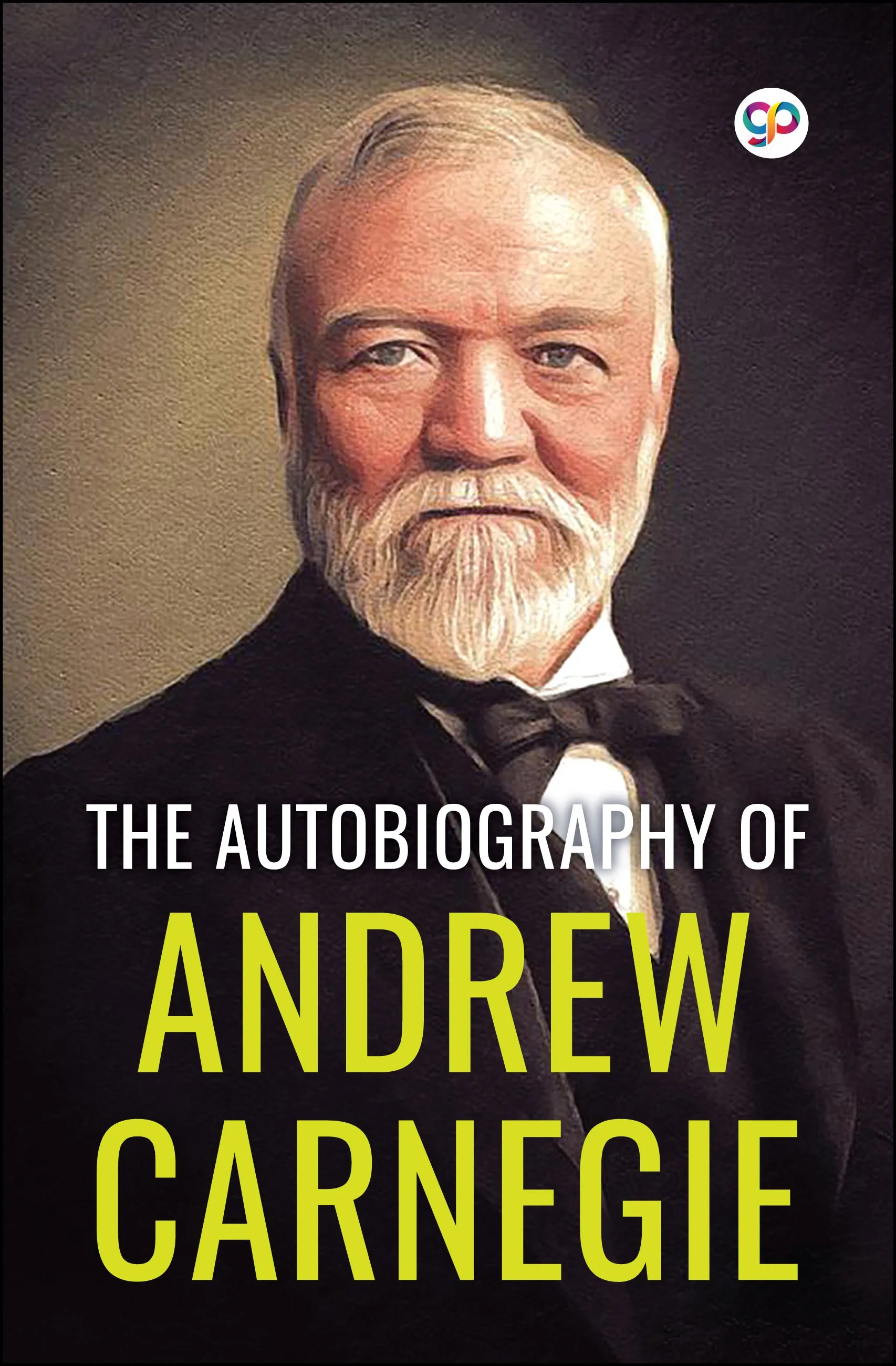
The Autobiography of Andrew Carnegie
eBook
• INR 99.00
• English
• 9789354994104
No ratings yet
| Publisher | General Press |
|---|---|
| ISBN13 | 9789354994104 |
| ASIN/SKU | B0BBRGYK7T |
| Book Format | eBook |
| Language | English |
| List Price | INR 99.00 |
| Subject Code | BIO026000, HIS054000, BUS025000 |
| Publishing Date | 05/09/2022 |
| Book Code | BD00068966 |
Buy this Book
Amazon Stores
Ebook Stores
Other Stores
Discover The Autobiography of Andrew Carnegie by Andrew Carnegie. This book is published by General Press in eBook format, ISBN 9789354994104, ASIN B0BBRGYK7T, under Biographies and Memoirs, Business Leaders, Entrepreneurship and Small Business.
Book Description
Written in 1919 and published posthumously in 1920, ‘The Autobiography of Andrew Carnegie’ is a very well-written and intriguing history of one of the most affluent men in the United States, a leading industrialist of the 19th and 20th centuries, Andrew Carnegie, who was one of America’s most triumphant and charitable businessmen.
Carnegie's famous dictum, that he who dies rich dies disgraced, has inspired a generation of twenty-first-century philanthropists to follow in his footsteps and put their money towards philanthropic causes. He had an unwavering belief in distributing wealth for good, and systematically and deliberately gave away the bulk of his riches throughout his lifetime.
The Autobiography conveys his rise to power, from ignoble beginnings in Scotland to controlling the biggest steel empire in the history of the United States. Carnegie lays down the blueprint for success, with plenty of inspiring life lessons, while also giving unique first-hand impressions of burgeoning 19th-century America.
Carnegie's famous dictum, that he who dies rich dies disgraced, has inspired a generation of twenty-first-century philanthropists to follow in his footsteps and put their money towards philanthropic causes. He had an unwavering belief in distributing wealth for good, and systematically and deliberately gave away the bulk of his riches throughout his lifetime.
The Autobiography conveys his rise to power, from ignoble beginnings in Scotland to controlling the biggest steel empire in the history of the United States. Carnegie lays down the blueprint for success, with plenty of inspiring life lessons, while also giving unique first-hand impressions of burgeoning 19th-century America.
Author Biography
Andrew Carnegie emigrated from Scotland to the United States in 1848 at the age of 13. At the age of 65 he sold the Carnegie Steel Company to J. P. Morgan for $480 million and devoted the rest of his life to writing and philanthropy.
Editorial Reviews
Editorial Reviews will be added soon…
Book Summary
The Autobiography of Andrew Carnegie is the remarkable life story of one of the most influential industrialists and philanthropists of the nineteenth century. Written in his later years, the autobiography is more than a record of personal success. It is a reflection on ambition, perseverance, leadership, wealth, and the responsibility that comes with achievement. Carnegie recounts his journey from a poor Scottish immigrant to one of the richest men in the world, while emphasizing that true success lies not in accumulating wealth but in using it to improve the lives of others.
The story begins in Dunfermline, Scotland, where Carnegie was born into a modest family. His father was a handloom weaver whose livelihood was threatened by the Industrial Revolution, while his mother displayed remarkable determination in supporting the household during difficult times. Carnegie remembers his childhood with affection, describing a close-knit community that valued hard work, honesty, and education despite limited financial resources. These early experiences shaped his lifelong appreciation for thrift, perseverance, and family loyalty.
Economic hardship eventually forced the Carnegie family to emigrate to the United States in search of better opportunities. They settled in Allegheny, Pennsylvania, where young Andrew quickly realized that survival depended upon hard work. His first jobs were humble and physically demanding, but he approached every task with enthusiasm and a willingness to learn. Looking back, Carnegie presents these early years not as a period of misfortune but as the foundation upon which his future was built.
One of the recurring themes throughout the autobiography is the transformative power of education. Although Carnegie received little formal schooling after arriving in America, he never stopped learning. He eagerly borrowed books from a local benefactor who opened his personal library to working boys. Carnegie describes this opportunity as one of the greatest gifts of his youth. Reading broadened his understanding of history, literature, science, and business, convincing him that knowledge could change the course of a person's life regardless of social background.
As his career progressed, Carnegie secured a position as a telegraph messenger. His curiosity and determination soon distinguished him from his peers. He learned to recognize telegraph signals by sound, mastered new skills rapidly, and developed a reputation for reliability. These qualities attracted the attention of influential employers who recognized his potential. Carnegie repeatedly emphasizes that success often begins with performing ordinary work exceptionally well.
A turning point came when he joined the Pennsylvania Railroad, where he worked under the mentorship of Thomas A. Scott. Carnegie credits Scott with teaching him valuable lessons about management, organization, decision-making, and leadership. More importantly, he learned to recognize opportunities that others overlooked. The autobiography highlights the importance of finding capable mentors and remaining open to guidance throughout one's career.
Carnegie gradually expanded his investments beyond his regular employment. Rather than relying solely on wages, he invested in industries he believed had promising futures. Railroads, bridges, iron production, and eventually steel became the focus of his growing business interests. He explains that successful investing requires patience, careful observation, and confidence in long-term development rather than short-term speculation.
The rise of the American steel industry occupies a significant portion of the autobiography. Carnegie describes how technological innovation transformed manufacturing and infrastructure during the nineteenth century. He viewed steel as the material that would shape the modern world by supporting railways, bridges, buildings, and industrial growth. While discussing business expansion, he emphasizes the importance of efficiency, innovation, and continual improvement. Companies, he believed, should constantly seek better methods instead of becoming satisfied with past achievements.
Leadership emerges as another central theme. Carnegie argues that successful organizations depend on capable people working together toward shared goals. He believed in identifying talented individuals, trusting them with responsibility, and rewarding initiative. Rather than attempting to control every detail himself, he relied on skilled managers whose judgment he respected. He suggests that the greatest leaders are those who inspire confidence and encourage others to develop their abilities.
The autobiography also explores Carnegie's views on competition. He regarded competition as a powerful force for innovation and progress, but he believed it should be accompanied by integrity and fairness. He admired individuals who succeeded through hard work, intelligence, and ethical conduct rather than through dishonesty or exploitation. Throughout the narrative, he expresses gratitude toward business partners, colleagues, and employees who contributed to shared success.
One of the most memorable sections of the book concerns Carnegie's philosophy of wealth and philanthropy. After achieving immense financial success, he became increasingly convinced that great fortunes carried significant moral responsibilities. He argues that wealth should not be accumulated merely for personal luxury or passed on indefinitely through inheritance. Instead, those who possess substantial resources should use them wisely for the benefit of society.
This belief later became known as the "Gospel of Wealth." Carnegie explains that money should support institutions that help people improve themselves rather than encourage dependence. Consequently, he devoted much of his fortune to establishing public libraries, universities, educational foundations, scientific research institutions, and cultural organizations. He believed that providing access to knowledge and opportunity created lasting benefits that extended across generations.
Education remains the autobiography's strongest recurring ideal. Carnegie frequently reflects on how books transformed his own life and expresses satisfaction that thousands of public libraries were built through his philanthropy. He regarded libraries not simply as buildings but as gateways through which individuals of modest backgrounds could pursue knowledge, develop skills, and improve their futures.
Friendship and gratitude also occupy an important place in Carnegie's reflections. He warmly recalls mentors, business associates, political leaders, inventors, and public figures whose influence shaped his life. Rather than portraying himself as entirely self-made, he repeatedly acknowledges the generosity, encouragement, and cooperation of others. This humility adds warmth to the narrative and reminds readers that personal success is often built upon the support of many people.
The later chapters shift from business achievements toward broader reflections on public service, international peace, and human progress. Carnegie expresses hope that education, scientific advancement, and international cooperation can reduce conflict and improve the quality of life for future generations. He believed that prosperity should ultimately serve civilization by promoting learning, understanding, and peaceful development.
Throughout the autobiography, Carnegie writes with remarkable optimism. He views challenges as opportunities for growth and believes that determination, integrity, and lifelong learning enable individuals to overcome humble beginnings. His tone is reflective rather than boastful, focusing less on personal wealth than on the lessons gained through decades of experience.
Ultimately, The Autobiography of Andrew Carnegie is far more than the story of an industrial success. It is a thoughtful meditation on ambition, responsibility, education, leadership, and generosity. Carnegie argues that genuine success is measured not simply by financial achievement but by the positive impact one leaves on society. His journey from poverty to extraordinary influence illustrates the power of perseverance and vision, while his commitment to philanthropy reminds readers that the greatest legacy often comes from creating opportunities that allow others to learn, grow, and succeed. Even today, his reflections continue to inspire readers to pursue excellence with humility and to use success as a means of serving the wider community.
The story begins in Dunfermline, Scotland, where Carnegie was born into a modest family. His father was a handloom weaver whose livelihood was threatened by the Industrial Revolution, while his mother displayed remarkable determination in supporting the household during difficult times. Carnegie remembers his childhood with affection, describing a close-knit community that valued hard work, honesty, and education despite limited financial resources. These early experiences shaped his lifelong appreciation for thrift, perseverance, and family loyalty.
Economic hardship eventually forced the Carnegie family to emigrate to the United States in search of better opportunities. They settled in Allegheny, Pennsylvania, where young Andrew quickly realized that survival depended upon hard work. His first jobs were humble and physically demanding, but he approached every task with enthusiasm and a willingness to learn. Looking back, Carnegie presents these early years not as a period of misfortune but as the foundation upon which his future was built.
One of the recurring themes throughout the autobiography is the transformative power of education. Although Carnegie received little formal schooling after arriving in America, he never stopped learning. He eagerly borrowed books from a local benefactor who opened his personal library to working boys. Carnegie describes this opportunity as one of the greatest gifts of his youth. Reading broadened his understanding of history, literature, science, and business, convincing him that knowledge could change the course of a person's life regardless of social background.
As his career progressed, Carnegie secured a position as a telegraph messenger. His curiosity and determination soon distinguished him from his peers. He learned to recognize telegraph signals by sound, mastered new skills rapidly, and developed a reputation for reliability. These qualities attracted the attention of influential employers who recognized his potential. Carnegie repeatedly emphasizes that success often begins with performing ordinary work exceptionally well.
A turning point came when he joined the Pennsylvania Railroad, where he worked under the mentorship of Thomas A. Scott. Carnegie credits Scott with teaching him valuable lessons about management, organization, decision-making, and leadership. More importantly, he learned to recognize opportunities that others overlooked. The autobiography highlights the importance of finding capable mentors and remaining open to guidance throughout one's career.
Carnegie gradually expanded his investments beyond his regular employment. Rather than relying solely on wages, he invested in industries he believed had promising futures. Railroads, bridges, iron production, and eventually steel became the focus of his growing business interests. He explains that successful investing requires patience, careful observation, and confidence in long-term development rather than short-term speculation.
The rise of the American steel industry occupies a significant portion of the autobiography. Carnegie describes how technological innovation transformed manufacturing and infrastructure during the nineteenth century. He viewed steel as the material that would shape the modern world by supporting railways, bridges, buildings, and industrial growth. While discussing business expansion, he emphasizes the importance of efficiency, innovation, and continual improvement. Companies, he believed, should constantly seek better methods instead of becoming satisfied with past achievements.
Leadership emerges as another central theme. Carnegie argues that successful organizations depend on capable people working together toward shared goals. He believed in identifying talented individuals, trusting them with responsibility, and rewarding initiative. Rather than attempting to control every detail himself, he relied on skilled managers whose judgment he respected. He suggests that the greatest leaders are those who inspire confidence and encourage others to develop their abilities.
The autobiography also explores Carnegie's views on competition. He regarded competition as a powerful force for innovation and progress, but he believed it should be accompanied by integrity and fairness. He admired individuals who succeeded through hard work, intelligence, and ethical conduct rather than through dishonesty or exploitation. Throughout the narrative, he expresses gratitude toward business partners, colleagues, and employees who contributed to shared success.
One of the most memorable sections of the book concerns Carnegie's philosophy of wealth and philanthropy. After achieving immense financial success, he became increasingly convinced that great fortunes carried significant moral responsibilities. He argues that wealth should not be accumulated merely for personal luxury or passed on indefinitely through inheritance. Instead, those who possess substantial resources should use them wisely for the benefit of society.
This belief later became known as the "Gospel of Wealth." Carnegie explains that money should support institutions that help people improve themselves rather than encourage dependence. Consequently, he devoted much of his fortune to establishing public libraries, universities, educational foundations, scientific research institutions, and cultural organizations. He believed that providing access to knowledge and opportunity created lasting benefits that extended across generations.
Education remains the autobiography's strongest recurring ideal. Carnegie frequently reflects on how books transformed his own life and expresses satisfaction that thousands of public libraries were built through his philanthropy. He regarded libraries not simply as buildings but as gateways through which individuals of modest backgrounds could pursue knowledge, develop skills, and improve their futures.
Friendship and gratitude also occupy an important place in Carnegie's reflections. He warmly recalls mentors, business associates, political leaders, inventors, and public figures whose influence shaped his life. Rather than portraying himself as entirely self-made, he repeatedly acknowledges the generosity, encouragement, and cooperation of others. This humility adds warmth to the narrative and reminds readers that personal success is often built upon the support of many people.
The later chapters shift from business achievements toward broader reflections on public service, international peace, and human progress. Carnegie expresses hope that education, scientific advancement, and international cooperation can reduce conflict and improve the quality of life for future generations. He believed that prosperity should ultimately serve civilization by promoting learning, understanding, and peaceful development.
Throughout the autobiography, Carnegie writes with remarkable optimism. He views challenges as opportunities for growth and believes that determination, integrity, and lifelong learning enable individuals to overcome humble beginnings. His tone is reflective rather than boastful, focusing less on personal wealth than on the lessons gained through decades of experience.
Ultimately, The Autobiography of Andrew Carnegie is far more than the story of an industrial success. It is a thoughtful meditation on ambition, responsibility, education, leadership, and generosity. Carnegie argues that genuine success is measured not simply by financial achievement but by the positive impact one leaves on society. His journey from poverty to extraordinary influence illustrates the power of perseverance and vision, while his commitment to philanthropy reminds readers that the greatest legacy often comes from creating opportunities that allow others to learn, grow, and succeed. Even today, his reflections continue to inspire readers to pursue excellence with humility and to use success as a means of serving the wider community.
Sample Chapters
Sample Chapters will be added soon…
Reader Reviews
No reviews yet.
The Autobiography of Andrew Carnegie
Download Cover Image
Do you want to download the full cover image for The Autobiography of Andrew Carnegie?