
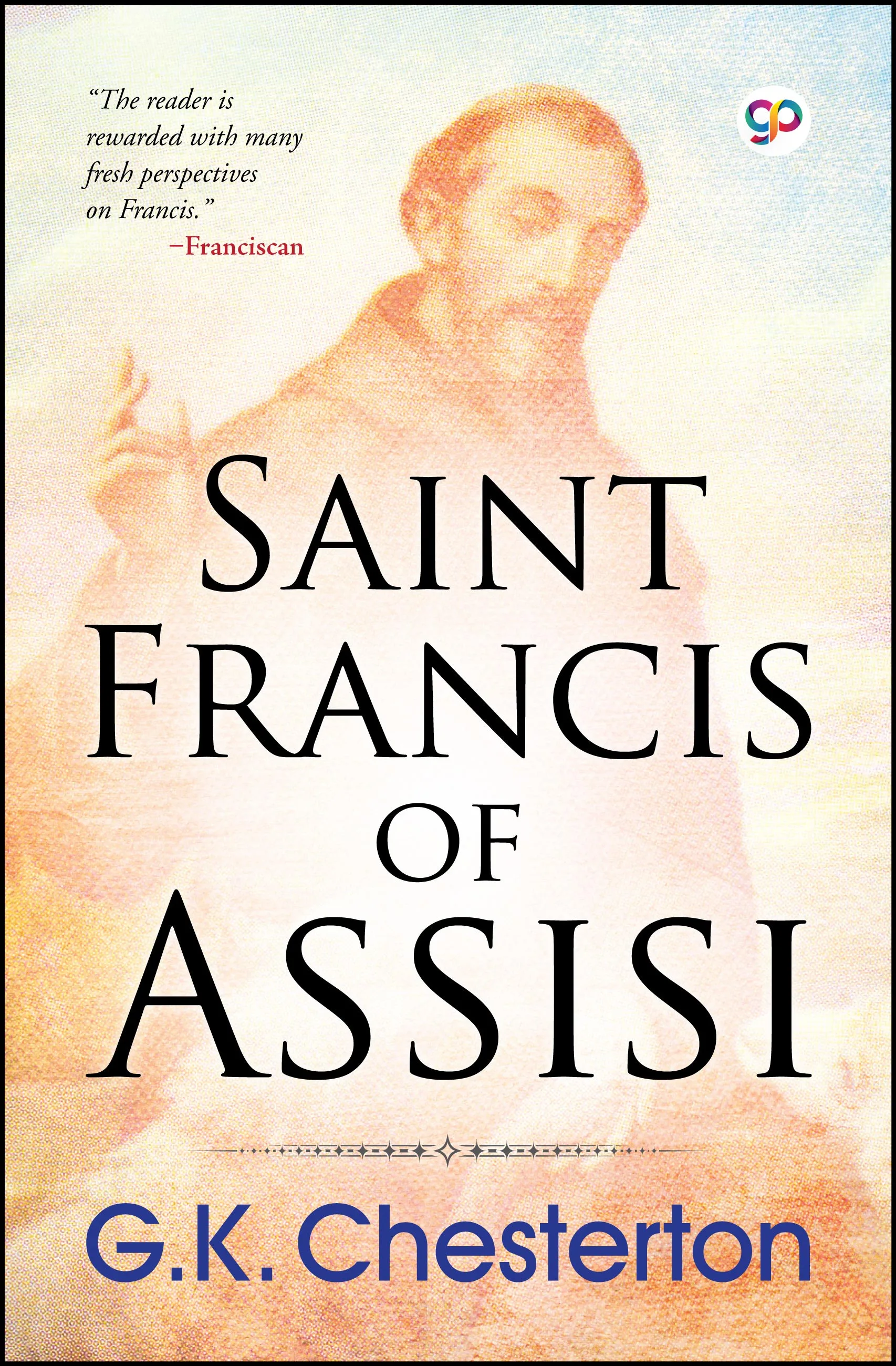
St. Francis of Assisi
eBook
• INR 99.00
• English
• 9789354995712
No ratings yet
| Publisher | General Press |
|---|---|
| ISBN13 | 9789354995712 |
| ASIN/SKU | B0BWDSWMKN |
| Book Format | eBook |
| Language | English |
| List Price | INR 99.00 |
| Subject Code | REL110000 |
| Publishing Date | 01/03/2023 |
| Book Code | BD00068970 |
Buy this Book
Amazon Stores
Ebook Stores
Other Stores
Discover St. Francis of Assisi by G.K. Chesterton. This book is published by General Press in eBook format, ISBN 9789354995712, ASIN B0BWDSWMKN, under Biographies and Memoirs, Religious Figures, Christian Biographies.
Book Description
The patron saint of animals, birds, and the environment, Francis of Assisi led the rediscovery of nature in the Christian West. This magnificent spiritual biography by the phenomenally popular G.K. Chesterton—a convert to Catholicism—chronicles the beloved saint's calling, his extraordinary life, and his influence in the Church. Its charm and wit will appeal to even the most secular-minded readers. G.K. Chesterton (1874–1936) was a prolific English journalist and author best known for his mystery series featuring the priest-detective Father Brown.
It covers the saint’s calling, his exceptional life, and his influence in the Catholic Church. A volume sure to appeal to all lovers of animals and nature, as well as those interested in the history of Christianity.
It covers the saint’s calling, his exceptional life, and his influence in the Catholic Church. A volume sure to appeal to all lovers of animals and nature, as well as those interested in the history of Christianity.
Author Biography
Gilbert Keith Chesterton was born in London, England, in 1874. He began his education at St Paul's School, and later went on to study art at the Slade School, and literature at University College in London. Chesterton wrote a great deal of poetry, as well as works of social and literary criticism. Among his most notable books are ‘The Man Who Was Thursday’, a metaphysical thriller, and ‘The Everlasting Man’, a history of humankind's spiritual progress. After Chesterton converted to Catholicism in 1922, he wrote mainly on religious topics. Chesterton is most known for creating the famous priest-detective character Father Brown, who first appeared in ‘The Innocence of Father Brown.’ Chesterton died in 1936 at the age of 62.
Editorial Reviews
Editorial Reviews will be added soon…
Book Summary
G.K. Chesterton’s St. Francis of Assisi is a vivid and deeply thoughtful biography of one of Christianity’s most beloved saints. Published in 1923, the book is not simply a chronological account of the life of Francis of Assisi. Chesterton uses the saint’s life to explore humility, poverty, joy, faith, nature, Christian freedom, sacrifice, and the meaning of spiritual renewal. His central argument is that St. Francis cannot be understood merely as a gentle lover of animals or a sentimental figure associated with birds and flowers. Francis was a radical religious personality who transformed his entire existence through an intense commitment to Christ, poverty, compassion, and spiritual freedom. Chesterton’s biography therefore works simultaneously as a life of St. Francis, a study of medieval Christianity, and a reflection on what genuine holiness means.
The book begins by placing St. Francis within the historical and cultural world of medieval Italy. Francis was born Giovanni di Pietro di Bernardone in Assisi around 1181 or 1182. His father, Pietro Bernardone, was a successful cloth merchant, and Francis grew up with access to comfort, wealth, social influence, and the pleasures available to a young man of his position. As a young person, he was known for his love of celebration, poetry, friendship, and romance. Chesterton emphasizes that Francis was not born as a solemn ascetic. He began life as an energetic, ambitious, pleasure-loving young man. Understanding this early personality is important because Francis’s later transformation was not simply a matter of becoming quieter or more religious. It was a dramatic redirection of enormous energy and enthusiasm.
Francis initially dreamed of becoming a knight and winning glory. Medieval society celebrated military honor, adventure, reputation, and social status, and Francis was attracted to these ideals. He eventually went to war and was captured, spending time as a prisoner. His experiences gradually weakened his attachment to the worldly ambitions he had previously embraced. Chesterton presents this period as part of a spiritual awakening. Francis began to feel that the life he had been pursuing could not satisfy the deeper desires of his personality. The young man who had once sought earthly glory began searching for a different kind of greatness.
One of the most important turning points in Francis’s life came through his encounter with poverty and suffering. He began to show compassion toward lepers, people whom society often treated with fear and disgust. Chesterton gives special significance to this change because it demonstrates that Francis’s spirituality was not merely emotional. Francis deliberately crossed a boundary that his former identity had considered almost unbearable. By embracing people he had once found repulsive, he discovered a new form of freedom. What had previously seemed ugly became an opportunity for love. This transformation illustrates one of Chesterton’s larger themes: holiness often begins when a person learns to see reality differently.
Francis’s encounter with the poor eventually led him to reject his former dependence on wealth. In one of the most famous episodes of his life, he renounced his inheritance and dramatically separated himself from his father’s expectations. The conflict with Pietro Bernardone became symbolic of Francis’s break with conventional ideas of success. Francis did not merely decide to give some money to charity while continuing to live comfortably. He embraced poverty as a way of life. Chesterton sees this decision as central to understanding Francis because poverty, for him, was not simply deprivation. It represented freedom from possession, status, fear, and social competition.
Francis’s famous relationship with “Lady Poverty” is therefore more than a poetic image. Chesterton explains that Francis treated poverty almost as a beloved companion because he believed that possessions could become chains. The more people possess, the more they may fear losing what they have. Wealth can create anxiety, competition, pride, and dependence on social status. Francis attempted to reverse this logic. By owning little, he believed he could become radically free to serve God and other people. Chesterton does not portray this as an easy philosophy. Francis’s poverty was demanding and sometimes severe, but its purpose was spiritual liberation rather than misery for its own sake.
Another major theme of the biography is Francis’s relationship with nature. He is famously associated with birds, animals, flowers, the sun, and the natural world, and Chesterton explains why this association should not be reduced to modern sentimental ideas about nature. Francis did not worship nature as a substitute for God. Rather, he regarded creation as a sign of divine generosity. The natural world could lead the human mind toward gratitude because everything created participates in the wonder of existence. His famous language of “Brother Sun” and “Sister Moon” expresses a sense of kinship within creation. For Francis, the world was not a collection of lifeless objects but a creation filled with meaning.
Chesterton particularly emphasizes Francis’s joy. This may seem surprising because Francis embraced poverty, fasting, sacrifice, and hardship. Yet Chesterton argues that Francis was one of the great figures of Christian joy precisely because he had freed himself from excessive attachment to material things. When a person no longer measures happiness through possessions, status, comfort, or public approval, joy can become much more spontaneous. Francis could celebrate simple things because he experienced existence itself as a gift. His poverty therefore did not produce a bleak personality; it produced an extraordinary capacity for gratitude.
Francis’s spirituality also transformed the meaning of humility. Chesterton distinguishes genuine humility from self-hatred or weakness. Francis did not become humble because he believed human beings were worthless. Instead, he became humble because he recognized the greatness of God and the dignity of creation. His humility allowed him to approach people without the constant need to establish superiority. This was especially important in his relationships with the poor and marginalized. Francis could serve people whom society considered insignificant because he did not organize human worth according to wealth or status.
The establishment of the Franciscan movement is another major part of the story. Francis’s radical way of life attracted followers, and what began as the spiritual journey of one man gradually became a religious community. His followers attempted to live according to the principles of poverty, preaching, service, brotherhood, and devotion. Chesterton pays attention to the tension created by this development. A spontaneous spiritual movement becomes an organized institution, and institutions inevitably introduce rules, structures, and practical concerns. Francis’s ideal was intensely personal and radical, while the growing Franciscan order had to deal with the realities of governing a large community.
This tension reveals one of Chesterton’s broader interests: the relationship between ideals and institutions. Francis wanted to preserve the purity of his spiritual vision, but an expanding movement required organization. Chesterton does not pretend that the transition was easy. Yet he suggests that the Franciscan achievement was remarkable because the movement preserved much of Francis’s spirit while becoming an enduring institution. Francis’s influence spread far beyond Assisi, demonstrating the extraordinary power of an individual who lives according to a coherent spiritual vision.
Chesterton also explores Francis’s preaching. Francis was not primarily a systematic theologian or philosopher. His preaching was direct, passionate, and accessible. He communicated through stories, symbolic actions, simplicity, and personal example. He did not simply tell people to become charitable; he lived among the poor. He did not merely praise humility; he practiced it. His message had credibility because his life embodied what he taught. Chesterton sees this as one of the secrets of Francis’s influence: people were not simply listening to an argument but encountering a person who had completely reorganized his life around his beliefs.
The relationship between Francis and the Church is another important theme. Chesterton strongly resists the idea that Francis was a revolutionary who rejected Christianity or the institutional Church. Francis’s radicalism existed within a deep loyalty to Catholic Christianity. He sought renewal through returning to the heart of the Christian message rather than through destroying the Church. This distinction is essential to Chesterton’s interpretation. Francis was revolutionary in the sense that he revived forgotten possibilities within the tradition, but he was not revolutionary in the sense of rejecting the tradition itself.
Chesterton also describes Francis’s encounter with Islam during the Crusading period, particularly his meeting with Sultan Malik al-Kamil in Egypt. The encounter illustrates Francis’s desire to communicate his faith directly, even in circumstances of danger. Chesterton does not turn Francis into a modern political figure, but the episode demonstrates his courage and his willingness to meet someone considered an enemy. Francis’s approach was rooted in religious conviction rather than hatred. He believed that faith could be communicated through personal witness, humility, and courage.
The later part of Francis’s life becomes increasingly marked by physical suffering and mystical experience. His body was weakened by years of poverty, travel, fasting, and hardship. Yet his spiritual intensity remained powerful. The culmination of his mystical life came with the stigmata, the wounds associated with the crucifixion of Christ, which Francis is traditionally believed to have received at La Verna. Chesterton presents this event as the ultimate expression of Francis’s desire to imitate Christ. Francis did not want Christianity to remain merely an idea he accepted intellectually. He wanted it to become something embodied in his entire existence.
Francis’s death in 1226 is presented as the completion of a life devoted to poverty, love, joy, and faith. He dies not as a wealthy prince or celebrated political leader but as a poor religious brother whose influence had already become enormous. His life demonstrates the paradox at the center of Chesterton’s biography: Francis became powerful by renouncing conventional power. He became rich in spiritual influence by embracing poverty. He found joy by surrendering many ordinary sources of pleasure. He became deeply connected to humanity by abandoning the social distinctions that separate people.
One of Chesterton’s most important achievements in St. Francis of Assisi is his rejection of simplistic interpretations of the saint. Modern readers sometimes imagine Francis primarily as a peaceful nature lover who preached kindness to animals. Chesterton insists that this image is incomplete. Francis was joyful, but his joy was rooted in sacrifice. He loved nature, but because he saw creation as belonging to God. He loved peace, but he was not passive. He was gentle, yet his spiritual demands were extraordinarily severe. His life combined tenderness with discipline, humility with courage, and simplicity with immense spiritual ambition.
The book also reflects Chesterton’s own concern with modern society. By presenting Francis as someone who rejected consumerism, status competition, and excessive material attachment, Chesterton invites readers to reconsider the assumptions of modern life. The saint’s poverty becomes a challenge to a culture that measures success through possessions. His joy challenges the belief that happiness requires constant consumption. His treatment of the poor challenges social indifference. His reverence for creation challenges the tendency to treat nature as merely a resource.
Ultimately, St. Francis of Assisi is a biography about transformation. Francis begins as a young man fascinated by pleasure, romance, honor, and military glory. He gradually discovers that these ambitions cannot satisfy his deepest desires. Through suffering, encounters with poverty, religious awakening, and a radical commitment to Christ, he becomes a person whose entire understanding of life changes. His journey is not simply from worldly pleasure to religious seriousness. It is from a narrow idea of happiness to a much larger vision of joy, freedom, love, and spiritual purpose.
For readers searching for a St. Francis of Assisi summary, biography, analysis, themes, or explanation of G.K. Chesterton’s interpretation of the saint, the book is best understood as a study of how radical faith can transform personality and society. Chesterton presents Francis as a figure who found freedom not by acquiring more but by needing less; who found happiness not by avoiding suffering but by giving himself to a greater purpose; and who found greatness not through domination but through humility and service. The deepest message of the book is that spiritual renewal is possible when people challenge the assumptions that imprison them. St. Francis remains memorable not because he escaped the world, but because he learned to see the world differently—and then lived according to that vision with extraordinary courage, simplicity, and joy.
The book begins by placing St. Francis within the historical and cultural world of medieval Italy. Francis was born Giovanni di Pietro di Bernardone in Assisi around 1181 or 1182. His father, Pietro Bernardone, was a successful cloth merchant, and Francis grew up with access to comfort, wealth, social influence, and the pleasures available to a young man of his position. As a young person, he was known for his love of celebration, poetry, friendship, and romance. Chesterton emphasizes that Francis was not born as a solemn ascetic. He began life as an energetic, ambitious, pleasure-loving young man. Understanding this early personality is important because Francis’s later transformation was not simply a matter of becoming quieter or more religious. It was a dramatic redirection of enormous energy and enthusiasm.
Francis initially dreamed of becoming a knight and winning glory. Medieval society celebrated military honor, adventure, reputation, and social status, and Francis was attracted to these ideals. He eventually went to war and was captured, spending time as a prisoner. His experiences gradually weakened his attachment to the worldly ambitions he had previously embraced. Chesterton presents this period as part of a spiritual awakening. Francis began to feel that the life he had been pursuing could not satisfy the deeper desires of his personality. The young man who had once sought earthly glory began searching for a different kind of greatness.
One of the most important turning points in Francis’s life came through his encounter with poverty and suffering. He began to show compassion toward lepers, people whom society often treated with fear and disgust. Chesterton gives special significance to this change because it demonstrates that Francis’s spirituality was not merely emotional. Francis deliberately crossed a boundary that his former identity had considered almost unbearable. By embracing people he had once found repulsive, he discovered a new form of freedom. What had previously seemed ugly became an opportunity for love. This transformation illustrates one of Chesterton’s larger themes: holiness often begins when a person learns to see reality differently.
Francis’s encounter with the poor eventually led him to reject his former dependence on wealth. In one of the most famous episodes of his life, he renounced his inheritance and dramatically separated himself from his father’s expectations. The conflict with Pietro Bernardone became symbolic of Francis’s break with conventional ideas of success. Francis did not merely decide to give some money to charity while continuing to live comfortably. He embraced poverty as a way of life. Chesterton sees this decision as central to understanding Francis because poverty, for him, was not simply deprivation. It represented freedom from possession, status, fear, and social competition.
Francis’s famous relationship with “Lady Poverty” is therefore more than a poetic image. Chesterton explains that Francis treated poverty almost as a beloved companion because he believed that possessions could become chains. The more people possess, the more they may fear losing what they have. Wealth can create anxiety, competition, pride, and dependence on social status. Francis attempted to reverse this logic. By owning little, he believed he could become radically free to serve God and other people. Chesterton does not portray this as an easy philosophy. Francis’s poverty was demanding and sometimes severe, but its purpose was spiritual liberation rather than misery for its own sake.
Another major theme of the biography is Francis’s relationship with nature. He is famously associated with birds, animals, flowers, the sun, and the natural world, and Chesterton explains why this association should not be reduced to modern sentimental ideas about nature. Francis did not worship nature as a substitute for God. Rather, he regarded creation as a sign of divine generosity. The natural world could lead the human mind toward gratitude because everything created participates in the wonder of existence. His famous language of “Brother Sun” and “Sister Moon” expresses a sense of kinship within creation. For Francis, the world was not a collection of lifeless objects but a creation filled with meaning.
Chesterton particularly emphasizes Francis’s joy. This may seem surprising because Francis embraced poverty, fasting, sacrifice, and hardship. Yet Chesterton argues that Francis was one of the great figures of Christian joy precisely because he had freed himself from excessive attachment to material things. When a person no longer measures happiness through possessions, status, comfort, or public approval, joy can become much more spontaneous. Francis could celebrate simple things because he experienced existence itself as a gift. His poverty therefore did not produce a bleak personality; it produced an extraordinary capacity for gratitude.
Francis’s spirituality also transformed the meaning of humility. Chesterton distinguishes genuine humility from self-hatred or weakness. Francis did not become humble because he believed human beings were worthless. Instead, he became humble because he recognized the greatness of God and the dignity of creation. His humility allowed him to approach people without the constant need to establish superiority. This was especially important in his relationships with the poor and marginalized. Francis could serve people whom society considered insignificant because he did not organize human worth according to wealth or status.
The establishment of the Franciscan movement is another major part of the story. Francis’s radical way of life attracted followers, and what began as the spiritual journey of one man gradually became a religious community. His followers attempted to live according to the principles of poverty, preaching, service, brotherhood, and devotion. Chesterton pays attention to the tension created by this development. A spontaneous spiritual movement becomes an organized institution, and institutions inevitably introduce rules, structures, and practical concerns. Francis’s ideal was intensely personal and radical, while the growing Franciscan order had to deal with the realities of governing a large community.
This tension reveals one of Chesterton’s broader interests: the relationship between ideals and institutions. Francis wanted to preserve the purity of his spiritual vision, but an expanding movement required organization. Chesterton does not pretend that the transition was easy. Yet he suggests that the Franciscan achievement was remarkable because the movement preserved much of Francis’s spirit while becoming an enduring institution. Francis’s influence spread far beyond Assisi, demonstrating the extraordinary power of an individual who lives according to a coherent spiritual vision.
Chesterton also explores Francis’s preaching. Francis was not primarily a systematic theologian or philosopher. His preaching was direct, passionate, and accessible. He communicated through stories, symbolic actions, simplicity, and personal example. He did not simply tell people to become charitable; he lived among the poor. He did not merely praise humility; he practiced it. His message had credibility because his life embodied what he taught. Chesterton sees this as one of the secrets of Francis’s influence: people were not simply listening to an argument but encountering a person who had completely reorganized his life around his beliefs.
The relationship between Francis and the Church is another important theme. Chesterton strongly resists the idea that Francis was a revolutionary who rejected Christianity or the institutional Church. Francis’s radicalism existed within a deep loyalty to Catholic Christianity. He sought renewal through returning to the heart of the Christian message rather than through destroying the Church. This distinction is essential to Chesterton’s interpretation. Francis was revolutionary in the sense that he revived forgotten possibilities within the tradition, but he was not revolutionary in the sense of rejecting the tradition itself.
Chesterton also describes Francis’s encounter with Islam during the Crusading period, particularly his meeting with Sultan Malik al-Kamil in Egypt. The encounter illustrates Francis’s desire to communicate his faith directly, even in circumstances of danger. Chesterton does not turn Francis into a modern political figure, but the episode demonstrates his courage and his willingness to meet someone considered an enemy. Francis’s approach was rooted in religious conviction rather than hatred. He believed that faith could be communicated through personal witness, humility, and courage.
The later part of Francis’s life becomes increasingly marked by physical suffering and mystical experience. His body was weakened by years of poverty, travel, fasting, and hardship. Yet his spiritual intensity remained powerful. The culmination of his mystical life came with the stigmata, the wounds associated with the crucifixion of Christ, which Francis is traditionally believed to have received at La Verna. Chesterton presents this event as the ultimate expression of Francis’s desire to imitate Christ. Francis did not want Christianity to remain merely an idea he accepted intellectually. He wanted it to become something embodied in his entire existence.
Francis’s death in 1226 is presented as the completion of a life devoted to poverty, love, joy, and faith. He dies not as a wealthy prince or celebrated political leader but as a poor religious brother whose influence had already become enormous. His life demonstrates the paradox at the center of Chesterton’s biography: Francis became powerful by renouncing conventional power. He became rich in spiritual influence by embracing poverty. He found joy by surrendering many ordinary sources of pleasure. He became deeply connected to humanity by abandoning the social distinctions that separate people.
One of Chesterton’s most important achievements in St. Francis of Assisi is his rejection of simplistic interpretations of the saint. Modern readers sometimes imagine Francis primarily as a peaceful nature lover who preached kindness to animals. Chesterton insists that this image is incomplete. Francis was joyful, but his joy was rooted in sacrifice. He loved nature, but because he saw creation as belonging to God. He loved peace, but he was not passive. He was gentle, yet his spiritual demands were extraordinarily severe. His life combined tenderness with discipline, humility with courage, and simplicity with immense spiritual ambition.
The book also reflects Chesterton’s own concern with modern society. By presenting Francis as someone who rejected consumerism, status competition, and excessive material attachment, Chesterton invites readers to reconsider the assumptions of modern life. The saint’s poverty becomes a challenge to a culture that measures success through possessions. His joy challenges the belief that happiness requires constant consumption. His treatment of the poor challenges social indifference. His reverence for creation challenges the tendency to treat nature as merely a resource.
Ultimately, St. Francis of Assisi is a biography about transformation. Francis begins as a young man fascinated by pleasure, romance, honor, and military glory. He gradually discovers that these ambitions cannot satisfy his deepest desires. Through suffering, encounters with poverty, religious awakening, and a radical commitment to Christ, he becomes a person whose entire understanding of life changes. His journey is not simply from worldly pleasure to religious seriousness. It is from a narrow idea of happiness to a much larger vision of joy, freedom, love, and spiritual purpose.
For readers searching for a St. Francis of Assisi summary, biography, analysis, themes, or explanation of G.K. Chesterton’s interpretation of the saint, the book is best understood as a study of how radical faith can transform personality and society. Chesterton presents Francis as a figure who found freedom not by acquiring more but by needing less; who found happiness not by avoiding suffering but by giving himself to a greater purpose; and who found greatness not through domination but through humility and service. The deepest message of the book is that spiritual renewal is possible when people challenge the assumptions that imprison them. St. Francis remains memorable not because he escaped the world, but because he learned to see the world differently—and then lived according to that vision with extraordinary courage, simplicity, and joy.
Sample Chapters
Sample Chapters will be added soon…
Reader Reviews
No reviews yet.
St. Francis of Assisi
Download Cover Image
Do you want to download the full cover image for St. Francis of Assisi?