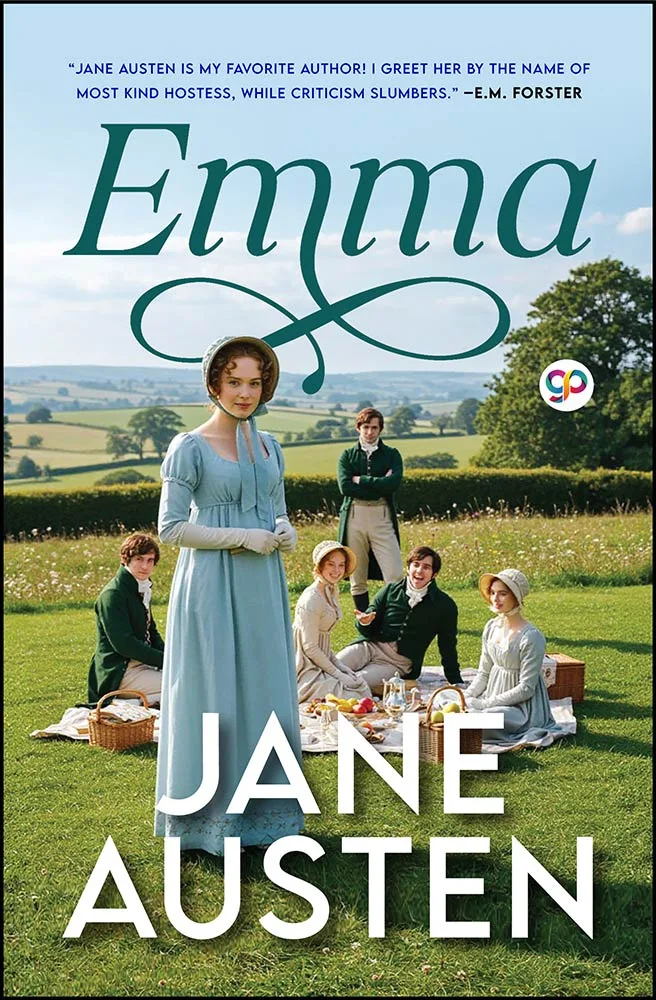
Emma
eBook
• INR 51.00
• English
• 9788198854858
No ratings yet
| Publisher | General Press |
|---|---|
| ISBN13 | 9788198854858 |
| ASIN/SKU | B0G1BJT5JP |
| Book Format | eBook |
| Language | English |
| List Price | INR 51.00 |
| Subject Code | FIC098040, FIC044000, FIC027100 |
| Book Code | BD00068989 |
Buy this Book
Amazon Stores
Ebook Stores
Other Stores
Discover Emma by Jane Austen. This book is published by General Press in eBook format, ISBN 9788198854858, ASIN B0G1BJT5JP, under Literature and Fiction, Literary Fiction, Women's Fiction.
Book Description
"Jane Austen is my favorite author! ... Shut up in measureless content, I greet her by the name of most kind hostess, while criticism slumbers." —E.M. Forster
First published in 1815, ‘Emma’ is a timeless novel by celebrated English author Jane Austen, known for her sharp wit, keen social commentary, and mastery of character-driven storytelling. Austen’s novels have long been admired for their elegant prose and insightful exploration of relationships, class, and the roles of women in early 19th-century society.
Emma follows the charming, wealthy, and self-assured Emma Woodhouse, a young woman who fancies herself a skilled matchmaker. Confident in her judgment, Emma meddles in the romantic affairs of those around her, believing she knows what is best for everyone—except herself. As her matchmaking efforts unravel and lead to unexpected consequences, Emma begins to recognize her own flaws and misunderstandings about love, friendship, and self-awareness.
Set in the idyllic English countryside, the novel offers a brilliant portrait of social manners and the complexities of human behavior. With its rich characters, sparkling dialogue, and gentle irony, ‘Emma’ is both a romantic comedy and a journey of personal growth. It remains one of Austen’s most beloved works, continuing to enchant readers with its wit, charm, and timeless insight into the human heart.
First published in 1815, ‘Emma’ is a timeless novel by celebrated English author Jane Austen, known for her sharp wit, keen social commentary, and mastery of character-driven storytelling. Austen’s novels have long been admired for their elegant prose and insightful exploration of relationships, class, and the roles of women in early 19th-century society.
Emma follows the charming, wealthy, and self-assured Emma Woodhouse, a young woman who fancies herself a skilled matchmaker. Confident in her judgment, Emma meddles in the romantic affairs of those around her, believing she knows what is best for everyone—except herself. As her matchmaking efforts unravel and lead to unexpected consequences, Emma begins to recognize her own flaws and misunderstandings about love, friendship, and self-awareness.
Set in the idyllic English countryside, the novel offers a brilliant portrait of social manners and the complexities of human behavior. With its rich characters, sparkling dialogue, and gentle irony, ‘Emma’ is both a romantic comedy and a journey of personal growth. It remains one of Austen’s most beloved works, continuing to enchant readers with its wit, charm, and timeless insight into the human heart.
Author Biography
Jane Austen was born on December 16, 1775 at Steventon near Basingstoke, the seventh child of the rector of the parish. She lived with her family at Steventon until they moved to Bath when her father retired in 1801. After his death in 1805, she moved around with her mother; in 1809, they settled in Chawton, near Alton, Hampshire. Here she remained, except for a few visits to London, until in May 1817 she moved to Winchester to be near her doctor. There she died on July 18, 1817. As a girl Jane Austen wrote stories, including burlesques of popular romances. Her works were only published after much revision, four novels being published in her lifetime. These are Sense and Sensibility (1811), Pride and Prejudice (1813), Mansfield Park (1814) and Emma(1816). Two other novels, Northanger Abbey and Persuasion, were published posthumously in 1818 with a biographical notice by her brother, Henry Austen, the first formal announcement of her authorship. Persuasion was written in a race against failing health in 1815-16. She also left two earlier compositions, a short epistolary novel, Lady Susan, and an unfinished novel, The Watsons. At the time of her death, she was working on a new novel, Sanditon, a fragmentary draft of which survives.
Editorial Reviews
Editorial Reviews will be added soon…
Book Summary
Jane Austen’s Emma, published in 1815, is a witty, warm, and deeply perceptive novel about love, friendship, social class, self-deception, and the difficult process of learning to understand other people. At its center is Emma Woodhouse, a wealthy, intelligent, confident young woman who believes she is exceptionally good at bringing people together. She enjoys arranging romances for others, yet she has surprisingly little understanding of her own feelings. Through Emma’s mistakes, misunderstandings, and eventual self-awareness, Austen creates a story about the dangers of assuming that we know what is best for everyone else.
Emma Woodhouse lives at Hartfield, a comfortable estate in the village of Highbury. She is twenty-one, beautiful, wealthy, intelligent, and socially privileged. She has very little financial pressure and therefore spends much of her time managing the lives of people around her. Her greatest companion has been Miss Taylor, her former governess, who has recently married Mr. Weston.
Although Emma is genuinely fond of Miss Taylor, she takes credit for the marriage. She believes that she successfully brought the couple together and becomes convinced that matchmaking is one of her special talents. This belief leads her to her first major mistake: she decides to find a suitable husband for her young friend Harriet Smith.
Harriet is a pretty and impressionable young woman whose parentage is uncertain. She attends Mrs. Goddard’s boarding school and has little social confidence. Emma becomes fascinated by her and decides that Harriet deserves a better social position. She encourages Harriet to reject the proposal of Robert Martin, a respectable young farmer who genuinely loves her.
Emma believes Harriet should marry someone socially superior. She imagines that Mr. Elton, the local vicar, is secretly in love with Harriet. In reality, Mr. Elton is interested in Emma herself. Emma fails to understand this because she interprets every action according to the romantic story she has constructed in her own mind.
When Mr. Elton finally declares his love for Emma, she is shocked and embarrassed. He has never been interested in Harriet. Emma's first major failure as a matchmaker reveals a larger problem: she sees what she expects to see rather than what is actually happening.
At the same time, Emma's old family friend, George Knightley, repeatedly criticizes her behavior. Knightley is intelligent, honest, practical, and considerably more perceptive than Emma. Unlike people who simply flatter her because of her wealth and position, he is willing to tell her when she is wrong.
Their relationship is one of the emotional centers of the novel. At first, Emma regards Knightley almost as an older brother and is accustomed to receiving his advice. Yet as the story develops, she gradually begins to understand that her feelings toward him are more complicated.
The arrival of Frank Churchill introduces another important source of confusion. Frank is Mr. Weston’s son and has been raised by wealthy relatives. He is charming, handsome, lively, and socially confident. Emma enjoys his company and briefly imagines that she may be attracted to him. She even begins to suspect that he might be a suitable match for Harriet.
Frank, however, is secretly engaged to Jane Fairfax, a young woman whom Emma knows but does not particularly understand. Because their engagement must remain hidden, Frank's behavior repeatedly creates misunderstandings. He flirts with Emma partly to conceal his real relationship with Jane, while Emma interprets his actions according to her own assumptions.
Jane Fairfax represents an important contrast to Emma. She is intelligent, elegant, talented, and accomplished, but she lacks Emma's wealth. Because she has no independent fortune, she faces the possibility of becoming a governess, a respectable but socially difficult position. Austen uses Jane's situation to show how strongly women's lives were constrained by economic dependence.
Emma, however, does not fully appreciate Jane's difficulties. She finds her reserved manner difficult to understand and sometimes behaves unkindly toward her. Emma's privilege makes it easy for her to underestimate the pressures facing women who lack money.
Harriet continues to follow Emma's romantic advice. After rejecting Robert Martin, she becomes increasingly convinced that she may be loved by someone far above her socially. Emma eventually realizes that Harriet has developed feelings for Mr. Knightley. This discovery shocks Emma because she suddenly recognizes that she herself is in love with him.
This is the turning point of the novel. For the first time, Emma understands that her matchmaking has consequences for her own heart. She has spent much of the story trying to arrange other people's relationships while failing to understand her own.
Emma is forced to confront an uncomfortable truth: she has been selfish, even when she believed she was helping. Her interference with Harriet's life has been based on her own assumptions about class, marriage, and happiness. She has repeatedly decided what would be best for others without asking what they actually wanted.
A particularly revealing moment occurs at Box Hill, during an outing with friends. Emma makes a cruel joke at the expense of Miss Bates, a kind but excessively talkative older woman. Knightley privately rebukes Emma for her behavior. His criticism deeply affects her because she recognizes that he is right.
For perhaps the first time, Emma sees herself as others may see her. Her intelligence and confidence have sometimes turned into arrogance. Her good intentions do not automatically excuse the harm she causes. This realization marks an important stage in her moral growth.
Soon afterward, the hidden relationships begin to become clear. Frank Churchill's engagement to Jane Fairfax is revealed, explaining many of his earlier actions. Harriet's feelings for Knightley also become apparent. Emma finally understands the full complexity of the situation and realizes that she must stop trying to control other people's lives.
Knightley eventually declares his love for Emma. His feelings have been growing quietly throughout the novel, but he waits until Emma has developed enough self-awareness to understand the relationship for herself. Emma is delighted because she now recognizes that Knightley is the person she truly loves.
Yet their marriage requires some practical adjustment. Emma cannot easily abandon her father, who is dependent on her and dislikes change. Knightley therefore agrees to live at Hartfield rather than expecting Emma to leave her home. Their solution reflects the novel's emphasis on affection combined with practical responsibility.
Harriet eventually reconciles with Robert Martin, the man she had rejected earlier because of Emma's influence. The marriage confirms that Emma's original judgment about Harriet's happiness was misguided. Harriet did not need a socially superior husband; she needed the person who genuinely loved her.
By the end of the novel, Emma has changed considerably. She remains intelligent, energetic, and confident, but she has become more humble and aware of her limitations. She learns that understanding other people requires more than intelligence. It requires empathy, patience, and the willingness to question one's own assumptions.
Austen's treatment of social class is central to the novel. Emma's wealth gives her enormous freedom, while characters such as Jane Fairfax face serious economic uncertainty. Emma's mistaken judgments are often connected to her privileged position. She assumes that social status should determine marriage, yet her own happiness ultimately depends on emotional compatibility rather than social calculation.
The novel also explores self-deception. Emma is not deliberately dishonest; she simply believes her own interpretations too easily. Her greatest obstacle is not a lack of intelligence but excessive confidence in her own judgment. Austen makes this especially effective by allowing readers to experience much of the story through Emma's perspective. We are encouraged to notice what she overlooks and gradually understand how far her assumptions are from reality.
Ultimately, Emma is a story about growing up emotionally. Emma begins as someone who believes she understands everyone else but gradually discovers that she barely understands herself. Her mistakes are often amusing, sometimes painful, and occasionally cruel, but they lead her toward greater humility and emotional maturity.
Austen's achievement lies in making this personal transformation both entertaining and profound. Emma is a romantic novel, but its deeper subject is self-knowledge. Love becomes possible only after Emma stops trying to control other people's lives and begins examining her own heart. By the end, she has learned one of life's most difficult lessons: being clever is not the same as being wise, and good intentions are not enough without understanding and empathy.
Emma Woodhouse lives at Hartfield, a comfortable estate in the village of Highbury. She is twenty-one, beautiful, wealthy, intelligent, and socially privileged. She has very little financial pressure and therefore spends much of her time managing the lives of people around her. Her greatest companion has been Miss Taylor, her former governess, who has recently married Mr. Weston.
Although Emma is genuinely fond of Miss Taylor, she takes credit for the marriage. She believes that she successfully brought the couple together and becomes convinced that matchmaking is one of her special talents. This belief leads her to her first major mistake: she decides to find a suitable husband for her young friend Harriet Smith.
Harriet is a pretty and impressionable young woman whose parentage is uncertain. She attends Mrs. Goddard’s boarding school and has little social confidence. Emma becomes fascinated by her and decides that Harriet deserves a better social position. She encourages Harriet to reject the proposal of Robert Martin, a respectable young farmer who genuinely loves her.
Emma believes Harriet should marry someone socially superior. She imagines that Mr. Elton, the local vicar, is secretly in love with Harriet. In reality, Mr. Elton is interested in Emma herself. Emma fails to understand this because she interprets every action according to the romantic story she has constructed in her own mind.
When Mr. Elton finally declares his love for Emma, she is shocked and embarrassed. He has never been interested in Harriet. Emma's first major failure as a matchmaker reveals a larger problem: she sees what she expects to see rather than what is actually happening.
At the same time, Emma's old family friend, George Knightley, repeatedly criticizes her behavior. Knightley is intelligent, honest, practical, and considerably more perceptive than Emma. Unlike people who simply flatter her because of her wealth and position, he is willing to tell her when she is wrong.
Their relationship is one of the emotional centers of the novel. At first, Emma regards Knightley almost as an older brother and is accustomed to receiving his advice. Yet as the story develops, she gradually begins to understand that her feelings toward him are more complicated.
The arrival of Frank Churchill introduces another important source of confusion. Frank is Mr. Weston’s son and has been raised by wealthy relatives. He is charming, handsome, lively, and socially confident. Emma enjoys his company and briefly imagines that she may be attracted to him. She even begins to suspect that he might be a suitable match for Harriet.
Frank, however, is secretly engaged to Jane Fairfax, a young woman whom Emma knows but does not particularly understand. Because their engagement must remain hidden, Frank's behavior repeatedly creates misunderstandings. He flirts with Emma partly to conceal his real relationship with Jane, while Emma interprets his actions according to her own assumptions.
Jane Fairfax represents an important contrast to Emma. She is intelligent, elegant, talented, and accomplished, but she lacks Emma's wealth. Because she has no independent fortune, she faces the possibility of becoming a governess, a respectable but socially difficult position. Austen uses Jane's situation to show how strongly women's lives were constrained by economic dependence.
Emma, however, does not fully appreciate Jane's difficulties. She finds her reserved manner difficult to understand and sometimes behaves unkindly toward her. Emma's privilege makes it easy for her to underestimate the pressures facing women who lack money.
Harriet continues to follow Emma's romantic advice. After rejecting Robert Martin, she becomes increasingly convinced that she may be loved by someone far above her socially. Emma eventually realizes that Harriet has developed feelings for Mr. Knightley. This discovery shocks Emma because she suddenly recognizes that she herself is in love with him.
This is the turning point of the novel. For the first time, Emma understands that her matchmaking has consequences for her own heart. She has spent much of the story trying to arrange other people's relationships while failing to understand her own.
Emma is forced to confront an uncomfortable truth: she has been selfish, even when she believed she was helping. Her interference with Harriet's life has been based on her own assumptions about class, marriage, and happiness. She has repeatedly decided what would be best for others without asking what they actually wanted.
A particularly revealing moment occurs at Box Hill, during an outing with friends. Emma makes a cruel joke at the expense of Miss Bates, a kind but excessively talkative older woman. Knightley privately rebukes Emma for her behavior. His criticism deeply affects her because she recognizes that he is right.
For perhaps the first time, Emma sees herself as others may see her. Her intelligence and confidence have sometimes turned into arrogance. Her good intentions do not automatically excuse the harm she causes. This realization marks an important stage in her moral growth.
Soon afterward, the hidden relationships begin to become clear. Frank Churchill's engagement to Jane Fairfax is revealed, explaining many of his earlier actions. Harriet's feelings for Knightley also become apparent. Emma finally understands the full complexity of the situation and realizes that she must stop trying to control other people's lives.
Knightley eventually declares his love for Emma. His feelings have been growing quietly throughout the novel, but he waits until Emma has developed enough self-awareness to understand the relationship for herself. Emma is delighted because she now recognizes that Knightley is the person she truly loves.
Yet their marriage requires some practical adjustment. Emma cannot easily abandon her father, who is dependent on her and dislikes change. Knightley therefore agrees to live at Hartfield rather than expecting Emma to leave her home. Their solution reflects the novel's emphasis on affection combined with practical responsibility.
Harriet eventually reconciles with Robert Martin, the man she had rejected earlier because of Emma's influence. The marriage confirms that Emma's original judgment about Harriet's happiness was misguided. Harriet did not need a socially superior husband; she needed the person who genuinely loved her.
By the end of the novel, Emma has changed considerably. She remains intelligent, energetic, and confident, but she has become more humble and aware of her limitations. She learns that understanding other people requires more than intelligence. It requires empathy, patience, and the willingness to question one's own assumptions.
Austen's treatment of social class is central to the novel. Emma's wealth gives her enormous freedom, while characters such as Jane Fairfax face serious economic uncertainty. Emma's mistaken judgments are often connected to her privileged position. She assumes that social status should determine marriage, yet her own happiness ultimately depends on emotional compatibility rather than social calculation.
The novel also explores self-deception. Emma is not deliberately dishonest; she simply believes her own interpretations too easily. Her greatest obstacle is not a lack of intelligence but excessive confidence in her own judgment. Austen makes this especially effective by allowing readers to experience much of the story through Emma's perspective. We are encouraged to notice what she overlooks and gradually understand how far her assumptions are from reality.
Ultimately, Emma is a story about growing up emotionally. Emma begins as someone who believes she understands everyone else but gradually discovers that she barely understands herself. Her mistakes are often amusing, sometimes painful, and occasionally cruel, but they lead her toward greater humility and emotional maturity.
Austen's achievement lies in making this personal transformation both entertaining and profound. Emma is a romantic novel, but its deeper subject is self-knowledge. Love becomes possible only after Emma stops trying to control other people's lives and begins examining her own heart. By the end, she has learned one of life's most difficult lessons: being clever is not the same as being wise, and good intentions are not enough without understanding and empathy.
Sample Chapters
Sample Chapters will be added soon…
Reader Reviews
No reviews yet.
Emma