
20,000 Leagues under the Sea
eBook
• INR 99.00
• English
• 9789354993695
No ratings yet
| Publisher | General Press |
|---|---|
| ISBN13 | 9789354993695 |
| ASIN/SKU | B0BBRHSWHD |
| Book Format | eBook |
| Language | English |
| List Price | INR 99.00 |
| Subject Code | FIC028010, FIC004000 |
| Publishing Date | 05/09/2022 |
| Book Code | BD00068993 |
Buy this Book
Amazon Stores
Ebook Stores
Other Stores
Discover 20,000 Leagues under the Sea by Jules Verne. This book is published by General Press in eBook format, ISBN 9789354993695, ASIN B0BBRHSWHD, under Literature and Fiction, Classics.
Book Description
First published in 1870, ‘20,000 Leagues under the Sea’ is a classic science fiction adventure novel by Jules Verne, a French novelist, poet, and playwright. Jules's story narrates the great tale of Captain Nemo and his submarine Nautilus. In 1866 a strange and unknown sea monster is sighted by ships and an ocean liner is attacked.
Captain Nemo captures the men and holds them prisoner on the Nautilus, his astonishing submarine. The captain and his unwilling passengers thus embark on a deep-sea odyssey that stretches from the palm-strewn Indian Ocean to the frozen peril of the South Pole. But the mysterious Nemo has a darker purpose for his voyage: revenge on humanity.
Not just a suspense-ridden drama, this classic novel predicts with breathtaking accuracy the advanced technology and inventions of the twentieth century, and it has inspired generations of science fiction writers.
Captain Nemo captures the men and holds them prisoner on the Nautilus, his astonishing submarine. The captain and his unwilling passengers thus embark on a deep-sea odyssey that stretches from the palm-strewn Indian Ocean to the frozen peril of the South Pole. But the mysterious Nemo has a darker purpose for his voyage: revenge on humanity.
Not just a suspense-ridden drama, this classic novel predicts with breathtaking accuracy the advanced technology and inventions of the twentieth century, and it has inspired generations of science fiction writers.
Author Biography
Jules Verne (1828–1905) is celebrated as one of the founding fathers of modern science fiction and adventure literature. Born on February 8, 1828, in Nantes, France, Verne was the eldest of five children in a middle-class family. His father, a lawyer, expected him to follow the same career, but young Jules was fascinated by travel, technology, and stories of exploration. Though he began law studies in Paris, he was drawn into literary circles, befriending authors such as Alexandre Dumas, which encouraged his early plays and short stories.
In his middle life, Verne developed the unique narrative style that would define his legacy. His breakthrough came in 1863 with Five Weeks in a Balloon, published by Pierre-Jules Hetzel. This partnership launched his famous series Voyages Extraordinaires, which included many of his most celebrated novels. Among them are Journey to the Center of the Earth (1864), From the Earth to the Moon (1865), Twenty Thousand Leagues Under the Seas (1870), and Around the World in Eighty Days (1873). These works combined adventure with scientific speculation, blending accurate research with imaginative foresight. Verne predicted technologies such as submarines, space travel, and advanced exploration long before they were realized, earning him the title “the father of science fiction,” alongside H.G. Wells.
Verne’s achievements were not limited to his imagination. His novels were translated into multiple languages, making him one of the most widely read authors of his time. He became a cultural icon, admired for his ability to inspire curiosity about science, geography, and human progress. In his later years, despite suffering from health issues and partial blindness, he continued to write prolifically, producing over 60 novels.
Jules Verne died on March 24, 1905, in Amiens, France, leaving behind a literary treasure that continues to inspire readers, writers, and scientists worldwide.
In his middle life, Verne developed the unique narrative style that would define his legacy. His breakthrough came in 1863 with Five Weeks in a Balloon, published by Pierre-Jules Hetzel. This partnership launched his famous series Voyages Extraordinaires, which included many of his most celebrated novels. Among them are Journey to the Center of the Earth (1864), From the Earth to the Moon (1865), Twenty Thousand Leagues Under the Seas (1870), and Around the World in Eighty Days (1873). These works combined adventure with scientific speculation, blending accurate research with imaginative foresight. Verne predicted technologies such as submarines, space travel, and advanced exploration long before they were realized, earning him the title “the father of science fiction,” alongside H.G. Wells.
Verne’s achievements were not limited to his imagination. His novels were translated into multiple languages, making him one of the most widely read authors of his time. He became a cultural icon, admired for his ability to inspire curiosity about science, geography, and human progress. In his later years, despite suffering from health issues and partial blindness, he continued to write prolifically, producing over 60 novels.
Jules Verne died on March 24, 1905, in Amiens, France, leaving behind a literary treasure that continues to inspire readers, writers, and scientists worldwide.
Editorial Reviews
Editorial Reviews will be added soon…
Book Summary
20,000 Leagues Under the Sea by Jules Verne is a classic adventure novel that combines exploration, science, mystery, and philosophical questions about freedom and human nature. First published in 1870, the story follows Professor Pierre Aronnax, his loyal servant Conseil, and the Canadian harpooner Ned Land after they are swept into an extraordinary underwater journey aboard the mysterious submarine Nautilus. Their voyage takes them through some of the most remarkable and dangerous parts of the world's oceans while gradually revealing the secrets of its enigmatic commander, Captain Nemo.
The story begins when ships around the world report encounters with an enormous and apparently unstoppable sea creature. Several vessels have been damaged, and rumors spread about a gigantic narwhal or unknown marine monster. The French naturalist Professor Aronnax, who is traveling aboard the American warship Abraham Lincoln, becomes involved in an expedition to find and destroy the creature. Aronnax sees the mission as an exciting opportunity to investigate an extraordinary phenomenon.
The expedition eventually finds the supposed monster. During the confrontation, Aronnax is thrown overboard along with Conseil. They discover that Ned Land, the ship's skilled harpooner, has also survived. Expecting to find themselves on the back of a sea creature, they are astonished to realize that the object is actually a remarkably advanced submarine.
The three men are taken aboard the vessel and brought before its mysterious commander, Captain Nemo. Nemo is an intelligent, highly educated, and deeply secretive man who has rejected ordinary human society. He tells Aronnax that the submarine, the Nautilus, is independent of the nations of the world. It travels beneath the sea, powered by advanced technology, and provides Nemo with everything he needs. He has no desire to return to land.
Aronnax is fascinated. As a scientist and naturalist, he sees the Nautilus as an extraordinary opportunity to study the underwater world. Conseil, whose loyalty to his master is absolute, accepts the strange circumstances calmly. Ned Land, however, reacts very differently. He wants nothing more than to escape and return to civilization.
Nemo explains that the men will remain aboard the submarine because he cannot allow them to reveal his existence to the outside world. Although they are effectively prisoners, he gives them considerable freedom within the ship. Aronnax gradually becomes absorbed in the wonders surrounding him. The Nautilus is far ahead of contemporary technology, and Nemo has assembled an enormous library, museum, and collection of scientific instruments inside it.
The submarine begins its extraordinary voyage through the oceans. Aronnax records the animals, plants, geological formations, and underwater landscapes he encounters. He and Conseil observe coral reefs, enormous schools of fish, strange marine creatures, and underwater forests. The ocean, which had previously been largely unknown to most people, becomes an entire world of its own.
One of the most memorable experiences is an underwater walk. Wearing special diving equipment, Aronnax, Conseil, and Nemo explore the ocean floor. They move through an eerie and beautiful underwater landscape filled with marine life. For Aronnax, these experiences are scientifically invaluable. He becomes increasingly convinced that Nemo's submarine offers possibilities for exploration that ordinary ships could never provide.
Yet the beauty of the voyage is repeatedly interrupted by danger. The Nautilus encounters storms, ice, giant creatures, underwater obstacles, and hostile vessels. Nemo's relationship with the outside world also becomes increasingly mysterious. Aronnax begins to understand that Nemo is not simply an eccentric inventor. He carries deep anger toward human civilization.
The most important clue to Nemo's character comes from his attitude toward governments and war. He has deliberately separated himself from nations and refuses to recognize their authority. He possesses enormous wealth, obtained through the resources of the sea, and uses his submarine to live beyond the reach of governments. At times, he appears compassionate and generous, helping oppressed people and using his wealth for humanitarian purposes. At other times, he is capable of terrible violence.
Nemo's moral complexity becomes particularly clear when the Nautilus attacks and destroys a warship. Aronnax is horrified by Nemo's actions. Although Nemo sees the destruction as justified, Aronnax begins to question whether his admiration for Nemo's intelligence has blinded him to the darker side of his character.
The voyage continues across many parts of the world. The travelers visit the lost city of Atlantis, travel beneath the Mediterranean, explore the Red Sea, and pass through underwater regions that seem almost mythical. Nemo demonstrates that the oceans contain landscapes and histories unknown to ordinary humanity.
One of the novel's most famous episodes occurs when the Nautilus travels beneath the Antarctic ice. Nemo and his passengers reach the South Pole, but their return journey becomes extremely dangerous. The submarine becomes trapped beneath layers of ice, leaving everyone at risk of suffocation. The crew works desperately to break through the ice and create a passage to open water. The experience shows both the extraordinary capabilities of the Nautilus and the fragility of the people inside it.
Another dangerous encounter occurs with a giant squid. The creatures attack the submarine, and Nemo's crew must leave the vessel and fight them directly. The battle is brutal, and one of Nemo's men is killed. Nemo is deeply affected by the death, revealing that beneath his cold exterior he is capable of genuine affection and grief.
Throughout the journey, Ned Land repeatedly urges Aronnax to escape. Aronnax is torn. He has become fascinated by the scientific wonders of the Nautilus and by Nemo himself, but he also understands that remaining aboard means surrendering his freedom. Conseil remains devoted to Aronnax, while Ned represents the ordinary human desire for independence and a return to familiar life.
Eventually, the three men decide that they must attempt to escape. Their opportunity comes when the Nautilus approaches the waters near Norway and enters the terrifying Maelstrom, a massive whirlpool. Amid the chaos, Aronnax, Conseil, and Ned manage to escape from the submarine.
Aronnax survives and eventually learns that the Nautilus has disappeared. Captain Nemo's final fate remains uncertain. The narrator is left wondering whether Nemo survived the Maelstrom and what became of the extraordinary submarine.
The novel is more than an adventure story. Through Captain Nemo, Verne creates a fascinating portrait of a brilliant but wounded man who has turned his back on society. Nemo represents both the possibilities and dangers of scientific progress. His submarine is a triumph of human ingenuity, yet the same technology allows him to isolate himself and commit acts of violence.
The contrast between Nemo and Ned Land is equally important. Nemo seeks complete independence from humanity, while Ned longs for ordinary human freedom. Aronnax stands between them. He is fascinated by knowledge and discovery, but he gradually realizes that knowledge cannot compensate for the loss of personal liberty.
Ultimately, 20,000 Leagues Under the Sea is a celebration of curiosity and exploration, but it is also a meditation on isolation, revenge, freedom, and the responsibilities that come with extraordinary power. Verne invites readers to wonder at the hidden world beneath the oceans while reminding them that technological brilliance does not automatically make a person wise or good.
The enduring appeal of the novel comes from this combination of wonder and mystery. The Nautilus offers a vision of the future that feels imaginative even today, while Captain Nemo remains one of literature's most memorable and enigmatic figures. His journey beneath the sea is therefore not merely a physical adventure. It is also a journey into the mind of a man who has escaped the world—and discovered that escaping humanity does not necessarily mean escaping its pain.
The story begins when ships around the world report encounters with an enormous and apparently unstoppable sea creature. Several vessels have been damaged, and rumors spread about a gigantic narwhal or unknown marine monster. The French naturalist Professor Aronnax, who is traveling aboard the American warship Abraham Lincoln, becomes involved in an expedition to find and destroy the creature. Aronnax sees the mission as an exciting opportunity to investigate an extraordinary phenomenon.
The expedition eventually finds the supposed monster. During the confrontation, Aronnax is thrown overboard along with Conseil. They discover that Ned Land, the ship's skilled harpooner, has also survived. Expecting to find themselves on the back of a sea creature, they are astonished to realize that the object is actually a remarkably advanced submarine.
The three men are taken aboard the vessel and brought before its mysterious commander, Captain Nemo. Nemo is an intelligent, highly educated, and deeply secretive man who has rejected ordinary human society. He tells Aronnax that the submarine, the Nautilus, is independent of the nations of the world. It travels beneath the sea, powered by advanced technology, and provides Nemo with everything he needs. He has no desire to return to land.
Aronnax is fascinated. As a scientist and naturalist, he sees the Nautilus as an extraordinary opportunity to study the underwater world. Conseil, whose loyalty to his master is absolute, accepts the strange circumstances calmly. Ned Land, however, reacts very differently. He wants nothing more than to escape and return to civilization.
Nemo explains that the men will remain aboard the submarine because he cannot allow them to reveal his existence to the outside world. Although they are effectively prisoners, he gives them considerable freedom within the ship. Aronnax gradually becomes absorbed in the wonders surrounding him. The Nautilus is far ahead of contemporary technology, and Nemo has assembled an enormous library, museum, and collection of scientific instruments inside it.
The submarine begins its extraordinary voyage through the oceans. Aronnax records the animals, plants, geological formations, and underwater landscapes he encounters. He and Conseil observe coral reefs, enormous schools of fish, strange marine creatures, and underwater forests. The ocean, which had previously been largely unknown to most people, becomes an entire world of its own.
One of the most memorable experiences is an underwater walk. Wearing special diving equipment, Aronnax, Conseil, and Nemo explore the ocean floor. They move through an eerie and beautiful underwater landscape filled with marine life. For Aronnax, these experiences are scientifically invaluable. He becomes increasingly convinced that Nemo's submarine offers possibilities for exploration that ordinary ships could never provide.
Yet the beauty of the voyage is repeatedly interrupted by danger. The Nautilus encounters storms, ice, giant creatures, underwater obstacles, and hostile vessels. Nemo's relationship with the outside world also becomes increasingly mysterious. Aronnax begins to understand that Nemo is not simply an eccentric inventor. He carries deep anger toward human civilization.
The most important clue to Nemo's character comes from his attitude toward governments and war. He has deliberately separated himself from nations and refuses to recognize their authority. He possesses enormous wealth, obtained through the resources of the sea, and uses his submarine to live beyond the reach of governments. At times, he appears compassionate and generous, helping oppressed people and using his wealth for humanitarian purposes. At other times, he is capable of terrible violence.
Nemo's moral complexity becomes particularly clear when the Nautilus attacks and destroys a warship. Aronnax is horrified by Nemo's actions. Although Nemo sees the destruction as justified, Aronnax begins to question whether his admiration for Nemo's intelligence has blinded him to the darker side of his character.
The voyage continues across many parts of the world. The travelers visit the lost city of Atlantis, travel beneath the Mediterranean, explore the Red Sea, and pass through underwater regions that seem almost mythical. Nemo demonstrates that the oceans contain landscapes and histories unknown to ordinary humanity.
One of the novel's most famous episodes occurs when the Nautilus travels beneath the Antarctic ice. Nemo and his passengers reach the South Pole, but their return journey becomes extremely dangerous. The submarine becomes trapped beneath layers of ice, leaving everyone at risk of suffocation. The crew works desperately to break through the ice and create a passage to open water. The experience shows both the extraordinary capabilities of the Nautilus and the fragility of the people inside it.
Another dangerous encounter occurs with a giant squid. The creatures attack the submarine, and Nemo's crew must leave the vessel and fight them directly. The battle is brutal, and one of Nemo's men is killed. Nemo is deeply affected by the death, revealing that beneath his cold exterior he is capable of genuine affection and grief.
Throughout the journey, Ned Land repeatedly urges Aronnax to escape. Aronnax is torn. He has become fascinated by the scientific wonders of the Nautilus and by Nemo himself, but he also understands that remaining aboard means surrendering his freedom. Conseil remains devoted to Aronnax, while Ned represents the ordinary human desire for independence and a return to familiar life.
Eventually, the three men decide that they must attempt to escape. Their opportunity comes when the Nautilus approaches the waters near Norway and enters the terrifying Maelstrom, a massive whirlpool. Amid the chaos, Aronnax, Conseil, and Ned manage to escape from the submarine.
Aronnax survives and eventually learns that the Nautilus has disappeared. Captain Nemo's final fate remains uncertain. The narrator is left wondering whether Nemo survived the Maelstrom and what became of the extraordinary submarine.
The novel is more than an adventure story. Through Captain Nemo, Verne creates a fascinating portrait of a brilliant but wounded man who has turned his back on society. Nemo represents both the possibilities and dangers of scientific progress. His submarine is a triumph of human ingenuity, yet the same technology allows him to isolate himself and commit acts of violence.
The contrast between Nemo and Ned Land is equally important. Nemo seeks complete independence from humanity, while Ned longs for ordinary human freedom. Aronnax stands between them. He is fascinated by knowledge and discovery, but he gradually realizes that knowledge cannot compensate for the loss of personal liberty.
Ultimately, 20,000 Leagues Under the Sea is a celebration of curiosity and exploration, but it is also a meditation on isolation, revenge, freedom, and the responsibilities that come with extraordinary power. Verne invites readers to wonder at the hidden world beneath the oceans while reminding them that technological brilliance does not automatically make a person wise or good.
The enduring appeal of the novel comes from this combination of wonder and mystery. The Nautilus offers a vision of the future that feels imaginative even today, while Captain Nemo remains one of literature's most memorable and enigmatic figures. His journey beneath the sea is therefore not merely a physical adventure. It is also a journey into the mind of a man who has escaped the world—and discovered that escaping humanity does not necessarily mean escaping its pain.
Sample Chapters
Sample Chapters will be added soon…
Reader Reviews
No reviews yet.
20,000 Leagues under the Sea
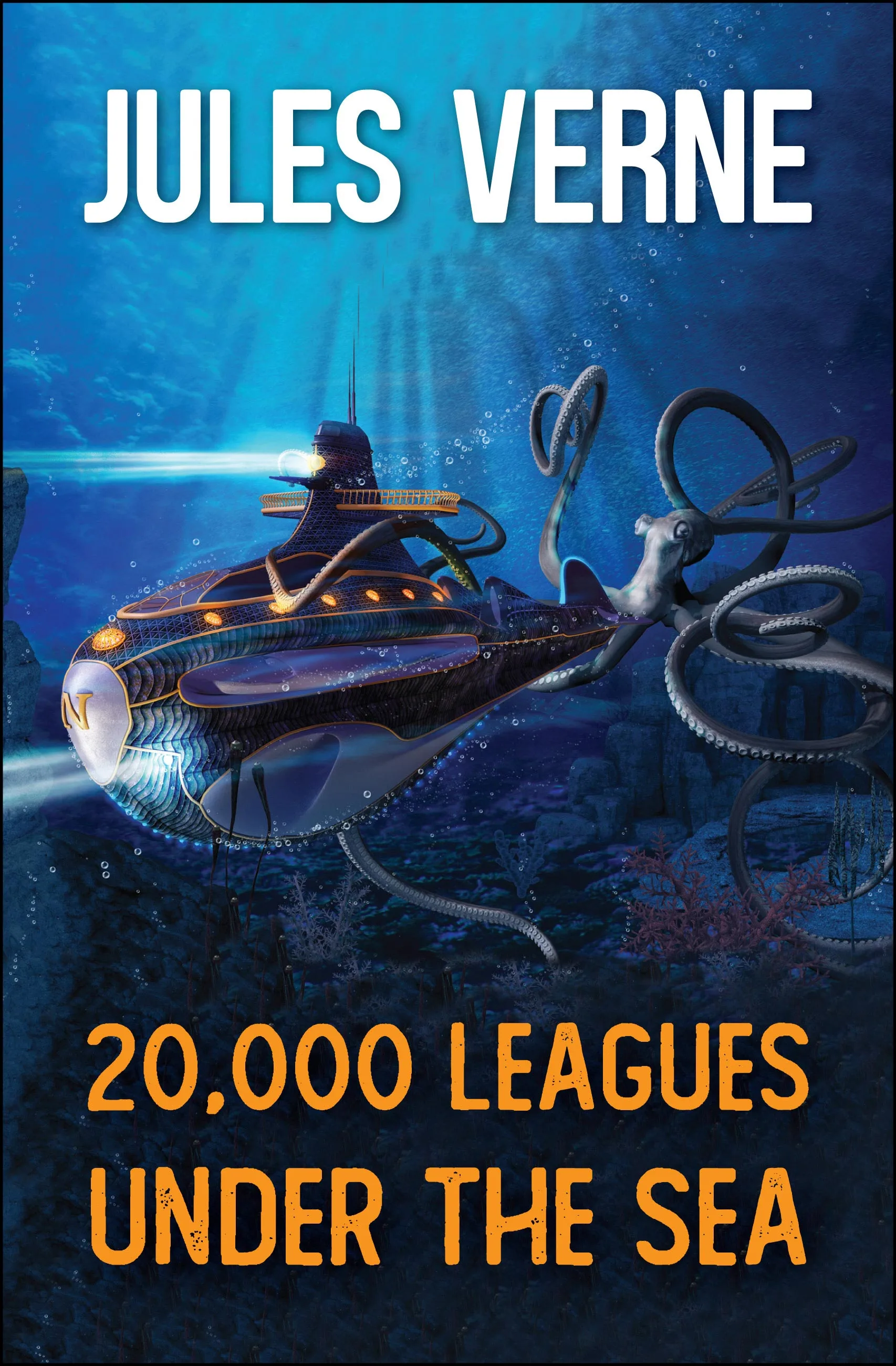
Download Cover Image
Do you want to download the full cover image for 20,000 Leagues under the Sea?