
The Critique of Pure Reason
eBook
• INR 99.00
• English
• 9789354996658
No ratings yet
| Publisher | General Press |
|---|---|
| ISBN13 | 9789354996658 |
| ASIN/SKU | B0BWDTVP7C |
| Book Format | eBook |
| Language | English |
| List Price | INR 99.00 |
| Subject Code | PHI013000 |
| Publishing Date | 01/03/2023 |
| Book Code | BD00069013 |
Buy this Book
Amazon Stores
Ebook Stores
Other Stores
Discover The Critique of Pure Reason by Immanuel Kant. This book is published by General Press in eBook format, ISBN 9789354996658, ASIN B0BWDTVP7C, under Non Fiction, Philosophy.
Book Description
The Critique of Pure Reason is a book by the German philosopher Immanuel Kant, in which the author seeks to determine the limits and scope of metaphysics. Kant's comprehensive and systematic works in epistemology, metaphysics, ethics, and aesthetics have made him one of the most influential figures in modern Western philosophy.
Also referred to as Kant's "First Critique", it was followed by his Critique of Practical Reason (1788) and Critique of Judgment (1790). In the preface to the first edition, Kant explains that by a "critique of pure reason" he means a critique "of the faculty of reason in general, in respect of all knowledge after which it may strive independently of all experience" and that he aims to reach a decision about "the possibility or impossibility of metaphysics."
Also referred to as Kant's "First Critique", it was followed by his Critique of Practical Reason (1788) and Critique of Judgment (1790). In the preface to the first edition, Kant explains that by a "critique of pure reason" he means a critique "of the faculty of reason in general, in respect of all knowledge after which it may strive independently of all experience" and that he aims to reach a decision about "the possibility or impossibility of metaphysics."
Author Biography
Immanuel Kant (1724–1804) was one of the most influential philosophers in the history of Western thought. His groundbreaking ideas transformed philosophy by reshaping the study of knowledge, ethics, metaphysics, and aesthetics. Through his profound yet carefully reasoned writings, Kant sought to explain how human beings understand the world, make moral decisions, and pursue truth. His work continues to shape modern philosophy, political theory, psychology, and the social sciences.
Born on April 22, 1724, in Königsberg, Prussia (now Kaliningrad, Russia), Kant grew up in a modest family deeply influenced by Lutheran values of discipline, honesty, and humility. Despite financial hardships, he excelled in his studies and attended the University of Königsberg, where he developed a keen interest in mathematics, natural science, and philosophy. After working for several years as a private tutor, he returned to the university, eventually becoming a respected professor whose lectures attracted students from across Europe.
Kant spent almost his entire life in Königsberg, leading a disciplined and orderly routine that became legendary. Although he rarely traveled far from his hometown, his intellectual influence extended around the world. His greatest philosophical achievement came with the publication of Critique of Pure Reason (1781), a landmark work that examined the limits and possibilities of human knowledge. He argued that while experience provides the content of knowledge, the human mind actively organizes and interprets that experience through innate structures. This revolutionary insight transformed the direction of modern philosophy.
Kant's later works, including Critique of Practical Reason, Critique of Judgment, and Groundwork of the Metaphysics of Morals, explored ethics, beauty, and human freedom. He believed that morality should be guided by universal principles rooted in reason rather than personal desires or changing circumstances. His concept of the categorical imperative—the idea that one should act only according to principles that could reasonably become universal laws—remains one of the most influential ideas in moral philosophy.
Beyond philosophy, Kant wrote on science, geography, education, religion, and politics, reflecting his wide-ranging intellectual curiosity. His emphasis on reason, human dignity, and personal responsibility helped shape the ideals of the Enlightenment and influenced countless thinkers, including Hegel, Schopenhauer, and John Rawls.
Immanuel Kant passed away on February 12, 1804, in Königsberg. Today, he is remembered as one of humanity's greatest philosophers, whose enduring ideas continue to inspire thoughtful inquiry into knowledge, ethics, freedom, and the nature of the human experience.
Born on April 22, 1724, in Königsberg, Prussia (now Kaliningrad, Russia), Kant grew up in a modest family deeply influenced by Lutheran values of discipline, honesty, and humility. Despite financial hardships, he excelled in his studies and attended the University of Königsberg, where he developed a keen interest in mathematics, natural science, and philosophy. After working for several years as a private tutor, he returned to the university, eventually becoming a respected professor whose lectures attracted students from across Europe.
Kant spent almost his entire life in Königsberg, leading a disciplined and orderly routine that became legendary. Although he rarely traveled far from his hometown, his intellectual influence extended around the world. His greatest philosophical achievement came with the publication of Critique of Pure Reason (1781), a landmark work that examined the limits and possibilities of human knowledge. He argued that while experience provides the content of knowledge, the human mind actively organizes and interprets that experience through innate structures. This revolutionary insight transformed the direction of modern philosophy.
Kant's later works, including Critique of Practical Reason, Critique of Judgment, and Groundwork of the Metaphysics of Morals, explored ethics, beauty, and human freedom. He believed that morality should be guided by universal principles rooted in reason rather than personal desires or changing circumstances. His concept of the categorical imperative—the idea that one should act only according to principles that could reasonably become universal laws—remains one of the most influential ideas in moral philosophy.
Beyond philosophy, Kant wrote on science, geography, education, religion, and politics, reflecting his wide-ranging intellectual curiosity. His emphasis on reason, human dignity, and personal responsibility helped shape the ideals of the Enlightenment and influenced countless thinkers, including Hegel, Schopenhauer, and John Rawls.
Immanuel Kant passed away on February 12, 1804, in Königsberg. Today, he is remembered as one of humanity's greatest philosophers, whose enduring ideas continue to inspire thoughtful inquiry into knowledge, ethics, freedom, and the nature of the human experience.
Editorial Reviews
Editorial Reviews will be added soon…
Book Summary
Book Summary will be added soon…
Sample Chapters
Sample Chapters will be added soon…
Reader Reviews
No reviews yet.
The Critique of Pure Reason
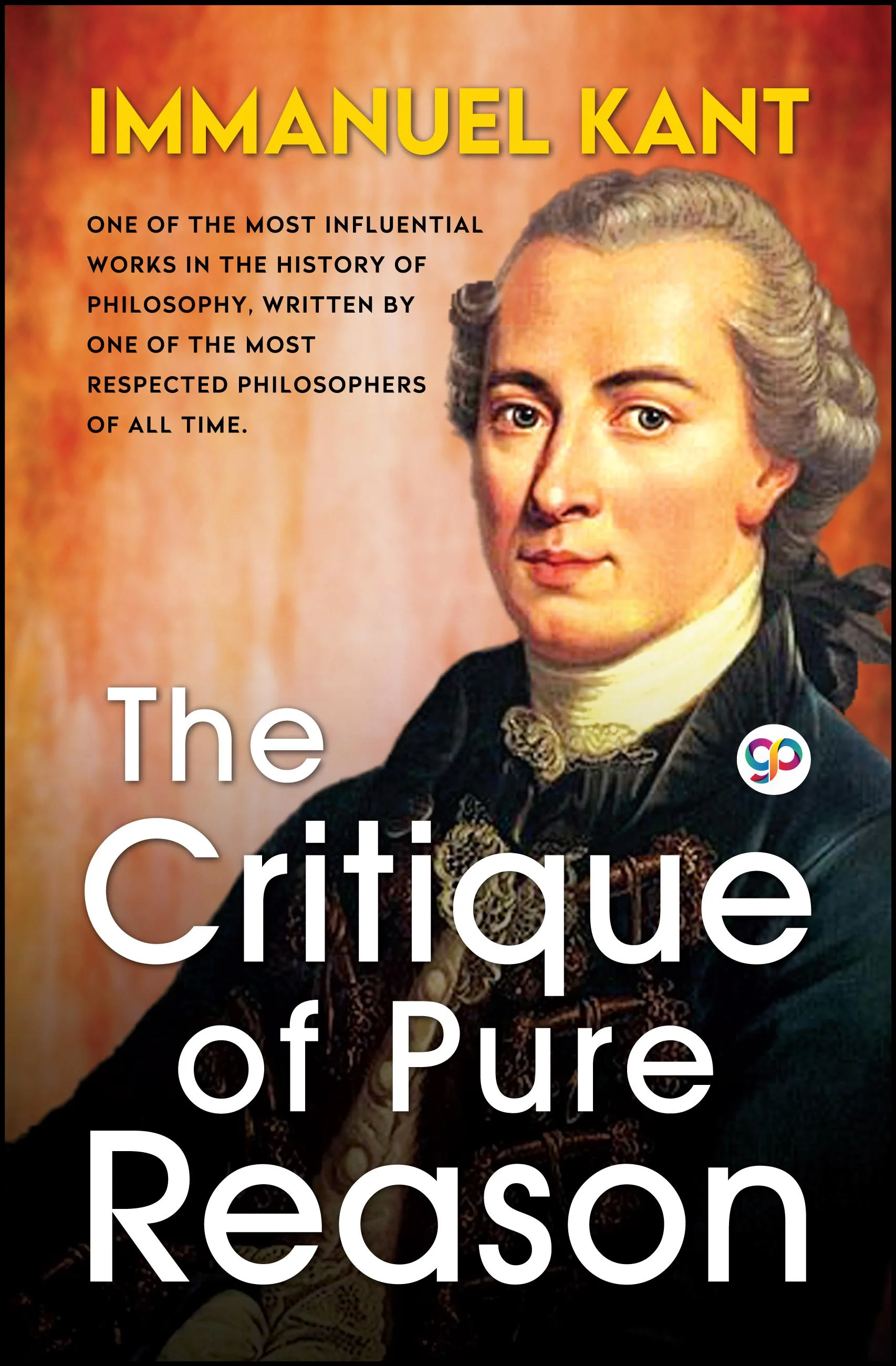
Download Cover Image
Do you want to download the full cover image for The Critique of Pure Reason?