
Ancient Book of Jubilees
eBook
• INR 51.00
• English
• 9789354993831
No ratings yet
| Publisher | General Press |
|---|---|
| ISBN13 | 9789354993831 |
| ASIN/SKU | B0BBRJW6B3 |
| Book Format | eBook |
| Language | English |
| List Price | INR 51.00 |
| Subject Code | REL114000, HIS022000, REL040030, HIS037000 |
| Publishing Date | 05/09/2022 |
| Book Code | BD00069019 |
Buy this Book
Amazon Stores
Ebook Stores
Other Stores
Discover Ancient Book of Jubilees by Ken Johnson. This book is published by General Press in eBook format, ISBN 9789354993831, ASIN B0BBRJW6B3, under Christian Books and Bibles, Religion, Judaism.
Book Description
First published in 2013, ‘Ancient Book of Jubilees’ is a commentary on the epistles of John and Jude from the ancient church fathers by Ken Johnson, who became a Christian at the age of 12 and quickly realized there were differences in doctrine in various denominations and sought to prove to himself the correct interpretation of these issues that divide Christians.
It gives the history of the struggles of the first-century church. You will learn which cults John and Jude were writing about and be able to identify each heresy. You will also learn what meditation and sorcery truly are. At the end of each chapter is a chart contrasting the teaching of the church and that of the Gnostics. Included are master charts of the doctrine of Christ, the commandments of Christ, and the teaching of the apostles.
It gives the history of the struggles of the first-century church. You will learn which cults John and Jude were writing about and be able to identify each heresy. You will also learn what meditation and sorcery truly are. At the end of each chapter is a chart contrasting the teaching of the church and that of the Gnostics. Included are master charts of the doctrine of Christ, the commandments of Christ, and the teaching of the apostles.
Author Biography
Ken Johnson was born in 1965 and became a Christian at the age of 12. He quickly realized there were differences in doctrine in various denominations and sought to prove to himself the correct interpretation of these issues that divide Christians. After an intensive study of the first-century church, he sought to bring back the teaching of the disciples of the 12 apostles. He has authored numerous books and made ancient Jewish scrolls available to the English-speaking world.
He currently travels to churches inside the USA, speaking on these and other topics. He currently attends Calvary Chapel of Johnson County, located in Olathe Kansas.
He currently travels to churches inside the USA, speaking on these and other topics. He currently attends Calvary Chapel of Johnson County, located in Olathe Kansas.
Editorial Reviews
Editorial Reviews will be added soon…
Book Summary
Ken Johnson’s Ancient Book of Jubilees presents the ancient Book of Jubilees together with Johnson’s notes and commentary. The underlying work, sometimes called the “Little Genesis,” “Book of Divisions,” or “Apocalypse of Moses,” retells the history found mainly in Genesis and the early chapters of Exodus, but adds many details about angels, demons, the patriarchs, sacred calendars, covenants, and the ordering of history. Johnson’s 2013 edition uses the R. H. Charles English translation and adds explanatory notes from a conservative Christian perspective.
The book begins with Moses on Mount Sinai. Moses receives revelation concerning the history of the world and the people of Israel. The narrative is presented as heavenly knowledge being given to Moses, giving the entire work the character of a revealed history. One of its distinctive features is its organization of events according to jubilees, periods of forty-nine years. Time is therefore not merely a way of measuring history; it is presented as part of God's orderly plan.
The account then goes back to the creation of the world. Jubilees closely follows Genesis but places special emphasis on the Sabbath. Creation is portrayed as an ordered act of God, and the Sabbath is given a particularly sacred status. The calendar and the correct observance of sacred days become major concerns throughout the work. Johnson highlights this aspect because the book's calendar differs in important respects from the later Jewish calendar and provides a distinctive way of understanding biblical chronology.
The story continues with Adam and Eve in the Garden of Eden and their fall. As in Genesis, disobedience brings sin and separation from God. But Jubilees expands the story with additional details and presents the events as part of a larger spiritual history involving angels, heavenly order, and the consequences of human rebellion.
The narrative then follows Cain and Abel and the generations descending from Adam. The familiar biblical story becomes part of a carefully organized chronology. Genealogies are especially important because they allow the author to establish exact relationships and dates. History is presented as something that unfolds according to a divinely ordered timetable rather than as a collection of unrelated events.
One of the most distinctive sections concerns the fallen angels and the Flood. Jubilees expands upon the brief biblical account in Genesis 6, describing the descent of angels who become involved with human beings. Their corruption contributes to the spread of violence and wickedness. The resulting disorder leads to God's judgment through the Flood.
The story of the Nephilim is also expanded. Johnson's edition emphasizes the ancient tradition that the giants associated with the pre-Flood world were destroyed, while their disembodied spirits became a continuing source of spiritual temptation. According to the interpretation presented in this edition, only a portion of these spirits remain active on earth, while others are restrained until a future period of judgment. This is one of the areas where Johnson's commentary connects the ancient text with broader Christian ideas concerning demons and end-time events.
After the Flood, Noah becomes central. He offers sacrifices to God, and God establishes His covenant with him. The rainbow covenant is presented as a sign of God's promise, while Noah's later experiences with his sons provide lessons concerning obedience, family relationships, blessing, and judgment.
The descendants of Noah are then traced through Shem, Ham, and Japheth. Jubilees gives considerable attention to the division of the earth among Noah's descendants. The world is presented as being apportioned according to a divinely established arrangement. This reinforces one of the book's recurring themes: history, geography, genealogy, and time all exist within an ordered divine plan.
The story eventually reaches the Tower of Babel. Human beings attempt to establish themselves independently, but their rebellion results in judgment and the division of languages and peoples. Jubilees connects this episode with the development of different nations and with the emergence of spiritual opposition to God's purposes.
The narrative then turns toward Abraham. His early life is portrayed in greater detail than in Genesis. Abraham grows up in a world dominated by idolatry, and his opposition to false worship becomes one of the defining features of his character. He gradually recognizes the God of creation and rejects the worship of idols.
Abraham's story continues through his journeys, his relationship with Lot, his experiences in Canaan and Egypt, and the covenant promises made to him. The book emphasizes Abraham's faithfulness and obedience. His willingness to follow God becomes a model for later generations.
The account proceeds through Isaac and Jacob, expanding familiar stories from Genesis. Jacob's marriages, children, struggles, and relationship with Esau receive detailed attention. The rivalry between Jacob and Esau becomes part of a larger struggle between peoples and future nations.
The book gives particular importance to Levi and Judah. Isaac blesses them, and Levi is associated with priestly responsibilities. This emphasis helps explain the importance of priesthood, holiness, and separation within Israel's later history.
The story of Joseph follows. Joseph is sold into Egypt by his brothers, rises within Egyptian society, interprets Pharaoh's dreams, and eventually becomes the means by which his family is preserved during famine. Jubilees follows the broad biblical narrative but provides additional chronological and interpretive details.
The family of Jacob eventually moves to Egypt. After Joseph's death, however, circumstances change. The Israelites become oppressed, and the story moves toward the birth and mission of Moses.
Moses is born during the period of Israelite oppression and eventually encounters God. Jubilees then follows the Exodus, including the plagues, Israel's departure from Egypt, and the crossing of the sea. The Passover receives particular attention, emphasizing its laws and its place in Israel's sacred calendar.
Near the conclusion, the book returns to its distinctive concern with time, Sabbath observance, and jubilees. Sacred history is presented as something governed by precise divine divisions. The calendar is therefore more than a practical tool; it becomes evidence of God's order.
A major theme running through Johnson's presentation is the conflict between obedience and rebellion. Again and again, people prosper when they follow God's commands and suffer when they turn toward violence, idolatry, sexual corruption, or disobedience. The history of humanity becomes a continuing struggle between faithfulness and spiritual rebellion.
Another important theme is the relationship between the visible and invisible worlds. Angels, fallen angels, spirits, and divine beings are presented as active participants in human history. The physical events recorded in Genesis and Exodus are therefore given a spiritual dimension that is less explicit in the biblical text.
Johnson's commentary encourages readers to compare Jubilees with the Bible. His edition identifies differences between the ancient work and the biblical canon and discusses these differences from his own Christian perspective. The book is consequently best understood as both a presentation of an ancient Jewish work and a modern interpretive edition rather than as a replacement for the biblical books themselves.
Ultimately, Ancient Book of Jubilees presents history as a carefully structured story of creation, sin, judgment, covenant, obedience, and redemption. Humanity repeatedly moves away from God, yet God continues to preserve a faithful line through figures such as Noah, Abraham, Isaac, Jacob, Joseph, and Moses.
The book's deepest appeal lies in its attempt to fill in the spaces left by Genesis and Exodus. It asks readers to imagine the spiritual realities behind familiar biblical events and to see history through the framework of sacred time. Its emphasis on angels, demons, the Nephilim, genealogies, festivals, and calendars makes it particularly interesting for readers who want to explore ancient traditions surrounding the biblical narrative.
At its heart, the work delivers a simple message: human history may appear chaotic, but it unfolds within an ordered spiritual framework governed by God. For Johnson, the ancient text offers additional context for understanding the biblical story, while its themes of faithfulness, spiritual conflict, judgment, and covenant continue to speak to readers interested in the deeper traditions surrounding the Old Testament.
The book begins with Moses on Mount Sinai. Moses receives revelation concerning the history of the world and the people of Israel. The narrative is presented as heavenly knowledge being given to Moses, giving the entire work the character of a revealed history. One of its distinctive features is its organization of events according to jubilees, periods of forty-nine years. Time is therefore not merely a way of measuring history; it is presented as part of God's orderly plan.
The account then goes back to the creation of the world. Jubilees closely follows Genesis but places special emphasis on the Sabbath. Creation is portrayed as an ordered act of God, and the Sabbath is given a particularly sacred status. The calendar and the correct observance of sacred days become major concerns throughout the work. Johnson highlights this aspect because the book's calendar differs in important respects from the later Jewish calendar and provides a distinctive way of understanding biblical chronology.
The story continues with Adam and Eve in the Garden of Eden and their fall. As in Genesis, disobedience brings sin and separation from God. But Jubilees expands the story with additional details and presents the events as part of a larger spiritual history involving angels, heavenly order, and the consequences of human rebellion.
The narrative then follows Cain and Abel and the generations descending from Adam. The familiar biblical story becomes part of a carefully organized chronology. Genealogies are especially important because they allow the author to establish exact relationships and dates. History is presented as something that unfolds according to a divinely ordered timetable rather than as a collection of unrelated events.
One of the most distinctive sections concerns the fallen angels and the Flood. Jubilees expands upon the brief biblical account in Genesis 6, describing the descent of angels who become involved with human beings. Their corruption contributes to the spread of violence and wickedness. The resulting disorder leads to God's judgment through the Flood.
The story of the Nephilim is also expanded. Johnson's edition emphasizes the ancient tradition that the giants associated with the pre-Flood world were destroyed, while their disembodied spirits became a continuing source of spiritual temptation. According to the interpretation presented in this edition, only a portion of these spirits remain active on earth, while others are restrained until a future period of judgment. This is one of the areas where Johnson's commentary connects the ancient text with broader Christian ideas concerning demons and end-time events.
After the Flood, Noah becomes central. He offers sacrifices to God, and God establishes His covenant with him. The rainbow covenant is presented as a sign of God's promise, while Noah's later experiences with his sons provide lessons concerning obedience, family relationships, blessing, and judgment.
The descendants of Noah are then traced through Shem, Ham, and Japheth. Jubilees gives considerable attention to the division of the earth among Noah's descendants. The world is presented as being apportioned according to a divinely established arrangement. This reinforces one of the book's recurring themes: history, geography, genealogy, and time all exist within an ordered divine plan.
The story eventually reaches the Tower of Babel. Human beings attempt to establish themselves independently, but their rebellion results in judgment and the division of languages and peoples. Jubilees connects this episode with the development of different nations and with the emergence of spiritual opposition to God's purposes.
The narrative then turns toward Abraham. His early life is portrayed in greater detail than in Genesis. Abraham grows up in a world dominated by idolatry, and his opposition to false worship becomes one of the defining features of his character. He gradually recognizes the God of creation and rejects the worship of idols.
Abraham's story continues through his journeys, his relationship with Lot, his experiences in Canaan and Egypt, and the covenant promises made to him. The book emphasizes Abraham's faithfulness and obedience. His willingness to follow God becomes a model for later generations.
The account proceeds through Isaac and Jacob, expanding familiar stories from Genesis. Jacob's marriages, children, struggles, and relationship with Esau receive detailed attention. The rivalry between Jacob and Esau becomes part of a larger struggle between peoples and future nations.
The book gives particular importance to Levi and Judah. Isaac blesses them, and Levi is associated with priestly responsibilities. This emphasis helps explain the importance of priesthood, holiness, and separation within Israel's later history.
The story of Joseph follows. Joseph is sold into Egypt by his brothers, rises within Egyptian society, interprets Pharaoh's dreams, and eventually becomes the means by which his family is preserved during famine. Jubilees follows the broad biblical narrative but provides additional chronological and interpretive details.
The family of Jacob eventually moves to Egypt. After Joseph's death, however, circumstances change. The Israelites become oppressed, and the story moves toward the birth and mission of Moses.
Moses is born during the period of Israelite oppression and eventually encounters God. Jubilees then follows the Exodus, including the plagues, Israel's departure from Egypt, and the crossing of the sea. The Passover receives particular attention, emphasizing its laws and its place in Israel's sacred calendar.
Near the conclusion, the book returns to its distinctive concern with time, Sabbath observance, and jubilees. Sacred history is presented as something governed by precise divine divisions. The calendar is therefore more than a practical tool; it becomes evidence of God's order.
A major theme running through Johnson's presentation is the conflict between obedience and rebellion. Again and again, people prosper when they follow God's commands and suffer when they turn toward violence, idolatry, sexual corruption, or disobedience. The history of humanity becomes a continuing struggle between faithfulness and spiritual rebellion.
Another important theme is the relationship between the visible and invisible worlds. Angels, fallen angels, spirits, and divine beings are presented as active participants in human history. The physical events recorded in Genesis and Exodus are therefore given a spiritual dimension that is less explicit in the biblical text.
Johnson's commentary encourages readers to compare Jubilees with the Bible. His edition identifies differences between the ancient work and the biblical canon and discusses these differences from his own Christian perspective. The book is consequently best understood as both a presentation of an ancient Jewish work and a modern interpretive edition rather than as a replacement for the biblical books themselves.
Ultimately, Ancient Book of Jubilees presents history as a carefully structured story of creation, sin, judgment, covenant, obedience, and redemption. Humanity repeatedly moves away from God, yet God continues to preserve a faithful line through figures such as Noah, Abraham, Isaac, Jacob, Joseph, and Moses.
The book's deepest appeal lies in its attempt to fill in the spaces left by Genesis and Exodus. It asks readers to imagine the spiritual realities behind familiar biblical events and to see history through the framework of sacred time. Its emphasis on angels, demons, the Nephilim, genealogies, festivals, and calendars makes it particularly interesting for readers who want to explore ancient traditions surrounding the biblical narrative.
At its heart, the work delivers a simple message: human history may appear chaotic, but it unfolds within an ordered spiritual framework governed by God. For Johnson, the ancient text offers additional context for understanding the biblical story, while its themes of faithfulness, spiritual conflict, judgment, and covenant continue to speak to readers interested in the deeper traditions surrounding the Old Testament.
Sample Chapters
Sample Chapters will be added soon…
Reader Reviews
No reviews yet.
Ancient Book of Jubilees
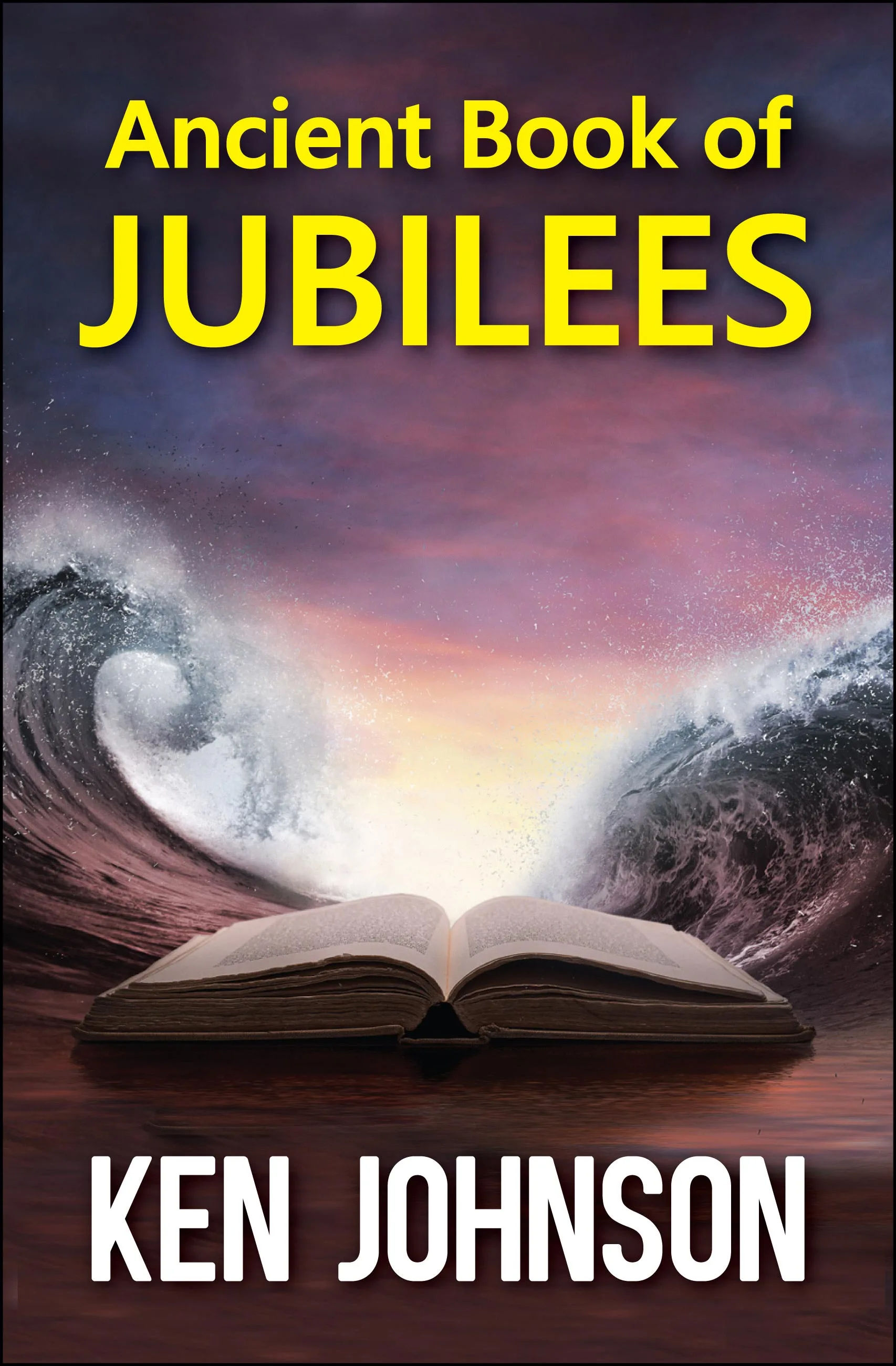
Download Cover Image
Do you want to download the full cover image for Ancient Book of Jubilees?