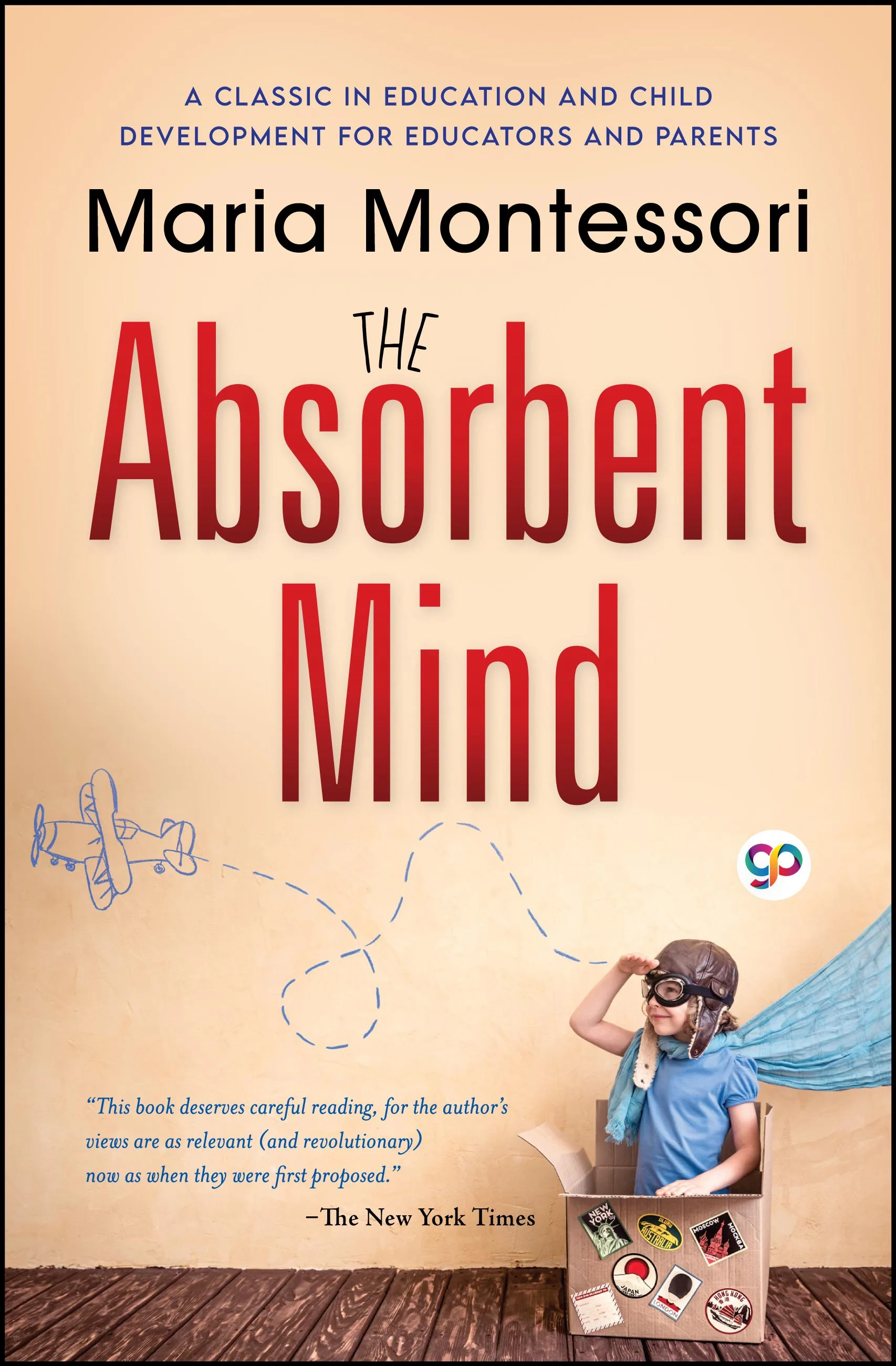
The Absorbent Mind
eBook
• INR 99.00
• English
• 9789354995729
No ratings yet
| Publisher | General Press |
|---|---|
| ISBN13 | 9789354995729 |
| ASIN/SKU | B0BWDV23DG |
| Book Format | eBook |
| Language | English |
| List Price | INR 99.00 |
| Subject Code | EDU029000 |
| Publishing Date | 01/03/2023 |
| Book Code | BD00069023 |
Discover The Absorbent Mind by Maria Montessori. This book is published by General Press in eBook format, ISBN 9789354995729, ASIN B0BWDV23DG, under Non Fiction, Nonfiction, Psychology.
Book Description
Maria Montessori was an Italian physician and educator best known for the philosophy of education that bears her name, and her writing on scientific pedagogy. Her educational method is in use today in public and private schools throughout the world. In 1947 she returned to India and gave courses in Adyar and Ahmedabad. These courses led to the book ‘The Absorbent Mind’, in which Montessori described the development of the child from birth onwards and presented the concept of the Four Planes of Development.
This was Maria Montessori's most in-depth work on her educational theory, based on decades of scientific observation of children. Her view on children and their absorbent minds was a landmark departure from the educational model at the time. This book helped start a revolution in education. Since this book first appeared there have been both cognitive and neurological studies that have confirmed what Maria Montessori knew decades ago.
This was Maria Montessori's most in-depth work on her educational theory, based on decades of scientific observation of children. Her view on children and their absorbent minds was a landmark departure from the educational model at the time. This book helped start a revolution in education. Since this book first appeared there have been both cognitive and neurological studies that have confirmed what Maria Montessori knew decades ago.
Author Biography
Maria Montessori was an Italian physician, educator, philosopher, humanitarian and devout Catholic; she is best known for her philosophy and the Montessori method of education of children from birth to adolescence. Her educational method is in use today in a number of public as well as private schools throughout the world.
Editorial Reviews
Editorial Reviews will be added soon…
Book Summary
Maria Montessori’s seminal work, "The Absorbent Mind", stands as a profound exploration of human development and a revolutionary treatise on early childhood education. Based on lectures she delivered in India during the 1940s, the book fundamentally challenges traditional educational paradigms that view the child as an empty vessel waiting to be filled by adult instruction. Instead, Montessori presents the child as a dynamic, self-directed builder of the human being. At the heart of her philosophy is the recognition that the first six years of life are the most crucial, a period during which the child’s brain operates in a way completely alien to the adult mind. She argues that society must shift its focus from direct teaching to scientific observation, advocating for an educational approach that aligns with the natural laws of human growth rather than fighting against them.
The titular concept of the "absorbent mind" refers to the unique psychological state of the young child, who possesses a sponge-like capacity to effortlessly soak up information, cultural norms, language, and behaviors. Montessori divides this period into two distinct phases. From birth to age three, the child possesses an unconscious absorbent mind. During this time, they do not consciously choose what to learn; rather, they literally incarnate their surroundings, constructing their memory, intellect, and personality out of thin air based on what they observe. From ages three to six, the mind transitions to a conscious absorbent state. Here, the child begins to interact intentionally with their environment, using their hands and senses to categorize, refine, and make sense of the vast impressions they unconsciously gathered during their first three years.
A cornerstone of this developmental journey is the concept of "sensitive periods." Montessori observed that children pass through transient, highly focused windows of time where they are biologically driven to acquire specific skills. During a sensitive period for language, order, movement, or social behavior, learning happens with astonishing ease and intense joy. A child might obsessively repeat a seemingly mundane task, driven by a deep inner need to master a particular cognitive or physical function. However, these windows are strictly temporary. If a child is prevented from fulfilling this inner urge, the opportunity passes, and acquiring that same skill later in life will require arduous, conscious effort rather than natural assimilation. Recognizing and supporting these fleeting phases is therefore essential to facilitating optimal development.
To support the absorbent mind and capitalize on these sensitive periods, Montessori introduces the absolute necessity of the "prepared environment." Because the child constructs themselves from what they find in their immediate surroundings, that environment must be meticulously curated. A prepared environment is physically scaled to the child, featuring child-sized furniture, accessible shelving, and real, functioning tools rather than passive, plastic toys. It must be aesthetically pleasing, orderly, and calm, providing a vital sense of security. Crucially, the environment must offer freedom. Within the boundaries of this carefully designed space, children are free to choose their own activities, work at their own pace, and follow their intrinsic interests, which allows them to independently answer the inner promptings of their sensitive periods.
In this setting, the role of the adult is radically redefined. The traditional teacher who stands at the front of a room dictating standardized lessons is replaced by a silent observer and a gentle guide. Montessori emphasizes that the adult must undergo a spiritual preparation, actively shedding their ego, pride, and the innate adult desire to control or mold the child. The adult’s primary responsibility is to prepare and maintain the environment, observe the children to identify their specific needs, and connect them with appropriate materials at exactly the right time. The guide must then step back and allow the child to work independently, intervening only when strictly necessary. By removing themselves as the focal point of the classroom, the adult allows the child’s natural developmental timeline to take center stage.
A revolutionary aspect of The Absorbent Mind is its exploration of the intricate relationship between physical movement and cognitive development. Traditional education often separates the mind from the body, expecting children to absorb knowledge while sitting perfectly still at desks. Montessori vehemently opposed this separation, arguing that movement is deeply and inextricably intertwined with human intelligence. She famously described the hand as the "instrument of man’s intelligence." When a child manipulates objects, sorts shapes, or pours water, they are not merely playing; they are doing the vital work of building complex neurological connections. Through purposeful movement, the child gains mastery over their physical body and develops the internal ability to sustain focus, organize their thoughts, and execute complex sequences of actions.
To illustrate this point, Montessori points to the miracle of language acquisition as the ultimate proof of the absorbent mind in action. Without formal instruction, grammar lessons, or textbooks, a toddler effortlessly masters the complex syntax, vocabulary, and phonetic nuances of their mother tongue simply by living in an environment where it is spoken. The child does not analyze the language logically; they absorb it entirely and perfectly. This astonishing feat, which adults struggle to replicate even with years of intensive, conscious study, highlights the unparalleled power of the young brain. Montessori points out that this linguistic explosion is not the result of direct teaching, but a natural unfolding of human potential facilitated by immersion.
Through the freedom to choose engaging, purposeful work, the child eventually achieves a state Montessori calls "normalization." This is perhaps one of the most misunderstood concepts in early education. Normalization does not mean forcing a child to conform to rigid adult standards of obedience or compliance. Rather, it is the natural emergence of the child's true, positive nature when their developmental needs are adequately met. When a child finds a piece of work that deeply captures their interest, they enter a state of profound, uninterrupted concentration. Emerging from this deep focus, the child appears rested, peaceful, and joyful. True discipline, therefore, is not imposed externally through behavioral rewards or punishments, but arises internally as a natural byproduct of concentrated work.
This inner discipline naturally extends outward, fostering genuine social harmony and moral development. In an authentic Montessori environment, children of mixed ages interact freely on a daily basis. Because they are not competing for a single teacher’s attention or vying for artificial grades, a natural, supportive community forms. Older children spontaneously assist younger ones, solidifying their own knowledge, while younger children look up to their older peers for inspiration. Through navigating shared spaces, waiting patiently for a desired material to become available, and respecting the quiet concentration of others, children organically learn empathy and social responsibility. Montessori saw this microcosm of peaceful coexistence as a blueprint for society at large, believing deeply that early education was the most viable path to lasting global peace.
Ultimately, The Absorbent Mind is much more than a practical educational manual; it is a profound philosophical plea to respect the inherent dignity and immense potential of the young child. Montessori challenges us to recognize that the infant and the toddler are engaged in the most monumental task known to humanity: the actual creation of the adult. By understanding the unique, fleeting mechanics of the absorbent mind, respecting the urgency of sensitive periods, and providing a nurturing, scientifically prepared environment, we can remove the arbitrary obstacles that hinder natural development. Her enduring message is one of hope and immense responsibility, reminding us that by radically changing our approach to the first six years of life, we possess the power to elevate the entire trajectory of the human race.
The titular concept of the "absorbent mind" refers to the unique psychological state of the young child, who possesses a sponge-like capacity to effortlessly soak up information, cultural norms, language, and behaviors. Montessori divides this period into two distinct phases. From birth to age three, the child possesses an unconscious absorbent mind. During this time, they do not consciously choose what to learn; rather, they literally incarnate their surroundings, constructing their memory, intellect, and personality out of thin air based on what they observe. From ages three to six, the mind transitions to a conscious absorbent state. Here, the child begins to interact intentionally with their environment, using their hands and senses to categorize, refine, and make sense of the vast impressions they unconsciously gathered during their first three years.
A cornerstone of this developmental journey is the concept of "sensitive periods." Montessori observed that children pass through transient, highly focused windows of time where they are biologically driven to acquire specific skills. During a sensitive period for language, order, movement, or social behavior, learning happens with astonishing ease and intense joy. A child might obsessively repeat a seemingly mundane task, driven by a deep inner need to master a particular cognitive or physical function. However, these windows are strictly temporary. If a child is prevented from fulfilling this inner urge, the opportunity passes, and acquiring that same skill later in life will require arduous, conscious effort rather than natural assimilation. Recognizing and supporting these fleeting phases is therefore essential to facilitating optimal development.
To support the absorbent mind and capitalize on these sensitive periods, Montessori introduces the absolute necessity of the "prepared environment." Because the child constructs themselves from what they find in their immediate surroundings, that environment must be meticulously curated. A prepared environment is physically scaled to the child, featuring child-sized furniture, accessible shelving, and real, functioning tools rather than passive, plastic toys. It must be aesthetically pleasing, orderly, and calm, providing a vital sense of security. Crucially, the environment must offer freedom. Within the boundaries of this carefully designed space, children are free to choose their own activities, work at their own pace, and follow their intrinsic interests, which allows them to independently answer the inner promptings of their sensitive periods.
In this setting, the role of the adult is radically redefined. The traditional teacher who stands at the front of a room dictating standardized lessons is replaced by a silent observer and a gentle guide. Montessori emphasizes that the adult must undergo a spiritual preparation, actively shedding their ego, pride, and the innate adult desire to control or mold the child. The adult’s primary responsibility is to prepare and maintain the environment, observe the children to identify their specific needs, and connect them with appropriate materials at exactly the right time. The guide must then step back and allow the child to work independently, intervening only when strictly necessary. By removing themselves as the focal point of the classroom, the adult allows the child’s natural developmental timeline to take center stage.
A revolutionary aspect of The Absorbent Mind is its exploration of the intricate relationship between physical movement and cognitive development. Traditional education often separates the mind from the body, expecting children to absorb knowledge while sitting perfectly still at desks. Montessori vehemently opposed this separation, arguing that movement is deeply and inextricably intertwined with human intelligence. She famously described the hand as the "instrument of man’s intelligence." When a child manipulates objects, sorts shapes, or pours water, they are not merely playing; they are doing the vital work of building complex neurological connections. Through purposeful movement, the child gains mastery over their physical body and develops the internal ability to sustain focus, organize their thoughts, and execute complex sequences of actions.
To illustrate this point, Montessori points to the miracle of language acquisition as the ultimate proof of the absorbent mind in action. Without formal instruction, grammar lessons, or textbooks, a toddler effortlessly masters the complex syntax, vocabulary, and phonetic nuances of their mother tongue simply by living in an environment where it is spoken. The child does not analyze the language logically; they absorb it entirely and perfectly. This astonishing feat, which adults struggle to replicate even with years of intensive, conscious study, highlights the unparalleled power of the young brain. Montessori points out that this linguistic explosion is not the result of direct teaching, but a natural unfolding of human potential facilitated by immersion.
Through the freedom to choose engaging, purposeful work, the child eventually achieves a state Montessori calls "normalization." This is perhaps one of the most misunderstood concepts in early education. Normalization does not mean forcing a child to conform to rigid adult standards of obedience or compliance. Rather, it is the natural emergence of the child's true, positive nature when their developmental needs are adequately met. When a child finds a piece of work that deeply captures their interest, they enter a state of profound, uninterrupted concentration. Emerging from this deep focus, the child appears rested, peaceful, and joyful. True discipline, therefore, is not imposed externally through behavioral rewards or punishments, but arises internally as a natural byproduct of concentrated work.
This inner discipline naturally extends outward, fostering genuine social harmony and moral development. In an authentic Montessori environment, children of mixed ages interact freely on a daily basis. Because they are not competing for a single teacher’s attention or vying for artificial grades, a natural, supportive community forms. Older children spontaneously assist younger ones, solidifying their own knowledge, while younger children look up to their older peers for inspiration. Through navigating shared spaces, waiting patiently for a desired material to become available, and respecting the quiet concentration of others, children organically learn empathy and social responsibility. Montessori saw this microcosm of peaceful coexistence as a blueprint for society at large, believing deeply that early education was the most viable path to lasting global peace.
Ultimately, The Absorbent Mind is much more than a practical educational manual; it is a profound philosophical plea to respect the inherent dignity and immense potential of the young child. Montessori challenges us to recognize that the infant and the toddler are engaged in the most monumental task known to humanity: the actual creation of the adult. By understanding the unique, fleeting mechanics of the absorbent mind, respecting the urgency of sensitive periods, and providing a nurturing, scientifically prepared environment, we can remove the arbitrary obstacles that hinder natural development. Her enduring message is one of hope and immense responsibility, reminding us that by radically changing our approach to the first six years of life, we possess the power to elevate the entire trajectory of the human race.
Sample Chapters
Sample Chapters will be added soon…