
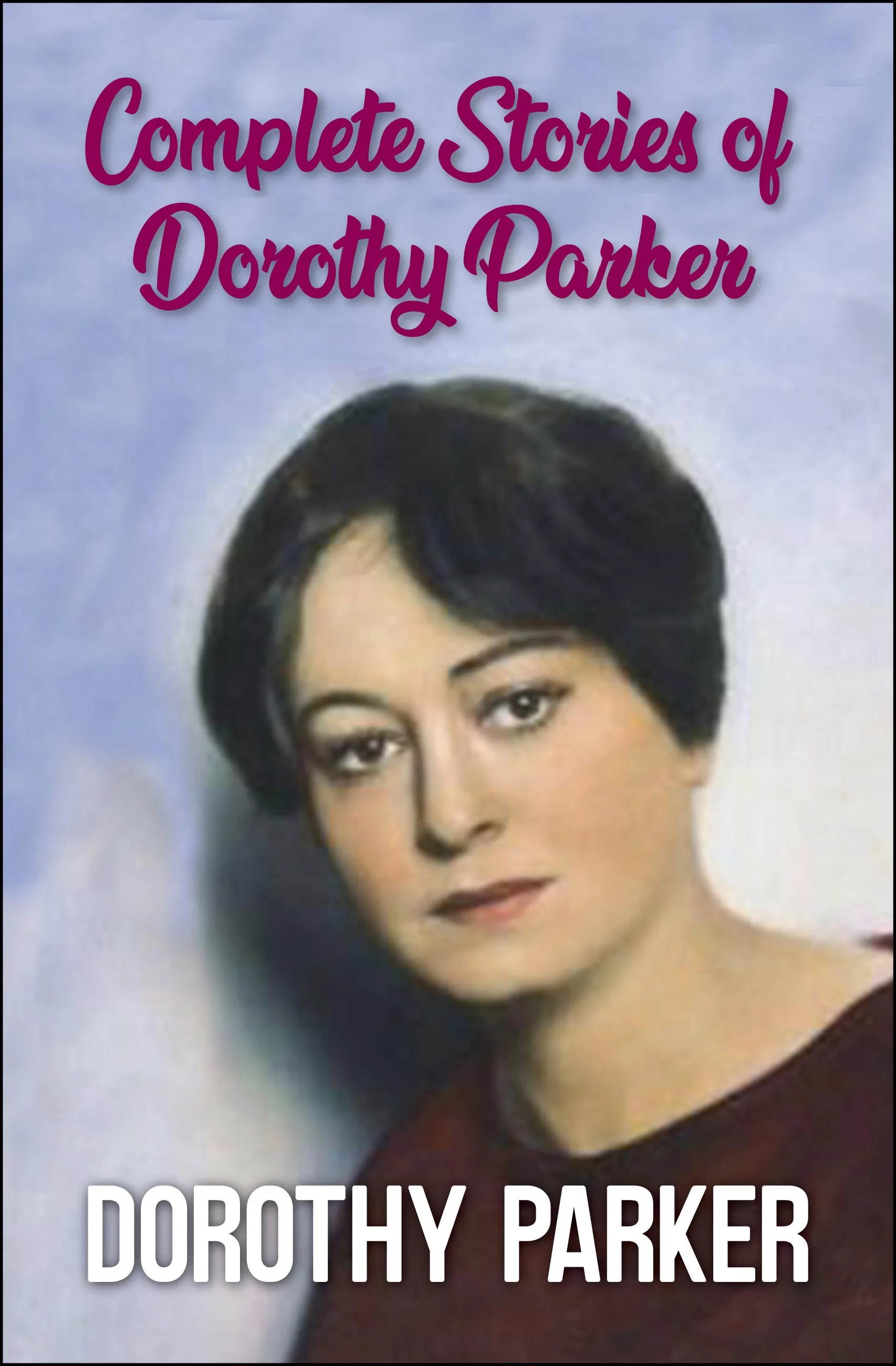
Complete Stories of Dorothy Parker
eBook
• INR 51.00
• English
• 9789354993916
No ratings yet
| Publisher | General Press |
|---|---|
| ISBN13 | 9789354993916 |
| ASIN/SKU | B0BBRJZNJL |
| Book Format | eBook |
| Language | English |
| List Price | INR 51.00 |
| Subject Code | LIT000000, EDU000000 |
| Publishing Date | 05/09/2022 |
| Book Code | BD00069025 |
Buy this Book
Amazon Stores
Ebook Stores
Other Stores
Discover Complete Stories of Dorothy Parker by Dorothy Parker. This book is published by General Press in eBook format, ISBN 9789354993916, ASIN B0BBRJZNJL, under Literature and Fiction, Short Stories, Humor and Comedy.
Book Description
"Complete Stories of Dorothy Parker" is a brilliant, poignant collection that peels back the glittering facade of early twentieth-century society to reveal the fragile, aching hearts beneath. While Parker is celebrated for her razor-sharp wit, this definitive collection—spanning forty-eight iconic tales—showcases her profound empathy for the quiet desperation of ordinary people.
Through masterfully crafted vignettes like 'The Waltz' and 'Arrangement in Black and White' Parker explores the agonizing vulnerability of waiting for love and the utter exhaustion of maintaining a cheerful mask. She focuses deeply on women navigating a world that demands perfection but offers very little genuine connection. Her characters are fiercely recognizable: individuals trapped in hollow marriages, enduring stifling social engagements, or, as in the heartbreaking 'Big Blonde,' drowning their sorrows in alcohol while longing desperately to be truly seen.
What makes these stories so enduringly powerful is Parker’s lucid, unflinching honesty. She writes with a beautiful balance of biting satire and immense compassion, never judging her characters for their flaws, their anxieties, or their foolish hopes. Instead, she holds up a mirror to the universal human longing for intimacy and meaning.
Ultimately, 'Complete Stories of Dorothy Parker' transcends its Jazz Age setting to become a timeless, deeply empathetic exploration of the human condition. It gently reminds us that beneath the cleverest banter and the brightest smiles often lies a profound, unspoken need for grace, understanding, and love.
Through masterfully crafted vignettes like 'The Waltz' and 'Arrangement in Black and White' Parker explores the agonizing vulnerability of waiting for love and the utter exhaustion of maintaining a cheerful mask. She focuses deeply on women navigating a world that demands perfection but offers very little genuine connection. Her characters are fiercely recognizable: individuals trapped in hollow marriages, enduring stifling social engagements, or, as in the heartbreaking 'Big Blonde,' drowning their sorrows in alcohol while longing desperately to be truly seen.
What makes these stories so enduringly powerful is Parker’s lucid, unflinching honesty. She writes with a beautiful balance of biting satire and immense compassion, never judging her characters for their flaws, their anxieties, or their foolish hopes. Instead, she holds up a mirror to the universal human longing for intimacy and meaning.
Ultimately, 'Complete Stories of Dorothy Parker' transcends its Jazz Age setting to become a timeless, deeply empathetic exploration of the human condition. It gently reminds us that beneath the cleverest banter and the brightest smiles often lies a profound, unspoken need for grace, understanding, and love.
Author Biography
Dorothy Parker (1893–1967) was an American poet, short story writer, critic, screenwriter, and satirist whose sharp wit and keen observations made her one of the most celebrated literary voices of the twentieth century. Renowned for her clever humor, elegant prose, and honest exploration of love, loneliness, and society, Parker captured the complexities of modern life with remarkable intelligence and sensitivity. Though often remembered for her biting one-liners, her work also revealed deep compassion and emotional insight, earning her a lasting place in American literature.
She was born Dorothy Rothschild on August 22, 1893, in Long Branch, New Jersey, and grew up in New York City. Her childhood was marked by personal loss, as both her mother and father died while she was still young. These early experiences shaped her independent spirit and influenced the themes of vulnerability and resilience that later appeared in her writing. Despite receiving only a modest formal education, Parker developed an extraordinary love for literature and language, nurturing her talent through constant reading and writing.
Parker began her literary career as a magazine writer and soon gained recognition as a drama critic for Vanity Fair. Her witty reviews and polished style quickly established her reputation. During the 1920s, she became a central figure of the famed Algonquin Round Table, a group of influential writers, critics, and performers known for their lively conversations and sparkling humor. Alongside journalism, she published acclaimed poetry collections such as Enough Rope and Sunset Gun, as well as memorable short stories, including the classic Big Blonde, which won the O. Henry Award.
In the 1930s, Parker moved to Hollywood, where she worked as a successful screenwriter and received Academy Award nominations for films such as A Star Is Born. She also became increasingly involved in political and social causes, advocating for civil rights, social justice, and freedom of expression. Her commitment to these ideals reflected the same honesty and courage found in her literary work.
Dorothy Parker passed away in 1967, leaving behind a rich body of poetry, fiction, criticism, and screenplays. Her remarkable ability to blend humor with emotional depth continues to resonate with readers around the world. Today, she is remembered not only for her unforgettable wit but also for her profound understanding of human relationships, making her one of the most distinctive and enduring voices in American literature.
She was born Dorothy Rothschild on August 22, 1893, in Long Branch, New Jersey, and grew up in New York City. Her childhood was marked by personal loss, as both her mother and father died while she was still young. These early experiences shaped her independent spirit and influenced the themes of vulnerability and resilience that later appeared in her writing. Despite receiving only a modest formal education, Parker developed an extraordinary love for literature and language, nurturing her talent through constant reading and writing.
Parker began her literary career as a magazine writer and soon gained recognition as a drama critic for Vanity Fair. Her witty reviews and polished style quickly established her reputation. During the 1920s, she became a central figure of the famed Algonquin Round Table, a group of influential writers, critics, and performers known for their lively conversations and sparkling humor. Alongside journalism, she published acclaimed poetry collections such as Enough Rope and Sunset Gun, as well as memorable short stories, including the classic Big Blonde, which won the O. Henry Award.
In the 1930s, Parker moved to Hollywood, where she worked as a successful screenwriter and received Academy Award nominations for films such as A Star Is Born. She also became increasingly involved in political and social causes, advocating for civil rights, social justice, and freedom of expression. Her commitment to these ideals reflected the same honesty and courage found in her literary work.
Dorothy Parker passed away in 1967, leaving behind a rich body of poetry, fiction, criticism, and screenplays. Her remarkable ability to blend humor with emotional depth continues to resonate with readers around the world. Today, she is remembered not only for her unforgettable wit but also for her profound understanding of human relationships, making her one of the most distinctive and enduring voices in American literature.
Editorial Reviews
Editorial Reviews will be added soon…
Book Summary
"Dorothy Parker's Complete Stories" is a remarkable collection that brings together the full range of her short fiction, revealing why she remains one of the sharpest and most unforgettable voices in twentieth-century American literature. Known for her sparkling wit, biting humor, and emotional honesty, Parker writes about ordinary people whose lives are filled with longing, disappointment, hope, and quiet resilience. Although many of her stories are brief, they leave a lasting impression because they capture moments of emotional truth with extraordinary precision. Set largely in New York during the early decades of the twentieth century, these stories explore relationships, social expectations, loneliness, love, ambition, and the hidden struggles that often lie beneath polished appearances. Through elegant prose and memorable dialogue, Parker creates characters who feel deeply human despite their flaws and contradictions.
One of the greatest strengths of the collection is Parker's ability to portray the complexity of human relationships. Many stories revolve around couples, friends, former lovers, or family members whose conversations reveal far more than they openly admit. Her characters frequently struggle with misunderstandings, unmet expectations, jealousy, or the fear of rejection. Parker excels at showing how people hide their true emotions behind clever remarks, polite smiles, or everyday routines. The tension often comes not from dramatic events but from the painful distance between what people say and what they truly feel. Readers witness relationships gradually unraveling or unexpectedly deepening through subtle exchanges rather than grand gestures, making the stories feel remarkably realistic.
Love, in Parker's world, is rarely simple or idealized. Many of her protagonists dream of happiness but find themselves trapped by insecurity, poor decisions, or impossible expectations. Romantic relationships often bring equal measures of joy and heartbreak, exposing the vulnerability of people who desperately want to be understood. Parker does not mock her characters for their emotional weaknesses. Instead, she treats them with compassion, even while exposing their illusions. She recognizes that people often cling to unhealthy relationships because they fear loneliness more than disappointment. This balance of irony and sympathy gives the stories emotional depth, allowing readers to recognize parts of themselves in characters who sometimes make frustrating but understandable choices.
Another recurring theme throughout the collection is loneliness. Even characters surrounded by friends, parties, or busy city life often experience profound isolation. Parker brilliantly captures the loneliness that exists within crowded rooms, fashionable gatherings, and seemingly successful lives. Many individuals long for genuine connection but struggle to express their feelings honestly. Social conventions, pride, and fear of vulnerability keep them emotionally distant from one another. Parker suggests that loneliness is not simply the absence of company but the inability to truly communicate one's inner self. This emotional isolation gives many stories a bittersweet quality that lingers long after the final sentence.
The collection also offers a sharp critique of the social values of Parker's era, particularly those affecting women. Her female characters often face expectations to be beautiful, charming, agreeable, and emotionally restrained. Many wrestle with limited opportunities, unequal relationships, and the pressure to define themselves through romance or marriage. Parker writes these women with intelligence and complexity, revealing both their strength and their frustration. Without becoming overtly political, her stories quietly challenge traditional gender roles by showing the emotional costs of living within rigid social expectations. Her observations remain surprisingly relevant because many of the pressures her characters experience continue to resonate with modern readers.
Humor is one of Parker's defining qualities, yet it is rarely used simply to entertain. Her wit frequently serves as a shield against pain, disappointment, and disappointment. Clever dialogue, ironic observations, and perfectly timed punchlines lighten even the saddest situations without diminishing their seriousness. Parker's humor often exposes hypocrisy, vanity, and self-deception while revealing deeper emotional truths. Readers may find themselves laughing at a character's remark only to realize moments later that it reflects profound sadness or regret. This seamless blending of comedy and tragedy is one of the reasons her stories remain so memorable. Her sharp observations about human behavior continue to feel fresh because they arise from timeless emotional experiences rather than temporary social trends.
Parker's storytelling style is remarkably economical. She wastes no words, often conveying an entire emotional history through a single conversation or carefully chosen detail. Her dialogue is especially celebrated for sounding natural while revealing layers of personality and hidden meaning. Rather than explaining everything directly, Parker trusts readers to interpret gestures, pauses, and subtle shifts in tone. Many stories end without complete resolution, leaving readers to reflect on what may happen next or what a character has finally understood. These open endings feel true to life, acknowledging that emotional conflicts are rarely solved neatly. The simplicity of her prose conceals extraordinary craftsmanship, making every sentence feel purposeful.
Although the stories reflect the culture and manners of early twentieth-century America, their emotional insights remain timeless. Readers from any generation can recognize the anxieties of falling in love, the pain of rejection, the awkwardness of social gatherings, the desire for acceptance, and the struggle to reconcile dreams with reality. Parker understood that beneath changing fashions and historical settings, human emotions remain remarkably consistent. Her characters may speak with the elegance and wit of another era, but their fears, hopes, and disappointments are instantly familiar. This universality explains why her work continues to attract new audiences decades after it was first published.
Complete Stories ultimately stands as a masterful portrait of human nature in all its beauty and imperfection. Dorothy Parker combines intelligence, compassion, humor, and psychological insight to create stories that are both entertaining and deeply moving. Rather than offering simple moral lessons, she invites readers to observe people honestly, recognizing their contradictions without losing sympathy for them. Every story captures a fleeting emotional moment that reveals something larger about life, love, and the complexities of the human heart. Rich with unforgettable characters and brilliantly crafted prose, this collection remains an enduring achievement in American literature and a rewarding read for anyone who appreciates fiction that is insightful, emotionally honest, and profoundly human.
One of the greatest strengths of the collection is Parker's ability to portray the complexity of human relationships. Many stories revolve around couples, friends, former lovers, or family members whose conversations reveal far more than they openly admit. Her characters frequently struggle with misunderstandings, unmet expectations, jealousy, or the fear of rejection. Parker excels at showing how people hide their true emotions behind clever remarks, polite smiles, or everyday routines. The tension often comes not from dramatic events but from the painful distance between what people say and what they truly feel. Readers witness relationships gradually unraveling or unexpectedly deepening through subtle exchanges rather than grand gestures, making the stories feel remarkably realistic.
Love, in Parker's world, is rarely simple or idealized. Many of her protagonists dream of happiness but find themselves trapped by insecurity, poor decisions, or impossible expectations. Romantic relationships often bring equal measures of joy and heartbreak, exposing the vulnerability of people who desperately want to be understood. Parker does not mock her characters for their emotional weaknesses. Instead, she treats them with compassion, even while exposing their illusions. She recognizes that people often cling to unhealthy relationships because they fear loneliness more than disappointment. This balance of irony and sympathy gives the stories emotional depth, allowing readers to recognize parts of themselves in characters who sometimes make frustrating but understandable choices.
Another recurring theme throughout the collection is loneliness. Even characters surrounded by friends, parties, or busy city life often experience profound isolation. Parker brilliantly captures the loneliness that exists within crowded rooms, fashionable gatherings, and seemingly successful lives. Many individuals long for genuine connection but struggle to express their feelings honestly. Social conventions, pride, and fear of vulnerability keep them emotionally distant from one another. Parker suggests that loneliness is not simply the absence of company but the inability to truly communicate one's inner self. This emotional isolation gives many stories a bittersweet quality that lingers long after the final sentence.
The collection also offers a sharp critique of the social values of Parker's era, particularly those affecting women. Her female characters often face expectations to be beautiful, charming, agreeable, and emotionally restrained. Many wrestle with limited opportunities, unequal relationships, and the pressure to define themselves through romance or marriage. Parker writes these women with intelligence and complexity, revealing both their strength and their frustration. Without becoming overtly political, her stories quietly challenge traditional gender roles by showing the emotional costs of living within rigid social expectations. Her observations remain surprisingly relevant because many of the pressures her characters experience continue to resonate with modern readers.
Humor is one of Parker's defining qualities, yet it is rarely used simply to entertain. Her wit frequently serves as a shield against pain, disappointment, and disappointment. Clever dialogue, ironic observations, and perfectly timed punchlines lighten even the saddest situations without diminishing their seriousness. Parker's humor often exposes hypocrisy, vanity, and self-deception while revealing deeper emotional truths. Readers may find themselves laughing at a character's remark only to realize moments later that it reflects profound sadness or regret. This seamless blending of comedy and tragedy is one of the reasons her stories remain so memorable. Her sharp observations about human behavior continue to feel fresh because they arise from timeless emotional experiences rather than temporary social trends.
Parker's storytelling style is remarkably economical. She wastes no words, often conveying an entire emotional history through a single conversation or carefully chosen detail. Her dialogue is especially celebrated for sounding natural while revealing layers of personality and hidden meaning. Rather than explaining everything directly, Parker trusts readers to interpret gestures, pauses, and subtle shifts in tone. Many stories end without complete resolution, leaving readers to reflect on what may happen next or what a character has finally understood. These open endings feel true to life, acknowledging that emotional conflicts are rarely solved neatly. The simplicity of her prose conceals extraordinary craftsmanship, making every sentence feel purposeful.
Although the stories reflect the culture and manners of early twentieth-century America, their emotional insights remain timeless. Readers from any generation can recognize the anxieties of falling in love, the pain of rejection, the awkwardness of social gatherings, the desire for acceptance, and the struggle to reconcile dreams with reality. Parker understood that beneath changing fashions and historical settings, human emotions remain remarkably consistent. Her characters may speak with the elegance and wit of another era, but their fears, hopes, and disappointments are instantly familiar. This universality explains why her work continues to attract new audiences decades after it was first published.
Complete Stories ultimately stands as a masterful portrait of human nature in all its beauty and imperfection. Dorothy Parker combines intelligence, compassion, humor, and psychological insight to create stories that are both entertaining and deeply moving. Rather than offering simple moral lessons, she invites readers to observe people honestly, recognizing their contradictions without losing sympathy for them. Every story captures a fleeting emotional moment that reveals something larger about life, love, and the complexities of the human heart. Rich with unforgettable characters and brilliantly crafted prose, this collection remains an enduring achievement in American literature and a rewarding read for anyone who appreciates fiction that is insightful, emotionally honest, and profoundly human.
Sample Chapters
Short Stories
1. Arrangement in Black and White
2. The Sexes
3. The Wonderful Old Gentleman
4. A Telephone Call
5. Here We Are
6. Lady with a Lamp
7. Too Bad
8. Mr. Durant
9. Just a Little One
10. Horsie
11. Clothe the Naked
12. The Waltz
13. Little Curtis
14. The Little Hours
15. Big Blonde
16. From the Diary of a New York Lady
17. Soldiers of the Republic
18. Dusk before Fireworks
19. New York to Detroit
20. Glory in the Daytime
21. The Last Tea
22. Sentiment
23. You Were Perfectly Fine
24. The Custard Heart
25. Such a Pretty Little Picture
26. A Certain Lady
27. Dialogue at Three in the Morning
28. Oh! He’s Charming!
29. Travelogue
30. A Terrible Day Tomorrow
31. The Mantle of Whistler
32. The Garter
33. The Cradle of Civilization
34. But the One on the Right
35. A Young Woman in Green Lace
36. Advice to the Little Peyton Girl
37. Mrs. Carrington and Mrs. Crane
38. The Road Home
39. Cousin Larry
40. Mrs. Hofstadter on Josephine Street
41. Song of the Shirt, 1941
42. The Standard of Living
43. The Lovely Leave
44. The Game
45. I Live on Your Visits
46. Lolita
47. The Banquet of Crow
48. The Bolt behind the Blue
Sketches
Men I’m not Married To
A Summer Hotel Anthology
Welcome Home
A Dinner Party Anthology
As the Spirit Moves
Our Tuesday Club
Professional Youth
An Apartment House Anthology
Our Own Crowd
1. Arrangement in Black and White
The woman with the pink velvet poppies turned round the assisted gold of her hair traversed the crowded room at an interesting gait combining a skip with a sidle, and clutched the lean arm of her host.
“Now I got you!” she said. “Now you can’t get away!”
“Why, hello,” said her host. “Well. How are you?”
“Oh, I’m finely,” she said. “Just simply finely. Listen. I want you to do me the most terrible favor. Will you? Will you please? Pretty please?”
“What is it?” said her host.
“Listen,” she said. “I want to meet Walter Williams. Honestly, I’m just simply crazy about that man. Oh, when he sings! When he sings those spirituals! Well, I said to Burton, ‘It’s a good thing for you Walter Williams is colored,’ I said, ‘or you’d have lots of reason to be jealous.’ I’d really love to meet him. I’d like to tell him I’ve heard him sing. Will you be an angel and introduce me to him?”
“Why, certainly,” said her host. “I thought you’d met him. The party’s for him. Where is he, anyway?”
“He’s over there by the bookcase,” she said. “Let’s wait till those people get through talking to him. Well, I think you’re simply marvelous, giving this perfectly marvelous party for him, and having him meet all these white people, and all. Isn’t he terribly grateful?”
“I hope not,” said her host.
“I think it’s really terribly nice,” she said. “I do. I don’t see why on earth it isn’t perfectly all right to meet colored people. I haven’t any feeling at all about it—not one single bit. Burton—oh, he’s just the other way. Well, you know, he comes from Virginia, and you know how they are.”
“Did he come tonight?” said her host.
“No, he couldn’t,” she said. “I’m a regular grass widow tonight. I told him when I left, ‘There’s no telling what I’ll do,’ I said. He was just so tired out, he couldn’t move. Isn’t it a shame?”
“Ah,” said her host.
“Wait till I tell him I met Walter Williams!” she said. “He’ll just about die. Oh, we have more arguments about colored people. I talk to him like I don’t know what, I get so excited. ‘Oh, don’t be so silly,’ I say. But I must say for Burton, he’s heaps broader-minded than lots of these Southerners. He’s really awfully fond of colored people. Well, he says himself, he wouldn’t have white servants. And you know, he had this old colored nurse, this regular old nigger mammy, and he just simply loves her. Why, every time he goes home, he goes out in the kitchen to see her. He does, really, to this day. All he says is, he says he hasn’t got a word to say against colored people as long as they keep their place. He’s always doing things for them—giving them clothes and I don’t know what all. The only thing he says, he says he wouldn’t sit down at the table with one for a million dollars. ‘Oh,’ I say to him, ‘you make me sick, talking like that.’ I’m just terrible to him. Aren’t I terrible?”
“Oh, no, no, no,” said her host. “No, no.”
“I am,” she said. “I know I am. Poor Burton! Now, me, I don’t feel that way at all. I haven’t the slightest feeling about colored people. Why, I’m just crazy about some of them. They’re just like children—just as easygoing, and always singing and laughing and everything. Aren’t they the happiest things you ever saw in your life? Honestly, it makes me laugh just to hear them. Oh, I like them. I really do. Well, now, listen, I have this colored laundress, I’ve had her for years, and I’m devoted to her. She’s a real character. And I want to tell you, I think of her as my friend. That’s the way I think of her. As I say to Burton, ‘Well, for Heaven’s sakes, we’re all human beings!’ Aren’t we?”
“Yes,” said her host. “Yes, indeed.”
“Now this Walter Williams,” she said. “I think a man like that’s a real artist. I do. I think he deserves an awful lot of credit. Goodness, I’m so crazy about music or anything, I don’t care what color he is. I honestly think if a person’s an artist, nobody ought to have any feeling at all about meeting them. That’s absolutely what I say to Burton. Don’t you think I’m right?”
“Yes,” said her host. “Oh, yes.”
“That’s the way I feel,” she said. “I just can’t understand people being narrow-minded. Why, I absolutely think it’s a privilege to meet a man like Walter Williams. Yes, I do. I haven’t any feeling at all. Well, my goodness, the good Lord made him, just the same as He did any of us. Didn’t He?”
“Surely,” said her host. “Yes, indeed.”
“That’s what I say,” she said. “Oh, I get so furious when people are narrow-minded about colored people. It’s just all I can do not to say something. Of course, I do admit when you get a bad colored man, they’re simply terrible. But as I say to Burton, there are some bad white people, too, in this world. Aren’t there?”
“I guess there are,” said her host.
“Why, I’d really be glad to have a man like Walter Williams come to my house and sing for us, some time,” she said. “Of course, I couldn’t ask him on account of Burton, but I wouldn’t have any feeling about it at all. Oh, can’t he sing! Isn’t it marvelous, the way they all have music in them? It just seems to be right in them. Come on, let’s us go on over and talk to him. Listen, what shall I do when I’m introduced? Ought I to shake hands? Or what?”
“Why, do whatever you want,” said her host.
“I guess maybe I’d better,” she said. “I wouldn’t for the world have him think I had any feeling. I think I’d better shake hands, just the way I would with anybody else. That’s just exactly what I’ll do.”
They reached the tall young Negro, standing by the bookcase. The host performed introductions; the Negro bowed.
“How do you do?” he said.
The woman with the pink velvet poppies extended her hand at the length of her arm and held it so for all the world to see, until the Negro took it, shook it, and gave it back to her.
“Oh, how do you do, Mr. Williams,” she said. “Well, how do you do. I’ve just been saying, I’ve enjoyed your singing so awfully much. I’ve been to your concerts, and we have you on the phonograph and everything. Oh, I just enjoy it!”
She spoke with great distinctness, moving her lips meticulously, as if in parlance with the deaf.
“I’m so glad,” he said.
“I’m just simply crazy about that ‘Water Boy’ thing you sing,” she said. “Honestly, I can’t get it out of my head. I have my husband nearly crazy, the way I go around humming it all the time. Oh, he looks just as black as the ace of—Well. Tell me, where on earth do you ever get all those songs of yours? How do you ever get hold of them?”
“Why,” he said, “there are so many different——”
“I should think you’d love singing them,” she said. “It must be more fun. All those darling old spirituals—oh, I just love them! Well, what are you doing, now? Are you still keeping up your singing? Why don’t you have another concert, some time?”
“I’m having one the sixteenth of this month,” he said.
“Well, I’ll be there,” she said. “I’ll be there, if I possibly can. You can count on me. Goodness, here comes a whole raft of people to talk to you. You’re just a regular guest of honor! Oh, who’s that girl in white? I’ve seen her some place.”
“That’s Katherine Burke,” said her host.
“Good Heavens,” she said, “is that Katherine Burke? Why, she looks entirely different off the stage. I thought she was much better-looking. I had no idea she was so terribly dark. Why, she looks almost like—Oh, I think she’s a wonderful actress! Don’t you think she’s a wonderful actress, Mr. Williams? Oh, I think she’s marvelous. Don’t you?”
“Yes, I do,” he said.
“Oh, I do, too,” she said. “Just wonderful. Well, goodness, we must give someone else a chance to talk to the guest of honor. Now, don’t forget, Mr. Williams, I’m going to be at that concert if I possibly can. I’ll be there applauding like everything. And if I can’t come, I’m going to tell everybody I know to go, anyway. Don’t you forget!”
“I won’t,” he said. “Thank you so much.”
The host took her arm and piloted her into the next room.
“Oh, my dear,” she said. “I nearly died! Honestly, I give you my word, I nearly passed away. Did you hear that terrible break I made? I was just going to say Katherine Burke looked almost like a nigger. I just caught myself in time. Oh, do you think he noticed?”
“I don’t believe so,” said her host.
“Well, thank goodness,” she said, “because I wouldn’t have embarrassed him for anything. Why, he’s awfully nice. Just as nice as he can be. Nice manners, and everything. You know, so many colored people, you give them an inch, and they walk all over you. But he doesn’t try any of that. Well, he’s got more sense, I suppose. He’s really nice. Don’t you think so?”
“Yes,” said her host.
“I liked him,” she said. “I haven’t any feeling at all because he’s a colored man. I felt just as natural as I would with anybody. Talked to him just as naturally, and everything. But honestly, I could hardly keep a straight face. I kept thinking of Burton. Oh, wait till I tell Burton I called him ‘Mister’!”
2. The Sexes
The young man with the scenic cravat glanced nervously down the sofa at the girl in the fringed dress. She was examining her handkerchief; it might have been the first one of its kind she had seen, so deep was her interest in its material, form, and possibilities. The young man cleared his throat, without necessity or success, producing a small, syncopated noise.
“Want a cigarette?” he said.
“No, thank you,” she said. “Thank you ever so much just the same.”
“Sorry I’ve only got these kind,” he said. “You got any of your own?”
“I really don’t know,” she said. “I probably have, thank you.”
“Because if you haven’t,” he said, “it wouldn’t take me a minute to go up to the corner and get you some.”
“Oh, thank you, but I wouldn’t have you go to all that trouble for anything,” she said. “It’s awfully sweet of you to think of it. Thank you ever so much.”
“Will you for God’s sakes stop thanking me?” he said.
“Really,” she said, “I didn’t know I was saying anything out of the way. I’m awfully sorry if I hurt your feelings. I know what it feels like to get your feelings hurt. I’m sure I didn’t realize it was an insult to say ‘thank you’ to a person. I’m not exactly in the habit of having people swear at me because I say ‘thank you’ to them.”
“I did not swear at you!” he said.
“Oh, you didn’t?” she said. “I see.”
“My God,” he said, “all I said, I simply asked you if I couldn’t go out and get you some cigarettes. Is there anything in that to get up in the air about?”
“Who’s up in the air?” she said. “I’m sure I didn’t know it was a criminal offense to say I wouldn’t dream of giving you all that trouble. I’m afraid I must be awfully stupid, or something.”
“Do you want me to go out and get you some cigarettes; or don’t you?” he said.
“Goodness,” she said, “if you want to go so much, please don’t feel you have to stay here. I wouldn’t have you feel you had to stay for anything.”
“Ah, don’t be that way, will you?” he said.
“Be what way?” she said. “I’m not being any way.”
“What’s the matter?” he said.
“Why, nothing,” she said. “Why?”
“You’ve been funny all evening,” he said. “Hardly said a word to me, ever since I came in.”
“I’m terribly sorry you haven’t been having a good time,” she said. “For goodness’ sakes, don’t feel you have to stay here and be bored. I’m sure there are millions of places you could be having a lot more fun. The only thing, I’m a little bit sorry I didn’t know before, that’s all. When you said you were coming over tonight, I broke a lot of dates to go to the theater and everything. But it doesn’t make a bit of difference. I’d much rather have you go and have a good time. It isn’t very pleasant to sit here and feel you’re boring a person to death.”
“I’m not bored!” he said. “I don’t want to go any place! Ah, honey, won’t you tell me what’s the matter? Ah, please.”
“I haven’t the faintest idea what you’re talking about,” she said. “There isn’t a thing on earth the matter. I don’t know what you mean.”
“Yes, you do,” he said. “There’s something the trouble. Is it anything I’ve done, or anything?”
“Goodness,” she said, “I’m sure it isn’t any of my business, anything you do. I certainly wouldn’t feel I had any right to criticize.”
“Will you stop talking like that?” he said. “Will you, please?”
“Talking like what?” she said.
“You know,” he said. “That’s the way you were talking over the telephone today, too. You were so snotty when I called you up, I was afraid to talk to you.”
“I beg your pardon,” she said. “What did you say I was?
“Well, I’m sorry,” he said. “I didn’t mean to say that. You get me so balled up.”
“You see,” she said, “I’m really not in the habit of hearing language like that. I’ve never had a thing like that said to me in my life.”
“I told you I was sorry, didn’t I?” he said. “Honest, honey, I didn’t mean it. I don’t know how I came to say a thing like that. Will you excuse me? Please?”
“Oh, certainly,” she said. “Goodness, don’t feel you have to apologize to me. It doesn’t make any difference at all. It just seems a little bit funny to have somebody you were in the habit of thinking was a gentleman come to your home and use language like that to you, that’s all. But it doesn’t make the slightest bit of difference.”
“I guess nothing I say makes any difference to you,” he said. “You seem to be sore at me.”
“I’m sore at you?” she said. “I can’t understand what put that idea in your head. Why should I be sore at you?”
“That’s what I’m asking you,” he said. “Won’t you tell me what I’ve done? Have I done something to hurt your feelings, honey? The way you were, over the phone, you had me worried all day. I couldn’t do a lick of work.”
“I certainly wouldn’t like to feel,” she said, “that I was interfering with your work. I know there are lots of girls that don’t think anything of doing things like that, but I think it’s terrible. It certainly isn’t very nice to sit here and have someone tell you interfere with his business.”
“I didn’t say that!” he said. “I didn’t say it!”
“Oh, didn’t you?” she said. “Well, that was the impression I got. It must be my stupidity.”
“I guess maybe I better go,” he said. “I can’t get right. Everything I say seems to make you sorer and sorer. Would you rather I’d go?”
“Please do just exactly whatever you like,” she said. “I’m sure the last thing I want to do is have you stay here when you’d rather be some place else. Why don’t you go some place where you won’t be bored? Why don’t you go up to Florence Leaming’s? I know she’d love to have you.”
“I don’t want to go up to Florence Leaming’s!” he said. “What would I want to go up to Florence Leaming’s for? She gives me a pain.”
“Oh, really?” she said. “She didn’t seem to be giving you so much of a pain at Elsie’s party last night, I notice. I notice you couldn’t even talk to anybody else, that’s how much of a pain she gave you.”
“Yeah, and you know why I was talking to her?” he said.
“Why, I suppose you think she’s attractive,” she said. “I suppose some people do. It’s perfectly natural. Some people think she’s quite pretty.”
“I don’t know whether she’s pretty or not,” he said. “I wouldn’t know her if I saw her again. Why I was talking to her was you wouldn’t even give me a tumble, last night. I came up and tried to talk to you, and you just said, ‘Oh, how do you do’—just like that, ‘Oh, how do you do’—and you turned right away and wouldn’t look at me.”
“I wouldn’t look at you?” she said. “Oh, that’s awfully funny. Oh, that’s marvelous. You don’t mind if I laugh, do you?”
“Go ahead and laugh your head off,” he said. “But you wouldn’t.”
“Well, the minute you came in the room,” she said, “you started making such a fuss over Florence Leaming, I thought you never wanted to see anybody else. You two seemed to be having such a wonderful time together, goodness knows I wouldn’t have butted in for anything.”
“My God,” he said, “this what’s-her-name girl came up and began talking to me before I even saw anybody else, and what could I do? I couldn’t sock her in the nose, could I?”
“I certainly didn’t see you try,” she said.
“You saw me try to talk to you, didn’t you?” he said. “And what did you do? ‘Oh, how do you do.’ Then this what’s-her-name came up again, and there I was, stuck. Florence Leaming! I think she’s terrible. Know what I think of her? I think she’s a damn little fool. That’s what I think of her.”
“Well, of course,” she said, “that’s the impression she always gave me, but I don’t know. I’ve heard people say she’s pretty. Honestly I have.”
“Why, she can’t be pretty in the same room with you,” he said.
“She has got an awfully funny nose,” she said. “I really feel sorry for a girl with a nose like that.”
“She’s got a terrible nose,” he said. “You’ve got a beautiful nose. Gee, you’ve got a pretty nose.”
“Oh, I have not,” she said. “You’re crazy.”
“And beautiful eyes,” he said, “and beautiful hair and a beautiful mouth. And beautiful hands. Let me have one of the little hands. Ah, look ’atta little hand! Who’s got the prettiest hands in the world? Who’s the sweetest girl in the world?”
“I don’t know,” she said. “Who?”
“You don’t know!” he said. “You do so, too, know.”
“I do not,” she said. “Who? Florence Leaming?”
“Oh, Florence Leaming, my eye!” he said. “Getting sore about Florence Leaming! And me not sleeping all last night and not doing a stroke of work all day because you wouldn’t speak to me! A girl like you getting sore about a girl like Florence Leaming!”
“I think you’re just perfectly crazy,” she said. “I was not sore! What on earth ever made you think I was? You’re simply crazy. Ow, my new pearl beads! Wait a second till I take them off. There!”
1. Arrangement in Black and White
2. The Sexes
3. The Wonderful Old Gentleman
4. A Telephone Call
5. Here We Are
6. Lady with a Lamp
7. Too Bad
8. Mr. Durant
9. Just a Little One
10. Horsie
11. Clothe the Naked
12. The Waltz
13. Little Curtis
14. The Little Hours
15. Big Blonde
16. From the Diary of a New York Lady
17. Soldiers of the Republic
18. Dusk before Fireworks
19. New York to Detroit
20. Glory in the Daytime
21. The Last Tea
22. Sentiment
23. You Were Perfectly Fine
24. The Custard Heart
25. Such a Pretty Little Picture
26. A Certain Lady
27. Dialogue at Three in the Morning
28. Oh! He’s Charming!
29. Travelogue
30. A Terrible Day Tomorrow
31. The Mantle of Whistler
32. The Garter
33. The Cradle of Civilization
34. But the One on the Right
35. A Young Woman in Green Lace
36. Advice to the Little Peyton Girl
37. Mrs. Carrington and Mrs. Crane
38. The Road Home
39. Cousin Larry
40. Mrs. Hofstadter on Josephine Street
41. Song of the Shirt, 1941
42. The Standard of Living
43. The Lovely Leave
44. The Game
45. I Live on Your Visits
46. Lolita
47. The Banquet of Crow
48. The Bolt behind the Blue
Sketches
Men I’m not Married To
A Summer Hotel Anthology
Welcome Home
A Dinner Party Anthology
As the Spirit Moves
Our Tuesday Club
Professional Youth
An Apartment House Anthology
Our Own Crowd
1. Arrangement in Black and White
The woman with the pink velvet poppies turned round the assisted gold of her hair traversed the crowded room at an interesting gait combining a skip with a sidle, and clutched the lean arm of her host.
“Now I got you!” she said. “Now you can’t get away!”
“Why, hello,” said her host. “Well. How are you?”
“Oh, I’m finely,” she said. “Just simply finely. Listen. I want you to do me the most terrible favor. Will you? Will you please? Pretty please?”
“What is it?” said her host.
“Listen,” she said. “I want to meet Walter Williams. Honestly, I’m just simply crazy about that man. Oh, when he sings! When he sings those spirituals! Well, I said to Burton, ‘It’s a good thing for you Walter Williams is colored,’ I said, ‘or you’d have lots of reason to be jealous.’ I’d really love to meet him. I’d like to tell him I’ve heard him sing. Will you be an angel and introduce me to him?”
“Why, certainly,” said her host. “I thought you’d met him. The party’s for him. Where is he, anyway?”
“He’s over there by the bookcase,” she said. “Let’s wait till those people get through talking to him. Well, I think you’re simply marvelous, giving this perfectly marvelous party for him, and having him meet all these white people, and all. Isn’t he terribly grateful?”
“I hope not,” said her host.
“I think it’s really terribly nice,” she said. “I do. I don’t see why on earth it isn’t perfectly all right to meet colored people. I haven’t any feeling at all about it—not one single bit. Burton—oh, he’s just the other way. Well, you know, he comes from Virginia, and you know how they are.”
“Did he come tonight?” said her host.
“No, he couldn’t,” she said. “I’m a regular grass widow tonight. I told him when I left, ‘There’s no telling what I’ll do,’ I said. He was just so tired out, he couldn’t move. Isn’t it a shame?”
“Ah,” said her host.
“Wait till I tell him I met Walter Williams!” she said. “He’ll just about die. Oh, we have more arguments about colored people. I talk to him like I don’t know what, I get so excited. ‘Oh, don’t be so silly,’ I say. But I must say for Burton, he’s heaps broader-minded than lots of these Southerners. He’s really awfully fond of colored people. Well, he says himself, he wouldn’t have white servants. And you know, he had this old colored nurse, this regular old nigger mammy, and he just simply loves her. Why, every time he goes home, he goes out in the kitchen to see her. He does, really, to this day. All he says is, he says he hasn’t got a word to say against colored people as long as they keep their place. He’s always doing things for them—giving them clothes and I don’t know what all. The only thing he says, he says he wouldn’t sit down at the table with one for a million dollars. ‘Oh,’ I say to him, ‘you make me sick, talking like that.’ I’m just terrible to him. Aren’t I terrible?”
“Oh, no, no, no,” said her host. “No, no.”
“I am,” she said. “I know I am. Poor Burton! Now, me, I don’t feel that way at all. I haven’t the slightest feeling about colored people. Why, I’m just crazy about some of them. They’re just like children—just as easygoing, and always singing and laughing and everything. Aren’t they the happiest things you ever saw in your life? Honestly, it makes me laugh just to hear them. Oh, I like them. I really do. Well, now, listen, I have this colored laundress, I’ve had her for years, and I’m devoted to her. She’s a real character. And I want to tell you, I think of her as my friend. That’s the way I think of her. As I say to Burton, ‘Well, for Heaven’s sakes, we’re all human beings!’ Aren’t we?”
“Yes,” said her host. “Yes, indeed.”
“Now this Walter Williams,” she said. “I think a man like that’s a real artist. I do. I think he deserves an awful lot of credit. Goodness, I’m so crazy about music or anything, I don’t care what color he is. I honestly think if a person’s an artist, nobody ought to have any feeling at all about meeting them. That’s absolutely what I say to Burton. Don’t you think I’m right?”
“Yes,” said her host. “Oh, yes.”
“That’s the way I feel,” she said. “I just can’t understand people being narrow-minded. Why, I absolutely think it’s a privilege to meet a man like Walter Williams. Yes, I do. I haven’t any feeling at all. Well, my goodness, the good Lord made him, just the same as He did any of us. Didn’t He?”
“Surely,” said her host. “Yes, indeed.”
“That’s what I say,” she said. “Oh, I get so furious when people are narrow-minded about colored people. It’s just all I can do not to say something. Of course, I do admit when you get a bad colored man, they’re simply terrible. But as I say to Burton, there are some bad white people, too, in this world. Aren’t there?”
“I guess there are,” said her host.
“Why, I’d really be glad to have a man like Walter Williams come to my house and sing for us, some time,” she said. “Of course, I couldn’t ask him on account of Burton, but I wouldn’t have any feeling about it at all. Oh, can’t he sing! Isn’t it marvelous, the way they all have music in them? It just seems to be right in them. Come on, let’s us go on over and talk to him. Listen, what shall I do when I’m introduced? Ought I to shake hands? Or what?”
“Why, do whatever you want,” said her host.
“I guess maybe I’d better,” she said. “I wouldn’t for the world have him think I had any feeling. I think I’d better shake hands, just the way I would with anybody else. That’s just exactly what I’ll do.”
They reached the tall young Negro, standing by the bookcase. The host performed introductions; the Negro bowed.
“How do you do?” he said.
The woman with the pink velvet poppies extended her hand at the length of her arm and held it so for all the world to see, until the Negro took it, shook it, and gave it back to her.
“Oh, how do you do, Mr. Williams,” she said. “Well, how do you do. I’ve just been saying, I’ve enjoyed your singing so awfully much. I’ve been to your concerts, and we have you on the phonograph and everything. Oh, I just enjoy it!”
She spoke with great distinctness, moving her lips meticulously, as if in parlance with the deaf.
“I’m so glad,” he said.
“I’m just simply crazy about that ‘Water Boy’ thing you sing,” she said. “Honestly, I can’t get it out of my head. I have my husband nearly crazy, the way I go around humming it all the time. Oh, he looks just as black as the ace of—Well. Tell me, where on earth do you ever get all those songs of yours? How do you ever get hold of them?”
“Why,” he said, “there are so many different——”
“I should think you’d love singing them,” she said. “It must be more fun. All those darling old spirituals—oh, I just love them! Well, what are you doing, now? Are you still keeping up your singing? Why don’t you have another concert, some time?”
“I’m having one the sixteenth of this month,” he said.
“Well, I’ll be there,” she said. “I’ll be there, if I possibly can. You can count on me. Goodness, here comes a whole raft of people to talk to you. You’re just a regular guest of honor! Oh, who’s that girl in white? I’ve seen her some place.”
“That’s Katherine Burke,” said her host.
“Good Heavens,” she said, “is that Katherine Burke? Why, she looks entirely different off the stage. I thought she was much better-looking. I had no idea she was so terribly dark. Why, she looks almost like—Oh, I think she’s a wonderful actress! Don’t you think she’s a wonderful actress, Mr. Williams? Oh, I think she’s marvelous. Don’t you?”
“Yes, I do,” he said.
“Oh, I do, too,” she said. “Just wonderful. Well, goodness, we must give someone else a chance to talk to the guest of honor. Now, don’t forget, Mr. Williams, I’m going to be at that concert if I possibly can. I’ll be there applauding like everything. And if I can’t come, I’m going to tell everybody I know to go, anyway. Don’t you forget!”
“I won’t,” he said. “Thank you so much.”
The host took her arm and piloted her into the next room.
“Oh, my dear,” she said. “I nearly died! Honestly, I give you my word, I nearly passed away. Did you hear that terrible break I made? I was just going to say Katherine Burke looked almost like a nigger. I just caught myself in time. Oh, do you think he noticed?”
“I don’t believe so,” said her host.
“Well, thank goodness,” she said, “because I wouldn’t have embarrassed him for anything. Why, he’s awfully nice. Just as nice as he can be. Nice manners, and everything. You know, so many colored people, you give them an inch, and they walk all over you. But he doesn’t try any of that. Well, he’s got more sense, I suppose. He’s really nice. Don’t you think so?”
“Yes,” said her host.
“I liked him,” she said. “I haven’t any feeling at all because he’s a colored man. I felt just as natural as I would with anybody. Talked to him just as naturally, and everything. But honestly, I could hardly keep a straight face. I kept thinking of Burton. Oh, wait till I tell Burton I called him ‘Mister’!”
2. The Sexes
The young man with the scenic cravat glanced nervously down the sofa at the girl in the fringed dress. She was examining her handkerchief; it might have been the first one of its kind she had seen, so deep was her interest in its material, form, and possibilities. The young man cleared his throat, without necessity or success, producing a small, syncopated noise.
“Want a cigarette?” he said.
“No, thank you,” she said. “Thank you ever so much just the same.”
“Sorry I’ve only got these kind,” he said. “You got any of your own?”
“I really don’t know,” she said. “I probably have, thank you.”
“Because if you haven’t,” he said, “it wouldn’t take me a minute to go up to the corner and get you some.”
“Oh, thank you, but I wouldn’t have you go to all that trouble for anything,” she said. “It’s awfully sweet of you to think of it. Thank you ever so much.”
“Will you for God’s sakes stop thanking me?” he said.
“Really,” she said, “I didn’t know I was saying anything out of the way. I’m awfully sorry if I hurt your feelings. I know what it feels like to get your feelings hurt. I’m sure I didn’t realize it was an insult to say ‘thank you’ to a person. I’m not exactly in the habit of having people swear at me because I say ‘thank you’ to them.”
“I did not swear at you!” he said.
“Oh, you didn’t?” she said. “I see.”
“My God,” he said, “all I said, I simply asked you if I couldn’t go out and get you some cigarettes. Is there anything in that to get up in the air about?”
“Who’s up in the air?” she said. “I’m sure I didn’t know it was a criminal offense to say I wouldn’t dream of giving you all that trouble. I’m afraid I must be awfully stupid, or something.”
“Do you want me to go out and get you some cigarettes; or don’t you?” he said.
“Goodness,” she said, “if you want to go so much, please don’t feel you have to stay here. I wouldn’t have you feel you had to stay for anything.”
“Ah, don’t be that way, will you?” he said.
“Be what way?” she said. “I’m not being any way.”
“What’s the matter?” he said.
“Why, nothing,” she said. “Why?”
“You’ve been funny all evening,” he said. “Hardly said a word to me, ever since I came in.”
“I’m terribly sorry you haven’t been having a good time,” she said. “For goodness’ sakes, don’t feel you have to stay here and be bored. I’m sure there are millions of places you could be having a lot more fun. The only thing, I’m a little bit sorry I didn’t know before, that’s all. When you said you were coming over tonight, I broke a lot of dates to go to the theater and everything. But it doesn’t make a bit of difference. I’d much rather have you go and have a good time. It isn’t very pleasant to sit here and feel you’re boring a person to death.”
“I’m not bored!” he said. “I don’t want to go any place! Ah, honey, won’t you tell me what’s the matter? Ah, please.”
“I haven’t the faintest idea what you’re talking about,” she said. “There isn’t a thing on earth the matter. I don’t know what you mean.”
“Yes, you do,” he said. “There’s something the trouble. Is it anything I’ve done, or anything?”
“Goodness,” she said, “I’m sure it isn’t any of my business, anything you do. I certainly wouldn’t feel I had any right to criticize.”
“Will you stop talking like that?” he said. “Will you, please?”
“Talking like what?” she said.
“You know,” he said. “That’s the way you were talking over the telephone today, too. You were so snotty when I called you up, I was afraid to talk to you.”
“I beg your pardon,” she said. “What did you say I was?
“Well, I’m sorry,” he said. “I didn’t mean to say that. You get me so balled up.”
“You see,” she said, “I’m really not in the habit of hearing language like that. I’ve never had a thing like that said to me in my life.”
“I told you I was sorry, didn’t I?” he said. “Honest, honey, I didn’t mean it. I don’t know how I came to say a thing like that. Will you excuse me? Please?”
“Oh, certainly,” she said. “Goodness, don’t feel you have to apologize to me. It doesn’t make any difference at all. It just seems a little bit funny to have somebody you were in the habit of thinking was a gentleman come to your home and use language like that to you, that’s all. But it doesn’t make the slightest bit of difference.”
“I guess nothing I say makes any difference to you,” he said. “You seem to be sore at me.”
“I’m sore at you?” she said. “I can’t understand what put that idea in your head. Why should I be sore at you?”
“That’s what I’m asking you,” he said. “Won’t you tell me what I’ve done? Have I done something to hurt your feelings, honey? The way you were, over the phone, you had me worried all day. I couldn’t do a lick of work.”
“I certainly wouldn’t like to feel,” she said, “that I was interfering with your work. I know there are lots of girls that don’t think anything of doing things like that, but I think it’s terrible. It certainly isn’t very nice to sit here and have someone tell you interfere with his business.”
“I didn’t say that!” he said. “I didn’t say it!”
“Oh, didn’t you?” she said. “Well, that was the impression I got. It must be my stupidity.”
“I guess maybe I better go,” he said. “I can’t get right. Everything I say seems to make you sorer and sorer. Would you rather I’d go?”
“Please do just exactly whatever you like,” she said. “I’m sure the last thing I want to do is have you stay here when you’d rather be some place else. Why don’t you go some place where you won’t be bored? Why don’t you go up to Florence Leaming’s? I know she’d love to have you.”
“I don’t want to go up to Florence Leaming’s!” he said. “What would I want to go up to Florence Leaming’s for? She gives me a pain.”
“Oh, really?” she said. “She didn’t seem to be giving you so much of a pain at Elsie’s party last night, I notice. I notice you couldn’t even talk to anybody else, that’s how much of a pain she gave you.”
“Yeah, and you know why I was talking to her?” he said.
“Why, I suppose you think she’s attractive,” she said. “I suppose some people do. It’s perfectly natural. Some people think she’s quite pretty.”
“I don’t know whether she’s pretty or not,” he said. “I wouldn’t know her if I saw her again. Why I was talking to her was you wouldn’t even give me a tumble, last night. I came up and tried to talk to you, and you just said, ‘Oh, how do you do’—just like that, ‘Oh, how do you do’—and you turned right away and wouldn’t look at me.”
“I wouldn’t look at you?” she said. “Oh, that’s awfully funny. Oh, that’s marvelous. You don’t mind if I laugh, do you?”
“Go ahead and laugh your head off,” he said. “But you wouldn’t.”
“Well, the minute you came in the room,” she said, “you started making such a fuss over Florence Leaming, I thought you never wanted to see anybody else. You two seemed to be having such a wonderful time together, goodness knows I wouldn’t have butted in for anything.”
“My God,” he said, “this what’s-her-name girl came up and began talking to me before I even saw anybody else, and what could I do? I couldn’t sock her in the nose, could I?”
“I certainly didn’t see you try,” she said.
“You saw me try to talk to you, didn’t you?” he said. “And what did you do? ‘Oh, how do you do.’ Then this what’s-her-name came up again, and there I was, stuck. Florence Leaming! I think she’s terrible. Know what I think of her? I think she’s a damn little fool. That’s what I think of her.”
“Well, of course,” she said, “that’s the impression she always gave me, but I don’t know. I’ve heard people say she’s pretty. Honestly I have.”
“Why, she can’t be pretty in the same room with you,” he said.
“She has got an awfully funny nose,” she said. “I really feel sorry for a girl with a nose like that.”
“She’s got a terrible nose,” he said. “You’ve got a beautiful nose. Gee, you’ve got a pretty nose.”
“Oh, I have not,” she said. “You’re crazy.”
“And beautiful eyes,” he said, “and beautiful hair and a beautiful mouth. And beautiful hands. Let me have one of the little hands. Ah, look ’atta little hand! Who’s got the prettiest hands in the world? Who’s the sweetest girl in the world?”
“I don’t know,” she said. “Who?”
“You don’t know!” he said. “You do so, too, know.”
“I do not,” she said. “Who? Florence Leaming?”
“Oh, Florence Leaming, my eye!” he said. “Getting sore about Florence Leaming! And me not sleeping all last night and not doing a stroke of work all day because you wouldn’t speak to me! A girl like you getting sore about a girl like Florence Leaming!”
“I think you’re just perfectly crazy,” she said. “I was not sore! What on earth ever made you think I was? You’re simply crazy. Ow, my new pearl beads! Wait a second till I take them off. There!”
Reader Reviews
No reviews yet.
Complete Stories of Dorothy Parker
Download Cover Image
Do you want to download the full cover image for Complete Stories of Dorothy Parker?