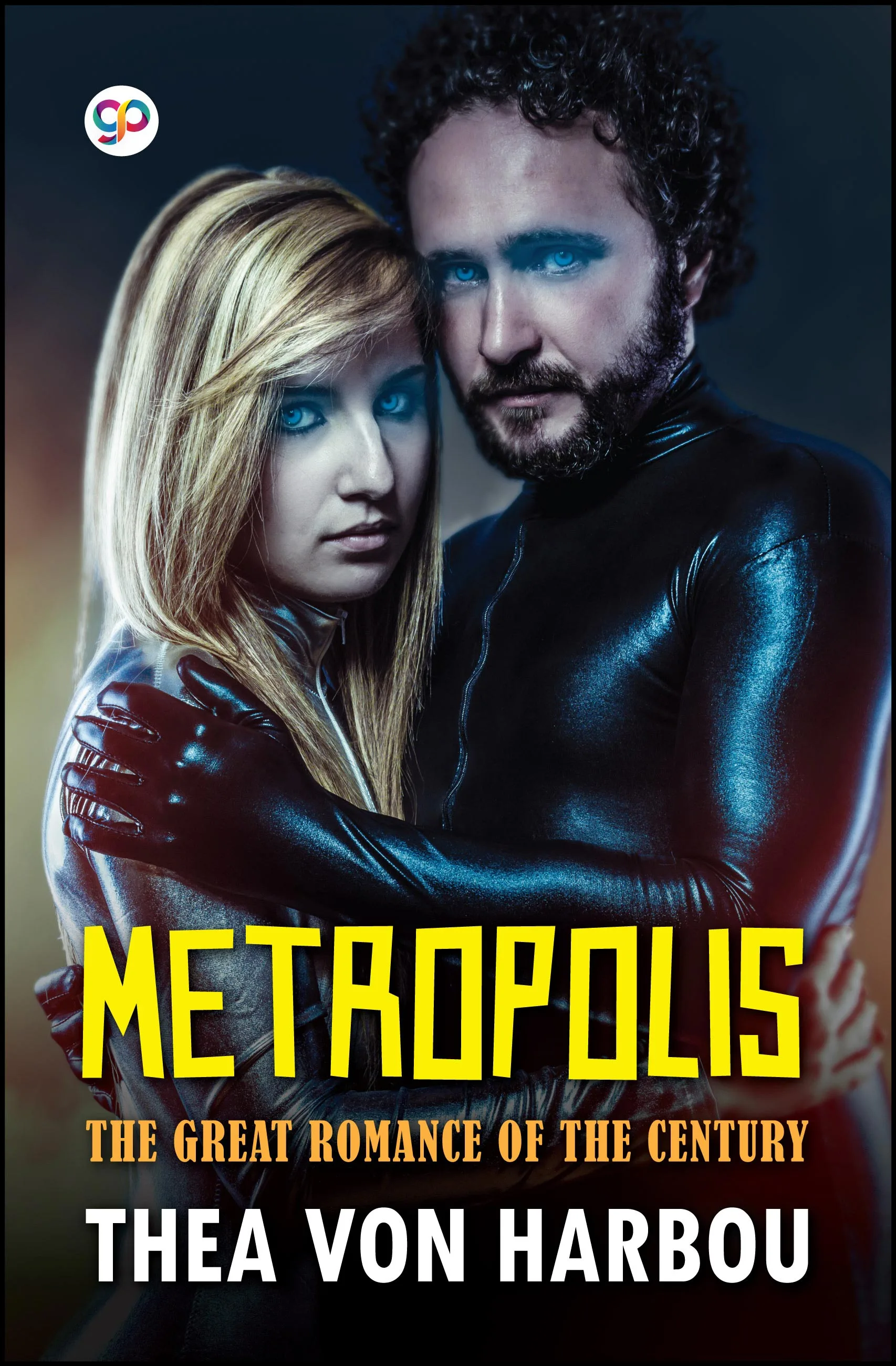
Metropolis
eBook
• INR 99.00
• English
• 9789354995651
No ratings yet
| Publisher | General Press |
|---|---|
| ISBN13 | 9789354995651 |
| ASIN/SKU | B0BWDV2HZZ |
| Book Format | eBook |
| Language | English |
| List Price | INR 99.00 |
| Subject Code | FIC055000 |
| Publishing Date | 01/03/2023 |
| Book Code | BD00069026 |
Buy this Book
Amazon Stores
Ebook Stores
Other Stores
Discover Metropolis by Thea von Harbou. This book is published by General Press in eBook format, ISBN 9789354995651, ASIN B0BWDV2HZZ, under Science Fiction and Fantasy, Dystopia, Fantasy.
Book Description
This city of the future encompasses two worlds: that of the hedonistic ruling class and that of a segregated subculture, toilers in a mechanized underworld who labor to provide the rich with their pleasures. When a charismatic leader arises, she seeks a savior to unite the disparate social orders. "Between the brain that plans and the hands that build," she declares, "there must be a mediator—the heart."
Thea von Harbou, creator of the screenplay for Fritz Lang's iconic 1927 film, wrote this novel to expand upon the movie's ideas and concepts. Vivid in description, rich in characterization and symbolism, the story draws upon ancient myths to form a compelling vision of the future. Noted science-fiction authority Forrest J. Ackerman hailed the book as "a work of genius," and a century after its initial publication Metropolis continues to captivate readers.
Thea von Harbou, creator of the screenplay for Fritz Lang's iconic 1927 film, wrote this novel to expand upon the movie's ideas and concepts. Vivid in description, rich in characterization and symbolism, the story draws upon ancient myths to form a compelling vision of the future. Noted science-fiction authority Forrest J. Ackerman hailed the book as "a work of genius," and a century after its initial publication Metropolis continues to captivate readers.
Author Biography
Thea von Harbou (1888–1954) was a German novelist, screenwriter, actress, and one of the most influential storytellers of early cinema. Best known for co-writing the screenplay for Metropolis, one of the greatest science fiction films ever made, she played a significant role in shaping German literature and filmmaking during the first half of the twentieth century. Her stories blended fantasy, technology, romance, and social themes, leaving a lasting impact on the development of cinematic science fiction.
She was born Thea Gabriele von Harbou on December 27, 1888, in Tauperlitz, Bavaria, Germany, into an aristocratic family. From an early age, she displayed remarkable literary talent, writing poems and stories while still a child. She received a broad education that included languages, music, and the arts, preparing her for a creative career. Before becoming a full-time writer, she also worked as an actress, gaining valuable experience in the performing arts.
Von Harbou first achieved recognition as a novelist, but the rapidly growing German film industry soon attracted her attention. During the 1920s, she became one of Germany's leading screenwriters and collaborated closely with the celebrated film director Fritz Lang, whom she later married. Together, they created several landmark films, including Dr. Mabuse, the Gambler, Die Nibelungen, Metropolis, Spies, and Woman in the Moon. Their partnership combined Lang's visual imagination with von Harbou's compelling narratives, producing works that remain classics of world cinema.
Among her literary achievements, Metropolis, published as a novel shortly before the film's release in 1927, became her most famous work. Its vision of a futuristic city divided by class conflict explored themes of technology, power, and social justice. The novel and film have influenced generations of writers, filmmakers, and artists, establishing von Harbou as an important pioneer of science fiction.
The later years of her life remain the subject of historical discussion because of her decision to remain in Germany during the Nazi era and her association with official cultural institutions of the period. While these choices have complicated her legacy, scholars continue to distinguish her significant artistic contributions from the political controversies surrounding her career.
Thea von Harbou died on July 1, 1954, in Berlin. Today, she is remembered as a gifted novelist and visionary screenwriter whose imagination helped shape modern science fiction and the history of international cinema.
She was born Thea Gabriele von Harbou on December 27, 1888, in Tauperlitz, Bavaria, Germany, into an aristocratic family. From an early age, she displayed remarkable literary talent, writing poems and stories while still a child. She received a broad education that included languages, music, and the arts, preparing her for a creative career. Before becoming a full-time writer, she also worked as an actress, gaining valuable experience in the performing arts.
Von Harbou first achieved recognition as a novelist, but the rapidly growing German film industry soon attracted her attention. During the 1920s, she became one of Germany's leading screenwriters and collaborated closely with the celebrated film director Fritz Lang, whom she later married. Together, they created several landmark films, including Dr. Mabuse, the Gambler, Die Nibelungen, Metropolis, Spies, and Woman in the Moon. Their partnership combined Lang's visual imagination with von Harbou's compelling narratives, producing works that remain classics of world cinema.
Among her literary achievements, Metropolis, published as a novel shortly before the film's release in 1927, became her most famous work. Its vision of a futuristic city divided by class conflict explored themes of technology, power, and social justice. The novel and film have influenced generations of writers, filmmakers, and artists, establishing von Harbou as an important pioneer of science fiction.
The later years of her life remain the subject of historical discussion because of her decision to remain in Germany during the Nazi era and her association with official cultural institutions of the period. While these choices have complicated her legacy, scholars continue to distinguish her significant artistic contributions from the political controversies surrounding her career.
Thea von Harbou died on July 1, 1954, in Berlin. Today, she is remembered as a gifted novelist and visionary screenwriter whose imagination helped shape modern science fiction and the history of international cinema.
Editorial Reviews
Editorial Reviews will be added soon…
Book Summary
Book Summary will be added soon…
Sample Chapters
Sample Chapters will be added soon…
Reader Reviews
No reviews yet.
Metropolis