
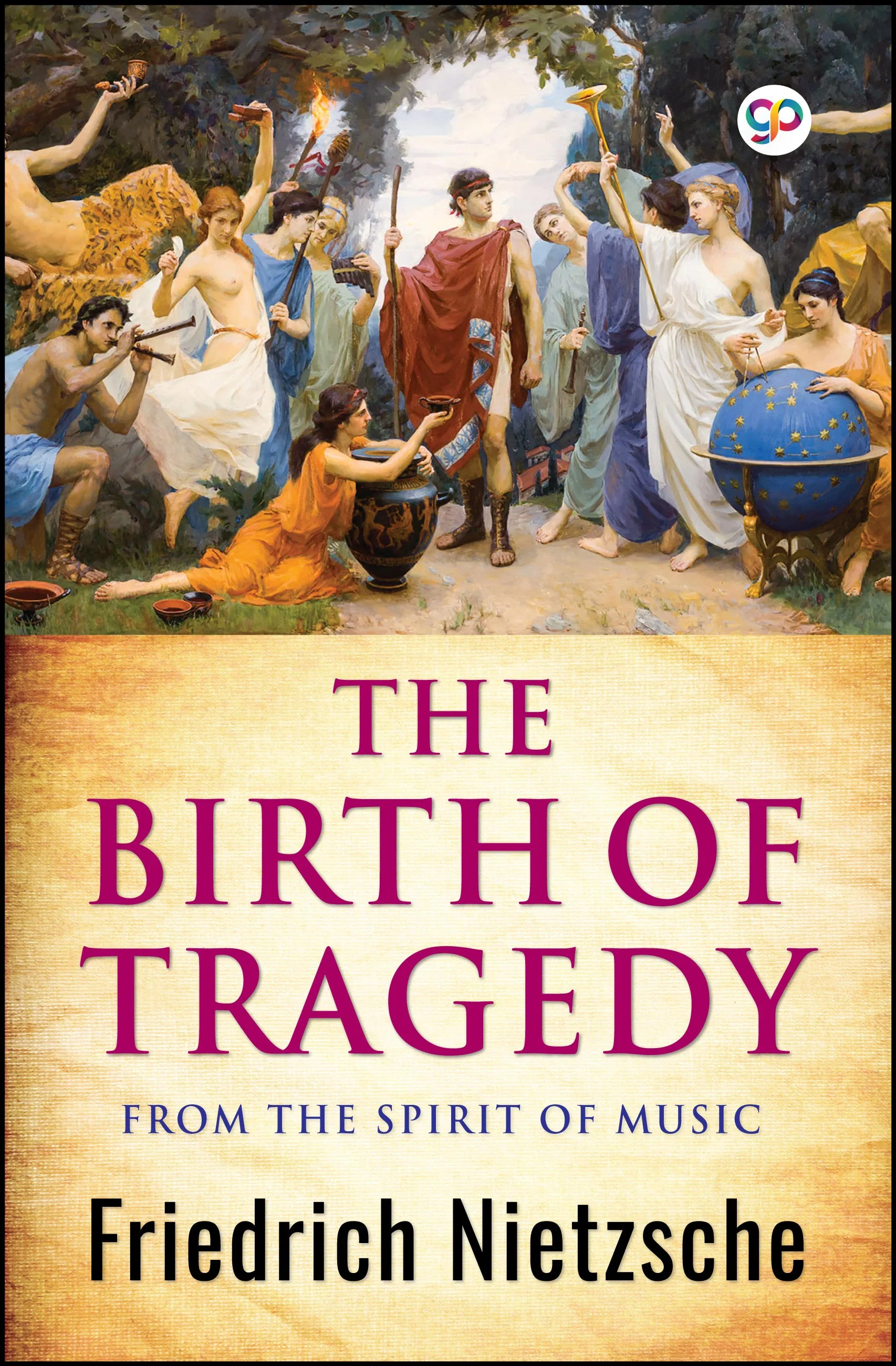
The Birth of Tragedy
eBook
• INR 99.00
• English
• 9789354997181
No ratings yet
| Publisher | General Press |
|---|---|
| ISBN13 | 9789354997181 |
| ASIN/SKU | B0BYZG442P |
| Book Format | eBook |
| Language | English |
| List Price | INR 99.00 |
| Subject Code | PHI001000 |
| Publishing Date | 24/03/2023 |
| Book Code | BD00069062 |
Buy this Book
Amazon Stores
Ebook Stores
Other Stores
Discover The Birth of Tragedy by Friedrich Nietzsche. This book is published by General Press in eBook format, ISBN 9789354997181, ASIN B0BYZG442P, under Non Fiction, Philosophy.
Book Description
A compelling argument for the necessity for art in life, Nietzsche's first book, ‘The Birth of Tragedy’ is fuelled by his enthusiasm for Greek tragedy, for the philosophy of Schopenhauer, and for the music of Wagner, to whom this work was dedicated.
Nietzsche outlined a distinction between its two central forces: the Apolline, representing beauty and order, and the Dionysiac, a primal or ecstatic reaction to the sublime. He believed the combination of these states produced the highest forms of music and tragic drama, which not only reveal the truth about suffering in life but also provide consolation. Impassioned and exhilarating in its conviction, it has become a key text in European culture and literary criticism.
"What does our great historical hunger signify, our clutching about us of countless cultures, our consuming desire for knowledge, if not the loss of myth, of a mythic home, the mythic womb?"
— Friedrich Nietzsche (The Birth of Tragedy)
Nietzsche outlined a distinction between its two central forces: the Apolline, representing beauty and order, and the Dionysiac, a primal or ecstatic reaction to the sublime. He believed the combination of these states produced the highest forms of music and tragic drama, which not only reveal the truth about suffering in life but also provide consolation. Impassioned and exhilarating in its conviction, it has become a key text in European culture and literary criticism.
"What does our great historical hunger signify, our clutching about us of countless cultures, our consuming desire for knowledge, if not the loss of myth, of a mythic home, the mythic womb?"
— Friedrich Nietzsche (The Birth of Tragedy)
Author Biography
Friedrich Wilhelm Nietzsche (1844–1900) was a profound and highly provocative German philosopher, cultural critic, and classical scholar whose ideas radically reshaped modern intellectual history. Born in the Prussian Province of Saxony, he initially studied theology and classical philology. In 1869, at the exceptionally young age of 24, he was appointed to the Chair of Classical Philology at the University of Basel in Switzerland, though severe health issues forced his early resignation a decade later.
For the next ten years, Nietzsche lived a nomadic existence across Europe, battling chronic illness while producing his most revolutionary writings. His work famously declared that "God is dead," a diagnostic statement regarding the collapse of traditional religious frameworks in the wake of the Enlightenment. To combat the ensuing threat of nihilism, Nietzsche introduced concepts like the Übermensch (Overman), who creates his own values, and the "Will to Power," a fundamental drive for self-overcoming and creative excellence.
Writing in a fiercely independent and aphoristic style, he authored several monumental texts, including Thus Spoke Zarathustra and Beyond Good and Evil. He rigorously challenged traditional Christian morality and the philosophical dogmas of his time, urging individuals to embrace life in its entirety and affirm human existence without relying on otherworldly comforts.
In 1889, Nietzsche suffered a total mental collapse in Turin, Italy, spending his final eleven years completely incapacitated. During this time, his sister, Elisabeth, gained control of his unpublished manuscripts and severely manipulated his work to align with German nationalist and anti-Semitic ideologies—views Nietzsche himself vehemently despised.
It took decades for scholars to rehabilitate his true legacy, rightfully restoring him as a visionary thinker who profoundly influenced existentialism, psychoanalysis, and modern literature.
For the next ten years, Nietzsche lived a nomadic existence across Europe, battling chronic illness while producing his most revolutionary writings. His work famously declared that "God is dead," a diagnostic statement regarding the collapse of traditional religious frameworks in the wake of the Enlightenment. To combat the ensuing threat of nihilism, Nietzsche introduced concepts like the Übermensch (Overman), who creates his own values, and the "Will to Power," a fundamental drive for self-overcoming and creative excellence.
Writing in a fiercely independent and aphoristic style, he authored several monumental texts, including Thus Spoke Zarathustra and Beyond Good and Evil. He rigorously challenged traditional Christian morality and the philosophical dogmas of his time, urging individuals to embrace life in its entirety and affirm human existence without relying on otherworldly comforts.
In 1889, Nietzsche suffered a total mental collapse in Turin, Italy, spending his final eleven years completely incapacitated. During this time, his sister, Elisabeth, gained control of his unpublished manuscripts and severely manipulated his work to align with German nationalist and anti-Semitic ideologies—views Nietzsche himself vehemently despised.
It took decades for scholars to rehabilitate his true legacy, rightfully restoring him as a visionary thinker who profoundly influenced existentialism, psychoanalysis, and modern literature.
Editorial Reviews
Editorial Reviews will be added soon…
Book Summary
Book Summary will be added soon…
Sample Chapters
Sample Chapters will be added soon…
Reader Reviews
No reviews yet.
The Birth of Tragedy
Download Cover Image
Do you want to download the full cover image for The Birth of Tragedy?