
The Poems of Emily Dickinson
eBook
• INR 99.00
• English
• 9789354994180
No ratings yet
| Publisher | General Press |
|---|---|
| ISBN13 | 9789354994180 |
| ASIN/SKU | B0BBRP6Y89 |
| Book Format | eBook |
| Language | English |
| List Price | INR 99.00 |
| Subject Code | POE024000 |
| Publishing Date | 05/09/2022 |
| Book Code | BD00069064 |
Buy this Book
Amazon Stores
Ebook Stores
Other Stores
Discover The Poems of Emily Dickinson by Emily Dickinson. This book is published by General Press in eBook format, ISBN 9789354994180, ASIN B0BBRP6Y89, under Literature and Fiction, Poetry.
Book Description
Emily Dickinson (1830-1886) was an American poet who wrote an astonishing amount of poems. She was a solitary and extremely private poet, who saw only a few of her poems published during her life. After discovering a trove of manuscripts left in a wooden box, Dickinson’s sister Lavinia, fortunately, chose to violate Emily’s wishes for her work to be burned after death. With the help of Amherst professors, Lavinia brought her sister’s gifted verse into print.
This brings together the first three series of her posthumous publications which debuted respectively in 1890, 1891, and 1896. It is here in this collection that we witness her poetic depth and range of style. These poems examine love, death, and nature with an effortless yet complex tone and voice. Dickinson’s idiom is as varied as her meter, and her unconventional use of punctuation, metaphor, and image make her an innovator of the lyric akin to many of the early modernists.
This brings together the first three series of her posthumous publications which debuted respectively in 1890, 1891, and 1896. It is here in this collection that we witness her poetic depth and range of style. These poems examine love, death, and nature with an effortless yet complex tone and voice. Dickinson’s idiom is as varied as her meter, and her unconventional use of punctuation, metaphor, and image make her an innovator of the lyric akin to many of the early modernists.
Author Biography
Emily Dickinson (1830–1886) was an American poet whose deeply original and introspective verse transformed the landscape of English-language poetry. Although only a handful of her poems were published during her lifetime, she is now regarded as one of the greatest poets in American literary history. Her works explore themes of love, nature, death, faith, immortality, and the mysteries of the human soul with remarkable emotional depth and linguistic innovation. Dickinson's unique voice, characterized by concise language, vivid imagery, and unconventional style, continues to inspire readers and writers around the world.
Dickinson was born on December 10, 1830, in Amherst, Massachusetts, into a respected and influential family. Her father, Edward Dickinson, was a lawyer, politician, and trustee of Amherst College, while her mother, Emily Norcross Dickinson, managed the family home. Emily received an excellent education at Amherst Academy and later attended Mount Holyoke Female Seminary for a short period. From an early age, she demonstrated an extraordinary love of reading and developed a deep interest in literature, science, philosophy, and religion.
As she grew older, Dickinson gradually withdrew from public life, spending much of her time at the family home in Amherst. Despite her increasingly private lifestyle, she maintained an active intellectual life through extensive reading and thoughtful correspondence with family members, friends, and fellow writers. During these years, she wrote nearly 1,800 poems, carefully preserving them in handwritten booklets. Her poetry challenged conventional forms through the use of short lines, slant rhyme, dashes, and unexpected rhythms, techniques that were far ahead of her time.
Dickinson's work often reflected her profound curiosity about existence and the inner life. Poems such as "Because I could not stop for Death," "Hope is the thing with feathers," and "I'm Nobody! Who are you?" have become enduring classics, admired for their emotional power and philosophical insight. Following her death, her sister Lavinia discovered the large collection of unpublished poems, leading to their gradual publication and growing recognition.
Emily Dickinson passed away on May 15, 1886, leaving behind one of the richest poetic legacies in American literature. Today, she is celebrated for her originality, intellectual courage, and extraordinary ability to express universal human emotions in a few carefully chosen words. Her timeless poetry continues to captivate readers, offering fresh meaning and inspiration with every generation.
Dickinson was born on December 10, 1830, in Amherst, Massachusetts, into a respected and influential family. Her father, Edward Dickinson, was a lawyer, politician, and trustee of Amherst College, while her mother, Emily Norcross Dickinson, managed the family home. Emily received an excellent education at Amherst Academy and later attended Mount Holyoke Female Seminary for a short period. From an early age, she demonstrated an extraordinary love of reading and developed a deep interest in literature, science, philosophy, and religion.
As she grew older, Dickinson gradually withdrew from public life, spending much of her time at the family home in Amherst. Despite her increasingly private lifestyle, she maintained an active intellectual life through extensive reading and thoughtful correspondence with family members, friends, and fellow writers. During these years, she wrote nearly 1,800 poems, carefully preserving them in handwritten booklets. Her poetry challenged conventional forms through the use of short lines, slant rhyme, dashes, and unexpected rhythms, techniques that were far ahead of her time.
Dickinson's work often reflected her profound curiosity about existence and the inner life. Poems such as "Because I could not stop for Death," "Hope is the thing with feathers," and "I'm Nobody! Who are you?" have become enduring classics, admired for their emotional power and philosophical insight. Following her death, her sister Lavinia discovered the large collection of unpublished poems, leading to their gradual publication and growing recognition.
Emily Dickinson passed away on May 15, 1886, leaving behind one of the richest poetic legacies in American literature. Today, she is celebrated for her originality, intellectual courage, and extraordinary ability to express universal human emotions in a few carefully chosen words. Her timeless poetry continues to captivate readers, offering fresh meaning and inspiration with every generation.
Editorial Reviews
Editorial Reviews will be added soon…
Book Summary
Book Summary will be added soon…
Sample Chapters
Sample Chapters will be added soon…
Reader Reviews
No reviews yet.
The Poems of Emily Dickinson
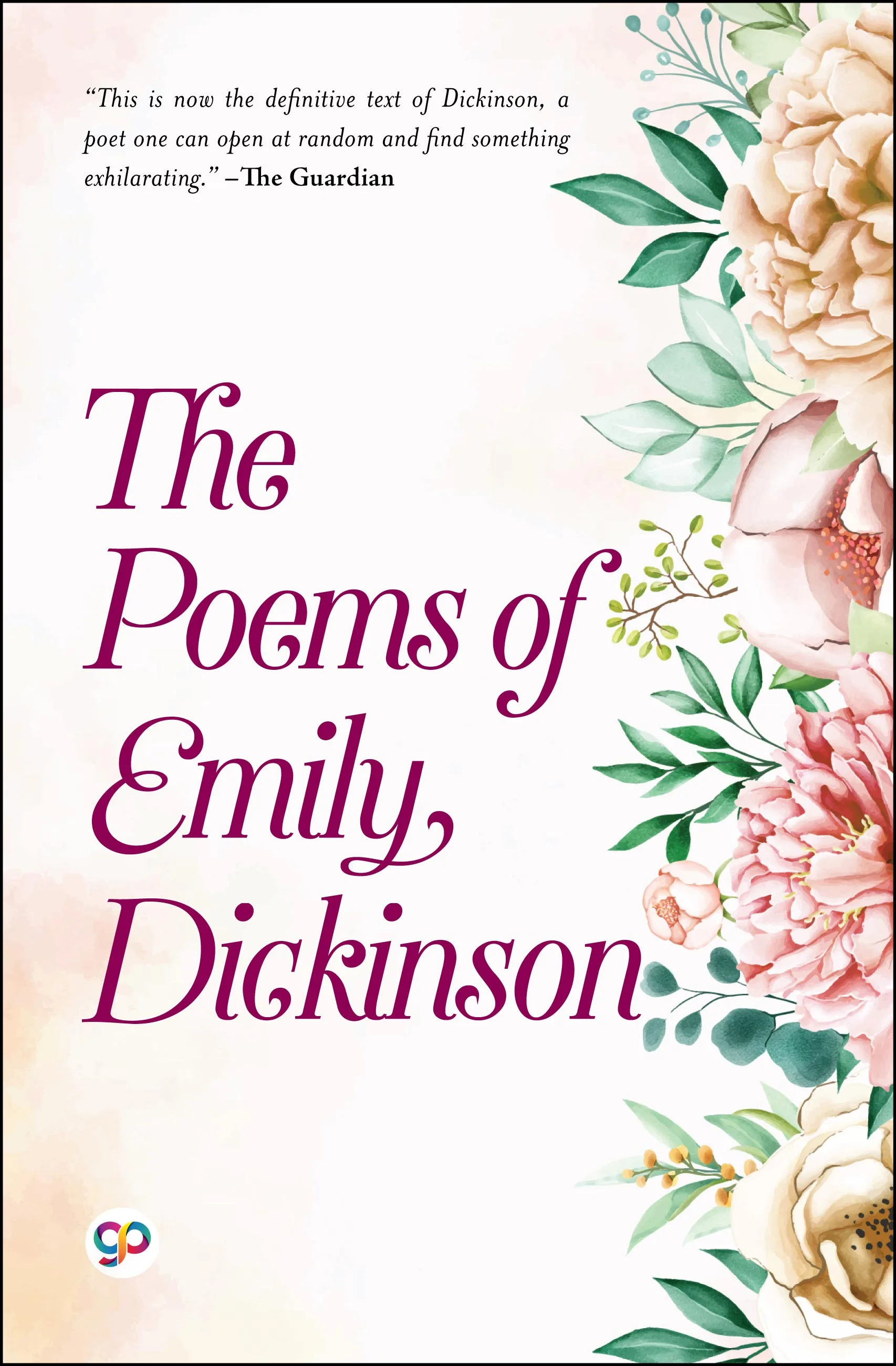
Download Cover Image
Do you want to download the full cover image for The Poems of Emily Dickinson?