
Vikram and the Vampire: Classic Hindu Tales of Adventure, Magic, and Romance
eBook
• INR 99.00
• English
• 9789354995057
No ratings yet
| Publisher | General Press |
|---|---|
| ISBN13 | 9789354995057 |
| ASIN/SKU | B0BCVS3S4Q |
| Book Format | eBook |
| Language | English |
| List Price | INR 99.00 |
| Subject Code | YAF021000, FIC012000 |
| Publishing Date | 12/09/2022 |
| Book Code | BD00069100 |
Buy this Book
Amazon Stores
Ebook Stores
Other Stores
Discover Vikram and the Vampire: Classic Hindu Tales of Adventure, Magic, and Romance by Sir Richard Francis Burton. This book is published by General Press in eBook format, ISBN 9789354995057, ASIN B0BCVS3S4Q, under Religion and Spirituality, Hinduism.
Book Description
First published in 1870, ‘Vikram and the Vampire: Classic Hindu Tales of Adventure, Magic, and Romance’ by Richard Francis Sir Burton, a British explorer, writer, scholar, and soldier. He was famed for his travels and explorations in Asia, Africa, and the Americas, as well as his extraordinary knowledge of languages and cultures.
The Baital-Pachisi or Twenty-five Tales of a Baital is the history of a huge Bat, Vampire, or Evil Spirit which inhabited and animated dead bodies. It is an old, and thoroughly Hindu, Legend composed in Sanskrit and is the germ that culminated in the Arabian Nights, and which inspired the ‘Golden Ass’ of Apuleius, Boccacio’s ‘Decamerone,’ the ‘Pentamerone,’ and all that class of facetious fictitious literature.
The Baital-Pachisi or Twenty-five Tales of a Baital is the history of a huge Bat, Vampire, or Evil Spirit which inhabited and animated dead bodies. It is an old, and thoroughly Hindu, Legend composed in Sanskrit and is the germ that culminated in the Arabian Nights, and which inspired the ‘Golden Ass’ of Apuleius, Boccacio’s ‘Decamerone,’ the ‘Pentamerone,’ and all that class of facetious fictitious literature.
Author Biography
Sir Richard Francis Burton (1821–1890) was one of the most remarkable explorers, scholars, linguists, soldiers, and writers of the Victorian era. Renowned for his fearless travels, extraordinary command of languages, and deep interest in world cultures, Burton devoted his life to exploring places that were little known to Europeans. His adventurous spirit and scholarly curiosity made him one of the nineteenth century's greatest travelers and one of its most fascinating literary figures.
Burton was born on March 19, 1821, in Torquay, Devon, England. Because of his father's military career, he spent much of his childhood traveling across Europe, becoming fluent in several languages at an early age. He later studied at Trinity College, Oxford, but left without completing his degree. Instead, he joined the British East India Company and was posted to India, where he immersed himself in local languages, customs, and religions. Over the course of his life, Burton is believed to have spoken or studied more than two dozen languages and numerous regional dialects.
His greatest fame came through his daring expeditions. In 1853, disguised as a Muslim pilgrim, Burton successfully traveled to the holy cities of Mecca and Medina, becoming one of the first Europeans known to complete the pilgrimage and document the experience in detail. A few years later, he joined John Hanning Speke on an expedition to East Africa in search of the source of the Nile. Although their journey produced valuable geographical discoveries, it also led to a famous disagreement between the two explorers over the river's true source.
Beyond exploration, Burton was a prolific writer and translator. He produced travel books, ethnographic studies, and translations of important literary works, including The Arabian Nights, The Kama Sutra, and The Perfumed Garden. His translations were admired for their richness and scholarship, though some were considered controversial in Victorian society because of their frank treatment of sexuality and cultural practices.
Sir Richard Francis Burton died on October 20, 1890, in Trieste, then part of Austria-Hungary. Today, he is remembered as one of history's greatest explorers and cross-cultural scholars. His writings remain valuable records of the people, languages, and traditions he encountered, reflecting a lifelong commitment to understanding the diversity of human civilization with remarkable curiosity and intellectual courage.
Burton was born on March 19, 1821, in Torquay, Devon, England. Because of his father's military career, he spent much of his childhood traveling across Europe, becoming fluent in several languages at an early age. He later studied at Trinity College, Oxford, but left without completing his degree. Instead, he joined the British East India Company and was posted to India, where he immersed himself in local languages, customs, and religions. Over the course of his life, Burton is believed to have spoken or studied more than two dozen languages and numerous regional dialects.
His greatest fame came through his daring expeditions. In 1853, disguised as a Muslim pilgrim, Burton successfully traveled to the holy cities of Mecca and Medina, becoming one of the first Europeans known to complete the pilgrimage and document the experience in detail. A few years later, he joined John Hanning Speke on an expedition to East Africa in search of the source of the Nile. Although their journey produced valuable geographical discoveries, it also led to a famous disagreement between the two explorers over the river's true source.
Beyond exploration, Burton was a prolific writer and translator. He produced travel books, ethnographic studies, and translations of important literary works, including The Arabian Nights, The Kama Sutra, and The Perfumed Garden. His translations were admired for their richness and scholarship, though some were considered controversial in Victorian society because of their frank treatment of sexuality and cultural practices.
Sir Richard Francis Burton died on October 20, 1890, in Trieste, then part of Austria-Hungary. Today, he is remembered as one of history's greatest explorers and cross-cultural scholars. His writings remain valuable records of the people, languages, and traditions he encountered, reflecting a lifelong commitment to understanding the diversity of human civilization with remarkable curiosity and intellectual courage.
Editorial Reviews
Editorial Reviews will be added soon…
Book Summary
Book Summary will be added soon…
Sample Chapters
Sample Chapters will be added soon…
Reader Reviews
No reviews yet.
Vikram and the Vampire: Classic Hindu Tales of Adventure, Magic, and Romance
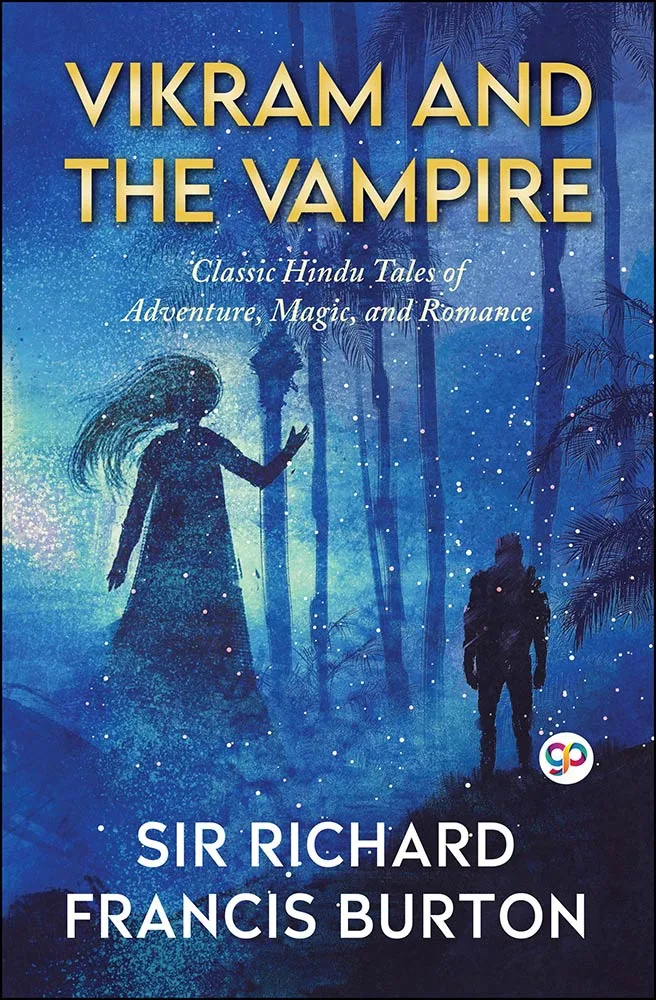
Download Cover Image
Do you want to download the full cover image for Vikram and the Vampire: Classic Hindu Tales of Adventure, Magic, and Romance?