
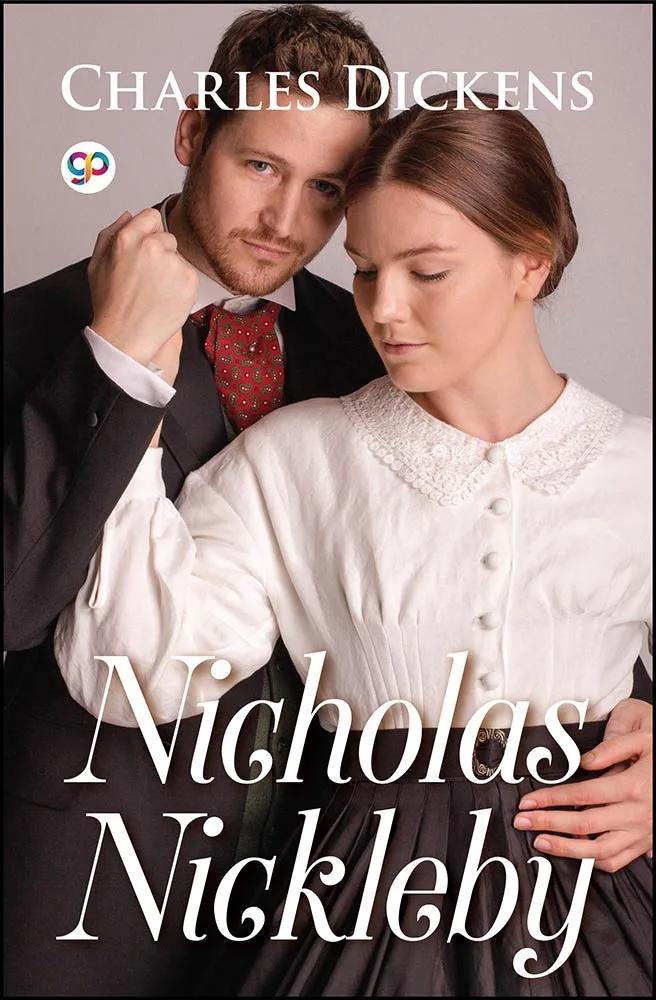
Nicholas Nickleby
eBook
• INR 99.00
• English
• 9788198859662
No ratings yet
| Publisher | General Press |
|---|---|
| ISBN13 | 9788198859662 |
| ASIN/SKU | B0G1BWPDP9 |
| Book Format | eBook |
| Language | English |
| List Price | INR 99.00 |
| Subject Code | FIC004000, FIC019000, FIC014000 |
| Book Code | BD00069102 |
Buy this Book
Amazon Stores
Ebook Stores
Other Stores
Discover Nicholas Nickleby by Charles Dickens. This book is published by General Press in eBook format, ISBN 9788198859662, ASIN B0G1BWPDP9, under Literature and Fiction, Classics, Historical Fiction.
Book Description
First published in 1838–1839, 'Nicholas Nickleby' is a stirring tale of courage, compassion, and justice in Victorian England. After the death of his father, young Nicholas Nickleby is forced to support his mother and sister. Seeking help from his cold-hearted uncle, Ralph Nickleby, Nicholas is sent to a harsh Yorkshire boarding school run by the cruel Wackford Squeers.
Witnessing the abuse of vulnerable boys, Nicholas rebels and escapes, beginning a journey filled with trials, unlikely friendships, and moments of deep humanity. As he navigates a world rife with greed and cruelty, Nicholas becomes a defender of the downtrodden and a symbol of hope for those suffering under unjust circumstances.
With a vibrant cast of characters—both villainous and virtuous—Charles Dickens combines biting satire, heartfelt emotion, and social critique to expose the failings of institutions and the resilience of the human spirit. 'Nicholas Nickleby' is a classic Dickensian adventure, brimming with drama and moral triumph.
Witnessing the abuse of vulnerable boys, Nicholas rebels and escapes, beginning a journey filled with trials, unlikely friendships, and moments of deep humanity. As he navigates a world rife with greed and cruelty, Nicholas becomes a defender of the downtrodden and a symbol of hope for those suffering under unjust circumstances.
With a vibrant cast of characters—both villainous and virtuous—Charles Dickens combines biting satire, heartfelt emotion, and social critique to expose the failings of institutions and the resilience of the human spirit. 'Nicholas Nickleby' is a classic Dickensian adventure, brimming with drama and moral triumph.
Author Biography
Charles Dickens (7 February 1812 – 9 June 1870) was an English writer and social critic. He created some of the world's best-known fictional characters and is regarded as the greatest novelist of the Victorian era. His works enjoyed unprecedented popularity during his lifetime, and by the twentieth century critics and scholars had recognised him as a literary genius. His novels and short stories enjoy lasting popularity.
The second of eight children, he grew up in a family frequently beset by financial insecurity. At age eleven, Dickens was taken out of school and sent to work in London backing warehouse, where his job was to paste labels on bottles for six shillings a week. His father John Dickens, was a warmhearted but improvident man. When he was condemned the Marshela Prison for unpaid debts, he unwisely agreed that Charles should stay in lodgings and continue working while the rest of the family joined him in jail. This three-month separation caused Charles much pain; his experiences as a child alone in a huge city—cold, isolated with barely enough to eat—haunted him for the rest of his life.
When the family fortunes improved, Charles went back to school, after which he became an office boy, a freelance reporter and finally an author. With Pickwick Papers (1836-7) he achieved immediate fame; in a few years he was easily the most popular and respected writer of his time. It has been estimated that one out of every ten persons in Victorian England was a Dickens reader. Oliver Twist (1837), Nicholas Nickleby (1838-9) and The Old Curiosity Shop (1840-41) were huge successes. Martin Chuzzlewit (1843-4) was less so, but Dickens followed it with his unforgettable, A Christmas Carol (1843), Bleak House (1852-3), Hard Times (1854) and Little Dorrit (1855-7) reveal his deepening concern for the injustices of British Society. A Tale of Two Cities (1859), Great Expectations (1860-1) and Our Mutual Friend (1864-5) complete his major works.
Dickens's marriage to Catherine Hoggarth produced ten children but ended in separation in 1858. In that year he began a series of exhausting public readings; his health gradually declined. After putting in a full day's work at his home at Gads Hill, Kent on June 8, 1870, Dickens suffered a stroke, and he died the following day.
He was a sympathiser with the poor, the suffering, and the oppressed; and by his death, one of England's greatest writers is lost to the world.
The second of eight children, he grew up in a family frequently beset by financial insecurity. At age eleven, Dickens was taken out of school and sent to work in London backing warehouse, where his job was to paste labels on bottles for six shillings a week. His father John Dickens, was a warmhearted but improvident man. When he was condemned the Marshela Prison for unpaid debts, he unwisely agreed that Charles should stay in lodgings and continue working while the rest of the family joined him in jail. This three-month separation caused Charles much pain; his experiences as a child alone in a huge city—cold, isolated with barely enough to eat—haunted him for the rest of his life.
When the family fortunes improved, Charles went back to school, after which he became an office boy, a freelance reporter and finally an author. With Pickwick Papers (1836-7) he achieved immediate fame; in a few years he was easily the most popular and respected writer of his time. It has been estimated that one out of every ten persons in Victorian England was a Dickens reader. Oliver Twist (1837), Nicholas Nickleby (1838-9) and The Old Curiosity Shop (1840-41) were huge successes. Martin Chuzzlewit (1843-4) was less so, but Dickens followed it with his unforgettable, A Christmas Carol (1843), Bleak House (1852-3), Hard Times (1854) and Little Dorrit (1855-7) reveal his deepening concern for the injustices of British Society. A Tale of Two Cities (1859), Great Expectations (1860-1) and Our Mutual Friend (1864-5) complete his major works.
Dickens's marriage to Catherine Hoggarth produced ten children but ended in separation in 1858. In that year he began a series of exhausting public readings; his health gradually declined. After putting in a full day's work at his home at Gads Hill, Kent on June 8, 1870, Dickens suffered a stroke, and he died the following day.
He was a sympathiser with the poor, the suffering, and the oppressed; and by his death, one of England's greatest writers is lost to the world.
Editorial Reviews
Editorial Reviews will be added soon…
Book Summary
Book Summary will be added soon…
Sample Chapters
Sample Chapters will be added soon…
Reader Reviews
No reviews yet.
Nicholas Nickleby
Download Cover Image
Do you want to download the full cover image for Nicholas Nickleby?