
The Home and the World
eBook
• INR 99.00
• English
• 9789354997266
No ratings yet
| Publisher | General Press |
|---|---|
| ISBN13 | 9789354997266 |
| ASIN/SKU | B0BYZKTY1S |
| Book Format | eBook |
| Language | English |
| List Price | INR 99.00 |
| Subject Code | FIC004000 |
| Publishing Date | 24/03/2023 |
| Book Code | BD00069107 |
Buy this Book
Amazon Stores
Ebook Stores
Other Stores
Discover The Home and the World by Rabindranath Tagore. This book is published by General Press in eBook format, ISBN 9789354997266, ASIN B0BYZKTY1S, under Literature and Fiction, Classics.
Book Description
Idealistic Nikhil, a wealthy Bengali landowner, encourages Bimala, his tradition-minded wife, to venture out into the world. Bimala's gradual political awakening leads to her attraction to charismatic Sandip, a revolutionary who stops at nothing—neither robbery nor murder—to achieve his ends. Their love triangle unfolds against the backdrop of the 1905 Partition of Bengal, during India's long fight for independence from British rule. This brilliantly poetic novel explores the psychology of its three protagonists, capturing the turmoil that results when personal relationships and family life are exposed to the chaos of social and political change.
Originally written in Bengali and published in 1916, The Home and the World is the vision of Rabindranath Tagore, Asia's first Nobel laureate. The novel reflects Tagore's inner conflict between embracing modern ideas and rejecting Western domination. His vivid historical setting, realistically portrayed characters, and philosophical insights form a compelling drama of the clash between old and new, realism and idealism, and good and evil.
"To tyrannize for the country is to tyrannize over the country"
— Rabindranath Tagore (The Home and the World)
Originally written in Bengali and published in 1916, The Home and the World is the vision of Rabindranath Tagore, Asia's first Nobel laureate. The novel reflects Tagore's inner conflict between embracing modern ideas and rejecting Western domination. His vivid historical setting, realistically portrayed characters, and philosophical insights form a compelling drama of the clash between old and new, realism and idealism, and good and evil.
"To tyrannize for the country is to tyrannize over the country"
— Rabindranath Tagore (The Home and the World)
Author Biography
Rabindranath Tagore (1861-1941) was the youngest son of Debendranath Tagore, a leader of the Brahmo Samaj. He was educated at home and although at seventeen he was sent to England for formal schooling, he did not finish his studies there. In his mature years, in addition to his many-sided literary activities, he managed the family estates, a project which brought him into close touch with common humanity and increased his interest in social reforms. He also started an experimental school at Shantiniketan where he tried his Upanishadic ideals of education. From time to time he participated in the Indian nationalist movement, though in his own non-sentimental and visionary way; and Gandhi, the political father of modern India, was his devoted friend. Tagore was knighted by the ruling British Government in 1915, but within a few years he resigned the honour as a protest against British policies in India.
Tagore had early success as a writer in his native Bengal. With his translations of some of his poems he became rapidly known in the West. In fact, his fame attained a luminous height, taking him across continents on lecture tours and tours of friendship. For the world he became the voice of India's spiritual heritage; and for India, especially for Bengal, he became a great living institution.
Although, Tagore wrote successfully in all literary genres, he was first of all a poet. Among his fifty and odd volumes of poetry are Manasi (1890) {The Ideal One}, Sonar Tari (1894) {The Golden Boat}, Gitanjali (1910) {Song Offerings}, Gitimalya (1914) {Wreath of Songs}, and Balaka (1916) {The Flight of Cranes}. The English renderings of his poetry, which include The Gardener (1913), Fruit-Gathering (1916), and The Fugitive (1921), do not generally correspond to particular volumes in the original Bengali; and in spite of its title, Gitanjali: Song Offerings (1912), the most acclaimed of them, contains poems from other works besides its namesake. Tagore’s major plays are Raja (1910) {The King of the Dark Chamber}, Dakghar (1912) {The Post Office}, Achalayatan (1912) {The Immovable}, Muktadhara (1922) {The Waterfall}, and Raktakaravi (1926) {Red Oleanders}. He is the author of several volumes of short stories and a number of novels, among them Gora (1910), Ghare-Baire (1916) {The Home and the World}, and Yogayog (1929) {Crosscurrents}. Besides these, he wrote musical dramas, dance dramas, essays of all types, travel diaries, and two autobiographies, one in his middle years and the other shortly before his death in 1941. Tagore also left numerous drawings and paintings, and songs for which he wrote the music himself.
Tagore had early success as a writer in his native Bengal. With his translations of some of his poems he became rapidly known in the West. In fact, his fame attained a luminous height, taking him across continents on lecture tours and tours of friendship. For the world he became the voice of India's spiritual heritage; and for India, especially for Bengal, he became a great living institution.
Although, Tagore wrote successfully in all literary genres, he was first of all a poet. Among his fifty and odd volumes of poetry are Manasi (1890) {The Ideal One}, Sonar Tari (1894) {The Golden Boat}, Gitanjali (1910) {Song Offerings}, Gitimalya (1914) {Wreath of Songs}, and Balaka (1916) {The Flight of Cranes}. The English renderings of his poetry, which include The Gardener (1913), Fruit-Gathering (1916), and The Fugitive (1921), do not generally correspond to particular volumes in the original Bengali; and in spite of its title, Gitanjali: Song Offerings (1912), the most acclaimed of them, contains poems from other works besides its namesake. Tagore’s major plays are Raja (1910) {The King of the Dark Chamber}, Dakghar (1912) {The Post Office}, Achalayatan (1912) {The Immovable}, Muktadhara (1922) {The Waterfall}, and Raktakaravi (1926) {Red Oleanders}. He is the author of several volumes of short stories and a number of novels, among them Gora (1910), Ghare-Baire (1916) {The Home and the World}, and Yogayog (1929) {Crosscurrents}. Besides these, he wrote musical dramas, dance dramas, essays of all types, travel diaries, and two autobiographies, one in his middle years and the other shortly before his death in 1941. Tagore also left numerous drawings and paintings, and songs for which he wrote the music himself.
Editorial Reviews
Editorial Reviews will be added soon…
Book Summary
Book Summary will be added soon…
Sample Chapters
Sample Chapters will be added soon…
Reader Reviews
No reviews yet.
The Home and the World
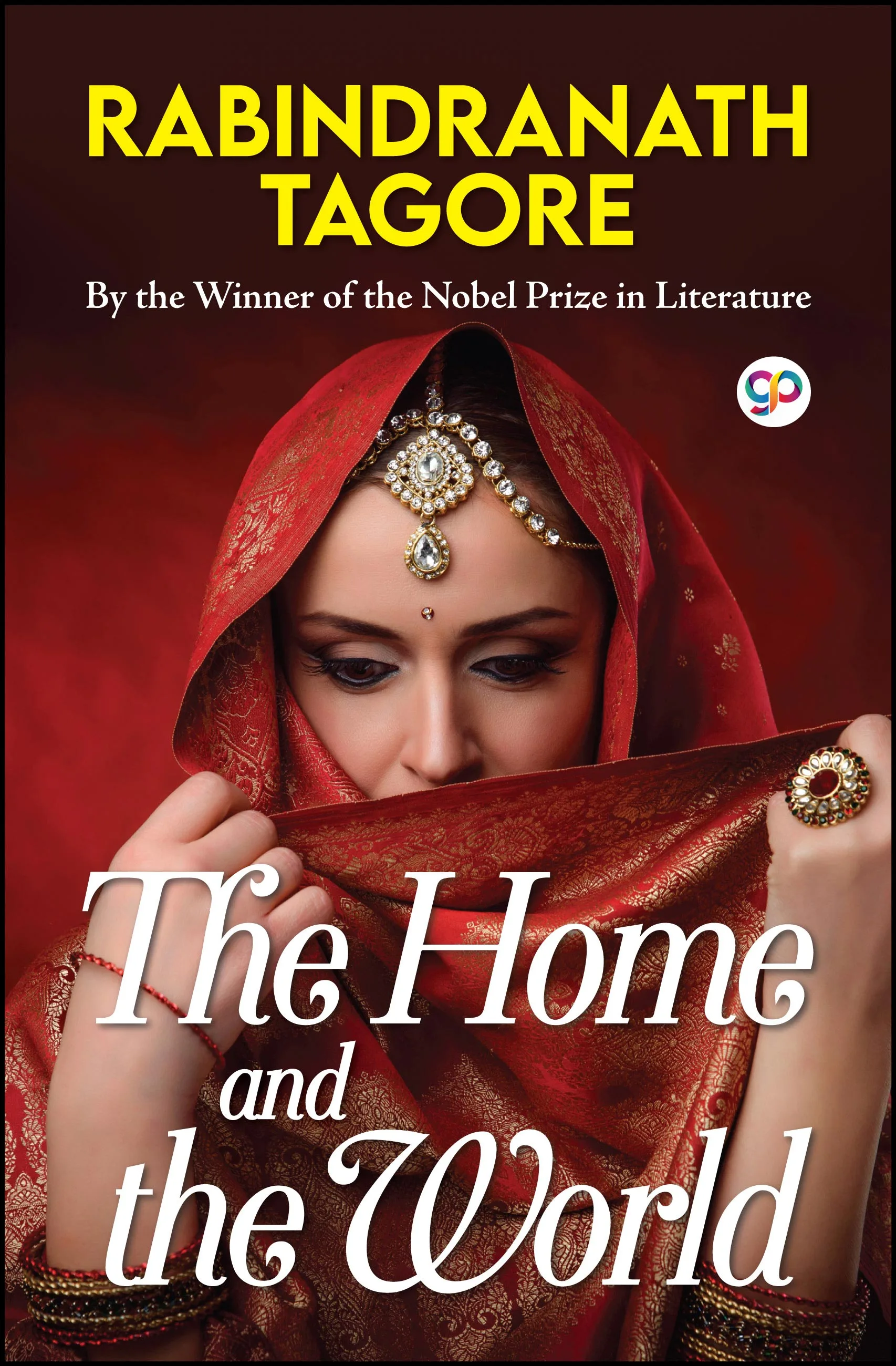
Download Cover Image
Do you want to download the full cover image for The Home and the World?