
The House of the Vampire
eBook
• INR 99.00
• English
• 9789354995033
No ratings yet
| Publisher | General Press |
|---|---|
| ISBN13 | 9789354995033 |
| ASIN/SKU | B0BCVSWXFT |
| Book Format | eBook |
| Language | English |
| List Price | INR 99.00 |
| Subject Code | FIC015000 |
| Publishing Date | 12/09/2022 |
| Book Code | BD00069112 |
Buy this Book
Amazon Stores
Ebook Stores
Other Stores
Discover The House of the Vampire by George Sylvester Viereck. This book is published by General Press in eBook format, ISBN 9789354995033, ASIN B0BCVSWXFT, under Mystery, Thriller and Suspense, Horror, Vampires.
Book Description
First published in 1907, ‘The House of the Vampire’ by George Sylvester Viereck, a German-American poet, writer, and pro-German propagandist.
One of the first psychic vampire novels of its time—where the vampire feeds off of more than just blood—The House of the Vampire is an early classic in its genre. Republished in this new edition, this Victorian novel operates in the continuum of life and death. What has been can be again, though often terribly transformed. Energetically inventive and infused with a relish for the supernatural, especially the trappings of the dark, The House of the Vampire delivers a horror that we know does not—but nonetheless conceivably might—exist and threaten ourselves. Blurring the lines between fact and fiction, it is considered a classic among Victorian Gothic stories.
One of the first psychic vampire novels of its time—where the vampire feeds off of more than just blood—The House of the Vampire is an early classic in its genre. Republished in this new edition, this Victorian novel operates in the continuum of life and death. What has been can be again, though often terribly transformed. Energetically inventive and infused with a relish for the supernatural, especially the trappings of the dark, The House of the Vampire delivers a horror that we know does not—but nonetheless conceivably might—exist and threaten ourselves. Blurring the lines between fact and fiction, it is considered a classic among Victorian Gothic stories.
Author Biography
George Sylvester Viereck (1884–1962) was a German-American poet, novelist, and publicist known for both his literary talent and controversial political views. Born in Munich, Germany, he immigrated to the United States as a child and was raised in New York. He showed early promise as a writer, publishing his first book of poetry, Nineveh and Other Poems, in 1907, which gained critical acclaim and established him as a rising literary figure.
In his early and middle years, Viereck wrote both poetry and fiction. His works included romantic and mystical themes, often influenced by German literature and culture. His novel The House of the Vampire (1907) is considered one of the earliest modern vampire novels, notable for its psychological depth. He also published biographies and political essays, including a controversial biography of Kaiser Wilhelm II.
However, Viereck's career took a darker turn in the 1930s and 1940s due to his strong pro-German and pro-Nazi sympathies. He wrote and spoke in favor of Adolf Hitler and was later convicted in 1942 under the Foreign Agents Registration Act for failing to disclose his activities as a propagandist for Nazi Germany. He served 5 years in prison. Viereck died in 1962, his literary legacy overshadowed by his political affiliations.
In his early and middle years, Viereck wrote both poetry and fiction. His works included romantic and mystical themes, often influenced by German literature and culture. His novel The House of the Vampire (1907) is considered one of the earliest modern vampire novels, notable for its psychological depth. He also published biographies and political essays, including a controversial biography of Kaiser Wilhelm II.
However, Viereck's career took a darker turn in the 1930s and 1940s due to his strong pro-German and pro-Nazi sympathies. He wrote and spoke in favor of Adolf Hitler and was later convicted in 1942 under the Foreign Agents Registration Act for failing to disclose his activities as a propagandist for Nazi Germany. He served 5 years in prison. Viereck died in 1962, his literary legacy overshadowed by his political affiliations.
Editorial Reviews
Editorial Reviews will be added soon…
Book Summary
George Sylvester Viereck’s The House of the Vampire is a strange, atmospheric, and psychologically focused Gothic novel that reimagines the vampire as a predator of creativity rather than blood. First published in 1907 by Moffat, Yard & Company, the novel is an early example of what is now called psychic or intellectual vampirism. Instead of a conventional undead creature that attacks its victims physically, Viereck’s mysterious Reginald Clarke feeds upon the ideas, inspiration, imagination, and creative vitality of talented people around him. The novel follows the young poet Ernest Fielding as he becomes fascinated by Clarke, a celebrated and charismatic literary figure, and gradually discovers that his admired mentor may be destroying the very artistic identity he claims to nurture.
The novel’s unusual premise is what makes The House of the Vampire so memorable. There is no traditional blood-drinking monster hiding in a coffin. Instead, the horror comes from the possibility that another person can invade your mind, absorb your originality, and leave you alive but spiritually and creatively empty. This makes the novel as much a story about artistic exploitation as it is a supernatural horror story. Viereck turns the familiar vampire metaphor into a disturbing question about genius: What if an apparently brilliant person could become more creative by secretly taking creativity away from others? The answer creates a Gothic world in which influence, admiration, jealousy, mentorship, and destruction become almost impossible to separate.
The story opens in New York City, where the celebrated Reginald Clarke moves through fashionable social surroundings with remarkable confidence. He is older, sophisticated, charismatic, and intellectually powerful. People notice him wherever he goes. The opening scene also introduces Ethel Brandenbourg, a woman whose intense reaction to Clarke immediately suggests that his influence has already harmed someone. Ethel is a painter whose artistic work has suffered since her relationship with Clarke ended. Her mixture of fascination, resentment, and pain provides an early warning about the kind of person Clarke really is. Ernest Fielding, however, does not initially understand the danger. He sees Clarke as a great literary master and is attracted to the possibility of learning from him.
Ernest is an ideal victim because he possesses precisely what Clarke wants: genuine artistic potential combined with youthful uncertainty. He is a poet and dreamer, still developing his voice and searching for recognition. His admiration for Clarke is therefore partly intellectual and partly emotional. Clarke appears to possess everything Ernest wants—confidence, fame, artistic authority, social influence, and the ability to transform ideas into impressive works. Ernest believes that proximity to such a man might help him become a greater artist. Instead, his association with Clarke gradually threatens to erase his individuality.
Clarke’s power is presented in an almost hypnotic way. He does not need to force people into obedience. His personality itself seems to dominate them. He understands how to flatter, fascinate, encourage, and intimidate. He can make talented people feel that they are special while simultaneously weakening their independence. This psychological manipulation is central to the novel because Clarke’s victims often approach him voluntarily. They believe they are entering the presence of greatness. Only later do they realize that the relationship has a predatory dimension.
The title, The House of the Vampire, refers to Clarke’s home, which becomes the symbolic center of this destructive influence. The house initially appears welcoming to artists and intellectuals. It is a place where creative people gather, ideas circulate, and literary ambition seems to flourish. Yet beneath this attractive surface lies something deeply sinister. The house becomes a kind of feeding ground where Clarke collects talented individuals and draws strength from their creativity. The contrast between hospitality and predation gives the setting much of its Gothic atmosphere.
One of the most original aspects of Viereck’s novel is its treatment of the creative mind as life force. Traditional vampire stories make blood the substance that sustains the vampire. Viereck replaces blood with inspiration. Clarke does not need to consume the body; he consumes what makes an artist distinctive. The victim remains physically alive, but something essential has been taken away. This is why the novel's horror feels psychological rather than merely physical. The greatest fear is not death but becoming incapable of being oneself.
Ernest gradually experiences this process. At first, he is excited by Clarke’s interest in him. He feels that his talents have finally been recognized by someone important. But as his relationship with Clarke deepens, his own creative confidence begins to disappear. Ideas that once came naturally become difficult to grasp. His imagination seems to weaken just as Clarke’s creative power becomes stronger. This imbalance eventually becomes impossible to ignore. The older man appears increasingly productive while the younger artist feels increasingly empty.
The novel therefore explores the darker side of mentorship. A good mentor should help a younger artist develop an independent voice. Clarke does almost the opposite. He creates dependency. He encourages talented people to admire him so intensely that they begin to measure themselves against him. Instead of teaching them how to become themselves, he absorbs their originality. His relationship with Ernest is consequently a grotesque parody of artistic apprenticeship.
Ethel’s earlier experience reinforces this pattern. Her relationship with Clarke suggests that his predatory influence is not limited to male writers or to one particular art form. He seems capable of draining creativity wherever he finds it. Her diminished artistic life becomes evidence that Ernest is not imagining the danger. She represents someone who has already passed through Clarke’s sphere of influence and survived physically while suffering a profound artistic loss.
The novel’s treatment of genius is particularly interesting. Viereck asks whether extraordinary talent is always admirable or whether genius can become a source of power and exploitation. Clarke possesses enormous intellectual ability, but his brilliance does not make him morally good. In fact, his talent becomes part of his danger. People forgive or overlook his cruelty because they are dazzled by his achievements. His artistic greatness creates the very conditions that allow him to prey upon others.
This idea gives the novel a broader social meaning. The vampire can be interpreted as a metaphor for people who build their success by exploiting the abilities of others. An influential person may take another artist’s ideas, imitate their style, manipulate their emotions, or absorb their labor while receiving the recognition themselves. Viereck turns this familiar form of exploitation into literal supernatural horror. Clarke’s victims are not simply plagiarized; their creative vitality is mysteriously extracted from them.
The novel is also concerned with authorship and originality. Ernest’s greatest fear is not merely that he will fail. He fears that his ideas will no longer belong to him. Artistic identity depends upon the ability to produce something genuinely one's own, and Clarke threatens that independence at its root. The book therefore anticipates modern anxieties about creative ownership, intellectual exploitation, celebrity culture, and unequal power relationships between established figures and younger artists.
As Ernest becomes increasingly suspicious, the atmosphere of the novel grows darker. The apparently glamorous world surrounding Clarke begins to look like a trap. The house becomes less a sanctuary for artists and more a place in which artists disappear psychologically. Clarke’s charm takes on a threatening quality. His smile, confidence, and intellectual brilliance become signs of danger rather than reassurance. The supernatural element works precisely because the reader has already seen how ordinary human admiration can become dangerous.
The novel also plays with the idea of psychic invasion. Clarke’s victims do not simply lose ideas in the ordinary sense. His influence appears to penetrate their minds. Ernest experiences disturbing sensations that suggest another consciousness is reaching into his thoughts. The supernatural horror therefore takes place inside the victim’s own mental space. This is much more intimate than a physical attack. A traditional vampire can be kept outside with walls, locks, or protective objects. Clarke’s power is more frightening because the boundary he crosses is the boundary of the mind itself.
This psychological approach places The House of the Vampire at an interesting point in the development of horror literature. It belongs to the Gothic tradition, but it anticipates later stories in which supernatural forces operate through influence, identity, obsession, or consciousness rather than simple physical violence. The novel's vampire is therefore less a monster of the grave than a monster of artistic and psychological domination.
As Ernest’s condition deteriorates, his friends begin to recognize that something is seriously wrong. His artistic identity is disappearing, and the change cannot be explained simply by ordinary writer’s block. The people around him become increasingly suspicious of Clarke. The danger is no longer theoretical. Ernest’s entire personality appears to be under attack.
The investigation eventually leads Ernest toward the horrifying realization that Clarke’s interest in him has never been purely generous. Clarke has been studying him as a source of creative energy. His admiration was predatory. His encouragement was part of the trap. His house was not simply a gathering place for artists but the setting for a form of psychic consumption.
One of the novel’s most striking developments comes when Ernest discovers a manuscript associated with the mysterious pattern of Clarke’s behavior. The discovery confirms his worst suspicions and connects the supernatural threat with literary creation itself. He finds the manuscript of Leontina, and the realization is devastating: the evidence suggests that Clarke has been appropriating the creative substance of others. Yet Ernest also experiences a moment of complicated triumph because the manuscript demonstrates that his own artistic capacity still exists. His discovery temporarily restores his confidence.
This is a crucial moment because Ernest’s struggle is ultimately a struggle to recover ownership of himself. The vampire’s power depends partly upon the victim believing that the vampire is superior. As long as Ernest sees Clarke as the source of genius and himself as merely a disciple, Clarke has psychological control. The discovery of his own creative strength challenges that hierarchy.
Yet the ending of the novel is deliberately disturbing. Ernest emerges from Clarke’s house in a dramatically transformed condition. When Ethel and Jack see him, they are horrified. The person descending the stairs resembles Ernest physically, but his personality and consciousness appear to have been almost completely destroyed. The text describes him as lacking recognition of his friends and moving like someone without a present or a past. The horror is therefore not conventional death. Ernest is alive, but the person his friends knew has effectively vanished.
This ending makes the title even more powerful. The vampire does not necessarily kill his victims in the ordinary sense. He takes the qualities that make them themselves. The body may remain, but imagination, memory, identity, and creative energy can disappear. Viereck thus transforms the vampire into a metaphor for a fate perhaps more terrifying to an artist than physical death: the complete loss of one's inner voice.
The relationship between Clarke and Ernest can also be read as a story about ambition and hero worship. Young artists often need models and mentors, but admiration can become dangerous when it turns into surrender. Ernest initially believes that greatness is something he can acquire by attaching himself to a greater person. The novel suggests that genuine creativity cannot be borrowed. An artist must eventually separate from the influence of the master and develop an independent identity.
Clarke, meanwhile, represents the corrupted version of artistic genius. He possesses intelligence without compassion and influence without responsibility. He does not create a community in which other artists flourish. He creates a hierarchy in which their talents feed his own. His vampirism is therefore an extreme representation of narcissistic exploitation: other people matter only insofar as they can supply him with what he lacks or wants.
The novel’s atmosphere also contributes significantly to its effect. Viereck combines urban New York settings with Gothic interiors, artistic salons, mysterious psychological experiences, and an almost dreamlike sense of danger. The city represents modernity, ambition, and artistic possibility, while Clarke’s house represents the hidden darkness beneath that sophistication. The supernatural does not arrive in an ancient castle far removed from modern life. It operates in the world of writers, painters, restaurants, apartments, and fashionable society.
This makes The House of the Vampire especially interesting as an early modern Gothic novel. It moves the vampire away from the medieval or aristocratic setting and into the world of contemporary artistic culture. The monster is not a corpse from the past but an influential intellectual. His weapon is not a fang but his mind. His victims are not helpless villagers but ambitious artists. The result is a distinctly modern form of horror.
For readers searching for an in-depth summary of The House of the Vampire by George Sylvester Viereck, the novel is best understood as a story of psychic vampirism, artistic exploitation, and the struggle for creative identity. Reginald Clarke represents a supernatural predator who feeds on the originality of gifted people. Ernest Fielding represents the young artist whose admiration for a powerful mentor slowly becomes a threat to his own identity, while Ethel Brandenbourg provides evidence that Clarke has left other creative victims behind him. The book's central horror is not bloodshed but depletion: the terrifying possibility that someone can take your ideas, imagination, confidence, and inner life while leaving your physical body intact.
Ultimately, The House of the Vampire remains fascinating because its vampire metaphor reaches beyond supernatural horror. It speaks to the fear of being used by someone more powerful, of confusing influence with friendship, of sacrificing individuality for approval, and of allowing another person's brilliance to overshadow one's own. Viereck’s vampire is terrifying precisely because his method resembles something that can happen in ordinary human relationships: a charismatic person can consume attention, confidence, labor, ideas, and emotional energy without appearing monstrous at first. The novel turns that experience into Gothic fantasy and asks a haunting question—what happens when the person you admire most becomes the person who takes away the very thing that makes you yourself?
The novel’s unusual premise is what makes The House of the Vampire so memorable. There is no traditional blood-drinking monster hiding in a coffin. Instead, the horror comes from the possibility that another person can invade your mind, absorb your originality, and leave you alive but spiritually and creatively empty. This makes the novel as much a story about artistic exploitation as it is a supernatural horror story. Viereck turns the familiar vampire metaphor into a disturbing question about genius: What if an apparently brilliant person could become more creative by secretly taking creativity away from others? The answer creates a Gothic world in which influence, admiration, jealousy, mentorship, and destruction become almost impossible to separate.
The story opens in New York City, where the celebrated Reginald Clarke moves through fashionable social surroundings with remarkable confidence. He is older, sophisticated, charismatic, and intellectually powerful. People notice him wherever he goes. The opening scene also introduces Ethel Brandenbourg, a woman whose intense reaction to Clarke immediately suggests that his influence has already harmed someone. Ethel is a painter whose artistic work has suffered since her relationship with Clarke ended. Her mixture of fascination, resentment, and pain provides an early warning about the kind of person Clarke really is. Ernest Fielding, however, does not initially understand the danger. He sees Clarke as a great literary master and is attracted to the possibility of learning from him.
Ernest is an ideal victim because he possesses precisely what Clarke wants: genuine artistic potential combined with youthful uncertainty. He is a poet and dreamer, still developing his voice and searching for recognition. His admiration for Clarke is therefore partly intellectual and partly emotional. Clarke appears to possess everything Ernest wants—confidence, fame, artistic authority, social influence, and the ability to transform ideas into impressive works. Ernest believes that proximity to such a man might help him become a greater artist. Instead, his association with Clarke gradually threatens to erase his individuality.
Clarke’s power is presented in an almost hypnotic way. He does not need to force people into obedience. His personality itself seems to dominate them. He understands how to flatter, fascinate, encourage, and intimidate. He can make talented people feel that they are special while simultaneously weakening their independence. This psychological manipulation is central to the novel because Clarke’s victims often approach him voluntarily. They believe they are entering the presence of greatness. Only later do they realize that the relationship has a predatory dimension.
The title, The House of the Vampire, refers to Clarke’s home, which becomes the symbolic center of this destructive influence. The house initially appears welcoming to artists and intellectuals. It is a place where creative people gather, ideas circulate, and literary ambition seems to flourish. Yet beneath this attractive surface lies something deeply sinister. The house becomes a kind of feeding ground where Clarke collects talented individuals and draws strength from their creativity. The contrast between hospitality and predation gives the setting much of its Gothic atmosphere.
One of the most original aspects of Viereck’s novel is its treatment of the creative mind as life force. Traditional vampire stories make blood the substance that sustains the vampire. Viereck replaces blood with inspiration. Clarke does not need to consume the body; he consumes what makes an artist distinctive. The victim remains physically alive, but something essential has been taken away. This is why the novel's horror feels psychological rather than merely physical. The greatest fear is not death but becoming incapable of being oneself.
Ernest gradually experiences this process. At first, he is excited by Clarke’s interest in him. He feels that his talents have finally been recognized by someone important. But as his relationship with Clarke deepens, his own creative confidence begins to disappear. Ideas that once came naturally become difficult to grasp. His imagination seems to weaken just as Clarke’s creative power becomes stronger. This imbalance eventually becomes impossible to ignore. The older man appears increasingly productive while the younger artist feels increasingly empty.
The novel therefore explores the darker side of mentorship. A good mentor should help a younger artist develop an independent voice. Clarke does almost the opposite. He creates dependency. He encourages talented people to admire him so intensely that they begin to measure themselves against him. Instead of teaching them how to become themselves, he absorbs their originality. His relationship with Ernest is consequently a grotesque parody of artistic apprenticeship.
Ethel’s earlier experience reinforces this pattern. Her relationship with Clarke suggests that his predatory influence is not limited to male writers or to one particular art form. He seems capable of draining creativity wherever he finds it. Her diminished artistic life becomes evidence that Ernest is not imagining the danger. She represents someone who has already passed through Clarke’s sphere of influence and survived physically while suffering a profound artistic loss.
The novel’s treatment of genius is particularly interesting. Viereck asks whether extraordinary talent is always admirable or whether genius can become a source of power and exploitation. Clarke possesses enormous intellectual ability, but his brilliance does not make him morally good. In fact, his talent becomes part of his danger. People forgive or overlook his cruelty because they are dazzled by his achievements. His artistic greatness creates the very conditions that allow him to prey upon others.
This idea gives the novel a broader social meaning. The vampire can be interpreted as a metaphor for people who build their success by exploiting the abilities of others. An influential person may take another artist’s ideas, imitate their style, manipulate their emotions, or absorb their labor while receiving the recognition themselves. Viereck turns this familiar form of exploitation into literal supernatural horror. Clarke’s victims are not simply plagiarized; their creative vitality is mysteriously extracted from them.
The novel is also concerned with authorship and originality. Ernest’s greatest fear is not merely that he will fail. He fears that his ideas will no longer belong to him. Artistic identity depends upon the ability to produce something genuinely one's own, and Clarke threatens that independence at its root. The book therefore anticipates modern anxieties about creative ownership, intellectual exploitation, celebrity culture, and unequal power relationships between established figures and younger artists.
As Ernest becomes increasingly suspicious, the atmosphere of the novel grows darker. The apparently glamorous world surrounding Clarke begins to look like a trap. The house becomes less a sanctuary for artists and more a place in which artists disappear psychologically. Clarke’s charm takes on a threatening quality. His smile, confidence, and intellectual brilliance become signs of danger rather than reassurance. The supernatural element works precisely because the reader has already seen how ordinary human admiration can become dangerous.
The novel also plays with the idea of psychic invasion. Clarke’s victims do not simply lose ideas in the ordinary sense. His influence appears to penetrate their minds. Ernest experiences disturbing sensations that suggest another consciousness is reaching into his thoughts. The supernatural horror therefore takes place inside the victim’s own mental space. This is much more intimate than a physical attack. A traditional vampire can be kept outside with walls, locks, or protective objects. Clarke’s power is more frightening because the boundary he crosses is the boundary of the mind itself.
This psychological approach places The House of the Vampire at an interesting point in the development of horror literature. It belongs to the Gothic tradition, but it anticipates later stories in which supernatural forces operate through influence, identity, obsession, or consciousness rather than simple physical violence. The novel's vampire is therefore less a monster of the grave than a monster of artistic and psychological domination.
As Ernest’s condition deteriorates, his friends begin to recognize that something is seriously wrong. His artistic identity is disappearing, and the change cannot be explained simply by ordinary writer’s block. The people around him become increasingly suspicious of Clarke. The danger is no longer theoretical. Ernest’s entire personality appears to be under attack.
The investigation eventually leads Ernest toward the horrifying realization that Clarke’s interest in him has never been purely generous. Clarke has been studying him as a source of creative energy. His admiration was predatory. His encouragement was part of the trap. His house was not simply a gathering place for artists but the setting for a form of psychic consumption.
One of the novel’s most striking developments comes when Ernest discovers a manuscript associated with the mysterious pattern of Clarke’s behavior. The discovery confirms his worst suspicions and connects the supernatural threat with literary creation itself. He finds the manuscript of Leontina, and the realization is devastating: the evidence suggests that Clarke has been appropriating the creative substance of others. Yet Ernest also experiences a moment of complicated triumph because the manuscript demonstrates that his own artistic capacity still exists. His discovery temporarily restores his confidence.
This is a crucial moment because Ernest’s struggle is ultimately a struggle to recover ownership of himself. The vampire’s power depends partly upon the victim believing that the vampire is superior. As long as Ernest sees Clarke as the source of genius and himself as merely a disciple, Clarke has psychological control. The discovery of his own creative strength challenges that hierarchy.
Yet the ending of the novel is deliberately disturbing. Ernest emerges from Clarke’s house in a dramatically transformed condition. When Ethel and Jack see him, they are horrified. The person descending the stairs resembles Ernest physically, but his personality and consciousness appear to have been almost completely destroyed. The text describes him as lacking recognition of his friends and moving like someone without a present or a past. The horror is therefore not conventional death. Ernest is alive, but the person his friends knew has effectively vanished.
This ending makes the title even more powerful. The vampire does not necessarily kill his victims in the ordinary sense. He takes the qualities that make them themselves. The body may remain, but imagination, memory, identity, and creative energy can disappear. Viereck thus transforms the vampire into a metaphor for a fate perhaps more terrifying to an artist than physical death: the complete loss of one's inner voice.
The relationship between Clarke and Ernest can also be read as a story about ambition and hero worship. Young artists often need models and mentors, but admiration can become dangerous when it turns into surrender. Ernest initially believes that greatness is something he can acquire by attaching himself to a greater person. The novel suggests that genuine creativity cannot be borrowed. An artist must eventually separate from the influence of the master and develop an independent identity.
Clarke, meanwhile, represents the corrupted version of artistic genius. He possesses intelligence without compassion and influence without responsibility. He does not create a community in which other artists flourish. He creates a hierarchy in which their talents feed his own. His vampirism is therefore an extreme representation of narcissistic exploitation: other people matter only insofar as they can supply him with what he lacks or wants.
The novel’s atmosphere also contributes significantly to its effect. Viereck combines urban New York settings with Gothic interiors, artistic salons, mysterious psychological experiences, and an almost dreamlike sense of danger. The city represents modernity, ambition, and artistic possibility, while Clarke’s house represents the hidden darkness beneath that sophistication. The supernatural does not arrive in an ancient castle far removed from modern life. It operates in the world of writers, painters, restaurants, apartments, and fashionable society.
This makes The House of the Vampire especially interesting as an early modern Gothic novel. It moves the vampire away from the medieval or aristocratic setting and into the world of contemporary artistic culture. The monster is not a corpse from the past but an influential intellectual. His weapon is not a fang but his mind. His victims are not helpless villagers but ambitious artists. The result is a distinctly modern form of horror.
For readers searching for an in-depth summary of The House of the Vampire by George Sylvester Viereck, the novel is best understood as a story of psychic vampirism, artistic exploitation, and the struggle for creative identity. Reginald Clarke represents a supernatural predator who feeds on the originality of gifted people. Ernest Fielding represents the young artist whose admiration for a powerful mentor slowly becomes a threat to his own identity, while Ethel Brandenbourg provides evidence that Clarke has left other creative victims behind him. The book's central horror is not bloodshed but depletion: the terrifying possibility that someone can take your ideas, imagination, confidence, and inner life while leaving your physical body intact.
Ultimately, The House of the Vampire remains fascinating because its vampire metaphor reaches beyond supernatural horror. It speaks to the fear of being used by someone more powerful, of confusing influence with friendship, of sacrificing individuality for approval, and of allowing another person's brilliance to overshadow one's own. Viereck’s vampire is terrifying precisely because his method resembles something that can happen in ordinary human relationships: a charismatic person can consume attention, confidence, labor, ideas, and emotional energy without appearing monstrous at first. The novel turns that experience into Gothic fantasy and asks a haunting question—what happens when the person you admire most becomes the person who takes away the very thing that makes you yourself?
Sample Chapters
Sample Chapters will be added soon…
Reader Reviews
No reviews yet.
The House of the Vampire
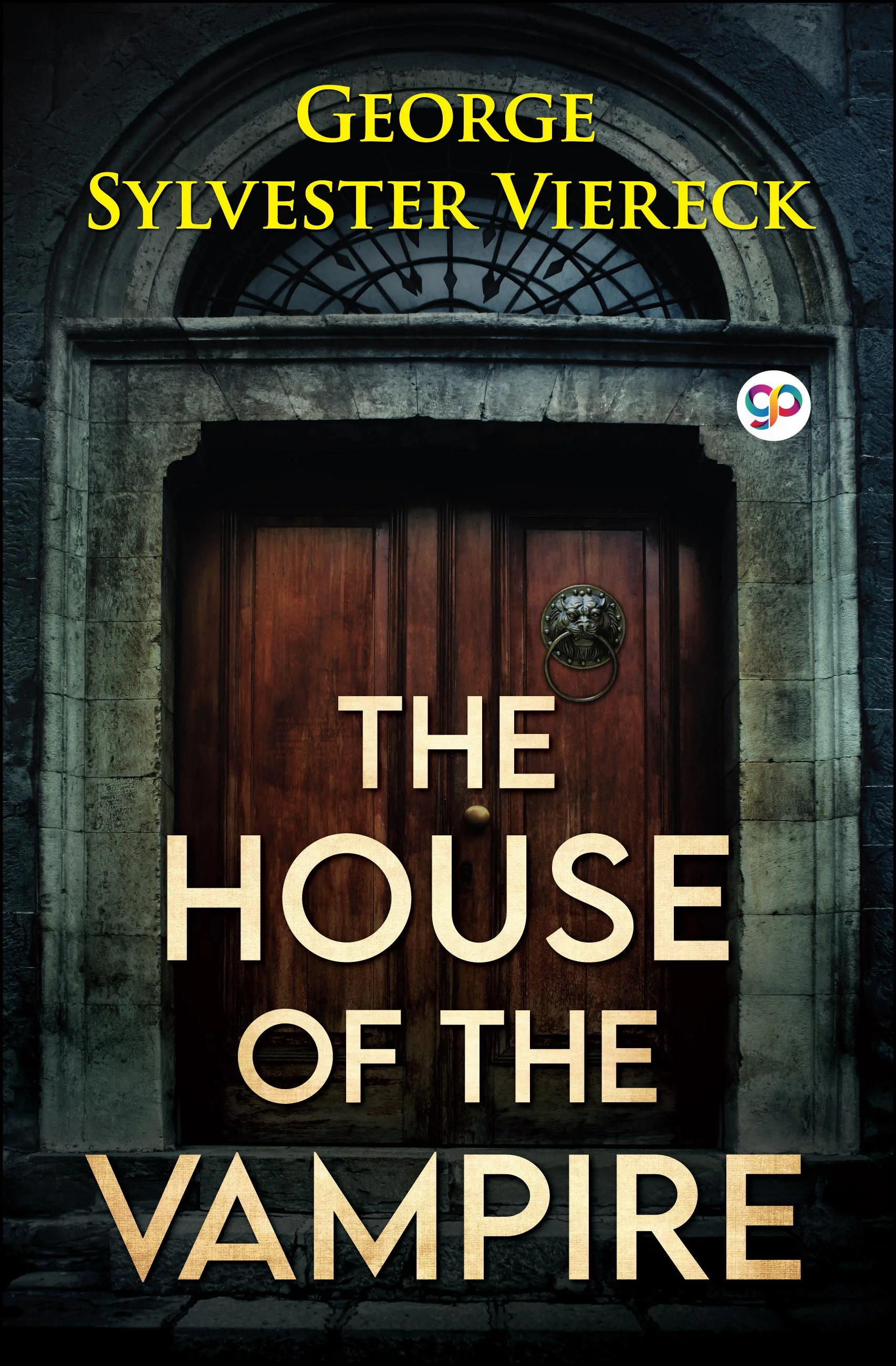
Download Cover Image
Do you want to download the full cover image for The House of the Vampire?