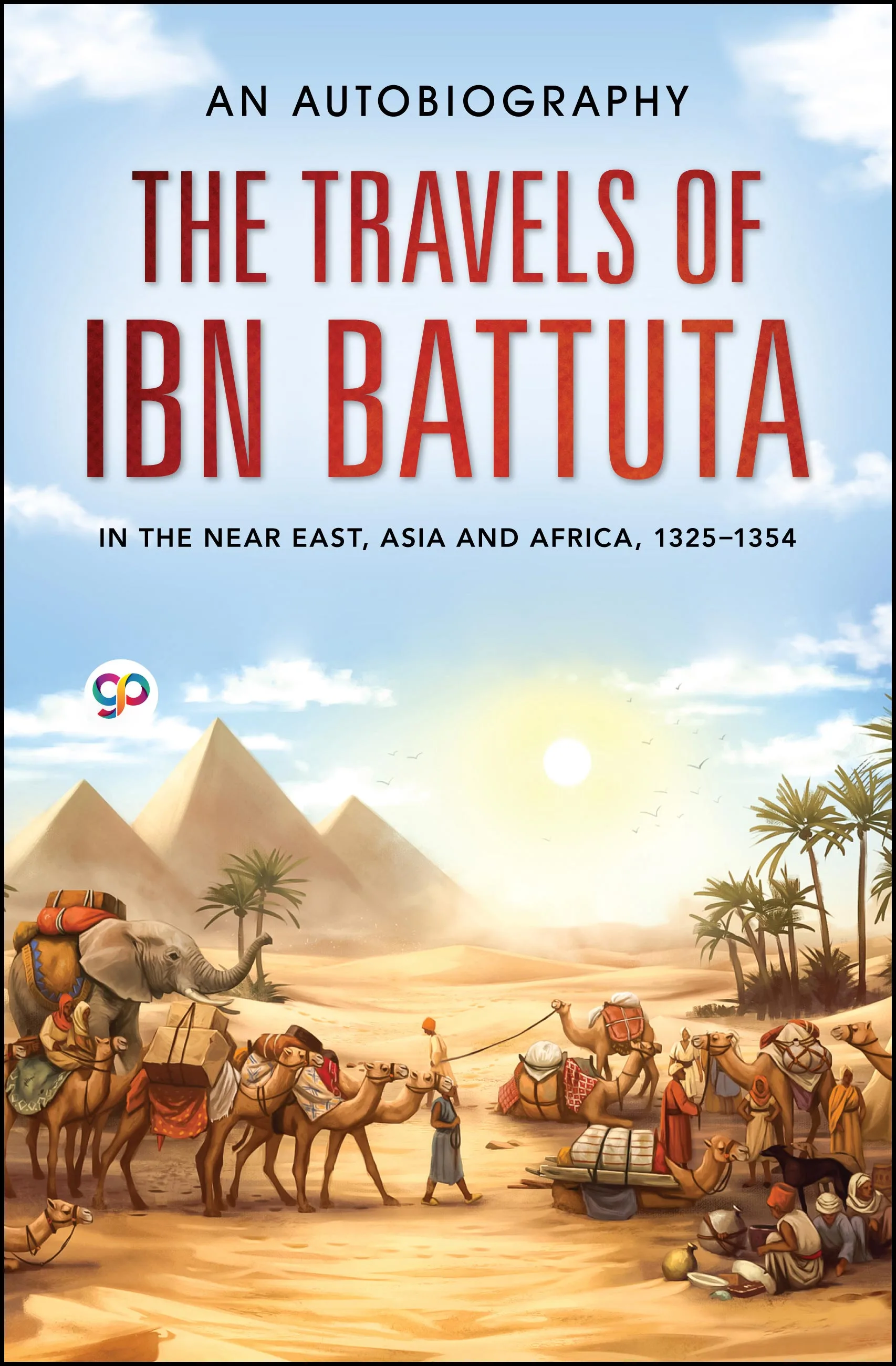
The Travels of Ibn Battuta: In the Near East, Asia and Africa, 1325-1354
eBook
• INR 51.00
• English
• 9789354997808
No ratings yet
| Publisher | General Press |
|---|---|
| ISBN13 | 9789354997808 |
| ASIN/SKU | B0CDGKPN34 |
| Book Format | eBook |
| Language | English |
| List Price | INR 51.00 |
| Subject Code | TRV003000 |
| Publishing Date | 10/08/2023 |
| Book Code | BD00069173 |
Discover The Travels of Ibn Battuta: In the Near East, Asia and Africa, 1325-1354 by Ibn Battuta. This book is published by General Press in eBook format, ISBN 9789354997808, ASIN B0CDGKPN34, under Reference, History, History of Asia.
Book Description
"The Travels of Ibn Battuta" is a breathtaking, deeply human chronicle of one of the greatest journeys in recorded history. In 1325, at just twenty-one years old, the Moroccan scholar left his home in Tangier to make the pilgrimage to Mecca. What began as a solitary religious duty blossomed into a magnificent, twenty-nine-year odyssey across the Near East, Africa, and Asia, driven by an insatiable curiosity about the world and its people.
Written with a vibrant, lucid immediacy, the narrative captures far more than just geographical distances. Across seventy-five thousand miles, Ibn Battuta intricately maps the human heart of the fourteenth-century world. He details the diverse customs, vibrant bazaars, and court intrigues of lands stretching from the Mali Empire to India, and onward to China. Yet, what makes his account so profoundly moving is its emotional resonance. He candidly shares his agonizing bouts of homesickness, the terror of violent shipwrecks, and the grief of losing companions, balanced always by the profound gratitude he feels for the boundless hospitality of strangers.
Ultimately, this remarkable travelogue is not merely a historical record of medieval empires; it is a timeless celebration of human connection. Through the lens of his shared Islamic faith, Ibn Battuta finds a comforting brotherhood in the most unfamiliar lands. His sprawling, empathetic memoir gently reminds us that the desire to explore, to seek knowledge, and to find common ground with our fellow human beings is a beautiful, universal pursuit.
Written with a vibrant, lucid immediacy, the narrative captures far more than just geographical distances. Across seventy-five thousand miles, Ibn Battuta intricately maps the human heart of the fourteenth-century world. He details the diverse customs, vibrant bazaars, and court intrigues of lands stretching from the Mali Empire to India, and onward to China. Yet, what makes his account so profoundly moving is its emotional resonance. He candidly shares his agonizing bouts of homesickness, the terror of violent shipwrecks, and the grief of losing companions, balanced always by the profound gratitude he feels for the boundless hospitality of strangers.
Ultimately, this remarkable travelogue is not merely a historical record of medieval empires; it is a timeless celebration of human connection. Through the lens of his shared Islamic faith, Ibn Battuta finds a comforting brotherhood in the most unfamiliar lands. His sprawling, empathetic memoir gently reminds us that the desire to explore, to seek knowledge, and to find common ground with our fellow human beings is a beautiful, universal pursuit.
Author Biography
Born in Tangier, Morocco, in 1304, 'Ibn Battuta' is widely celebrated as one of the greatest travelers and explorers in human history. Raised in a family of Islamic legal scholars, he received a traditional education that prepared him for a quiet, respectable life as a judge. However, at the age of twenty-one, he set out on a solitary religious pilgrimage to Mecca—a journey that was supposed to take a little over a year. Instead, propelled by an insatiable curiosity and a deep love for learning about the world, he did not return home for nearly three decades.
Over the next twenty-nine years, Ibn Battuta covered an astonishing 75,000 miles, venturing far beyond the boundaries of his homeland. Traveling by foot, camel, and boat, his incredible odyssey took him through North and West Africa, the Middle East, the steppes of Central Asia, India, Southeast Asia, and all the way to China. Unlike explorers who traveled primarily for trade or conquest, Ibn Battuta traveled as a scholar and a pilgrim. He seamlessly integrated himself into diverse societies, serving as a judge for foreign sultans, surviving pirate attacks and tragic shipwrecks, and witnessing the devastating sweep of the Black Death. Throughout his perilous travels, his shared faith often served as a universal passport, allowing him to find a sense of brotherhood and community wherever he roamed.
In 1354, a weary but deeply enriched Ibn Battuta finally returned to Morocco for good. At the request of the Sultan, he dictated the sprawling memories of his adventures to a scholar named Ibn Juzayy. The resulting book, commonly known as the *Rihla* (The Journey), remains a vibrant masterpiece of medieval travel literature. Ibn Battuta passed away around 1368, leaving behind a remarkable legacy. His writings offer us an irreplaceable, profoundly human window into the diverse cultures, politics, and daily life of the fourteenth-century world.
Over the next twenty-nine years, Ibn Battuta covered an astonishing 75,000 miles, venturing far beyond the boundaries of his homeland. Traveling by foot, camel, and boat, his incredible odyssey took him through North and West Africa, the Middle East, the steppes of Central Asia, India, Southeast Asia, and all the way to China. Unlike explorers who traveled primarily for trade or conquest, Ibn Battuta traveled as a scholar and a pilgrim. He seamlessly integrated himself into diverse societies, serving as a judge for foreign sultans, surviving pirate attacks and tragic shipwrecks, and witnessing the devastating sweep of the Black Death. Throughout his perilous travels, his shared faith often served as a universal passport, allowing him to find a sense of brotherhood and community wherever he roamed.
In 1354, a weary but deeply enriched Ibn Battuta finally returned to Morocco for good. At the request of the Sultan, he dictated the sprawling memories of his adventures to a scholar named Ibn Juzayy. The resulting book, commonly known as the *Rihla* (The Journey), remains a vibrant masterpiece of medieval travel literature. Ibn Battuta passed away around 1368, leaving behind a remarkable legacy. His writings offer us an irreplaceable, profoundly human window into the diverse cultures, politics, and daily life of the fourteenth-century world.
Editorial Reviews
Editorial Reviews will be added soon…
Book Summary
In 1325, a twenty-one-year-old legal scholar named 'Ibn Battuta' left his home in Tangier, Morocco, with a simple intention: to complete the Hajj to Mecca. He could never have imagined this religious duty would spiral into a twenty-nine-year odyssey across the known world. Dictated years later to the scribe Ibn Juzayy, his monumental travelogue, the Rihla (The Journey), chronicles a voyage of roughly 75,000 miles. It is a sprawling, deeply human narrative that paints an unparalleled portrait of the fourteenth-century world, stretching from West Africa to the distant shores of China. Through his eyes, we witness a vast global network united by trade, faith, and relentless human curiosity.
The journey began with profound isolation. Leaving his grieving parents behind, Ibn Battuta struck out across the rugged landscapes of North Africa, traversing modern-day Algeria and Tunisia. It was a perilous route plagued by illness and banditry, forcing him to join caravans for protection. Yet, as he reached Cairo, the vibrant heart of the Mamluk Sultanate, his perspective shifted. He was mesmerized by the sheer scale of the city, its bustling bazaars, towering mosques, and the endless flow of scholars. Surrounded by the immense wealth and intellectual vigor of the Islamic world, the young traveler first realized his journey was destined to be about much more than just reaching Mecca.
Venturing into Palestine and Syria, he marveled at the spiritual gravity of Jerusalem and the architectural splendor of Damascus. These cities were thriving hubs of the Dar al-Islam, the interconnected Islamic world where a shared religion transcended vast geographic borders. By 1326, he finally arrived in the arid landscapes of Arabia to complete his Hajj. Standing before the Kaaba, he had fulfilled the sacred obligation that initially drew him from home. Yet, rather than feeling a sense of completion, he was overcome by an insatiable wanderlust. He decided to abandon the direct route back to Morocco, opting instead to plunge deeper into the unknown territories of the East.
His ensuing travels took him down the eastern coast of Africa, sailing along the Swahili Coast to bustling trading hubs like Mogadishu and Kilwa. He was struck by the prosperity of these city-states, whose merchants traded gold and spices across the Indian Ocean. Returning north, he explored the rugged terrain of Oman and the Persian Gulf, eventually making his way back to Mecca for a second pilgrimage. By now, Ibn Battuta was no longer a naive pilgrim; he was a seasoned traveler with growing ambition. Realizing his credentials as an Islamic judge could open doors in foreign courts, he set his sights on the wealthy empires of Asia.
This pursuit of patronage led him northward into Anatolia, a region transitioning under the growing power of the Ottoman Turks. He was warmly received by the akhi brotherhoods—local guilds that offered incredible hospitality to foreign travelers. From there, he crossed the Black Sea onto the windswept steppes of Central Asia, entering the domain of the Golden Horde. In a remarkable twist of fate, he joined the camp of a Mongol ruler and escorted a Byzantine princess back to Constantinople. This detour provided him with a fascinating glimpse into the Christian Byzantine Empire, allowing him to walk a grand metropolis that stood in stark contrast to the Islamic cities he knew.
Drawn by the legendary wealth of India, Ibn Battuta braved the treacherous passes of the Hindu Kush mountains. He arrived in Delhi during the reign of Sultan Muhammad bin Tughluq, a ruler renowned for staggering generosity and terrifying cruelty. The Sultan was actively recruiting foreign scholars to administer his diverse empire, and Ibn Battuta’s credentials served him perfectly. Appointed as a qadi, or supreme judge, he was plunged into the opulent but dangerous world of the Delhi Sultanate. For several years, he lived in luxury, surrounded by immense political power, but he also lived in constant fear of the Sultan’s erratic temper, witnessing horrific executions and political purges.
Desperate to escape this gilded cage without provoking the Sultan, he found a way out when appointed as an ambassador to China. However, his departure from India was anything but smooth. Before his fleet could leave the western coast, a massive storm shattered his ships, drowning his colleagues and taking his accumulated wealth to the bottom of the sea. Stranded on the Malabar Coast, penniless and terrified of returning to Delhi as a failure, he fled further south. This disastrous turn led him to the Maldives, where he spent a year and a half entangled in local politics, working once again as a judge and marrying into the nobility.
His restless spirit eventually pushed him onward, taking him through the lush landscapes of Ceylon and navigating through the complex archipelagos of Southeast Asia. After months of grueling travel, he finally reached the bustling ports of Yuan-dynasty China. China presented the greatest culture shock of his entire journey. While deeply impressed by the safety of the roads and the incredible efficiency of Chinese administration, he felt profoundly alienated. As a devout Muslim, the non-Islamic culture, dietary habits, and social customs left him feeling isolated. Despite the grandeur of cities like Hangzhou, which he considered the largest he had ever seen, he longed for the familiar comforts of home.
The long journey back was shadowed by an unseen terror. As Ibn Battuta traveled through the Middle East in the late 1340s, he rode straight into the path of the Black Death. He witnessed firsthand the devastation of the bubonic plague as it ravaged cities like Damascus and Cairo, transforming bustling metropolises into landscapes of mass graves. The staggering mortality added a grim chapter to his travels. Driven by a desperate need to see his family once more, he hurried across North Africa. Upon reaching Tangier in 1349, nearly a quarter-century after he first left, he was met with the heartbreaking news that both of his parents had passed away.
Even after this emotional homecoming, his wanderlust was not quenched. He embarked on two final journeys: a brief expedition to the embattled Muslim enclaves of Andalusia in southern Spain, and a grueling trek across the Sahara Desert to the legendary courts of the Mali Empire in West Africa. Only after returning from Mali did the Sultan of Morocco finally order him to dictate his memories. The resulting manuscript stands as one of the greatest travelogues ever written. It is a testament to human endurance, an invaluable historical record, and a vivid, personal story of a man who simply could not stop walking until he had seen the entirety of his world.
The journey began with profound isolation. Leaving his grieving parents behind, Ibn Battuta struck out across the rugged landscapes of North Africa, traversing modern-day Algeria and Tunisia. It was a perilous route plagued by illness and banditry, forcing him to join caravans for protection. Yet, as he reached Cairo, the vibrant heart of the Mamluk Sultanate, his perspective shifted. He was mesmerized by the sheer scale of the city, its bustling bazaars, towering mosques, and the endless flow of scholars. Surrounded by the immense wealth and intellectual vigor of the Islamic world, the young traveler first realized his journey was destined to be about much more than just reaching Mecca.
Venturing into Palestine and Syria, he marveled at the spiritual gravity of Jerusalem and the architectural splendor of Damascus. These cities were thriving hubs of the Dar al-Islam, the interconnected Islamic world where a shared religion transcended vast geographic borders. By 1326, he finally arrived in the arid landscapes of Arabia to complete his Hajj. Standing before the Kaaba, he had fulfilled the sacred obligation that initially drew him from home. Yet, rather than feeling a sense of completion, he was overcome by an insatiable wanderlust. He decided to abandon the direct route back to Morocco, opting instead to plunge deeper into the unknown territories of the East.
His ensuing travels took him down the eastern coast of Africa, sailing along the Swahili Coast to bustling trading hubs like Mogadishu and Kilwa. He was struck by the prosperity of these city-states, whose merchants traded gold and spices across the Indian Ocean. Returning north, he explored the rugged terrain of Oman and the Persian Gulf, eventually making his way back to Mecca for a second pilgrimage. By now, Ibn Battuta was no longer a naive pilgrim; he was a seasoned traveler with growing ambition. Realizing his credentials as an Islamic judge could open doors in foreign courts, he set his sights on the wealthy empires of Asia.
This pursuit of patronage led him northward into Anatolia, a region transitioning under the growing power of the Ottoman Turks. He was warmly received by the akhi brotherhoods—local guilds that offered incredible hospitality to foreign travelers. From there, he crossed the Black Sea onto the windswept steppes of Central Asia, entering the domain of the Golden Horde. In a remarkable twist of fate, he joined the camp of a Mongol ruler and escorted a Byzantine princess back to Constantinople. This detour provided him with a fascinating glimpse into the Christian Byzantine Empire, allowing him to walk a grand metropolis that stood in stark contrast to the Islamic cities he knew.
Drawn by the legendary wealth of India, Ibn Battuta braved the treacherous passes of the Hindu Kush mountains. He arrived in Delhi during the reign of Sultan Muhammad bin Tughluq, a ruler renowned for staggering generosity and terrifying cruelty. The Sultan was actively recruiting foreign scholars to administer his diverse empire, and Ibn Battuta’s credentials served him perfectly. Appointed as a qadi, or supreme judge, he was plunged into the opulent but dangerous world of the Delhi Sultanate. For several years, he lived in luxury, surrounded by immense political power, but he also lived in constant fear of the Sultan’s erratic temper, witnessing horrific executions and political purges.
Desperate to escape this gilded cage without provoking the Sultan, he found a way out when appointed as an ambassador to China. However, his departure from India was anything but smooth. Before his fleet could leave the western coast, a massive storm shattered his ships, drowning his colleagues and taking his accumulated wealth to the bottom of the sea. Stranded on the Malabar Coast, penniless and terrified of returning to Delhi as a failure, he fled further south. This disastrous turn led him to the Maldives, where he spent a year and a half entangled in local politics, working once again as a judge and marrying into the nobility.
His restless spirit eventually pushed him onward, taking him through the lush landscapes of Ceylon and navigating through the complex archipelagos of Southeast Asia. After months of grueling travel, he finally reached the bustling ports of Yuan-dynasty China. China presented the greatest culture shock of his entire journey. While deeply impressed by the safety of the roads and the incredible efficiency of Chinese administration, he felt profoundly alienated. As a devout Muslim, the non-Islamic culture, dietary habits, and social customs left him feeling isolated. Despite the grandeur of cities like Hangzhou, which he considered the largest he had ever seen, he longed for the familiar comforts of home.
The long journey back was shadowed by an unseen terror. As Ibn Battuta traveled through the Middle East in the late 1340s, he rode straight into the path of the Black Death. He witnessed firsthand the devastation of the bubonic plague as it ravaged cities like Damascus and Cairo, transforming bustling metropolises into landscapes of mass graves. The staggering mortality added a grim chapter to his travels. Driven by a desperate need to see his family once more, he hurried across North Africa. Upon reaching Tangier in 1349, nearly a quarter-century after he first left, he was met with the heartbreaking news that both of his parents had passed away.
Even after this emotional homecoming, his wanderlust was not quenched. He embarked on two final journeys: a brief expedition to the embattled Muslim enclaves of Andalusia in southern Spain, and a grueling trek across the Sahara Desert to the legendary courts of the Mali Empire in West Africa. Only after returning from Mali did the Sultan of Morocco finally order him to dictate his memories. The resulting manuscript stands as one of the greatest travelogues ever written. It is a testament to human endurance, an invaluable historical record, and a vivid, personal story of a man who simply could not stop walking until he had seen the entirety of his world.
Sample Chapters
Sample Chapters will be added soon…