
Notes on Nursing: What it is, and What it is Not
eBook
• INR 99.00
• English
• 9789354999307
No ratings yet
| Publisher | General Press |
|---|---|
| ISBN13 | 9789354999307 |
| ASIN/SKU | B0CFTQXWXJ |
| Book Format | eBook |
| Language | English |
| List Price | INR 99.00 |
| Subject Code | MED039000, MED058050 |
| Book Code | BD00069180 |
Buy this Book
Amazon Stores
Ebook Stores
Other Stores
Discover Notes on Nursing: What it is, and What it is Not by Florence Nightingale. This book is published by General Press in eBook format, ISBN 9789354999307, ASIN B0CFTQXWXJ, under History, Nursing History, Nursing Fundamentals and Skills.
Book Description
Notes on Nursing: What it is, and What it is Not is the best-known work of Florence Nightingale, the originator, and founder of modern nursing, comes from a collection of notes that played an important part in the much-needed revolution in the field of nursing.
For the first time, it was brought to the attention of those caring for the sick that their responsibilities covered not only the administration of medicines and the application of poultices, but the proper use of fresh air, light, warmth, cleanliness, quiet, and the proper selection and administration of diet. Miss Nightingale is outspoken on these subjects as well as on other factors that she considers essential to good nursing. But, whatever her topic, her main concern, and attention is always on the patient and his needs.
This little volume is as practical as it is interesting and entertaining. It will be an inspiration to the student nurse, refreshing and stimulating to the experienced nurse, and immensely helpful to anyone caring for the sick.
For the first time, it was brought to the attention of those caring for the sick that their responsibilities covered not only the administration of medicines and the application of poultices, but the proper use of fresh air, light, warmth, cleanliness, quiet, and the proper selection and administration of diet. Miss Nightingale is outspoken on these subjects as well as on other factors that she considers essential to good nursing. But, whatever her topic, her main concern, and attention is always on the patient and his needs.
This little volume is as practical as it is interesting and entertaining. It will be an inspiration to the student nurse, refreshing and stimulating to the experienced nurse, and immensely helpful to anyone caring for the sick.
Author Biography
Florence Nightingale (1820–1910) was a pioneering British nurse, social reformer, and statistician whose dedication transformed modern healthcare. Widely known as the "Lady with the Lamp," she revolutionized nursing by introducing higher standards of patient care, hospital sanitation, and professional training. Her compassion, intelligence, and unwavering commitment to public health made her one of the most influential figures in medical history.
Born on May 12, 1820, in Florence, Italy, during her parents' European travels, she was named after the city of her birth. Raised in a wealthy English family, Florence received an excellent education at a time when few women had access to advanced learning. She studied mathematics, languages, philosophy, and history, developing strong analytical skills that would later shape her approach to healthcare. Despite her family's objections, she felt a deep calling to serve humanity and chose nursing as her life's work—a profession that was not then considered respectable for women of her social standing.
Nightingale gained worldwide recognition during the Crimean War (1853–1856), when she led a team of nurses to care for wounded British soldiers. She found military hospitals overcrowded, unsanitary, and poorly managed. Through tireless effort, she improved cleanliness, ventilation, nutrition, and hygiene, dramatically reducing death rates and demonstrating the life-saving importance of proper hospital management. Her nightly rounds with a lamp to comfort injured soldiers earned her enduring admiration and her famous nickname.
After the war, Florence devoted herself to healthcare reform. She used statistical analysis to demonstrate how poor sanitation contributed to disease and preventable deaths, making her one of the earliest advocates of evidence-based public health. In 1860, she established the Nightingale Training School for Nurses at St. Thomas' Hospital in London, laying the foundation for professional nursing education across the world. Her influential book, Notes on Nursing, became a landmark guide for nurses and caregivers.
Although illness limited her later years, Nightingale continued writing, advising governments, and promoting healthcare improvements. She received numerous honors, including becoming the first woman to be awarded the Order of Merit in Britain.
Florence Nightingale passed away on August 13, 1910, leaving behind a legacy that continues to shape hospitals, nursing education, and public health systems worldwide. She is remembered not only as the founder of modern nursing but also as a visionary reformer whose compassion, scientific thinking, and lifelong service transformed healthcare for generations.
Born on May 12, 1820, in Florence, Italy, during her parents' European travels, she was named after the city of her birth. Raised in a wealthy English family, Florence received an excellent education at a time when few women had access to advanced learning. She studied mathematics, languages, philosophy, and history, developing strong analytical skills that would later shape her approach to healthcare. Despite her family's objections, she felt a deep calling to serve humanity and chose nursing as her life's work—a profession that was not then considered respectable for women of her social standing.
Nightingale gained worldwide recognition during the Crimean War (1853–1856), when she led a team of nurses to care for wounded British soldiers. She found military hospitals overcrowded, unsanitary, and poorly managed. Through tireless effort, she improved cleanliness, ventilation, nutrition, and hygiene, dramatically reducing death rates and demonstrating the life-saving importance of proper hospital management. Her nightly rounds with a lamp to comfort injured soldiers earned her enduring admiration and her famous nickname.
After the war, Florence devoted herself to healthcare reform. She used statistical analysis to demonstrate how poor sanitation contributed to disease and preventable deaths, making her one of the earliest advocates of evidence-based public health. In 1860, she established the Nightingale Training School for Nurses at St. Thomas' Hospital in London, laying the foundation for professional nursing education across the world. Her influential book, Notes on Nursing, became a landmark guide for nurses and caregivers.
Although illness limited her later years, Nightingale continued writing, advising governments, and promoting healthcare improvements. She received numerous honors, including becoming the first woman to be awarded the Order of Merit in Britain.
Florence Nightingale passed away on August 13, 1910, leaving behind a legacy that continues to shape hospitals, nursing education, and public health systems worldwide. She is remembered not only as the founder of modern nursing but also as a visionary reformer whose compassion, scientific thinking, and lifelong service transformed healthcare for generations.
Editorial Reviews
Editorial Reviews will be added soon…
Book Summary
Notes on Nursing: What It Is, and What It Is Not by Florence Nightingale is one of the foundational works in modern nursing literature and a remarkably practical book about patient care, hygiene, observation, environment, and the conditions that allow the human body to recover from illness. First published in 1859 and revised in 1860, the book was not intended by Nightingale to be a formal nursing textbook or a complete manual of professional nursing. In her preface, she explains that she wants to offer “hints for thought” to people responsible for the health of others and to encourage them to learn how to think carefully about nursing. This distinction is important because the book's enduring value lies not in a list of outdated medical instructions, but in Nightingale's philosophy of care: good nursing means creating the best possible conditions for the body to recover, observing the patient intelligently, preventing unnecessary suffering, and taking responsibility for the environment surrounding the sick person.
Nightingale begins with a powerful idea about the nature of illness and recovery. She suggests that disease can often be understood, at least in part, as a reparative process through which the body attempts to correct or recover from something that has gone wrong. From this perspective, nursing should not unnecessarily interfere with the body's efforts. Instead, the nurse's task is to create conditions in which recovery can proceed as effectively as possible. Nightingale's observation is especially significant because she distinguishes symptoms caused by the disease itself from suffering caused by poor care. A patient may be uncomfortable, exhausted, feverish, or distressed not only because of an illness but because the room is poorly ventilated, the surroundings are dirty, the patient is cold, the diet is badly managed, or the environment is noisy.
This leads to the central principle of Notes on Nursing: nursing is fundamentally concerned with the environment in which the patient lives. Nightingale does not reduce nursing to administering medicines or following doctors' orders. She sees it as a specialized form of intelligent attention. The nurse must notice what the patient needs and arrange the surroundings accordingly. This idea helped establish nursing as a distinct body of knowledge rather than treating it simply as domestic service or an assistant's role in medicine.
The first major chapter, “Ventilation and Warming,” establishes fresh air as the foundation of good nursing. Nightingale argues that the air a patient breathes should be as pure as the air outside, while taking care not to expose the patient to unnecessary cold. Her point is broader than simply opening a window. She wants nurses to think about where air comes from and whether apparent ventilation is actually bringing clean air into the patient's room. A room may have an open window yet still be contaminated by unpleasant or unhealthy sources elsewhere in a building. Good nursing therefore requires attention to the whole environment rather than reliance on superficial remedies.
For Nightingale, ventilation is connected to sanitation and disease prevention. She was writing at a time when the scientific understanding of infection was still developing, but her practical observations about contaminated environments were extraordinarily influential. She recognizes that bad smells, dirty spaces, poor drainage, overcrowding, and stagnant air are signs of an unhealthy environment. Her insistence that the causes of environmental unhealthiness should be removed rather than merely covered up reflects her practical approach. She is not satisfied with making a room smell better; she wants the underlying source of the problem dealt with properly.
The next chapter, “Health of Houses,” broadens the discussion from the sickroom to the entire home. Nightingale identifies five essential requirements for healthy houses: pure air, pure water, efficient drainage, cleanliness, and light. These principles demonstrate that Nightingale's nursing philosophy is also a philosophy of public health. She understands that illness cannot always be treated successfully if the conditions that produced or worsen it remain unchanged. A nurse who cares for an individual patient must therefore understand something about sanitation, housing, water, waste, and the physical environment.
The chapter on “Petty Management” introduces another important idea: nursing depends upon countless small details. A patient may suffer not because of one dramatic mistake but because a series of minor needs have been overlooked. The room may be too warm, the water may not be available when needed, food may arrive at the wrong time, bedding may be uncomfortable, or the patient may be repeatedly disturbed. Nightingale argues that good nursing requires organization and anticipation. The nurse should not wait until a problem becomes serious before responding. Care means thinking ahead.
This attention to detail is connected with responsibility. Nightingale does not portray the nurse as someone who merely performs instructions. The nurse must exercise judgment. She must know the patient's habits, observe changes, anticipate needs, and understand how different aspects of the environment interact. This is one reason the book is so important historically: it presents nursing as skilled work requiring intelligence, discipline, observation, and independent thought.
Nightingale then turns to noise, a subject that may seem surprisingly minor until she explains its psychological importance. She argues that unnecessary noise can harm patients, particularly noise that creates expectation or anxiety. A patient may become distressed not simply because a sound is loud but because the sound signals that something is about to happen. Footsteps, doors, conversations, interruptions, or careless activity can prevent rest and keep the patient mentally alert when the body needs recovery.
This chapter reveals how closely Nightingale connects physical and psychological well-being. Nursing is not merely about preventing physical contamination. It is also about protecting the patient's peace of mind. A sick person is vulnerable, and ordinary disturbances can become disproportionately exhausting. Good nursing therefore requires sensitivity to the patient's emotional state as well as physical condition.
The chapter on “Variety” develops a related idea. A patient confined to the same room and the same view for long periods can become mentally exhausted. Nightingale argues that the mind needs appropriate stimulation and change. Variety may come from a different view, natural light, conversation, reading, flowers, or other small alterations in the patient's surroundings. The important point is that recovery is not purely physical. Human beings are psychological creatures, and monotony can affect morale.
At the same time, Nightingale is careful about overstimulation. The nurse must understand the individual patient rather than applying a rigid formula. Something that comforts one person may irritate another. This individual sensitivity is one of the recurring principles of the book. Nursing requires observation because there is no single environment that is equally appropriate for every patient.
Food receives substantial attention in the chapters “Taking Food” and “What Food?” Nightingale emphasizes that the nurse must observe not merely what food is offered but how, when, and under what circumstances the patient eats. Illness can alter appetite and digestion, and forcing food at inappropriate times may be counterproductive. The nurse should therefore pay attention to patterns of appetite, timing, quantity, and response. This approach reflects her broader belief that nursing involves careful observation rather than mechanical rule-following.
The discussion of food also demonstrates Nightingale's interest in individualized care. A patient's nutritional needs cannot always be understood from a standard schedule alone. The nurse must notice what helps the patient and what causes discomfort. Even seemingly ordinary actions, such as serving food attractively or ensuring that it arrives at the appropriate time, can influence whether a patient actually eats.
The chapter on “Bed and Bedding” continues the same practical logic. A bed is not merely a place where a patient lies down; it is the patient's immediate physical environment. Bedding should be clean, dry, comfortable, and properly arranged. The nurse must notice whether the patient is positioned comfortably and whether the bed is contributing to discomfort or complications. Nightingale's attention to such details shows how she transforms ordinary domestic tasks into deliberate acts of healthcare.
Light is another essential element. Nightingale regards light, particularly direct sunlight, as extremely important to sick people. Cambridge's summary of the chapter notes her conviction that, after fresh air, patients have a profound need for light and that sunlight has effects beyond simply improving mood. For Nightingale, a dark room can make illness feel more oppressive, while natural light can contribute to a healthier and more pleasant environment. Her insistence on sunlight also reflects her broader understanding that the physical surroundings can influence both body and mind.
The chapters on cleanliness of rooms and walls and personal cleanliness are among the most practical sections of the book. Nightingale argues that ventilation alone cannot make an environment healthy if carpets, curtains, walls, furniture, bedding, or other surfaces are dirty. Cleanliness is therefore not cosmetic. It is an essential part of maintaining a healthy environment. She pays particular attention to hidden dirt and accumulated organic matter, warning against the assumption that a room is clean simply because it looks presentable.
Personal cleanliness is equally important. A patient who cannot care for himself depends upon the nurse for washing, changing, grooming, and other forms of personal care. Nightingale treats these tasks with dignity and seriousness. Cleanliness is not merely about appearance; it affects comfort, morale, and health. Her approach helped elevate what might have been dismissed as mundane domestic work into an essential component of professional care.
One of the more distinctive chapters is “Chattering Hopes and Advices.” Nightingale criticizes the habit of offering sick people empty reassurance, excessive optimism, or unwanted advice. Telling a seriously ill person that everything will certainly be fine may be intended as kindness, but it can actually make the patient feel misunderstood. She argues that nurses should avoid filling the room with meaningless conversation and instead learn to understand what the patient genuinely needs. Sometimes the most compassionate response is quiet presence rather than constant talking.
This chapter demonstrates Nightingale's unusually modern understanding of communication in healthcare. Patients are not objects to be managed; they are people with fears, expectations, preferences, and individual personalities. The nurse must listen and observe rather than assuming that she already knows what the patient needs emotionally.
The chapter on “Observation of the Sick” brings the entire philosophy of the book together. For Nightingale, observation is perhaps the defining intellectual skill of nursing. A nurse must notice changes in appetite, sleep, temperature, appearance, behavior, mood, pain, and other aspects of the patient's condition. More importantly, the nurse must know what those changes may signify. Nursing therefore requires attention that is both careful and analytical.
Nightingale strongly distinguishes seeing from observing. Anyone can look at a patient, but a skilled nurse notices meaningful changes. Observation requires memory, comparison, judgment, and curiosity. A patient who seems slightly different from yesterday may be showing an important change, and a nurse who understands the patient's usual condition is more likely to detect it.
This is why Nightingale's concept of nursing is ultimately a form of active intelligence. She does not want nurses to become passive followers of routines. She wants them to understand why they are doing what they do. The nurse must constantly ask: What is happening? What has changed? What might be causing it? What can be improved? What does this patient need right now?
The conclusion reinforces the importance of practical action. Nightingale's philosophy is remarkably resistant to empty theory. Knowledge matters because it should lead to better care. Her book repeatedly takes ordinary experiences and asks readers to examine them more carefully. A room, a window, a meal, a bed, a sound, a conversation, or a patient's expression can all become significant when viewed through the eyes of an attentive nurse.
The appendix extends the book's broader interest in health, statistics, and population conditions. This is consistent with Nightingale's larger career, in which nursing reform was connected with hospital organization, sanitation, public health, education, and the use of statistics to demonstrate the consequences of poor conditions. Notes on Nursing should therefore not be isolated from her wider reform work. It is part of a larger effort to make healthcare more systematic, evidence-informed, and attentive to preventable suffering.
It is also important to remember the historical context. Nightingale wrote Notes on Nursing in the nineteenth century, long before modern infection-control practices, antibiotics, intensive care, and contemporary nursing science. Some of her medical explanations are consequently dated. Yet the book's central principles—clean environments, careful observation, appropriate nutrition, rest, light, ventilation, patient dignity, prevention, organization, and individualized attention—remain recognizable in modern healthcare.
Ultimately, Notes on Nursing: What It Is, and What It Is Not by Florence Nightingale is not simply a book about how to look after sick people. It is a book about how to think about care. Nightingale argues that good nursing means creating the conditions in which a patient can recover, while minimizing unnecessary physical and psychological suffering. Fresh air, cleanliness, light, quiet, appropriate food, comfortable bedding, personal hygiene, and careful observation are not trivial details; together they form the environment in which healing takes place.
For readers searching for a Notes on Nursing summary, Florence Nightingale nursing principles, Notes on Nursing analysis, what nursing is according to Florence Nightingale, Nightingale's environmental theory, importance of ventilation and cleanliness in nursing, observation of patients, or the main ideas of Notes on Nursing, the book's enduring message is remarkably clear. Nursing is not simply about performing tasks, following instructions, or administering treatment. It is a disciplined practice of observation, prevention, judgment, and compassionate attention. Nightingale asks the caregiver to look beyond the obvious, to notice what others overlook, and to understand that seemingly small details can profoundly affect a patient's experience of illness. More than a century and a half after its publication, Notes on Nursing remains important because it transforms ordinary acts of care into a serious intellectual and moral responsibility: to create the best possible conditions for another human being to heal.
Nightingale begins with a powerful idea about the nature of illness and recovery. She suggests that disease can often be understood, at least in part, as a reparative process through which the body attempts to correct or recover from something that has gone wrong. From this perspective, nursing should not unnecessarily interfere with the body's efforts. Instead, the nurse's task is to create conditions in which recovery can proceed as effectively as possible. Nightingale's observation is especially significant because she distinguishes symptoms caused by the disease itself from suffering caused by poor care. A patient may be uncomfortable, exhausted, feverish, or distressed not only because of an illness but because the room is poorly ventilated, the surroundings are dirty, the patient is cold, the diet is badly managed, or the environment is noisy.
This leads to the central principle of Notes on Nursing: nursing is fundamentally concerned with the environment in which the patient lives. Nightingale does not reduce nursing to administering medicines or following doctors' orders. She sees it as a specialized form of intelligent attention. The nurse must notice what the patient needs and arrange the surroundings accordingly. This idea helped establish nursing as a distinct body of knowledge rather than treating it simply as domestic service or an assistant's role in medicine.
The first major chapter, “Ventilation and Warming,” establishes fresh air as the foundation of good nursing. Nightingale argues that the air a patient breathes should be as pure as the air outside, while taking care not to expose the patient to unnecessary cold. Her point is broader than simply opening a window. She wants nurses to think about where air comes from and whether apparent ventilation is actually bringing clean air into the patient's room. A room may have an open window yet still be contaminated by unpleasant or unhealthy sources elsewhere in a building. Good nursing therefore requires attention to the whole environment rather than reliance on superficial remedies.
For Nightingale, ventilation is connected to sanitation and disease prevention. She was writing at a time when the scientific understanding of infection was still developing, but her practical observations about contaminated environments were extraordinarily influential. She recognizes that bad smells, dirty spaces, poor drainage, overcrowding, and stagnant air are signs of an unhealthy environment. Her insistence that the causes of environmental unhealthiness should be removed rather than merely covered up reflects her practical approach. She is not satisfied with making a room smell better; she wants the underlying source of the problem dealt with properly.
The next chapter, “Health of Houses,” broadens the discussion from the sickroom to the entire home. Nightingale identifies five essential requirements for healthy houses: pure air, pure water, efficient drainage, cleanliness, and light. These principles demonstrate that Nightingale's nursing philosophy is also a philosophy of public health. She understands that illness cannot always be treated successfully if the conditions that produced or worsen it remain unchanged. A nurse who cares for an individual patient must therefore understand something about sanitation, housing, water, waste, and the physical environment.
The chapter on “Petty Management” introduces another important idea: nursing depends upon countless small details. A patient may suffer not because of one dramatic mistake but because a series of minor needs have been overlooked. The room may be too warm, the water may not be available when needed, food may arrive at the wrong time, bedding may be uncomfortable, or the patient may be repeatedly disturbed. Nightingale argues that good nursing requires organization and anticipation. The nurse should not wait until a problem becomes serious before responding. Care means thinking ahead.
This attention to detail is connected with responsibility. Nightingale does not portray the nurse as someone who merely performs instructions. The nurse must exercise judgment. She must know the patient's habits, observe changes, anticipate needs, and understand how different aspects of the environment interact. This is one reason the book is so important historically: it presents nursing as skilled work requiring intelligence, discipline, observation, and independent thought.
Nightingale then turns to noise, a subject that may seem surprisingly minor until she explains its psychological importance. She argues that unnecessary noise can harm patients, particularly noise that creates expectation or anxiety. A patient may become distressed not simply because a sound is loud but because the sound signals that something is about to happen. Footsteps, doors, conversations, interruptions, or careless activity can prevent rest and keep the patient mentally alert when the body needs recovery.
This chapter reveals how closely Nightingale connects physical and psychological well-being. Nursing is not merely about preventing physical contamination. It is also about protecting the patient's peace of mind. A sick person is vulnerable, and ordinary disturbances can become disproportionately exhausting. Good nursing therefore requires sensitivity to the patient's emotional state as well as physical condition.
The chapter on “Variety” develops a related idea. A patient confined to the same room and the same view for long periods can become mentally exhausted. Nightingale argues that the mind needs appropriate stimulation and change. Variety may come from a different view, natural light, conversation, reading, flowers, or other small alterations in the patient's surroundings. The important point is that recovery is not purely physical. Human beings are psychological creatures, and monotony can affect morale.
At the same time, Nightingale is careful about overstimulation. The nurse must understand the individual patient rather than applying a rigid formula. Something that comforts one person may irritate another. This individual sensitivity is one of the recurring principles of the book. Nursing requires observation because there is no single environment that is equally appropriate for every patient.
Food receives substantial attention in the chapters “Taking Food” and “What Food?” Nightingale emphasizes that the nurse must observe not merely what food is offered but how, when, and under what circumstances the patient eats. Illness can alter appetite and digestion, and forcing food at inappropriate times may be counterproductive. The nurse should therefore pay attention to patterns of appetite, timing, quantity, and response. This approach reflects her broader belief that nursing involves careful observation rather than mechanical rule-following.
The discussion of food also demonstrates Nightingale's interest in individualized care. A patient's nutritional needs cannot always be understood from a standard schedule alone. The nurse must notice what helps the patient and what causes discomfort. Even seemingly ordinary actions, such as serving food attractively or ensuring that it arrives at the appropriate time, can influence whether a patient actually eats.
The chapter on “Bed and Bedding” continues the same practical logic. A bed is not merely a place where a patient lies down; it is the patient's immediate physical environment. Bedding should be clean, dry, comfortable, and properly arranged. The nurse must notice whether the patient is positioned comfortably and whether the bed is contributing to discomfort or complications. Nightingale's attention to such details shows how she transforms ordinary domestic tasks into deliberate acts of healthcare.
Light is another essential element. Nightingale regards light, particularly direct sunlight, as extremely important to sick people. Cambridge's summary of the chapter notes her conviction that, after fresh air, patients have a profound need for light and that sunlight has effects beyond simply improving mood. For Nightingale, a dark room can make illness feel more oppressive, while natural light can contribute to a healthier and more pleasant environment. Her insistence on sunlight also reflects her broader understanding that the physical surroundings can influence both body and mind.
The chapters on cleanliness of rooms and walls and personal cleanliness are among the most practical sections of the book. Nightingale argues that ventilation alone cannot make an environment healthy if carpets, curtains, walls, furniture, bedding, or other surfaces are dirty. Cleanliness is therefore not cosmetic. It is an essential part of maintaining a healthy environment. She pays particular attention to hidden dirt and accumulated organic matter, warning against the assumption that a room is clean simply because it looks presentable.
Personal cleanliness is equally important. A patient who cannot care for himself depends upon the nurse for washing, changing, grooming, and other forms of personal care. Nightingale treats these tasks with dignity and seriousness. Cleanliness is not merely about appearance; it affects comfort, morale, and health. Her approach helped elevate what might have been dismissed as mundane domestic work into an essential component of professional care.
One of the more distinctive chapters is “Chattering Hopes and Advices.” Nightingale criticizes the habit of offering sick people empty reassurance, excessive optimism, or unwanted advice. Telling a seriously ill person that everything will certainly be fine may be intended as kindness, but it can actually make the patient feel misunderstood. She argues that nurses should avoid filling the room with meaningless conversation and instead learn to understand what the patient genuinely needs. Sometimes the most compassionate response is quiet presence rather than constant talking.
This chapter demonstrates Nightingale's unusually modern understanding of communication in healthcare. Patients are not objects to be managed; they are people with fears, expectations, preferences, and individual personalities. The nurse must listen and observe rather than assuming that she already knows what the patient needs emotionally.
The chapter on “Observation of the Sick” brings the entire philosophy of the book together. For Nightingale, observation is perhaps the defining intellectual skill of nursing. A nurse must notice changes in appetite, sleep, temperature, appearance, behavior, mood, pain, and other aspects of the patient's condition. More importantly, the nurse must know what those changes may signify. Nursing therefore requires attention that is both careful and analytical.
Nightingale strongly distinguishes seeing from observing. Anyone can look at a patient, but a skilled nurse notices meaningful changes. Observation requires memory, comparison, judgment, and curiosity. A patient who seems slightly different from yesterday may be showing an important change, and a nurse who understands the patient's usual condition is more likely to detect it.
This is why Nightingale's concept of nursing is ultimately a form of active intelligence. She does not want nurses to become passive followers of routines. She wants them to understand why they are doing what they do. The nurse must constantly ask: What is happening? What has changed? What might be causing it? What can be improved? What does this patient need right now?
The conclusion reinforces the importance of practical action. Nightingale's philosophy is remarkably resistant to empty theory. Knowledge matters because it should lead to better care. Her book repeatedly takes ordinary experiences and asks readers to examine them more carefully. A room, a window, a meal, a bed, a sound, a conversation, or a patient's expression can all become significant when viewed through the eyes of an attentive nurse.
The appendix extends the book's broader interest in health, statistics, and population conditions. This is consistent with Nightingale's larger career, in which nursing reform was connected with hospital organization, sanitation, public health, education, and the use of statistics to demonstrate the consequences of poor conditions. Notes on Nursing should therefore not be isolated from her wider reform work. It is part of a larger effort to make healthcare more systematic, evidence-informed, and attentive to preventable suffering.
It is also important to remember the historical context. Nightingale wrote Notes on Nursing in the nineteenth century, long before modern infection-control practices, antibiotics, intensive care, and contemporary nursing science. Some of her medical explanations are consequently dated. Yet the book's central principles—clean environments, careful observation, appropriate nutrition, rest, light, ventilation, patient dignity, prevention, organization, and individualized attention—remain recognizable in modern healthcare.
Ultimately, Notes on Nursing: What It Is, and What It Is Not by Florence Nightingale is not simply a book about how to look after sick people. It is a book about how to think about care. Nightingale argues that good nursing means creating the conditions in which a patient can recover, while minimizing unnecessary physical and psychological suffering. Fresh air, cleanliness, light, quiet, appropriate food, comfortable bedding, personal hygiene, and careful observation are not trivial details; together they form the environment in which healing takes place.
For readers searching for a Notes on Nursing summary, Florence Nightingale nursing principles, Notes on Nursing analysis, what nursing is according to Florence Nightingale, Nightingale's environmental theory, importance of ventilation and cleanliness in nursing, observation of patients, or the main ideas of Notes on Nursing, the book's enduring message is remarkably clear. Nursing is not simply about performing tasks, following instructions, or administering treatment. It is a disciplined practice of observation, prevention, judgment, and compassionate attention. Nightingale asks the caregiver to look beyond the obvious, to notice what others overlook, and to understand that seemingly small details can profoundly affect a patient's experience of illness. More than a century and a half after its publication, Notes on Nursing remains important because it transforms ordinary acts of care into a serious intellectual and moral responsibility: to create the best possible conditions for another human being to heal.
Sample Chapters
Sample Chapters will be added soon…
Reader Reviews
No reviews yet.
Notes on Nursing: What it is, and What it is Not
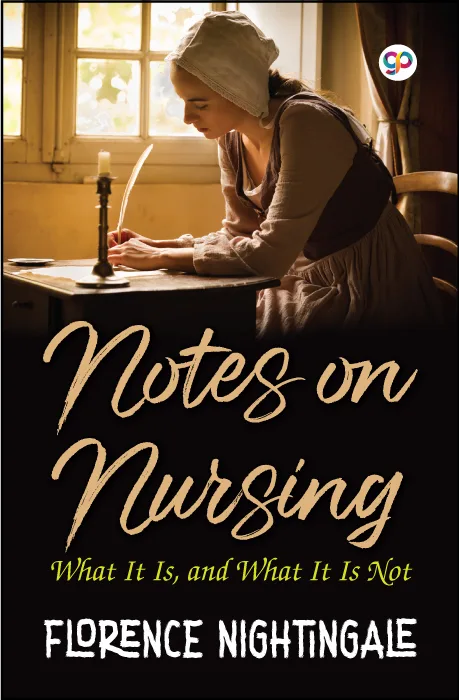
Download Cover Image
Do you want to download the full cover image for Notes on Nursing: What it is, and What it is Not?