
A Calendar of Wisdom
eBook
• INR 99.00
• English
• 9788198883896
No ratings yet
| Publisher | General Press |
|---|---|
| ISBN13 | 9788198883896 |
| ASIN/SKU | B0G1TGMWNW |
| Book Format | eBook |
| Language | English |
| List Price | INR 99.00 |
| Subject Code | REL022000, PHI005000, REL042000 |
| Book Code | BD00069181 |
Buy this Book
Amazon Stores
Ebook Stores
Other Stores
Discover A Calendar of Wisdom by Leo Tolstoy. This book is published by General Press in eBook format, ISBN 9788198883896, ASIN B0G1TGMWNW, under Religion and Spirituality, Philosophy, Spirituality.
Book Description
“A bedside companion." —USA Today
“A surprisingly powerful book." —The Washington Post
“A self-help book.” —Minneapolis Star Tribune
"This book will inspire." —The Sun, London (UK)
"Let's just say that Tolstoy is transcendent, and that we are grateful he lived long enough to endow us with his grand inheritance." —THOMAS KENEALLY, author of Schindler's List
“A Calendar of Wisdom” by Leo Tolstoy is a timeless daily devotional that offers profound spiritual insights for every day of the year. First published in 1904, this carefully curated collection reflects Tolstoy’s deep philosophical and moral inquiries in the final years of his life. Drawing on wisdom from across cultures and centuries—featuring voices such as Socrates, the Bible, Marcus Aurelius, Confucius, and Eastern sages—Tolstoy weaves together a rich tapestry of thought that speaks to the human soul.
Each daily entry is centered around a theme like kindness, death, humility, or purpose, combining excerpts from great thinkers with Tolstoy’s own contemplations. The result is a book that not only nourishes the mind but also calls the reader to live more thoughtfully and ethically.
Unlike Tolstoy’s epic novels, this work is compact and meditative, showing the author’s skill in distilling complex ideas into accessible daily reflections. Banned in the Soviet era but rediscovered in recent decades, A Calendar of Wisdom remains a source of daily inspiration, moral clarity, and inner peace for readers seeking guidance in a chaotic world.
“A surprisingly powerful book." —The Washington Post
“A self-help book.” —Minneapolis Star Tribune
"This book will inspire." —The Sun, London (UK)
"Let's just say that Tolstoy is transcendent, and that we are grateful he lived long enough to endow us with his grand inheritance." —THOMAS KENEALLY, author of Schindler's List
“A Calendar of Wisdom” by Leo Tolstoy is a timeless daily devotional that offers profound spiritual insights for every day of the year. First published in 1904, this carefully curated collection reflects Tolstoy’s deep philosophical and moral inquiries in the final years of his life. Drawing on wisdom from across cultures and centuries—featuring voices such as Socrates, the Bible, Marcus Aurelius, Confucius, and Eastern sages—Tolstoy weaves together a rich tapestry of thought that speaks to the human soul.
Each daily entry is centered around a theme like kindness, death, humility, or purpose, combining excerpts from great thinkers with Tolstoy’s own contemplations. The result is a book that not only nourishes the mind but also calls the reader to live more thoughtfully and ethically.
Unlike Tolstoy’s epic novels, this work is compact and meditative, showing the author’s skill in distilling complex ideas into accessible daily reflections. Banned in the Soviet era but rediscovered in recent decades, A Calendar of Wisdom remains a source of daily inspiration, moral clarity, and inner peace for readers seeking guidance in a chaotic world.
Author Biography
Leo Tolstoy (1828–1910) was a renowned Russian novelist, philosopher, and moral thinker, widely regarded as one of the greatest writers in world literature. Born into a noble family on September 9, 1828, at Yasnaya Polyana, Russia, he was orphaned at a young age and raised by relatives. After a brief stint at university and time in the military, Tolstoy turned to writing. His early works, such as Childhood, Boyhood, and Youth, drew on his own experiences and established him as a promising literary voice.
Tolstoy’s masterpieces War and Peace (1869) and Anna Karenina (1877) are towering achievements of realist fiction, blending history, philosophy, and deep psychological insight. In middle life, he underwent a profound spiritual crisis and rejected materialism, embracing a life of Christian-based simplicity, pacifism, and ethical living.
During this period, he wrote philosophical and religious texts including The Kingdom of God Is Within You and the inspiring A Calendar of Wisdom—a daily guide to moral and spiritual reflection compiled from global wisdom traditions.
His radical beliefs brought him into conflict with both the Church and State. Tolstoy died on November 20, 1910, after leaving his estate in search of solitude. His works continue to influence literature, ethics, and global thought.
Tolstoy’s masterpieces War and Peace (1869) and Anna Karenina (1877) are towering achievements of realist fiction, blending history, philosophy, and deep psychological insight. In middle life, he underwent a profound spiritual crisis and rejected materialism, embracing a life of Christian-based simplicity, pacifism, and ethical living.
During this period, he wrote philosophical and religious texts including The Kingdom of God Is Within You and the inspiring A Calendar of Wisdom—a daily guide to moral and spiritual reflection compiled from global wisdom traditions.
His radical beliefs brought him into conflict with both the Church and State. Tolstoy died on November 20, 1910, after leaving his estate in search of solitude. His works continue to influence literature, ethics, and global thought.
Editorial Reviews
Editorial Reviews will be added soon…
Book Summary
A Calendar of Wisdom by Leo Tolstoy is not a conventional book with a continuous story, characters, or plot. Instead, it is a collection of daily reflections, thoughts, quotations, and moral teachings designed to be read slowly, one day at a time. Tolstoy spent many years gathering wisdom from philosophers, religious teachers, writers, and thinkers from different cultures, while also adding hundreds of his own reflections. The work grew out of his desire to bring the accumulated wisdom of humanity into an accessible form for ordinary readers. The enlarged version was organized around daily and recurring themes such as God, love, conscience, faith, freedom, work, kindness, death, knowledge, self-improvement, and the meaning of life.
The central idea of the book is that wisdom should not merely be something we admire; it should become part of the way we live. Tolstoy believes that human beings often make life unnecessarily complicated because they chase wealth, status, pleasure, recognition, and intellectual distractions. Yet the most important questions are remarkably simple: Why are we alive? How should we treat other people? What is genuinely valuable? What should we do when life becomes difficult? How can we become better human beings? The book repeatedly brings the reader back to these questions and encourages quiet reflection rather than quick answers.
One of Tolstoy's strongest messages concerns the difference between material and spiritual life. He does not deny that people need food, shelter, work, and other practical necessities. His concern is with allowing material desires to become the purpose of existence. Wealth, possessions, comfort, and social recognition can easily become endless pursuits because once one desire is satisfied, another takes its place. Spiritual development, by contrast, gives a person something deeper to work toward. Tolstoy repeatedly suggests that genuine happiness comes from developing the inner life, controlling selfish desires, and living according to conscience rather than constantly seeking external rewards.
The book also places enormous importance on knowledge, but Tolstoy makes a distinction between information and wisdom. A person can know thousands of facts and still have little understanding of how to live. True knowledge should help us recognize what is important and distinguish it from what is trivial. This is why Tolstoy values the writings of the great thinkers of history so highly. Books can allow us to communicate with people separated from us by centuries and cultures. Through them, we inherit the experience of humanity. But reading alone is not enough. Wisdom becomes meaningful only when it changes our thoughts, choices, and behavior.
Faith is another major theme. Tolstoy's understanding of faith is broader than simply accepting religious doctrines. For him, faith is closely connected with a person's understanding of existence and with the search for a higher moral order. He repeatedly points toward the idea that human beings possess a spiritual dimension and that there is something greater than individual selfishness. Different religions may express this truth in different forms, but Tolstoy is especially interested in the moral principles they share: love, compassion, humility, forgiveness, self-restraint, and the unity of humanity.
Love, in fact, becomes one of the book's most important answers to the problems of human life. Tolstoy does not treat love merely as romantic affection. He means a much wider form of love that recognizes the dignity and humanity of other people. To love someone is to move beyond selfishness and become concerned with another person's welfare. This kind of love requires patience, forgiveness, kindness, and sometimes sacrifice. It is easy to be kind when circumstances are pleasant, but the deeper test comes when someone disappoints, insults, or harms us. Tolstoy repeatedly encourages the reader not to answer hatred with hatred because doing so only multiplies suffering.
Closely connected with love is Tolstoy's emphasis on kindness. Small acts of kindness may appear insignificant, but he sees them as among the most meaningful things a person can do. A gentle word, an act of generosity, forgiveness, attention to someone who is suffering, or simple respect for another human being can change the quality of life. Kindness also transforms the person who practices it. Instead of becoming trapped in self-interest, one becomes connected to other people. In this sense, moral goodness is not simply a duty; it is also a source of freedom and happiness.
Tolstoy also asks the reader to examine the self honestly. Much of human suffering, according to the book, comes from pride, anger, greed, jealousy, vanity, and uncontrolled desire. It is tempting to blame circumstances or other people for our unhappiness, but Tolstoy repeatedly turns attention inward. The first person we must reform is ourselves. Self-examination does not mean becoming obsessed with guilt. Rather, it means becoming aware of our motives and recognizing where we are acting selfishly or dishonestly. Moral improvement is presented as a gradual process, something that must be practiced every day.
The concept of conscience is especially important in this process. Tolstoy sees conscience as an inner moral guide that can tell us when our behavior is inconsistent with what we know to be right. Society may praise something that conscience rejects, or condemn something that conscience accepts. Therefore, a person should not blindly follow public opinion. True freedom involves the ability to act according to one's deepest moral understanding rather than being controlled by fear, fashion, ambition, or the desire for approval.
The book's treatment of freedom is therefore deeply connected with self-control. Modern people often imagine freedom as having unlimited choices and doing whatever they desire. Tolstoy offers almost the opposite idea. A person controlled by anger, greed, addiction, vanity, or fear is not truly free, even if society gives that person many external choices. Real freedom comes from mastering oneself and choosing what is good. The less enslaved we are by unnecessary desires, the more independent our inner life becomes.
Tolstoy also reflects repeatedly on death. Death is unavoidable, but people often avoid thinking about it because the subject is frightening. For Tolstoy, however, awareness of mortality can make life more meaningful. If we remember that our time is limited, we become less likely to waste it on petty arguments, meaningless ambitions, and endless accumulation. Death reminds us to concentrate on what really matters: love, goodness, truth, relationships, and the quality of the life we are actually living. Rather than encouraging despair, this awareness can make each day more precious.
Another recurring theme is the importance of living in the present. Human beings easily become prisoners of the past or the future. We regret what has already happened and worry about what has not yet happened. Tolstoy repeatedly redirects attention toward the present moment because that is where life actually takes place. The past can teach us, and the future can guide our plans, but neither can be lived directly. The meaningful action available to us is always the action before us now.
Tolstoy also believes strongly in work and purposeful effort. Spiritual improvement cannot be achieved simply by having good intentions. A person must practice goodness through ordinary actions. Work, responsibility, service, and discipline are therefore important parts of a meaningful life. The emphasis is not on achieving greatness in the eyes of society but on doing one's present duties sincerely and conscientiously.
One of the most striking features of A Calendar of Wisdom is its universality. Tolstoy draws from a remarkably broad intellectual and spiritual heritage, selecting ideas from Christian writings as well as philosophers and thinkers from different cultures and traditions. He sometimes shortened or adapted the original passages rather than providing strict word-for-word translations because his purpose was to communicate the underlying wisdom clearly to ordinary readers. He also contributed roughly eight hundred of his own thoughts, often placing his reflections around selections from other writers.
The book therefore feels less like a lecture and more like an extended conversation among generations of wise people. Its calendar structure is significant because Tolstoy does not expect wisdom to be absorbed in one sitting. Each day's reading is meant to provide something to think about, perhaps returning to the same moral questions from a slightly different angle. The repetition is intentional. Human beings rarely change because they hear an idea once. We need to encounter important truths repeatedly before they become habits of thought and action.
Ultimately, A Calendar of Wisdom is Tolstoy's attempt to answer one of the oldest human questions: how should a person live? His answer is demanding but simple. Live less for the ego and more for others. Seek wisdom rather than mere information. Prefer spiritual richness to material excess. Listen to conscience. Control selfish desires. Practice kindness and forgiveness. Work honestly. Accept life's uncertainty and mortality. Keep improving yourself without expecting perfection. Above all, make love the guiding principle of human relationships.
The enduring power of the book comes from its refusal to promise an easy formula for happiness. Tolstoy does not suggest that wisdom will eliminate suffering or make life perfectly peaceful. Instead, he suggests that a person can change the way suffering, desire, success, failure, and mortality are understood. Life becomes richer when we stop asking only what we can get from it and begin asking what we can give. In that sense, A Calendar of Wisdom is not merely a collection of quotations. It is an invitation to slow down, examine one's life, and practice becoming a more thoughtful, compassionate, and morally awake human being—one day at a time.
The central idea of the book is that wisdom should not merely be something we admire; it should become part of the way we live. Tolstoy believes that human beings often make life unnecessarily complicated because they chase wealth, status, pleasure, recognition, and intellectual distractions. Yet the most important questions are remarkably simple: Why are we alive? How should we treat other people? What is genuinely valuable? What should we do when life becomes difficult? How can we become better human beings? The book repeatedly brings the reader back to these questions and encourages quiet reflection rather than quick answers.
One of Tolstoy's strongest messages concerns the difference between material and spiritual life. He does not deny that people need food, shelter, work, and other practical necessities. His concern is with allowing material desires to become the purpose of existence. Wealth, possessions, comfort, and social recognition can easily become endless pursuits because once one desire is satisfied, another takes its place. Spiritual development, by contrast, gives a person something deeper to work toward. Tolstoy repeatedly suggests that genuine happiness comes from developing the inner life, controlling selfish desires, and living according to conscience rather than constantly seeking external rewards.
The book also places enormous importance on knowledge, but Tolstoy makes a distinction between information and wisdom. A person can know thousands of facts and still have little understanding of how to live. True knowledge should help us recognize what is important and distinguish it from what is trivial. This is why Tolstoy values the writings of the great thinkers of history so highly. Books can allow us to communicate with people separated from us by centuries and cultures. Through them, we inherit the experience of humanity. But reading alone is not enough. Wisdom becomes meaningful only when it changes our thoughts, choices, and behavior.
Faith is another major theme. Tolstoy's understanding of faith is broader than simply accepting religious doctrines. For him, faith is closely connected with a person's understanding of existence and with the search for a higher moral order. He repeatedly points toward the idea that human beings possess a spiritual dimension and that there is something greater than individual selfishness. Different religions may express this truth in different forms, but Tolstoy is especially interested in the moral principles they share: love, compassion, humility, forgiveness, self-restraint, and the unity of humanity.
Love, in fact, becomes one of the book's most important answers to the problems of human life. Tolstoy does not treat love merely as romantic affection. He means a much wider form of love that recognizes the dignity and humanity of other people. To love someone is to move beyond selfishness and become concerned with another person's welfare. This kind of love requires patience, forgiveness, kindness, and sometimes sacrifice. It is easy to be kind when circumstances are pleasant, but the deeper test comes when someone disappoints, insults, or harms us. Tolstoy repeatedly encourages the reader not to answer hatred with hatred because doing so only multiplies suffering.
Closely connected with love is Tolstoy's emphasis on kindness. Small acts of kindness may appear insignificant, but he sees them as among the most meaningful things a person can do. A gentle word, an act of generosity, forgiveness, attention to someone who is suffering, or simple respect for another human being can change the quality of life. Kindness also transforms the person who practices it. Instead of becoming trapped in self-interest, one becomes connected to other people. In this sense, moral goodness is not simply a duty; it is also a source of freedom and happiness.
Tolstoy also asks the reader to examine the self honestly. Much of human suffering, according to the book, comes from pride, anger, greed, jealousy, vanity, and uncontrolled desire. It is tempting to blame circumstances or other people for our unhappiness, but Tolstoy repeatedly turns attention inward. The first person we must reform is ourselves. Self-examination does not mean becoming obsessed with guilt. Rather, it means becoming aware of our motives and recognizing where we are acting selfishly or dishonestly. Moral improvement is presented as a gradual process, something that must be practiced every day.
The concept of conscience is especially important in this process. Tolstoy sees conscience as an inner moral guide that can tell us when our behavior is inconsistent with what we know to be right. Society may praise something that conscience rejects, or condemn something that conscience accepts. Therefore, a person should not blindly follow public opinion. True freedom involves the ability to act according to one's deepest moral understanding rather than being controlled by fear, fashion, ambition, or the desire for approval.
The book's treatment of freedom is therefore deeply connected with self-control. Modern people often imagine freedom as having unlimited choices and doing whatever they desire. Tolstoy offers almost the opposite idea. A person controlled by anger, greed, addiction, vanity, or fear is not truly free, even if society gives that person many external choices. Real freedom comes from mastering oneself and choosing what is good. The less enslaved we are by unnecessary desires, the more independent our inner life becomes.
Tolstoy also reflects repeatedly on death. Death is unavoidable, but people often avoid thinking about it because the subject is frightening. For Tolstoy, however, awareness of mortality can make life more meaningful. If we remember that our time is limited, we become less likely to waste it on petty arguments, meaningless ambitions, and endless accumulation. Death reminds us to concentrate on what really matters: love, goodness, truth, relationships, and the quality of the life we are actually living. Rather than encouraging despair, this awareness can make each day more precious.
Another recurring theme is the importance of living in the present. Human beings easily become prisoners of the past or the future. We regret what has already happened and worry about what has not yet happened. Tolstoy repeatedly redirects attention toward the present moment because that is where life actually takes place. The past can teach us, and the future can guide our plans, but neither can be lived directly. The meaningful action available to us is always the action before us now.
Tolstoy also believes strongly in work and purposeful effort. Spiritual improvement cannot be achieved simply by having good intentions. A person must practice goodness through ordinary actions. Work, responsibility, service, and discipline are therefore important parts of a meaningful life. The emphasis is not on achieving greatness in the eyes of society but on doing one's present duties sincerely and conscientiously.
One of the most striking features of A Calendar of Wisdom is its universality. Tolstoy draws from a remarkably broad intellectual and spiritual heritage, selecting ideas from Christian writings as well as philosophers and thinkers from different cultures and traditions. He sometimes shortened or adapted the original passages rather than providing strict word-for-word translations because his purpose was to communicate the underlying wisdom clearly to ordinary readers. He also contributed roughly eight hundred of his own thoughts, often placing his reflections around selections from other writers.
The book therefore feels less like a lecture and more like an extended conversation among generations of wise people. Its calendar structure is significant because Tolstoy does not expect wisdom to be absorbed in one sitting. Each day's reading is meant to provide something to think about, perhaps returning to the same moral questions from a slightly different angle. The repetition is intentional. Human beings rarely change because they hear an idea once. We need to encounter important truths repeatedly before they become habits of thought and action.
Ultimately, A Calendar of Wisdom is Tolstoy's attempt to answer one of the oldest human questions: how should a person live? His answer is demanding but simple. Live less for the ego and more for others. Seek wisdom rather than mere information. Prefer spiritual richness to material excess. Listen to conscience. Control selfish desires. Practice kindness and forgiveness. Work honestly. Accept life's uncertainty and mortality. Keep improving yourself without expecting perfection. Above all, make love the guiding principle of human relationships.
The enduring power of the book comes from its refusal to promise an easy formula for happiness. Tolstoy does not suggest that wisdom will eliminate suffering or make life perfectly peaceful. Instead, he suggests that a person can change the way suffering, desire, success, failure, and mortality are understood. Life becomes richer when we stop asking only what we can get from it and begin asking what we can give. In that sense, A Calendar of Wisdom is not merely a collection of quotations. It is an invitation to slow down, examine one's life, and practice becoming a more thoughtful, compassionate, and morally awake human being—one day at a time.
Sample Chapters
Sample Chapters will be added soon…
Reader Reviews
No reviews yet.
A Calendar of Wisdom
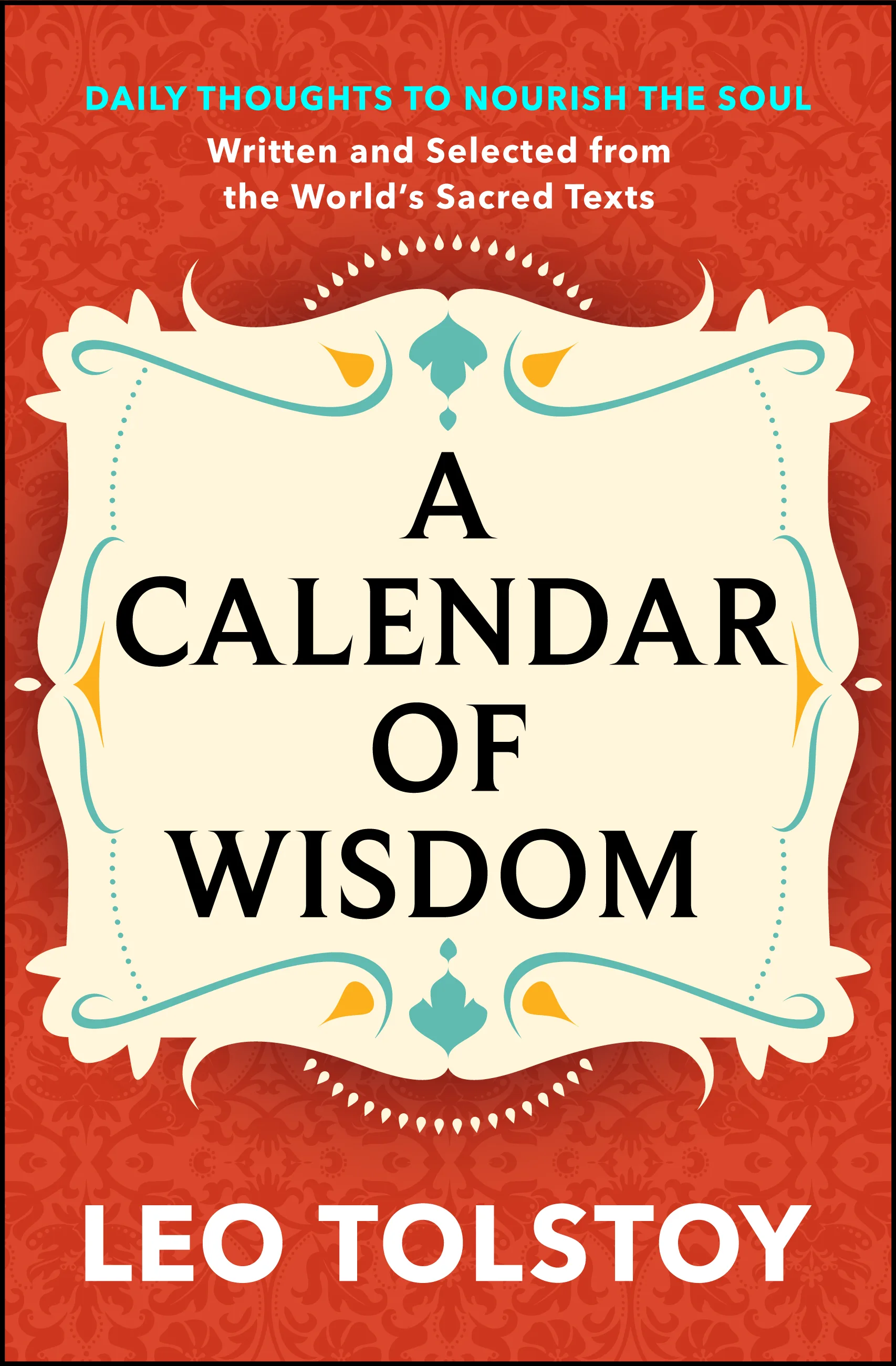
Download Cover Image
Do you want to download the full cover image for A Calendar of Wisdom?