
Pakistan or The Partition Of India
eBook
• INR 99.00
• English
• 9788199088566
No ratings yet
| Publisher | General Press |
|---|---|
| ISBN13 | 9788199088566 |
| ASIN/SKU | B0G1TH8LXH |
| Book Format | eBook |
| Language | English |
| List Price | INR 99.00 |
| Subject Code | HIS062000, HIS037070, POL042000 |
| Book Code | BD00069191 |
Buy this Book
Amazon Stores
Ebook Stores
Other Stores
Discover Pakistan or The Partition Of India by Dr. B.R. Ambedkar. This book is published by General Press in eBook format, ISBN 9788199088566, ASIN B0G1TH8LXH, under History, History of Asia, Politics.
Book Description
“Pakistan or The Partition of India” by Dr. B.R. Ambedkar, first published in 1940, is a significant work of political analysis and historical commentary that explores the complex causes and consequences of India’s partition. Dr. Ambedkar, a renowned jurist, social reformer, and principal architect of the Indian Constitution, was known for his sharp intellect, fearless honesty, and logical clarity. His writing in this book is bold, analytical, and rooted in deep historical understanding.
In this work, Ambedkar examines the demand for a separate Muslim state—what would eventually become Pakistan—and the communal tensions between Hindus and Muslims. He critically assesses the positions of the Muslim League, the Indian National Congress, and British colonial policies, offering a clear-eyed view of the political realities of pre-independence India.
Ambedkar also delves into the concept of Muslim separatism, the weaknesses of Indian nationalism, and the failure to create a truly inclusive national identity. While not endorsing partition, he presents it as a practical solution under the prevailing circumstances.
Pakistan or The Partition of India remains a vital text in South Asian political literature, offering deep insights into one of the subcontinent’s most defining historical events. It continues to provoke thought and debate on nationalism, identity, and communalism.
In this work, Ambedkar examines the demand for a separate Muslim state—what would eventually become Pakistan—and the communal tensions between Hindus and Muslims. He critically assesses the positions of the Muslim League, the Indian National Congress, and British colonial policies, offering a clear-eyed view of the political realities of pre-independence India.
Ambedkar also delves into the concept of Muslim separatism, the weaknesses of Indian nationalism, and the failure to create a truly inclusive national identity. While not endorsing partition, he presents it as a practical solution under the prevailing circumstances.
Pakistan or The Partition of India remains a vital text in South Asian political literature, offering deep insights into one of the subcontinent’s most defining historical events. It continues to provoke thought and debate on nationalism, identity, and communalism.
Author Biography
Dr. Bhimrao Ramji Ambedkar (1891–1956) was a towering Indian jurist, economist, social reformer, and political leader who served as the chief architect of the Indian Constitution. Born into the marginalized Mahar caste in Mhow, Madhya Pradesh, Ambedkar faced severe socio-economic discrimination from a young age due to the oppressive practice of untouchability. Despite these immense barriers, his exceptional intellect propelled him to become one of the most highly educated Indians of his time, earning doctorates in economics from both Columbia University and the London School of Economics.
Returning to India, Ambedkar dedicated his life to dismantling the rigid Hindu caste system and fighting for the civil liberties of Dalits and other oppressed communities. He led powerful grassroots movements, such as the Mahad Satyagraha in 1927, advocating for equal access to public resources. When India gained independence in 1947, he was appointed as the nation’s first Law Minister and selected to chair the Constitution Drafting Committee. Under his visionary leadership, the newly framed Constitution guaranteed fundamental rights, formally outlawed untouchability, and established affirmative action policies to uplift disadvantaged groups.
Beyond his monumental political legacy, Ambedkar was a prolific author and relentless public intellectual. His most famous work, Annihilation of Caste (1936), remains a seminal, blistering critique of social hierarchy and religious orthodoxy. Other major scholarly contributions include Who Were the Shudras? and The Problem of the Rupee, which heavily influenced the establishment of the Reserve Bank of India. Disillusioned with the entrenched inequalities of Hinduism, Ambedkar converted to Buddhism just weeks before his death in 1956, initiating a mass conversion movement among his followers. Posthumously awarded the Bharat Ratna, India’s highest civilian honor, Dr. Ambedkar’s profound legacy continues to inspire global movements for social justice, equality, and human rights.
Returning to India, Ambedkar dedicated his life to dismantling the rigid Hindu caste system and fighting for the civil liberties of Dalits and other oppressed communities. He led powerful grassroots movements, such as the Mahad Satyagraha in 1927, advocating for equal access to public resources. When India gained independence in 1947, he was appointed as the nation’s first Law Minister and selected to chair the Constitution Drafting Committee. Under his visionary leadership, the newly framed Constitution guaranteed fundamental rights, formally outlawed untouchability, and established affirmative action policies to uplift disadvantaged groups.
Beyond his monumental political legacy, Ambedkar was a prolific author and relentless public intellectual. His most famous work, Annihilation of Caste (1936), remains a seminal, blistering critique of social hierarchy and religious orthodoxy. Other major scholarly contributions include Who Were the Shudras? and The Problem of the Rupee, which heavily influenced the establishment of the Reserve Bank of India. Disillusioned with the entrenched inequalities of Hinduism, Ambedkar converted to Buddhism just weeks before his death in 1956, initiating a mass conversion movement among his followers. Posthumously awarded the Bharat Ratna, India’s highest civilian honor, Dr. Ambedkar’s profound legacy continues to inspire global movements for social justice, equality, and human rights.
Editorial Reviews
Editorial Reviews will be added soon…
Book Summary
Pakistan or the Partition of India by Dr. B.R. Ambedkar is one of the most important and intellectually challenging books written about the political crisis that eventually led to the Partition of British India. First published in 1940 under the title Thoughts on Pakistan, the work was substantially revised and expanded in later editions, including the 1945 and 1946 editions. Rather than offering a simple emotional argument either for or against Pakistan, Ambedkar examines the Muslim League's demand, the Hindu response, the constitutional and economic consequences of partition, the problem of communal conflict, and the possible alternatives to division. The 1946 edition runs to roughly 480 pages and is organized into five major parts, followed by an epilogue, appendices, and an index.
The central question of Pakistan or the Partition of India is deceptively simple: if Hindus and Muslims could not agree on a common political future, should India remain united, or should Muslim-majority regions be separated into a different state? Ambedkar does not approach this question as a romantic nationalist. He approaches it as a political thinker, constitutionalist, economist, and social critic. His concern is not merely whether partition is emotionally desirable but whether a united India can actually function as a stable democracy when two large communities have developed such deep political distrust. For Ambedkar, the problem has to be examined through institutions, representation, power, security, economics, social relations, and the practical consequences of each possible solution.
The first major section presents what Ambedkar calls the Muslim case for Pakistan. He begins by examining what the Muslim League was actually demanding rather than reducing its position to a slogan. The demand was connected to the idea that Muslim-majority regions should be organized into separate political units and that Muslims constituted a distinct political nation. Ambedkar examines the argument that Muslims needed a political homeland because they feared permanent domination by a Hindu majority in a united democratic India. The book's structure is significant because Ambedkar deliberately presents the arguments of those demanding Pakistan before developing the case against it. The first three chapters are titled “What does the League Demand?”, “A Nation Calling for a Home,” and “Escape from Degradation.”
Ambedkar takes seriously the Muslim argument that democracy based purely on numerical majority could become a source of insecurity for minorities. This is an especially important aspect of the book because Ambedkar himself had spent much of his political life confronting the problem of majority domination and social exclusion. He therefore does not assume that the creation of a united nation automatically guarantees equality. A constitution may declare everyone equal, but political institutions must also prevent one community from using its numerical strength to control another indefinitely. In Ambedkar's analysis, the Muslim demand for Pakistan cannot be dismissed simply as an irrational desire for separation. It emerges from a history of political disagreements, fears about representation, and a lack of confidence in the possibility of genuine power-sharing.
The idea of nationhood receives particular attention. Ambedkar examines whether Hindus and Muslims should be regarded as members of one nation merely because they inhabit the same geographical territory. His analysis challenges the assumption that geography alone creates political unity. A nation, in his reasoning, requires a sufficient sense of common social and political purpose. Where communities possess conflicting political loyalties and cannot trust one another, territorial unity may exist on a map without producing genuine national unity. This distinction between geographical unity and political unity is one of the most important ideas running through the book.
Ambedkar then turns to the Hindu case against Pakistan. The second part examines the argument that partition would destroy India's unity, weaken its military defenses, create economic difficulties, and fail to solve communal tensions. He considers the geographical consequences of separating Muslim-majority areas from the rest of India. Questions about Punjab, Bengal, the North-West Frontier Province, Sindh, Assam, and other regions become important because religious populations were not distributed neatly into completely separate territories. The problem was therefore not simply to draw a line between “Hindu India” and “Muslim India.” Populations were mixed, cities contained different communities, and economic systems crossed proposed political boundaries.
The question of India's defence after partition is another major concern. Ambedkar examines whether the division of territory and resources would leave either state militarily vulnerable. He considers questions involving frontiers, financial resources, armed forces, and strategic geography. His approach is practical rather than sentimental. If Pakistan were created, what would happen to the army? How would military resources be divided? What territories would be strategically important? Would the new states have enough economic resources to maintain security? These questions reveal why the book is much more than a discussion of Hindu-Muslim relations. It is also a study of how political boundaries affect the functioning of states.
The chapter on Pakistan and communal peace goes to the heart of Ambedkar's argument. One common objection to partition was that separating the country would not necessarily end Hindu-Muslim conflict. Ambedkar examines this seriously. If communities were already hostile to one another, could territorial separation actually reduce conflict, or would it simply create new disputes over borders, minorities, property, resources, and political influence? He considers the possibility that partition might not eliminate communalism but could transform its form. The question is therefore not simply whether Pakistan would be good or bad but whether it could produce a more workable political relationship between the two communities.
The third part, “What If Not Pakistan?”, is especially important because Ambedkar does not treat partition as the only idea worth discussing. He examines alternatives proposed by both Hindu and Muslim political thinkers. The Hindu alternative includes arguments associated with those who wanted to preserve India's territorial unity, while the Muslim alternative considers proposals intended to provide Muslims with political security without creating a separate sovereign state. Ambedkar also examines the history of Hindu-Muslim relations and the repeated failure of political cooperation. The book's structure shows that he is interested in testing alternatives rather than simply announcing a conclusion at the beginning.
Ambedkar's discussion of Mahatma Gandhi, the Hindu Mahasabha, and other political positions illustrates the complexity of the debate. He is skeptical of solutions based primarily on moral appeals when political institutions remain unresolved. Appeals to brotherhood, unity, or goodwill may be valuable, but they cannot substitute for constitutional arrangements that distribute power fairly. Ambedkar's political thinking consistently emphasizes institutions because institutions continue to operate even when goodwill disappears. A political system that depends entirely on leaders behaving generously may collapse when those leaders change or when social tensions become intense.
The chapter “Lessons from Abroad” broadens the analysis by examining international examples, including Turkey and Czechoslovakia. Ambedkar uses these cases to explore questions of nationalism, territorial division, minorities, and self-determination. He is interested in what happens when political communities containing different national or ethnic groups cannot sustain a common political framework. The comparison is not meant to suggest that India's circumstances are identical to those of other countries. Instead, Ambedkar uses international experience to ask whether similar political problems can reveal general principles about state formation and national self-determination.
The fourth part, “Pakistan and the Malaise,” shifts from the immediate constitutional question toward deeper social and political problems. Its three chapters—“Social Stagnation,” “Communal Aggression,” and “National Frustration”—examine the forces that make political cooperation so difficult. Ambedkar's argument becomes increasingly psychological and social here. Political conflict is not produced only by constitutional arrangements; it is also produced by accumulated memories, fears, prejudices, grievances, and experiences of humiliation. When these emotions become embedded in political life, compromise becomes extremely difficult.
The discussion of communal aggression is particularly significant. Ambedkar refuses to romanticize communal relations. He points to episodes of violence and political hostility as evidence that the problem cannot be solved merely by declaring that Hindus and Muslims have always lived peacefully together. His method is empirical: if communal violence repeatedly occurs, political theory must account for it. A successful constitutional settlement must be designed for the society that actually exists, not for an idealized society that political leaders wish existed.
At the same time, Ambedkar's analysis should not be read as a straightforward endorsement of every argument made by the Muslim League or as a blanket condemnation of either religious community. His method is argumentative and deliberately confrontational. He examines competing claims, tests them against political realities, and repeatedly asks what arrangement is most likely to produce stability. His position is best understood as a pragmatic response to a political deadlock rather than as an expression of enthusiasm for partition itself.
The final section, including “Must There Be Pakistan?”, “The Problems of Pakistan,” and “Who Can Decide?”, brings the various strands of the argument together. Ambedkar asks whether partition is unavoidable, what problems it would create, and who should have the authority to make such a momentous decision. The question of decision-making is crucial because partition would affect millions of people, including communities that might become minorities on either side of a new boundary. Ambedkar therefore considers the constitutional mechanism through which such a settlement could be achieved. The book even includes a proposed framework for dealing with the political transition, demonstrating his characteristic preference for concrete institutional arrangements rather than vague political promises.
One of the most striking features of Pakistan or the Partition of India is Ambedkar's insistence that political problems must be approached realistically. He does not believe that patriotism by itself can solve constitutional conflicts. Nor does he assume that a united India is automatically better than a divided India. For him, the real test is whether people can live together with political security, equality, and mutual confidence. If unity produces permanent communal conflict and one community fears domination by another, then geographical unity may become a source of instability rather than strength.
The book is also closely connected to Ambedkar's larger philosophy of minority rights, constitutional safeguards, and social democracy. His experience of caste oppression influenced his understanding of majority-minority politics, although Hindu-Muslim relations and caste relations are not identical problems. Ambedkar understood that a numerical majority can become politically dangerous when institutions do not protect vulnerable groups. This explains why his discussion of Pakistan repeatedly returns to representation, safeguards, political power, and the fear of domination. The book is therefore valuable not only as a historical document about Partition but also as an exploration of how democracies should handle deeply divided societies.
Ambedkar's final position is pragmatic: he comes to regard partition as a potentially necessary solution to an otherwise persistent political deadlock, while also recognizing the enormous difficulties that partition would create. This is why the book should not be reduced to the statement that “Ambedkar supported Pakistan.” His argument is more complicated. He examines the Muslim demand seriously, tests the Hindu objections seriously, studies alternatives, considers international examples, and then asks which arrangement offers the best chance of creating workable political relations. The book is essentially an argument about choosing between difficult alternatives rather than choosing between an obviously good option and an obviously bad one.
For readers looking for a summary of Pakistan or the Partition of India, an analysis of B.R. Ambedkar's views on Partition, Ambedkar's views on Pakistan, the Muslim League's demand for Pakistan, Hindu-Muslim relations before Partition, Ambedkar and the Partition of India, or an explanation of why Ambedkar discussed Pakistan, the book's greatest value lies in its refusal to simplify the issue. Ambedkar treats Partition as a constitutional, political, economic, military, social, and psychological problem at the same time. The book's detailed chapter structure reflects this broad approach, moving from the Muslim case to the Hindu case, then to alternatives, deeper social problems, and finally the question of whether partition is necessary and how it should be carried out.
Ultimately, Pakistan or the Partition of India by Dr. B.R. Ambedkar is a study of political realism. Ambedkar asks readers to look beyond slogans such as unity, nationalism, communal harmony, or independence and examine the institutions underneath them. His central concern is whether people who distrust one another can build a stable democratic state without meaningful safeguards and an acceptable distribution of political power. The book does not make the tragedy of Partition disappear, nor does it pretend that partition would solve every problem. Instead, it forces readers to confront the difficult choices that existed before 1947. Its lasting importance comes from this willingness to examine uncomfortable realities. Ambedkar's analysis reminds us that nations are not sustained by territory alone; they also require political trust, constitutional protection, social cooperation, and a genuine sense of security among the people who live within their borders. Even decades after Partition, that combination of political realism and constitutional thinking makes Pakistan or the Partition of India an essential work for anyone seeking to understand the intellectual debates surrounding one of the most consequential events in modern South Asian history.
The central question of Pakistan or the Partition of India is deceptively simple: if Hindus and Muslims could not agree on a common political future, should India remain united, or should Muslim-majority regions be separated into a different state? Ambedkar does not approach this question as a romantic nationalist. He approaches it as a political thinker, constitutionalist, economist, and social critic. His concern is not merely whether partition is emotionally desirable but whether a united India can actually function as a stable democracy when two large communities have developed such deep political distrust. For Ambedkar, the problem has to be examined through institutions, representation, power, security, economics, social relations, and the practical consequences of each possible solution.
The first major section presents what Ambedkar calls the Muslim case for Pakistan. He begins by examining what the Muslim League was actually demanding rather than reducing its position to a slogan. The demand was connected to the idea that Muslim-majority regions should be organized into separate political units and that Muslims constituted a distinct political nation. Ambedkar examines the argument that Muslims needed a political homeland because they feared permanent domination by a Hindu majority in a united democratic India. The book's structure is significant because Ambedkar deliberately presents the arguments of those demanding Pakistan before developing the case against it. The first three chapters are titled “What does the League Demand?”, “A Nation Calling for a Home,” and “Escape from Degradation.”
Ambedkar takes seriously the Muslim argument that democracy based purely on numerical majority could become a source of insecurity for minorities. This is an especially important aspect of the book because Ambedkar himself had spent much of his political life confronting the problem of majority domination and social exclusion. He therefore does not assume that the creation of a united nation automatically guarantees equality. A constitution may declare everyone equal, but political institutions must also prevent one community from using its numerical strength to control another indefinitely. In Ambedkar's analysis, the Muslim demand for Pakistan cannot be dismissed simply as an irrational desire for separation. It emerges from a history of political disagreements, fears about representation, and a lack of confidence in the possibility of genuine power-sharing.
The idea of nationhood receives particular attention. Ambedkar examines whether Hindus and Muslims should be regarded as members of one nation merely because they inhabit the same geographical territory. His analysis challenges the assumption that geography alone creates political unity. A nation, in his reasoning, requires a sufficient sense of common social and political purpose. Where communities possess conflicting political loyalties and cannot trust one another, territorial unity may exist on a map without producing genuine national unity. This distinction between geographical unity and political unity is one of the most important ideas running through the book.
Ambedkar then turns to the Hindu case against Pakistan. The second part examines the argument that partition would destroy India's unity, weaken its military defenses, create economic difficulties, and fail to solve communal tensions. He considers the geographical consequences of separating Muslim-majority areas from the rest of India. Questions about Punjab, Bengal, the North-West Frontier Province, Sindh, Assam, and other regions become important because religious populations were not distributed neatly into completely separate territories. The problem was therefore not simply to draw a line between “Hindu India” and “Muslim India.” Populations were mixed, cities contained different communities, and economic systems crossed proposed political boundaries.
The question of India's defence after partition is another major concern. Ambedkar examines whether the division of territory and resources would leave either state militarily vulnerable. He considers questions involving frontiers, financial resources, armed forces, and strategic geography. His approach is practical rather than sentimental. If Pakistan were created, what would happen to the army? How would military resources be divided? What territories would be strategically important? Would the new states have enough economic resources to maintain security? These questions reveal why the book is much more than a discussion of Hindu-Muslim relations. It is also a study of how political boundaries affect the functioning of states.
The chapter on Pakistan and communal peace goes to the heart of Ambedkar's argument. One common objection to partition was that separating the country would not necessarily end Hindu-Muslim conflict. Ambedkar examines this seriously. If communities were already hostile to one another, could territorial separation actually reduce conflict, or would it simply create new disputes over borders, minorities, property, resources, and political influence? He considers the possibility that partition might not eliminate communalism but could transform its form. The question is therefore not simply whether Pakistan would be good or bad but whether it could produce a more workable political relationship between the two communities.
The third part, “What If Not Pakistan?”, is especially important because Ambedkar does not treat partition as the only idea worth discussing. He examines alternatives proposed by both Hindu and Muslim political thinkers. The Hindu alternative includes arguments associated with those who wanted to preserve India's territorial unity, while the Muslim alternative considers proposals intended to provide Muslims with political security without creating a separate sovereign state. Ambedkar also examines the history of Hindu-Muslim relations and the repeated failure of political cooperation. The book's structure shows that he is interested in testing alternatives rather than simply announcing a conclusion at the beginning.
Ambedkar's discussion of Mahatma Gandhi, the Hindu Mahasabha, and other political positions illustrates the complexity of the debate. He is skeptical of solutions based primarily on moral appeals when political institutions remain unresolved. Appeals to brotherhood, unity, or goodwill may be valuable, but they cannot substitute for constitutional arrangements that distribute power fairly. Ambedkar's political thinking consistently emphasizes institutions because institutions continue to operate even when goodwill disappears. A political system that depends entirely on leaders behaving generously may collapse when those leaders change or when social tensions become intense.
The chapter “Lessons from Abroad” broadens the analysis by examining international examples, including Turkey and Czechoslovakia. Ambedkar uses these cases to explore questions of nationalism, territorial division, minorities, and self-determination. He is interested in what happens when political communities containing different national or ethnic groups cannot sustain a common political framework. The comparison is not meant to suggest that India's circumstances are identical to those of other countries. Instead, Ambedkar uses international experience to ask whether similar political problems can reveal general principles about state formation and national self-determination.
The fourth part, “Pakistan and the Malaise,” shifts from the immediate constitutional question toward deeper social and political problems. Its three chapters—“Social Stagnation,” “Communal Aggression,” and “National Frustration”—examine the forces that make political cooperation so difficult. Ambedkar's argument becomes increasingly psychological and social here. Political conflict is not produced only by constitutional arrangements; it is also produced by accumulated memories, fears, prejudices, grievances, and experiences of humiliation. When these emotions become embedded in political life, compromise becomes extremely difficult.
The discussion of communal aggression is particularly significant. Ambedkar refuses to romanticize communal relations. He points to episodes of violence and political hostility as evidence that the problem cannot be solved merely by declaring that Hindus and Muslims have always lived peacefully together. His method is empirical: if communal violence repeatedly occurs, political theory must account for it. A successful constitutional settlement must be designed for the society that actually exists, not for an idealized society that political leaders wish existed.
At the same time, Ambedkar's analysis should not be read as a straightforward endorsement of every argument made by the Muslim League or as a blanket condemnation of either religious community. His method is argumentative and deliberately confrontational. He examines competing claims, tests them against political realities, and repeatedly asks what arrangement is most likely to produce stability. His position is best understood as a pragmatic response to a political deadlock rather than as an expression of enthusiasm for partition itself.
The final section, including “Must There Be Pakistan?”, “The Problems of Pakistan,” and “Who Can Decide?”, brings the various strands of the argument together. Ambedkar asks whether partition is unavoidable, what problems it would create, and who should have the authority to make such a momentous decision. The question of decision-making is crucial because partition would affect millions of people, including communities that might become minorities on either side of a new boundary. Ambedkar therefore considers the constitutional mechanism through which such a settlement could be achieved. The book even includes a proposed framework for dealing with the political transition, demonstrating his characteristic preference for concrete institutional arrangements rather than vague political promises.
One of the most striking features of Pakistan or the Partition of India is Ambedkar's insistence that political problems must be approached realistically. He does not believe that patriotism by itself can solve constitutional conflicts. Nor does he assume that a united India is automatically better than a divided India. For him, the real test is whether people can live together with political security, equality, and mutual confidence. If unity produces permanent communal conflict and one community fears domination by another, then geographical unity may become a source of instability rather than strength.
The book is also closely connected to Ambedkar's larger philosophy of minority rights, constitutional safeguards, and social democracy. His experience of caste oppression influenced his understanding of majority-minority politics, although Hindu-Muslim relations and caste relations are not identical problems. Ambedkar understood that a numerical majority can become politically dangerous when institutions do not protect vulnerable groups. This explains why his discussion of Pakistan repeatedly returns to representation, safeguards, political power, and the fear of domination. The book is therefore valuable not only as a historical document about Partition but also as an exploration of how democracies should handle deeply divided societies.
Ambedkar's final position is pragmatic: he comes to regard partition as a potentially necessary solution to an otherwise persistent political deadlock, while also recognizing the enormous difficulties that partition would create. This is why the book should not be reduced to the statement that “Ambedkar supported Pakistan.” His argument is more complicated. He examines the Muslim demand seriously, tests the Hindu objections seriously, studies alternatives, considers international examples, and then asks which arrangement offers the best chance of creating workable political relations. The book is essentially an argument about choosing between difficult alternatives rather than choosing between an obviously good option and an obviously bad one.
For readers looking for a summary of Pakistan or the Partition of India, an analysis of B.R. Ambedkar's views on Partition, Ambedkar's views on Pakistan, the Muslim League's demand for Pakistan, Hindu-Muslim relations before Partition, Ambedkar and the Partition of India, or an explanation of why Ambedkar discussed Pakistan, the book's greatest value lies in its refusal to simplify the issue. Ambedkar treats Partition as a constitutional, political, economic, military, social, and psychological problem at the same time. The book's detailed chapter structure reflects this broad approach, moving from the Muslim case to the Hindu case, then to alternatives, deeper social problems, and finally the question of whether partition is necessary and how it should be carried out.
Ultimately, Pakistan or the Partition of India by Dr. B.R. Ambedkar is a study of political realism. Ambedkar asks readers to look beyond slogans such as unity, nationalism, communal harmony, or independence and examine the institutions underneath them. His central concern is whether people who distrust one another can build a stable democratic state without meaningful safeguards and an acceptable distribution of political power. The book does not make the tragedy of Partition disappear, nor does it pretend that partition would solve every problem. Instead, it forces readers to confront the difficult choices that existed before 1947. Its lasting importance comes from this willingness to examine uncomfortable realities. Ambedkar's analysis reminds us that nations are not sustained by territory alone; they also require political trust, constitutional protection, social cooperation, and a genuine sense of security among the people who live within their borders. Even decades after Partition, that combination of political realism and constitutional thinking makes Pakistan or the Partition of India an essential work for anyone seeking to understand the intellectual debates surrounding one of the most consequential events in modern South Asian history.
Sample Chapters
Sample Chapters will be added soon…
Reader Reviews
No reviews yet.
Pakistan or The Partition Of India
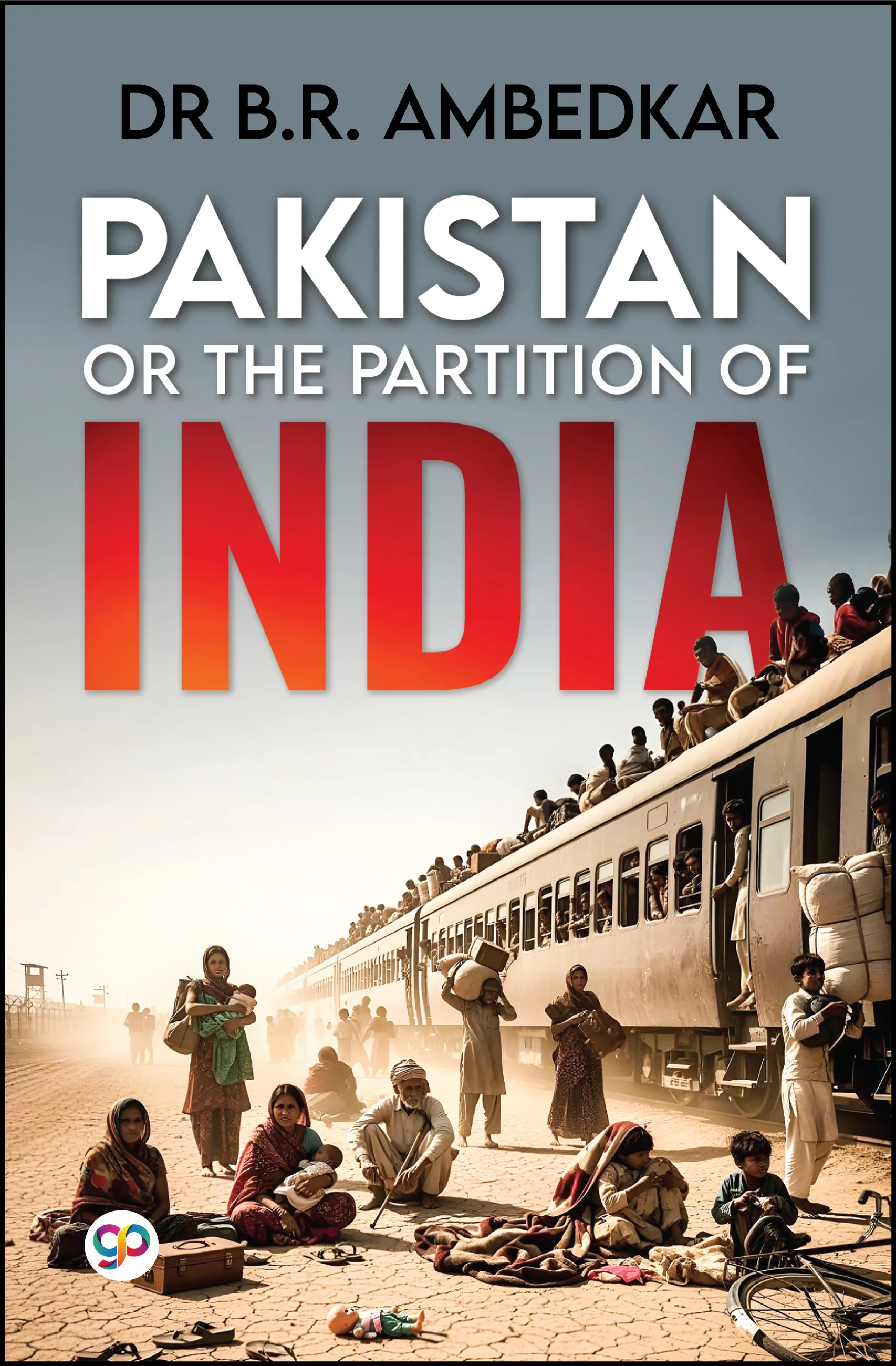
Download Cover Image
Do you want to download the full cover image for Pakistan or The Partition Of India?