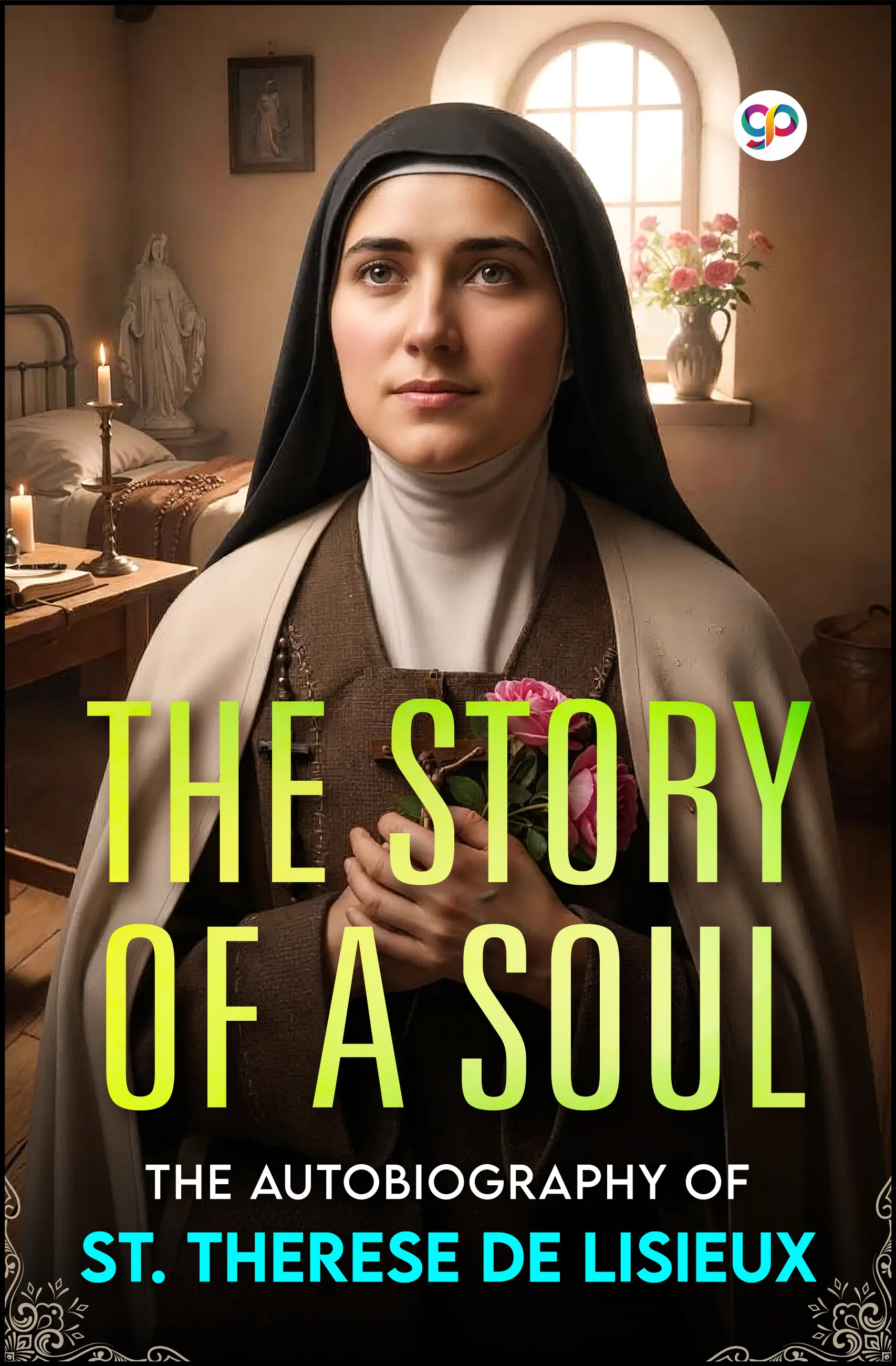
The Story of a Soul
eBook
• INR 99.00
• English
• 9788199107373
No ratings yet
| Publisher | General Press |
|---|---|
| ISBN13 | 9788199107373 |
| ASIN/SKU | B0G1THD2VZ |
| Book Format | eBook |
| Language | English |
| List Price | INR 99.00 |
| Subject Code | BIO018000, REL022000, REL036000 |
| Book Code | BD00069197 |
Discover The Story of a Soul by St. Therese de Lisieux. This book is published by General Press in eBook format, ISBN 9788199107373, ASIN B0G1THD2VZ, under Religion and Spirituality, Christian Books and Bibles, Biographies.
Book Description
St. Thérèse de Lisieux’s "The Story of a Soul" is a profoundly intimate, radiant spiritual autobiography that transforms the pursuit of holiness from a distant, heroic feat into an accessible journey of the heart. Originally written as a private memoir for her convent sisters, this book invites us into the quiet, inner life of a young French Carmelite nun who found extraordinary grace in the most ordinary moments.
Thérèse candidly chronicles her early years, detailing her deeply sensitive nature, the pain of losing her mother, and her passionate, almost stubborn determination to enter the cloister at just fifteen. Yet, it is within the restrictive, hidden walls of the monastery that her true spiritual genius blossoms. Realizing she was too small and weak to achieve the grand, sweeping acts of martyrdom celebrated in church history, Thérèse discovers her revolutionary "Little Way."
With beautiful lucidity, she explains this philosophy: doing small, everyday things with immense love. Whether it is enduring the irritating habits of a fellow nun or sweeping a floor, she offers every fleeting moment as an act of profound devotion.
In her final chapters, the narrative deepens into a moving testament of resilience. As she battles agonizing tuberculosis and a profound darkness of faith, her child-like trust never wavers. Written with gentle humility and immense compassion, 'The Story of a Soul' is a timeless, deeply human reminder that true greatness is not found in spectacular achievements, but in the quiet, unyielding power of everyday love.
Thérèse candidly chronicles her early years, detailing her deeply sensitive nature, the pain of losing her mother, and her passionate, almost stubborn determination to enter the cloister at just fifteen. Yet, it is within the restrictive, hidden walls of the monastery that her true spiritual genius blossoms. Realizing she was too small and weak to achieve the grand, sweeping acts of martyrdom celebrated in church history, Thérèse discovers her revolutionary "Little Way."
With beautiful lucidity, she explains this philosophy: doing small, everyday things with immense love. Whether it is enduring the irritating habits of a fellow nun or sweeping a floor, she offers every fleeting moment as an act of profound devotion.
In her final chapters, the narrative deepens into a moving testament of resilience. As she battles agonizing tuberculosis and a profound darkness of faith, her child-like trust never wavers. Written with gentle humility and immense compassion, 'The Story of a Soul' is a timeless, deeply human reminder that true greatness is not found in spectacular achievements, but in the quiet, unyielding power of everyday love.
Author Biography
St. Thérèse of Lisieux (1873–1897), author of The Story of a Soul, was a French Carmelite nun whose simple yet profound spirituality left a lasting mark on Christian thought. Born Marie Françoise-Thérèse Martin in Alençon, France, she was the youngest of nine children in a deeply religious family. Her mother died when she was four, and the loss profoundly shaped her emotional and spiritual life. At age 15, after appealing directly to the Pope, she entered the Carmelite convent in Lisieux.
In the convent, Thérèse lived a quiet, hidden life of prayer, humility, and devotion. She developed her famous “Little Way,” which taught that holiness could be achieved through small acts of love and complete trust in God. At the request of her superiors, she wrote her spiritual autobiography, L’Histoire d’une Âme (The Story of a Soul), which was published after her death in 1898. The book quickly gained worldwide popularity for its heartfelt sincerity and spiritual depth.
Thérèse died from tuberculosis at age 24, yet her influence grew rapidly. She was canonized in 1925 and declared a Doctor of the Church in 1997—one of only four women to receive that title. Her message of love, simplicity, and trust continues to inspire millions.
In the convent, Thérèse lived a quiet, hidden life of prayer, humility, and devotion. She developed her famous “Little Way,” which taught that holiness could be achieved through small acts of love and complete trust in God. At the request of her superiors, she wrote her spiritual autobiography, L’Histoire d’une Âme (The Story of a Soul), which was published after her death in 1898. The book quickly gained worldwide popularity for its heartfelt sincerity and spiritual depth.
Thérèse died from tuberculosis at age 24, yet her influence grew rapidly. She was canonized in 1925 and declared a Doctor of the Church in 1997—one of only four women to receive that title. Her message of love, simplicity, and trust continues to inspire millions.
Editorial Reviews
Editorial Reviews will be added soon…
Book Summary
"The Story of a Soul" by St. Thérèse of Lisieux is not your typical saintly autobiography filled with miraculous visions or grand crusades. Instead, it is a deeply intimate collection of three autobiographical manuscripts written by a young French Carmelite nun who died in obscurity at age twenty-four. Penned purely under obedience to her religious superiors, the book was never originally intended for a global audience. Yet, shortly after her death from tuberculosis in 1897, these personal notebooks were compiled and published, inadvertently sparking a worldwide spiritual revolution. The enduring magic of the book lies in its striking simplicity and psychological honesty, offering a completely new, accessible roadmap to spiritual perfection that she famously dubbed the "Little Way."
The narrative begins with a tender look at her early childhood in Alençon, France. Born in 1873 to devout parents, Louis and Zélie Martin, Thérèse paints her earliest years as a time of unclouded joy. However, this idyllic period was shattered by the tragic death of her mother from breast cancer when Thérèse was only four years old. With striking self-awareness, she describes how this devastating loss profoundly altered her personality. The once lively child retreated into a fragile shell, becoming excessively shy, hypersensitive, and prone to endless fits of tears. Though her father and sisters enveloped her in love after a move to Lisieux, Thérèse remained emotionally crippled by her grief for nearly a decade.
The great turning point of her life, which she calls her "Christmas Conversion," occurred in 1886. Returning from Midnight Mass, she overheard her beloved father grumbling about the childhood tradition of leaving her shoes by the fireplace for gifts, sighing that she was too old for such things. Ordinarily, this would have sent the fragile Thérèse fleeing to her room in tears. Instead, she received a sudden grace of emotional maturity. She swallowed her tears, walked downstairs, and joyfully opened her gifts, sparing her father any guilt. In that brief, mundane moment, she recovered the strength of soul lost at her mother's death, shifting her lifelong focus away from her own feelings and outward toward God and others.
Empowered by this newfound fortitude, Thérèse became consumed by a singular desire: to enter the strict, cloistered Carmelite convent in Lisieux. Because she was only fifteen, local religious authorities flatly refused her request, urging her to wait. Unfazed, the stubborn teenager took her case to the top during a diocesan pilgrimage to Rome. In a famous and daring scene, she broke protocol during a papal audience, throwing herself at the feet of Pope Leo XIII and tearfully begging him to let her enter Carmel. Though the Pope gently told her that God’s will would be done, her bold display of determination ultimately swayed her superiors back home, and she was admitted to the cloister in 1888.
Once inside the convent walls, Thérèse quickly discovered that the romanticized ideals of religious life were vastly different from the gritty reality. Carmel was not a sanctuary of perpetual spiritual ecstasy; it was a place of biting physical cold, meager meals, and the constant friction of living alongside flawed human beings. Rather than seeking out grand, dramatic mortifications, Thérèse embraced a radically different approach to holiness. She realized her battlefield was found in the ordinary annoyances of daily life. She writes of her conscious efforts to show profound love to the most difficult nuns, folding laundry without complaint, and accepting unfair criticism with silence. Her heroism was entirely hidden, composed of thousands of tiny, invisible sacrifices.
This approach formed the foundation of her groundbreaking theology, the "Little Way" of spiritual childhood. Looking at the towering, intimidating perfection of the great saints, Thérèse felt like a tiny grain of sand at the bottom of a massive staircase she was too weak to climb. In a stroke of brilliant spiritual intuition, she decided that she did not need to climb the stairs at all; she simply needed an "elevator" to lift her to God. That elevator, she concluded, was the arms of Jesus. The Little Way was not about childish naivety, but absolute, radical trust. God did not demand great deeds from her, only a recognition of her poverty and unwavering trust in His mercy.
As her spiritual maturity deepened, so did her desires. In the second manuscript, often considered the theological climax of the book, Thérèse expresses a tormented longing to be everything for God—a priest, an apostle, a missionary, a martyr. Knowing she was confined to a tiny convent, she frantically searched the epistles of Saint Paul for an answer. She finally found her resolution in Paul's discourse on love, realizing that love is the engine driving all other vocations. With joyous relief, she penned her most famous line: "In the heart of the Church, my Mother, I shall be Love." By doing the smallest things with extraordinary love, she could participate in every mission from within her hidden cloister.
The final section of the book is a poignant descent into extreme physical and spiritual agony. In 1896, Thérèse began coughing up blood, signaling the onset of tuberculosis, which would slowly suffocate her. Tragically, this physical deterioration coincided with a terrifying "dark night of the soul." The veil of heaven, which had always felt so vividly real to her, was suddenly replaced by an impenetrable wall of darkness. She writes candidly of being assailed by voices of atheism and despair. Yet, she refused to yield. She chose to make acts of blind faith, sitting at what she called "the table of sinners," offering her inner torment as a sacrifice for unbelievers who had lost their way.
The Story of a Soul concludes in the shadow of her impending death, capturing her grueling final months in the convent infirmary. She died in September 1897 at twenty-four, her final words being a simple declaration: "My God, I love you." She had promised to spend her heaven doing good on earth, letting fall a "shower of roses," but she died practically unknown outside her community. It was only when her sisters compiled her scattered exercise books and distributed them that the explosion of devotion began. The deeply relatable, vulnerable voice captured in those pages resonated globally, leading millions to embrace her spirituality and resulting in her rapid canonization just twenty-eight years after her death.
Ultimately, 'The Story of a Soul' endures as a masterpiece of Christian literature because it entirely demystifies the pursuit of holiness. Thérèse stripped away the impossible, intimidating standards of asceticism and replaced them with the simple mechanics of love, trust, and acceptance of one's own weakness. By laying bare her flaws, her hypersensitivity, her doubts, and her ordinary struggles, she assured everyday people that they, too, were capable of profound sanctity without leaving their ordinary lives. The young woman who felt too small to do great deeds left behind a memoir that reshaped modern theology, earning her the title of Doctor of the Church and proving that there is immense power in small things done with great love.
The narrative begins with a tender look at her early childhood in Alençon, France. Born in 1873 to devout parents, Louis and Zélie Martin, Thérèse paints her earliest years as a time of unclouded joy. However, this idyllic period was shattered by the tragic death of her mother from breast cancer when Thérèse was only four years old. With striking self-awareness, she describes how this devastating loss profoundly altered her personality. The once lively child retreated into a fragile shell, becoming excessively shy, hypersensitive, and prone to endless fits of tears. Though her father and sisters enveloped her in love after a move to Lisieux, Thérèse remained emotionally crippled by her grief for nearly a decade.
The great turning point of her life, which she calls her "Christmas Conversion," occurred in 1886. Returning from Midnight Mass, she overheard her beloved father grumbling about the childhood tradition of leaving her shoes by the fireplace for gifts, sighing that she was too old for such things. Ordinarily, this would have sent the fragile Thérèse fleeing to her room in tears. Instead, she received a sudden grace of emotional maturity. She swallowed her tears, walked downstairs, and joyfully opened her gifts, sparing her father any guilt. In that brief, mundane moment, she recovered the strength of soul lost at her mother's death, shifting her lifelong focus away from her own feelings and outward toward God and others.
Empowered by this newfound fortitude, Thérèse became consumed by a singular desire: to enter the strict, cloistered Carmelite convent in Lisieux. Because she was only fifteen, local religious authorities flatly refused her request, urging her to wait. Unfazed, the stubborn teenager took her case to the top during a diocesan pilgrimage to Rome. In a famous and daring scene, she broke protocol during a papal audience, throwing herself at the feet of Pope Leo XIII and tearfully begging him to let her enter Carmel. Though the Pope gently told her that God’s will would be done, her bold display of determination ultimately swayed her superiors back home, and she was admitted to the cloister in 1888.
Once inside the convent walls, Thérèse quickly discovered that the romanticized ideals of religious life were vastly different from the gritty reality. Carmel was not a sanctuary of perpetual spiritual ecstasy; it was a place of biting physical cold, meager meals, and the constant friction of living alongside flawed human beings. Rather than seeking out grand, dramatic mortifications, Thérèse embraced a radically different approach to holiness. She realized her battlefield was found in the ordinary annoyances of daily life. She writes of her conscious efforts to show profound love to the most difficult nuns, folding laundry without complaint, and accepting unfair criticism with silence. Her heroism was entirely hidden, composed of thousands of tiny, invisible sacrifices.
This approach formed the foundation of her groundbreaking theology, the "Little Way" of spiritual childhood. Looking at the towering, intimidating perfection of the great saints, Thérèse felt like a tiny grain of sand at the bottom of a massive staircase she was too weak to climb. In a stroke of brilliant spiritual intuition, she decided that she did not need to climb the stairs at all; she simply needed an "elevator" to lift her to God. That elevator, she concluded, was the arms of Jesus. The Little Way was not about childish naivety, but absolute, radical trust. God did not demand great deeds from her, only a recognition of her poverty and unwavering trust in His mercy.
As her spiritual maturity deepened, so did her desires. In the second manuscript, often considered the theological climax of the book, Thérèse expresses a tormented longing to be everything for God—a priest, an apostle, a missionary, a martyr. Knowing she was confined to a tiny convent, she frantically searched the epistles of Saint Paul for an answer. She finally found her resolution in Paul's discourse on love, realizing that love is the engine driving all other vocations. With joyous relief, she penned her most famous line: "In the heart of the Church, my Mother, I shall be Love." By doing the smallest things with extraordinary love, she could participate in every mission from within her hidden cloister.
The final section of the book is a poignant descent into extreme physical and spiritual agony. In 1896, Thérèse began coughing up blood, signaling the onset of tuberculosis, which would slowly suffocate her. Tragically, this physical deterioration coincided with a terrifying "dark night of the soul." The veil of heaven, which had always felt so vividly real to her, was suddenly replaced by an impenetrable wall of darkness. She writes candidly of being assailed by voices of atheism and despair. Yet, she refused to yield. She chose to make acts of blind faith, sitting at what she called "the table of sinners," offering her inner torment as a sacrifice for unbelievers who had lost their way.
The Story of a Soul concludes in the shadow of her impending death, capturing her grueling final months in the convent infirmary. She died in September 1897 at twenty-four, her final words being a simple declaration: "My God, I love you." She had promised to spend her heaven doing good on earth, letting fall a "shower of roses," but she died practically unknown outside her community. It was only when her sisters compiled her scattered exercise books and distributed them that the explosion of devotion began. The deeply relatable, vulnerable voice captured in those pages resonated globally, leading millions to embrace her spirituality and resulting in her rapid canonization just twenty-eight years after her death.
Ultimately, 'The Story of a Soul' endures as a masterpiece of Christian literature because it entirely demystifies the pursuit of holiness. Thérèse stripped away the impossible, intimidating standards of asceticism and replaced them with the simple mechanics of love, trust, and acceptance of one's own weakness. By laying bare her flaws, her hypersensitivity, her doubts, and her ordinary struggles, she assured everyday people that they, too, were capable of profound sanctity without leaving their ordinary lives. The young woman who felt too small to do great deeds left behind a memoir that reshaped modern theology, earning her the title of Doctor of the Church and proving that there is immense power in small things done with great love.
Sample Chapters
Sample Chapters will be added soon…