
The Torrents of Spring
eBook
• INR 99.00
• English
• 9788199107366
No ratings yet
| Publisher | General Press |
|---|---|
| ISBN13 | 9788199107366 |
| ASIN/SKU | B0G1THKRJ3 |
| Book Format | eBook |
| Language | English |
| List Price | INR 99.00 |
| Subject Code | FIC019000, FIC004000, FIC052000 |
| Book Code | BD00069204 |
Buy this Book
Amazon Stores
Ebook Stores
Other Stores
Discover The Torrents of Spring by Ernest Hemingway. This book is published by General Press in eBook format, ISBN 9788199107366, ASIN B0G1THKRJ3, under Literature and Fiction, Literary Fiction, Classics.
Book Description
“Delightful entertainment... full-blooded comedy, with a sting of satire... reveals Hemingway's gift.” —The New York Times
“The Torrents of Spring” by Ernest Hemingway, first published in 1926, is a short satirical novella and Hemingway’s first published novel. Known for his minimalist style and sharp prose, Hemingway uses this early work to parody the romanticism and literary pretensions of his contemporaries—particularly fellow writer Sherwood Anderson.
Subtitled A Romantic Novel in Honor of the Passing of a Great Race, the book is a witty and exaggerated send-up of literary trends of the time, mocking both sentimental storytelling and self-important modernist styles. Set in a small Michigan town, the story follows two factory workers, Yogi Johnson, a stoic war veteran struggling with his lack of desire, and Scripps O’Neill, a would-be writer and serial romantic who falls for multiple women in quick succession.
Through absurd dialogue, exaggerated characters, and bizarre romantic entanglements, Hemingway critiques the overwrought prose and idealized characters typical of the era. The novella serves both as a humorous literary experiment and a deliberate break from prevailing literary norms.
Though not as well-known as Hemingway’s later masterpieces, The Torrents of Spring is a clever, irreverent work that reveals the young author’s growing confidence and his determination to carve out a new voice in 20th-century American literature.
“The Torrents of Spring” by Ernest Hemingway, first published in 1926, is a short satirical novella and Hemingway’s first published novel. Known for his minimalist style and sharp prose, Hemingway uses this early work to parody the romanticism and literary pretensions of his contemporaries—particularly fellow writer Sherwood Anderson.
Subtitled A Romantic Novel in Honor of the Passing of a Great Race, the book is a witty and exaggerated send-up of literary trends of the time, mocking both sentimental storytelling and self-important modernist styles. Set in a small Michigan town, the story follows two factory workers, Yogi Johnson, a stoic war veteran struggling with his lack of desire, and Scripps O’Neill, a would-be writer and serial romantic who falls for multiple women in quick succession.
Through absurd dialogue, exaggerated characters, and bizarre romantic entanglements, Hemingway critiques the overwrought prose and idealized characters typical of the era. The novella serves both as a humorous literary experiment and a deliberate break from prevailing literary norms.
Though not as well-known as Hemingway’s later masterpieces, The Torrents of Spring is a clever, irreverent work that reveals the young author’s growing confidence and his determination to carve out a new voice in 20th-century American literature.
Author Biography
Ernest Miller Hemingway (1899–1961) was a legendary American novelist, short-story writer, and journalist whose economical, understated prose style profoundly influenced 20th-century fiction. Born in Oak Park, Illinois, Hemingway began his career as a reporter before volunteering as an ambulance driver in Italy during World War I. He was severely wounded and returned home, a traumatic but formative experience that heavily informed his early fiction, particularly his acclaimed 1929 novel A Farewell to Arms.
In the 1920s, Hemingway moved to Paris, where he became a central figure in the "Lost Generation" of expatriate artists and writers, associating with luminaries like F. Scott Fitzgerald and Gertrude Stein. During this period, he published his breakthrough debut novel, The Sun Also Rises (1926), which perfectly captured the post-war disillusionment of his peers. Hemingway's writing was famously characterized by his "iceberg theory"—a minimalist approach where the underlying meaning and emotion are implied rather than explicitly stated. His thirst for adventure frequently mirrored the rugged lives of his characters; he passionately pursued bullfighting, deep-sea fishing, and big-game hunting. He later covered the Spanish Civil War as a journalist, an experience that inspired his 1940 masterpiece For Whom the Bell Tolls.
Hemingway’s later years were marked by a tumultuous personal life, failing physical health, and enduring literary triumph. In 1952, he published The Old Man and the Sea, a short, powerful novel about an aging Cuban fisherman's epic battle with a giant marlin. The book earned him the Pulitzer Prize for Fiction in 1953 and was instrumental in his winning the Nobel Prize in Literature in 1954. Despite his immense global success, Hemingway struggled with severe depression in his final years. He tragically took his own life in Ketchum, Idaho, in 1961, leaving behind a monumental legacy that forever reshaped modern literature.
In the 1920s, Hemingway moved to Paris, where he became a central figure in the "Lost Generation" of expatriate artists and writers, associating with luminaries like F. Scott Fitzgerald and Gertrude Stein. During this period, he published his breakthrough debut novel, The Sun Also Rises (1926), which perfectly captured the post-war disillusionment of his peers. Hemingway's writing was famously characterized by his "iceberg theory"—a minimalist approach where the underlying meaning and emotion are implied rather than explicitly stated. His thirst for adventure frequently mirrored the rugged lives of his characters; he passionately pursued bullfighting, deep-sea fishing, and big-game hunting. He later covered the Spanish Civil War as a journalist, an experience that inspired his 1940 masterpiece For Whom the Bell Tolls.
Hemingway’s later years were marked by a tumultuous personal life, failing physical health, and enduring literary triumph. In 1952, he published The Old Man and the Sea, a short, powerful novel about an aging Cuban fisherman's epic battle with a giant marlin. The book earned him the Pulitzer Prize for Fiction in 1953 and was instrumental in his winning the Nobel Prize in Literature in 1954. Despite his immense global success, Hemingway struggled with severe depression in his final years. He tragically took his own life in Ketchum, Idaho, in 1961, leaving behind a monumental legacy that forever reshaped modern literature.
Editorial Reviews
Editorial Reviews will be added soon…
Book Summary
Book Summary will be added soon…
Sample Chapters
Sample Chapters will be added soon…
Reader Reviews
No reviews yet.
The Torrents of Spring
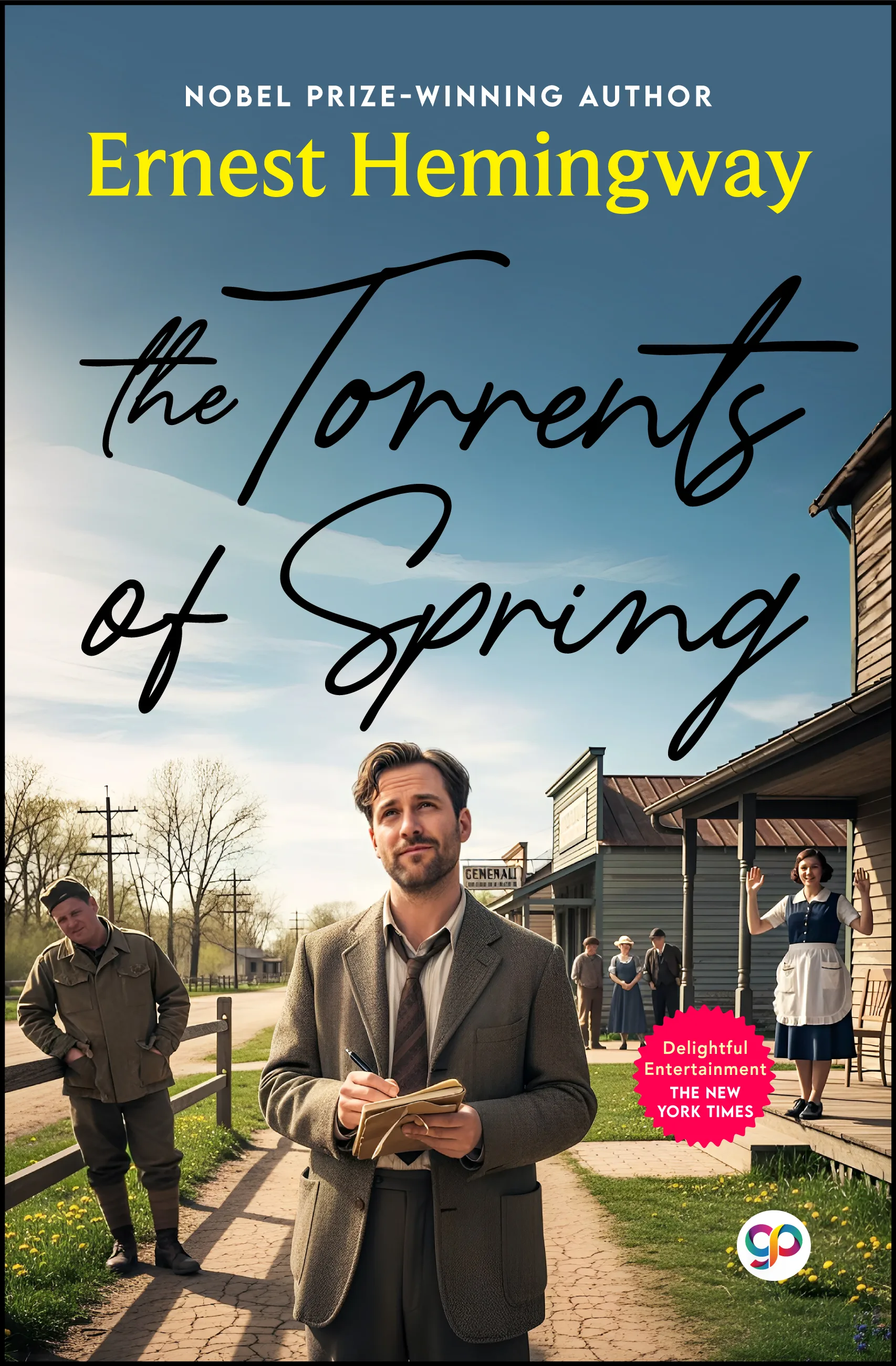
Download Cover Image
Do you want to download the full cover image for The Torrents of Spring?