
An Enemy of the People
eBook
• INR 99.00
• English
• 9789354998492
No ratings yet
| Publisher | General Press |
|---|---|
| ISBN13 | 9789354998492 |
| ASIN/SKU | B0CFTV9XVR |
| Book Format | eBook |
| Language | English |
| List Price | INR 99.00 |
| Subject Code | FIC004000 |
| Book Code | BD00069226 |
Buy this Book
Amazon Stores
Ebook Stores
Other Stores
Discover An Enemy of the People by Henrik Ibsen. This book is published by General Press in eBook format, ISBN 9789354998492, ASIN B0CFTV9XVR, under Literature and Fiction, Classics, Drama.
Book Description
An Enemy of the People by Henrik Ibsen is a powerful social drama that explores the conflict between truth, public opinion, and personal integrity. The story centers on Dr. Thomas Stockmann, a respected physician in a small Norwegian town who discovers that the town's famous public baths—the source of its prosperity and pride—are contaminated and pose a serious threat to public health. Believing that the truth must be revealed, he expects gratitude for his discovery. Instead, he is met with resistance from those who fear the economic consequences of closing the baths.
As news of the contamination spreads, influential townspeople, local officials, and even members of the press turn against Dr. Stockmann. His own brother, the town's mayor, becomes his strongest opponent, arguing that exposing the problem would ruin the town's reputation and financial future. Gradually, the doctor finds himself isolated, condemned by the very community he hoped to protect. His struggle becomes not only a fight for scientific truth but also a battle against the pressure of majority opinion and political convenience.
Through this compelling conflict, Ibsen examines how societies often reject uncomfortable truths when they threaten established interests. The play raises enduring questions about morality, courage, and the responsibility of individuals to stand by their principles even when faced with hostility and personal loss. Dr. Stockmann emerges as a complex and deeply human character whose unwavering commitment to honesty comes at a tremendous personal cost. An Enemy of the People remains a timeless and thought-provoking work, reminding readers that integrity and truth often demand sacrifice, especially when they challenge the interests of the powerful or the beliefs of the majority.
As news of the contamination spreads, influential townspeople, local officials, and even members of the press turn against Dr. Stockmann. His own brother, the town's mayor, becomes his strongest opponent, arguing that exposing the problem would ruin the town's reputation and financial future. Gradually, the doctor finds himself isolated, condemned by the very community he hoped to protect. His struggle becomes not only a fight for scientific truth but also a battle against the pressure of majority opinion and political convenience.
Through this compelling conflict, Ibsen examines how societies often reject uncomfortable truths when they threaten established interests. The play raises enduring questions about morality, courage, and the responsibility of individuals to stand by their principles even when faced with hostility and personal loss. Dr. Stockmann emerges as a complex and deeply human character whose unwavering commitment to honesty comes at a tremendous personal cost. An Enemy of the People remains a timeless and thought-provoking work, reminding readers that integrity and truth often demand sacrifice, especially when they challenge the interests of the powerful or the beliefs of the majority.
Author Biography
Henrik Ibsen (1828–1906) was a Norwegian playwright, poet, and theatre director who is widely regarded as the father of modern drama. Through his bold exploration of social issues, individual freedom, and human psychology, he transformed the theatre from a form of entertainment into a powerful medium for intellectual and emotional reflection. His plays continue to be performed around the world and have profoundly influenced modern literature, theatre, and dramatic storytelling.
Born on March 20, 1828, in the town of Skien, Norway, Ibsen grew up in a once-prosperous family that later faced severe financial hardship. This sudden decline in fortune deeply affected him and gave him an early understanding of social expectations, personal struggle, and the fragile nature of reputation. At the age of fifteen, he left home to work as an apprentice in a pharmacy while educating himself through extensive reading and writing. During these years, he began composing poetry and plays, laying the foundation for his future literary career.
In the early stages of his career, Ibsen worked with several theatres in Norway, gaining valuable experience as a playwright, director, and stage manager. Although his initial works attracted limited attention, he continued refining his craft with remarkable determination. After spending many years in voluntary exile in Italy and Germany, he wrote the plays that would establish his international reputation.
Among his greatest works are Brand, Peer Gynt, A Doll's House, Ghosts, An Enemy of the People, The Wild Duck, Hedda Gabler, and The Master Builder. These plays challenged the conventions of Victorian society by addressing themes such as gender equality, marriage, hypocrisy, morality, personal responsibility, and the search for identity. A Doll's House, in particular, became a landmark in world drama for its courageous portrayal of a woman seeking independence and self-respect.
Ibsen's realistic dialogue, psychologically complex characters, and fearless examination of social issues reshaped dramatic literature. His influence extended to countless playwrights, including George Bernard Shaw, Anton Chekhov, Arthur Miller, and Tennessee Williams, who admired his innovative approach to theatre.
Henrik Ibsen died on May 23, 1906, in Kristiania (now Oslo), Norway. Today, he is remembered as one of the greatest dramatists in history, whose timeless plays continue to inspire audiences with their emotional depth, intellectual power, and enduring exploration of the human condition. His remarkable legacy firmly established modern theatre as a platform for truth, self-examination, and social change.
Born on March 20, 1828, in the town of Skien, Norway, Ibsen grew up in a once-prosperous family that later faced severe financial hardship. This sudden decline in fortune deeply affected him and gave him an early understanding of social expectations, personal struggle, and the fragile nature of reputation. At the age of fifteen, he left home to work as an apprentice in a pharmacy while educating himself through extensive reading and writing. During these years, he began composing poetry and plays, laying the foundation for his future literary career.
In the early stages of his career, Ibsen worked with several theatres in Norway, gaining valuable experience as a playwright, director, and stage manager. Although his initial works attracted limited attention, he continued refining his craft with remarkable determination. After spending many years in voluntary exile in Italy and Germany, he wrote the plays that would establish his international reputation.
Among his greatest works are Brand, Peer Gynt, A Doll's House, Ghosts, An Enemy of the People, The Wild Duck, Hedda Gabler, and The Master Builder. These plays challenged the conventions of Victorian society by addressing themes such as gender equality, marriage, hypocrisy, morality, personal responsibility, and the search for identity. A Doll's House, in particular, became a landmark in world drama for its courageous portrayal of a woman seeking independence and self-respect.
Ibsen's realistic dialogue, psychologically complex characters, and fearless examination of social issues reshaped dramatic literature. His influence extended to countless playwrights, including George Bernard Shaw, Anton Chekhov, Arthur Miller, and Tennessee Williams, who admired his innovative approach to theatre.
Henrik Ibsen died on May 23, 1906, in Kristiania (now Oslo), Norway. Today, he is remembered as one of the greatest dramatists in history, whose timeless plays continue to inspire audiences with their emotional depth, intellectual power, and enduring exploration of the human condition. His remarkable legacy firmly established modern theatre as a platform for truth, self-examination, and social change.
Editorial Reviews
Editorial Reviews will be added soon…
Book Summary
Book Summary will be added soon…
Sample Chapters
Sample Chapters will be added soon…
Reader Reviews
No reviews yet.
An Enemy of the People
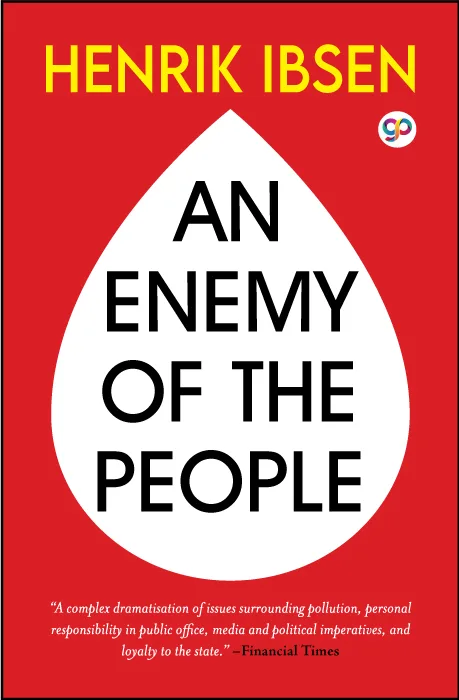
Download Cover Image
Do you want to download the full cover image for An Enemy of the People?