
The Theory of Moral Sentiments
eBook
• INR 99.00
• English
• 9789354998560
No ratings yet
| Publisher | General Press |
|---|---|
| ISBN13 | 9789354998560 |
| ASIN/SKU | B0CFTX94VZ |
| Book Format | eBook |
| Language | English |
| List Price | INR 99.00 |
| Subject Code | BUS069030, SOC050000 |
| Book Code | BD00069235 |
Buy this Book
Amazon Stores
Ebook Stores
Other Stores
Discover The Theory of Moral Sentiments by Adam Smith. This book is published by General Press in eBook format, ISBN 9789354998560, ASIN B0CFTX94VZ, under Non Fiction, Economics, Philosophy.
Book Description
Written in 1759 by Scottish philosopher and political economist Adam Smith, ‘The Theory of Moral Sentiments’ provides much of the foundation for the ideas in his later works, most notably in ‘The Wealth of Nations’. Through this initial text, Smith expresses his general system of morals, exploring the propriety of action, reward and punishment, sense of duty, and the effect of numerous factors on moral sentiment. In so doing, Smith devised innovative theories on virtues, conscience, and moral judgment that are still relevant and accessible today.
It divides moral philosophy into four parts: Ethics and Virtue; Private rights and Natural liberty; Familial rights (called Economics); and State and Individual rights (called Politics). Smith establishes the intellectual framework for all of his later work, including The Wealth of Nations. Though somewhat surprising to find a philosopher of Smith’s abilities discussing aspects such as luck and sympathy and how they affect self-image or relationships, it never loses its critical excellence in its good-natured understanding of the human exploration of the meaning of being good.
It divides moral philosophy into four parts: Ethics and Virtue; Private rights and Natural liberty; Familial rights (called Economics); and State and Individual rights (called Politics). Smith establishes the intellectual framework for all of his later work, including The Wealth of Nations. Though somewhat surprising to find a philosopher of Smith’s abilities discussing aspects such as luck and sympathy and how they affect self-image or relationships, it never loses its critical excellence in its good-natured understanding of the human exploration of the meaning of being good.
Author Biography
Adam Smith (1723–1790) was a Scottish philosopher, economist, and author whose ideas transformed the way people understand economics, commerce, and society. Widely regarded as the "Father of Modern Economics," Smith believed that prosperity grows when individuals are free to pursue their own interests within a system guided by fair laws and open competition. His ideas continue to influence governments, businesses, and economists around the world.
Born in Kirkcaldy, Scotland, Smith lost his father before he was born and was raised by his devoted mother, Margaret Douglas. A gifted student from an early age, he studied at the University of Glasgow under the renowned philosopher Francis Hutcheson before continuing his education at Balliol College, Oxford. Although he found Oxford's academic environment disappointing, he remained a passionate reader and independent thinker, laying the foundation for his later work.
After returning to Scotland, Smith became a professor at the University of Glasgow, where he taught logic and moral philosophy. His lectures explored ethics, law, politics, and economics, reflecting his belief that these subjects were deeply interconnected. In 1759, he published The Theory of Moral Sentiments, a landmark work that argued human beings are guided not only by self-interest but also by sympathy, conscience, and a desire for justice. This balanced view of human nature became an important part of his philosophy.
Smith achieved lasting fame with the publication of An Inquiry into the Nature and Causes of the Wealth of Nations in 1776. In this groundbreaking book, he explained how free markets, specialization, and the division of labor can increase productivity and improve living standards. He introduced the famous idea of the "invisible hand," describing how individual economic choices can unintentionally benefit society when supported by competition and sound institutions. While often associated with free-market capitalism, Smith also recognized the importance of education, public infrastructure, and ethical conduct in creating a healthy economy.
Adam Smith spent his later years serving as a Commissioner of Customs in Scotland while continuing to revise his writings. He passed away in Edinburgh in 1790, leaving behind a body of work that has shaped economic thought for more than two centuries. His enduring legacy lies not only in his economic theories but also in his profound understanding of human behavior, morality, and the relationship between individual freedom and the common good.
Born in Kirkcaldy, Scotland, Smith lost his father before he was born and was raised by his devoted mother, Margaret Douglas. A gifted student from an early age, he studied at the University of Glasgow under the renowned philosopher Francis Hutcheson before continuing his education at Balliol College, Oxford. Although he found Oxford's academic environment disappointing, he remained a passionate reader and independent thinker, laying the foundation for his later work.
After returning to Scotland, Smith became a professor at the University of Glasgow, where he taught logic and moral philosophy. His lectures explored ethics, law, politics, and economics, reflecting his belief that these subjects were deeply interconnected. In 1759, he published The Theory of Moral Sentiments, a landmark work that argued human beings are guided not only by self-interest but also by sympathy, conscience, and a desire for justice. This balanced view of human nature became an important part of his philosophy.
Smith achieved lasting fame with the publication of An Inquiry into the Nature and Causes of the Wealth of Nations in 1776. In this groundbreaking book, he explained how free markets, specialization, and the division of labor can increase productivity and improve living standards. He introduced the famous idea of the "invisible hand," describing how individual economic choices can unintentionally benefit society when supported by competition and sound institutions. While often associated with free-market capitalism, Smith also recognized the importance of education, public infrastructure, and ethical conduct in creating a healthy economy.
Adam Smith spent his later years serving as a Commissioner of Customs in Scotland while continuing to revise his writings. He passed away in Edinburgh in 1790, leaving behind a body of work that has shaped economic thought for more than two centuries. His enduring legacy lies not only in his economic theories but also in his profound understanding of human behavior, morality, and the relationship between individual freedom and the common good.
Editorial Reviews
Editorial Reviews will be added soon…
Book Summary
The Theory of Moral Sentiments, first published in 1759, is Adam Smith’s first major work and one of the most influential books in the history of moral philosophy. Although Smith is widely known for The Wealth of Nations and his ideas about economics, this earlier work reveals another side of his thinking. Here, he explores what makes human beings moral, compassionate, and capable of living together in society. Rather than viewing people as purely self-interested, Smith argues that human nature is shaped by sympathy, conscience, and the desire to earn the respect of others. The book offers a thoughtful examination of ethics, emotions, virtue, justice, and happiness, showing that a stable society depends not only on laws and markets but also on moral character.
At the heart of the book is Smith’s idea of sympathy, a term that today is closer to what we call empathy. He believes that human beings naturally try to imagine what others are feeling. Even though we cannot directly experience another person's emotions, we instinctively place ourselves in their situation and attempt to understand their joys and sorrows. This ability to share in the feelings of others forms the foundation of morality. According to Smith, people are not isolated individuals concerned only with their own interests. Instead, they are deeply social beings whose emotions and actions are constantly influenced by their relationships with others.
Smith explains that sympathy does not mean feeling exactly what another person feels. Rather, it involves imagining ourselves in the other person's circumstances. When we witness someone suffering, we naturally experience concern because we mentally picture how we would feel in a similar situation. Likewise, we rejoice in the success of others when we understand the effort and happiness behind their achievements. This shared emotional understanding encourages kindness, cooperation, and mutual respect.
One of Smith’s most original contributions is the concept of the "impartial spectator." He argues that every person carries within themselves an inner judge—a voice of conscience that observes their actions as if from the perspective of a fair and unbiased outsider. Before acting, people often imagine how an objective observer would evaluate their behavior. This imagined spectator helps individuals distinguish right from wrong and encourages them to act with integrity even when no one else is watching.
The impartial spectator becomes the foundation of moral self-discipline. Instead of relying entirely on external laws or punishments, Smith believes that individuals regulate their own conduct by seeking the approval of this inner moral judge. A person experiences peace of mind when their actions align with conscience and feels guilt or shame when they fall short. In this way, morality grows from internal reflection rather than fear of punishment alone.
Smith also explores the relationship between self-interest and virtue. He acknowledges that people naturally care about their own well-being. Seeking food, shelter, security, success, and recognition is entirely normal. However, he argues that healthy self-interest must be balanced by consideration for others. A good society is not built by suppressing personal ambition but by ensuring that ambition operates within the boundaries of justice, honesty, and compassion. True virtue lies in finding harmony between caring for oneself and respecting the needs of others.
Throughout the book, Smith examines the major virtues that contribute to moral character. Prudence, or wise self-management, enables individuals to make thoughtful decisions and prepare responsibly for the future. Prudence encourages moderation, careful judgment, and personal responsibility. While it focuses primarily on one's own well-being, Smith insists that prudence remains a genuine virtue because responsible individuals are better equipped to contribute positively to society.
Another essential virtue is justice, which Smith considers indispensable for social life. While acts of generosity are admirable, justice is absolutely necessary because it protects people from harm. Society can survive without extraordinary kindness, but it cannot function where dishonesty, violence, or oppression are allowed to flourish. Justice establishes the minimum standards of behavior required for peaceful coexistence. Without it, trust disappears and communities collapse.
Beyond justice lies beneficence, the voluntary practice of kindness and generosity. Unlike justice, beneficence cannot be demanded or enforced by law. Acts such as helping strangers, forgiving others, comforting the suffering, or giving to those in need arise freely from compassion rather than obligation. Smith believes these acts enrich society by creating stronger bonds between people and encouraging mutual goodwill.
Smith devotes considerable attention to the human desire for approval and recognition. People naturally wish to be admired and respected by others. This desire can motivate honorable behavior, encouraging individuals to develop good character and earn genuine esteem. However, it can also become dangerous when people seek admiration through wealth, power, or social status alone. Smith warns that society often celebrates external success while overlooking true virtue. He encourages readers to pursue not merely praise but to become genuinely worthy of praise through honesty, wisdom, and moral integrity.
The book also reflects deeply on wealth and social inequality. Smith observes that people often admire the rich and powerful while ignoring the poor, even when the wealthy possess little moral excellence. This tendency, he argues, distorts society's values and encourages superficial judgments. While he recognizes that prosperity has its place, he insists that material success should never become the ultimate measure of human worth. Genuine respect should be based on character rather than possessions.
Another important theme is the role of self-command, or the ability to control one's emotions and impulses. Smith does not believe morality requires suppressing feelings altogether. Instead, he argues that individuals should learn to regulate anger, fear, pride, and desire so that these emotions remain consistent with reason and compassion. Self-command allows people to respond thoughtfully rather than impulsively, especially during moments of conflict or hardship.
Smith also examines how moral standards develop within communities. Families, friendships, and society all shape a person's understanding of right and wrong. Yet individuals must eventually move beyond simply following public opinion. True morality depends on listening to the impartial spectator within rather than blindly seeking popular approval. Sometimes doing what is right requires resisting social pressure and acting according to conscience.
Throughout The Theory of Moral Sentiments, Smith presents human beings as neither perfectly good nor hopelessly selfish. Instead, they possess a complex mixture of self-interest, compassion, ambition, generosity, weakness, and moral potential. Ethical life involves continuously balancing these competing tendencies through reflection, experience, and self-improvement. Moral growth is not achieved through perfection but through the steady effort to become wiser, kinder, and more just.
One of the book's lasting strengths is its optimistic view of human nature. Although people frequently make mistakes and sometimes act selfishly, Smith believes they also possess an innate capacity for sympathy and virtue. By cultivating empathy, practicing self-control, respecting justice, and seeking the approval of conscience rather than public applause, individuals can contribute to healthier relationships and stronger communities.
Ultimately, The Theory of Moral Sentiments is a profound exploration of what it means to live a good life. Adam Smith argues that true happiness does not come from wealth, fame, or power alone but from developing moral character, treating others with fairness and compassion, and acting in harmony with one's conscience. His vision of humanity is both realistic and hopeful, recognizing our imperfections while affirming our remarkable capacity for kindness and ethical growth. More than two and a half centuries after its publication, the book remains a timeless guide to understanding the moral foundations of human society and the enduring importance of empathy, integrity, and virtue.
At the heart of the book is Smith’s idea of sympathy, a term that today is closer to what we call empathy. He believes that human beings naturally try to imagine what others are feeling. Even though we cannot directly experience another person's emotions, we instinctively place ourselves in their situation and attempt to understand their joys and sorrows. This ability to share in the feelings of others forms the foundation of morality. According to Smith, people are not isolated individuals concerned only with their own interests. Instead, they are deeply social beings whose emotions and actions are constantly influenced by their relationships with others.
Smith explains that sympathy does not mean feeling exactly what another person feels. Rather, it involves imagining ourselves in the other person's circumstances. When we witness someone suffering, we naturally experience concern because we mentally picture how we would feel in a similar situation. Likewise, we rejoice in the success of others when we understand the effort and happiness behind their achievements. This shared emotional understanding encourages kindness, cooperation, and mutual respect.
One of Smith’s most original contributions is the concept of the "impartial spectator." He argues that every person carries within themselves an inner judge—a voice of conscience that observes their actions as if from the perspective of a fair and unbiased outsider. Before acting, people often imagine how an objective observer would evaluate their behavior. This imagined spectator helps individuals distinguish right from wrong and encourages them to act with integrity even when no one else is watching.
The impartial spectator becomes the foundation of moral self-discipline. Instead of relying entirely on external laws or punishments, Smith believes that individuals regulate their own conduct by seeking the approval of this inner moral judge. A person experiences peace of mind when their actions align with conscience and feels guilt or shame when they fall short. In this way, morality grows from internal reflection rather than fear of punishment alone.
Smith also explores the relationship between self-interest and virtue. He acknowledges that people naturally care about their own well-being. Seeking food, shelter, security, success, and recognition is entirely normal. However, he argues that healthy self-interest must be balanced by consideration for others. A good society is not built by suppressing personal ambition but by ensuring that ambition operates within the boundaries of justice, honesty, and compassion. True virtue lies in finding harmony between caring for oneself and respecting the needs of others.
Throughout the book, Smith examines the major virtues that contribute to moral character. Prudence, or wise self-management, enables individuals to make thoughtful decisions and prepare responsibly for the future. Prudence encourages moderation, careful judgment, and personal responsibility. While it focuses primarily on one's own well-being, Smith insists that prudence remains a genuine virtue because responsible individuals are better equipped to contribute positively to society.
Another essential virtue is justice, which Smith considers indispensable for social life. While acts of generosity are admirable, justice is absolutely necessary because it protects people from harm. Society can survive without extraordinary kindness, but it cannot function where dishonesty, violence, or oppression are allowed to flourish. Justice establishes the minimum standards of behavior required for peaceful coexistence. Without it, trust disappears and communities collapse.
Beyond justice lies beneficence, the voluntary practice of kindness and generosity. Unlike justice, beneficence cannot be demanded or enforced by law. Acts such as helping strangers, forgiving others, comforting the suffering, or giving to those in need arise freely from compassion rather than obligation. Smith believes these acts enrich society by creating stronger bonds between people and encouraging mutual goodwill.
Smith devotes considerable attention to the human desire for approval and recognition. People naturally wish to be admired and respected by others. This desire can motivate honorable behavior, encouraging individuals to develop good character and earn genuine esteem. However, it can also become dangerous when people seek admiration through wealth, power, or social status alone. Smith warns that society often celebrates external success while overlooking true virtue. He encourages readers to pursue not merely praise but to become genuinely worthy of praise through honesty, wisdom, and moral integrity.
The book also reflects deeply on wealth and social inequality. Smith observes that people often admire the rich and powerful while ignoring the poor, even when the wealthy possess little moral excellence. This tendency, he argues, distorts society's values and encourages superficial judgments. While he recognizes that prosperity has its place, he insists that material success should never become the ultimate measure of human worth. Genuine respect should be based on character rather than possessions.
Another important theme is the role of self-command, or the ability to control one's emotions and impulses. Smith does not believe morality requires suppressing feelings altogether. Instead, he argues that individuals should learn to regulate anger, fear, pride, and desire so that these emotions remain consistent with reason and compassion. Self-command allows people to respond thoughtfully rather than impulsively, especially during moments of conflict or hardship.
Smith also examines how moral standards develop within communities. Families, friendships, and society all shape a person's understanding of right and wrong. Yet individuals must eventually move beyond simply following public opinion. True morality depends on listening to the impartial spectator within rather than blindly seeking popular approval. Sometimes doing what is right requires resisting social pressure and acting according to conscience.
Throughout The Theory of Moral Sentiments, Smith presents human beings as neither perfectly good nor hopelessly selfish. Instead, they possess a complex mixture of self-interest, compassion, ambition, generosity, weakness, and moral potential. Ethical life involves continuously balancing these competing tendencies through reflection, experience, and self-improvement. Moral growth is not achieved through perfection but through the steady effort to become wiser, kinder, and more just.
One of the book's lasting strengths is its optimistic view of human nature. Although people frequently make mistakes and sometimes act selfishly, Smith believes they also possess an innate capacity for sympathy and virtue. By cultivating empathy, practicing self-control, respecting justice, and seeking the approval of conscience rather than public applause, individuals can contribute to healthier relationships and stronger communities.
Ultimately, The Theory of Moral Sentiments is a profound exploration of what it means to live a good life. Adam Smith argues that true happiness does not come from wealth, fame, or power alone but from developing moral character, treating others with fairness and compassion, and acting in harmony with one's conscience. His vision of humanity is both realistic and hopeful, recognizing our imperfections while affirming our remarkable capacity for kindness and ethical growth. More than two and a half centuries after its publication, the book remains a timeless guide to understanding the moral foundations of human society and the enduring importance of empathy, integrity, and virtue.
Sample Chapters
Sample Chapters will be added soon…
Reader Reviews
No reviews yet.
The Theory of Moral Sentiments
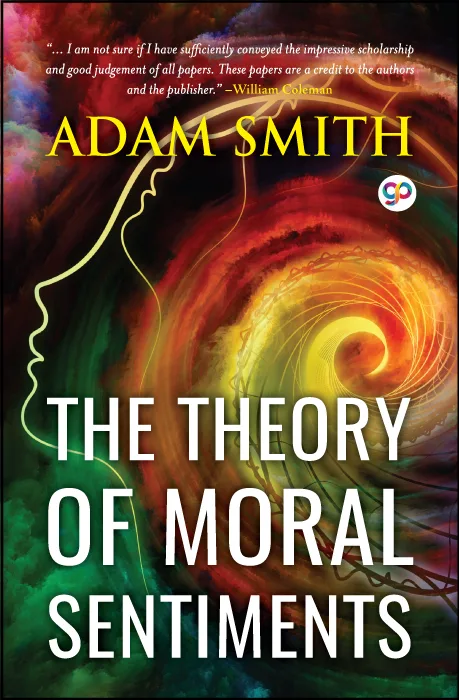
Download Cover Image
Do you want to download the full cover image for The Theory of Moral Sentiments?