
The Expedition of Humphry Clinker
eBook
• INR 99.00
• English
• 9789388843485
No ratings yet
| Publisher | General Press |
|---|---|
| ISBN13 | 9789388843485 |
| ASIN/SKU | B0G19HRCT9 |
| Book Format | eBook |
| Language | English |
| List Price | INR 99.00 |
| Subject Code | FIC016000 |
| Book Code | BD00069238 |
Buy this Book
Amazon Stores
Ebook Stores
Other Stores
Discover The Expedition of Humphry Clinker by Tobias Smollett. This book is published by General Press in eBook format, ISBN 9789388843485, ASIN B0G19HRCT9, under Literature and Fiction, Classics.
Book Description
The Expedition of Humphry Clinker is the final novel by Tobias Smollett, first published in 1771, just months before his death. Smollett, a Scottish novelist, satirist, and physician, was one of the great early figures of English fiction, known for his sharp wit, vivid characterizations, and lively depictions of 18th-century society.
The novel is written in epistolary form, composed entirely of letters exchanged among a group of travelers as they journey through England, Scotland, and Wales. The central figure, Matthew Bramble, a cantankerous yet kind-hearted Welsh squire suffering from various ailments, embarks on a tour with his sister Tabitha, his niece Lydia, his nephew Jery Melford, and their servants, including the innocent and good-natured Humphry Clinker, who gives the book its title. Through their letters, readers gain multiple perspectives on the same events, blending humor, social commentary, and vivid travel writing.
As the group travels, they encounter the contrasting realities of Georgian Britain — from bustling cities like London and Bath to the scenic landscapes of Scotland. Smollett uses these encounters to satirize class pretensions, medical quackery, urban corruption, and social inequality, while also expressing genuine affection for the natural beauty and emerging national pride of Scotland. Humphry Clinker himself, a humble and virtuous servant who later discovers his true parentage, embodies the moral heart of the novel — a symbol of innocence and goodness amid human folly.
Despite its humor and satire, the novel reveals Smollett’s growing compassion and maturity as a writer. The Expedition of Humphry Clinker combines comedy, realism, and sentiment, offering both entertainment and moral reflection.
Regarded as Smollett’s masterpiece, it remains a cornerstone of 18th-century English literature — a richly humane, observant, and humorous exploration of travel, family, and the absurdities of society.
The novel is written in epistolary form, composed entirely of letters exchanged among a group of travelers as they journey through England, Scotland, and Wales. The central figure, Matthew Bramble, a cantankerous yet kind-hearted Welsh squire suffering from various ailments, embarks on a tour with his sister Tabitha, his niece Lydia, his nephew Jery Melford, and their servants, including the innocent and good-natured Humphry Clinker, who gives the book its title. Through their letters, readers gain multiple perspectives on the same events, blending humor, social commentary, and vivid travel writing.
As the group travels, they encounter the contrasting realities of Georgian Britain — from bustling cities like London and Bath to the scenic landscapes of Scotland. Smollett uses these encounters to satirize class pretensions, medical quackery, urban corruption, and social inequality, while also expressing genuine affection for the natural beauty and emerging national pride of Scotland. Humphry Clinker himself, a humble and virtuous servant who later discovers his true parentage, embodies the moral heart of the novel — a symbol of innocence and goodness amid human folly.
Despite its humor and satire, the novel reveals Smollett’s growing compassion and maturity as a writer. The Expedition of Humphry Clinker combines comedy, realism, and sentiment, offering both entertainment and moral reflection.
Regarded as Smollett’s masterpiece, it remains a cornerstone of 18th-century English literature — a richly humane, observant, and humorous exploration of travel, family, and the absurdities of society.
Author Biography
Tobias George Smollett was born in Dalquhurn, now part of Renton, Scotland, to a prosperous family and educated at the University of Glasgow, where he studied to be a physician. Later he joined the British Royal Navy as a surgeon's mate. He was present at the disastrous battle against the Spanish at Cartagena in 1741.
He married a British woman named Anne " Nancy" Lascelles, in Jamaica, 1747,and settled in England. In London, as a writer, he became successful. The Adventures of Roderick Random (1748), a picaresque novel - like most of his books - made him a well known author. It was followed by The Adventures of Peregrine Pickle in 1751. But the failure of The Adventures of Ferdinand Count Fathom (1753) caused financial difficulties for him. Publishing The Adventures of Sir Launcelot Greaves (1762) didn't help.
Writing poems, plays, travel and history books, essays, satires, doing translations and even becoming a literary critic and magazine editor, Dr. Smollett struggled all his short life against poverty, he traveled to Italy, to regain his health, but died of tuberculosis near Livorno, in 1771. Ironically finishing his masterpiece, The Expedition of Humphry Clinker, a few months before his death. Charles Dickens was a great admirer of Tobias Smollett, even visiting his grave site.
He married a British woman named Anne " Nancy" Lascelles, in Jamaica, 1747,and settled in England. In London, as a writer, he became successful. The Adventures of Roderick Random (1748), a picaresque novel - like most of his books - made him a well known author. It was followed by The Adventures of Peregrine Pickle in 1751. But the failure of The Adventures of Ferdinand Count Fathom (1753) caused financial difficulties for him. Publishing The Adventures of Sir Launcelot Greaves (1762) didn't help.
Writing poems, plays, travel and history books, essays, satires, doing translations and even becoming a literary critic and magazine editor, Dr. Smollett struggled all his short life against poverty, he traveled to Italy, to regain his health, but died of tuberculosis near Livorno, in 1771. Ironically finishing his masterpiece, The Expedition of Humphry Clinker, a few months before his death. Charles Dickens was a great admirer of Tobias Smollett, even visiting his grave site.
Editorial Reviews
Editorial Reviews will be added soon…
Book Summary
The Expedition of Humphry Clinker, first published in 1771, is the final novel by Scottish author Tobias Smollett and is widely regarded as his masterpiece. Unlike a conventional novel, it is written entirely in the form of letters exchanged between different characters. This epistolary structure allows readers to experience the same events through multiple viewpoints, often revealing how differently people interpret the world around them. Combining humor, satire, adventure, and heartfelt moments, Smollett creates a lively portrait of eighteenth-century Britain while exploring themes of family, personal growth, social class, morality, and human kindness.
The story centers on Matthew Bramble, a wealthy Welsh gentleman whose poor health prompts him to undertake a lengthy journey across England and Scotland. Bramble is intelligent, generous, and deeply moral, but he is also famously irritable. He constantly complains about dirty cities, dishonest merchants, poor roads, bad manners, and the decline of public virtue. Through his letters, readers encounter a man who genuinely cares about society yet finds it difficult to overlook its many imperfections.
Accompanying Bramble on the journey is a diverse group of family members, each with a unique personality and perspective. His lively niece Lydia Melford is young, romantic, and hopeful. She dreams of marrying the man she loves despite opposition from her guardian. Her letters are emotional and idealistic, reflecting the excitement and uncertainty of youth.
Lydia's brother, Jery Melford, is practical, curious, and open-minded. Unlike his uncle, he approaches new places with enthusiasm rather than criticism. His observations often balance Bramble's pessimism, showing that the same world can appear entirely different depending on one's outlook.
Another memorable traveler is Tabitha Bramble, Matthew's unmarried sister. She is loud, ambitious, and determined to find a wealthy husband during their travels. Her letters are unintentionally humorous because of her poor spelling, exaggerated confidence, and constant concern with social status. Despite her flaws, Tabitha adds warmth and comic energy to the story.
The group is completed by Winifred Jenkins, Tabitha's loyal maid. Her letters are among the novel's funniest. Filled with amusing misunderstandings, incorrect vocabulary, and innocent observations, they reveal the lives of ordinary working people. Winifred's cheerful honesty often uncovers truths that more educated characters overlook.
As the family travels through famous cities and fashionable resorts such as Bath, London, Edinburgh, and Glasgow, Smollett uses their experiences to paint a vivid picture of eighteenth-century British society. The journey is not simply geographical; it becomes an exploration of different lifestyles, customs, and values.
Matthew Bramble is frequently disturbed by what he sees. He criticizes overcrowded cities, pollution, greed, political corruption, and the obsession with luxury. London, in particular, appears to him as a place where wealth and appearances matter more than honesty or virtue. Through Bramble's complaints, Smollett satirizes many aspects of contemporary society, suggesting that material progress often comes at the expense of morality.
At the same time, the younger travelers often discover beauty and enjoyment where Bramble sees only faults. Jery appreciates architecture, conversation, and cultural diversity. Lydia delights in gardens, music, and social gatherings. Their contrasting viewpoints remind readers that reality is shaped not only by circumstances but also by attitude. Smollett encourages readers to consider multiple perspectives before reaching conclusions.
One of the central storylines involves Lydia's romance with Wilson, a respectable young man whom she deeply loves. Matthew Bramble initially opposes the relationship because he doubts Wilson's financial situation and social standing. Lydia struggles between loyalty to her guardian and faithfulness to her own heart. Through this conflict, Smollett explores the tension between personal happiness and family expectations. As the story unfolds, misunderstandings are gradually resolved, revealing that Wilson's character is far more honorable than appearances had suggested.
During their travels, the family unexpectedly encounters a rough, good-natured young man named Humphry Clinker, who becomes Bramble's servant after rescuing him during an accident. At first, Clinker appears awkward, inexperienced, and somewhat clumsy. His humble background causes others to underestimate him. Yet his sincerity, loyalty, courage, and willingness to help others quickly earn the respect of many members of the household.
Humphry Clinker gradually becomes the emotional heart of the novel. Unlike many characters driven by pride or ambition, he consistently acts with honesty and compassion. His simple goodness contrasts sharply with the hypocrisy and selfishness displayed by many supposedly respectable members of society. Smollett uses Clinker to suggest that true worth is measured by character rather than education, wealth, or social rank.
The journey also provides opportunities for numerous humorous adventures. The travelers encounter eccentric innkeepers, boastful gentlemen, dishonest doctors, fortune hunters, pretentious aristocrats, and curious local customs. These episodes create a lively, entertaining narrative while allowing Smollett to satirize various professions and social classes. His humor is rarely cruel; instead, it exposes human weaknesses with wit and understanding.
As the expedition continues into Scotland, Smollett presents a more balanced and affectionate view of his homeland than was common in English literature of the time. He praises Scottish education, intellectual life, and hospitality while acknowledging certain local shortcomings. His descriptions reflect both pride and realism, contributing to the novel's rich portrayal of Britain as a whole.
The novel gradually shifts from episodic travel adventures toward family revelations. Long-hidden secrets begin to emerge, changing the relationships among the characters. In one of the story's most surprising developments, it is discovered that Humphry Clinker is actually Matthew Bramble's illegitimate son. Years earlier, Bramble had unknowingly fathered the young man and remained unaware of his existence.
This revelation transforms both men's lives. Rather than rejecting Humphry because of the circumstances of his birth, Bramble warmly accepts him into the family. The recognition demonstrates one of the novel's deepest messages: love, responsibility, and forgiveness matter far more than rigid social conventions. Family bonds are strengthened not merely by legal status but by compassion and acceptance.
Other storylines also reach satisfying conclusions. Lydia receives permission to marry Wilson after his true worth becomes evident. Jery finds happiness in his own romantic relationship. Even Tabitha achieves her long-desired goal of marriage, although her courtship unfolds with plenty of comic misunderstandings. Each resolution reinforces the novel's optimistic belief that honesty, patience, and goodwill ultimately triumph over prejudice and misunderstanding.
Throughout the novel, Smollett continually examines the contrast between appearance and reality. Wealthy individuals often prove selfish, while humble people demonstrate remarkable integrity. Educated characters sometimes behave foolishly, whereas those with little formal learning display practical wisdom. By presenting multiple viewpoints through letters, Smollett reminds readers that no single perspective captures the complete truth.
The epistolary format itself plays an essential role in the novel's success. Because each character writes in a distinct voice, readers witness the same event from different emotional and intellectual angles. This technique not only creates humor but also encourages empathy, showing that every person interprets experiences according to personality, hopes, fears, and social position.
Ultimately, The Expedition of Humphry Clinker is much more than a travel narrative. It is a warm and insightful exploration of human nature, family relationships, and the diverse society of eighteenth-century Britain. Through laughter, satire, and heartfelt storytelling, Tobias Smollett demonstrates that kindness, humility, and genuine character outweigh wealth, status, and outward appearances. The novel celebrates the transformative power of compassion while reminding readers that life's greatest journeys are often those that lead people toward deeper understanding of themselves and one another. Its enduring charm lies in its lively characters, its affectionate humor, and its timeless faith in the goodness that can emerge from even the most unexpected places.
The story centers on Matthew Bramble, a wealthy Welsh gentleman whose poor health prompts him to undertake a lengthy journey across England and Scotland. Bramble is intelligent, generous, and deeply moral, but he is also famously irritable. He constantly complains about dirty cities, dishonest merchants, poor roads, bad manners, and the decline of public virtue. Through his letters, readers encounter a man who genuinely cares about society yet finds it difficult to overlook its many imperfections.
Accompanying Bramble on the journey is a diverse group of family members, each with a unique personality and perspective. His lively niece Lydia Melford is young, romantic, and hopeful. She dreams of marrying the man she loves despite opposition from her guardian. Her letters are emotional and idealistic, reflecting the excitement and uncertainty of youth.
Lydia's brother, Jery Melford, is practical, curious, and open-minded. Unlike his uncle, he approaches new places with enthusiasm rather than criticism. His observations often balance Bramble's pessimism, showing that the same world can appear entirely different depending on one's outlook.
Another memorable traveler is Tabitha Bramble, Matthew's unmarried sister. She is loud, ambitious, and determined to find a wealthy husband during their travels. Her letters are unintentionally humorous because of her poor spelling, exaggerated confidence, and constant concern with social status. Despite her flaws, Tabitha adds warmth and comic energy to the story.
The group is completed by Winifred Jenkins, Tabitha's loyal maid. Her letters are among the novel's funniest. Filled with amusing misunderstandings, incorrect vocabulary, and innocent observations, they reveal the lives of ordinary working people. Winifred's cheerful honesty often uncovers truths that more educated characters overlook.
As the family travels through famous cities and fashionable resorts such as Bath, London, Edinburgh, and Glasgow, Smollett uses their experiences to paint a vivid picture of eighteenth-century British society. The journey is not simply geographical; it becomes an exploration of different lifestyles, customs, and values.
Matthew Bramble is frequently disturbed by what he sees. He criticizes overcrowded cities, pollution, greed, political corruption, and the obsession with luxury. London, in particular, appears to him as a place where wealth and appearances matter more than honesty or virtue. Through Bramble's complaints, Smollett satirizes many aspects of contemporary society, suggesting that material progress often comes at the expense of morality.
At the same time, the younger travelers often discover beauty and enjoyment where Bramble sees only faults. Jery appreciates architecture, conversation, and cultural diversity. Lydia delights in gardens, music, and social gatherings. Their contrasting viewpoints remind readers that reality is shaped not only by circumstances but also by attitude. Smollett encourages readers to consider multiple perspectives before reaching conclusions.
One of the central storylines involves Lydia's romance with Wilson, a respectable young man whom she deeply loves. Matthew Bramble initially opposes the relationship because he doubts Wilson's financial situation and social standing. Lydia struggles between loyalty to her guardian and faithfulness to her own heart. Through this conflict, Smollett explores the tension between personal happiness and family expectations. As the story unfolds, misunderstandings are gradually resolved, revealing that Wilson's character is far more honorable than appearances had suggested.
During their travels, the family unexpectedly encounters a rough, good-natured young man named Humphry Clinker, who becomes Bramble's servant after rescuing him during an accident. At first, Clinker appears awkward, inexperienced, and somewhat clumsy. His humble background causes others to underestimate him. Yet his sincerity, loyalty, courage, and willingness to help others quickly earn the respect of many members of the household.
Humphry Clinker gradually becomes the emotional heart of the novel. Unlike many characters driven by pride or ambition, he consistently acts with honesty and compassion. His simple goodness contrasts sharply with the hypocrisy and selfishness displayed by many supposedly respectable members of society. Smollett uses Clinker to suggest that true worth is measured by character rather than education, wealth, or social rank.
The journey also provides opportunities for numerous humorous adventures. The travelers encounter eccentric innkeepers, boastful gentlemen, dishonest doctors, fortune hunters, pretentious aristocrats, and curious local customs. These episodes create a lively, entertaining narrative while allowing Smollett to satirize various professions and social classes. His humor is rarely cruel; instead, it exposes human weaknesses with wit and understanding.
As the expedition continues into Scotland, Smollett presents a more balanced and affectionate view of his homeland than was common in English literature of the time. He praises Scottish education, intellectual life, and hospitality while acknowledging certain local shortcomings. His descriptions reflect both pride and realism, contributing to the novel's rich portrayal of Britain as a whole.
The novel gradually shifts from episodic travel adventures toward family revelations. Long-hidden secrets begin to emerge, changing the relationships among the characters. In one of the story's most surprising developments, it is discovered that Humphry Clinker is actually Matthew Bramble's illegitimate son. Years earlier, Bramble had unknowingly fathered the young man and remained unaware of his existence.
This revelation transforms both men's lives. Rather than rejecting Humphry because of the circumstances of his birth, Bramble warmly accepts him into the family. The recognition demonstrates one of the novel's deepest messages: love, responsibility, and forgiveness matter far more than rigid social conventions. Family bonds are strengthened not merely by legal status but by compassion and acceptance.
Other storylines also reach satisfying conclusions. Lydia receives permission to marry Wilson after his true worth becomes evident. Jery finds happiness in his own romantic relationship. Even Tabitha achieves her long-desired goal of marriage, although her courtship unfolds with plenty of comic misunderstandings. Each resolution reinforces the novel's optimistic belief that honesty, patience, and goodwill ultimately triumph over prejudice and misunderstanding.
Throughout the novel, Smollett continually examines the contrast between appearance and reality. Wealthy individuals often prove selfish, while humble people demonstrate remarkable integrity. Educated characters sometimes behave foolishly, whereas those with little formal learning display practical wisdom. By presenting multiple viewpoints through letters, Smollett reminds readers that no single perspective captures the complete truth.
The epistolary format itself plays an essential role in the novel's success. Because each character writes in a distinct voice, readers witness the same event from different emotional and intellectual angles. This technique not only creates humor but also encourages empathy, showing that every person interprets experiences according to personality, hopes, fears, and social position.
Ultimately, The Expedition of Humphry Clinker is much more than a travel narrative. It is a warm and insightful exploration of human nature, family relationships, and the diverse society of eighteenth-century Britain. Through laughter, satire, and heartfelt storytelling, Tobias Smollett demonstrates that kindness, humility, and genuine character outweigh wealth, status, and outward appearances. The novel celebrates the transformative power of compassion while reminding readers that life's greatest journeys are often those that lead people toward deeper understanding of themselves and one another. Its enduring charm lies in its lively characters, its affectionate humor, and its timeless faith in the goodness that can emerge from even the most unexpected places.
Sample Chapters
Sample Chapters will be added soon…
Reader Reviews
No reviews yet.
The Expedition of Humphry Clinker
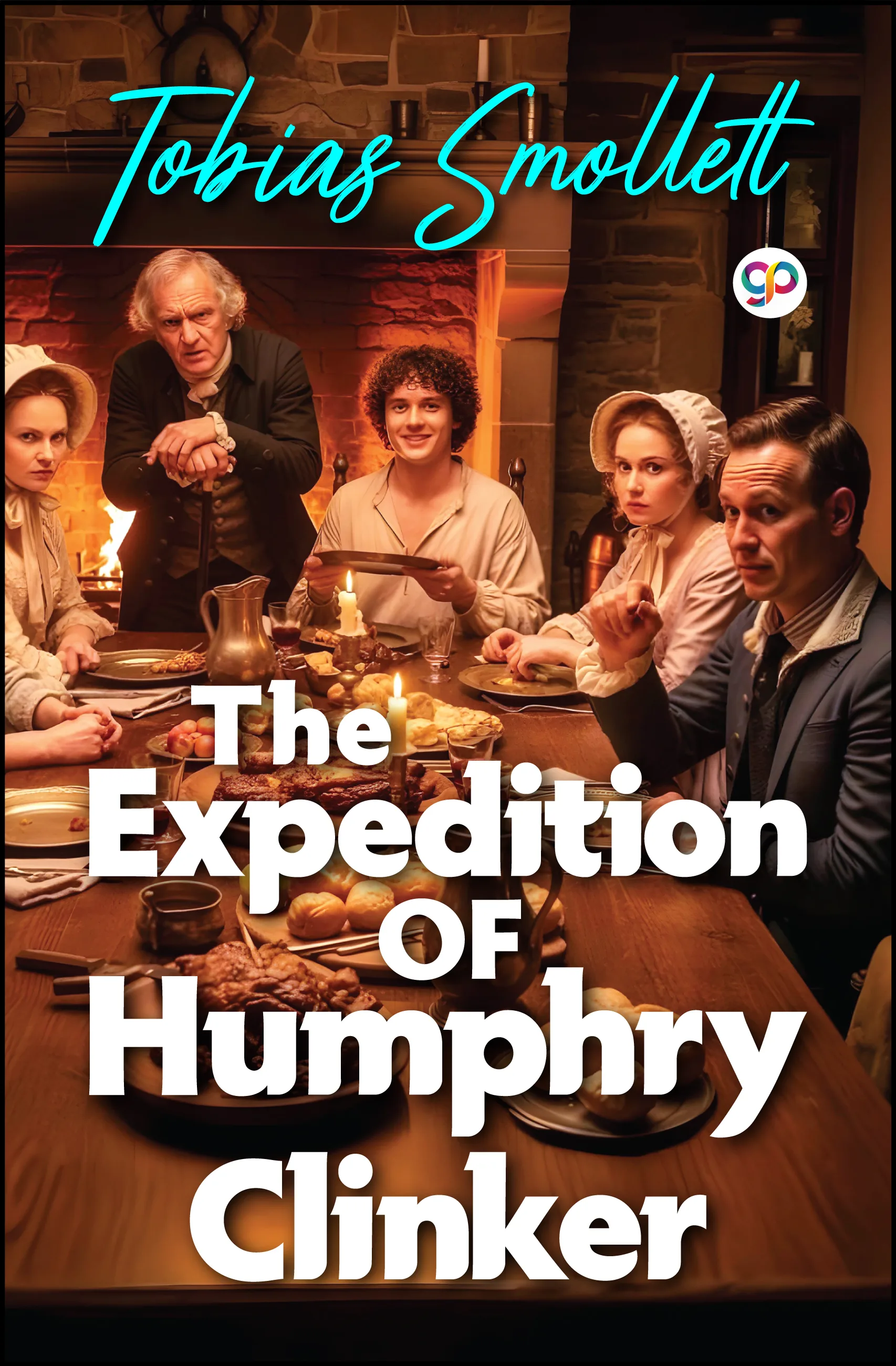
Download Cover Image
Do you want to download the full cover image for The Expedition of Humphry Clinker?